
For dietary supplement brand owners, sports-nutrition formulators, and private-label teams, Coenzyme Q10 and L-Carnitine are often evaluated together because they support two different steps of cellular energy metabolism. L-Carnitine helps transport long-chain fatty acids into mitochondria for beta-oxidation, while CoQ10 supports electron transfer in the mitochondrial respiratory chain and helps maintain cellular antioxidant balance. The formulation challenge is that CoQ10 is fat-soluble and poorly suited to simple dry capsules, while many L-carnitine forms are water-soluble, high-dose, and moisture-sensitive. [Cite: NIH ODS Carnitine; NCCIH Coenzyme Q10]
이 가이드에서는 영양학 및 제조학적 관점에서 코엔자임 Q10과 L-카르니틴을 비교합니다. 비교 항목으로는 작용 기전, 최적의 사용 사례, 제형 선택, 소프트젤과 캡슐의 타당성, 품질 관리 검사, 그리고 FDA 규정을 준수하는 구조·기능 표기 문구 등이 포함됩니다.
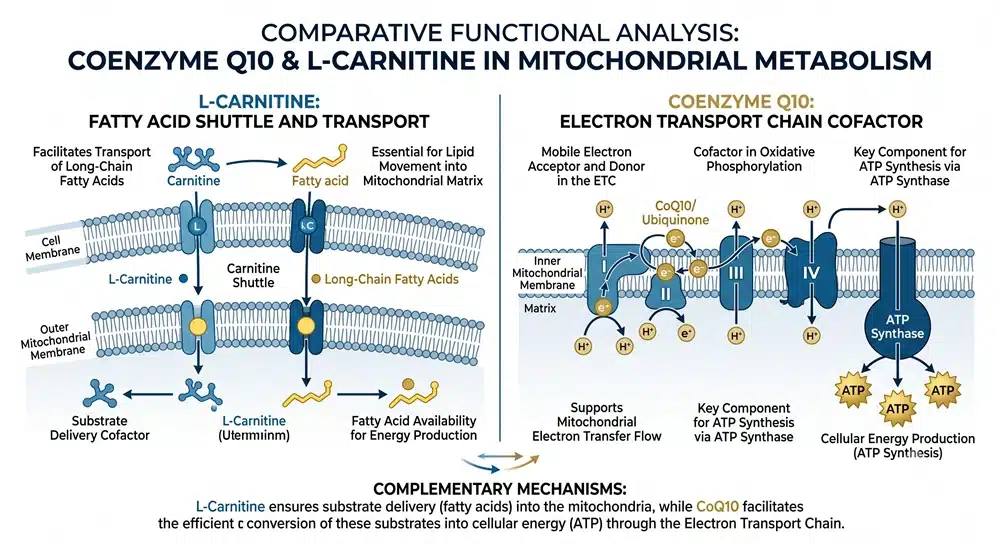
CoQ10 그리고 L-카르니틴 이 두 성분은 상호 보완적이지만 서로 대체할 수는 없습니다. L-카르니틴은 지방산을 미토콘드리아로 이동시키는 반면, 코엔자임 Q10은 미토콘드리아의 전자 전달계가 에너지원(연료)을 ATP로 전환하는 데 도움을 줍니다. 보충제 브랜드의 경우, 가장 중요한 결정 요소는 제형입니다. 코엔자임 Q10은 지질 기반 소프트젤이나 강화 분말 제형이 적합하며, L-카르니틴은 대개 수분 조절이 가능한 캡슐, 정제 또는 분말 혼합 제형이 필요합니다.
코엔자임 Q10 - 무엇인가요?
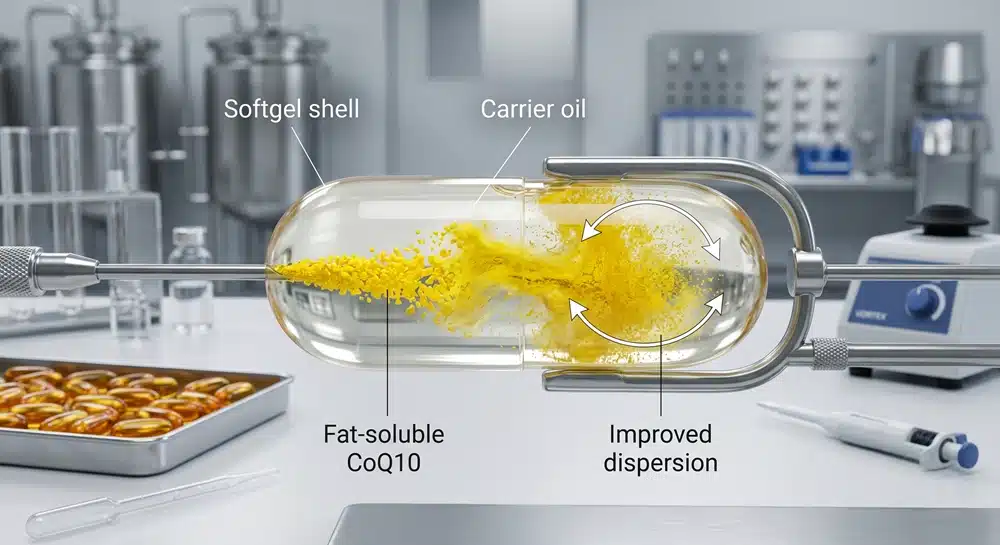
코엔자임 Q10(CoQ10, 유비퀴논/유비퀴놀)은 세포막과 미토콘드리아에 존재하는 지용성 퀴논입니다. 에너지 보충제에서 코엔자임 Q10은 자극제가 아닌, 미토콘드리아 전자 전달 보조인자 및 지질상 항산화제로서의 역할이 가장 적합합니다. 결정성 코엔자임 Q10은 수용성이 낮고 분말 분산성이 좋지 않기 때문에, 상업적 성과는 운반유 선택, 입자 크기 조절, 제형 설계에 크게 좌우됩니다.
코엔자임 Q10(CoQ10)은 인체 내에 자연적으로 존재하며, 세포가 아데노신 삼인산(ATP)을 생성하는 미토콘드리아 전자 전달 사슬에 관여합니다. 그 수치는 연령, 식단, 건강 상태 및 약물 복용 여부에 따라 달라질 수 있습니다. 영양 보충제 광고 문구에서는 규정 준수 차원에서 “세포 에너지 생성을 지원한다” 또는 “항산화 상태 유지를 돕는다”와 같이 구조 및 기능 지원에 초점을 맞추어야 하며, 질병 치료 효과에 대한 표현은 피해야 합니다.
코엔자임 Q10을 섭취해야 하는 이유는?
세포 에너지와 활동적인 생활을 위해
코엔자임 Q10(CoQ10)은 미토콘드리아 내부의 에너지 생성 기전을 돕습니다. 따라서 스포츠 영양, 일상적인 활력 증진, 활기찬 노화를 위한 제품에 적합합니다. 다만, 제품 설명에서는 피로나 특정 질환의 치료 효과를 약속하는 표현은 피해야 합니다. 규정을 준수하는 제품 페이지에는 세포 에너지 대사와 항산화 균형을 돕는다는 내용을 기술해야 합니다.
심장 건강을 위한 자세
심장은 에너지를 많이 소비하는 장기이므로, 코엔자임 Q10은 일반적으로 심혈관 건강 보조제에 포함됩니다. 증거의 신뢰도는 결과와 대상 집단에 따라 차이가 있으므로, B2B 홍보 문구에서는 “심장 건강을 돕습니다”와 같은 신중한 표현을 사용해야 하며, 자격을 갖춘 규제 자문가의 검토를 거치지 않은 한 심부전, 심근경색 또는 스타틴의 부작용 치료 효과를 암시하는 표현은 피해야 합니다.
지질상 항산화제로서
코엔자임 Q10(CoQ10)은 환원형인 유비퀴놀이 지질 상의 산화환원 반응에 관여하기 때문에 항산화제로 자주 언급됩니다. 완제품의 경우, 이로 인해 제형상의 문제도 발생하는데, 산소, 열, 그리고 캐리어 오일의 품질이 제품의 안정성에 영향을 미칠 수 있기 때문입니다. 브랜드 측은 제품 출시 전에 적절한 원료 및 완제품 사양을 요청해야 합니다.
최고의 코엔자임 Q10 보충제를 선택하는 방법은?
1. 유비퀴논 대 유비퀴놀
유비퀴논은 코엔자임 Q10의 산화형으로, 건강기능식품에 널리 사용됩니다. 유비퀴놀은 환원형으로, 특히 고령층의 경우 생체 이용률이 더 높다고 홍보되는 경우가 많습니다. 어떤 성분을 선택할지는 목표 시장, 비용, 안정성, 제형, 라벨 표기 전략 등에 따라 달라집니다.
2. 소싱 및 제조 품질
B2B 구매자의 경우, 코엔자임 Q10(CoQ10) 조달 시 원료의 정체성, 함량 분석, 해당되는 경우 잔류 용매, 중금속, 미생물학적 검사 및 안정성 데이터를 확인해야 합니다. 프리미엄 제품에는 천연 발효 코엔자임 Q10이 흔히 사용되지만, 제형은 원료만큼이나 중요합니다.
제형 개발자의 참고 사항: 고성능 상용 제형에서 CoQ10이 “단순한 분말” 원료로 사용되는 경우는 드뭅니다. 유성 CoQ10 소프트젤의 경우, 주요 변수로는 CoQ10 함량, 운반유 유형, 현탁 입자의 균일성, 충전 점도, 산소 노출, 캡슐 껍질과의 호환성, 그리고 유상에서의 과산화물 제어 등이 있습니다. 건조 캡슐이나 정제의 경우, 브랜드 측에서는 해당 CoQ10이 표준 결정성 분말, 미분화된 CoQ10, 비드렛, 유화 분말, 또는 그 밖의 분산성이 향상된 형태인지 확인해야 합니다. 브랜드는 다음을 통해 이러한 옵션을 검토할 수 있습니다. 맞춤형 포뮬러 보충제 제조 또는 소프트젤 캡슐 제조.
3. 복용량 및 생체이용률
시중에서 판매되는 코엔자임 Q10의 1회 섭취량은 일반적으로 100mg에서 200mg 사이이지만, 적절한 섭취량은 제품의 포지셔닝과 제형에 따라 달라집니다. 코엔자임 Q10은 지용성이기 때문에, 지질 운반체, 소프트젤, 유화 분말 또는 비드렛 기술을 활용하면 일반 결정성 분말에 비해 소비자 경험을 향상시킬 수 있습니다.
코엔자임 Q10을 섭취하기 가장 좋은 시기
코엔자임 Q10은 지용성 성분이기 때문에 일반적으로 지방이 포함된 식사와 함께 섭취하는 것이 가장 좋습니다. 일상의 활력을 주는 제품의 경우 아침에 섭취하는 것이 일반적이지만, 제품에 대한 내성이 좋은 소비자의 경우 저녁에 섭취하는 것도 효과적일 수 있습니다. 라벨 표기 측면에서 볼 때, 즉각적인 활력 효과를 약속하는 것보다 “식사와 함께 섭취하십시오”라고 안내하는 것이 더 안전하고 실용적인 방법입니다.
황금률: 식사와 함께 섭취하기
이것이 가장 중요한 조언입니다. 코큐텐은 지용성 화합물이기 때문에 체내에 제대로 흡수되려면 지방이 필요합니다. 공복에 보충제를 복용하면 효과가 크게 떨어집니다. 최적의 흡수를 보장하려면 항상 다음과 같은 건강한 지방이 포함된 식사와 함께 코큐텐을 섭취하세요:
- 아보카도
- 견과류 및 씨앗
- 올리브유 또는 기타 건강한 식용유
- 연어나 참치 같은 지방이 많은 생선
- 달걀
많은 코큐텐 보충제, 특히 인기 있는 소프트젤 제품은 생체이용률을 높이기 위해 이미 오일 베이스에 현탁되어 있지만, 여전히 식사와 함께 섭취하는 것이 가장 좋습니다.
아침 또는 저녁?
개인적인 취향과 약간의 자기 관찰이 필요한 부분입니다.
- 안녕하세요: 많은 사람이 아침 식사와 함께 코큐텐을 섭취합니다. 코큐텐은 에너지 생성에 관여하므로 아침에 섭취하면 하루 종일 에너지 수준을 유지하는 데 도움이 될 수 있기 때문에 이는 훌륭한 선택이 될 수 있습니다. 또한 일관된 루틴을 확립하는 데 도움이 되며, 이는 보충제의 장기적인 효과를 보는 데 필수적인 요소입니다.
- 안녕하세요: 특히 지방 함량이 가장 많은 하루 중 가장 큰 식사인 저녁 식사와 함께 코큐텐을 섭취하는 것이 좋은 선택이 될 수 있습니다. 그러나 소수의 사람들은 코큐텐이 수면을 방해할 수 있는 “활력을 주는” 효과가 있다고 보고합니다. 늦은 밤에 복용한 후 불안한 느낌이 든다면 아침에 복용하는 것이 가장 좋습니다.
결론: 일관성이 핵심
복용 시기는 기분에 영향을 미칠 수 있지만, 진정으로 중요한 것은 꾸준히 복용하는 것입니다. 체내 코큐텐 수치를 치료 가능한 수준으로 끌어올리려면 몇 주가 걸릴 수 있습니다. 가장 효과적인 전략은 모닝 커피와 달걀, 저녁 식사와 함께 섭취하는 등 매일 잊지 않고 보충제를 섭취할 수 있는 시간을 선택하는 것입니다. 최상의 결과를 위해 건강한 지방과 함께 섭취하는 것을 잊지 마세요.
L-카르니틴 - 무엇인가요?
L-Carnitine is a conditionally essential nutrient involved in the transport of long-chain fatty acids into mitochondria, where fatty acids can be oxidized for energy. In supplement formulation, L-Carnitine is not a single material choice: L-carnitine base, L-carnitine L-tartrate, acetyl-L-carnitine, propionyl-L-carnitine, and fumarate forms differ in target use case, taste, powder behavior, hygroscopicity, dose size, and capsule-filling feasibility.
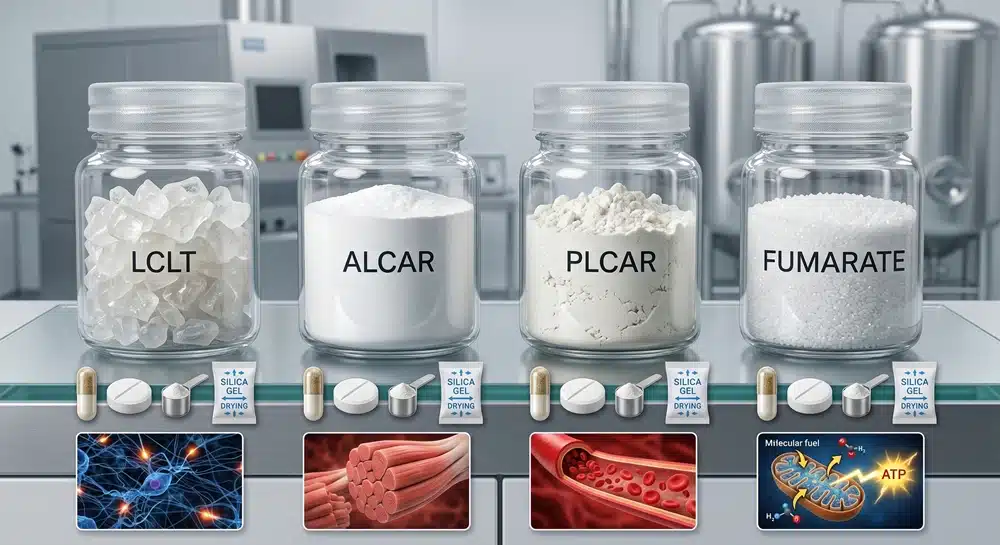
L-카르니틴은 체내에서 자연적으로 생성되며, 식품, 특히 동물성 식품에서도 발견됩니다. 보충제에서는 주로 활동적인 생활 방식, 운동 후 회복, 체중 관리 지원, 남성 기능 강화용 제품에 사용됩니다. 규정에 부합하는 문구는 “지방 대사를 돕는다” 또는 “운동 후 회복을 돕는다”는 점에 초점을 맞춰야 하며, 체지방 감소를 보장하는 표현은 피해야 합니다.
L-카르니틴을 섭취해야 하는 이유는 무엇인가요?
지방산 수송 지원
L-카르니틴은 장쇄 지방산을 미토콘드리아로 운반하는 데 도움을 줍니다. 이것이 L-카르니틴이 코엔자임 Q10과 함께 사용되는 이유에 대한 가장 설득력 있는 기전적 설명입니다. 한 성분은 연료를 미토콘드리아로 이동시키는 데 도움을 주고, 다른 성분은 미토콘드리아의 전자 전달 과정을 지원하기 때문입니다.
운동 수행 및 회복 자세
L-카르니틴 L-타르트레이트는 스포츠 영양제 제형에 널리 사용됩니다. 이 성분은 주로 운동 후 회복 및 활동적인 생활 방식과 관련하여 포지셔닝됩니다. 브랜드는 L-카르니틴만으로도 체지방 감소 효과가 있거나 피로를 직접적으로 치료한다고 주장해서는 안 됩니다. 스포츠 제품의 경우, 스포츠 영양제 계약 제조 이를 통해 캡슐, 정제, 분말, 일일 분량 팩 중 어떤 형태가 가장 적합한지 판단하는 데 도움이 될 수 있습니다.
인지 및 전문 분야별 포지셔닝
아세틸-L-카르니틴은 아세틸화 구조와 위치 특성 때문에 인지 기능 및 정신 에너지 관련 제품 포뮬러에 흔히 사용됩니다. 대상 시장, 용량, 맛, 제품 형태 등을 검토하지 않고서는 스포츠용 제품 포뮬러에서 L-카르니틴 L-타르트레이트를 무턱대고 아세틸-L-카르니틴으로 대체해서는 안 됩니다.
최고의 L-카르니틴 보충제를 선택하는 방법은?
먼저 제품의 목표 효능과 제형을 고려하십시오. 제품이 스포츠 영양 분말이라면 L-카르니틴 L-타르트레이트가 실용적일 수 있습니다. 제품이 인지 기능 지원을 위한 캡슐이라면 아세틸-L-카르니틴이 더 적합할 수 있습니다. 코엔자임 Q10을 함유하여 전반적인 에너지 증진을 목표로 하는 제품이라면, 안정성을 해치지 않으면서도 필요한 용량을 공급할 수 있는 형태가 단일 캡슐, 정제, 파우더 스틱, 또는 이중 제형 팩 중 어떤 것인지 고려해 보십시오.
L-카르니틴 제제는 함량, 건조 손실, 입자 크기, 유동성, 맛, 냄새, 중금속 및 미생물학적 특성을 검사해야 합니다. 특히 캡슐 및 분말 혼합물의 경우 흡습성이 매우 중요합니다. 수분 관리가 제대로 이루어지지 않으면 뭉침 현상, 중량 편차 및 유통기한이 짧아 보인다는 인상을 줄 수 있습니다.
남성용 고성능 포뮬러에 대한 안전 주의사항: L-카르니틴, 시네프린, SR9011 및 GW0742
L-카르니틴은 관련 규정을 준수하는 건강기능식품에 사용될 경우 합법적인 건강기능식품 원료입니다. 시네프린은 자극제와 유사한 쓴오렌지 유래 화합물로, 복용량, 카페인 함량, 혈압 영향 및 경고 문구를 신중하게 검토해야 합니다. SR9011 및 GW0742/GW1516 계열 화합물은 적절한 식이보충제 성분이 아니며, 합법적인 보충제 배합의 일부로 포지셔닝되어서는 안 됩니다. 또한 운동선수들은 GW1516/카다린(Cardarine) 계열의 대사 조절제가 스포츠에서 금지되어 있으며, 반도핑 위반 위험과 연관되어 있다는 점을 유의해야 합니다.
남성용 성능 향상 또는 활동적인 라이프스타일용 제품의 경우, 허용된 성분, 투명한 라벨링, 제3자 오염물질 검사, 그리고 “에너지 대사를 돕는다” 또는 “운동 후 회복을 돕는다”와 같이 규정을 준수하는 구조/기능 문구를 중심으로 제품을 구성하는 것이 B2B 시장에서 더 안전한 접근 방식입니다. 질병 치료 관련 주장, 스테로이드와 유사한 포지셔닝, 그리고 해당 제품이 금지된 연구용 화학 물질을 포함하거나 이를 대체한다는 암시는 피해야 합니다.
코엔자임 Q10과 L-카르니틴: 주요 차이점
코엔자임 Q10(CoQ10)과 L-카르니틴은 종종 함께 판매되지만, 동일한 성분은 아닙니다. 코엔자임 Q10은 미토콘드리아 전자 전달 사슬과 지질상 항산화 시스템을 지원합니다. L-카르니틴은 지방산이 미토콘드리아로 이동하는 과정을 돕습니다. 이러한 차이는 소비자 인식과 최종 제형 모두에 영향을 미치기 때문에 중요합니다.
다음은 코엔자임 Q10과 L-카르니틴의 주요 차이점을 이해하는 데 도움이 되는 양식입니다:
| 비교 기준 | 코엔자임 Q10(CoQ10) | L-카르니틴 | B2B 제형 개발 시사점 |
|---|---|---|---|
| 핵심 메커니즘 | 미토콘드리아 호흡 사슬에서의 전자 전달과 세포 내 항산화 균형을 돕습니다. | 베타 산화를 위해 장쇄 지방산이 미토콘드리아로 이동하는 것을 돕습니다. | 이 두 가지는 서로 보완적인 관계이지, 서로 대체할 수 있는 것은 아닙니다. |
| 용해도 프로파일 | 지용성이므로 단순한 수성 전달 방식에는 적합하지 않다. | 일반적으로 수용성이며, 많은 형태가 습기에 민감하다. | 코엔자임 Q10은 주로 소프트젤이나 지질 운반체를 사용하는 반면, L-카르니틴은 캡슐, 정제, 분말 또는 분할 투여 제형을 주로 사용합니다. |
| 일반적인 상업용 투여량 | 제품 포지셔닝에 따라 대개 100~200 mg/일을 투여합니다. | 제형과 용도에 따라 대개 하루 500~2,000 mg을 섭취합니다. | L-카르니틴의 1회 복용량은 캡슐 수와 포장 전략을 결정하는 요인이 될 수 있습니다. |
| 품질 관리 중점 | HPLC/UPLC 분석, 산화 상태, 캐리어 오일 품질, 오일 기반 제품의 경우 과산화치. | 분석, 원료 확인, 건조 감량, 중금속, 미생물학적 검사 및 유동성. | 복합 제제의 경우, 각 유효 성분마다 별도의 방출 사양이 필요합니다. |
| 가장 적합한 상품 형식 | 소프트젤, 지질 기반 액체, 분산성이 향상된 분말, 비드렛. | 캡슐, 정제, 파우더 스틱, RTD 샷, 스포츠 영양 혼합 제품. | 2캡슐 팩은 1캡슐에 모든 성분이 한데 들어 있는 “올인원” 방식보다 성능이 더 우수할 수 있다. |
함께 사용하면 더 효과적인 이유
이 두 성분의 시너지 효과는 ‘연료 공급과 에너지 전환 지원’으로 가장 잘 설명될 수 있습니다. L-카르니틴은 장쇄 지방산을 미토콘드리아로 이동시키는 데 도움을 주며, 코엔자임 Q10은 미토콘드리아의 전자 전달을 지원합니다. 이 두 성분은 함께 일상적인 에너지 공급, 심장 건강 지원, 스포츠 영양, 활기찬 노년 생활, 그리고 자극제가 포함되지 않은 성능 향상 제제에 적합합니다.
제형 개발자의 관점에서 볼 때, “함께하면 더 좋다”는 것이 항상 “같은 캡슐에 담는 것이 최선”을 의미하는 것은 아닙니다. 100mg 코엔자임 Q10 오일 소프트젤과 1,000mg L-카르니틴 분말 1회 분량은 서로 다른 제조 공정이 필요할 수 있습니다. 고급 제품의 경우, 이중 제형의 일일 섭취 팩을 고려해 보십시오. 지질 상 흡수를 위한 코엔자임 Q10 소프트젤 1정과 복용 효율을 높이기 위한 L-카르니틴 캡슐, 정제 또는 파우더 스틱 1개를 함께 제공하는 방식입니다.
제조 인사이트: 코엔자임 Q10 + L-카르니틴 제형 개발의 과제
코엔자임 Q10(CoQ10)과 L-카르니틴은 라벨상으로는 단순해 보이지만, 실제 생산 과정에서는 매우 다른 특성을 보입니다. 코엔자임 Q10은 친유성이 있어 유상에 분산되거나 분산성이 향상된 분말 형태로 가공되었을 때 더 우수한 성능을 발휘합니다. L-카르니틴 제형은 대개 고함량 원료이며, 상당수가 흡습성을 띠고 있어 습도 관리가 제대로 이루어지지 않을 경우 유동성이 저하되고, 뭉침 위험이 증가하며, 캡슐 중량 편차가 발생할 수 있습니다.
실무적인 공장 검토는 다음 네 가지 질문으로 시작해야 합니다. (1) 제형은 1회 투여형인가, 분할 투여형인가? (2) 코엔자임 Q10은 오일 현탁액, 비드렛, 미분화 분말, 또는 유화 분말 형태로 공급되는가? (3) 목표 효능 표기와 제형에 가장 적합한 L-카르니틴 형태는 무엇인가? (4) 성분 동일성, 함량, 미생물 품질, 중금속, 수분, 캡슐/정제의 균일성을 확인하기 위한 방출 규격은 무엇인가?
복합 제품의 경우, GENSEI는 소프트젤과 캡슐이 결합된 듀얼 팩, 코엔자임 Q10의 분산성이 향상된 파우더 스틱, 또는 엄선된 부형제를 사용한 캡슐 제형 등의 실현 가능성을 제시할 수 있습니다.
결론
코엔자임 Q10과 L-카르니틴은 미토콘드리아 에너지 대사의 서로 다른 단계를 지원하기 때문에, 자극제가 포함되지 않은 에너지 제형에 있어 강력한 조합을 이룹니다. 코엔자임 Q10은 전자 전달과 지질 상의 항산화 균형을 지원하는 반면, L-카르니틴은 지방산의 미토콘드리아 내 수송을 돕습니다. 소비자에게 있어 핵심은 이 두 성분이 서로 보완적이라는 점입니다. 보충제 브랜드의 경우, 핵심은 이 성분들의 물리적 특성으로 인해 서로 다른 제형 결정, 방출 시험 및 안정성 관리가 필요하다는 점입니다.
효과가 뛰어난 코엔자임 Q10 + L-카르니틴 제품은 단순히 마케팅 주장만으로 만들어져서는 안 됩니다. 검증된 원료, 적절한 제형, 수분 및 산화 제어, 배치별 COA 문서, 그리고 관련 규정을 준수하는 구조/기능 표기를 바탕으로 개발되어야 합니다.
자주 묻는 질문
참조
- 미국 국립보건원(NIH) 식이보충제 사무국. “카르니틴 건강 전문가용 정보지.” 참조: https://ods.od.nih.gov/factsheets/Carnitine-HealthProfessional/
- NCCIH. “코엔자임 Q10.” 출처: https://www.nccih.nih.gov/health/coenzyme-q10
- PubChem. “코엔자임 Q10.” 출처: https://pubchem.ncbi.nlm.nih.gov/compound/Coenzyme-Q10
- PubMed. “CoQ10 함유 올레오젤 / 생체이용률 제형 참고 자료.” 참조: https://pubmed.ncbi.nlm.nih.gov/30529659/
- FDA. “구조/기능 주장.” 참조: https://www.fda.gov/food/nutrition-food-labeling-and-critical-foods/structurefunction-claims
- eCFR. “21 CFR 101.93 영양보충제 표기 사항.” 참조: https://www.ecfr.gov/current/title-21/chapter-I/subchapter-B/part-101/subpart-F/section-101.93
- eCFR. “21 CFR 제111편 건강기능식품 cGMP.” 참조: https://www.ecfr.gov/current/title-21/chapter-I/subchapter-B/part-111
- FDA. “영양보충제 cGMP 소규모 기업 준수 가이드.” 참조: https://www.fda.gov/regulatory-information/search-fda-guidance-documents/small-entity-compliance-guide-current-good-manufacturing-practice-manufacturing-packaging-labeling
- USADA. “운동선수들은 GW1516에 대해 무엇을 알아야 할까요?” 참조: https://www.usada.org/spirit-of-sport/what-should-athletes-know-gw1516/
- WADA. “GW501516에 대한 경보.” 참조: https://www.wada-ama.org/en/news/wada-issues-alert-gw501516
워렌 완은 식이 보충제 공급망 분야에서 폭넓은 경험을 갖춘 노련한 전문가로, 콜라겐 펩타이드, 뼈 육수 단백질, 케라틴과 같은 핵심 원료의 연구, 개발, 공정 관리 및 글로벌 조달에 풍부한 실무 경험을 보유하고 있습니다. 이 칼럼의 필자로서 그는 마케팅적 포장만을 벗겨내고, 난해한 원료 과학 및 생산 품질 관리 기준을 누구나 쉽게 이해할 수 있는 심도 있는 과학 대중화 콘텐츠로 재구성함으로써, 독자들이 라벨 뒤에 숨겨진 진실을 파악하고 보다 합리적인 건강 선택을 할 수 있도록 돕는 데 전념하고 있습니다.


