
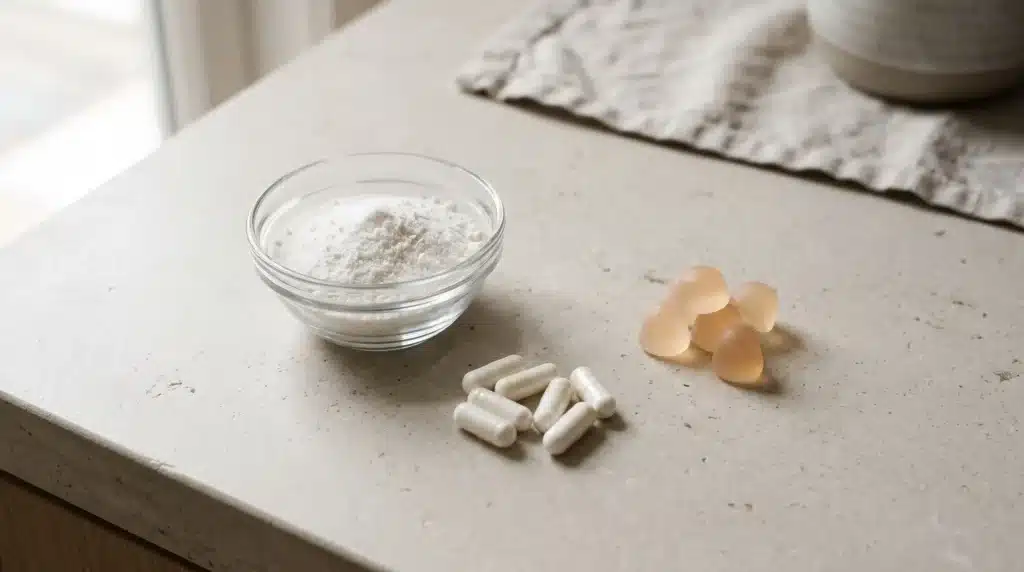
If you’re trying creatine for the first time, a plain creatine monohydrate powder is a good place to start. It’s affordable and helps your muscles produce energy during short, intense efforts such as lifting weights or sprinting. Taken regularly alongside resistance training, it can help you gain strength and muscle.
Choosing a supplement isn’t always as simple as that sounds. You might come across two tubs of white powder at very different prices, both labeled creatine. One may contain a different form of creatine, while the other may simply have been processed into a finer powder or prepared in a different way.
Creatine HCl, nitrate and ethyl ester are different forms of creatine itself. Micronized powder, on the other hand, is simply a finer powder, and capsules and gummies give you other ways to take creatine. If you dislike the grit left in a glass of water, a finer powder may be all you need. Capsules are handy if you’d rather skip the mixing altogether. Easier mixing or a claim of faster absorption doesn’t necessarily mean better results in the gym. For strength and muscle growth, monohydrate is still a dependable choice.
Different Types of Creatine at a Glance
| Type of creatine | Distinguishing feature | 인간을 대상으로 한 연구 결과 | Advantage over monohydrate? |
| 모노하이드레이트 | Crystalline hydrate | Extensive | Reference form |
| Anhydrous | No crystallization water | Few direct comparisons | Higher creatine fraction; no proven training advantage |
| HCl | Hydrochloride salt; higher solubility | Direct trials, limited | Positive short-term findings; no consistent advantage |
| 질산염 | Includes nitrate | 제한적 | No consistent overall advantage |
| Ethyl ester | Chemically modified ester | Direct trials | Mixed findings; poorer muscle accumulation in earlier trial |
| Buffered | Alkaline buffering ingredients | Direct trial | No advantage in cited trial |
| Citrate | Citric acid component | 제한적 | No established advantage |
| Malate | Malic acid component | 제한적 | No established advantage |
| Pyruvate | Pyruvic acid component | 제한적 | No established advantage |
| Magnesium chelate | Magnesium component | Small human studies | No established advantage |
What Is Creatine and How Does It Work?
Your body makes creatine from amino acids. You also get some from food, particularly meat and fish. Most of it is stored in your muscles.
Muscles use a substance called ATP (adenosine triphosphate) for energy. During a heavy lift or sprint, ATP is used up quickly. Phosphocreatine helps replenish it, which is why creatine is particularly useful for short, intense efforts. Having more creatine stored in your muscles can help you maintain performance across repeated sets or sprints. Over time, being able to do a little more work in training may help you gain strength and lean mass.
Is All Creatine the Same?
You might see Micronized Creatine Monohydrate Powder on a label and wonder whether it’s different from plain creatine. The three terms actually describe different things. Monohydrate is the ingredient, micronized means the particles have been made smaller, and powder is the way you take it. A single product can have all three features.
| Product attribute | Common examples |
| Chemical form | Monohydrate, HCl, nitrate |
| Physical processing | Standard or micronized |
| Delivery format | Powder, capsules, gummies, liquid |
| 공식화 | Flavored, unflavored, single-ingredient or blended |
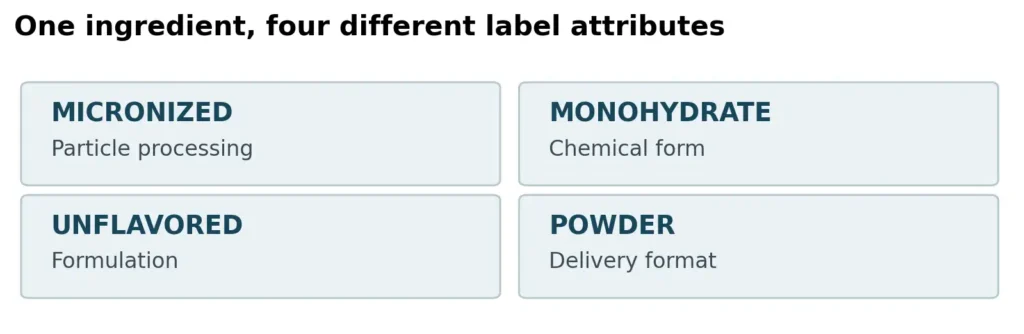
Figure 1. An illustrative supplement label distinguishes chemical form, processing, formulation and delivery format.
The Main Types of Creatine and Their Differences
크레아틴
Creatine monohydrate contains one water molecule for every creatine molecule in its crystal structure. It is the familiar white powder used to increase the amount of creatine stored in muscle and support strength training. Decades of research, including training programs lasting several months, have made its effects and usual doses well understood. In cold water it may leave a little powder at the bottom of the glass; this is normal and does not by itself indicate poor quality.
Creatine Anhydrous
Anhydrous means without water. Removing the water from the crystal leaves more creatine in each gram of powder, which can be useful when space in a serving is limited. If two servings supply the same amount of creatine, however, the difference in weight alone gives no reason to expect better training results. The two forms have rarely been compared directly.
Creatine Hydrochloride (HCl)
Creatine hydrochloride, or creatine HCl, dissolves more readily than monohydrate. It often comes in smaller servings and is sold as an option for people who dislike gritty drinks or experience stomach discomfort. The amount that dissolves in a glass, though, is not a measure of how much creatine reaches the muscles or how comfortable it will be to take.
For regular strength training, a change to HCl may make your drink easier to prepare, but it may not change your progress in the gym. After eight weeks of training, the 40 participants taking HCl, monohydrate with or without loading, or a placebo showed no significant advantage for HCl over monohydrate in strength or body composition.
A 2026 study offers a different perspective for sports that involve repeated sprints and jumps. Male college soccer players taking HCl or ethyl ester performed better on some jumping and sprint tests during four weeks of training. Those results are specific to this type of exercise; whether either form helps build more muscle over several months remains unclear.
If you’re thinking of replacing your usual scoop of monohydrate with HCl, take a look at the grams per serving on both labels. A smaller scoop is convenient, but the comparisons above don’t establish that a much smaller HCl dose will give you the same benefits.
HCl can still cause stomach discomfort. If digestion is the main reason for changing forms, start by looking at the amount taken at once and any extra ingredients. There is less information on stomach comfort and long-term use of HCl than there is for monohydrate.
질산 크레아틴
Creatine nitrate supplies both creatine and nitrate, which participates in the body’s nitric oxide pathway. The chemical difference between creatine nitrate and monohydrate affects both water solubility and the proportion of creatine in each gram of the compound. Equal scoop weights therefore do not necessarily provide equal amounts of creatine.
The nitrate component makes this form relevant to sports formulas intended to supply nitrate as well as creatine. For routine strength training, plain monohydrate remains a suitable option; nitrate has no established overall performance advantage.
Creatine Ethyl Ester
Creatine ethyl ester was designed to pass through cell membranes more easily, but some of it can break down into creatinine instead. For weight training, the aim is to build up creatine inside the muscles. In a direct comparison with monohydrate, ethyl ester led to less creatine stored in muscle and a larger rise in blood creatinine, without extra gains in strength or body composition.
The more favorable jumping and sprint results in the four-week soccer trial mentioned above concern a different kind of exercise. Whether those results carry over to longer strength-training programs or other groups of athletes remains uncertain.
Buffered Creatine
Buffered creatine contains alkaline ingredients intended to slow creatine breakdown. Plain monohydrate already works without a buffer. In a direct comparison, buffered creatine offered no extra muscle creatine storage or training benefits, whether taken at its smaller recommended serving or at the same dose as monohydrate.
Creatine Citrate, Malate and Pyruvate
Citrate, malate and pyruvate combine creatine with different organic acids. Citrate is mainly used for its dissolution properties. Pyruvate and malate are associated with energy metabolism, although the effects of creatine malate itself are not well understood.
Citrate and pyruvate may help with repeated muscular efforts. After 28 days, people taking these forms did better than those taking a placebo on some repeated handgrip tests. Monohydrate and malate were not part of that comparison.
Creatine Magnesium Chelate
Creatine magnesium chelate provides creatine together with magnesium, a mineral involved in muscle function and energy production. In a small comparison, both ordinary creatine and the magnesium form helped participants complete more bench-press work than a placebo at 70% of their one-repetition maximum. Neither creatine group performed significantly better than the other. If magnesium is your main reason for choosing this form, consider how much magnesium you need separately from your creatine intake.
Which Form of Creatine Is Best?
For everyday strength training, monohydrate is effective, affordable and has a long safety record. A review of 17 trials involving 548 people favored monohydrate for those reasons. If mixing is the main problem with your current powder, another option may be more comfortable to drink. A clearer drink, however, doesn’t tell you how much creatine reaches your muscles or how much progress you’ll make in training.
| Claimed advantage | Evidence needed to support it |
| Better water solubility | Laboratory solubility testing |
| Greater bioavailability | Appropriate human absorption or retention studies |
| More creatine reaching muscle | Measurements of muscle creatine stores |
| Better strength or muscle growth | Controlled human training studies |
| Effectiveness at a smaller dose | Direct comparisons at relevant doses |
| Better stomach comfort | Human tolerability studies |
What Is the Best Creatine for Beginners?
You don’t need anything elaborate to get started. A plain monohydrate powder or a capsule containing just creatine is generally enough. If you already have a favorite daily drink, powder fits into that routine easily. Capsules may be more practical if you spend much of the day away from home. Keeping the ingredient list simple also makes it easier to work out what might be causing an upset stomach, should one occur.
Which Type of Creatine Is Best for Muscle Growth?
If your goal is to build muscle, creatine monohydrate fits well into a regular strength-training routine. A 2024 review found that adults under 50 who took creatine while doing resistance training gained about 1.1 kg more lean body mass on average than those who trained without it.
Some of that extra weight may be water stored inside the muscles rather than new muscle tissue. The figure below shows the exact average of 1.14 kg. It’s not a personal target or a comparison between creatine types, but an indication of the average benefit of adding creatine to training.
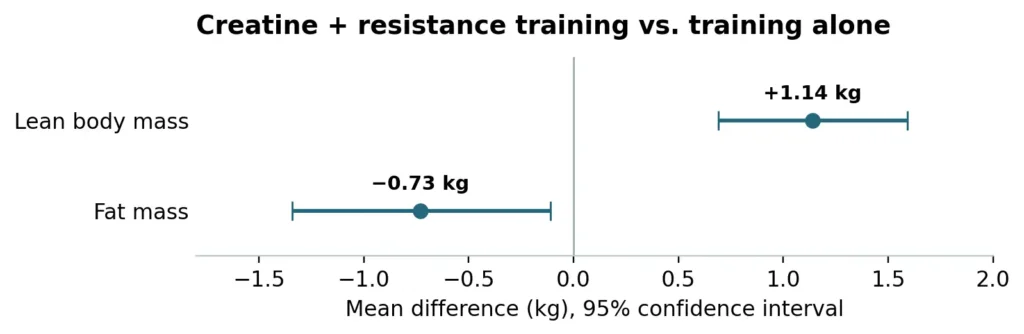
Figure 2. Mean differences in lean body mass and fat mass with creatine plus resistance training versus resistance training alone. Error bars are 95% confidence intervals; lean mass includes water. Source: 2024 meta-analysis.
Do Women Need a Different Type of Creatine?
Women can use the same creatine monohydrate as men; there is no need to look for a different chemical form. Age, diet, training and hormonal changes can influence how people respond, but the phosphocreatine system works in both sexes. If a formula marketed to women includes extra nutrients, consider whether you need those ingredients rather than choosing it simply because of the label.
Which Type of Creatine Is Easier on the Stomach?
It’s frustrating to start taking creatine only to find that it upsets your stomach. Loose stools and abdominal bloating can make it difficult to keep up a daily routine. Sometimes the problem is the amount you’re taking at once, rather than the form of creatine itself.
If you’re taking 10 g at once, splitting it into two 5 g servings may be easier on your stomach. In a comparison involving 59 male soccer players, diarrhea was more common with the single 10 g serving.
Skipping the loading phase, taking smaller servings or choosing a plain formula may help. Bloating in your stomach is also different from the extra water stored in your muscles, even though people sometimes call both water retention.
No type of creatine is guaranteed to be gentle on everyone’s stomach. If the symptoms continue, stop taking it and talk to a healthcare professional.
Does the Form of the Supplement Matter?
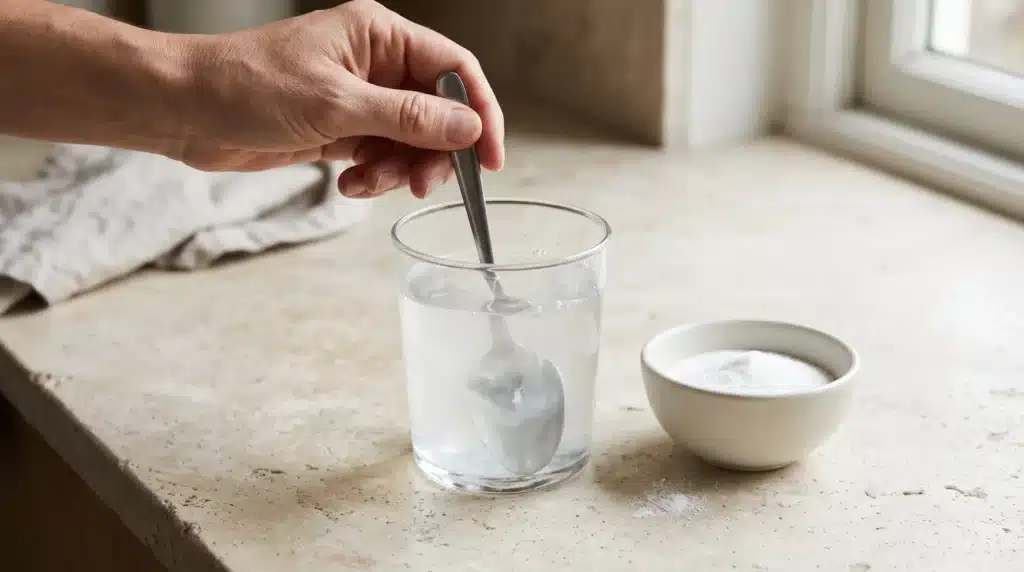
Standard vs. Micronized Creatine
The main difference between micronized creatine and regular creatine monohydrate is particle size. Finer particles tend to disperse more readily and may leave less noticeable grit in a drink. This can improve the texture for people who find standard powder unpleasant to drink.
Both powders deliver the same ingredient, so if you’re happy with the texture of your current powder, there’s no need to change it for extra strength or muscle gains. If the last few gritty sips are the part you dislike, a finer powder may make your daily drink more pleasant.
Creatine Powder, Capsules, Gummies, or Liquid?
| Supplement format | 주요 장점 | 주요 상충 관계 |
| 파우더 | Flexible dosing and relatively low cost | Measuring and mixing |
| 캡슐 | Portable and pre-measured | Several capsules may be needed |
| 태블릿 | Convenient solid dosage form | Limited dose flexibility |
| 구미 | Pleasant taste and no preparation | Additional ingredients and stability considerations |
| 액체 | Ready to drink | Creatine stability during storage |
If you already have a protein shake each day, adding creatine powder takes very little extra effort. When choosing between creatine powder and capsules, consider where you usually take your supplement. Capsules can be more convenient when traveling or at work, although you may need several to get a full daily serving.
When choosing between creatine gummies and powder, check the amount of creatine per serving and whether that amount is maintained until the end of the shelf life. HCl gummies are simply a chewable way to take HCl. A smaller serving isn’t automatically equivalent to a regular dose just because it is a gummy or contains a more soluble form of creatine. There is little information on the effects of HCl gummies specifically.
Creatine keeps well as a dry powder, but some of it gradually turns into creatinine once dissolved in water. How quickly this happens depends on the temperature, acidity (pH) and how long the drink is stored.
If you mix a scoop of creatine before leaving for the gym, the powder is only in water for a short time. A ready-to-drink bottle may have been sitting on a shelf for months. That’s why bottled products need stability testing to confirm that they still contain the amount of creatine stated on the label throughout their shelf life.
Flavored vs. Unflavored Creatine
Unflavored creatine works well in a protein shake or another drink whose flavor you already enjoy. Flavored powder is an option if you prefer drinking it with plain water. When comparing the two, look at the creatine content rather than the scoop size. A 6 g serving containing 5 g of monohydrate and 1 g of flavorings and other ingredients provides the same amount of monohydrate as 5 g of plain powder.
Acids in a flavored powder can affect how stable creatine is after you add water, especially if you leave the mixed drink sitting for a long time. Seeing an acid on the dry powder’s ingredient list doesn’t mean the creatine has already degraded.
A flavor you enjoy can make it easier to take creatine every day. Plain powder has fewer ingredients that might upset your stomach, so it can be easier to work out the cause of any discomfort.
Are Creatine Blends Better Than a Single Ingredient?
A creatine blend may contain several forms of creatine or extra ingredients such as amino acids, electrolytes and carbohydrates. More creatine types in a blend do not necessarily make it more effective. Extra ingredients can be useful if they provide something you need, in an amount that makes sense for that purpose.
A label that says ‘5 g blend’ may not tell you how much creatine you’re getting. Under U.S. dietary supplement labeling rules, certain proprietary blends can list the combined weight without specifying the quantity of each ingredient.
For example, creatine and collagen peptides may be included in the same formula or taken together, although they serve different nutritional purposes. Creatine primarily supports high-intensity exercise, whereas collagen peptides are more commonly used for connective tissue and skin-related goals.
Is All Creatine Monohydrate the Same?
Once you’ve decided on monohydrate, it’s easy to assume that any two tubs with that name will be the same. The chemical ingredient can be identical, but the powder’s fineness, impurity levels and batch test records may differ. Particle size is useful if you care about texture; test results help you judge quality. Neither tells you that one powder will build more muscle than the other.
What Does Creatine Purity Actually Mean?
Pure creatine monohydrate contains water as part of its crystal structure. By molecular weight, about 88% is creatine and the other 12% is water of crystallization.
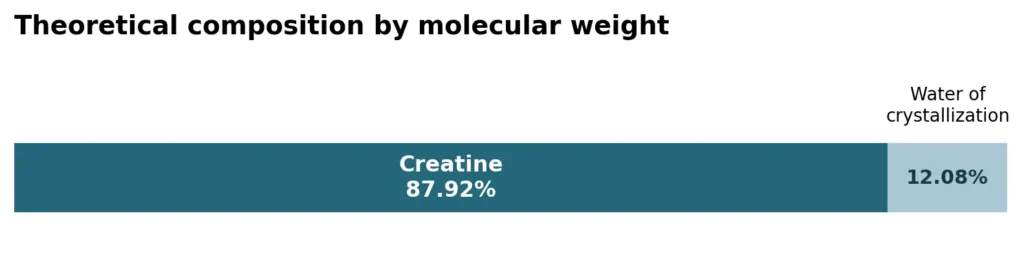
Figure 3. Theoretical mass composition of pure creatine monohydrate. Calculated from molecular weights; water of crystallization is part of the compound, not an impurity.
That 88% figure doesn’t mean the powder is only 88% pure. The United States Pharmacopeia (USP) measures creatine (C4H9N3O2) on a dried basis in its assay. The water in the crystal is a normal part of monohydrate, not an impurity. You don’t need to add extra powder to the usual monohydrate dose to make up for it.
What to Look for in High-Quality Creatine
A label stating over 99% purity can be reassuring, but it doesn’t tell you everything about the powder. A quality report also lists the impurities that were checked and their results. Creatinine can form when creatine breaks down, while dicyandiamide (DCD) and dihydrotriazine (DHT) are other impurities that may be checked during production.
Even two powders with similar purity figures can contain different amounts of individual impurities. Testing of 33 creatine supplements found this kind of variation. Although those older results can’t tell you which products are good today, they help explain why a quality report lists more than just purity.
For example, these are the results from one reference batch of our 200-mesh 크레아틴 일수화물 분말.
| Test parameter | Material specification | 일괄 처리 결과 |
| Assay, dried basis | ≥99.5% | 99.63% |
| Creatinine | ≤100 ppm | 39.26 ppm |
| Dicyandiamide | ≤100 ppm | 6.26 ppm |
| Dihydrotriazine | ≤5 ppm | Conformed |
| 건조 시 손실 | ≤12.0% | 11.63% |
출처: Gensei Certificate of Analysis, Batch 202508-07, August 15, 2025. Assay determined by HPLC. Results apply to the documented reference batch.
The purity test (assay) measures one aspect of quality, while the creatinine and DCD tests measure others. ‘Conformed’ means the result met the stated limit; it doesn’t mean the impurity was absent. Likewise, a result below 0.1 ppm doesn’t mean the amount was zero.
Check What the Testing Actually Covers
A quality report for raw creatine tells you about the ingredient before it was made into a supplement. A certificate of analysis (COA) for the powder doesn’t tell you how much creatine is left in a gummy or bottled drink after months of storage.
Other checks can include heavy metals, microorganisms and records showing which batch was tested. Athletes who compete under anti-doping rules should also look for suitable independent testing for banned substances. A regular purity test doesn’t cover that.
When you’re comparing labels, start with two things that should be easy to find: the form of creatine and the amount in each serving. If a product promises better absorption, exceptionally high purity or the same benefits from a very small dose, look for information that supports that particular promise rather than relying on the wording alone.
Is More Expensive Creatine Worth It?
A larger tub can look like a better deal until you check how many full servings it contains. When comparing products containing the same form of creatine, work out the cost of an equal dose rather than comparing the container price or scoop weight. Finer powder, flavorings, extra quality tests, packaging and marketing can all add to the price.
A finer powder may be worth paying for if it makes creatine easier to drink. Extra quality checks or a convenient format can also be useful. A higher price alone, however, says nothing about how quickly creatine is absorbed or how much muscle you can gain. Those are separate benefits that need to be demonstrated by comparing the products or forms.
How Much Creatine Should You Take?
For healthy adults, 3–5 grams of creatine monohydrate per day is a common amount for building up and maintaining muscle creatine stores. There are two ways to get started:
| Approach | Typical creatine monohydrate protocol |
| Without loading | 3–5 g daily |
| With loading | Approximately 20 g daily, divided into four 5 g servings for 5–7 days, followed by 3–5 g daily |
Loading fills up muscle creatine stores faster, but daily use without loading can bring those stores up to a similar level over several weeks. If you only go to the gym a few times a week, a regular time at home, such as with breakfast, may be easier to remember. Keep taking it on rest days too.
These amounts refer to creatine monohydrate. Other forms may contain a different amount of creatine per gram, and their usual effective doses are not always as well established.
크레아틴은 안전한가요?
For healthy adults, the usual daily amounts of creatine monohydrate are generally well tolerated. Side effects are still possible, but they were reported by a similar proportion of people taking creatine and placebo across the 685 clinical trials examined in 2025.
Digestive discomfort can occur, particularly after a large single serving. Body weight may also increase as muscle creatine stores and associated water content rise.
Creatine does not routinely cause dehydration or cramps in healthy adults. This safety record mainly concerns monohydrate; other chemical forms and products containing several active ingredients should not automatically be treated the same way.
People with existing kidney conditions, those taking medications that may affect kidney function, pregnant or breastfeeding individuals, and children or adolescents should seek appropriate medical guidance before starting supplementation.
자주 묻는 질문
What are the three types of creatine?
There isn’t an official list of just three types. The number changes depending on whether you count different chemical compounds, forms with or without water in the crystal, buffered formulas or ways of taking creatine. Some of the names on supplement labels simply describe the same ingredient in different ways.
Which type of creatine is best for weight loss?
If you’re trying to lose fat, creatine monohydrate may help you keep up your strength and training performance while doing resistance exercise. Creatine isn’t a fat burner, and no particular type has been shown to work best for weight loss.
If you’re watching your body fat as well as your strength, adding creatine to resistance training may offer a modest benefit. Adults under 50 who took creatine lost about 0.7 kg more fat on average than those who trained without it (0.73 kg in the analysis shown earlier). Creatine isn’t a fat burner, and this doesn’t mean one form is better for fat loss. You may even see the scale go up at first as your muscles hold more water, despite losing body fat.
What forms of creatine are found naturally in the body?
In skeletal muscle, creatine is found mainly in two forms: free creatine and phosphocreatine. About two-thirds of the muscle creatine pool is phosphocreatine, and the rest is free creatine.
Why do some doctors advise against creatine?
Your doctor may have a particular reason to recommend against creatine, such as an existing kidney condition, a medication you’re taking or an abnormal blood test.
Creatine can raise the level of creatinine in your blood, and doctors use creatinine to estimate how well your kidneys filter blood. That can make a routine blood test harder to interpret. Creatinine may rise slightly even when the filtration rate (GFR) shows no significant change. Few trials in healthy, active adults have measured filtration directly, so some questions about kidney safety remain unanswered.
Don’t assume an elevated creatinine result is simply from taking a supplement. Tell your healthcare professional that you take creatine before having kidney-related blood tests so they can interpret the results appropriately.
결론
For everyday strength training, plain creatine monohydrate powder is a practical choice with decades of use and research behind it. If you already have a powder you like, there is no need to make your routine more complicated. A finer powder may suit you if you dislike the grit, while capsules or gummies can be handy if you rarely have time to mix a drink. Whatever format fits your day, check the amount of creatine per serving and the available quality information before paying extra for a different chemical form.
참조
[12] United States Pharmacopeia. Creatine Monograph.[13] Moret S, Prevarin A, Tubaro F. (2011). Levels of Creatine, Organic Contaminants and Heavy Metals in Creatine Dietary Supplements. Food Chemistry, 126, 1232–1238.

워렌 완은 식이 보충제 공급망 분야에서 폭넓은 경험을 갖춘 노련한 전문가로, 콜라겐 펩타이드, 뼈 육수 단백질, 케라틴과 같은 핵심 원료의 연구, 개발, 공정 관리 및 글로벌 조달에 풍부한 실무 경험을 보유하고 있습니다. 이 칼럼의 필자로서 그는 마케팅적 포장만을 벗겨내고, 난해한 원료 과학 및 생산 품질 관리 기준을 누구나 쉽게 이해할 수 있는 심도 있는 과학 대중화 콘텐츠로 재구성함으로써, 독자들이 라벨 뒤에 숨겨진 진실을 파악하고 보다 합리적인 건강 선택을 할 수 있도록 돕는 데 전념하고 있습니다.