
Для потребителей наиболее полезной информацией на этикетке является фактическое содержание GLA, общее количество масла и четкие инструкции по безопасности. Что касается производителей пищевых добавок, то при принятии решения следует опираться на спецификацию партии, рекомендуемую порцию, размер капсул, программу обеспечения стабильности и стратегию позиционирования продукта, а не на расплывчатые обещания типа “более эффективный” или “восстанавливающий гормональный баланс”.
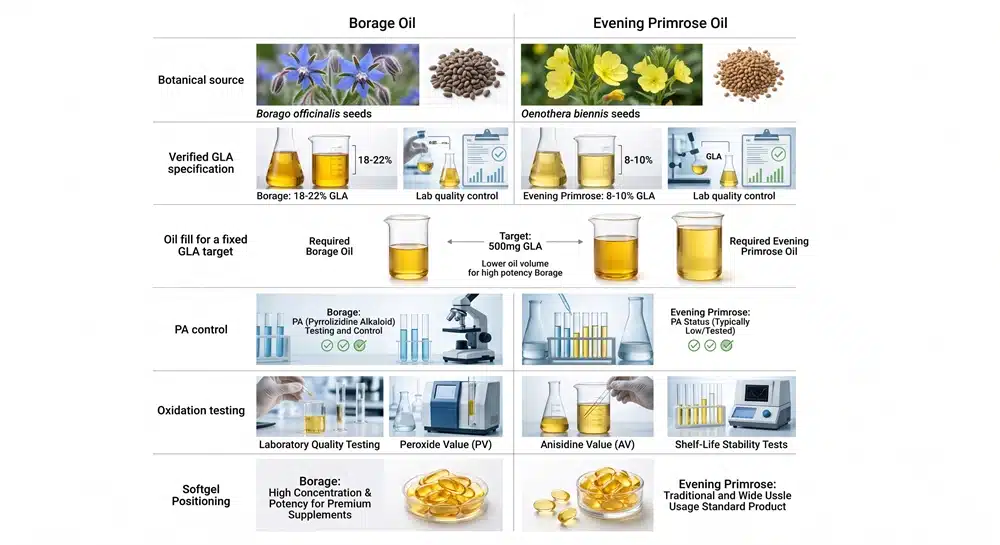
Масло бурачника и масло примулы вечерней: краткое сравнение
| Фактор | Масло бурачника | Масло примулы вечерней |
|---|---|---|
| Растительное происхождение | Бораго лекарственный семя; также называемое масло звездчатого цветка | Энотера биеннис семя |
| Типичное расположение общей площади здания (GLA) | Часто продается с более высокими показателями общей площади (GLA); проверяйте каждую партию | Обычно продается с более низкими показателями общей площади здания (GLA); проверяйте каждую партию |
| Объем нефти, необходимый для достижения установленного целевого показателя GLA | Обычно меньше масла | Обычно больше масла |
| Осведомленность потребителей | Более специализированный ингредиент | Устоявшаяся категория товаров для женского здоровья и красоты |
| Критическая проблема, связанная с качеством | Метод ПА, диапазон анализируемых веществ, предел определения и результат партии | Идентификация, анализ содержания ГЛА, окисление и аттестация поставщиков |
| Оптимальное решение для B2B | Формулы с повышенным содержанием ГЛА или ограниченным объемом наполнителя в капсулах | Привычное позиционирование продукта и устоявшаяся узнаваемость в розничной торговле |
Примечание: Процентное содержание жирных кислот варьируется в зависимости от сорта, происхождения, способа экстракции, степени рафинирования и условий хранения. Руководствуйтесь актуальными техническими характеристиками и сертификатом соответствия (COA) для конкретной партии, а не общими диапазонами, скопированными с маркетинговой страницы.
Что такое гамма-линоленовая кислота (ГЛА)?
ГЛА — это полиненасыщенная жирная кислота омега-6, содержащаяся в маслах семян ряда растений, в том числе в маслах семян бурачника, энотеры и черной смородины. Она участвует в метаболизме жирных кислот, однако биологический механизм этого процесса гораздо сложнее, чем простое утверждение о том, что ГЛА обладает “противовоспалительным” действием.”
Клинические результаты варьируются в зависимости от ингредиентов, дозировки, группы испытуемых, конечных показателей и дизайна исследования. Поэтому на странице продукта следует раскрыть информацию о составе и качестве ГЛА, не обещая при этом лечения экземы, артрита, астмы, диабетической невропатии, предменструального синдрома, симптомов менопаузы или других заболеваний.
Что такое масло бурачника?
Borage oil is pressed, extracted or refined from the seeds of Бораго лекарственный. Обычно его выбирают в тех случаях, когда разработчик рецептуры стремится получить больше ГЛА в меньшем количестве масла. Производителям следует проанализировать Технические характеристики масла бурачника информацию об исходном материале, профиле GLA, показателях окисления, документации по PA и требованиях к упаковке.
Масло семян бурачника не следует приравнивать к листьям, цветкам бурачника или сырому растительному препарату. Необходимо указать, что речь идет именно о масле семян, а также описать метод его получения и окончательные результаты анализа. Указание “без PA” не является полной спецификацией, если поставщик не определит метод анализа, анализируемые вещества, предел обнаружения, критерий приемлемости и результаты анализа партии.
Что такое масло примулы вечерней?
Масло примулы вечерней получают из семян Энотера биеннис. Обычно оно содержит меньше ГЛА на грамм, чем масло бурачника, но пользуется большей популярностью среди потребителей в сегменте товаров для женского здоровья, ухода за кожей и «красоты изнутри».
Широкая известность не является доказательством клинической эффективности. Данные о влиянии на конкретные заболевания по-прежнему носят ограниченный или противоречивый характер, и тот или иной препарат не следует представлять в качестве признанного средства лечения только на том основании, что его ингредиент давно присутствует в розничной торговле.
В каком масле больше ГЛА?
Масло бурачника, как правило, содержит более высокую концентрацию ГЛА. В коммерческих маслах бурачника часто указывается более высокий диапазон концентрации, чем в маслах примулы вечерней, однако гарантированный минимум, указанный в текущей спецификации поставщика, является правильным значением для расчетов при разработке рецептуры и составлении этикеток.
Пример расчета состава
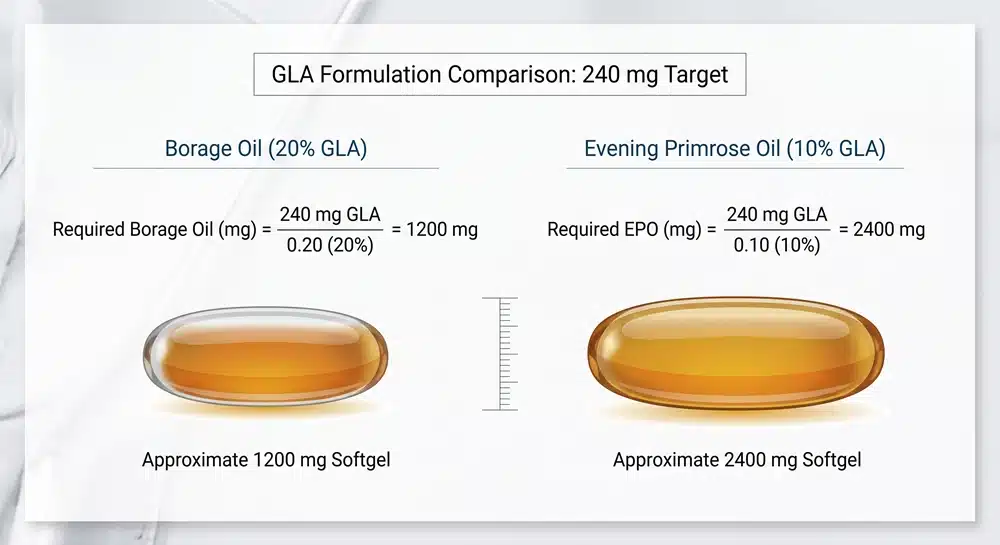
Если бренд хочет обеспечить содержание 240 мг ГЛА в одной порции:
| Технические характеристики масла | Расчет | Примерный расход масла |
|---|---|---|
| 20% GLA масло бурачника | 240 мг ÷ 0,20 | 1 200 мг масла |
| 10% GLA — масло примулы вечерней | 240 мг ÷ 0,10 | 2 400 мг масла |
Это пример состава препарата, а не рекомендация по дозировке. При расчёте следует использовать гарантированное или минимальное содержание активного вещества, а любой избыток должен быть технически обоснован данными по производству и стабильности.
Масло бурачника лучше, чем масло примулы вечерней?
Масло бурачника может оказаться более эффективным исходным ингредиентом, если необходимо обеспечить более высокое заявленное содержание ГЛА при ограниченном объеме розлива. Масло примулы вечерней может стать более удачным коммерческим выбором, если большую роль играют узнаваемость среди потребителей, популярность данной категории продуктов или традиционная концепция «здоровье женщин».
Ни одно из этих масел не является автоматически лучшим. Масло бурачника с недостаточной информацией на этикетке не лучше, чем масло примулы вечерней с полной информацией, а знакомая этикетка масла примулы вечерней не компенсирует неясный профиль жирных кислот или низкую стойкость к окислению.
Как выбрать в зависимости от цели продукта
| Цель продукта | Вероятная отправная точка | Обоснование решения |
|---|---|---|
| Большее содержание ГЛА в одной капсуле | Масло бурачника | Более высокая концентрация может привести к уменьшению общего объема масла |
| Меньший объем обслуживания при фиксированном заявлении о общей арендуемой площади (GLA) | Масло бурачника | Позволяет оптимизировать размер мягких капсул или количество капсул в упаковке |
| Устоявшееся позиционирование в сфере женского здоровья | Масло примулы вечерней | Более широкое признание категории при условии соответствия заявлений |
| Продукт премиум-класса с высоким содержанием ГЛА | Сертифицированное масло бурачника или рациональная смесь | Требуется подробная документация по PA, окислению и стабильности |
| Вводный розничный продукт | Масло примулы вечерней | Название ингредиента, более знакомое многим потребителям |
| Смесь из двух масел | Смесь, состав которой определяется техническими требованиями | Используйте только в том случае, если у смеси есть реальная рецептура и обоснование позиционирования |
Безопасность: что должны знать потребители и бренды
Масло бурачника и пирролизидиновые алкалоиды
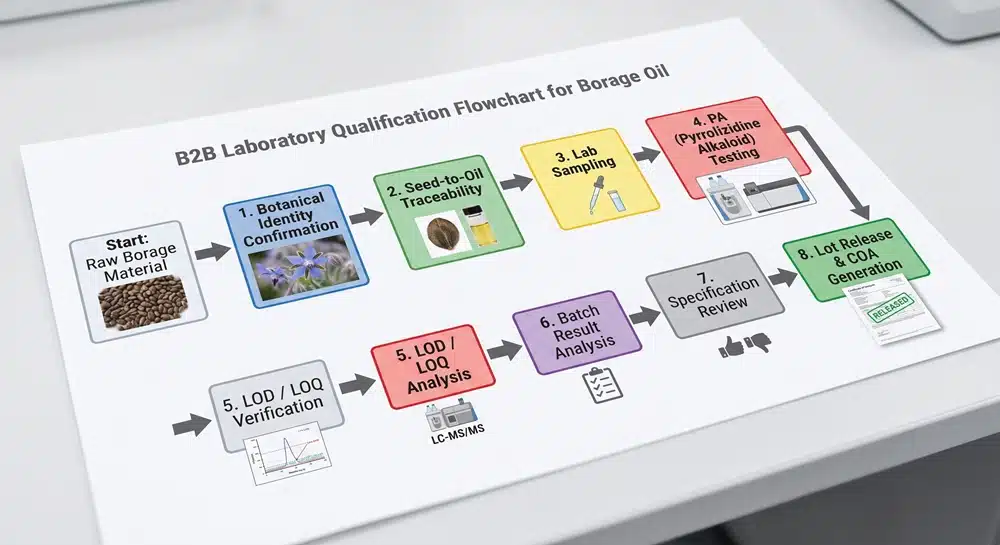
Растительный сырье бурачника может содержать токсичные ненасыщенные пирролизидиновые алкалоиды. Переработка и очистка могут снизить уровень загрязнения, однако производители не должны полагаться исключительно на заявления поставщиков. Квалифицированный протокол анализа масла бурачника должен включать метод анализа, перечень анализируемых веществ, предел обнаружения или количественного определения, допустимый предел и результаты анализа конкретной партии.
Беременность, кормление грудью и дети
Применение препаратов из бурачника требует особой осторожности во время беременности и кормления грудью из-за опасений, связанных с содержанием полиацетилена, а также ввиду ограниченности научных данных. Масло примулы вечерней также требует индивидуальной оценки специалиста, поскольку имеющиеся данные не являются окончательными. Не следует рекомендовать применение этих препаратов у детей без консультации с врачом, обладающим соответствующей квалификацией.
Лекарственные препараты и заболевания
Лицам, принимающим лекарственные препараты, готовящимся к хирургическому вмешательству, страдающим заболеваниями печени, эпилептическими расстройствами или другими медицинскими состояниями, следует проконсультироваться с медицинским работником перед применением. В общей статье не следует публиковать исчерпывающий перечень взаимодействий без экспертной оценки, поскольку их значимость зависит от конкретного лекарственного препарата, дозы, формы выпуска и индивидуальных особенностей пациента.
Распространенные проблемы, связанные с переносимостью
Пищевые добавки на основе растительных масел могут вызывать у некоторых потребителей дискомфорт в желудочно-кишечном тракте, тошноту, жидкий стул, головную боль или другие проявления непереносимости. Потребителям следует руководствоваться указаниями на этикетке и прекратить прием при появлении выраженных побочных реакций.
Доказательства и ограничения заявлений о пользе для здоровья
Оба масла изучались в ходе клинических и экспериментальных исследований, однако полученные данные носят неоднозначный характер и зависят от конкретного заболевания. Обзоры данных о пероральном приеме масла примулы вечерней и масла бурачника при экземе не выявили значимого клинического преимущества по сравнению с плацебо. Ни одно из этих масел не должно рекламироваться в качестве средства для лечения экземы, псориаза, артрита, астмы, невропатии, предменструального синдрома, менопаузы или гормонального дисбаланса.
Формулировки, касающиеся потенциальной связи “структура-функция”, должны быть подкреплены доказательствами в отношении готового продукта. Фраза “содержит ГЛА” является заявлением о составе, если она соответствует действительности. Более общие формулировки, такие как «поддерживает нормальную функцию кожного барьера», требуют обоснования и тщательного анализа продукта, дозировки, доказательной базы и правил целевого рынка.
Требования к качеству, которые необходимо проверить
| Технические характеристики | Что необходимо проверить | Почему это важно |
|---|---|---|
| Ботаническая классификация | Научное название, часть семени, происхождение и отслеживаемость | Подтверждает правильность выбора масла и его происхождения |
| Состав жирных кислот | ГЛА, линолевая кислота и основные жирные кислоты по валидированному методу | Обеспечивает точность идентификации, математических вычислений и маркировки |
| Методы борьбы с бурачником | Метод, анализируемые вещества, предел определения (LOQ), технические характеристики и результаты анализа партии | Рассматривает основную опасность, связанную именно с бурачником |
| Окисление | Перекисное число, p-анизидиновое число и/или TOTOX — в зависимости от ситуации | Полиненасыщенные масла подвержены прогорканию |
| Примеси | Тяжёлые металлы, пестициды, микробиологические показатели и остатки растворителей (при необходимости) | Обеспечивает отгрузку сырья и готовой продукции |
| Процесс | Холодное прессование, экстракция, рафинирование или дезодорация; технологические добавки | Влияет на чистоту, органолептические характеристики и позиционирование |
| Антиоксиданты | Тип и количество токоферолов или других стабилизаторов | Определяет саму формулу и систему окисления |
| Упаковка и хранение | Защита от воздействия азота, светоизоляция, условия хранения и срок годности | Обеспечивает сохранность качества масла на всех этапах распределения |
| Документация | Технические характеристики, сертификат соответствия (COA), технический паспорт (TDS), паспорт безопасности (SDS), заявления об аллергенах/ГМО и происхождении | Обеспечивает прохождение аттестации, готовность к аудиту и контроль за изменениями |
Вопросы, связанные с формой выпуска в виде мягких капсул
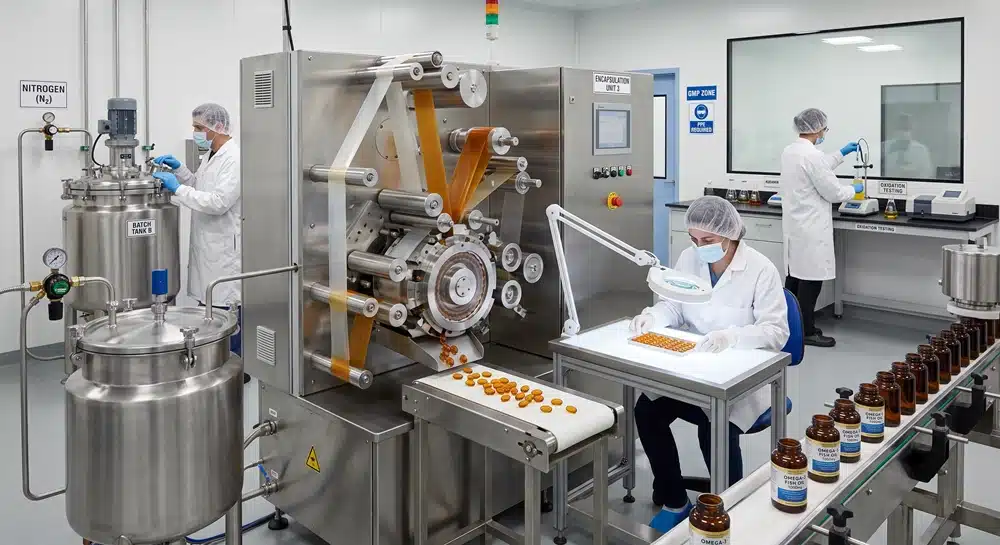
Масла бурачника и энотеры хорошо подходят для масляных капсул, но успешное производство мягких гелевых капсул для этого нужно нечто большее, чем просто выбрать название масла.
- Вес наполнителя: Рассчитать на основе минимальной гарантированной общей арендуемой площади (GLA).
- Система оболочки: Выберите желатин или подходящий альтернативный материал с учетом целевого рынка, совместимости с маслами и стабильности.
- Защита от окисления: Рассмотрите возможность использования антиоксидантов, контролируемого доступа кислорода, азотной защиты и светонепроницаемой упаковки.
- Утечки и качество швов: Проверить совместимость заполнителя и оболочки, целостность шва и эксплуатационные характеристики при хранении.
- Конструкция опоры: Следует учитывать содержание ГЛА, размер капсул, количество капсул в упаковке и предпочтения потребителя в отношении способа приема.
- Стабильность: Проводить анализ содержания ГЛА, определение показателей окисления, оценку запаха, внешнего вида, целостности оболочки и соответствия микробиологическим требованиям в готовой упаковке.
Выпуск сырья и проверка готовой продукции должны быть увязаны с задокументированной контроль качества добавок программу, а не полагаться на общий знак “проверено сторонней организацией”.
Контрольный список для покупателей масла бурачника и масла примулы вечерней
- Уточните научное название, часть семени, происхождение и способ обработки.
- Предоставьте не менее трёх недавних сертификатов соответствия (COA) конкретно для данной партии.
- Определить минимальные требования к GLA и утвержденный метод определения содержания жирных кислот.
- В отношении масла бурачника необходимо предоставить спецификацию PA с указанием метода анализа, анализируемых веществ и предела определения.
- Пересмотреть предельные значения для перекиси, п-анизидина и/или TOTOX.
- Уточните требования в отношении загрязняющих веществ, пестицидов и микробиологических показателей.
- Укажите все антиоксиданты, носители и технологические добавки.
- Проверить упаковку, азотную защиту, условия хранения и срок повторного тестирования.
- Подтвердите уведомление об управлении изменениями в отношении изменений исходного кода, процесса и спецификации.
- Проверить меры контроля, предусмотренные стандартами GMP для соответствующих пищевых добавок.
- Проведение полной проверки идентичности, концентрации, состава и наличия примесей в готовой продукции.
- Перед запуском продукта следует провести проверку этикеток и рекламных заявлений.
Вопросы к запросу предложений для поставщика масла или производителя капсул
- Какие спецификации масел бурачника и энотеры в настоящее время соответствуют требованиям?
- Можно ли построить формулу на основе заявленной величины GLA, а не только на основе общего веса масла?
- Как проверяется соответствие масла бурачника требованиям PA и каков предел отчетности?
- Какие пределы окисления применяются при отгрузке сырья и в течение всего срока хранения?
- Можно ли в данном процессе использовать азотную защитную атмосферу или упаковку с промывкой азотом?
- Какие типы, размеры и формы оболочек капсул подходят для необходимого количества масла?
- Каковы требования к пилотным партиям, минимальному объему заказа (MOQ), срокам выполнения заказа и исследованиям стабильности?
- Какие испытания включены в коммерческое предложение, а для проведения каких требуется привлечение сторонней лаборатории?
- Можете ли вы предоставить основную производственную документацию и документацию по партиям?
- Как осуществляется контроль за заменой ингредиентов и изменениями в спецификациях?
- Как проводится экспертиза заявлений, касающихся кожи, женского здоровья, воспалительных процессов и гормонального фона?
- Какие данные о образце, сертификате анализа (COA) и коммерческом предложении по проекту необходимо предоставить?
Часто задаваемые вопросы
В чём больше ГЛА — в масле бурачника или в масле примулы вечерней?
Масло бурачника, как правило, содержит больше ГЛА на грамм. При фактическом расчете необходимо руководствоваться гарантированными характеристиками поставщика и сертификатом анализа конкретной партии.
Является ли масло бурачника более безопасным, чем масло примулы вечерней?
Не обязательно. Масло бурачника требует четкого контроля в соответствии с требованиями PA, тогда как для обоих масел необходимо проводить анализы на идентичность, степень окисления и наличие примесей. Безопасность зависит от материала, дозировки, пользователя и контроля готовой продукции.
Повышает ли масло бурачника уровень эстрогена?
Недостаточно достоверных данных, чтобы утверждать, что масло бурачника с высокой степенью предсказуемости повышает уровень эстрогена. Его не следует позиционировать на рынке как ингредиент, обладающий доказанным гормонобалансирующим действием или способный повышать уровень эстрогена.
Можно ли использовать масло бурачника и масло примулы вечерней вместе?
Их можно комбинировать в составе препарата, но оба компонента обеспечивают поступление ГЛА. Такая смесь должна иметь четкое обоснование, определённое общее количество ГЛА, а также пройти надлежащую оценку безопасности и заявленных свойств.
Можно ли использовать масло бурачника во время беременности?
При использовании продуктов из бурачника следует проявлять осторожность из-за опасений, связанных с содержанием ПА, и недостаточного количества доказательств. Беременным и кормящим женщинам не следует полагаться на общие рекомендации из Интернета, а необходимо получить индивидуальную профессиональную консультацию.
Что должно означать “масло бурачника без ПА”?
Это должно означать, что партия соответствовала установленным спецификациям по PA с использованием указанного метода, набора аналитов и предела отчетности. Рекламного заявления без протокола испытаний недостаточно для квалификации поставщика.
Какое масло лучше использовать для производства пищевых добавок в капсулах?
Масло бурачника может оказаться более эффективным благодаря более высокому содержанию ГЛА при меньшем объеме наполнителя. Масло примулы вечерней, возможно, будет проще позиционировать благодаря его известности среди потребителей. При принятии окончательного решения также необходимо учесть такие факторы, как окисление, стабильность, стоимость, упаковка и заявления о полезных свойствах.
Окончательный вывод
Масло бурачника и масло примулы вечерней являются растительными источниками ГЛА, но они решают разные задачи при разработке рецептур. Масло бурачника, как правило, содержит больше ГЛА на грамм; масло примулы вечерней, в свою очередь, пользуется большей узнаваемостью среди потребителей. Ответственный выбор основывается на подтвержденном содержании ГЛА, документации по ПА, контроле окисления, возможности использования в мягких капсулах, стабильности готового продукта и соответствии заявлений о пользе — а не на обещании, что какое-то масло лечит заболевания или нормализует гормональный фон.
Бренды могут Связаться с GENSEI с указанием целевого объема общей активной площади (GLA), предпочтительного масла, размера капсул, рынка сбыта, требований к тестированию и ожидаемого объема заказа.
Ссылки
- NCCIH: Масло примулы вечерней — польза и безопасность
- NCCIH: Заболевания кожи и методы комплементарной медицины — Научные данные
- NCBI LactMed: Бурачник
- EMA: Пирролизидиновые алкалоиды в растительных лекарственных средствах
- EFSA: Риски для здоровья человека, связанные с содержанием пирролизидиновых алкалоидов в пищевых продуктах
- Обзор Кокрана: Прием масла примулы вечерней и масла бурачника внутрь при экземе
- Обзор PMC: гамма-линоленовая кислота и дигомо-гамма-линоленовая кислота
- FDA: Вопросы и ответы о пищевых добавках
- FDA: Заявления о связи «структура-функция»
- Федеральная торговая комиссия (FTC): Руководство по соблюдению требований к товарам для здоровья
- 21 CFR, часть 111: Действующие правила надлежащей производственной практики для пищевых добавок

Уоррен Ван — опытный специалист с обширным стажем работы в сфере цепочки поставок пищевых добавок, обладающий богатым практическим опытом в области исследований, разработки, контроля производственных процессов и глобального поиска поставщиков ключевых ингредиентов, таких как коллагеновые пептиды, белок костного бульона и кератин. Как автор этой рубрики, он стремится развенчать маркетинговую мистификацию, преобразуя малоизвестные научные факты об ингредиентах и стандарты контроля качества производства в доступные и достоверные научно-популярные материалы, помогая читателям понять правду, скрытую за этикетками, и делать более рациональный выбор в вопросах здоровья.


