
Краткий ответ: Да, большинство взрослых могут одновременно потреблять витамин А и витамин Е с пищей или в составе стандартных мультивитаминных препаратов. Однако прием добавок в высоких дозах не всегда приносит дополнительную пользу для здоровья. Поскольку оба этих питательных вещества являются жирорастворимыми, их чрезмерное потребление — особенно в виде готового витамина А или витамина Е в высоких дозах в виде добавок — может нанести вред здоровью. Беременным женщинам или тем, кто планирует забеременеть, нынешним или бывшим курильщикам, а также людям, принимающим антикоагулянты или ретиноидные препараты, следует проконсультироваться со специалистом перед приемом добавок в высоких дозах.
Витамин А и витамин Е являются важнейшими жирорастворимыми питательными веществами, однако они выполняют в организме разные функции. Витамин А необходим для нормального зрения, работы иммунной системы, репродуктивной функции и роста клеток. Витамин Е действует как антиоксидант, а также способствует нормальной работе иммунной системы и клеток.
Добавки витаминов А и Е могут оказаться полезными в случае недостаточного поступления этих витаминов с пищей или если медицинский работник выявит конкретную необходимость в их приеме. Однако не следует полагать, что прием доз, превышающих рекомендуемые, укрепит иммунитет, предотвратит заболевания или даст заметные результаты в борьбе со старением.
В данном руководстве объясняются различия между витамином А и витамином Е, рассказывается, можно ли принимать их одновременно, перечисляются их пищевые источники, суточные нормы потребления, пределы безопасности, взаимодействия, а также объясняется, как правильно оценивать информацию на этикетке пищевой добавки.
Краткое сравнение витамина А и витамина Е
Хотя витамин А и витамин Е относятся к жирорастворимым витаминам, они не являются взаимозаменяемыми.
| Характеристика | Витамин A | Витамин Е |
|---|---|---|
| Основные функции питания | Нормальное зрение, иммунная функция, репродуктивная функция, рост и клеточная дифференцировка | Антиоксидантная защита, иммунная функция и межклеточная коммуникация |
| Распространенные формы питания | Готовые формы витамина А и провитамина А — каротиноиды | Альфа-токоферол и другие токоферолы и токотриенолы |
| Распространенные формы пищевых добавок | Ретинилацетат, ретинилпальмитат и бета-каротин | d-альфа-токоферол, dl-альфа-токоферол и смесь токоферолов |
| Рекомендуемая доза для взрослых | 900 мкг RAE для мужчин и 700 мкг RAE для женщин | 15 мг альфа-токоферола |
| Верхний предел для взрослых | 3 000 мкг RAE готового витамина А | 1 000 мг из пищевых добавок |
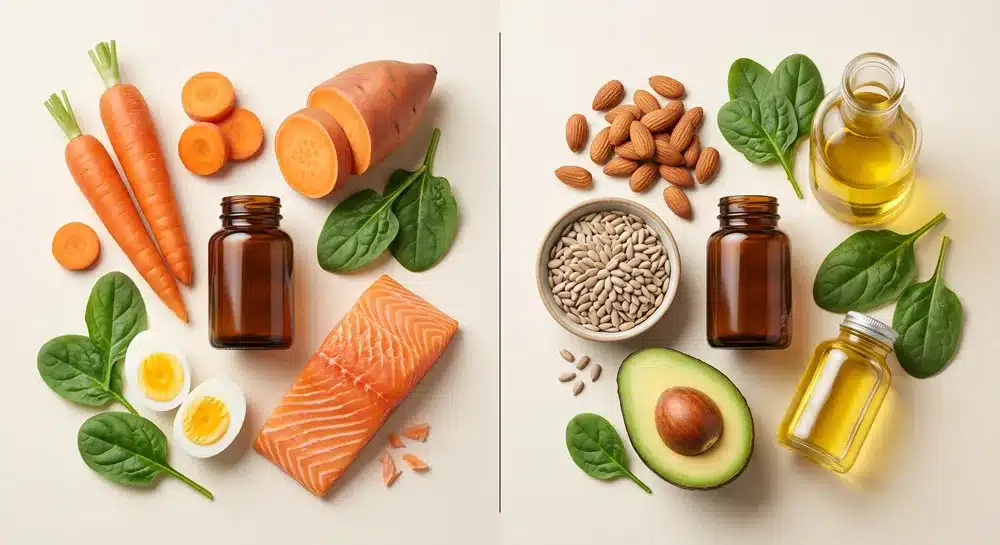
| Основные источники питания | Печень, яйца, молочные продукты, рыба, морковь, батат и листовые овощи | Растительные масла, миндаль, семена подсолнечника, арахис, шпинат и брокколи |
| Основная проблема, связанная с высокими дозами | Токсическое воздействие на печень, риск врождённых пороков развития и лекарственные взаимодействия | Повышенный риск кровотечений и лекарственные взаимодействия |
Верхний предел для витамина А применяется к преформированный витамин А, а не к бета-каротину, естественным образом содержащемуся в продуктах питания. Однако прием добавок с высокими дозами бета-каротина не считается целесообразным для всех, особенно для курящих или бывших курильщиков, а также для людей, подвергающихся воздействию асбеста.
В чём заключаются преимущества витаминов А и Е?
Доказанные функции витамина А
Витамин А необходим для нормального зрения, в частности для способности видеть в условиях слабого освещения. Он также поддерживает работу иммунной системы и способствует поддержанию здоровья тканей глаз, легких, кишечника и других органов.
Организм получает витамин А из двух основных источников:
- Готовый витамин А, в том числе ретинол и эфиры ретинила, содержится в продуктах животного происхождения и некоторых пищевых добавках.
- Провитамин А и каротиноиды, в том числе бета-каротин, содержатся в ярких фруктах и овощах и могут преобразовываться организмом в витамин А.
Дефицит витамина А в США встречается редко, но может наблюдаться у людей с определенными нарушениями пищеварения или всасывания. Серьезный дефицит может повлиять на зрение и работу иммунной системы.
Доказанные свойства витамина Е
Витамин Е представляет собой группу жирорастворимых соединений. Альфа-токоферол — это форма, на основе которой определяется суточная потребность человека в витамине Е.
Наиболее хорошо изученной его функцией в питании является антиоксидантная защита. Витамин Е способствует защите клеточных мембран от окислительного повреждения, а также участвует в обеспечении иммунной функции и межклеточной коммуникации.
Дефицит витамина Е редко встречается у в остальном здоровых людей. Чаще всего он связан с заболеваниями, нарушающими переваривание или всасывание жиров.
Приносят ли витамин А и витамин Е дополнительную пользу при совместном приеме?
Витамин А и витамин Е можно принимать в рамках одного и того же рациона питания или в составе одного и того же пищевого добавки. Однако это не означает, что сочетание высоких доз приводит к возникновению особой или клинически доказанной “синергии”.”
Каждое из этих питательных веществ способствует выполнению установленных биологических функций, однако данных о том, что здоровые взрослые люди, получающие достаточное количество питательных веществ с пищей, получают дополнительную пользу просто от приема обоих веществ в виде высокодозированных пищевых добавок, недостаточно.
Цель должна заключаться в том, чтобы удовлетворить потребности организма в питательных веществах, не превышая при этом безопасные уровни, а не в том, чтобы максимально увеличить дозу того или иного витамина.
Полезны ли витамины А и Е для кожи?
Витамин А способствует нормальному росту и дифференцировке клеток, в том числе процессам, связанным с поддержанием здоровья кожи. Витамин Е помогает защищать клеточные мембраны от окислительного повреждения.
Эти нормальные функции питательных веществ не следует рассматривать как доказательство того, что пероральные добавки витаминов А и Е способны устранить морщины, увеличить выработку коллагена или заметно замедлить процесс старения кожи.
Выводы, сделанные на основе применения ретиноидов для наружного применения или средств по уходу за кожей, не следует автоматически распространять на пищевые добавки для перорального приема. Людям, рассматривающим возможность приема пищевых добавок специально для решения проблем с кожей, следует сначала проанализировать свой рацион, меры защиты от солнца, процедуры по уходу за кожей, а также наличие каких-либо сопутствующих заболеваний.
Можно ли принимать витамины А и Е одновременно?
Для большинства взрослых витамин А и витамин Е можно употреблять вместе с пищей или в тех количествах, которые обычно содержатся в стандартных мультивитаминных препаратах.
Общего требования о том, чтобы разделять их по разным временам суток, нет.
Поскольку оба эти вещества являются жирорастворимыми, их обычно принимают во время еды, содержащей некоторое количество пищевых жиров. Всегда следуйте инструкциям по применению препарата, если только медицинский работник не порекомендует иной режим приема.
Прежде чем комбинировать пищевые добавки, проверьте их общее количество
Часто основной риск заключается не в самой комбинации, а в том, что человек случайно потребляет одни и те же питательные вещества из нескольких продуктов.
Например, витамин А или витамин Е могут содержаться в:
- Мультивитаминный препарат
- Капсула с витаминами А и Е
- Добавка для кожи, волос или красоты
- Масло из печени трески
- Пищевая добавка для здоровья глаз
- Обогащенный пищевой продукт или питательный напиток
- Отдельная антиоксидантная формула
Прежде чем принимать решение о целесообразности использования дополнительного продукта, сложите дозы всех принимаемых добавок.
Высокие дозы отличаются от обычного потребления с пищей
Обычное потребление пищи и прием пищевых добавок в высоких дозах не следует рассматривать как одно и то же воздействие.
Пищевые источники, как правило, обеспечивают поступление питательных веществ в рамках более широкой рациональной диеты. Пищевые добавки могут содержать концентрированные дозы, которые могут приближаться к верхнему пределу потребления или превышать его.
Применение высоких доз должно контролироваться медицинским работником, особенно если оно направлено на восполнение дефицита или содействие лечению какого-либо заболевания.
Продукты, содержащие витамины А и Е: где найти оба этих питательных вещества
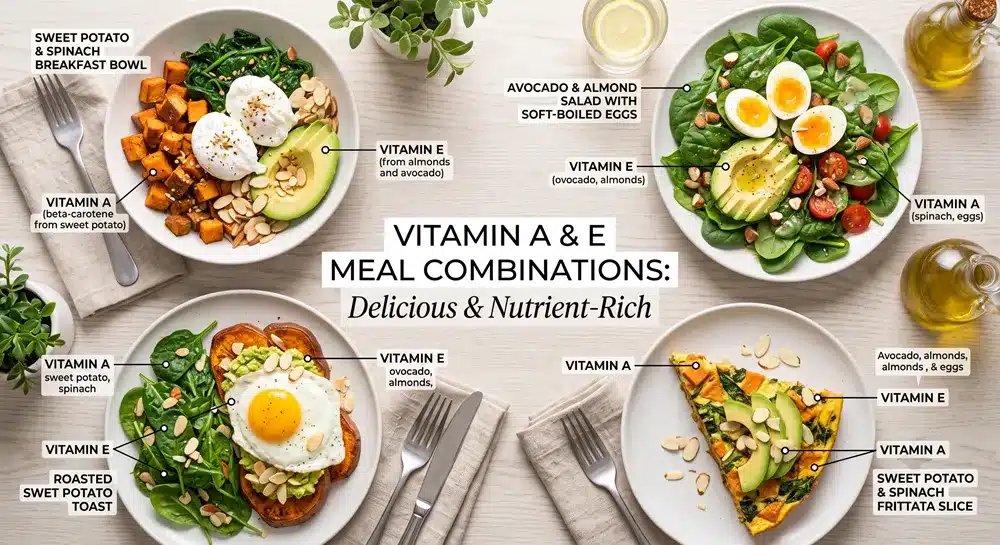
Большинству людей не нужно искать какой-то один продукт, содержащий большое количество обоих витаминов. В рамках сбалансированного питания можно сочетать источники витамина А и витамина Е.
| Комбинация блюд | Основной источник витамина А | Основной источник витамина Е |
|---|---|---|
| Сладкий картофель с миндалем или семечками подсолнечника | Бета-каротин из сладкого картофеля | Витамин Е из орехов или семян |
| Салат из шпината с авокадо и семечками подсолнечника | Бета-каротин из шпината | Витамин Е из авокадо и семян |
| Яйца со шпинатом и авокадо | Готовый витамин А из яиц и каротиноиды из шпината | Витамин Е из авокадо |
| Брокколи с заправкой из растительного масла | Каротиноиды из брокколи | Витамин Е из растительного масла |
| Злаковые хлопья с добавлением фруктов и орехов | С добавлением витамина А, в соответствии с указанием на этикетке | Добавлены витамин Е и витамин Е из орехов |
Продукты, богатые витамином А
К числу распространенных источников витамина А относятся:
- Говяжья печень и другие субпродукты
- Яйца
- Молочные продукты
- Такие виды рыб, как лосось и сельдь
- Сладкий картофель
- Морковь
- Шпинат
- Брокколи
- Зимняя тыква
- Манго
- Абрикосы
- Злаковые хлопья с добавками для завтрака
Печень содержит особенно высокую концентрацию готового витамина А, поэтому её не следует рассматривать как источник, которым можно без ограничений питаться каждый день.
Продукты, богатые витамином Е
К числу распространенных источников витамина Е относятся:
- Масло зародышей пшеницы
- Подсолнечное масло
- Сафлоровое масло
- Миндаль
- Семена подсолнечника
- Арахис и арахисовое масло
- Фундук
- Шпинат
- Брокколи
- Некоторые обогащенные витаминами и минералами зерновые продукты и пасты для бутербродов
Содержание питательных веществ зависит от вида продукта, размера порции, способа приготовления и рецептуры продукта. Если вам нужны точные данные, обратитесь к этикеткам с информацией о пищевой ценности или к проверенной базе данных о составе продуктов.
Дозировка, суточная потребность и верхние пределы
Рекомендуемые суточные нормы
| Этап жизни | Витамин A | Витамин Е |
|---|---|---|
| Взрослые мужчины | 900 мкг RAE | 15 мг |
| Взрослые женщины | 700 мкг RAE | 15 мг |
| Беременные женщины | 770 мкг RAE | 15 мг |
| Кормящие женщины | 1 300 мкг RAE | 19 мг |
Эти значения отражают рекомендуемое суточное потребление из пищи, напитков и пищевых добавок. Они не являются рекомендуемыми дозами пищевых добавок.
Человеку, который уже получает достаточное количество этого вещества с пищей,, возможно, не нужна добавка, содержащая 100% или более от суточной нормы.
Что означают аббревиатуры RAE, мг, МЕ и %DV?
- мкг RAE означает микрограммы эквивалентов активности ретинола. Этот показатель учитывает различия между готовым витамином А и провитамином А — каротиноидами.
- мг означает «миллиграмм» и является стандартной единицей измерения, используемой для обозначения витамина Е на современных этикетках в США.
- IU означает «международные единицы». На старых упаковках витамина Е по-прежнему могут указываться МЕ, однако коэффициент пересчёта зависит от того, является ли витамин Е натуральным или синтетическим.
- %DV показывает, на какую долю суточной нормы питания приходится одна порция, указанная на этикетках продуктов питания и пищевых добавок в США.
Суточная норма, установленная Управлением по контролю за продуктами и лекарствами США (FDA), составляет 900 мкг RAE для витамина А и 15 мг альфа-токоферола для витамина Е.
Суточные нормы предназначены для сравнения информации на этикетках и не являются индивидуальными рекомендациями для людей разного возраста, пола или на разных этапах жизни.
Допустимые верхние уровни потребления
| Питательные вещества | Верхний предел для взрослых | К чему применяется данное ограничение |
|---|---|---|
| Витамин A | 3 000 мкг RAE в день | Готовые формы витамина А, содержащиеся в продуктах питания, напитках и пищевых добавках |
| Витамин Е | 1 000 мг в день | Витамин Е из пищевых добавок |
Верхний предел — это не целевой показатель. Это максимальное среднесуточное потребление, которое, как считается, вряд ли нанесет вред большинству людей из соответствующей группы.
У некоторых людей побочные эффекты могут проявляться даже при дозировках ниже верхнего предела, особенно в случае приема лекарственных средств, наличия определенных заболеваний или длительного применения высоких доз.
Побочные эффекты, риски и взаимодействия
Беременность и готовый витамин А
Чрезмерное потребление готового витамина А во время беременности может привести к врождённым аномалиям развития.
Женщинам, которые беременны, могут забеременеть или кормят грудью, не следует принимать добавки с высокими дозами готового витамина А, если это не рекомендовано соответствующим медицинским работником.
Продукты для беременных следует оценивать исходя из их полного состава, а не путем сравнения только указанного на лицевой стороне этикетки количества витамина А.
Бета-каротин и наличие в анамнезе курения
Бета-каротин, поступающий с пищей, — это не то же самое, что пищевая добавка с высоким содержанием бета-каротина.
Результаты исследований показывают, что прием высоких доз бета-каротина связан с повышенным риском развития рака легких и летального исхода у курящих, бывших курильщиков и людей, подвергавшихся воздействию асбеста.
Людям, относящимся к этим группам, следует воздерживаться от приема добавок с высоким содержанием бета-каротина, за исключением случаев, когда их прием по конкретной причине рекомендовал квалифицированный медицинский работник.
Витамин Е и риск кровотечений
Прием добавок витамина Е в высоких дозах может снизить свертываемость крови и повысить риск кровотечения.
Особую осторожность следует проявлять людям, принимающим антикоагулянты или антиагреганты, в том числе варфарин, а также тем, у кого имеются нарушения свертываемости крови.
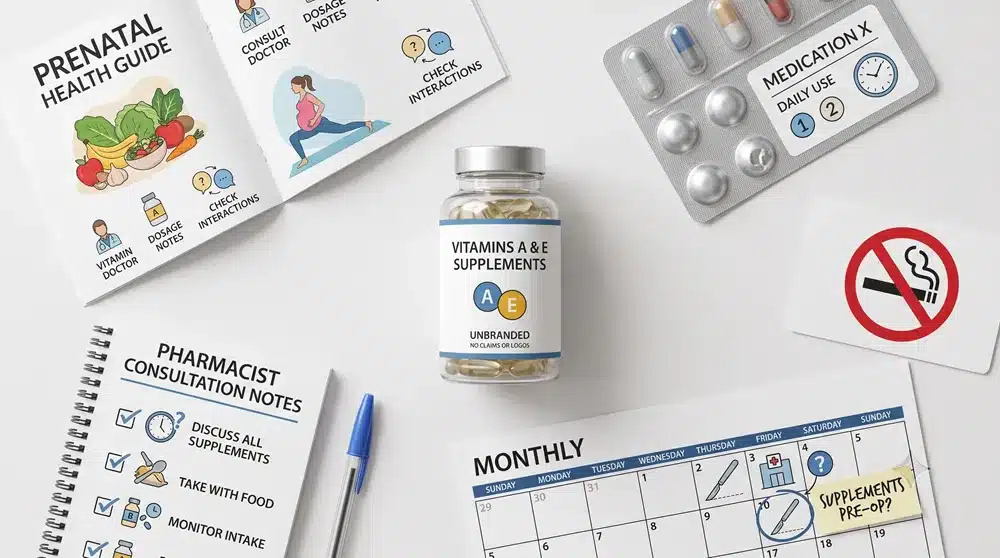
Люди, готовящиеся к медицинской процедуре, должны сообщить своему лечащему персоналу обо всех принимаемых ими пищевых добавках.
Ретиноиды, отпускаемые по рецепту, и витамин А
Некоторые рецептурные лекарственные препараты химически родственны витамину А. Прием дополнительных доз витамина А одновременно с ретиноидными препаратами может привести к чрезмерной нагрузке на организм.
Лицам, принимающим такие лекарственные средства, как ацитретин или бексаротен, не следует принимать добавки витамина А без согласия лечащего врача.
Орлистат и усвоение питательных веществ
Орлистат может снижать всасывание жирорастворимых витаминов, в том числе витамина А. Лицам, принимающим орлистат, следует соблюдать рекомендации по времени приема и дополнительному приему витаминов, предоставленные лечащим врачом.
Лечение рака
Антиоксидантные добавки могут вступать во взаимодействие с некоторыми видами химиотерапии или лучевой терапии. Любому пациенту, проходящему лечение от рака, перед приемом витамина Е и других антиоксидантных добавок следует проконсультироваться со своей онкологической бригадой.
Возможные признаки чрезмерного потребления
Избыток готового витамина А может вызывать такие симптомы, как:
- Головная боль
- Тошнота
- Головокружение
- Затуманенное зрение
- Мышечные боли
- Проблемы координации
Прием высоких доз витамина Е может повысить риск появления синяков или кровотечений.
Эти симптомы недостаточно специфичны для самостоятельной диагностики. При появлении подозрений на побочный эффект или передозировку следует обратиться к врачу.
Как выбрать добавку с витаминами А и Е
Не существует единой “лучшей добавки с витаминами А и Е”, подходящей для всех. Выбор наиболее подходящего продукта зависит от рациона питания, возраста, беременности, приема лекарств, состояния здоровья и цели приема добавки.
При оценке продукта руководствуйтесь приведенным ниже контрольным списком.
1. Определите, необходимы ли оба питательных вещества
Комбинированный препарат не всегда является более подходящим, чем препарат с одним питательным веществом или стандартный мультивитаминный препарат.
Прежде чем добавлять новый источник, проанализируйте свой рацион и все принимаемые в настоящее время пищевые добавки.
2. Сравните дозу с суточной нормой
Уточните количество на порцию и размер порции.
На лицевой стороне упаковки может быть указана одна капсула, в то время как в разделе «Информация о пищевой добавке» полная порция может составлять две или более капсул.
Более высокий процент не всегда означает, что это лучше.
3. Определить форму витамина А
К распространенным формам относятся:
- Ретинилацетат
- Ретинил пальмитат
- Бета-каротин
- Комбинация готового витамина А и бета-каротина
При употреблении готовых форм витамина А необходимо уделять больше внимания общему объему потребления, поскольку он учитывается при расчете верхнего предельного уровня для взрослых.
4. Определите форму витамина Е
Витамин Е природного происхождения обычно обозначается как d-альфа-токоферол, тогда как синтетический витамин E обычно указывается как dl-альфа-токоферол.
Чтобы ознакомиться с более подробным сравнением терминологии на этикетках, биологической активности и различий в составе, прочитайте наше руководство по натуральный витамин Е и синтетический витамин Е.
Натуральный витамин Е обладает более высокой биологической активностью на миллиграмм, однако это не доказывает, что каждый продукт натурального происхождения дает лучшие результаты для здоровья, чем любой синтетический продукт.
Некоторые препараты также содержат смесь токоферолов или токотриенолов. Имеющиеся на данный момент данные не позволяют утверждать, что эти формы в пищевых добавках обладают безусловным преимуществом перед альфа-токоферолом.
5. Проверьте, нет ли повторяющихся ингредиентов
Сравните данный продукт с уже используемыми мультивитаминами, косметическими добавками, средствами для здоровья глаз, рыбьим жиром и обогащенными витаминами напитками.
Прием двойной дозы — один из самых простых способов непреднамеренно принять высокую дозу.
6. Ищите содержательную и достоверную информацию
Полезная информация может включать:
- Четкое указание форм и количеств ингредиентов
- Идентификация партии или серии
- Срок годности или срок хранения
- Рекомендации по хранению
- Информация об аллергенах
- Контактные данные производителя
- Независимая сертификация или проверка, если это применимо
- Доступная документация по качеству или испытаниям
Бренды, закупщики и разработчики продукции, которым требуется более подробная информация о проверках сырья, документации по партиям, проверке эффективности и испытаниях готовой продукции, могут ознакомиться с нашим усовершенствовать процесс контроля качества.
Сертификация независимыми организациями может быть полезной, однако её конкретный объем зависит от конкретной программы. Наличие сертификата не следует рассматривать как доказательство того, что данная пищевая добавка обладает клинической эффективностью в отношении конкретного показателя здоровья.
7. Избегайте заявлений о лечении заболеваний
Пищевую добавку не следует выбирать только на том основании, что она, как утверждается, способна вылечить, лечить или предотвратить какое-либо заболевание.
Следует с осторожностью относиться к продуктам, которые обещают быстрый омолаживающий эффект, профилактику заболеваний, гарантированное укрепление иммунитета или радикальное преображение кожи.
Рекомендации по разработке рецептур для производителей пищевых добавок
Брендам, разрабатывающим пищевую добавку с витаминами А и Е, следует выбирать форму ингредиента с учетом лекарственной формы, целевой дозы, требований к стабильности, условий переработки, целевого рынка и стратегии регулирования. Наша контрактное производство витаминов Данная услуга включает в себя анализ рецептур, выбор лекарственной формы, планирование производства, упаковку и контроль качества готовой продукции.
| Формат продукта | Общие рекомендации по составлению рецептур |
|---|---|
| Софтгели | Совместимость с маслом, защита от окисления, совместимость с наполнителями, воздействие света и упаковка |
| Твердые капсулы | Текучесть порошка, гранулометрический состав, однородность смеси, активность и стабильность |
| Планшеты | Сжимаемость, однородность состава, взаимодействие ингредиентов и удержание активного вещества |
| Жевательные резинки | Воздействие высокой температуры, кислород, способность к диспергированию, вкус, внешний вид и потери питательных веществ в процессе переработки |
| Порошки | Диспергируемость, выбор носителя, контроль влажности, окисление и точность дозирования |
| Премиксы и обогащенные продукты питания | Размер частиц, сегрегация, потери при переработке, подтвержденный избыток и стабильность в течение срока хранения |
В рамках проектов, связанных с витамином А, разработчики рецептур могут сравнить такие варианты, как ретинилацетат, ретинилпальмитат, порошок, гранулы, масляная дисперсия, а также индивидуальные варианты концентрации в нашем Руководство по сырью для производства витамина А.
Поскольку витамины А и Е могут быть чувствительны к условиям переработки и хранения, технические характеристики готовой продукции должны подкрепляться подтвержденными результатами аналитических испытаний и данными о стабильности.
Любой избыток компонентов в рецептуре должен обосновываться фактическими данными о производстве и сроке хранения, а не добавляться в виде произвольного процента.
Разрабатываете продукт с витаминами А и Е?
Gensei оказывает поддержку брендам пищевых добавок в таких областях, как поиск поставщиков ингредиентов, разработка индивидуальных рецептур, оценка лекарственных форм, пилотное производство, оформление документации по качеству, упаковка и масштабируемое производство.
Прежде чем запросить коммерческое предложение, подготовьте следующую информацию:
- Целевой рынок
- Рекомендуемый размер порции
- Рекомендуемые суточные дозы витамина А и витамина Е
- Предпочтительные формы ингредиентов
- Капсулы, мягкие капсулы, таблетки, жевательные конфеты, порошок или жидкость
- Требования к сертификации
- Требования, связанные с аллергенами и диетой
- Формат упаковки
- Ожидаемый объем заказов
Часто задаваемые вопросы
Можно ли принимать витамин А и витамин Е одновременно?
Да. Большинство взрослых могут одновременно потреблять витамин А и витамин Е с пищей или в составе стандартных мультивитаминных препаратов. Основная проблема заключается в чрезмерном общем потреблении, а не в несовместимости этих двух питательных веществ.
Чем полезны витамины А и Е?
Витамин А способствует поддержанию нормального зрения, нормальной работы иммунной системы, репродуктивной функции, роста и клеточной дифференцировки. Витамин Е обладает антиоксидантным действием, а также способствует нормальной работе иммунной системы и клеточным процессам.
Когда лучше всего принимать витамин А и витамин Е?
Не существует какого-то общепринятого времени суток для приема. Поскольку оба препарата являются жирорастворимыми, их обычно принимают во время еды, содержащей некоторое количество пищевых жиров. Следуйте инструкциям, указанным на этикетке продукта.
Могут ли витамины А и Е улучшить состояние кожи?
Оба этих питательных вещества способствуют нормальному функционированию клеток и кожных тканей, однако не следует ожидать, что пищевая добавка, принимаемая внутрь, устранит морщины или обеспечит гарантированные косметические изменения. Данные, полученные в ходе исследований ингредиентов для наружного ухода за кожей, нельзя автоматически применять к пищевым добавкам, принимаемым внутрь.
В каких продуктах содержатся витамин А и витамин Е?
Шпинат и брокколи содержат оба этих питательных вещества. Практичный подход заключается в том, чтобы сочетать продукты, богатые витамином А, такие как сладкий картофель или морковь, с продуктами, богатыми витамином Е, такими как миндаль, семена подсолнечника или растительные масла.
Какое количество витамина А и витамина Е необходимо взрослым?
Взрослым мужчинам, как правило, требуется 900 мкг витамина А в пересчете на RAE в сутки, а взрослым женщинам — 700 мкг в пересчете на RAE. Большинству взрослых требуется 15 мг витамина Е в сутки. Указанные количества включают поступление витаминов из пищи и пищевых добавок.
Можно ли беременным женщинам принимать добавки с витамином А и витамином Е?
Беременность меняет потребности организма в питательных веществах, однако прием высоких доз готового витамина А может привести к врождённым аномалиям развития. Беременным женщинам следует проконсультироваться с квалифицированным медицинским специалистом по поводу приема пищевых добавок и не следует самостоятельно включать в рацион препараты с высоким содержанием витамина А.
Бета-каротин безопаснее ретинола?
Бета-каротин не вызывает такого же типа токсического действия витамина А, как избыток готового витамина А. Однако прием добавок бета-каротина в высоких дозах связывают с повышенным риском развития рака легких у курящих, бывших курильщиков и людей, подвергающихся воздействию асбеста.
Естественный витамин Е лучше синтетического?
Натуральный витамин Е обладает более высокой эффективностью в расчете на миллиграмм и обычно обозначается на этикетке как d-альфа-токоферол. Синтетический витамин Е обычно обозначается на этикетке как dl-альфа-токоферол. Форма обозначения на этикетке и дозировка имеют значение, однако слово “натуральный” не означает автоматически, что продукт обеспечит лучшие клинические результаты.
Можно ли принимать витамин Е вместе с антикоагулянтами?
Прием высоких доз витамина Е может повысить риск кровотечения у людей, принимающих антикоагулянты или антиагреганты. Лицам, принимающим варфарин или аналогичные препараты, следует проконсультироваться с врачом перед началом приема добавок витамина Е.
Можно ли принимать добавки с витаминами А и Е вместе с поливитаминами?
Возможно, но сначала сравните таблицы «Информация о пищевой ценности». При одновременном употреблении обоих продуктов может произойти дублирование витамина А или витамина Е, что приведет к значительно более высокой общей дозе, чем предполагалось.
Заключение
Витамин А и витамин Е, как правило, можно принимать вместе, но больше не всегда означает лучше.
Витамин А способствует поддержанию нормального зрения, нормальной работы иммунной системы и росту клеток, а витамин Е обеспечивает антиоксидантную защиту и способствует нормальной работе иммунной системы и клеток. Большинству людей следует уделять первостепенное внимание сбалансированному питанию и прибегать к пищевым добавкам только в тех случаях, когда они помогают удовлетворить реальную потребность в питательных веществах.
Прежде чем выбрать добавку с витаминами А и Е, обратите внимание на форму ингредиентов, размер порции, процентное соотношение к суточной норме, общее потребление из других продуктов, а также на возможные взаимодействия с принимаемыми лекарствами.
Применение препаратов с высокой дозировкой требует особой осторожности во время беременности, у курящих или бывших курильщиков, а также у людей, принимающих антикоагулянты или ретиноиды.
Медицинское предупреждение: Данная статья носит образовательный характер и не заменяет медицинского диагноза или индивидуальной консультации. Если у вас имеются проблемы со здоровьем, вы принимаете лекарства, находитесь в положении или планируете принять препарат в высоких дозах, проконсультируйтесь по поводу пищевых добавок с врачом, дипломированным диетологом или фармацевтом.
Ссылки
- Национальные институты здравоохранения, Управление по пищевым добавкам. Витамин А и каротиноиды: информационный бюллетень для потребителей. Обновлено 10 марта 2025 года.
- Национальные институты здравоохранения, Управление по пищевым добавкам. Витамин А и каротиноиды: информационный бюллетень для медицинских работников.
- Национальные институты здравоохранения, Управление по пищевым добавкам. Витамин Е: Информационный бюллетень для потребителей.
- Национальные институты здравоохранения, Управление по пищевым добавкам. Витамин Е: информационный бюллетень для медицинских работников.
- Управление по контролю за продуктами и лекарствами США. Суточная норма на этикетках с информацией о пищевой ценности и составе пищевых добавок.
- Министерство сельского хозяйства США. FoodData Central.

Уоррен Ван — опытный специалист с обширным стажем работы в сфере цепочки поставок пищевых добавок, обладающий богатым практическим опытом в области исследований, разработки, контроля производственных процессов и глобального поиска поставщиков ключевых ингредиентов, таких как коллагеновые пептиды, белок костного бульона и кератин. Как автор этой рубрики, он стремится развенчать маркетинговую мистификацию, преобразуя малоизвестные научные факты об ингредиентах и стандарты контроля качества производства в доступные и достоверные научно-популярные материалы, помогая читателям понять правду, скрытую за этикетками, и делать более рациональный выбор в вопросах здоровья.