
สำหรับเจ้าของแบรนด์ผลิตภัณฑ์เสริมอาหารและทีมพัฒนาสูตร CoQ10 และวิตามินบี ไม่ใช่ส่วนผสมที่แข่งขันกัน แต่ทั้งสองช่วยสนับสนุนระดับต่าง ๆ ของการโภชนาการด้านพลังงาน CoQ10 เป็นโคแฟกเตอร์ที่ละลายในไขมันของไมโทคอนเดรีย ซึ่งใช้ในการผลิต ATP ในเซลล์และให้การปกป้องจากอนุมูลอิสระ ส่วนวิตามินบีเป็นโคแฟกเตอร์ที่ละลายในน้ำ ซึ่งจำเป็นสำหรับการเผาผลาญคาร์โบไฮเดรต ไขมัน โปรตีน เซลล์เม็ดเลือดแดง และระบบประสาท.
คำถามที่แท้จริงเกี่ยวกับการพัฒนาสูตรไม่ใช่เพียง “แบบไหนดีกว่า” แต่เป็นรูปแบบการให้ยาแบบใดที่จะช่วยรักษาการดูดซึมของ CoQ10 ความเสถียรของวิตามินบี ความสอดคล้องกับมาตรฐาน “clean label” และการจัดวางโครงสร้าง/หน้าที่ให้สอดคล้องกับข้อกำหนด.
- โคเอนไซม์คิวเท็น เป็นตัวเลือกที่ดีที่สุดสำหรับสูตรอาหารเสริมที่เน้นพลังงานจากไมโทคอนเดรีย สารต้านอนุมูลอิสระ และสุขภาพหัวใจ โดยเฉพาะเมื่ออยู่ในรูปแบบแคปซูลนิ่มที่มีฐานเป็นน้ำมัน หรือระบบการกระจายตัวขั้นสูง.
- วิตามินบีคอมเพล็กซ์ มีประโยชน์มากกว่าในการสนับสนุนการเผาผลาญพลังงานประจำวัน การทำงานของระบบประสาท และกลุ่มประชากรที่มีความเสี่ยงต่อการขาดสารอาหาร.
- สามารถรวมกันได้ แต่ การส่ง CoQ10 และความเสถียรของวิตามินบี ต้องได้รับการออกแบบแยกกัน.
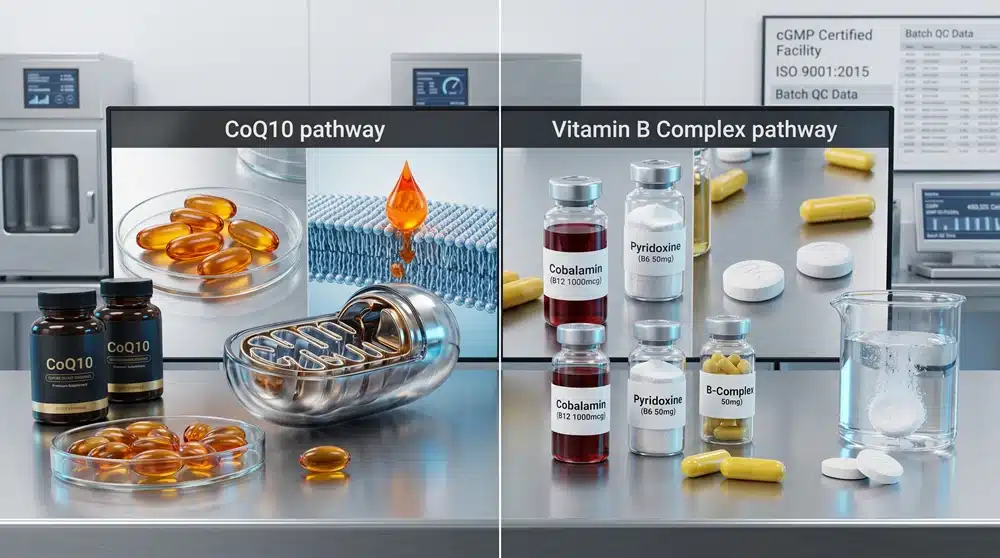
CoQ10 คืออะไร?
CoQ10 หรือที่รู้จักกันในชื่อโคเอนไซม์ Q10 ยูบิควิโนน หรือยูบิควิโนล ขึ้นอยู่กับสถานะออกซิเดชัน-รีดักชัน เป็นโคเอนไซม์ที่ละลายในไขมัน ซึ่งพบได้ในเยื่อหุ้มเซลล์และไมโทคอนเดรีย มันมีส่วนร่วมในกระบวนการขนส่งอิเล็กตรอนในไมโทคอนเดรีย และช่วยรักษาการผลิตพลังงานของเซลล์ เนื่องจาก CoQ10 มีคุณสมบัติชอบไขมันสูงและละลายในน้ำได้น้อย ประสิทธิภาพของผลิตภัณฑ์เสริมอาหารจึงขึ้นอยู่กับรูปแบบการให้ยาเป็นอย่างมาก.
จากมุมมองด้านการผลิต CoQ10 ไม่ควรถูกปฏิบัติเหมือนผงวิตามินทั่วไป แคปซูลแห้งที่บรรจุผง CoQ10 แบบพื้นฐานอาจมีความคุ้มค่าทางต้นทุน แต่แคปซูลนิ่มที่มีฐานเป็นน้ำมัน ระบบอิมัลชัน หรือเม็ดกระจายตัวที่ได้รับการตรวจสอบแล้ว มักเป็นตัวเลือกที่ได้รับความนิยมมากกว่า สำหรับการวางตำแหน่งผลิตภัณฑ์ในระดับพรีเมียม.
หน้าที่หลักของ CoQ10
CoQ10 มักถูกใช้ในผลิตภัณฑ์เสริมอาหารเพื่อสนับสนุนการผลิตพลังงานของเซลล์ การเสริมสร้างระบบต้านอนุมูลอิสระ การสนับสนุนสุขภาพหัวใจ และสูตรอาหารเพื่อวัยสูงอายุอย่างมีสุขภาพดี ควรนำเสนอด้วยภาษาที่เน้นโครงสร้างและหน้าที่ เช่น “สนับสนุนการผลิตพลังงานของเซลล์”, “ช่วยรักษาสมดุลระบบต้านอนุมูลอิสระ” หรือ “สนับสนุนสุขภาพระบบหัวใจและหลอดเลือด” แทนที่จะใช้คำกล่าวอ้างเกี่ยวกับการรักษาโรค.
หมายเหตุจากผู้พัฒนาสูตร: ยูบิควิโนนถูกใช้อย่างแพร่หลาย เนื่องจากมีความเสถียรและคุ้มค่า ยูบิควิโนลอาจถูกจัดเป็นรูปแบบที่ถูกลดระดับคุณภาพสูง แต่จำเป็นต้องมีการควบคุมการออกซิเดชันที่เข้มงวดยิ่งขึ้น และต้องตรวจสอบบรรจุภัณฑ์อย่างละเอียด สำหรับผลิตภัณฑ์สำเร็จรูป ให้ขอผลการวิเคราะห์ CoQ10 ด้วยวิธี HPLC ค่าเปอร์ออกไซด์ของน้ำมันพาหะเมื่อใช้แคปซูลนิ่ม และข้อมูลความเสถียรภายใต้การเก็บรักษาแบบเร่งและแบบจริง สำหรับการส่งมอบ CoQ10 แบบน้ำมัน ให้ตรวจสอบข้อมูลของเรา ความสามารถในการผลิตแคปซูลนิ่ม CoQ10.
การตรวจสอบแหล่งที่มาและข้อกำหนดของ CoQ10
สำหรับเจ้าของแบรนด์ การเลือกแหล่งจัดหา CoQ10 ควรเน้นไปที่การระบุตัวตนของส่วนผสม การวิเคราะห์ปริมาณ พฤติกรรมของอนุภาค และความเสถียรของผลิตภัณฑ์สำเร็จรูป การตรวจสอบสำคัญในการจัดซื้อรวมถึงรูปแบบของ CoQ10 (ยูบิควิโนน vs ยูบิควิโนล), วิธีวัดปริมาณ, สารละลายตกค้าง (หากมี), โลหะหนัก, การตรวจสอบจุลินทรีย์, คำชี้แจงเกี่ยวกับสารก่อภูมิแพ้, ความเข้ากันได้กับน้ำมันพาหะ, และว่าวัตถุดิบดังกล่าวถูกออกแบบมาเพื่อใช้ในระบบการผสมแบบแห้ง, การใช้เม็ดเล็ก, ระบบแขวนลอยในแคปซูลนิ่ม หรือระบบอิมัลชัน.
วิตามินบีคอมเพล็กซ์คืออะไร?
Vitamin B complex is not one ingredient but a coordinated group of water-soluble vitamins. It includes B1 thiamine, B2 riboflavin, B3 niacin, B5 pantothenic acid, B6 pyridoxine or P5P, B7 biotin, B9 folate, and B12 cobalamin. These vitamins function as cofactors or coenzyme precursors in metabolism, red blood cell formation, DNA synthesis, methylation, and normal nervous-system support.
ในผลิตภัณฑ์เสริมอาหารที่ผลิตเสร็จแล้ว วิตามินบีมีความแตกต่างกันในด้านความเข้มข้น สี กลิ่น ความไวต่อแสง ความเข้ากันได้กับค่า pH และข้อกำหนดเกี่ยวกับปริมาณส่วนเกิน ดังนั้น การพัฒนาสูตรวิตามินบีคอมเพล็กซ์จึงเป็นความท้าทายด้านความเสถียรภาพและการติดฉลาก มากกว่าที่จะเป็นเพียงการผสม “วิตามินพลังงาน” อย่างง่ายๆ.
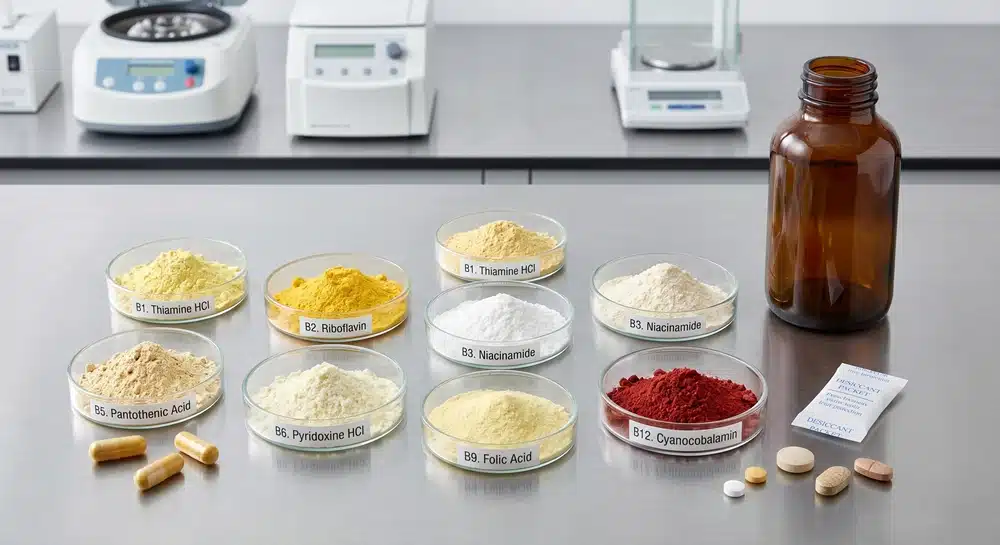
หน้าที่หลักของวิตามินบีคอมเพล็กซ์
| วิตามิน | รูปแบบทั่วไป | หมายเหตุเกี่ยวกับสูตร |
|---|---|---|
| B1 | ไทอามีน HCl / ไทอามีน โมโนไนเตรต | การควบคุมกลิ่นและรส; พฤติกรรมการผสมแบบแห้ง; ปริมาณที่ระบุบนฉลาก. |
| บีทู | ริโบฟลาวิน / ริโบฟลาวิน-5-ฟอสเฟต | สีเหลืองเข้มอาจทำให้ผงหรือกัมมี่เกิดรอยเปื้อน; จำเป็นต้องป้องกันแสง. |
| บี3 | นิอาซิน / นิอาซินามิด | การเปรียบเทียบระหว่างอาการหน้าแดงจากนิอาซินกับระดับความทนทานต่อนิอาซินามิด; ปริมาณการใช้และข้อความโฆษณา. |
| B5 | แคลเซียม ดี-แพนโทเทเนต | มักใช้ในรูปแคปซูล/เม็ด; ตรวจสอบความเข้ากันได้ในส่วนผสมที่ดูดความชื้น. |
| B6 | พิริโดกซิน HCl / P5P | การกำหนดตำแหน่งในรูปแบบที่ใช้งานได้ (P5P); หลีกเลี่ยงการอ้างสิทธิ์ที่เกินจริงเกี่ยวกับโรค. |
| B9 | กรดโฟลิก / 5-MTHF | การจัดวางโฟเลตแบบแอคทีฟ; ความแม่นยำของปริมาณยา และความแตกต่างด้านกฎระเบียบในตลาด. |
| บี12 | ไซยาโนโคบาลามิน / เมทิลโคบาลามิน | ปริมาณที่น้อยมาก แต่มีมูลค่าทางการตลาดสูง; ความไวต่อแสงและความสม่ำเสมอของการผสมเป็นปัจจัยสำคัญ. |
วิตามินบีคอมเพล็กซ์มักถูกใช้เพื่อสนับสนุนกระบวนการเผาผลาญพลังงานในชีวิตประจำวัน การสนับสนุนระบบประสาท สูตรช่วยลดความเครียด การเติมเต็มช่องว่างวิตามินบี12 สำหรับผู้ทานมังสวิรัติ/วีแกน และผลิตภัณฑ์วิตามินรวม วิตามินบี12 จำเป็นต้องได้รับความสนใจเป็นพิเศษ เนื่องจากค่าปริมาณที่แนะนำต่อวัน (Daily Value) สำหรับผู้ใหญ่มีค่าต่ำมากเมื่อเทียบกับปริมาณที่ใช้ในผลิตภัณฑ์เสริมอาหารทั่วไป นอกจากนี้ ความสม่ำเสมอของส่วนผสมก็มีความสำคัญเมื่อต้องกระจายสารออกฤทธิ์ในปริมาณน้อยมากให้ทั่วถึงส่วนผสมผงที่มีปริมาณมาก.
ในการผลิตวิตามินบีคอมเพล็กซ์ ให้พิจารณาการเลือกรูปแบบสารออกฤทธิ์ ปริมาณการใช้ ปริมาณส่วนเกิน คุณสมบัติทางประสาทสัมผัส ข้อความบนฉลาก และตลาดเป้าหมาย สูตรวิตามินบีคอมเพล็กซ์แบบเมทิลเลตอาจใช้เมทิลโฟเลตและเมทิลโคบาลามิน ในขณะที่ผลิตภัณฑ์สำหรับใช้ประจำวันทั่วไปอาจใช้กรดโฟลิกและไซยาโนโคบาลามิน เพื่อประหยัดค่าใช้จ่ายและรักษาความเสถียร.
โคเอนไซม์คิวเท็น vs วิตามินบี: ความแตกต่างที่สำคัญ
ความแตกต่างที่สำคัญที่สุดคือพฤติกรรมการส่งมอบ: CoQ10 เป็นสารที่ละลายในไขมันและขึ้นอยู่กับวิธีการส่งมอบ ส่วนวิตามินกลุ่ม B เป็นสารที่ละลายในน้ำและขึ้นอยู่กับโคแฟกเตอร์ การตัดสินใจเลือกสูตรที่เหมาะสมยิ่งขึ้นจะเกิดจากการเปรียบเทียบกลไกการทำงาน ความละลาย รูปแบบการให้ยา ความเสถียร และการวางตำแหน่งตลาดที่สอดคล้องกับความต้องการ.
| มิติ | โคเอนไซม์คิวเท็น | วิตามินบีคอมเพล็กซ์ |
|---|---|---|
| กลไก | โคแฟกเตอร์ในกระบวนการขนส่งอิเล็กตรอนของไมโทคอนเดรีย; ช่วยสนับสนุนการผลิต ATP ในเซลล์และการรีไซเคิลสารต้านอนุมูลอิสระ. | โคแฟกเตอร์/สารตั้งต้นของโคเอนไซม์ มีส่วนร่วมในกระบวนการเมแทบอลิซึมของพลังงาน การสร้างเซลล์เลือดแดง การสังเคราะห์ดีเอ็นเอ และการสนับสนุนระบบประสาท. |
| การละลาย | ละลายในไขมัน / มีคุณสมบัติชอบไขมัน ละลายในน้ำได้น้อย และขึ้นอยู่กับวิธีการส่งยา. |
ละลายในน้ำ โดยทั่วไปเหมาะสำหรับแคปซูลแบบแห้ง เม็ด ผง กัมมี่ และของเหลวที่มีการควบคุมความเสถียร. |
| รูปแบบการผลิตที่ดีที่สุด | แคปซูลนุ่ม, สารแขวนลอยในน้ำมัน, ของเหลวแบบอิมัลชัน, เม็ดเล็ก หรือแคปซูลรุ่นใหม่ที่ใช้ระบบ CoQ10 ที่สามารถกระจายตัวได้. | แคปซูล, แท็บเล็ต, กัมมี่, ผง, ของเหลว หรือส่วนผสมวิตามินรวม; แต่ละรูปแบบของวิตามินบีจำเป็นต้องผ่านการตรวจสอบความเข้ากันได้. |
| ความกังวลเกี่ยวกับความมั่นคง | แสง ความร้อน การสัมผัสกับออกซิเจน การออกซิเดชันของน้ำมันพาหะ และความเสี่ยงต่อการตกผลึกในระบบของเหลวที่ออกแบบไม่ดี. | การดูดซับความชื้น ความไวต่อแสง การเปลี่ยนสีจากริโบฟลาวิน การกลบกลิ่น/รส ความเข้ากันได้ของค่า pH การคำนวณปริมาณส่วนเกิน. |
| กรณีการใช้งานที่ดีที่สุด | การสนับสนุนสุขภาพหัวใจ, การใช้ชีวิตอย่างกระฉับกระเฉงในวัยสูงอายุ, การปรับสมดุลพลังงานของไมโทคอนเดรีย, สูตรสารต้านอนุมูลอิสระ, เนื้อหาเพื่อสร้างความตระหนักรู้สำหรับผู้ใช้ยาสแตติน. | การเผาผลาญพลังงานประจำวัน, การสนับสนุนระบบประสาท, การเติมเต็มช่องว่างของวิตามินบี12, สูตรอาหารเสริมเพื่อลดความเครียด, วิตามินรวม. |
| คำถามเกี่ยวกับสูตรผลิตภัณฑ์ B2B | เราจะเพิ่มการดูดซึมทางชีวภาพได้อย่างไร โดยยังคงรักษาความแม่นยำในการทดสอบ ความสม่ำเสมอในการบรรจุ และความเสถียรของแคปซูลนิ่มไว้ได้? | เราจะทำอย่างไรเพื่อสร้างสมดุลระหว่างรูปแบบที่ใช้งานได้ ข้อความบนฉลาก ปริมาณส่วนเกินเพื่อความมั่นคง และข้อจำกัดทางประสาทสัมผัส? |
สามารถรับประทาน CoQ10 และวิตามินบีคอมเพล็กซ์พร้อมกันได้หรือไม่?
ใช่ครับ CoQ10 และวิตามินบีคอมเพล็กซ์สามารถใช้ร่วมกันในโปรแกรมเสริมพลังงานได้โดยทั่วไป เนื่องจากทั้งสองทำงานผ่านกลไกทางโภชนาการที่แตกต่างกัน CoQ10 ช่วยสนับสนุนการผลิตพลังงานในไมโทคอนเดรียและทำหน้าที่เป็นสารต้านอนุมูลอิสระ ส่วนวิตามินบีช่วยสนับสนุนกลไกการทำงานของโคแฟกเตอร์ในกระบวนการเมแทบอลิซึม.
อย่างไรก็ตาม ผลิตภัณฑ์แบบผสมจำเป็นต้องมีการออกแบบฉลากอย่างระมัดระวัง หากผู้บริโภคกำลังรับประทานวิตามินบีคอมเพล็กซ์ที่มีปริมาณสูงอยู่แล้ว การเพิ่มสูตรอื่นที่มีวิตามินบี6, บี12, ไนอาซิน หรือโฟเลตเข้าไป อาจทำให้ปริมาณการบริโภครวมต่อวันเพิ่มขึ้น ผู้ที่กำลังรับประทานยา ผู้ตั้งครรภ์ หรือผู้ที่มีภาวะสุขภาพเฉพาะ ควรปรึกษาผู้เชี่ยวชาญด้านสุขภาพก่อนที่จะผสมผลิตภัณฑ์เสริมอาหาร.
คุณควรเลือกอันไหน?
เลือก CoQ10 เมื่อแนวคิดของผลิตภัณฑ์มุ่งเน้นไปที่พลังงานของไมโทคอนเดรีย การป้องกันอนุมูลอิสระ การสนับสนุนสุขภาพหัวใจ การให้ความรู้แก่ผู้ใช้ยาสแตติน หรือสูตรผลิตภัณฑ์ระดับพรีเมียมสำหรับการดูแลสุขภาพในวัยสูงอายุ เลือกวิตามินบีคอมเพล็กซ์เมื่อแนวคิดผลิตภัณฑ์มุ่งเน้นไปที่การเผาผลาญพลังงานในชีวิตประจำวัน การสนับสนุนระบบประสาท การเติมเต็มช่องว่างวิตามินบี12 สำหรับผู้ทานมังสวิรัติ/วีแกน ชุดผลิตภัณฑ์ลดความเครียด หรือรูปแบบวิตามินรวมสำหรับใช้ประจำวัน.
เลือกทั้งสองตัวเลือกเมื่อคำสัญญาของแบรนด์คือ “พลังงานเซลล์ + การสนับสนุนโคแฟกเตอร์การเผาผลาญ” แต่ต้องตรวจสอบปริมาณการใช้ พื้นที่บนฉลาก ความเสถียร และต้นทุนสินค้าก่อนการเปิดตัว.
การผลิตผลิตภัณฑ์เสริมอาหาร CoQ10 + วิตามินบี: มุมมองจากผู้พัฒนาสูตร
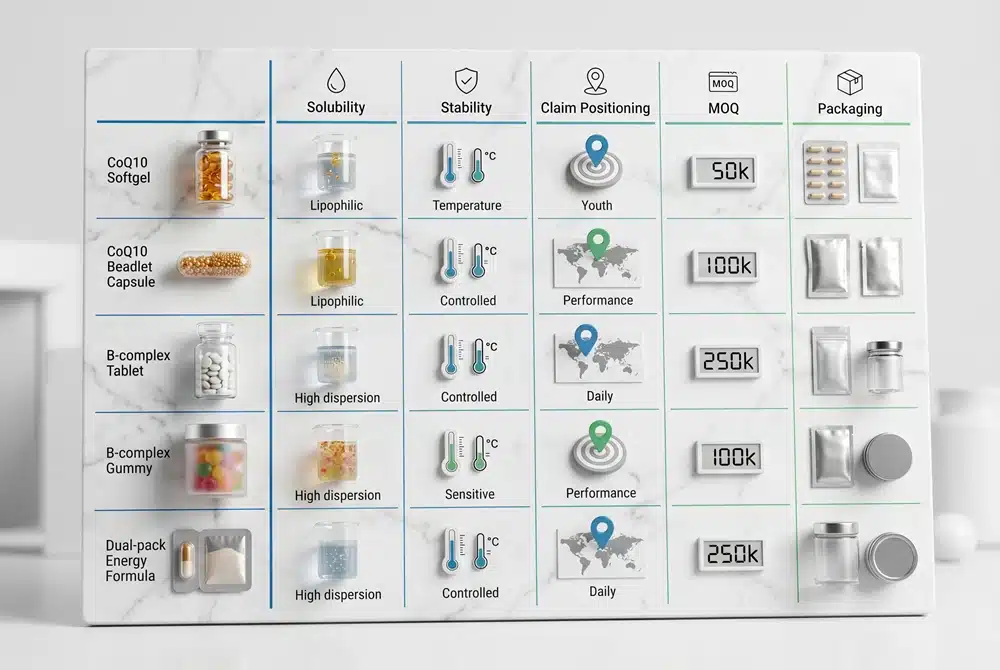
เมื่อนำ CoQ10 และวิตามินบีคอมเพล็กซ์มาผสมกัน สูตรดังกล่าวต้องปรับให้เหมาะสมกับคุณสมบัติทางกายภาพที่แตกต่างกันของทั้งสองสาร CoQ10 มักให้ประสิทธิภาพสูงสุดในแคปซูลนิ่มที่มีฐานเป็นน้ำมัน เม็ดเล็ก หรือระบบอิมัลชัน เนื่องจากมีคุณสมบัติชอบไขมัน วิตามินบีมักใช้ในแคปซูล แท็บเล็ต ผง กัมมี่ หรือของเหลว แต่จำเป็นต้องควบคุมความชื้น แสง ค่า pH และปริมาณส่วนเกิน.
สำหรับสูตรพลังงานสองส่วน แบรนด์สามารถใช้ซอฟต์เจลสำหรับ CoQ10 ร่วมกับแคปซูลหรือเม็ดสำหรับวิตามินบีคอมเพล็กซ์ หรือใช้เม็ด CoQ10 แบบพิเศษในระบบแคปซูลแห้ง สำหรับโครงการผสมผสาน โปรดดูข้อมูลของเรา บริการผลิตตามสัญญาสำหรับวิตามิน และ ตัวเลือกในการผลิตอาหารเสริมแบบแคปซูล.
เมทริกซ์ความเป็นไปได้ของรูปแบบยา
ข้อกำหนดการปล่อยสินค้าจากฝ่ายควบคุมคุณภาพ (QC) เพื่อหารือกับผู้ผลิต
สำหรับโครงการ CoQ10 + วิตามิน B ให้ขอแผนควบคุมคุณภาพ (QC) ที่ครอบคลุมการตรวจสอบความถูกต้องของวัตถุดิบ การวิเคราะห์ปริมาณ การปล่อยเชื้อจุลินทรีย์ การตรวจสอบโลหะหนัก สารละลายตกค้าง (หากเกี่ยวข้อง) การสลายตัวหรือการละลาย ความแปรปรวนของน้ำหนักการบรรจุหรือน้ำหนักเม็ดยา การศึกษาความคงตัว และการตรวจสอบความถูกต้องของข้อมูลบนฉลาก ผลิตภัณฑ์ CoQ10 ยังควรพิจารณาค่าเปอร์ออกไซด์ของน้ำมันพาหะและการควบคุมการออกซิเดชัน สำหรับผลิตภัณฑ์กลุ่มวิตามินบี ควรพิจารณาปริมาณเกินมาตรฐาน การป้องกันแสง ความชื้นสัมพัทธ์ และความสม่ำเสมอของสารออกฤทธิ์ในปริมาณต่ำ เช่น วิตามินบี12 และไบโอติน กิจกรรมการผลิตและการเก็บรักษาควรปฏิบัติตามข้อกำหนด cGMP สำหรับผลิตภัณฑ์เสริมอาหารที่เกี่ยวข้อง.
คำถามที่พบบ่อย
สรุป
CoQ10 และวิตามินบีคอมเพล็กซ์ไม่ควรถูกมองว่าเป็นคู่แข่งกัน CoQ10 เป็นโคแฟกเตอร์ของไมโทคอนเดรียที่ละลายในไขมัน ซึ่งต้องการเทคโนโลยีการส่งผ่านที่ได้รับการออกแบบอย่างรอบคอบ ส่วนวิตามินบีเป็นโคแฟกเตอร์ทางเมแทบอลิซึมที่ละลายในน้ำ ซึ่งต้องการความเสถียรภาพและการควบคุมข้อมูลบนฉลาก ผลิตภัณฑ์สำเร็จรูปที่มีประสิทธิภาพสูงสุดจะผสมผสานหลักการทางโภชนาการกับวิศวกรรมรูปแบบการให้ยา: CoQ10 เพื่อเพิ่มพลังงานเซลล์และบทบาทเป็นสารต้านอนุมูลอิสระ, วิตามินบีคอมเพล็กซ์เพื่อสนับสนุนการทำงานของโคแฟกเตอร์ในกระบวนการเมแทบอลิซึม, และระบบควบคุมการผลิตที่รักษาความแรงของผลิตภัณฑ์ตั้งแต่วัตถุดิบจนถึงอายุการเก็บรักษา.
สำหรับแบรนด์ผลิตภัณฑ์เสริมอาหารแบบ B2B คำถามสำคัญไม่ใช่เพียง “CoQ10 หรือวิตามิน B?” แต่คือ “รูปแบบสารออกฤทธิ์ รูปแบบการให้ยา ข้อกำหนดการปล่อยสาร และคำกล่าวอ้างที่สอดคล้องกับข้อกำหนดใด จะทำให้สูตรพลังงานนี้มีความมั่นคงทางการค้าและสามารถอธิบายได้ทางเทคนิค?”
เอกสารอ้างอิง
- ศูนย์ข้อมูลเทคโนโลยีชีวภาพแห่งชาติ (NCBI). (2020). การเสริมโคเอนไซม์ Q10: การทบทวนประสิทธิภาพ ความปลอดภัย และความสามารถในการดูดซึม. PubMed Central (PMC). https://pmc.ncbi.nlm.nih.gov/articles/PMC7278738/
- สถาบันสุขภาพแห่งชาติ (NIH) – ศูนย์สุขภาพเสริมและบูรณาการแห่งชาติ (NCCIH). (ไม่มีวันที่ระบุ). โคเอนไซม์ Q10: ภาพรวมข้อมูลสุขภาพ. https://www.nccih.nih.gov/health/coenzyme-q10
- สถาบันสุขภาพแห่งชาติ (NIH) – สำนักงานอาหารเสริม (ODS). (ไม่มีวันที่). วิตามินบี12: ใบข้อมูลสำหรับผู้เชี่ยวชาญด้านสุขภาพ. https://ods.od.nih.gov/factsheets/VitaminB12-HealthProfessional/
- สำนักงานอาหารและยาของสหรัฐอเมริกา (FDA) / รหัสกฎระเบียบของรัฐบาลกลางแบบอิเล็กทรอนิกส์ (eCFR). (ไม่มีวันที่). 21 CFR § 101.93 – ข้อความบางประเภทสำหรับผลิตภัณฑ์เสริมอาหาร (กฎเกี่ยวกับคำกล่าวอ้างเกี่ยวกับโครงสร้าง/หน้าที่). https://www.ecfr.gov/current/title-21/chapter-I/subchapter-B/part-101/subpart-F/section-101.93
- สำนักงานอาหารและยาของสหรัฐอเมริกา (FDA) / รหัสกฎระเบียบของรัฐบาลกลางแบบอิเล็กทรอนิกส์ (eCFR). (ไม่มีวันที่ระบุ). 21 CFR Part 111 – หลักการผลิตที่ดีในปัจจุบัน (cGMP) ในกระบวนการผลิต การบรรจุ การติดฉลาก หรือการเก็บรักษาผลิตภัณฑ์เสริมอาหาร. https://www.ecfr.gov/current/title-21/chapter-I/subchapter-B/part-111
- สำนักงานอาหารและยาของสหรัฐอเมริกา (FDA). (ไม่มีวันที่ระบุ). คู่มือสำหรับอุตสาหกรรม: ภาพรวมของคำกล่าวอ้างเกี่ยวกับโครงสร้าง/หน้าที่. https://www.fda.gov/food/nutrition-food-labeling-and-critical-foods/structurefunction-claims

Warren Wan เป็นผู้เชี่ยวชาญที่มีประสบการณ์ยาวนานในห่วงโซ่อุปทานของผลิตภัณฑ์เสริมอาหาร โดยมีความรู้และประสบการณ์ทางปฏิบัติอย่างลึกซึ้งด้านการวิจัย พัฒนา การควบคุมกระบวนการผลิต และการจัดหาวัตถุดิบหลักจากทั่วโลก เช่น เปปไทด์คอลลาเจน โปรตีนจากน้ำซุปกระดูก และเคราติน ในฐานะผู้เขียนคอลัมน์นี้ เขามุ่งมั่นที่จะลอกเปลือกการตลาดออก และแปลงความรู้ทางวิทยาศาสตร์เกี่ยวกับส่วนผสมที่เข้าใจยาก รวมถึงมาตรฐานการควบคุมคุณภาพการผลิต ให้กลายเป็นเนื้อหาวิทยาศาสตร์ที่เข้าใจง่ายและเข้าถึงได้สำหรับทุกคน เพื่อช่วยให้ผู้อ่านเข้าใจความจริงที่ซ่อนอยู่เบื้องหลังฉลากผลิตภัณฑ์ และตัดสินใจเลือกผลิตภัณฑ์เพื่อสุขภาพได้อย่างมีเหตุผลมากขึ้น.


