curcumin and cumin are not the same. Curcumin is a yellow polyphenol found in turmeric root and commonly used in standardized botanical extract supplements. Cumin is a culinary spice made from the dried seeds of Cuminum cyminum. Cumin can add flavor and some nutrients to food, but it is not a substitute for curcumin extract in supplement formulas.
This guide explains the difference between curcumin, turmeric and cumin, when each one makes sense, what safety notes matter, and how supplement brands should verify curcumin raw materials before using them in capsules, tablets, gummies or powder blends.
For bulk botanical sourcing, see our 姜黃素萃取物製造商 page or review our broader herbal extracts supplier 功能。.
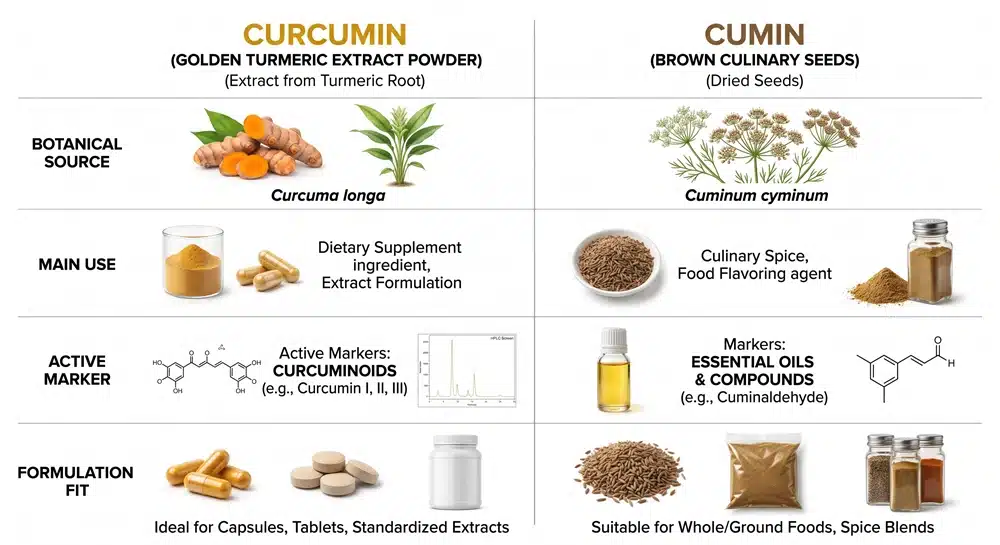
Curcumin vs Cumin at a Glance
| 比較基準點 | 姜黃素 | 小茴香 |
| 這是什麼 | A natural compound, or curcuminoid, found in turmeric root | A spice made from dried Cuminum cyminum seeds |
| 植物來源 | Curcuma longa , a plant in the ginger family | Cuminum cyminum , a plant in the parsley family |
| Main use | Standardized extract for dietary supplements and functional formulations | Culinary seasoning for curries, soups, tacos, spice blends and teas |
| Typical active markers | Total curcuminoids, often standardized to 95% by HPLC in extract powders | Volatile oils, including compounds such as cuminaldehyde |
| Color and aroma | Bright yellow to orange; mild earthy bitterness | Brown to grey-brown; warm, earthy, nutty aroma |
| 最適合 | Formulas focused on antioxidant support, joint comfort support or healthy inflammatory response support, when substantiated | Food flavor, culinary tradition and general diet diversity |
| 主要限制 | Poor absorption unless formulated with a delivery strategy such as piperine, lipid systems or phytosome technology | Not a curcumin source and not appropriate as a curcumin substitute |
What Is Curcumin?
Curcumin is one of the main curcuminoids naturally present in turmeric root. Turmeric powder normally contains only a small percentage of curcuminoids, which is why curcumin extract powders are often standardized and concentrated for supplement use.
In supplement ingredient sourcing, a curcumin raw material should be described by botanical source, extract ratio or active marker, assay method, purity, solvent residue, heavy metals, pesticide residue, microbial limits, carrier information and batch documentation. For example, a B2B curcumin extract specification may state “薑 root extract, 95% total curcuminoids by HPLC,” but the final claim must always match the actual batch COA.
Curcumin has been widely studied for antioxidant activity and support of normal inflammatory pathways. For consumer-facing dietary supplement content, keep wording cautious: use phrases such as “may help support a healthy inflammatory response” or “studied for joint comfort support,” not disease treatment claims.
What Is Cumin?
Cumin is a spice from the dried seeds of 孜然. It is widely used in Indian, Middle Eastern, Mediterranean, Mexican and North African cooking. Cumin seeds can be used whole, toasted or ground into powder.
Cumin contains flavor compounds and nutrients, but it is not botanically related to turmeric and does not supply meaningful curcumin for supplement purposes. If a formula, label or procurement brief calls for curcumin, cumin powder should not be used as a substitute.
Curcumin vs Turmeric vs Cumin: Why the Names Cause Confusion
| 術語 | Plain-English Meaning | Use in Food or Supplements |
| 薑黃 | The golden root or ground spice from Curcuma longa | Food spice, color, traditional culinary ingredient and source material for extracts |
| 姜黃素 | A concentrated compound found within turmeric | Standardized extract ingredient for supplement formulas |
| 小茴香 | A separate seed spice from Cuminum cyminum | Culinary spice, not a curcumin source |
The simplest way to remember the difference is this: turmeric is the golden root, curcumin is a key active compound from turmeric, and cumin is a different seed spice used mainly for flavor.
Does Cumin Contain Curcumin?
No. Cumin is not a meaningful source of curcumin. Cumin comes from 孜然 seeds, while curcumin comes from turmeric root. The two names sound similar, but they refer to different botanicals, different plant parts and different functional ingredient categories.
This matters for both consumers and supplement brands. A consumer looking for turmeric or curcumin support should not expect ground cumin to provide the same use case. A brand developing a curcumin supplement should verify the ingredient identity before purchasing, especially when dealing with multiple spice powders, botanical extracts or blended premixes.
Which Is Better: Curcumin or Cumin?
Neither is “better” in every situation. Curcumin is the better fit when the goal is a standardized botanical extract for supplement formulation. Cumin is the better fit when the goal is culinary flavor, spice aroma or a food-based ingredient.
Choose curcumin when:
- You are formulating a turmeric or curcuminoid dietary supplement.
- You need a standardized active marker such as total curcuminoids.
- You want to build a formula around antioxidant support, joint comfort support or healthy inflammatory response support, within compliant claim boundaries.
- You can verify COA, test method, contaminant testing and bioavailability strategy.
Choose cumin when:
- You want a warm, earthy spice for food or beverage flavor.
- You are developing a culinary seasoning blend, tea blend or savory functional food.
- You do not need a standardized curcuminoid claim.
- You want a familiar spice note rather than a concentrated botanical extract.
Benefits and Limitations of Curcumin
Curcumin is mainly valued because it has been studied for antioxidant activity and support of normal inflammatory pathways. Some clinical research has explored 姜黃素 extracts for joint comfort and mobility, but claims should be written carefully and should not imply that a dietary supplement diagnoses, treats, cures or prevents disease.
The biggest formulation limitation is bioavailability. Plain curcumin is poorly absorbed. Many supplement products use black pepper extract, phospholipid complexes, lipid systems, emulsions, nanoparticles or other delivery approaches to improve absorption. These technologies are not interchangeable, so brands should compare human data, ingredient cost, dosage, capsule size, taste impact and regulatory wording before choosing a form.
Benefits and Limitations of Cumin
Cumin is useful as a culinary spice. It contributes flavor, aroma and small amounts of nutrients within normal serving sizes. It may fit savory powder blends, spice blends, teas and food-based products where taste is the main goal.
However, cumin should not be positioned as a curcumin supplement. Its active chemistry and intended use are different. If the page or label promise is about curcuminoids, turmeric extract or standardized curcumin, cumin cannot deliver that specification.
Safety Notes: Who Should Be Careful With Curcumin Supplements?
Turmeric in food is generally different from high-dose curcumin supplementation. Some people may experience digestive discomfort such as nausea, reflux, stomach upset, diarrhea or constipation with oral turmeric or curcumin products.
Consumers should speak with a qualified healthcare professional before using concentrated curcumin supplements if they are pregnant or breastfeeding, taking anticoagulant or antiplatelet medication, scheduled for surgery, using diabetes medication, undergoing treatment for a medical condition, or have gallbladder, liver or kidney stone concerns.
For supplement brands, safety review should happen before launch. Review serving size, target audience, warning statements, drug interaction language, claim wording and market-specific label requirements. Gensei can support ingredient documentation and manufacturing discussions through 客製化補充劑配方 和 補充品品質控制 工作流程。.
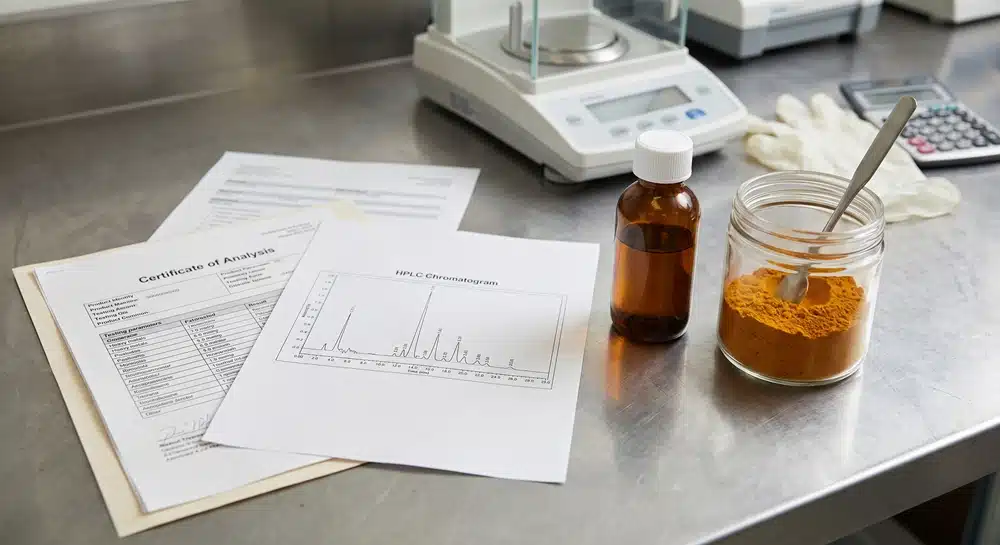
Supplement Formulation Checklist for Curcumin Raw Materials
For supplement brands, the most important difference is not only “curcumin vs cumin.” It is whether the ingredient matches the formula, label and quality requirements.
| 檢查事項 | 為何重要 | 該向供應商詢問哪些問題 |
| 植物學鑑定 | Prevents confusion between turmeric, curcumin, cumin and other botanicals | Can you confirm the botanical source and plant part? |
| 有效標記 | Defines the strength of the extract | What is the total curcuminoid percentage and test method? |
| COA by batch | Supports quality verification and label accuracy | Can you provide a current COA, specification sheet and test report? |
| Contaminant testing | Important for heavy metals, microbes, pesticides and solvent residues | Which limits are tested and which lab performed the test? |
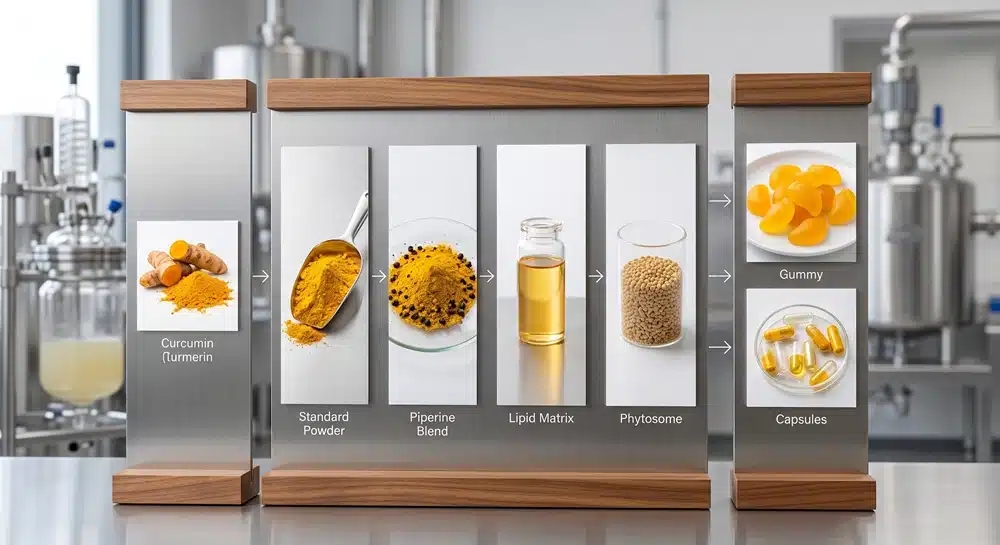
| Bioavailability approach | Impacts serving size, claims, capsule count and cost | Is this standard extract, piperine blend, phytosome, liposomal or another delivery form? |
| Application fit | Curcumin can affect color, taste, staining and processing | Is the ingredient suitable for capsules, tablets, gummies, sachets or drink powders? |
| Claim review | Reduces regulatory and advertising risk | Which structure/function claims are supportable for the market? |
If you are building a botanical supplement, review our 草本補充品製造 capabilities or contact us for a batch-specific quote.
Common Label and Content Claim Mistakes
Curcumin content often becomes risky when marketing language becomes too medical. Avoid phrases such as “cures arthritis,” “treats inflammation,” “prevents cancer,” “cleanses the liver,” or “FDA-approved supplement.” Safer wording should be truthful, substantiated and limited to normal structure/function support where appropriate.
| Risky Wording | Safer Alternative |
| Curcumin treats arthritis pain | Curcumin has been studied for joint comfort and mobility support |
| Curcumin fights inflammation | Curcumin may help support a healthy inflammatory response |
| Curcumin cleanses the liver | Curcumin is being studied for roles related to normal liver health; avoid detox claims unless properly substantiated |
| FDA-approved curcumin supplement | Dietary supplements are not approved by FDA for safety and effectiveness before marketing |
常見問題
姜黃素和小茴香一樣嗎?
No. Curcumin is a compound found in turmeric root. Cumin is a separate spice from 孜然 seeds.
Is cumin the same thing as curcumin?
No. The names sound similar, but cumin and curcumin come from different plants and have different uses.
Does cumin contain curcumin?
No. Cumin is not a meaningful source of curcumin. Curcumin is associated with turmeric, not cumin.
What is the difference between curcumin, turmeric and cumin?
Turmeric is the golden root or spice, curcumin is one of the active compounds in turmeric, and cumin is a separate seed spice used mainly for flavor.
Can I substitute cumin for curcumin or turmeric?
Not for supplement purposes. Cumin can replace turmeric only in some recipes where flavor is flexible, but it does not replace curcumin extract in a dietary supplement formula.
Which is better for inflammation support: turmeric, curcumin or cumin?
For a supplement positioned around healthy inflammatory response support, standardized curcumin or turmeric extract is usually more relevant than cumin. The exact choice depends on bioavailability, dosage, claim support and target market rules.
Is curcumin extract better than turmeric powder?
Curcumin extract is more concentrated and easier to standardize. Turmeric powder is a whole spice with a broader natural matrix but lower curcuminoid concentration.
Who should avoid high-dose curcumin supplements?
People taking blood-thinning medication, people scheduled for surgery, pregnant or breastfeeding people, and anyone with gallbladder, liver, kidney stone or medication concerns should speak with a healthcare professional first.
Can supplement brands use cumin and curcumin in the same formula?
Yes, if the formula strategy, flavor profile, quality specifications and claims make sense. However, cumin should be treated as a culinary or botanical spice ingredient, not as the source of curcuminoids.

最終心得
Curcumin and cumin are different ingredients. Curcumin is a concentrated compound from turmeric used in standardized supplement extracts. Cumin is a flavorful seed spice used in food. For consumers, the key is choosing the right ingredient for the right purpose. For supplement brands, the key is verifying botanical identity, active marker, COA, safety, bioavailability and compliant claims before launch.
Need help sourcing or formulating a curcumin product? Visit our 姜黃素萃取物製造商 page or 聯絡 Gensei to request specifications, COA support and formulation options.
參考資料
- NCCIH – Turmeric: https://www.nccih.nih.gov/health/turmeric
- PubMed – Curcumin content of turmeric and curry powders: https://pubmed.ncbi.nlm.nih.gov/17044766/
- PubMed – Influence of piperine on the pharmacokinetics of curcumin: https://pubmed.ncbi.nlm.nih.gov/9619120/
- PMC – Efficacy and safety of curcumin and Curcuma longa extract in arthritis: https://pmc.ncbi.nlm.nih.gov/articles/PMC9353077/
- PubChem – Cuminum cyminum taxonomy: https://pubchem.ncbi.nlm.nih.gov/taxonomy/52462
- USDA FoodData Central: https://fdc.nal.usda.gov/
- 美國食品藥物管理局(FDA)——關於使用膳食補充劑的消費者資訊: https://www.fda.gov/food/dietary-supplements/information-consumers-using-dietary-supplements
- FDA – Structure/Function Claims: https://www.fda.gov/food/nutrition-food-labeling-and-critical-foods/structurefunction-claims
- FTC – Health Products Compliance Guidance: https://www.ftc.gov/business-guidance/resources/health-products-compliance-guidance

萬華仁(Warren Wan)是一位資深專家,在膳食補充劑供應鏈領域擁有豐富經驗,並在膠原蛋白肽、骨湯蛋白及角蛋白等核心成分的研發、製程控制及全球採購方面具備深厚的實務經驗。 身為本專欄的作者,他致力於剝去行銷包裝的表象,將晦澀難懂的成分科學與生產品質控制標準,轉化為淺顯易懂的硬核科普,協助讀者看清標籤背後的真相,並做出更理性的健康選擇。.