
Protein Powder Manufacturer for Whey & Plant-Based Supplements
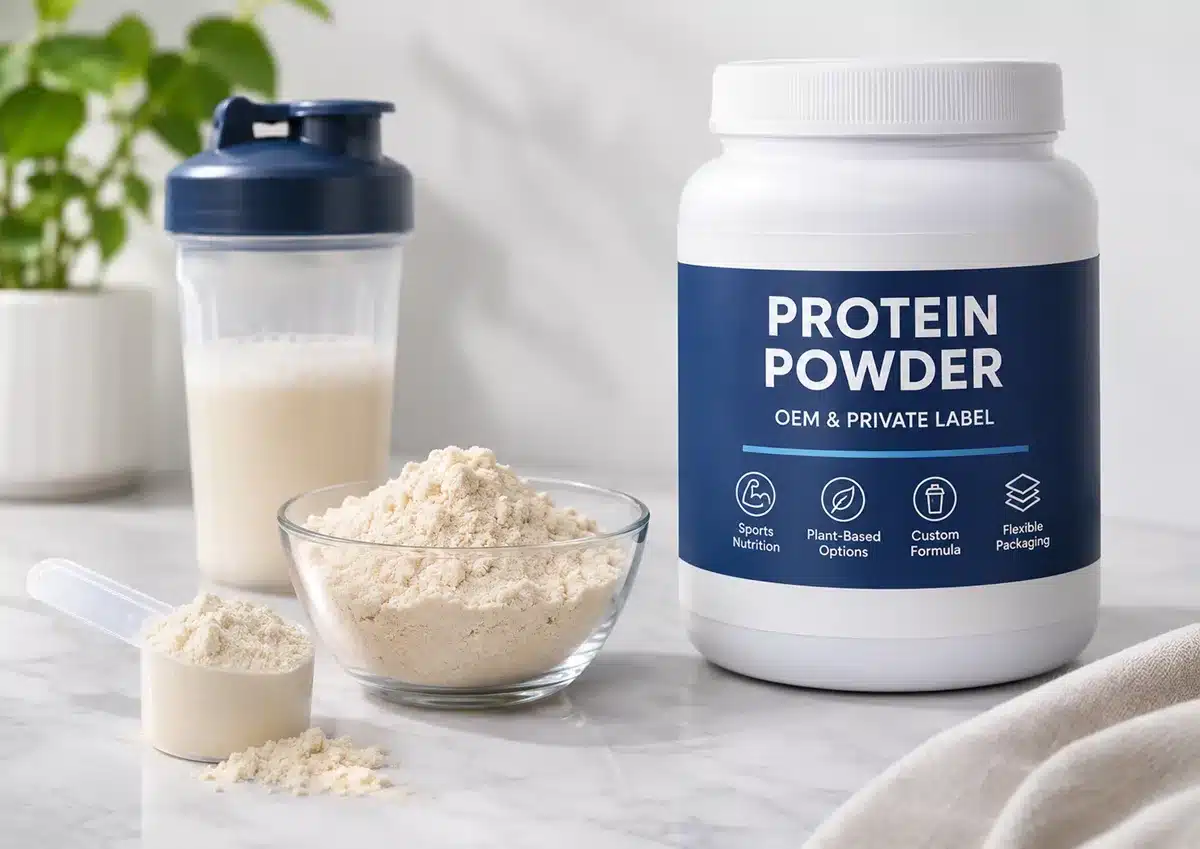
Gensei Global manufactures custom and private label protein powder blends for nutrition brands. We support whey protein concentrate (WPC), whey protein isolate (WPI), pea protein, and brown rice protein projects—from formula balancing and sensory trials to bulk blending and retail packaging.
The above reference terms apply to standard WPC/WPI and pea/rice protein powder projects. Lead times vary by formula complexity, custom packaging components, and testing scope. International freight, customs clearance, and destination delivery after the China export port are quoted separately.
Choose the Right Protein Project Route
Whether you have a locked-in formulation sheet or an early product concept, we align your protein source, target grams per serving, sensory profile, and retail format before production.
Manufacture Your Formula
Submit your existing Bill of Materials (BOM) for technical review of protein grades, serving weight, flavor systems, dry blending feasibility, and packaging compatibility.
Develop a Protein Blend
Build a tailored whey, plant-based, or hybrid protein formula around your target amino profile, protein-per-scoop ratio, sweetener preference, and mouthfeel.
Prepare Your Branded Product
Pair proven protein base formulas with your selected flavor direction, scoop calibration, and branded tubs, stand-up pouches, or single-serve sachets.
Whey, Plant-Based & Functional Protein Formulas
Each protein base behaves differently in bulk density, flavor masking, dispersion, and allergen labeling. We evaluate raw material specifications prior to sample blending.
Whey Protein Concentrate
WPC 80-based sports and daily nutrition powders balancing protein density, creamy dairy mouthfeel, natural milk notes, and cost efficiency.
بروتين مصل اللبن المعزول
WPI 90-based formulations designed for higher protein-to-calorie ratios, lower lactose and fat profiles, and rapid wetting in shaker applications.
Pea & Rice Protein
Vegan and dairy-free protein blends formulated to complement essential amino acids while masking earthy notes and smoothing out gritty textures.
Collagen & Functional Blends
Hydrolyzed collagen peptide and multi-ingredient active blends engineered for specialized nutrition positioning, high solubility, and clean label compliance.
Collagen peptides lack tryptophan and do not share the same PDCAAS / essential amino acid profile as dairy whey or complementary pea-rice blends. We help ensure your protein source selection aligns with your finished label claims and destination-market regulations.
For non-protein powdered beverages, electrolytes, or greens formulas, explore our تصنيع مسحوق المكملات الغذائية القدرات.
Plan Protein Content, Serving Size & Powder Performance
Procurement and R&D teams can use the following technical parameters to define a quote-ready product brief. Final specifications are locked in upon sample approval.
| المعلمة | Standard Manufacturing Range & Options |
|---|---|
| Protein Sources & Grades | WPC 80%, WPI 90%, Pea Protein Isolate (80%–85%), Brown Rice Protein (80%), Collagen Peptides, or multi-source custom blends. |
| Target Protein per Serving | Typically 15 g–30 g protein per serving (calculated on dry/as-is basis after accounting for flavoring, sweeteners, and excipients). |
| Serving Size & Scoop | 25 g–45 g typical single serving; custom-calibrated PP scoop sizes matched to finished powder bulk density (typically 0.40–0.65 g/mL). |
| Flavor & Sweetener Systems | Natural or artificial flavors (Chocolate, Vanilla, Strawberry, Cookies & Cream, Unflavored); Sucralose, Stevia (Reb A / Reb M), Monk Fruit, or Erythritol. |
| Granulation & Mixability | Instantized (sunflower or soy lecithin agglomerated) options; 60–80 mesh particle distribution; gums (xanthan, guar, acacia) for mouthfeel and suspension. |
| Functional Co-Ingredients | Digestive enzymes (protease, lactase), BCAAs/EAAs, creatine monohydrate, MCT powder, prebiotic fibers (inulin), and vitamin/mineral premixes. |
| أشكال التعبئة والتغليف | HDPE/PET tubs (300 g–2.27 kg / 5 lb), gusseted stand-up pouches, single-serve sachets (25 g–35 g), or 10 kg–25 kg food-grade liner bulk cartons. |
| Quality & Release Testing | Protein assay (Kjeldahl / Dumas method), moisture (typically under 6.0%), water activity, heavy metals (Pb, As, Cd, Hg), microbiological limits, and milk/soy allergen control. |
Protein Taste, Mouthfeel & Mixability
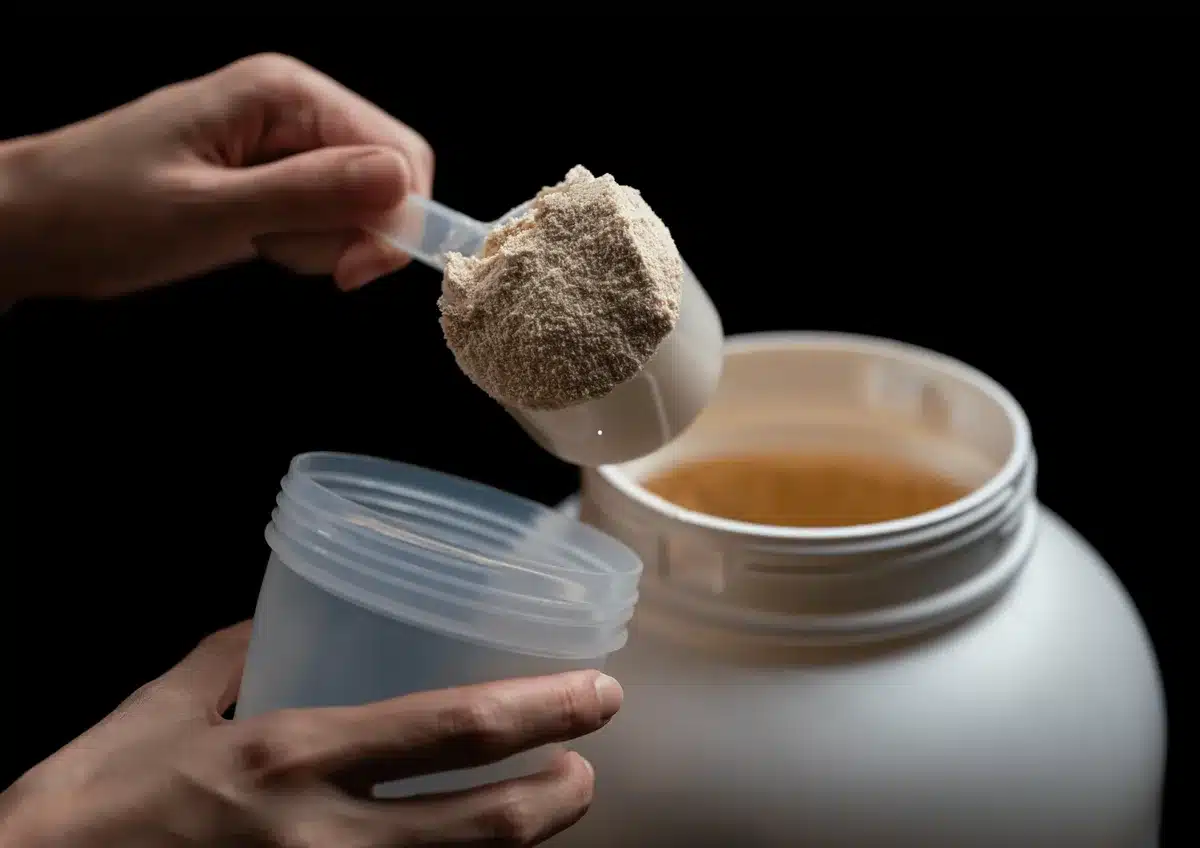
Repeat consumer purchases depend on sensory performance as much as macros. We optimize wetting, viscosity, and flavor masking across both dairy and botanical protein matrices.
Clean Finish & Sweetness
Balance dairy notes, mask pea or brown rice vegetative undertones, and calibrate high-intensity sweeteners to avoid metallic or lingering aftertastes.
Controlled Viscosity
Tune hydrocolloid gum systems and particle mesh sizes to reduce chalkiness in plant proteins and deliver a smooth drinking texture.
Wetting & Anti-Clumping
Evaluate instantized lecithin coatings and powder flowability so scoops disperse rapidly in cold water or milk using a standard shaker cup.
Foam & Sediment Control
Monitor head foam height (especially in WPI formulas) and suspension settling times during benchtop reconstitution trials.
Every 100–300 g benchtop sample is tested under realistic consumer mixing ratios (typically 250–350 mL cold water) before locking in commercial production parameters.
Commercial Terms for Whey & Plant Protein Projects
These commercial benchmarks apply to standard WPC/WPI and pea/rice protein powder runs. Exact pricing is quoted based on raw material grade, flavor complexity, and packaging format.
Benchtop trial blend for flavor, sweetness, and shaker dispersion approval.
Starting batch size per formula/flavor; retail unit counts scale by fill weight.
Typical R&D preparation window using stocked protein bases and flavors.
Standard production and QC window until cargo reaches a China export port.
Lead time & logistics scope: The 4–6 week production window starts upon deposit receipt and packaging artwork sign-off, ending when finished goods arrive at the designated China export port (FOB/EXW). International ocean/air freight, customs clearance, and final destination delivery are arranged according to your preferred Incoterms.

Packaging Formats & Configuration
Because aerated protein powders have low bulk density, container headspace, induction seal integrity, and moisture barrier specs are verified for every SKU.
HDPE & PET Tubs / Jars
300 g to 2.27 kg (5 lb) wide-mouth canisters with heat-induction liners, neck shrink bands, calibrated scoops, and pressure-sensitive or shrink-sleeve labels.
Stand-Up Gusseted Pouches
Multi-layer high-barrier laminated Doypacks (500 g–1 kg+) featuring powder-resistant zip locks to reduce shipping volume and packaging weight.
Single-Serve Sachets & Stick Packs
25 g–35 g trial or travel packets filled on auger-dosing form-fill-seal lines (custom printed film roll MOQs apply).
Bulk Food-Grade Cartons
10 kg–25 kg double PE-lined corrugated cartons or foil bags for brands managing local co-packing in their destination market.
From Formula Verification to Batch Release
Every commercial batch follows a documented quality plan covering raw material identity, homogeneous ribbon/V-blending, weight checks, and release testing.
Lock the Specification
Confirm protein grade, amino/nitrogen target, flavor system, allergen status, and destination-market compliance.
Approve Lab Samples
Evaluate a 100–300 g trial blend for taste, sweetness, liquid dispersion, and scoop bulk density.
Blend & Fill
Execute controlled dry blending, metal detection, auger filling, induction sealing, and lot coding.
Assay & Dispatch
Issue the finished batch COA and export documentation prior to dispatch to the China export port.
Protein-Specific QC Checkpoints
- Raw material identity and incoming protein assay verification.
- Finished batch protein-per-serving verification (Kjeldahl or Dumas nitrogen analysis).
- Loss on drying (moisture), water activity ($a_w$), bulk density, and shaker reconstitution checks.
- Strict allergen cross-contact controls for dairy (whey/milk) and soy lecithin lines.
- Total plate count, yeast & mold, الإشريكية القولونية, السالمونيلا, and heavy metal screening.
Standard Qualification & Batch Documents
- Master Formula Record (MFR) & Finished Product Specification sheet.
- Incoming raw material COAs and allergen/GMO statements.
- Batch-specific Certificate of Analysis (COA) issued prior to shipment.
- Nutrition Facts / Supplement Facts calculation inputs for label compliance.
- Optional third-party lab verification (SGS, Eurofins, or Intertek) available upon request.
Quality System Certificates
Review our quality management and food safety certifications below. Complete supplier qualification packages, ingredient COAs, and third-party lab reports are available upon request.
Product-specific Halal coverage and destination-market export documentation are confirmed per approved formula.
Protein Powder Manufacturing Questions
Direct answers for sourcing and R&D teams evaluating whey and plant-based protein contract manufacturing.
Can Gensei manufacture both WPC and WPI protein powders?
Yes. We manufacture Whey Protein Concentrate (WPC 80), Whey Protein Isolate (WPI 90), and blended dairy protein formulas. We review your target protein grams per serving, lactose/fat thresholds, flavor profile, and instantization requirements for each project.
Can you formulate pea and brown rice plant protein blends?
Yes. We produce single-source pea protein isolate, brown rice protein, and complementary pea-rice blends engineered for a balanced amino acid profile. Benchtop samples are used to fine-tune hydrocolloid gums, sweetener levels, and flavor maskers for a smooth texture.
What are your protein powder MOQ and sample sizes?
Our starting bulk powder MOQ is 100 kg per formula and flavor. Standard R&D trial samples are 100–300 g so your team can evaluate flavor and shaker dispersion. Retail-packed unit minimums (such as tubs, pouches, or printed sachets) depend on your serving weight and packaging format.
How long do samples and commercial protein orders take?
Benchtop sample preparation typically takes about 2 weeks. Commercial production generally takes 4–6 weeks from deposit payment and artwork approval until cargo reaches a China export port (excluding international freight and customs clearance).
How do you ensure the finished powder hits our exact protein claim per scoop?
We formulate based on dry/as-is protein assay values of the raw protein lot and account for the weight dilution of cocoa powder, flavors, gums, and sweeteners. Finished batches can be verified by Kjeldahl or Dumas nitrogen testing prior to release.
Do whey and plant protein powders mix the same way in a shaker?
No. Instantized whey dissolves rapidly with lighter viscosity but can generate surface foam, whereas pea and rice proteins absorb more water and require targeted gum suspension and particle-size control to minimize settling and grittiness.
What packaging formats and quality documents can I request?
We offer HDPE/PET tubs, gusseted stand-up pouches, single-serve sachets, and 10–25 kg bulk lined cartons. Every project is supported with product specifications, allergen statements, batch COAs, and optional third-party lab testing (SGS, Eurofins, or Intertek).
Request a Protein Powder Manufacturing Quote
For an accurate technical and commercial quotation, share your target protein source, grams of protein per serving, flavor direction, packaging format, and destination market.
- WPC 80 / WPI 90 / Pea / Rice or custom protein blend
- Target protein per serving (g) and total scoop weight (g)
- Flavor direction, sweetener preference, and co-ingredients
- 100 kg+ bulk trial or retail-packaged order volume
- Tubs, stand-up pouches, sachets, or bulk cartons + destination country
Protein Powder OEM & Private Label Manufacturing
sales@collagensei.com