Beta glucan and hyaluronic acid are both hydration-focused skincare ingredients, but they do not solve the same problem. Hyaluronic acid is best known for fast, lightweight surface hydration and a visibly plumper skin appearance. Beta glucan is better positioned for sensitive, irritated, post-treatment or barrier-compromised skin because it combines moisture retention with soothing and barrier-supportive benefits.
For most modern skincare formulas, the best answer is not simply “beta glucan or hyaluronic acid.” A stronger formulation strategy is to use hyaluronic acid for immediate water-binding and beta glucan for longer-lasting comfort, redness-prone skin support and barrier recovery.
Beta Glucan vs. حمض الهيالورونيك: Quick Answer
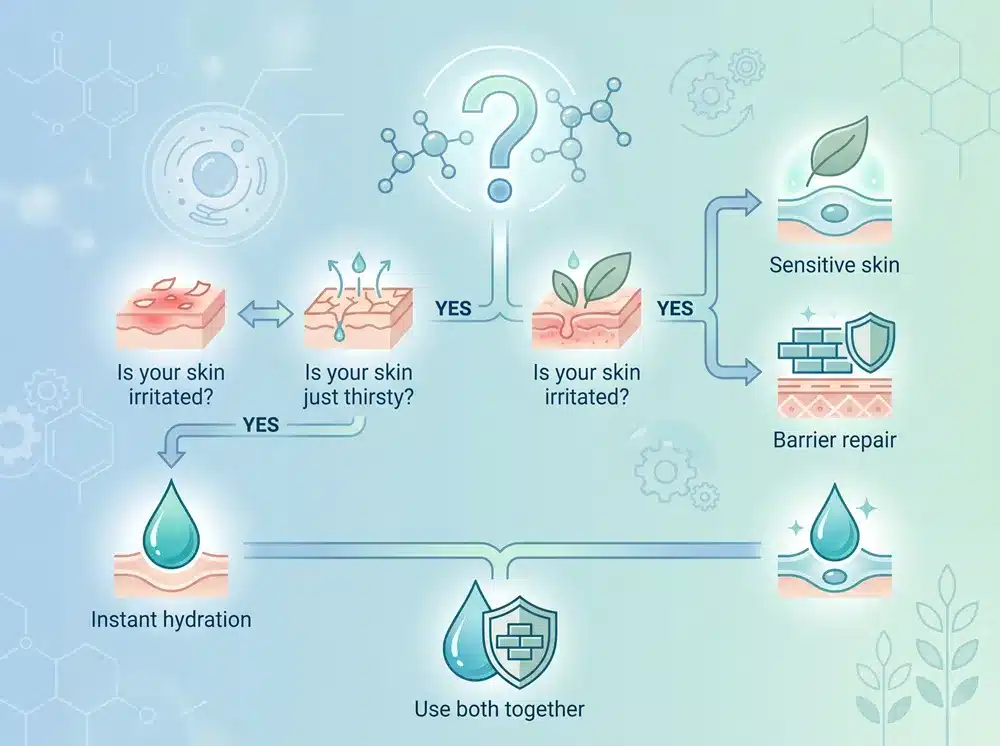
اختر حمض الهيالورونيك when the goal is instant hydration, surface plumping and a lightweight serum feel. Choose beta glucan when the target user has sensitive, irritated, dry or barrier-damaged skin. Use both together when you want fast hydration plus soothing barrier support in one formula.
How Beta Glucan and Hyaluronic Acid Work Differently
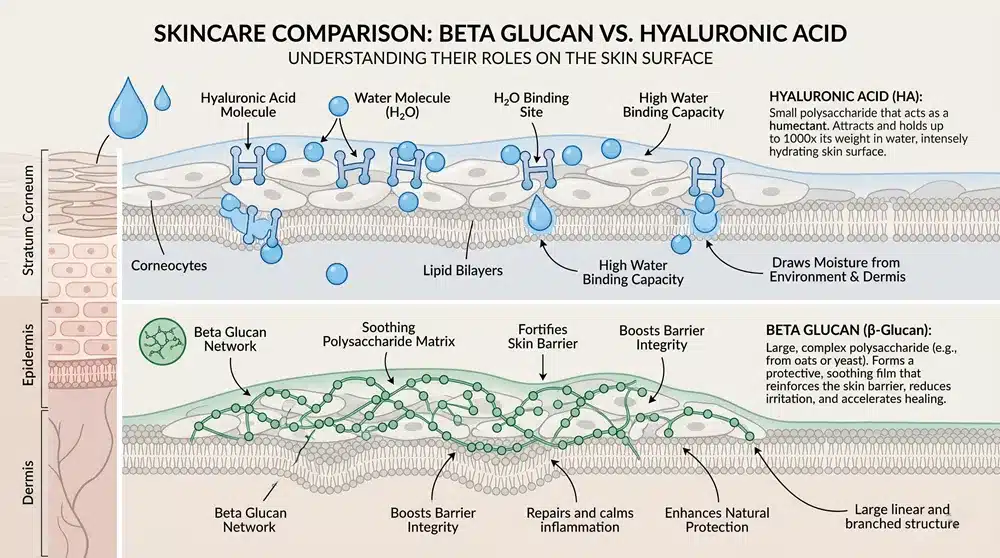
Beta glucan and hyaluronic acid are often grouped together as moisturizing ingredients, but their roles are different. Hyaluronic acid is a glycosaminoglycan naturally found in the skin, connective tissue, eyes and joints. In topical skincare, it is mainly used as a humectant that helps bind water and improve the hydrated look and feel of the skin.
Beta glucan is a natural polysaccharide found in sources such as oats, barley, yeast, mushrooms, algae and certain microorganisms. In skincare, beta glucan is used not only for hydration, but also for calming, antioxidant support, post-treatment comfort and skin barrier recovery positioning.
| الآلية | Beta Glucan | حمض الهيالورونيك |
|---|---|---|
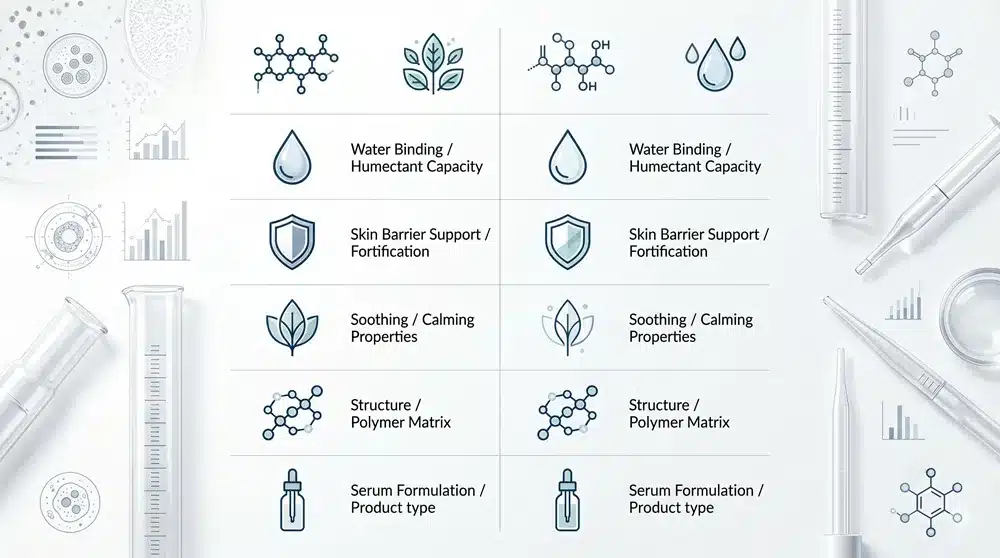
| Primary skincare role | Hydration plus calming and barrier support | Fast water binding and surface plumping |
| الخيار الأنسب | Sensitive, irritated, dry, post-treatment or barrier-compromised skin | Dehydrated skin, fine lines caused by dryness and lightweight serum formulas |
| Formula focus | Source, solubility, purity, viscosity and allergen status | Molecular weight, salt form, viscosity, purity and microbiological quality |
| Consumer benefit angle | Comfort, resilience, reduced tightness and barrier recovery | Immediate hydration, plumper appearance and smoother skin feel |
Beta Glucan for Skin: Barrier Recovery, Soothing and Moisture Retention
What is beta glucan?
Beta glucan is a natural polysaccharide. Depending on the raw material source, it may be derived from oats, barley, yeast, mushrooms, algae or microbial fermentation. Its performance depends on source, molecular structure, solubility, purity and processing quality.
In skincare, beta glucan is often used as a moisturizing, soothing and barrier-supportive active. It is especially relevant for products designed for sensitive skin, irritated skin, redness-prone skin, post-treatment care and formulas that need to reduce the discomfort associated with stronger cosmetic actives.
Evidence-backed skin benefits of beta glucan
- Barrier recovery: Beta-glucan-containing skincare regimens have been studied for post-fractional-laser recovery, where they showed potential benefits for skin inflammation and barrier function recovery.
- Soothing support: Beta glucan is widely discussed in cosmetic science for its calming and anti-inflammatory potential, making it relevant for sensitive-skin and post-active recovery formulas.
- Wound-healing support: Beta glucans have been reviewed as wound-healing modulators that can support tissue repair processes, including macrophage activity, granulation, collagen deposition and re-epithelialization.
- Moisturizing comfort: For consumers who experience tightness, dryness or discomfort from harsh actives, beta glucan can be positioned as a gentle hydration-and-recovery ingredient rather than just another humectant.
- Formula differentiation: Beta glucan gives brands a more specific story than basic hydration alone. It supports product claims around comfort, resilience, barrier care and sensitive-skin recovery.
Who should consider beta glucan?
Beta glucan is especially relevant for dry, sensitive, reactive, redness-prone, post-treatment or barrier-compromised skin. It also fits formulas designed to pair with potentially irritating actives such as retinoids, exfoliating acids or vitamin C derivatives.
For brands, beta glucan is useful when the product positioning needs to move beyond “hydrating serum” and into “barrier repair,” “calming care,” “post-active recovery” or “sensitive skin support.”
Potential side effects of beta glucan
Topical beta glucan is generally well tolerated. However, brands should confirm the source and allergen status, especially when using yeast-, oat- or mushroom-derived materials. For oral supplement use, buyers should review the ingredient specification, source declaration, purity data and applicable regulatory status in the target market.
Hyaluronic Acid for Skin: Fast Hydration and Plumping
What is hyaluronic acid?
Hyaluronic acid, also called hyaluronan, is a naturally occurring glycosaminoglycan found in the skin, connective tissue, eyes and joints. In topical skincare, it works primarily as a humectant: it helps bind water and improve the hydrated look and feel of the skin.
Sodium hyaluronate is the sodium salt form of hyaluronic acid. It is commonly used in skincare and supplement applications because it is water-soluble, stable and available in different molecular weight ranges.
For brands sourcing HA ingredients, the sodium salt form is often the commercial material used in skincare and supplement applications. Learn more about our مورد هيالورونات الصوديوم options and our detailed guide to هيالورونات الصوديوم مقابل حمض الهيالورونيك.
Evidence-backed skin benefits of hyaluronic acid
- Immediate hydration: Topical hyaluronic acid serum studies have reported significant increases in skin hydration measured by instrumental methods such as corneometry.
- Visible plumping: By improving surface hydration, HA can temporarily soften the look of fine lines caused by dryness.
- Formula flexibility: HA and sodium hyaluronate are used in serums, creams, masks, oral beauty supplements, المكملات الغذائية الصحية للمفاصل and medical applications.
- Molecular weight matters: High-, medium- and low-molecular-weight HA can behave differently. Brands should not market all HA materials as identical; the molecular weight range should match the desired skin feel, penetration profile, viscosity and end-use claim.
Potential side effects of hyaluronic acid
Topical hyaluronic acid is usually well tolerated. In very dry environments, HA-focused formulas may feel tight if they are not paired with water, emollients or occlusive ingredients. For a better consumer experience, HA products should be layered with a moisturizer or formulated with barrier-supportive ingredients such as beta glucan, glycerin, squalane, ceramides or panthenol.
Beta Glucan vs. Hyaluronic Acid: Detailed Comparison
The difference between beta glucan and hyaluronic acid is not simply “which one is stronger.” The better question is: what skin concern, product format and consumer promise are you trying to solve?
| نقطة المقارنة | Beta Glucan | حمض الهيالورونيك | Practical Decision |
|---|---|---|---|
| Core function | Hydration, soothing, antioxidant support and barrier recovery | Water binding, surface hydration and visible plumping | Use HA for instant hydration; use beta glucan when comfort and recovery matter. |
| Best skin type | Sensitive, reactive, irritated, dry or barrier-damaged skin | Dehydrated, dull or fine-line-prone skin | For redness-prone users, beta glucan should be highlighted more strongly. |
| Speed of effect | Comfort and barrier benefits may build with consistent use | Often gives a fast hydrated and plumped appearance | For “instant glow” marketing, HA is easier to communicate. |
| Formula caveat | Source, purity, solubility and allergen status should be confirmed | Molecular weight, viscosity, salt form and humidity conditions matter | Ask suppliers for COA, TDS, SDS, molecular weight range and microbiology data. |
| أفضل أشكال المنتجات | Barrier serums, calming creams, post-treatment care, sensitive-skin formulas | Hydrating serums, masks, moisturizers, beauty supplements, joint-support formulas | For premium hydration formulas, combine both ingredients. |
| B2B differentiation | Useful for “sensitive skin,” “barrier support” and “post-active recovery” positioning | Useful for “hydration,” “plumping,” “beauty-from-within” and “joint support” positioning | Use the two ingredients together for broader claim coverage. |
Which Should You Choose: Beta Glucan or Hyaluronic Acid?
Choose hyaluronic acid if your goal is instant hydration
Hyaluronic acid is the better first choice when the product promise is fast hydration, lightweight texture, visible plumping or a dewy skin finish. It works especially well in serums, sheet masks, hydrating toners and daily moisturizers.
From a marketing perspective, HA is also easy for consumers to understand. Many shoppers already associate hyaluronic acid with “hydration,” “plump skin” and “dewy skin.” This makes it a practical hero ingredient for entry-level hydrating products.
Choose beta glucan if your goal is sensitive-skin comfort
Beta glucan is the stronger choice when the target consumer has sensitive, irritated, tight, redness-prone or barrier-compromised skin. It is also useful in formulas designed for users who apply retinoids, exfoliating acids or other actives that may cause dryness or discomfort.
From a positioning perspective, beta glucan gives brands a more premium and problem-solving message: hydration plus skin comfort, resilience and barrier recovery.
Use both if you want a premium hydration-and-repair formula
For many modern skincare products, beta glucan and hyaluronic acid should be treated as complementary rather than competing ingredients. A formula can use HA or sodium hyaluronate for immediate hydration while using beta glucan to support comfort, resilience and barrier recovery.
For powder drink, sachet or beauty supplement projects, our تصنيع مسحوق المكملات الغذائية service can help evaluate solubility, taste, flowability, moisture control, packaging and finished-product stability.
Can You Use Beta Glucan and Hyaluronic Acid Together?
Yes. Beta glucan and hyaluronic acid can be used together, and this is often the best option for high-performance hydration formulas. They support different parts of the consumer experience: HA helps provide fast water-binding and a plumper look, while beta glucan adds comfort, soothing and barrier-supportive benefits.
This combination is especially useful for:
- Hydrating serums for sensitive or reactive skin
- Barrier repair creams
- Post-treatment or post-active recovery formulas
- Moisturizers designed for dry and tight skin
- Beauty-from-within products targeting hydration and skin comfort
- Joint-health or skin-health supplement formulas using sodium hyaluronate
For topical formulas, HA should not be the only hydration strategy if the target user has a compromised skin barrier. Pairing humectants with barrier-supportive and emollient ingredients can improve the overall product experience.
Formulation and Ingredient Sourcing Notes for Brands
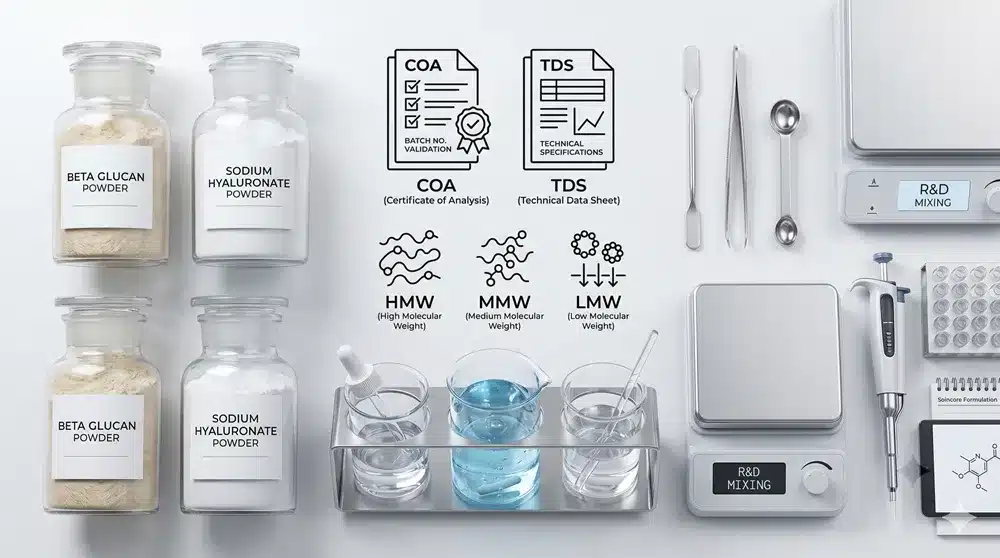
For supplement brands, cosmetic brands and contract manufacturers, the choice between beta glucan and hyaluronic acid should not be based only on consumer popularity. The more important question is: what finished product claim, dosage form and target user experience are you building?
If you are developing a beauty-from-within, hydration or joint-support product, Gensei can support تصنيع المكملات الغذائية ذات التركيبة المخصصة, ingredient sourcing and sample development for capsules, powders, gummies, tablets and liquid formats.
| Specification to Check | ما أهمية ذلك | Relevant Ingredient |
|---|---|---|
| إعلان المصدر | Oat, barley, yeast, mushroom, microbial fermentation or animal-derived sources can affect allergen, vegan and label claims. | Beta glucan and sodium hyaluronate |
| Molecular weight range | For sodium hyaluronate, molecular weight affects texture, viscosity, skin feel and positioning. | Hyaluronic acid / sodium hyaluronate |
| Purity and assay | Brands should confirm active content, identification method and batch-to-batch consistency before production. | كلاهما |
| علم الأحياء الدقيقة والمعادن الثقيلة | Important for finished product safety, import review and brand documentation. | كلاهما |
| Solubility and processing behavior | Powder blends, capsules, gummies, liquids and topical serums require different solubility, flowability and viscosity profiles. | كلاهما |
| COA / TDS / SDS availability | Procurement teams should request batch documents before confirming bulk orders. | كلاهما |
For oral hydration or joint-health concepts, review our bulk joint health ingredients, including sodium hyaluronate, MSM, chondroitin sulfate, glucosamine and related raw materials with COA, MSDS, TDS and batch documentation support.
For topical skincare formulas
If the product goal is a hydrating serum, HA or sodium hyaluronate can help deliver fast hydration and a smooth skin feel. If the product goal is a calming cream, barrier recovery serum or post-active care product, beta glucan may provide a stronger differentiation story.
For premium topical products, many brands can combine both ingredients: HA for fast hydration and beta glucan for comfort and barrier support. The final performance will still depend on the full formula, including water phase design, emollients, occlusives, preservatives, pH, viscosity and packaging compatibility.
For oral beauty and joint-health supplements
Sodium hyaluronate is commonly used in oral beauty, skin hydration and joint-health concepts. For these applications, brands should check molecular weight range, assay method, purity, heavy metals, microbiology and regulatory suitability for the target market.
Beta glucan can also be used in supplement concepts, especially where immune support, wellness or functional fiber positioning is relevant. However, the claims, dosage and regulatory language must be reviewed according to the target country or region.
For manufacturing and quality control
Ingredient quality is not only about choosing a popular name on the label. Before confirming production, brands should request and review the Certificate of Analysis, Technical Data Sheet, Safety Data Sheet, allergen statement, source declaration and batch-to-batch consistency data.
Need help checking ingredient specifications before production? Review our مراقبة جودة المكملات الغذائية process or learn more about our مركز البحث والتطوير for formulation, stability and application testing support.
FAQs About Beta Glucan vs. Hyaluronic Acid
Is beta glucan better than hyaluronic acid?
Beta glucan is not simply “better” than hyaluronic acid. Hyaluronic acid is better for fast surface hydration and visible plumping, while beta glucan is better for sensitive, irritated or barrier-compromised skin. Many formulas benefit from using both.
Can I use beta glucan and hyaluronic acid together?
Yes. They are complementary ingredients. Hyaluronic acid helps attract and bind water, while beta glucan adds soothing, comfort and barrier-supportive benefits.
Which is better for dry skin?
For dehydrated skin, hyaluronic acid can provide fast hydration. For dry skin with tightness, redness or a weakened barrier, beta glucan may be more useful. For very dry skin, combine humectants with emollients or occlusive ingredients.
Which is better for sensitive skin?
Beta glucan is usually the better positioning choice for sensitive skin because it supports hydration while also helping with soothing and barrier recovery.
هل هيالورونات الصوديوم هو نفسه حمض الهيالورونيك؟
Sodium hyaluronate is the sodium salt form of hyaluronic acid. It is commonly used in skincare and supplement applications because it is stable, water-soluble and available in different molecular weight ranges.
Does hyaluronic acid work better in humid weather?
Hyaluronic acid is a humectant, so the overall formula and environment can affect how it feels on the skin. In dry environments, HA-focused formulas may feel more comfortable when paired with moisturizers, emollients or occlusive ingredients.
Is beta glucan good after retinol or exfoliating acids?
Beta glucan is a useful ingredient for formulas designed to support comfort after potentially drying or irritating actives. It can be used in calming serums, moisturizers and barrier-supportive routines.
Which ingredient is better for brands to launch a premium hydration product?
For a basic hydration product, hyaluronic acid is easy for consumers to understand. For a more differentiated premium formula, beta glucan plus hyaluronic acid can support a broader message: fast hydration, comfort and barrier recovery.
Conclusion: Beta Glucan and Hyaluronic Acid Work Better as a Team
Hyaluronic acid remains one of the best-known ingredients for fast hydration, surface plumping and lightweight serum textures. Beta glucan is the more strategic choice when the product needs to support sensitive skin, reduce discomfort and strengthen the skin barrier story.
For consumers, the simplest rule is this: choose hyaluronic acid for instant hydration, choose beta glucan for sensitive-skin comfort, and choose both when your skin needs hydration plus recovery support. For brands and manufacturers, the better approach is to compare ingredient source, molecular weight, purity, solubility, batch documents and finished product format before selecting the final formula.
If you are developing a hydration, skin-health, beauty-from-within or joint-support product, Collagensei can help evaluate ingredient specifications, formula format, sourcing documentation and manufacturing requirements before production.
المراجع
- Cao Y. et al. Administration of skin care regimens containing β-glucan for skin recovery after fractional laser therapy.
- Feng X. et al. Exploring the properties and application potential of β-glucan in skin care.
- Majtan J. et al. β-Glucans: Multi-Functional Modulator of Wound Healing.
- Draelos ZD. et al. Efficacy evaluation of a topical hyaluronic acid serum in facial photoaging.
- Bravo B. et al. Benefits of topical hyaluronic acid for skin quality and signs of skin aging.
- Zanchetta C. et al. Hyaluronic acid in topical applications: the various forms and benefits.
- Cleveland Clinic. Hyaluronic Acid: What It Is, Benefits and Uses.

وارن وان خبير متمرس يتمتع بخبرة واسعة في سلسلة توريد المكملات الغذائية، ولديه خبرة عملية غنية في مجالات البحث والتطوير ومراقبة العمليات والتوريد العالمي للمكونات الأساسية مثل ببتيدات الكولاجين وبروتين مرق العظام والكيراتين. وبصفته كاتب هذه الزاوية، يكرس جهوده لتجريد الموضوعات من غلافها التسويقي، وتحويل العلوم الغامضة المتعلقة بالمكونات ومعايير مراقبة جودة الإنتاج إلى معلومات علمية متعمقة وسهلة الفهم، مما يساعد القراء على فهم الحقيقة الكامنة وراء الملصقات واتخاذ خيارات صحية أكثر عقلانية.