
Для производителей пищевых добавок оптимальный выбор зависит от формы выпуска продукта. Используйте коллагеновые пептиды, если вам нужен нейтральный, легко растворимый порошок для формул, предназначенных для красоты, суставов, сухожилий или активного питания. Используйте желатин, если вам нужны желирующие, загущающие свойства или текстура мармелада. Ни один из этих ингредиентов не следует рассматривать как средство для лечения проблем с кожей, суставами, кишечником или весом; заявления о пользе должны быть связаны с формой ингредиента, дозировкой, научными данными и целевым рынком.
Если вы занимаетесь разработкой коллагенового порошка, жевательных конфет или продукта функционального питания, сотрудничайте с производитель протеиновых добавок который позволяет оценить исходное сырье, молекулярную массу, растворимость, органолептические характеристики, сертификат анализа (COA), содержание тяжелых металлов, микробиологические показатели и заявленные свойства готового продукта ещё до начала производства.
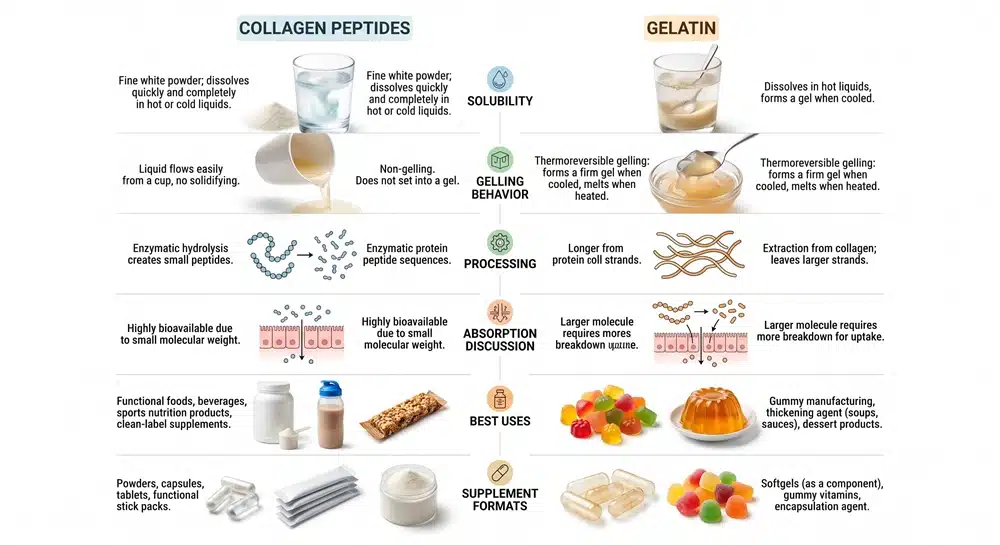
Коллагеновые пептиды и желатин: краткое сравнение
Что такое коллагеновые пептиды?
Коллагеновые пептиды представляют собой короткие цепочки аминокислот, получаемые в результате гидролиза коллагена. В ходе этого процесса крупные коллагеновые структуры расщепляются на более мелкие пептидные фрагменты, поэтому коллагеновые пептиды широко используются в составе порошков, пакетиков-стиков, готовых к употреблению напитков, капсул и биологически активных добавок для омоложения изнутри.
В повседневной речи коллагеновые пептиды часто называют гидролизованным коллагеном. С точки зрения рецептуры важны не только вопросы “это коллаген?” но и: «Каков его источник?» Каково распределение молекулярной массы? Растворяется ли он в холодной воде? Имеет ли он запах или цвет? Что показывает сертификат анализа (COA)? Как он ведет себя в конечной формуле?
Для брендов, разрабатывающих продукты с коллагеном, которые можно набирать ложкой, производство порошковых добавок Такая поддержка поможет проверить вкусовые качества, растворимость, размер порции, защиту от влаги, упаковку и стабильность готового продукта перед выпуском на рынок.
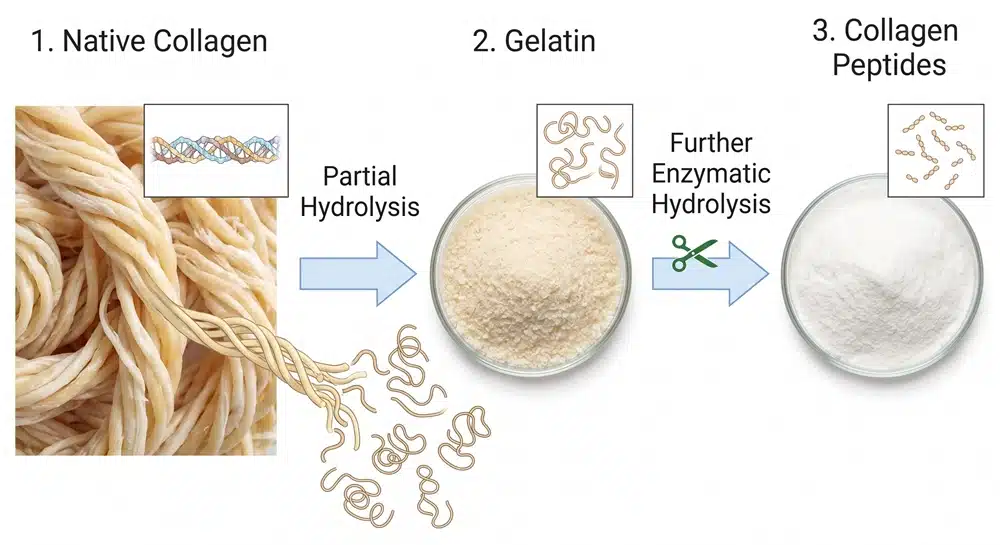
Что такое желатин?
Желатин — это белок, получаемый из коллагена путем его частичного расщепления из соединительной ткани животных. Он широко используется в пищевых продуктах, капсулах, жевательных конфетках, десертах и фармацевтических препаратах, поскольку обладает способностью образуть гель, загущать и стабилизировать текстуру.
Самое важное практическое отличие заключается в том, что желатин при охлаждении образует гель. Это свойство полезно при производстве мармеладов, зефира, желе и некоторых функциональных продуктов питания, но становится проблемой, если требуется получить прозрачный коллагеновый напиток, растворяющийся в холодной воде. При разработке рецептуры пищевой добавки желатин следует выбирать с учетом показателя Блума, вязкости, прозрачности, источника происхождения, запаха, предельных значений микробиологических показателей и технологических особенностей производства.
Если ваш бренд планирует выпустить жевательные конфеты с коллагеном или функциональные жевательные таблетки, производство жевательных добавок Служба поддержки может помочь проанализировать свойства желатина, альтернативы пектину, воздействие высоких температур, совместимость активных ингредиентов и требования к упаковке.
Содержит ли желатин коллаген?
Да. Желатин получают из коллагена и он содержит аминокислоты, производные коллагена, такие как глицин, пролин и гидроксипролин. Однако желатин не является идентичным коллагеновым пептидам ни по способу получения, ни по растворимости, ни по свойствам продукта.
Полезный способ объяснить это различие заключается в следующем:
- Натуральный коллаген: крупный структурный белок, содержащийся в соединительной ткани животных.
- Желатин: частично гидролизованный коллаген, который при охлаждении может превращаться в гель.
- Коллагеновые пептиды: дополнительные фрагменты гидролизованного коллагена, разработанные для облегчения смешивания и приема пищевых добавок.
Биодоступность и всасывание: что должны указывать производители
Коллагеновые пептиды часто позиционируются как более легко усваиваемые, поскольку они гидролизуются до пептидов меньшего размера. Исследования показывают, что пептиды, полученные из коллагена, такие как Pro-Hyp и Hyp-Gly, могут обнаруживаться в крови человека после перорального приема гидролизата коллагена. В обзорных статьях гидролизованный коллаген также описывается как вещество с более низкой молекулярной массой по сравнению с нативным коллагеном.
В то же время брендам следует избегать преувеличения этого различия. Желатин также усваивается, и, согласно результатам исследований, усвоенный желатин может всасываться в виде коллагеновых пептидов. Более безопасное и точное утверждение — не “желатин не усваивается”, а скорее: коллагеновые пептиды подвергаются более тщательной обработке, как правило, имеют меньшую молекулярную массу и обычно более удобны для быстрорастворимых форм пищевых добавок.
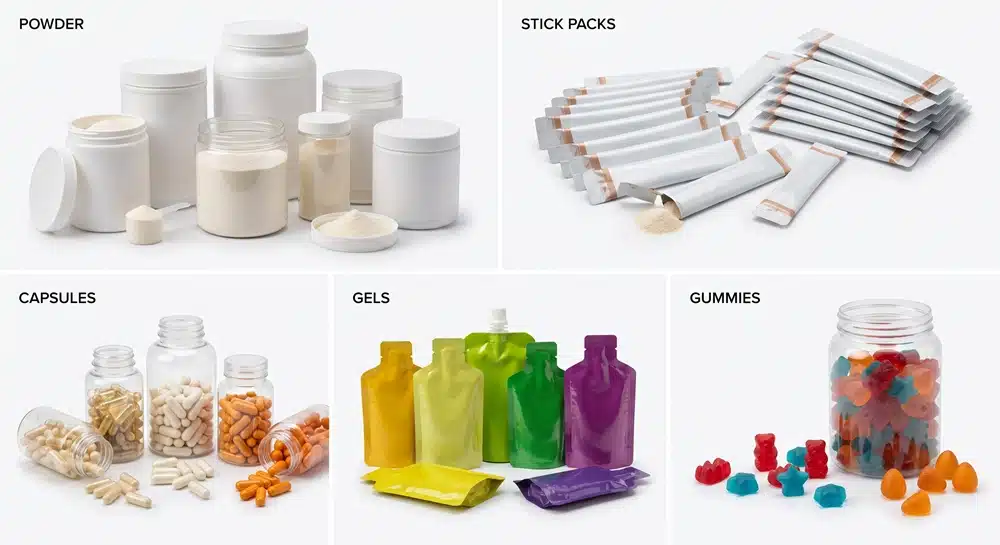
Коллагеновые пептиды и желатин в различных формах выпуска продукции
Брендам, разрабатывающим продукты, ориентированные на суставы, сухожилия или подвижность, рекомендуется увязать стратегию формулировки с ответственной проверкой рекламных заявлений. Вы также можете ознакомиться с нашим руководством по коллагеновые пептиды для сухожилий для более подробного обсуждения ингредиентов.
Желатин против коллагеновых пептидов: цена и стоимость одной порции
Данные поисковых запросов показывают, что пользователи сравнивают цены на желатиновый порошок и коллагеновые пептиды. Во многих случаях желатин может казаться дешевле в пересчете на килограмм, но стоимость за килограмм — не единственный фактор, влияющий на принятие решения.
Производители пищевых добавок должны сравнивать:
- Стоимость одной готовой порции
- Рекомендуемая доза на одну порцию
- Содержание белка и уровень влажности
- Требования к обработке и растворимости
- Потребности в маскировке привкуса
- Формат упаковки
- Ожидания потребителей и позиционирование бренда
Например, желатин может быть экономически выгодным решением для производства жевательных конфет или десертных продуктов, поскольку в данном случае главную роль играет именно его текстура. Коллагеновые пептиды, в свою очередь, могут оказаться более подходящим вариантом для косметической пудры премиум-класса, поскольку потребители ожидают, что пудра будет иметь нейтральную текстуру, легко растворяться и не превращаться в гель.
Требования к качеству, на которые следует обратить внимание перед покупкой
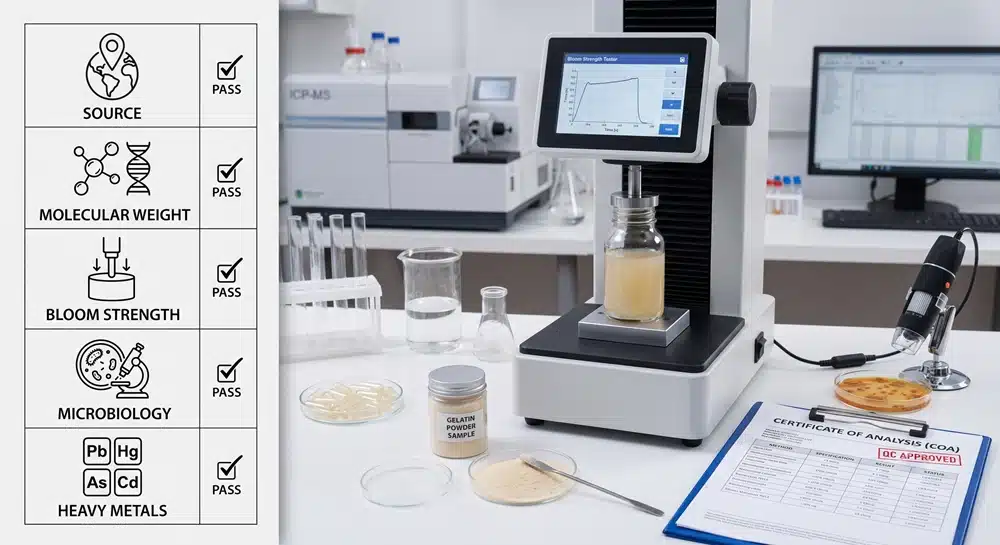
Независимо от того, выбираете ли вы коллагеновые пептиды или желатин, качество ингредиентов следует проверять до начала производства. Не полагайтесь исключительно на маркетинговые термины, такие как “от кормления травой”, “премиум”, “натуральный” или “коллаген для красоты”. Попросите предоставить техническую документацию.
Если вам нужна помощь в подборе ингредиентов для готовой линейки коллагеновых добавок, добавка под собственной торговой маркой Поддержка может помочь согласовать требования к составу смеси, формату упаковки, проведению испытаний и рассмотрению заявлений о свойствах продукта.
Вопросы, связанные с претензиями и соблюдением нормативных требований
Коллагеновые пептиды и желатин являются пищевыми добавками или пищевыми ингредиентами, а не лекарственными средствами. Следует избегать формулировок, которые прямо или косвенно указывают на то, что продукт лечит, излечивает или предотвращает заболевания. Например, не следует утверждать, что желатин лечит синдром «проницаемого кишечника», излечивает артрит, обращает вспять процессы старения или гарантирует похудение.
Более корректные формулировки включают:
- “способствует увлажнению и повышению эластичности кожи”, если это подтверждается составом продукта и научными данными
- “способствует комфорту и подвижности суставов”, если это обосновано и уместно
- “способствует поступлению аминокислот, полученных из коллагена”
- “используется в качестве желирующего ингредиента для жевательных конфет и функциональных продуктов питания”
- “обеспечивает гибкость при разработке рецептур порошков, жевательных конфет и капсул”
Для добавки для здоровья суставов, производители должны убедиться, что заявления о свойствах готового продукта подтверждаются дозировкой, формой ингредиентов, релевантностью исследований и нормативными требованиями целевого рынка.
Какой из них выбрать?
Выберите коллагеновые пептиды если вы ищете удобную пищевую добавку для ежедневного употребления в виде порошка, коктейля для красоты, капсул, таблеток, пакетиков-стиков или средства для здоровья суставов, которое легко растворяется и не образует гелеобразной консистенции.
Выберите желатин если ваша цель — придание текстуры, гелеобразование, загущение, производство жевательных конфет, зефира, десертов, оболочек для капсул или функциональных пищевых продуктов, в которых гель является неотъемлемой частью вкусовых качеств продукта.
Выбирайте оба варианта только в том случае, если формула требует использования обоих преимуществ: Например, в жевательных конфетках с коллагеном может использоваться желатин для придания нужной текстуры, а пептиды коллагена — для позиционирования продукта на этикетке или указания содержания активного коллагена. В таком случае производитель должен проверить текстуру, термостабильность, водную активность, срок хранения и соответствие размера порции.
ЧАСТО ЗАДАВАЕМЫЕ ВОПРОСЫ
Желатин — это то же самое, что и коллагеновые пептиды?
Нет. Желатин получают из коллагена, однако коллагеновые пептиды подвергаются дальнейшей гидролизации с образованием более мелких пептидных фрагментов. Они имеют схожий аминокислотный состав, но отличаются растворимостью, текстурой и поведением в составе препарата.
Содержит ли желатин коллаген?
Да. Желатин — это белок, получаемый из коллагена. Он содержит аминокислоты, характерные для коллагена, такие как глицин, пролин и гидроксипролин, но не является точным аналогом гидролизованных коллагеновых пептидов.
Что лучше: коллагеновые пептиды или желатин?
Коллагеновые пептиды обычно лучше подходят для порошковых напитков, капсул и формул ежедневных пищевых добавок. Желатин лучше подходит для жевательных конфет, гелей, десертов и продуктов, которым требуется загущение или желирование. Выбор зависит от формы выпуска продукта.
Обладают ли коллагеновые пептиды более высокой биодоступностью, чем желатин?
Коллагеновые пептиды, как правило, имеют более низкую молекулярную массу и разработаны для облегчения растворения и усвоения. Однако желатин также легко усваивается и может всасываться после расщепления. Производителям следует избегать категоричных заявлений, если они не подкреплены конкретными доказательствами и техническими характеристиками ингредиентов.
Может ли желатин заменить коллагеновые пептиды в порошковой добавке?
Как правило, нет, если для продукта требуется растворимость в холодной воде и низкая вязкость при употреблении. Желатин при охлаждении может комковаться, загустевать или превращаться в гель, что может ухудшить впечатления потребителей от напитков в порошковой форме.
Что следует проверять производителям пищевых добавок перед выбором ингредиента?
Проверьте исходное сырье, распределение молекулярной массы, прочность по Блуму для желатина, растворимость, содержание белка, сертификат анализа (COA), содержание тяжелых металлов, микробиологические показатели, информацию об аллергенах, страну происхождения, сертификаты и подтверждающую документацию по заявлениям о свойствах готового продукта.
Ссылки
- FDA: Вопросы и ответы о пищевых добавках
- Федеральная торговая комиссия (FTC): Руководство по соблюдению требований к товарам для здоровья
- Лю и др., «Коллаген и желатин», «Ежегодный обзор пищевых наук и технологий»
- Леон-Лопес и др., «Гидролизованный коллаген — источники и области применения»
- Виргилио и др., Абсорбция биологически активных пептидов после приема гидролизата коллагена
- Ван и др., Биодоступность желатина и всасывание коллагеновых пептидов
- Министерство здравоохранения Канады: Монография по гидролизованному коллагену

Уоррен Ван — опытный специалист с обширным стажем работы в сфере цепочки поставок пищевых добавок, обладающий богатым практическим опытом в области исследований, разработки, контроля производственных процессов и глобального поиска поставщиков ключевых ингредиентов, таких как коллагеновые пептиды, белок костного бульона и кератин. Как автор этой рубрики, он стремится развенчать маркетинговую мистификацию, преобразуя малоизвестные научные факты об ингредиентах и стандарты контроля качества производства в доступные и достоверные научно-популярные материалы, помогая читателям понять правду, скрытую за этикетками, и делать более рациональный выбор в вопросах здоровья.


