
Đối với các thương hiệu thực phẩm bổ sung, lựa chọn tốt nhất phụ thuộc vào dạng bào chế của sản phẩm. Nên sử dụng peptide collagen khi cần một loại bột trung tính, dễ hòa tan cho các công thức chăm sóc sắc đẹp, hỗ trợ khớp, gân hoặc dinh dưỡng thể thao. Nên sử dụng gelatin khi cần tạo độ đông, làm đặc hoặc tạo kết cấu dạng kẹo dẻo. Cả hai thành phần này đều không nên được coi là phương thuốc chữa trị các vấn đề về da, khớp, đường ruột hoặc cân nặng; các tuyên bố về lợi ích cần phải dựa trên dạng bào chế, liều lượng, bằng chứng khoa học và thị trường mục tiêu của từng thành phần.
Nếu bạn đang phát triển sản phẩm bột collagen, kẹo dẻo hoặc thực phẩm chức năng, hãy hợp tác với một Nhà sản xuất thực phẩm bổ sung protein có thể đánh giá nguồn gốc, trọng lượng phân tử, độ hòa tan, đặc tính cảm quan, Báo cáo phân tích (COA), hàm lượng kim loại nặng, các chỉ tiêu vi sinh và các tuyên bố về sản phẩm thành phẩm trước khi sản xuất.
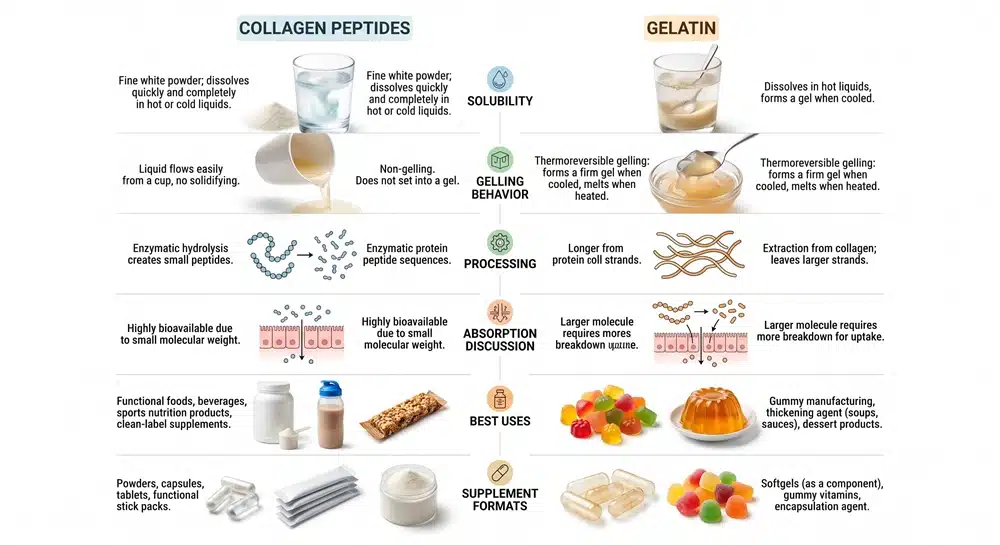
Peptide collagen so với gelatin: So sánh nhanh
Peptide collagen là gì?
Peptide collagen là các chuỗi ngắn gồm các axit amin được tạo ra thông qua quá trình thủy phân collagen. Quá trình này phân tách các cấu trúc collagen lớn thành các đoạn peptide nhỏ hơn, chính vì vậy peptide collagen thường được sử dụng trong các sản phẩm dạng bột, gói nhỏ, đồ uống pha sẵn, viên nang và các thực phẩm bổ sung giúp làm đẹp từ bên trong.
Trong ngôn ngữ phổ thông, các peptit collagen thường được gọi là collagen thủy phân. Từ góc độ công thức, những câu hỏi quan trọng không chỉ là “đó có phải là collagen không?” mà còn là: Nguồn gốc của nó là gì? Phân bố trọng lượng phân tử như thế nào? Nó có hòa tan trong nước lạnh không? Nó có mùi hoặc màu không? Báo cáo phân tích (COA) cho thấy điều gì? Nó hoạt động như thế nào trong công thức cuối cùng?
Đối với các thương hiệu đang phát triển các sản phẩm collagen dạng muỗng, Sản xuất thực phẩm bổ sung dạng bột Việc hỗ trợ này có thể giúp kiểm tra hương vị, độ hòa tan, khẩu phần, khả năng bảo vệ khỏi độ ẩm, bao bì và độ ổn định của sản phẩm hoàn thiện trước khi ra mắt.
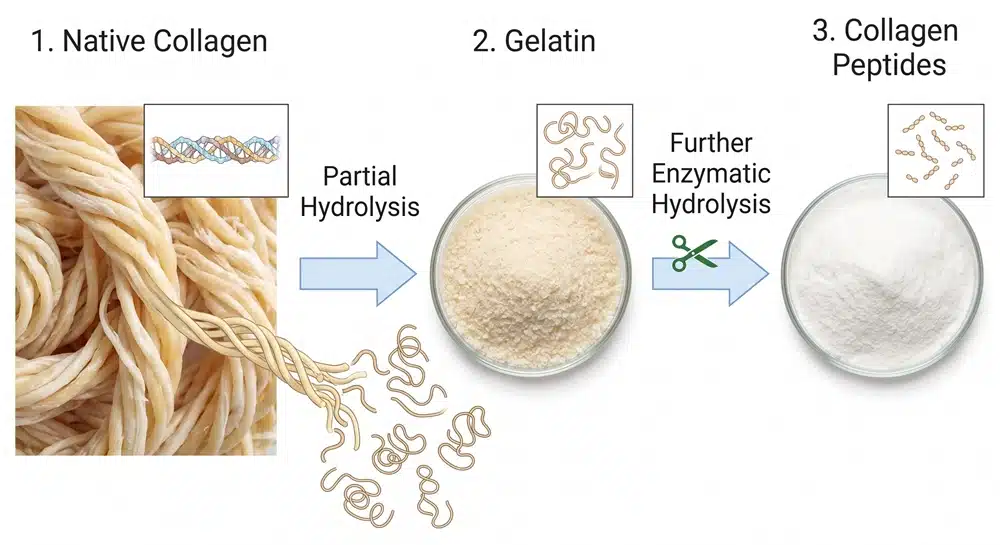
Gelatin là gì?
Gelatin là một loại protein có nguồn gốc từ collagen, được sản xuất thông qua quá trình phân giải một phần collagen từ mô liên kết động vật. Chất này được sử dụng rộng rãi trong thực phẩm, viên nang, kẹo dẻo, món tráng miệng và các ứng dụng dược phẩm vì có khả năng tạo gel, làm đặc và ổn định kết cấu.
Sự khác biệt thực tế lớn nhất là gelatin sẽ tạo thành gel khi nguội đi. Tính chất này rất hữu ích cho kẹo dẻo, kẹo marshmallow, thạch và một số loại thực phẩm chức năng, nhưng lại trở thành vấn đề nếu mục tiêu là tạo ra một loại đồ uống collagen trong suốt, có thể hòa tan trong nước lạnh. Trong công thức thực phẩm bổ sung, gelatin nên được lựa chọn dựa trên độ đặc Bloom, độ nhớt, độ trong suốt, nguồn gốc, mùi, giới hạn vi sinh và ứng dụng sản xuất.
Nếu thương hiệu của bạn đang có kế hoạch ra mắt kẹo dẻo collagen hoặc các sản phẩm nhai có công dụng chức năng, Sản xuất thực phẩm chức năng dạng kẹo dẻo Dịch vụ hỗ trợ có thể giúp đánh giá tính chất của gelatin, các chất thay thế pectin, tác động của nhiệt, khả năng tương thích của các thành phần hoạt tính và các yêu cầu về bao bì.
Gelatin có chứa collagen không?
Đúng vậy. Gelatin được sản xuất từ collagen và chứa các axit amin có nguồn gốc từ collagen như glycine, proline và hydroxyproline. Tuy nhiên, gelatin không hoàn toàn giống với các peptit collagen về quy trình chế biến, độ hòa tan hay tính chất của sản phẩm.
Một cách hữu ích để giải thích sự khác biệt này là:
- Collagen tự nhiên: một loại protein cấu trúc lớn có trong mô liên kết của động vật.
- Gelatin: collagen đã được thủy phân một phần, có thể đông đặc khi được làm lạnh.
- Peptide collagen: các đoạn collagen đã được thủy phân thêm, được thiết kế để dễ hòa tan và sử dụng như thực phẩm bổ sung hơn.
Khả năng sinh khả dụng và sự hấp thu: Những thông tin mà các thương hiệu nên cung cấp
Các peptit collagen thường được quảng cáo là dễ hấp thu hơn vì chúng đã được thủy phân thành các peptit có kích thước nhỏ hơn. Các nghiên cứu cho thấy các peptit có nguồn gốc từ collagen như Pro-Hyp và Hyp-Gly có thể xuất hiện trong máu người sau khi uống hydrolysate collagen. Các bài tổng quan cũng mô tả collagen thủy phân là một chất có trọng lượng phân tử thấp hơn so với collagen nguyên bản.
Đồng thời, các thương hiệu nên tránh phóng đại sự khác biệt này. Gelatin cũng có thể tiêu hóa được, và các nghiên cứu đã chỉ ra rằng gelatin sau khi được tiêu hóa có thể được hấp thu dưới dạng các peptit collagen. Tuyên bố an toàn và chính xác hơn không phải là “gelatin không được hấp thu”, mà là: các peptit collagen đã qua xử lý nhiều hơn, thường có trọng lượng phân tử thấp hơn và thường thuận tiện hơn cho các dạng thực phẩm bổ sung pha nhanh.
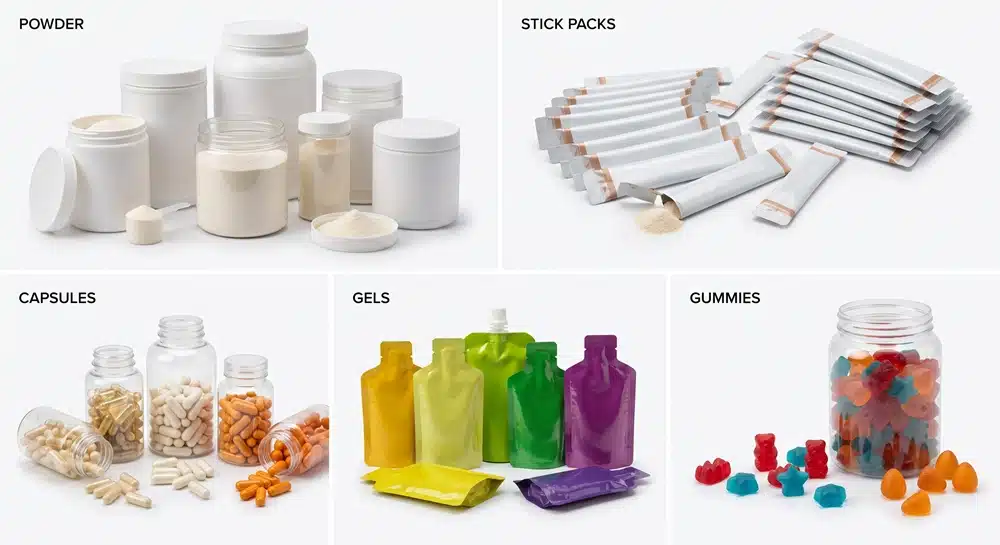
So sánh peptit collagen và gelatin trong các dạng sản phẩm khác nhau
Đối với các thương hiệu phát triển sản phẩm xoay quanh các khái niệm về khớp, gân hoặc khả năng vận động, hãy kết hợp chiến lược công thức với việc đánh giá các tuyên bố một cách có trách nhiệm. Bạn cũng có thể tham khảo hướng dẫn của chúng tôi về peptide collagen cho gân để có một cuộc thảo luận chuyên sâu hơn về các thành phần.
Gelatin so với peptit collagen: Giá và chi phí trên mỗi khẩu phần
Dữ liệu tìm kiếm cho thấy người dùng thường so sánh giá của bột gelatin và peptide collagen. Trong nhiều trường hợp, gelatin có vẻ rẻ hơn tính theo kilogram, nhưng giá mỗi kilogram không phải là yếu tố duy nhất quyết định việc mua hàng.
Các thương hiệu thực phẩm bổ sung nên so sánh:
- Chi phí cho mỗi phần ăn hoàn chỉnh
- Lượng khuyến nghị cho mỗi phần ăn
- Hàm lượng protein và độ ẩm
- Các yêu cầu về chế biến và độ hòa tan
- Các yêu cầu về che lấp hương vị
- Định dạng đóng gói
- Kỳ vọng của người tiêu dùng và định vị nhãn hiệu
Ví dụ, gelatin có thể là lựa chọn hiệu quả về chi phí cho các sản phẩm dạng kẹo dẻo hoặc món tráng miệng vì chính kết cấu của nó mới là yếu tố quan trọng. Trong khi đó, các peptit collagen có thể phù hợp hơn cho các loại bột làm đẹp cao cấp, bởi người tiêu dùng mong muốn một loại bột trung tính, dễ hòa tan mà không tạo thành gel.
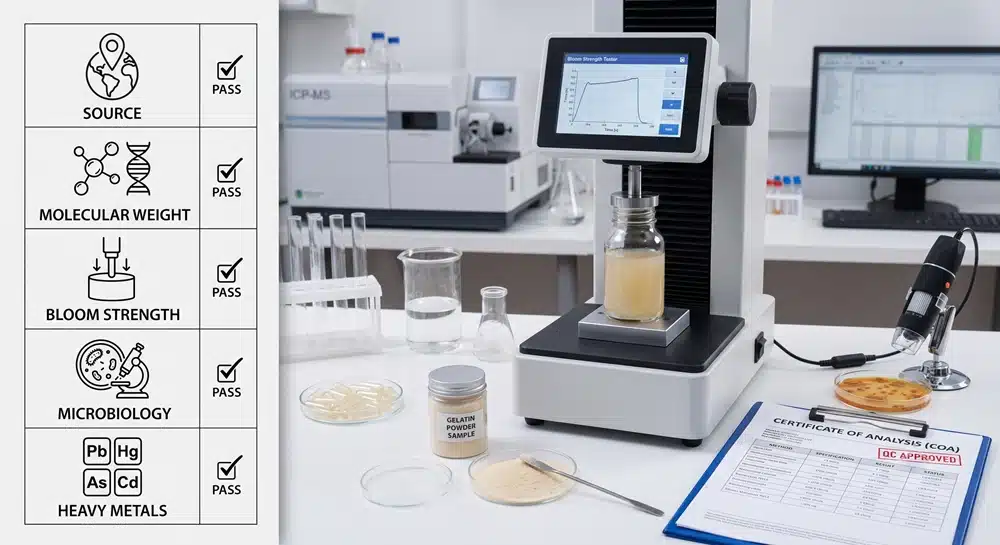
Các tiêu chuẩn chất lượng cần kiểm tra trước khi mua
Dù bạn chọn peptide collagen hay gelatin, chất lượng nguyên liệu đều cần được kiểm chứng trước khi sản xuất. Đừng chỉ dựa vào các thuật ngữ tiếp thị như “nuôi bằng cỏ”, “cao cấp”, “tự nhiên” hay “collagen làm đẹp”. Hãy yêu cầu cung cấp tài liệu kỹ thuật.
Nếu bạn cần sự trợ giúp trong việc lựa chọn nguyên liệu để hoàn thiện dòng sản phẩm bổ sung collagen, Thực phẩm bổ sung mang nhãn hiệu riêng theo yêu cầu Sự hỗ trợ này có thể giúp liên kết các yêu cầu về công thức, hình thức đóng gói, thử nghiệm và việc xem xét các tuyên bố.
Các vấn đề cần lưu ý về yêu cầu bồi thường và tuân thủ
Peptide collagen và gelatin là thực phẩm bổ sung hoặc thành phần thực phẩm, không phải là thuốc. Tránh sử dụng ngôn từ khẳng định hoặc ngụ ý rằng sản phẩm có tác dụng điều trị, chữa khỏi hoặc phòng ngừa bệnh tật. Ví dụ, không được tuyên bố rằng gelatin có thể chữa lành hội chứng ruột rò rỉ, chữa khỏi viêm khớp, đảo ngược quá trình lão hóa hoặc đảm bảo giảm cân.
Các cách diễn đạt phù hợp hơn bao gồm:
- “giúp duy trì độ ẩm và độ đàn hồi cho da” khi có sự hỗ trợ từ thành phần và bằng chứng khoa học
- “giúp duy trì sự thoải mái và khả năng vận động cho khớp” khi có cơ sở khoa học và phù hợp
- “giúp cung cấp các axit amin có nguồn gốc từ collagen”
- “được sử dụng làm thành phần tạo gel cho kẹo dẻo và thực phẩm chức năng”
- “hỗ trợ tính linh hoạt trong công thức sản xuất các sản phẩm dạng bột, kẹo dẻo và viên nang”
Cho Thực phẩm bổ sung cho sức khỏe khớp, các thương hiệu cần đảm bảo rằng các tuyên bố về sản phẩm hoàn chỉnh phải được chứng minh bằng liều lượng, dạng thành phần, tính phù hợp của các nghiên cứu và các quy định của thị trường mục tiêu.
Bạn nên chọn cái nào?
Chọn peptide collagen Nếu mục tiêu của bạn là tìm một sản phẩm bổ sung hàng ngày tiện lợi dưới dạng bột, thức uống làm đẹp, viên nang, viên nén, gói dạng que hoặc công thức hỗ trợ sức khỏe khớp, sản phẩm đó cần dễ hòa tan và không bị đông đặc.
Chọn gelatin nếu mục tiêu của bạn là tạo kết cấu, tạo gel, làm đặc, kẹo dẻo, kẹo marshmallow, món tráng miệng, vỏ viên nang hoặc các ứng dụng thực phẩm chức năng mà trong đó chất gel là một phần của trải nghiệm sản phẩm.
Chỉ nên chọn cả hai khi công thức cần cả hai lợi ích: Ví dụ, một sản phẩm kẹo dẻo collagen có thể sử dụng gelatin để tạo kết cấu, đồng thời bổ sung các peptit collagen nhằm mục đích quảng bá trên nhãn sản phẩm hoặc để tăng hàm lượng collagen hoạt tính. Trong trường hợp đó, thương hiệu phải tiến hành kiểm tra kết cấu, độ ổn định nhiệt, độ hoạt động của nước, thời hạn sử dụng và tính khả thi về khẩu phần.
Câu hỏi thường gặp
Gelatin có phải là collagen peptide không?
Không. Gelatin được sản xuất từ collagen, nhưng các peptit collagen được thủy phân thêm để tạo thành các đoạn peptit nhỏ hơn. Chúng có nguồn gốc axit amin tương tự nhau nhưng lại khác nhau về độ hòa tan, kết cấu và tính chất trong công thức.
Gelatin có chứa collagen không?
Đúng vậy. Gelatin là một loại protein có nguồn gốc từ collagen. Nó cung cấp các axit amin liên quan đến collagen như glycine, proline và hydroxyproline, nhưng không hoàn toàn giống với các peptit collagen thủy phân.
Cái nào tốt hơn, peptide collagen hay gelatin?
Peptide collagen thường phù hợp hơn với các sản phẩm bột uống, viên nang và công thức thực phẩm bổ sung hàng ngày. Gelatin lại phù hợp hơn với kẹo dẻo, gel, món tráng miệng và các sản phẩm cần làm đặc hoặc tạo gel. Lựa chọn nào tốt hơn phụ thuộc vào dạng bào chế của sản phẩm.
Các peptit collagen có khả năng hấp thu sinh học cao hơn gelatin không?
Các peptit collagen thường có trọng lượng phân tử thấp hơn và được thiết kế để dễ hòa tan và tiêu hóa hơn. Tuy nhiên, gelatin cũng dễ tiêu hóa và có thể được hấp thu sau khi được phân giải. Các thương hiệu nên tránh đưa ra những tuyên bố tuyệt đối trừ khi chúng được dựa trên bằng chứng cụ thể và thông số kỹ thuật của thành phần.
Gelatin có thể thay thế các peptit collagen trong bột thực phẩm chức năng không?
Thông thường thì không, nếu sản phẩm cần có khả năng hòa tan trong nước lạnh và mang lại cảm giác uống có độ nhớt thấp. Gelatin có thể vón cục, đặc lại hoặc đông đặc khi được làm lạnh, điều này có thể gây ra trải nghiệm tiêu dùng kém đối với các sản phẩm bột uống.
Các thương hiệu thực phẩm bổ sung cần kiểm tra những yếu tố nào trước khi lựa chọn một thành phần?
Kiểm tra nguồn gốc, phân bố khối lượng phân tử, độ bền Bloom của gelatin, độ hòa tan, hàm lượng protein, Báo cáo phân tích (COA), kim loại nặng, các chỉ tiêu vi sinh, thông tin về chất gây dị ứng, nước xuất xứ, các chứng nhận và cơ sở chứng minh cho các tuyên bố về sản phẩm hoàn thiện.
Tài liệu tham khảo
- FDA: Câu hỏi và câu trả lời về thực phẩm chức năng
- FTC: Hướng dẫn tuân thủ đối với các sản phẩm chăm sóc sức khỏe
- Liu và các cộng sự, “Collagen và gelatin”, Tạp chí Tổng quan Hàng năm về Khoa học và Công nghệ Thực phẩm
- León-López và các cộng sự, Collagen thủy phân – Nguồn gốc và ứng dụng
- Virgilio và các cộng sự, Sự hấp thu các peptit có hoạt tính sinh học sau khi tiêu thụ hydrolysate collagen
- Wang và các cộng sự, Khả năng sinh khả dụng của gelatin và sự hấp thu của peptit collagen
- Bộ Y tế Canada: Tài liệu chuyên môn về collagen thủy phân

Warren Wan là một chuyên gia dày dạn với kinh nghiệm phong phú trong chuỗi cung ứng thực phẩm bổ sung, sở hữu kinh nghiệm thực tiễn sâu rộng trong nghiên cứu, phát triển, kiểm soát quy trình và tìm nguồn cung ứng toàn cầu các thành phần cốt lõi như peptit collagen, protein từ nước hầm xương và keratin. Với tư cách là tác giả của chuyên mục này, ông cam kết loại bỏ những lớp bao bọc tiếp thị, biến những kiến thức khoa học phức tạp về thành phần và các tiêu chuẩn kiểm soát chất lượng sản xuất thành những nội dung phổ biến khoa học dễ hiểu nhưng sâu sắc, giúp độc giả hiểu rõ sự thật đằng sau các nhãn mác và đưa ra những lựa chọn sức khỏe hợp lý hơn.


