
快速解答:輔酶Q10 對比 魚油
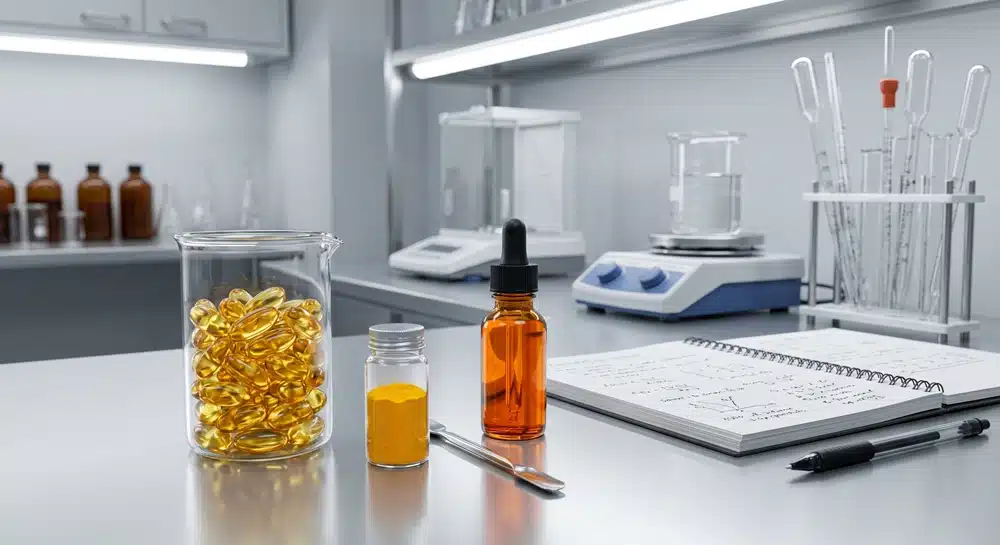
輔酶 Q10 與魚油並非同一種成分。輔酶 Q10 是一種脂溶性抗氧化劑,參與線粒體的能量生成;而魚油則提供如 EPA 和 DHA 等 omega-3 脂肪酸,這些成分通常被用於維持脂質健康、減輕發炎及促進心血管健康。.
對消費者而言,哪種選擇較佳取決於其健康目標及用藥狀況。輔酶Q10(CoQ10)常與細胞能量、他汀類藥物使用及抗氧化支持相關;魚油則與Omega-3攝取、三酸甘油酯管理及全身性發炎更密切相關。.
對營養補充品品牌而言,更關鍵的問題並非單純地「哪一種比較好?」,而是:哪種成分最符合該劑型、宣稱策略、油基系統、成分分析證書(COA)要求、穩定性目標以及市場定位?
在許多產品開發專案中,輔酶Q10與魚油並非競爭對手。它們可以是互補的成分,特別是在以心臟健康、健康老化及高端Omega-3定位為設計核心的軟膠囊產品中。.
早期 客製化 CoQ10 與 omega-3 配方 專業支援可協助您確定合適的輔酶Q10劑型、EPA/DHA的目標攝取量、基底油以及抗氧化系統。.什麼是輔酵素 Q10?
輔酶 Q10(常簡稱為 CoQ10)是一種存在於人體細胞中的天然化合物。它在線粒體的能量生成過程中扮演重要角色,同時也具有抗氧化作用。其濃度最高的地方是心臟、肝臟、腎臟和胰臟等高耗能器官。.
在營養補充劑配方中,輔酶Q10通常以兩種商業形式出現:泛醌(ubiquinone)和泛醌醇(ubiquinol)。泛醌是氧化型,因其穩定且性價比高而被廣泛使用;泛醌醇則是還原型,常被定位為生物利用度更高,特別是在高階配方或針對老年族群的產品中。.
由於輔酶Q10(CoQ10)具有脂溶性,其給藥系統至關重要。 融入油基軟膠囊中的輔酶Q10成分,其表現可能與乾粉錠劑或膠囊有顯著差異。對營養補充品品牌而言,這意味著在選用輔酶Q10時,不僅應考量劑量,還需評估其溶解度、載體油、抗氧化系統、與軟膠囊的相容性,以及穩定性測試。.
輔酵素 Q10 的好處
為什麼您可以考慮在日常活動中加入輔酶Q10?讓我們來分析一下:
- 心臟健康: CoQ10 是心臟最好的朋友,尤其是對心臟衰竭的患者而言。研究,如 美國心臟病學會期刊研究發現,補充 CoQ10 可使心臟衰竭患者的主要心血管事件減少 39%。它對服用他汀類藥物的患者特別有幫助,因為他汀類藥物會消耗 CoQ10 的水平,導致肌肉酸痛或疲勞。
- 緩解偏頭痛: 如果偏頭痛是經常出現的不速之客,CoQ10 可能會有所幫助。發表於 頭痛 研究顯示,與安慰劑相比,每天服用 150 毫克 CoQ10 可將偏頭痛的天數減少 48%。這對任何厭倦了劇烈頭痛的人來說都是一個改變。
- 抗氧化能力: CoQ10 可中和自由基,有助於保護細胞免受氧化壓力,而氧化壓力與糖尿病和神經退化性疾病等慢性疾病有關。有些研究顯示 CoQ10 可改善糖尿病患者對胰島素的敏感度,但仍需進行更多的研究。
- 其他潛在福利: CoQ10 在提升運動表現和延緩帕金森氏症或阿茲海默症等疾病的進展方面的作用仍在研究中,但仍未有定論。
CoQ10 就像是您值得信賴的夥伴,能滿足您身體的能量需求,並防止細胞受損。但與魚油相比,輔酶Q10的效果如何呢?
什麼是魚油?
魚油是一種來自海洋的油脂成分,能提供長鏈ω-3脂肪酸,主要為EPA和DHA。這些脂肪酸天然存在於油性魚類中,例如沙丁魚、鯷魚、鯖魚、鮭魚和鯡魚。 在營養補充品製造中,魚油最常被用於軟膠囊、液態油及歐米伽-3複合產品中。.
魚油的品質並非僅由「魚油」一詞所決定。各品牌應比較實際的 EPA 與 DHA 含量、氧化指標、污染物檢測結果、來源可追溯性、氣味特徵,以及保質期表現。.
就魚油原料而言,氧化控制是品質管理上的重要課題。高品質的魚油應具備相關分析報告(COA)數據作為依據,例如過氧化值、p-苯甲醯胺值及總毒素(TOTOX)等。在進行批量採購或生產前,亦應審查重金屬、多氯聯苯(PCBs)、二噁英及微生物含量等指標是否符合標準。.
魚油的好處
魚油的成名之處在於它的廣泛好處,特別是對心臟和腦部。以下是科學的說法:
- 心臟健康: 魚油是心血管健康的超級明星。的 美國心臟協會 建議甘油三酸脂高的人服用奧米加-3 補充劑,因為根據劑量的不同,奧米加-3 補充劑可降低甘油三酸脂水平 20-50%。胰島素 REDUCE-IT 試驗,發表於 新英格蘭醫學雜誌研究發現,高劑量 EPA 可降低三酸甘油脂升高患者的心血管事件 25%。
- 大腦健康: Omega-3,尤其是 DHA,對大腦功能至關重要。它們是腦細胞膜的主要成分,可降低認知能力衰退和憂鬱症的風險。一項研究在 臨床精神病學期刊 研究發現,補充 omega-3 可以有效治療重度抑鬱症。
- 抗發炎效果: Omega-3 有助於消炎,可以緩解類風濕關節炎等症狀。研究顯示 健康網站 指出魚油可以減少關節炎患者的關節疼痛和僵硬。
- 其他福利: 魚油也可以幫助眼睛健康、改善肝臟功能,甚至可以減少痘痘等發炎相關症狀,從而增進皮膚健康。
魚油就像是身體的撫慰膏,能鎮靜發炎,並支援重要器官。但它與輔酶Q10相比如何呢?
輔酵素 Q10 vs 魚油:有何差異?
雖然輔酶Q10和魚油都因其健康益處而聞名,但它們的作用方式卻截然不同:
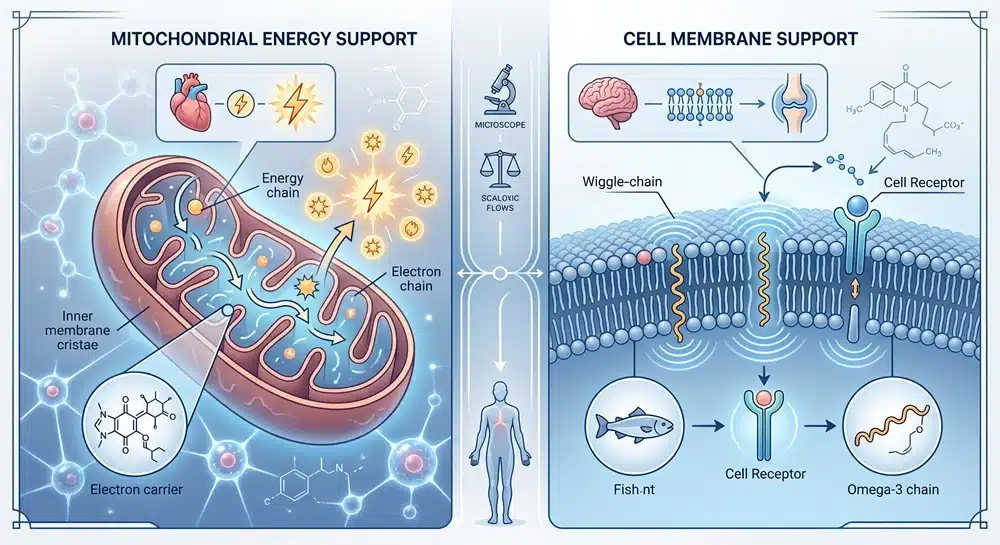
- 輔酶Q10 專注於能量生產和抗氧化保護。它集中在高能量器官,如心臟、肝臟和腎臟,確保它們有足夠的燃料發揮最佳功能。對於涉及能量不足或氧化壓力的情況特別有幫助。
- 魚油提供奧米加-3 脂肪酸能減少發炎,並維持細胞膜結構的完整性,尤其是心臟和腦部。它是管理全身性發炎和改善血脂狀況的理想選擇。.
將您的身體想像成一個忙碌的工廠:CoQ10 可維持發電機運轉,而魚油可確保機器不會過熱。兩者相輔相成,但根據您的健康需求,它們的應用也有所不同。
輔酵素 Q10 與魚油比較表
為了讓差異更清楚,這裡有一個並排比較:
| 因子 | 輔酶Q10 | 魚油 | 配方說明 |
| 主要職責 | 線粒體能量與抗氧化支援 | EPA/DHA 歐米加-3 的攝取 | 它們解決了不同的產品定位問題。. |
| 常用形式 | 泛醌或泛醌醇 | 富含 EPA/DHA 的海洋油脂 | 兩者均為脂溶性,適合用於油基劑型。. |
| 最佳劑型 | 軟膠囊、膠囊、錠劑、油性配方 | 軟膠囊或液態油 | 複方軟膠囊在商業上可能具有吸引力。. |
| 關鍵品質指標 | 含量、純度、殘留溶劑、劑型 | EPA/DHA 含量、PV、p-AV、TOTOX、污染物 | 在投入生產前,必須進行 COA 審查。. |
| 主要製造問題 | 水溶性差、分散性差、色穩性差 | 氧化、異味、洩漏風險 | 載體油、抗氧化系統以及與外殼的相容性都很重要。. |
| 最佳定位 | 健康老化、細胞能量、心臟健康 | Omega-3、三酸甘油酯調節、發炎平衡 | 複合型產品可鎖定高端心臟健康配方市場。. |
哪一種更有益於心臟健康?輔酶 Q10 和魚油?
談到心臟健康,這兩種營養補充品都有其獨特的優點,最佳選擇取決於您的特定需求:
- 輔酶Q10 對心臟衰竭患者和服用他汀類藥物的患者特別有效。一項來自 雪松-西奈 指出,CoQ10 可改善心臟細胞的能量產生,並減少氧化壓力,可能降低心臟相關事件的風險。它特別有助於對抗他汀類藥物引起的 CoQ10 損耗,因為他汀類藥物可能會引起肌肉疼痛。
- 魚油 在降低甘油三酸脂和改善膽固醇方面表現優異。膽固醇 美國心臟協會 重點指出,omega-3 可使高甘油三酯血症患者的甘油三酯降低 20-30%,而高劑量的 EPA 則可減少心血管事件的發生。魚油也有助於降低血壓和穩定心律。
有關它們對預防心臟病的整體影響,研究結果不一。例如,2018 年一項研究在 新英格蘭醫學雜誌 發現對於沒有心臟病風險因素的人來說,魚油補充劑並沒有顯著降低心臟病發作的風險。與此同時,CoQ10 在特定的心臟病症中顯得很有希望,但在預防一般心臟病方面則缺乏廣泛的認可。如果您是根據心臟健康來選擇,魚油可能在血脂管理方面略勝一籌,而 CoQ10 則較適合心臟衰竭或他汀相關的問題。結合兩者可提供全面的支援,因為它們針對心血管健康的不同方面。
何時使用輔酵素 Q10 vs 魚油
在輔酶Q10和魚油之間做出選擇取決於您的健康目標。以下指南可幫助您做出決定:
- 如果您有以下情況,請選擇 CoQ10:
- 您正在服用他汀类药物,这会消耗 CoQ10 水平,导致疲劳或肌肉酸痛。
- 您患有心臟衰竭或其他心臟疾病,而這些疾病對能量的產生非常重要。
- 您經常偏頭痛 - 研究顯示 CoQ10 可以大幅減少偏頭痛的天數。
- 您想要提升細胞能量,並防止氧化壓力。
- 如果您有以下情況,請選擇魚油
- 您的三酸甘油脂或膽固醇水平偏高,因為 omega-3 經證實能改善血脂狀況。
- 您希望減少發炎,這對關節炎等疾病有幫助。
- 您想要支援腦部健康,尤其是認知功能或情緒穩定。
- 您沒有進食足夠的油性魚類 (魚油) 美國心臟協會 建議每週至少食用兩次)。
Sarah 是一位服用他汀類藥物的 45 歲女性,她可能會傾向使用 CoQ10 來消除疲勞和支持她的心臟。與此同時,她的朋友 John 有高甘油三酸脂且很少吃魚,可能會從魚油中獲益更多。您的醫療保健提供者可以根據您的需求幫助您選擇。
輔酶Q10和魚油可以一起吃嗎?
輔酶Q10(CoQ10)與魚油常被搭配使用,因為兩者的作用機制不同。輔酶Q10參與線粒體的能量產生及抗氧化保護,而魚油則提供EPA和DHA這兩種ω-3脂肪酸。從一般營養學的角度來看,它們並非同一種成分,也不能互相替代。.
然而,正在服用抗凝血劑、降血壓藥物、糖尿病藥物或處方降脂藥物的消費者,在併用營養補充品前應先諮詢醫療專業人員。過量攝取魚油可能會影響出血風險,而輔酶Q10則可能與某些藥物(例如華法林)產生交互作用。.
從營養補充品製造的角度來看,將輔酶Q10與魚油結合於同一顆軟膠囊中是合理的,因為兩者皆與油基傳遞系統相容。此類複合產品可定位於促進心臟健康、健康老化、補充Omega-3,以及支援細胞能量等領域。.
主要的挑戰不在於成分能否共同列於標籤上,真正的挑戰在於生產執行:輔酶Q10在油相中的分散性、填充均勻度、氧化控制、膠囊殼相容性、魚腥味控制,以及在保存期限內的穩定性。 一套設計完善的配方,應在試產前明確界定載體油、抗氧化系統、輔酶Q10的形態、EPA/DHA的活性含量,以及品質規格。.
對於計畫推出油性複合型產品的品牌而言,, 輔酶Q10與魚油軟膠囊的製造 這需要仔細控制填充均勻性、氧化程度以及外殼的相容性。.CoQ10 + 魚油軟膠囊的製造注意事項
CoQ10 搭配魚油的軟膠囊對營養補充品品牌而言頗具吸引力,但相較於簡單的單一成分膠囊,其配方控制要求更高。.
首先,輔酶 Q10 雖屬親脂性成分,但仍需在油相中充分分散。若分散效果不佳,成品軟膠囊中各顆膠囊的活性成分含量可能不一致。品牌方應確認配方中使用的是泛醌(ubiquinone)還是泛醌醇(ubiquinol),以及該成分在載體系統中是以懸浮還是溶解的方式存在。.
其次,魚油容易氧化。在配方設計時應將抗氧化考量納入其中,包括原料油的品質、抗氧化劑的選用、必要時的氮氣沖洗、包裝防護,以及加速穩定性測試。.
第三,必須檢查膠囊殼的相容性。海洋油脂、載體油及懸浮活性成分可能會影響軟膠囊的密封性、滲漏風險及外觀。在進行商業規模生產之前,進行試產批次至關重要。.
對於 B2B 採購方而言,理想的發展路徑是:
1. 確定目標輔酶 Q10 劑量。.
2. 訂定每份的 EPA 和 DHA 建議攝取量。.
3. 審查原料的分析報告。.
4. 確認基底油與抗氧化系統。.
5. 進行軟膠囊填充試產。.
6. 檢測填充均勻性、氧化狀況、滲漏情況及外觀。.
7. 確認包裝與保存期限策略。.
購買輔酶Q10或魚油原料前的品質檢查清單
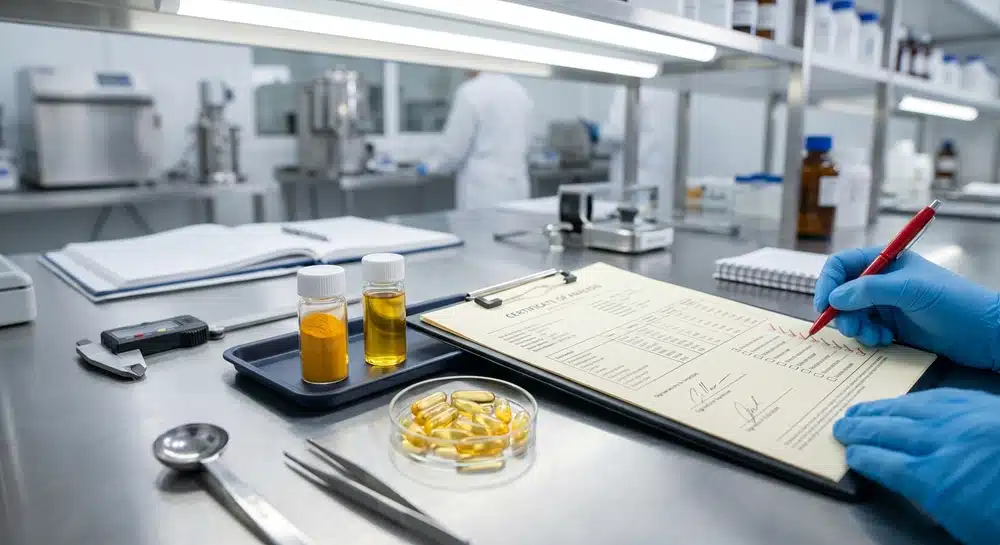
對於營養補充品品牌而言,品質控制應在生產前就開始進行。請向供應商索取完整的分析報告(COA),並確認所採用的檢測方法。.
關於 CoQ10 成分,請參閱:
– 輔酶 Q10 的測定與純度
– 泛醌與泛醌醇的比較
– 殘留溶劑
– 重金屬
- 微生物限度
– 粒徑或分散特性
- 原產地
– 過敏原與基因改造生物聲明
– 若有,請提供穩定性數據
關於魚油成分,請參閱:
– EPA 內容
– DHA 含量
– 總 omega-3 含量
– 過氧化值(PV)
– p-苯甲苯胺值(p-AV)
– TOTOX 值
– 重金屬
– 印刷電路板
– 二噁英
– 氣味與感官特徵
– 來源可追溯性
– 第三方測試或認證
從長遠來看,低成本的原料並不一定代表成本更低的產品。輔酶 Q10 分散性不佳、魚油氧化,或文件資料不齊全,都可能導致生產延誤、穩定性測試未達標、客戶投訴,或面臨法規風險。.
結構化的 補充品品質控制 在生產前進行審查,有助於驗證輔酶Q10(CoQ10)的檢測結果、EPA/DHA的含量、氧化值、重金屬含量,以及供應商的文件。.需要協助開發 CoQ10 + 魚油產品嗎?
If you are developing a CoQ10 softgel, fish oil softgel, or combined CoQ10 + omega-3 formula, Gensei can help review ingredient form, carrier oil selection, EPA/DHA target, antioxidant system, pilot batch feasibility, packaging options, and quality testing requirements.
請提供您的目標劑量、劑型及市場定位,我們的配方團隊將協助評估:單一成分軟膠囊、複方軟膠囊,或是多SKU產品線,哪一種是更佳的商業發展方向。.
如果您正在開發一款成品零售產品,我們的 自有品牌 CoQ10 及魚油營養補充品 該服務可提供配方開發、包裝、品質檢測及上市規劃等支援。.總結
在輔酵素 Q10 與魚油的對決中,並沒有一個放之四海而皆准的贏家。輔酶 Q10 是增強細胞能量和對抗氧化壓力的最佳選擇,因此非常適合心臟衰竭、他汀類藥物使用者或偏頭痛患者。魚油含有奧米加-3 脂肪酸,是減少發炎、降低三酸甘油脂、維持心臟和腦部健康的最佳選擇。
對於許多人而言,結合這兩種營養補充品可提供強大的雙重功效,解決多方面的健康問題。無論您是像 Sarah 一樣想要抵消他汀類藥物的副作用,或是像 John 一樣想要控制三酸甘油脂,這些營養補充劑都可以成為健康生活方式的重要補充。請務必諮詢您的醫療保健提供者,以確保它們適合您,並選擇高品質的產品,以獲得最大的效益。
常見問題
問:輔酶Q10和魚油是一樣的嗎?
A:不。輔酶Q10(CoQ10)是一種脂溶性抗氧化劑,參與線粒體的能量生成。魚油則是一種海洋油脂,能提供EPA和DHA這兩種ω-3脂肪酸。它們是不同的成分,分別滿足不同的營養補充定位需求。.
問:可以同時服用輔酶Q10和魚油嗎?
A:許多消費者會同時服用輔酶Q10和魚油,這兩種成分通常被視為互補。然而,正在服用抗凝血劑、降血壓藥物、糖尿病藥物或處方心臟藥物的患者,在併用這些營養補充品之前,應先諮詢醫療專業人員。.
問:對心臟健康來說,輔酶Q10和魚油哪一種比較好?
A:它們有助於維持心臟健康的不同面向。魚油通常用於補充歐米伽-3 及調節三酸甘油酯,而輔酶 Q10 則常被提及與細胞能量及他汀類藥物相關的用途。在沒有醫療監督的情況下,這兩者都不應被定位為治療手段。.
問:輔酶Q10和Omega-3是一樣的嗎?
A:不。Omega-3 指的是 EPA 和 DHA 等脂肪酸。輔酶 Q10 並非 Omega-3 脂肪酸。雖然它們可能出現在同一种配方中,但在化學結構和功能上卻有所不同。.
問:輔酶Q10和磷蝦油,哪一種比較好?
A:磷蝦油是另一種 omega-3 來源,而 CoQ10 則是一種抗氧化成分。究竟哪一種是較佳的選擇,取決於產品的目標是補充 omega-3、強調抗氧化功效,還是作為一種結合心臟健康的複方配方。.
問:輔酶Q10和魚油可以合製成一顆軟膠囊嗎?
A:是的,從劑型角度來看這是可行的,因為兩者都與油性系統相容。不過,必須對配方進行測試,以確認 CoQ10 的分散性、魚油的氧化情況、膠囊殼的相容性、填充均勻度以及滲漏風險。.
問:品牌在採購魚油前應檢查哪些事項?
A:品牌應審查 EPA、DHA、總 omega-3 含量、PV、p-AV、TOTOX、重金屬、多氯聯苯(PCBs)、二噁英、氣味特徵、來源可追溯性,以及第三方檢測報告。.
問:品牌在採購輔酶Q10之前應確認哪些事項?
A:品牌應審查輔酶Q10的分析方法、劑型、純度、殘留溶劑、重金屬、微生物限值、粒徑、原產國、過敏原狀況及穩定性資訊。.
參考資料
- NCCIH。輔酶 Q10。. https://www.nccih.nih.gov/health/coenzyme-q10
- 美國國家衛生研究院(NIH)膳食補充劑辦公室。《Omega-3 脂肪酸——醫療專業人員參考資料》。. https://ods.od.nih.gov/factsheets/Omega3FattyAcids-HealthProfessional/
- Mortensen SA 等人。Q-SYMBIO 隨機對照試驗,PubMed。. https://pubmed.ncbi.nlm.nih.gov/25282031/
- Sandor PS 等人。輔酶 Q10 在偏頭痛預防中的療效,PubMed。. https://pubmed.ncbi.nlm.nih.gov/15728298/
- Bhatt DL 等。REDUCE-IT 試驗,《新英格蘭醫學雜誌》。. https://www.nejm.org/doi/full/10.1056/NEJMoa1812792
- 美國心臟協會(AHA)科學建議:運用Omega-3脂肪酸治療高三酸甘油酯血症。. https://www.ahajournals.org/doi/10.1161/CIR.0000000000000709
- GOED 針對 EPA 和 DHA 歐米伽-3 油類的自願性專論。. https://goedomega3.com/storage/app/media/Monograph/GOED%20Monograph%20-%202022%2001%2006%20-%20FINAL.pdf
- FDA。結構/功能聲稱。. https://www.fda.gov/food/nutrition-food-labeling-and-critical-foods/structurefunction-claims
- 北美非處方 n-3 營養補充品的氧化程度。. https://pmc.ncbi.nlm.nih.gov/articles/PMC4678768/
萬華仁(Warren Wan)是一位資深專家,在膳食補充劑供應鏈領域擁有豐富經驗,並在膠原蛋白肽、骨湯蛋白及角蛋白等核心成分的研發、製程控制及全球採購方面具備深厚的實務經驗。 身為本專欄的作者,他致力於剝去行銷包裝的表象,將晦澀難懂的成分科學與生產品質控制標準,轉化為淺顯易懂的硬核科普,協助讀者看清標籤背後的真相,並做出更理性的健康選擇。.


