
Quick Answer: CoQ10 vs Fish Oil

Coenzyme Q10 and fish oil are not the same ingredient. CoQ10 is a fat-soluble antioxidant involved in mitochondrial energy production, while fish oil provides omega-3 fatty acids such as EPA and DHA that are commonly used for lipid, inflammation, and cardiovascular wellness positioning.
For consumers, the better choice depends on the health goal and medication status. CoQ10 is often discussed in the context of cellular energy, statin use, and antioxidant support. Fish oil is more closely associated with omega-3 intake, triglyceride support, and systemic inflammation.
For supplement brands, the more important question is not simply “which is better?” It is: which ingredient fits the dosage form, claim strategy, oil system, COA requirements, stability target, and market positioning?
In many product development projects, CoQ10 and fish oil are not competitors. They can be complementary ingredients, especially in softgel products designed around heart health, healthy aging, and premium omega-3 positioning.
Early custom CoQ10 omega-3 formulation support can help define the right CoQ10 form, EPA/DHA target, carrier oil, and antioxidant system.What is Coenzyme Q10?
Coenzyme Q10, often shortened to CoQ10, is a naturally occurring compound found in human cells. It plays an important role in mitochondrial energy production and also functions as an antioxidant. The highest concentrations are found in high-energy organs such as the heart, liver, kidneys, and pancreas.
In supplement formulation, CoQ10 is usually used in two commercial forms: ubiquinone and ubiquinol. Ubiquinone is the oxidized form and is widely used because it is stable and cost-effective. Ubiquinol is the reduced form and is often positioned as more bioavailable, especially in premium formulas or products targeting older adults.
Because CoQ10 is fat-soluble, its delivery system matters. A CoQ10 ingredient blended into an oil-based softgel may behave very differently from a dry powder tablet or capsule. For supplement brands, this means CoQ10 selection should consider not only dosage, but also solubility, carrier oil, antioxidant system, softgel compatibility, and stability testing.
Benefits of Coenzyme Q10
Why might you consider adding CoQ10 to your routine? Let’s break it down:
- Heart Health: CoQ10 is a heart’s best friend, especially for those with heart failure. Research, like a study in the Journal of the American College of Cardiology, found that CoQ10 supplementation reduced major cardiovascular events by 39% in heart failure patients. It’s particularly helpful for those on statins, which can deplete CoQ10 levels, leading to muscle aches or fatigue.
- Migraine Relief: If migraines are a frequent unwelcome guest, CoQ10 might help. A study published in Cephalalgia showed that 150 mg of CoQ10 daily reduced migraine days by 48% compared to a placebo. That’s a game-changer for anyone tired of those pounding headaches.
- Antioxidant Power: By neutralizing free radicals, CoQ10 helps protect cells from oxidative stress, which is linked to chronic diseases like diabetes and neurodegenerative disorders. Some studies suggest it may improve insulin sensitivity in people with diabetes, though more research is needed.
- Other Potential Perks: There’s ongoing research into CoQ10’s role in boosting exercise performance and slowing the progression of conditions like Parkinson’s or Alzheimer’s, but the jury’s still out on these.
CoQ10 is like a trusty sidekick, supporting your body’s energy needs and keeping cellular damage at bay. But how does it stack up against Fish Oil?
What is Fish Oil?
Fish oil is a marine oil ingredient that provides long-chain omega-3 fatty acids, mainly EPA and DHA. These fatty acids are naturally found in oily fish such as sardine, anchovy, mackerel, salmon, and herring. In supplement manufacturing, fish oil is most commonly used in softgels, liquid oils, and omega-3 combination products.
The quality of fish oil is not determined by the words “fish oil” alone. Brands should compare the actual EPA and DHA content, oxidation markers, contaminant testing, source traceability, odor profile, and shelf-life performance.
For fish oil ingredients, oxidation control is a major quality issue. A high-quality oil should be supported by COA data such as peroxide value, p-anisidine value, and TOTOX. Heavy metals, PCBs, dioxins, and microbial limits should also be reviewed before bulk purchasing or production.

Benefits of Fish Oil
Fish Oil’s claim to fame is its wide-ranging benefits, particularly for your heart and brain. Here’s what the science says:
- Heart Health: Fish Oil is a superstar for cardiovascular health. The American Heart Association recommends omega-3 supplements for people with high triglycerides, as they can lower levels by 20-50% depending on the dose. The REDUCE-IT trial, published in the New England Journal of Medicine, found that high-dose EPA reduced cardiovascular events by 25% in patients with elevated triglycerides.
- Brain Health: Omega-3s, especially DHA, are crucial for brain function. They’re a key component of brain cell membranes and may reduce the risk of cognitive decline and depression. A study in the Journal of Clinical Psychiatry found that omega-3 supplementation can be an effective add-on treatment for major depressive disorder.
- Anti-Inflammatory Effects: Omega-3s help tame inflammation, which can ease symptoms of conditions like rheumatoid arthritis. Research in Health.com notes that Fish Oil may reduce joint pain and stiffness in arthritis patients.
- Other Benefits: Fish Oil may also support eye health, improve liver function, and even enhance skin health by reducing inflammation-related conditions like acne.
Fish Oil is like a soothing balm for your body, calming inflammation and supporting vital organs. But how does it compare to CoQ10?
Coenzyme Q10 vs Fish Oil: What is the Difference?
While both CoQ10 and Fish Oil are celebrated for their health benefits, they work in distinct ways:
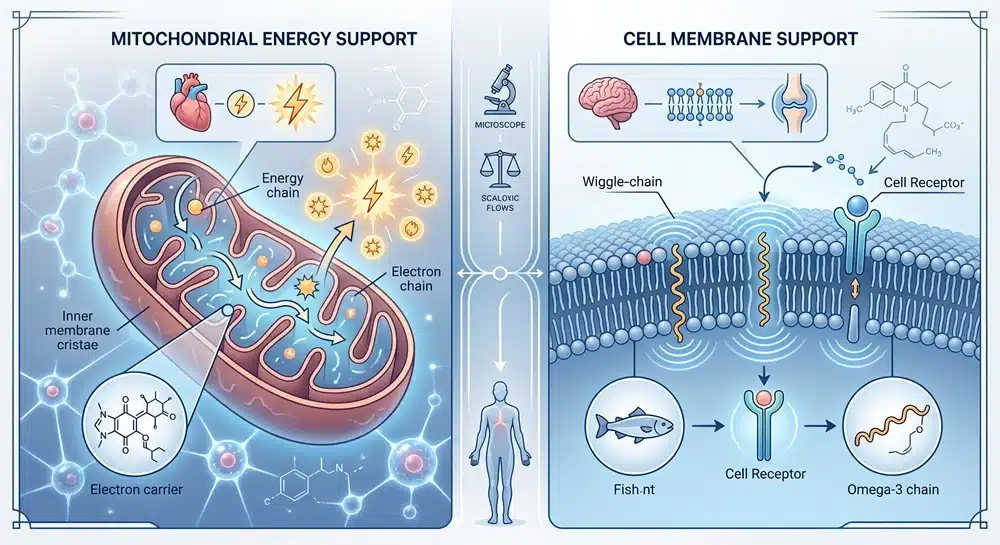
- CoQ10 focuses on energy production and antioxidant protection. It’s concentrated in high-energy organs like the heart, liver, and kidneys, ensuring they have the fuel to function optimally. It’s especially helpful for conditions involving energy deficits or oxidative stress.
- Fish Oil provides omega-3 fatty acids that reduce inflammation and support the structural integrity of cell membranes, particularly in the heart and brain. It’s ideal for managing systemic inflammation and improving lipid profiles.
Imagine your body as a busy factory: CoQ10 keeps the power generators running, while Fish Oil ensures the machinery doesn’t overheat. They complement each other, but their applications differ based on your health needs.
Coenzyme Q10 vs Fish Oil Comparison Table
To make the differences clearer, here’s a side-by-side comparison:
| Factor | CoQ10 | Fish Oil | Formulation Note |
| Primary role | Mitochondrial energy and antioxidant support | EPA/DHA omega-3 delivery | They solve different product positioning problems. |
| Common form | Ubiquinone or ubiquinol | EPA/DHA-rich marine oil | Both are fat-soluble and fit oil-based dosage forms. |
| Best dosage form | Softgel, capsule, tablet, oil-based formula | Softgel or liquid oil | Combination softgels can be commercially attractive. |
| Key quality marker | Assay, purity, residual solvents, form | EPA/DHA potency, PV, p-AV, TOTOX, contaminants | COA review is essential before production. |
| Main manufacturing issue | Poor water solubility, dispersion, color stability | Oxidation, odor, leakage risk | Carrier oil, antioxidant system, and shell compatibility matter. |
| Best positioning | Healthy aging, cellular energy, heart wellness | Omega-3, triglyceride support, inflammation balance | Combined products can target premium heart-health formulas. |
Which is Better for Heart Health: CoQ10 or Fish Oil?
When it comes to heart health, both supplements have unique strengths, and the best choice depends on your specific needs:
- CoQ10 is particularly effective for heart failure patients and those on statins. A study from Cedars-Sinai notes that CoQ10 may improve energy production in heart cells and reduce oxidative stress, potentially lowering the risk of heart-related events. It’s especially helpful for counteracting statin-induced CoQ10 depletion, which can cause muscle pain.
- Fish Oil excels at reducing triglycerides and improving cholesterol profiles. The American Heart Association highlights that omega-3s can lower triglycerides by 20-30% in people with hypertriglyceridemia, and high-dose EPA has been shown to reduce cardiovascular events. Fish Oil also helps lower blood pressure and stabilize heart rhythms.
Research is mixed on their overall impact on heart disease prevention. For example, a 2018 study in the New England Journal of Medicine found no significant reduction in heart attacks from Fish Oil supplements in people without heart disease risk factors. Meanwhile, CoQ10 shows promise in specific heart conditions but lacks broad approval for general heart disease prevention. If you’re choosing based on heart health, Fish Oil may have a slight edge for lipid management, while CoQ10 is better for heart failure or statin-related issues. Combining both could offer comprehensive support, as they target different aspects of cardiovascular health.
When to Use Coenzyme Q10 vs Fish Oil
Choosing between CoQ10 and Fish Oil depends on your health goals. Here’s a guide to help you decide:
- Choose CoQ10 if:
- You’re taking statins, which can deplete CoQ10 levels, leading to fatigue or muscle aches.
- You have heart failure or other heart conditions where energy production is critical.
- You suffer from frequent migraines—studies show CoQ10 can cut migraine days significantly.
- You want to boost cellular energy and protect against oxidative stress.
- Choose Fish Oil if:
- You have high triglycerides or cholesterol levels, as omega-3s are proven to improve lipid profiles.
- You’re looking to reduce inflammation, which can help with conditions like arthritis.
- You want to support brain health, especially cognitive function or mood stability.
- You don’t eat enough oily fish (the American Heart Association recommends at least two servings weekly).
Sarah, a 45-year-old woman on statins, might lean toward CoQ10 to combat fatigue and support her heart. Meanwhile, her friend John, who has high triglycerides and rarely eats fish, might benefit more from Fish Oil. Your healthcare provider can help tailor the choice to your needs.
Can You Take CoQ10 and Fish Oil Together?
CoQ10 and fish oil are commonly used together because they work through different mechanisms. CoQ10 is involved in mitochondrial energy production and antioxidant protection, while fish oil supplies EPA and DHA omega-3 fatty acids. From a general nutrition perspective, they are not the same ingredient and do not replace each other.
However, consumers taking anticoagulants, blood pressure medication, diabetes medication, or prescription lipid-lowering drugs should speak with a healthcare professional before combining supplements. Fish oil at higher intakes may affect bleeding risk, and CoQ10 may interact with certain medications such as warfarin.
From a supplement manufacturing perspective, CoQ10 and fish oil can make sense in the same softgel because both are compatible with oil-based delivery systems. A combination product may be positioned around heart health, healthy aging, omega-3 intake, and cellular energy support.
The main challenge is not whether the ingredients can sit together on a label. The real challenge is manufacturing execution: CoQ10 dispersion in the oil phase, fill uniformity, oxidation control, shell compatibility, fishy odor control, and stability over shelf life. A well-designed formula should define the carrier oil, antioxidant system, CoQ10 form, EPA/DHA potency, and quality specifications before pilot production.
For brands planning a combined oil-based product, CoQ10 and fish oil softgel manufacturing requires careful control of fill uniformity, oxidation, and shell compatibility.Manufacturing Considerations for CoQ10 + Fish Oil Softgels
A CoQ10 + fish oil softgel can be attractive for supplement brands, but it requires more formulation control than a simple single-ingredient capsule.
First, CoQ10 is a lipophilic ingredient, but it still needs proper dispersion in the oil phase. If dispersion is poor, the finished softgel may have inconsistent active content from capsule to capsule. Brands should confirm whether the formula uses ubiquinone or ubiquinol and how the ingredient is suspended or dissolved in the carrier system.
Second, fish oil is sensitive to oxidation. The formulation should be built with oxidation control in mind, including raw oil quality, antioxidant selection, nitrogen flushing if applicable, packaging protection, and accelerated stability testing.
Third, shell compatibility must be checked. Marine oils, carrier oils, and suspended actives can affect softgel sealing, leakage risk, and appearance. A pilot batch is important before commercial-scale production.
For B2B buyers, the ideal development path is:
1. Define target CoQ10 dosage.
2. Define EPA and DHA target per serving.
3. Review raw material COAs.
4. Confirm carrier oil and antioxidant system.
5. Run pilot softgel filling.
6. Test fill uniformity, oxidation, leakage, and appearance.
7. Confirm packaging and shelf-life strategy.
Quality Checklist Before Buying CoQ10 or Fish Oil Ingredients

For supplement brands, quality control should start before production. Ask suppliers for a complete COA and confirm the test methods used.
For CoQ10 ingredients, review:
– CoQ10 assay and purity
– Ubiquinone vs ubiquinol form
– Residual solvents
– Heavy metals
– Microbial limits
– Particle size or dispersion properties
– Country of origin
– Allergen and GMO statements
– Stability data if available
For fish oil ingredients, review:
– EPA content
– DHA content
– Total omega-3 content
– Peroxide value (PV)
– p-anisidine value (p-AV)
– TOTOX value
– Heavy metals
– PCBs
– Dioxins
– Odor and sensory profile
– Source traceability
– Third-party testing or certification
A low-cost ingredient is not always the lower-cost product in the long run. Poor CoQ10 dispersion, oxidized fish oil, or weak documentation can lead to production delays, failed stability results, customer complaints, or regulatory risk.
A structured supplement quality control review can help verify CoQ10 assay, EPA/DHA potency, oxidation values, heavy metals, and supplier documentation before production.Need Help Developing a CoQ10 + Fish Oil Product?
If you are developing a CoQ10 softgel, fish oil softgel, or combined CoQ10 + omega-3 formula, Gensei can help review ingredient form, carrier oil selection, EPA/DHA target, antioxidant system, pilot batch feasibility, packaging options, and quality testing requirements.
Send us your target dosage, dosage form, and market positioning, and our formulation team can help evaluate whether a single-ingredient softgel, combination softgel, or multi-SKU product line is the better commercial direction.
If you are building a finished retail product, our private label CoQ10 and fish oil supplements service can support formulation, packaging, quality testing, and launch planning.Conclusion
In the showdown of Coenzyme Q10 vs Fish Oil, there’s no one-size-fits-all winner. CoQ10 is your go-to for boosting cellular energy and protecting against oxidative stress, making it ideal for heart failure, statin users, or migraine sufferers. Fish Oil, with its omega-3 fatty acids, is a champion for reducing inflammation, lowering triglycerides, and supporting heart and brain health.
For many, combining both supplements offers a powerful duo, addressing multiple aspects of health. Whether you’re like Sarah, looking to counteract statin side effects, or John, aiming to manage triglycerides, these supplements can be valuable additions to a healthy lifestyle. Always consult your healthcare provider to ensure they’re right for you, and choose high-quality products to maximize benefits.
FAQs
Q: Is CoQ10 the same as fish oil?
A: No. CoQ10 is a fat-soluble antioxidant involved in mitochondrial energy production. Fish oil is a marine oil that provides EPA and DHA omega-3 fatty acids. They are different ingredients and serve different supplement positioning needs.
Q: Can you take CoQ10 and fish oil together?
A: Many consumers use CoQ10 and fish oil together, and the two ingredients are often considered complementary. However, people taking blood thinners, blood pressure medication, diabetes medication, or prescription heart medication should consult a healthcare professional before combining supplements.
Q: Which is better for heart health, CoQ10 or fish oil?
A: They support different aspects of heart wellness. Fish oil is commonly used for omega-3 intake and triglyceride support, while CoQ10 is often discussed for cellular energy and statin-related contexts. Neither should be positioned as a treatment without medical supervision.
Q: Is CoQ10 the same as omega-3?
A: No. Omega-3 refers to fatty acids such as EPA and DHA. CoQ10 is not an omega-3 fatty acid. They can appear in the same formula, but they are chemically and functionally different.
Q: What is better, CoQ10 or krill oil?
A: Krill oil is another omega-3 source, while CoQ10 is an antioxidant ingredient. The better choice depends on whether the product goal is omega-3 delivery, antioxidant positioning, or a combination heart-health formula.
Q: Can CoQ10 and fish oil be made in one softgel?
A: Yes, this is possible from a dosage-form perspective because both are compatible with oil-based systems. However, the formula must be tested for CoQ10 dispersion, fish oil oxidation, shell compatibility, fill uniformity, and leakage risk.
Q: What should brands check before sourcing fish oil?
A: Brands should review EPA, DHA, total omega-3 content, PV, p-AV, TOTOX, heavy metals, PCBs, dioxins, odor profile, source traceability, and third-party testing.
Q: What should brands check before sourcing CoQ10?
A: Brands should review CoQ10 assay, form, purity, residual solvents, heavy metals, microbial limits, particle size, country of origin, allergen status, and stability information.
References
- NCCIH. Coenzyme Q10. https://www.nccih.nih.gov/health/coenzyme-q10
- NIH Office of Dietary Supplements. Omega-3 Fatty Acids – Health Professional Fact Sheet. https://ods.od.nih.gov/factsheets/Omega3FattyAcids-HealthProfessional/
- Mortensen SA et al. Q-SYMBIO randomized trial, PubMed. https://pubmed.ncbi.nlm.nih.gov/25282031/
- Sandor PS et al. Efficacy of coenzyme Q10 in migraine prophylaxis, PubMed. https://pubmed.ncbi.nlm.nih.gov/15728298/
- Bhatt DL et al. REDUCE-IT trial, New England Journal of Medicine. https://www.nejm.org/doi/full/10.1056/NEJMoa1812792
- AHA Science Advisory: Omega-3 fatty acids for management of hypertriglyceridemia. https://www.ahajournals.org/doi/10.1161/CIR.0000000000000709
- GOED Voluntary Monograph for EPA and DHA Omega-3 Oils. https://goedomega3.com/storage/app/media/Monograph/GOED%20Monograph%20-%202022%2001%2006%20-%20FINAL.pdf
- FDA. Structure/Function Claims. https://www.fda.gov/food/nutrition-food-labeling-and-critical-foods/structurefunction-claims
- Oxidation levels of North American OTC n-3 supplements. https://pmc.ncbi.nlm.nih.gov/articles/PMC4678768/

Warren Wan is a seasoned expert with extensive experience in the dietary supplement supply chain, possessing rich practical experience in the research, development, process control, and global sourcing of core ingredients such as collagen peptides, bone broth protein, and keratin. As the author of this column, he is dedicated to stripping away the marketing packaging, transforming obscure ingredient science and production quality control standards into easy-to-understand, hardcore science popularization, helping readers understand the truth behind the labels and make more rational health choices.


