
Introduction
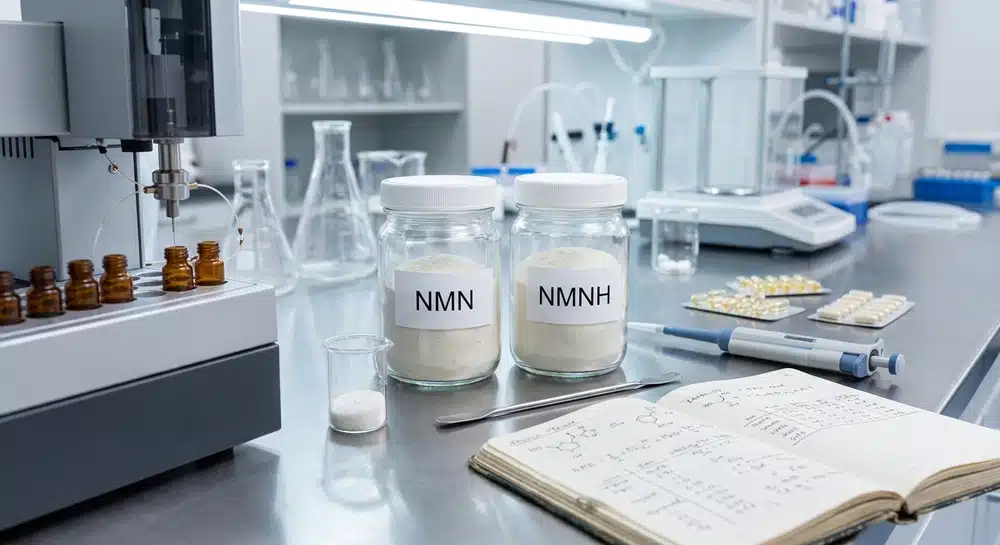
NMN and NMNH are both NAD+ precursor ingredients, but they are not equal from a supplement manufacturing perspective. NMN is the more established ingredient, with a longer research history, broader supplier availability, and more mature dosage-form experience. NMNH is a newer reduced form that may show stronger NAD+ elevation in early preclinical research, but it also brings more uncertainty around stability, long-term human data, raw material handling, and finished-product shelf life.
For supplement brands, the real question is not simply “Which one is stronger?” The better question is: which ingredient can be sourced consistently, tested reliably, manufactured into a stable product, supported with appropriate documentation, and positioned responsibly in your target market?
This guide compares NMN and NMNH from a formulation and manufacturing angle: evidence maturity, raw material purity, HPLC testing, stability risk, capsule/tablet/gummy feasibility, packaging, storage, and regulatory considerations. If you are building a next-generation NAD+ supplement, these practical details matter as much as the marketing story.
Quick Answer: NMN vs NMNH for Supplement Brands
Choose NMN when your priority is a better-established ingredient with broader human research, more predictable supply, and easier finished-product development. NMN is usually the more practical choice for capsules, tablets, powders, and private-label NAD+ supplement lines.
Consider NMNH only when your brand is prepared for a more experimental positioning, stronger stability controls, tighter supplier qualification, and more cautious claim language. NMNH may be scientifically interesting, but it should not be treated as a simple “better NMN” without reviewing stability data, purity testing, and regulatory status.
In short: NMN is the safer commercial starting point. NMNH is a next-generation option that requires stronger R&D, QA, packaging, and documentation support.
What Is NMN?
NMN is a naturally occurring molecule found in trace amounts in foods like broccoli, cabbage, and avocados. It serves as a direct precursor to NAD+, which powers cellular processes such as energy metabolism, DNA repair, and gene expression. Aging reduces NAD+ levels by up to 50% by middle age, leading to fatigue, reduced muscle function, and increased disease risk. NMN supplements aim to replenish NAD+ to support anti-aging and overall wellness.
If you are sourcing NMN for capsules or powders, review our beta-NMN raw material page for purity, storage, and documentation details.Scientific Evidence
Research on NMN is robust, particularly in animal models. A 2016 study showed NMN improved insulin sensitivity, heart function, and energy metabolism in mice (Mills et al., 2016). A 2020 human trial found that 250 mg daily NMN enhanced muscle function and aerobic capacity in older adults (Irie et al., 2020). Additional studies suggest NMN may improve cognitive function and protect against neurodegenerative diseases, though large-scale human trials are ongoing.
Benefits of NMN
- Energy Metabolism: Enhances mitochondrial function for better energy production.
- DNA Repair: Supports enzymes like PARPs that repair damaged DNA.
- Cardiovascular Health: Improves blood vessel function and reduces arterial stiffness.
- Cognitive Support: May protect brain cells and improve memory.
- Metabolic Health: Enhances insulin sensitivity and glucose metabolism.
Raw Materials
NMN is manufactured through:
- Biological Fermentation: Yeast or bacteria convert nicotinamide and ribose into NMN, ensuring high purity (typically 98%+).
- Chemical Synthesis: Combines chemical precursors in controlled environments, offering scalability but requiring rigorous quality checks.
High-purity NMN is critical to avoid contaminants that could reduce efficacy or cause side effects.
Manufacturing Notes for NMN
For brands developing NMN products, the most important manufacturing questions are purity, isomer control, moisture protection, and dosage-form compatibility. A high-quality NMN raw material should be supported by a Certificate of Analysis showing assay, identity, heavy metals, microbial limits, residual solvents if applicable, and HPLC purity.
NMN is commonly used in capsules, tablets, powders, and sublingual formats. Compared with NMNH, it is generally easier to source and easier to formulate, but it is still not a “set and forget” ingredient. The finished product should be protected from heat, light, and humidity, and the packaging system should be selected based on the intended shelf life and market.
For capsule products, brands should review bulk density, flowability, and capsule fill weight before committing to production. For tablets, compression behavior and excipient compatibility matter. For powders and stick packs, taste, hygroscopicity, and moisture barrier packaging become more important.
Product Forms
NMN is available in multiple forms to suit diverse preferences:
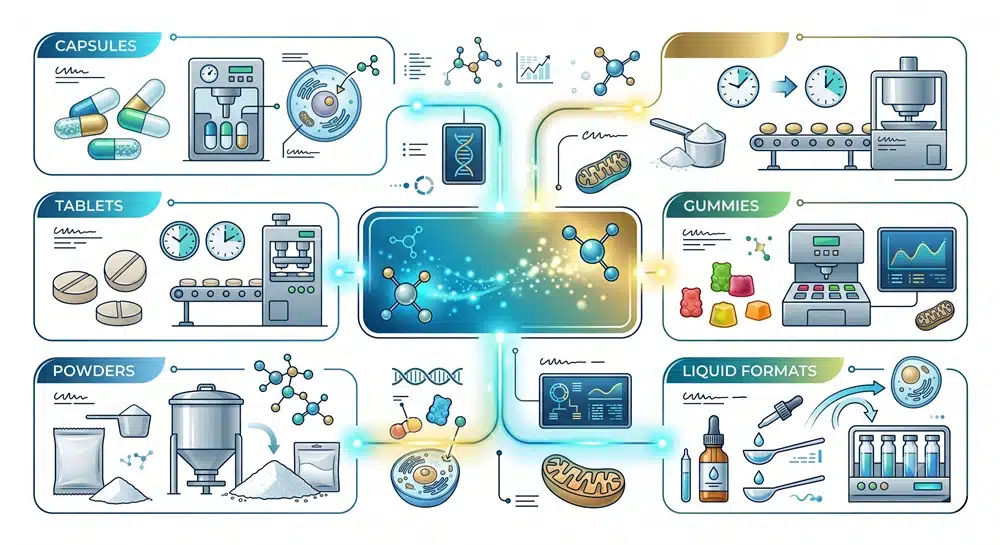
- Capsules/Tablets: Most popular, offering precise dosing (100–500 mg per capsule).
- Powder: Dissolves in water or smoothies, ideal for fast absorption.
- Gummies: Tasty NMN gummies appeal to those who dislike swallowing pills.
- Liquid: Drops or oral solutions provide rapid absorption but require careful storage to prevent degradation.
Dosage and Safety
Recommended doses range from 250–500 mg daily, often taken in the morning to align with circadian rhythms. Side effects are rare but may include mild nausea or headaches. Long-term safety is supported by preliminary human studies, but consulting a doctor is advised, especially for those with medical conditions.

What Is NMNH?
NMNH, or Reduced Nicotinamide Mononucleotide, is a newer derivative of NMN with an additional hydrogen atom, making it a reduced, potentially more reactive form. This structural difference may enhance its ability to boost NAD+ levels and provide stronger antioxidant effects. NMNH is less studied but shows promise as a next-generation anti-aging supplement.
Scientific Evidence
NMNH research is in its infancy. A 2023 mouse study found NMNH increased NAD+ levels 2–3 times faster than NMN and exhibited superior antioxidant properties (Zhang et al., 2023). Another study suggested NMNH improved cellular repair in oxidative stress models (Li et al., 2024). Human trials are limited, so claims about NMNH’s benefits rely heavily on preclinical data.
Benefits of NMNH
- Enhanced NAD+ Boosting: Potentially faster and more efficient NAD+ production.
- Stronger Antioxidant Effects: Neutralizes free radicals more effectively than NMN.
- Improved Bioavailability: Preliminary data suggests better absorption in cells.
- Cellular Repair: May enhance recovery from oxidative damage.
Raw Materials
NMNH production is more complex:
- Chemical Reduction: NMN is chemically reduced to add a hydrogen atom, requiring advanced technology to maintain stability.
- High-Purity NMN Base: Starts with high-quality NMN, increasing production costs.
- Strict environmental controls are needed to prevent degradation, as NMNH is less stable than NMN.
Why NMNH Stability Is the Real Formulation Challenge
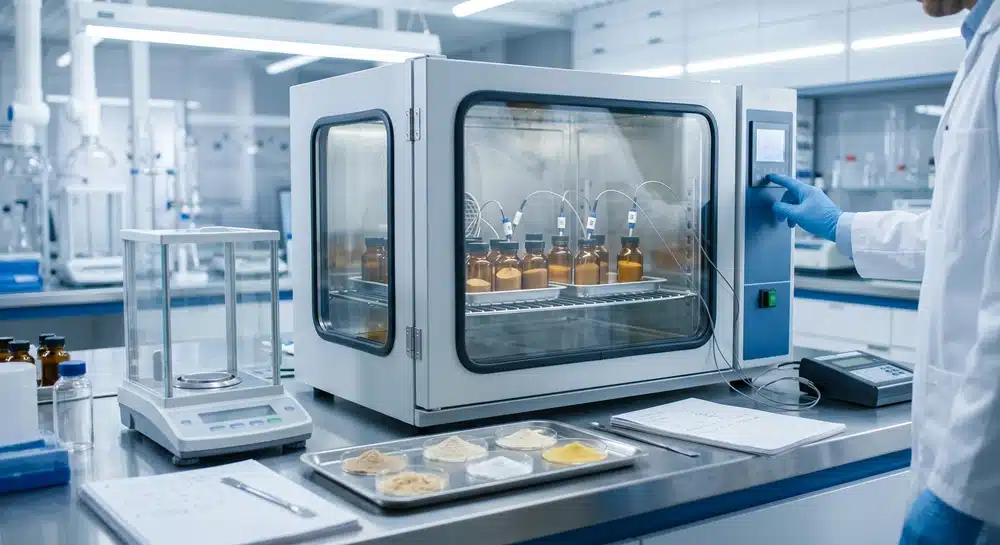
NMNH is often described as a more powerful or faster-acting NAD+ precursor, but for manufacturers the main challenge is stability. A compound can look promising in early research and still be difficult to turn into a reliable commercial supplement if it is sensitive to oxidation, moisture, heat, or processing stress.
This is why NMNH product development should start with a stability-first mindset. Brands should request raw material stability data, accelerated stability studies, recommended storage conditions, and packaging guidance before launching a finished product. Without this data, a product may test well at release but lose potency before the end of shelf life.
NMNH is also a weaker fit for gummies and liquid products unless the supplier and manufacturer can prove stability under realistic processing conditions. Gummies involve heat, water activity, sugar systems, acids, and long storage periods. Liquids introduce even more risk because dissolved actives can degrade faster than dry powders. For this reason, capsule or protected powder formats are usually more reasonable starting points for NMNH development.
Product Forms
NMNH is less widely available but offered in:
- Capsules/Tablets: Most common, with doses of 100–300 mg.
- Powder: Soluble in water, flexible for custom dosing.
- Gummies: Rare due to high costs and stability issues.
- Liquid: Experimental, with challenges in maintaining potency over time.
Dosage and Safety
Suggested NMNH doses range from 100–300 mg daily, but optimal dosing is unclear due to limited research. Side effects are not well-documented, and long-term safety remains unstudied. Users should proceed cautiously and consult healthcare professionals.
NMN vs NMNH: A Detailed Comparison
To clarify NMN and NMNH differences, the following table compares key aspects:
| Aspect | NMN | NMNH |
|---|---|---|
| Chemical Structure | NAD+ precursor, stable molecule | Reduced NMN with extra hydrogen, potentially more reactive |
| NAD+ Boosting | Effective, raises NAD+ by 20–40% in studies | Potentially 2–3x faster NAD+ increase, limited human data |
| Bioavailability | Good, especially in powder/liquid forms | Possibly higher, but lacks human studies |
| Antioxidant Ability | Moderate, supports cellular health | Stronger, neutralizes free radicals effectively |
| Raw Materials | Fermentation or synthesis, cost-effective | Requires NMN reduction, costly and complex |
| Product Forms | Capsules, powder, NMN gummies, liquid | Capsules, powder, rare gummies/liquid |
| Research Maturity | Extensive animal and human studies | Early-stage, mostly animal studies |
| Price (30-day supply) | $30–60, widely available | $50–100, limited availability |
| Stability | Stable, easy to store | Less stable, requires careful handling |
Formulation and manufacturing feasibility table
| Formulation factor | NMN | NMNH | B2B note |
| Research maturity | More established, including human trials | Early-stage, mostly preclinical evidence | NMN is easier to support with responsible marketing language. |
| Raw material availability | Broader supplier base | Limited supplier base | NMNH requires stricter supplier qualification. |
| Stability | More manageable, but still moisture/heat sensitive | Higher stability concern | NMNH needs stronger packaging and stability data. |
| Capsules | Practical | Possible with controls | Capsules are the safest first format for both. |
| Tablets | Possible with excipient testing | Higher compression/stability risk | Pilot tableting is essential. |
| Gummies | Possible but not ideal for high potency | Generally high risk | Avoid NMNH gummies unless stability is proven. |
| Liquids | Possible but needs stability work | Experimental/high risk | Dry formats are safer. |
| Quality testing | HPLC, assay, impurities, heavy metals, microbes | Same plus stronger stability monitoring | COA alone is not enough; review method and stability. |
In-Depth Analysis
- Chemical Structure: NMNH’s extra hydrogen enhances its reducing power, potentially making it more effective at boosting NAD+. However, its instability requires precise manufacturing.
- NAD+ Boosting Efficiency: NMNH may increase NAD+ faster, but NMN’s effects are better documented in humans.
- Bioavailability: NMNH’s structure suggests better cellular uptake, but NMN’s absorption is optimized across various forms like NMN gummies and liquids.
- Antioxidant Effects: NMNH’s reduced form offers superior protection against oxidative stress, which contributes to aging and disease.
- Raw Materials and Production: NMN’s simpler production makes it more accessible. NMNH’s complex process limits scalability and raises costs.
- Product Forms: NMN’s variety, including NMN gummies, caters to diverse preferences. NMNH’s limited forms reflect its newer market presence.
- Research and Cost: NMN’s extensive research makes it a safer bet, while NMNH’s higher price reflects its novelty and production challenges.
Which Ingredient Should Brands Choose?
Choose NMN if your brand needs a more mature NAD+ precursor ingredient with broader market awareness, more available suppliers, and better finished-product experience. NMN is generally more suitable for mainstream longevity supplements, private-label capsule products, sublingual powders, and first-time NAD+ product launches.
Choose NMNH only if your brand is prepared for a more technical development process. NMNH may offer an interesting next-generation story, but it requires stronger R&D review, stricter raw material qualification, stability-first formulation, and cautious claims. It is better suited for brands with a science-led positioning and the budget to support testing and documentation.
If your goal is speed to market, NMN is usually the more practical choice. If your goal is differentiation and you are willing to manage stability and evidence limitations, NMNH can be explored as an advanced ingredient.
Packaging and Storage Recommendations
Packaging should be selected based on the ingredient’s stability profile, not only on cost or appearance. NMN products may be suitable for HDPE bottles, blister packs, stick packs, or foil sachets depending on dosage form and shelf-life target. NMNH products generally require a more conservative approach.
For NMNH, brands should consider:
– high-barrier bottles,
– desiccants,
– aluminum foil sachets,
– blister packaging,
– double-aluminum blister packs for premium formulas,
– reduced headspace,
– oxygen and moisture barrier review,
– and accelerated stability testing before launch.
The best packaging decision is not always the cheapest one. If an ingredient is unstable, weak packaging can destroy the commercial value of the formula before the consumer ever opens the bottle.
Quality Checklist Before Sourcing NMN or NMNH
Before purchasing NMN or NMNH raw material, supplement brands should request a full technical document package. At minimum, the review should include:
– Certificate of Analysis (COA)
– HPLC assay and identity method
– Chromatogram or method summary, if available
– Purity specification
– Impurity profile
– Heavy metals
– Microbial limits
– Residual solvents, if applicable
– Water content or loss on drying
– Particle size and bulk density
– Stability data
– Recommended storage conditions
– Allergen statement
– GMO statement
– Country of origin
– Manufacturing process summary
– Packaging recommendation
– Regulatory support documents
For NMNH, stability data should be treated as essential, not optional. A 98%+ purity claim is not enough if the ingredient degrades rapidly under normal storage, blending, compression, or packaging conditions.
Precautions
- Medical Consultation: Essential for NMNH due to limited safety data. NMN’s safety is better established but still requires professional advice.
- Quality Assurance: Choose products with third-party testing (e.g., NSF or USP certification) and 98%+ purity to ensure efficacy and safety.
- Side Effects: NMN may cause mild nausea or fatigue in rare cases. NMNH’s side effects are unknown, so monitor for adverse reactions.
- Storage: NMNH’s instability requires cool, dry storage. NMN is more forgiving but still benefits from proper handling.
How to Read an NMN/NMNH COA and HPLC Result
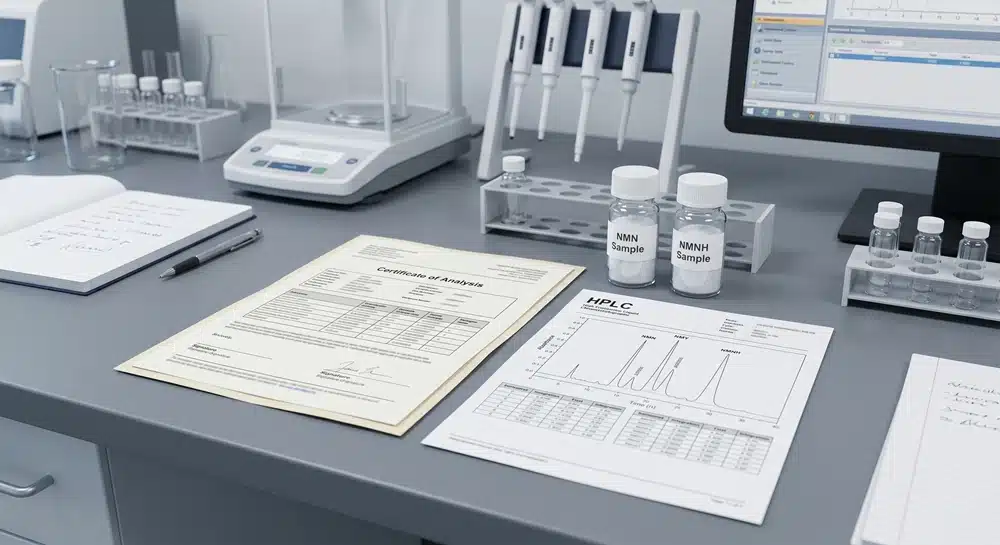
A COA should do more than state “98% purity.” For NAD+ precursor ingredients, brands should pay attention to the test method, identity confirmation, chromatogram clarity, and impurity peaks.
When reviewing a supplier document, ask:
1. Does the COA identify the exact ingredient form?
For NMN, beta-NMN identity matters. For NMNH, confirm that the supplier is not simply marketing standard NMN under a reduced-form name.
2. Is the assay method clearly stated?
HPLC is commonly used for assay and purity testing, but brands should review whether the method is validated and whether the supplier can provide supporting data.
3. Are impurities visible and controlled?
A clean headline purity number may hide meaningful impurity peaks. Ask for chromatogram support when sourcing high-value ingredients.
4. Is the batch tested for storage-sensitive degradation?
This is especially important for NMNH. A fresh batch may pass release testing but still fail shelf-life expectations if stability is weak.
For B2B buyers, documentation quality often reveals supplier quality. If a supplier cannot provide clear analytical support, the ingredient should be treated as higher risk.
Conclusion
NMN supplements and NMNH supplements both offer compelling benefits for anti-aging and health optimization. NMN is the go-to choice for its affordability, extensive research, and diverse forms like NMN gummies and liquids. NMNH, while promising for its potential NAD+ boosting efficiency and antioxidant effects, is pricier and less studied, appealing to those willing to explore cutting-edge options. Your choice depends on budget, health goals, and preference for product forms. Always prioritize high-quality products and consult a healthcare provider to ensure safety and suitability.
Ready to evaluate NMN, NMNH, or another NAD+ precursor? Contact our formulation team with your target market, dosage form, and stability requirements.FAQs
Is NMNH better than NMN?
Not necessarily. NMNH may show stronger NAD+ elevation in early preclinical research, but NMN has more mature human data, broader commercial use, and easier formulation experience. For most brands, NMN is the more practical starting point, while NMNH is a higher-risk next-generation option that requires stronger stability and documentation support.
What is the main difference between NMN and NMNH?
NMN is an oxidized NAD+ precursor, while NMNH is a reduced form with different redox behavior. The difference is not only biochemical. It also affects raw material handling, stability, packaging, and finished-product feasibility.
Can NMNH be used in gummies?
NMNH gummies are generally high risk unless the supplier and manufacturer can provide convincing stability data. Gummies involve heat, water activity, sweeteners, acids, and long storage periods, all of which can increase degradation risk for sensitive ingredients.
What product form is best for NMN?
Capsules and tablets are usually the most practical NMN formats. Powders and stick packs can also work if moisture protection and taste are controlled. Liquid formats require more stability work.
What product form is best for NMNH?
For NMNH, capsules or protected dry powder formats are usually the safest first options. Liquids and gummies should be treated as experimental until stability is proven.
What should brands check before buying NMN or NMNH raw material?
Brands should request COA, HPLC assay, identity testing, impurity profile, heavy metals, microbial limits, residual solvents if applicable, water content, stability data, storage guidance, and regulatory support documents.
Is NMN or NMNH legal in every market?
No. Regulatory status can vary by country and can change over time. Brands should review the current rules in their target markets and consult regulatory professionals before launching NAD+ precursor products.
Can Gensei help develop NMN or NMNH finished products?
Yes. A manufacturing partner can help review raw material quality, dosage form feasibility, excipient compatibility, packaging, stability testing, and private-label production requirements for NAD+ supplement products.
references
- Mills et al. 2016 – Long-term administration of NMN mitigates age-associated physiological decline in mice
- Irie et al. 2020 – Effect of oral NMN administration on clinical parameters in healthy men
- Yoshino et al. 2021 – NMN increases muscle insulin sensitivity in prediabetic women
- Liu et al. 2021 – Reduced nicotinamide mononucleotide potently enhances NAD+
- Zapata-Pérez et al. 2021 – Reduced nicotinamide mononucleotide is a new and potent NAD+ precursor
- NIH PMC review – NAD+ precursors NMN and NR review
- FDA Q&A on dietary supplements, NDI, claims, and manufacturer responsibility
- FDA Structure/Function Claims
- Regulations.gov FDA docket PDF on NMN petition/ingredient status (if accessible)
- Venable analysis on FDA 2025 NMN position reversal
- USP Dietary Supplement Verification Program

Warren Wan is a seasoned expert with extensive experience in the dietary supplement supply chain, possessing rich practical experience in the research, development, process control, and global sourcing of core ingredients such as collagen peptides, bone broth protein, and keratin. As the author of this column, he is dedicated to stripping away the marketing packaging, transforming obscure ingredient science and production quality control standards into easy-to-understand, hardcore science popularization, helping readers understand the truth behind the labels and make more rational health choices.


