بالنسبة لمالكي العلامات التجارية للمكملات الغذائية، ومطوري تركيبات التغذية الرياضية، وفرق العلامات التجارية الخاصة، غالبًا ما يتم تقييم الإنزيم المساعد Q10 والكارنيتين L معًا لأنهما يدعمان خطوتين مختلفتين من عملية التمثيل الغذائي للطاقة الخلوية. يساعد L-كارنيتين في نقل الأحماض الدهنية طويلة السلسلة إلى الميتوكوندريا من أجل الأكسدة البيتا، بينما يدعم CoQ10 نقل الإلكترونات في سلسلة التنفس الميتوكوندريا ويساعد في الحفاظ على التوازن المضاد للأكسدة في الخلايا. ويكمن التحدي في التركيب في أن الإنزيم المساعد Q10 قابل للذوبان في الدهون ولا يتناسب جيدًا مع الكبسولات الجافة البسيطة، في حين أن العديد من أشكال L-كارنيتين قابلة للذوبان في الماء وذات جرعات عالية وحساسة للرطوبة.
يقارن هذا الدليل بين مركب CoQ10 و L-كارنيتين من منظور كل من علم التغذية والتصنيع: آلية العمل، وأفضل حالات الاستخدام، واختيار شكل الجرعة، وجدوى استخدام الكبسولات اللينة مقارنةً بالكبسولات الصلبة، واختبارات مراقبة الجودة، وصياغة الادعاءات المتعلقة بالهيكل/الوظيفة بما يتوافق مع معايير إدارة الغذاء والدواء الأمريكية (FDA).
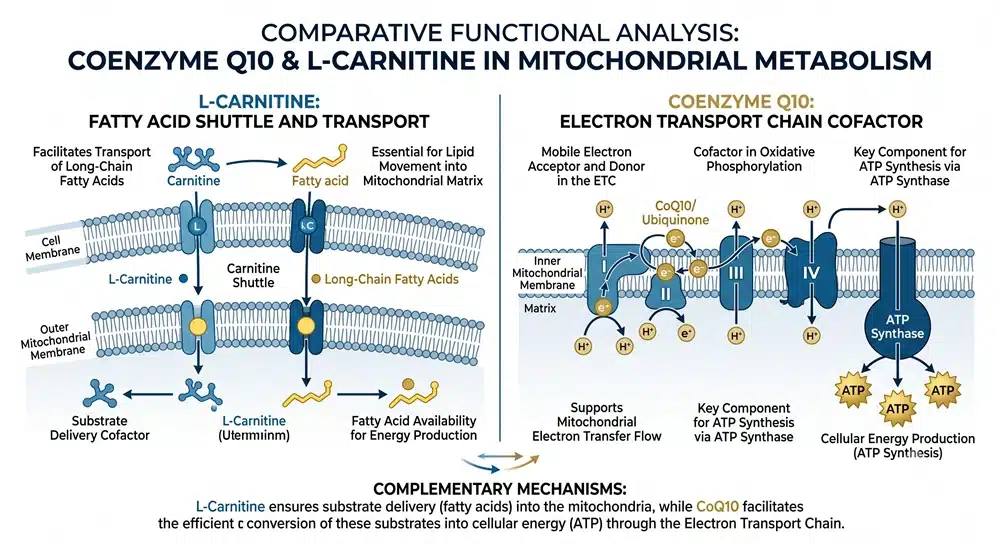
CoQ10 و ل-كارنيتين هما مكمّلان لبعضهما البعض ولكنهما غير قابلين للتبادل. حيث يعمل L-كارنيتين على نقل الأحماض الدهنية إلى الميتوكوندريا، بينما يساعد CoQ10 سلسلة نقل الإلكترونات في الميتوكوندريا على تحويل الوقود إلى ATP. بالنسبة لعلامات المكملات الغذائية، فإن القرار الرئيسي يتعلق بشكل الجرعة: يُفضل كوينزيم Q10 الكبسولات اللينة ذات القاعدة الدهنية أو المساحيق المحسّنة؛ بينما يتطلب L-كارنيتين غالبًا كبسولات أو أقراصًا أو خلطات مسحوقية يتم التحكم في رطوبتها.
الإنزيم المساعد Q10 - ما هو؟
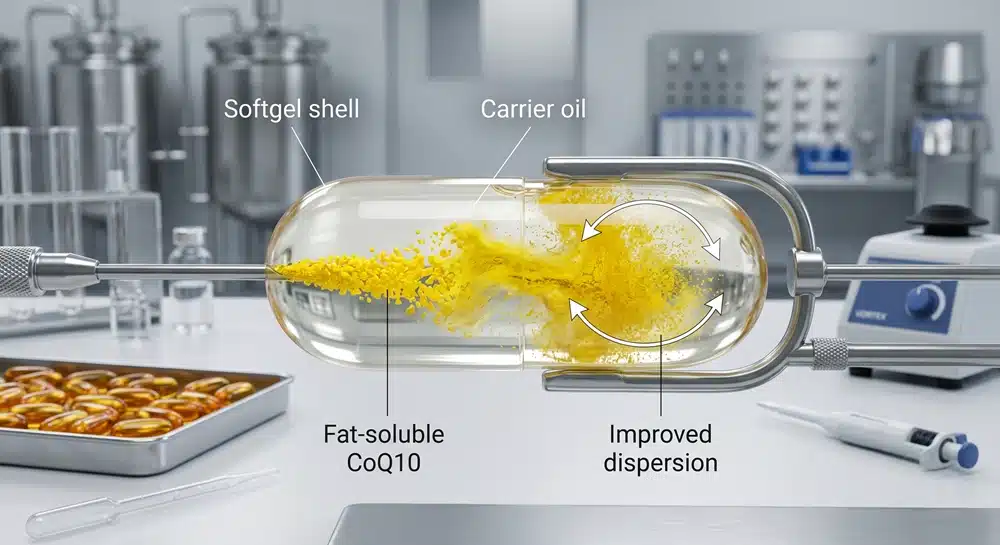
الإنزيم المساعد Q10 (CoQ10، يوبيكوينون/يوبيكوينول) هو مركب كينون قابل للذوبان في الدهون، ويوجد في الأغشية الخلوية والميتوكوندريا. في التركيبات المخصصة للطاقة، يُعتبر CoQ10 أكثر فاعلية بصفته عاملًا مساعدًا في نقل الإلكترونات داخل الميتوكوندريا ومضادًا للأكسدة في الطور الدهني، وليس كمنشط. ونظرًا لأن CoQ10 البلوري يتميز بانخفاض قابلية الذوبان في الماء وضعف قابلية تشتت المسحوق، فإن أدائه التجاري يعتمد بشكل كبير على اختيار الزيت الحامل، والتحكم في حجم الجسيمات، وهندسة شكل الجرعة.
يوجد الكوينزيم Q10 بشكل طبيعي في الجسم ويشارك في سلسلة نقل الإلكترونات في الميتوكوندريا، حيث تنتج الخلايا الأدينوسين ثلاثي الفوسفات (ATP). وقد تختلف مستوياته باختلاف العمر والنظام الغذائي والحالة الصحية واستخدام الأدوية. في النصوص الخاصة بالمكملات الغذائية، يجب أن تركز الصياغة المتوافقة مع اللوائح على دعم البنية/الوظيفة، مثل “يدعم إنتاج الطاقة الخلوية” أو “يساعد في الحفاظ على مستوى مضادات الأكسدة”، بدلاً من التركيز على نتائج علاج الأمراض.
لماذا يجب عليك تناول الإنزيم المساعد Q10؟
للحصول على الطاقة الخلوية واتباع أنماط حياة نشطة
يدعم الكوينزيم Q10 آلية إنتاج الطاقة داخل الميتوكوندريا. وهذا يجعله عنصرًا مهمًا في منتجات التغذية الرياضية، والحيوية اليومية، ومنتجات الشيخوخة النشطة. ومع ذلك، يجب أن تتجنب الادعاءات الواردة في التركيبة الوعد بعلاج التعب أو الحالات الطبية. وينبغي أن تصف صفحة المنتج المتوافقة مع المعايير الدعم المقدم لعملية التمثيل الغذائي للطاقة الخلوية والتوازن المضاد للأكسدة.
لضمان وضعية صحية للقلب
يُعد القلب عضوًا يستهلك طاقة كبيرة، ولذلك يُدرج الكوينزيم Q10 عادةً في تركيبات منتجات العناية بصحة القلب والأوعية الدموية. تختلف جودة الأدلة حسب النتائج والفئات السكانية، لذا يجب أن تستخدم النصوص الموجهة للأعمال (B2B) صياغة متحفظة مثل “يدعم صحة القلب”، ويجب تجنب الإيحاء بعلاج قصور القلب أو النوبة القلبية أو الآثار الجانبية لعقاقير الستاتين، ما لم يتم مراجعة هذه الادعاءات من قبل مستشار تنظيمي مؤهل.
كمضاد للأكسدة في الطور الدهني
غالبًا ما يُشار إلى CoQ10 باعتباره أحد مضادات الأكسدة، لأن شكله المختزل، وهو «يوبيكوينول»، يشارك في نشاط الأكسدة والاختزال في الطور الدهني. وفي المنتجات النهائية، يثير هذا الأمر أيضًا مخاوف تتعلق بالتركيبة؛ حيث يمكن أن تؤثر العوامل مثل الأكسجين والحرارة وجودة الزيت الحامل على استقرار المنتج. لذا، ينبغي على العلامات التجارية أن تطلب مواصفات مناسبة للمواد الخام والمنتجات النهائية قبل طرح المنتج في الأسواق.
كيف تختار أفضل مكملات الإنزيم المساعد Q10؟
1. الأوبيكينون مقابل الأوبيكينول
الأوبيكوينون هو الشكل المؤكسد لـ CoQ10، ويستخدم على نطاق واسع في المكملات الغذائية. أما الأوبيكوينول فهو الشكل المختزل، وغالبًا ما يُروَّج له على أنه أكثر قابلية للامتصاص الحيوي بشكل مباشر، خاصةً بالنسبة لكبار السن. ويعتمد الاختيار الأمثل على السوق المستهدفة، والتكلفة، والاستقرار، وشكل الجرعة، والطريقة التي يتم بها تسويق المنتج.
2. جودة التوريد والتصنيع
بالنسبة للمشترين في قطاع الأعمال بين الشركات (B2B)، يجب أن تشمل عملية توريد مادة CoQ10 بيانات تتعلق بالهوية، والتحليل الكيميائي، والمذيبات المتبقية (إن وجدت)، والمعادن الثقيلة، والفحوصات الميكروبيولوجية، وبيانات الاستقرار. وتُعد مادة CoQ10 المُخمَّرة طبيعيًّا شائعةً في المنتجات عالية الجودة، لكن شكل الجرعة لا يقل أهمية عن المادة الخام نفسها.
ملاحظة المُصنِّع: نادرًا ما يكون الكوينزيم Q10 مكونًا “مسحوقيًّا بسيطًا” في التركيبات التجارية عالية الأداء. بالنسبة للكبسولات اللينة التي تحتوي على CoQ10 ذات الأساس الزيتي، فإن المتغيرات الرئيسية هي تحليل CoQ10، ونوع الزيت الحامل، وتجانس الجسيمات المعلقة، ولزوجة الحشو، والتعرض للأكسجين، وتوافق الغلاف، والتحكم في البيروكسيد في الطور الزيتي. بالنسبة للكبسولات الجافة أو الأقراص، يجب على العلامات التجارية التحقق مما إذا كان CoQ10 عبارة عن مسحوق بلوري قياسي، أو CoQ10 ميكرونيز، أو حبيبات صغيرة، أو مسحوق مستحلب، أو أي شكل آخر ذي تشتت محسّن. يمكن للعلامات التجارية مراجعة هذه الخيارات من خلال تصنيع المكملات الغذائية ذات التركيبات المخصصة أو تصنيع الكبسولات اللينة.
3. الجرعة والتوافر البيولوجي
تتراوح جرعات كوينزيم Q10 المتوفرة تجاريًا عادةً بين 100 ملغ و200 ملغ لكل حصة، لكن الجرعة المناسبة تعتمد على الغرض من المنتج وشكله. ونظرًا لأن كوينزيم Q10 قابل للذوبان في الدهون، فإن استخدام ناقلات دهنية أو كبسولات هلامية أو مساحيق مستحلبة أو تقنيات الحبيبات الصغيرة قد يحسّن تجربة المستهلك مقارنةً بالمسحوق البلوري العادي.
ما أفضل وقت لتناول الإنزيم المساعد Q10
من الأفضل عمومًا تناول كوينزيم Q10 مع وجبة تحتوي على دهون لأنه قابل للذوبان في الدهون. ويُفضل تناوله في الصباح في حالة المنتجات التي تهدف إلى توفير الطاقة اليومية، بينما قد يكون تناوله في المساء مناسبًا للمستهلكين الذين يتحملونه جيدًا. ومن منظور الملصق، غالبًا ما تكون عبارة “يُتناول مع الطعام” توجيهًا أكثر أمانًا وعمليًة من الوعد بتأثيرات فورية على الطاقة.
القاعدة الذهبية تناولها مع الوجبة
هذه هي النصيحة الأكثر أهمية. إن CoQ10 هو مركب قابل للذوبان في الدهون، مما يعني أنه يحتاج إلى الدهون ليمتصه الجسم بشكل صحيح. إن تناول المكمل الغذائي على معدة فارغة سيقلل بشكل كبير من فعاليته. لضمان الامتصاص الأمثل، تناول CoQ10 دائمًا مع وجبة تحتوي على دهون صحية، مثل:
- أفوكادو
- المكسرات والبذور
- زيت الزيتون أو غيره من زيوت الطهي الصحية
- الأسماك الدهنية مثل السلمون أو التونة
- بيض
يتم بالفعل تعليق العديد من مكملات CoQ10، وخاصةً الأصناف الهلامية الشائعة، في قاعدة زيتية لتحسين التوافر البيولوجي، ولكن لا يزال إقرانها مع وجبة الطعام هو أفضل الممارسات.
في الصباح أم في المساء؟
وهنا يأتي دور التفضيل الشخصي والقليل من الملاحظة الذاتية.
- صباح الخير: يختار العديد من الأشخاص تناول CoQ10 مع وجبة الإفطار. يمكن أن يكون هذا خيارًا رائعًا لأن CoQ10 يشارك في إنتاج الطاقة، لذا فإن تناوله في الصباح يمكن أن يساعد في دعم مستويات الطاقة لديك طوال اليوم. كما أنه يساعد أيضًا على إنشاء روتين ثابت، وهو أمر حيوي لرؤية فوائد طويلة الأمد من أي مكمل غذائي.
- مساء الخير: بالنسبة للبعض، يمكن أن يكون تناول CoQ10 مع وجبة العشاء خيارًا جيدًا، خاصةً إذا كانت أكبر وجبة في اليوم تحتوي على أكبر قدر من الدهون. ومع ذلك، أفاد عدد قليل من الأشخاص أن CoQ10 له تأثير “منشط” يمكن أن يتداخل مع النوم. إذا وجدت نفسك تشعر بالأرق بعد تناول جرعة في وقت متأخر من الليل، فمن الأفضل أن تنتقل إلى الصباح.
خلاصة القول: الاتساق هو المفتاح
في حين أن التوقيت يمكن أن يؤثر على ما تشعر به، إلا أن الاتساق هو ما يهم حقًا. قد يستغرق الأمر عدة أسابيع لزيادة مستويات CoQ10 في جسمك إلى المستوى العلاجي. الاستراتيجية الأكثر فعالية هي اختيار وقت من اليوم تتذكر فيه تناول المكمل الغذائي كل يوم، سواء كان ذلك مع قهوة الصباح والبيض أو مع وجبة المساء. فقط تذكر أن تقرنه ببعض الدهون الصحية للحصول على أفضل النتائج.
ل-كارنيتين - ما هو؟
L-كارنيتين هو عنصر غذائي ضروري بشكل مشروط، ويشارك في نقل الأحماض الدهنية طويلة السلسلة إلى الميتوكوندريا، حيث يمكن أكسدة هذه الأحماض الدهنية لتوليد الطاقة. وفي تركيبات المكملات الغذائية، لا يُعد L-كارنيتين خيارًا وحيدًا: قاعدة L-كارنيتين، L-كارنيتين L-تارترات،, أسيتيل-إل-كارنيتين, ، وتختلف أشكال البروبيونيل-L-كارنيتين والفومارات من حيث الاستخدامات المستهدفة، والمذاق، وخصائص المسحوق، والقدرة على امتصاص الرطوبة، وحجم الجرعة، وإمكانية تعبئة الكبسولات.
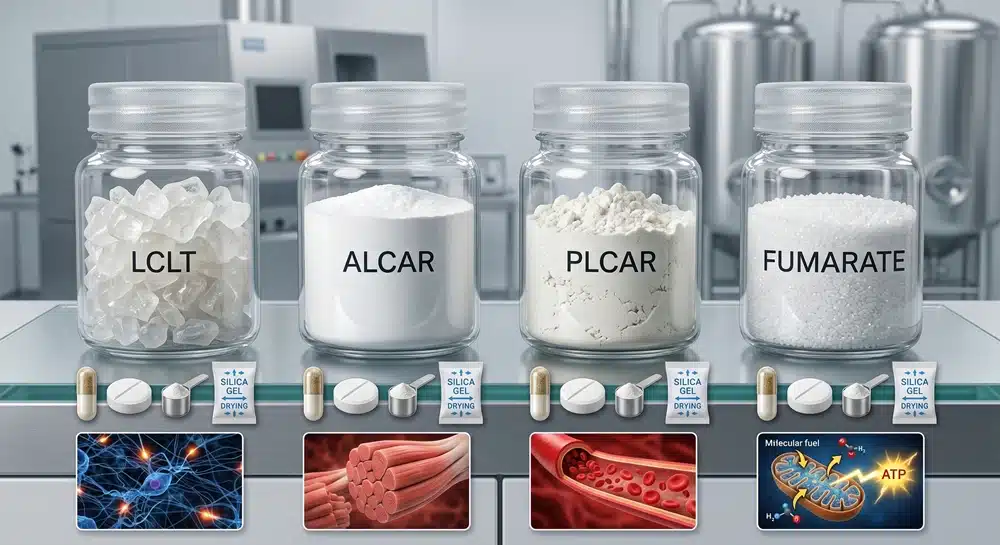
يُنتج الجسم مادة L-كارنيتين بشكل طبيعي، كما توجد في الأطعمة، لا سيما الأطعمة ذات الأصل الحيواني. وفي المكملات الغذائية، غالبًا ما تُستخدم في التركيبات المخصصة لنمط الحياة النشط، والتعافي بعد ممارسة الرياضة، ودعم التحكم في الوزن، وتحسين الأداء لدى الرجال. يجب أن تركز الصياغة المتوافقة مع اللوائح التنظيمية على عبارات مثل “يدعم عملية التمثيل الغذائي للدهون” أو “يدعم التعافي بعد التمرين”، وليس على ضمان فقدان الدهون.
لماذا يجب عليك تناول ل-كارنتين؟
دعم نقل الأحماض الدهنية
يساعد L-كارنيتين في نقل الأحماض الدهنية طويلة السلسلة إلى الميتوكوندريا. وهذا هو التفسير الآلي الأقوى لسبب اقترانه بـ CoQ10: فإحدى المكونات تساعد في نقل الوقود إلى الميتوكوندريا، بينما تدعم المكونة الأخرى عملية نقل الإلكترونات في الميتوكوندريا.
أداء التمارين ووضعيات الاسترخاء
يُستخدم L-كارنيتين L-تارترات على نطاق واسع في تركيبات التغذية الرياضية. وعادةً ما يتم تسويقه في سياق التعافي بعد التمرين وأنماط الحياة النشطة. يجب على العلامات التجارية تجنب الادعاء بأن L-كارنيتين وحده يؤدي إلى فقدان الدهون أو يعالج التعب بشكل مباشر. أما بالنسبة للمنتجات الرياضية،, التصنيع التعاقدي للتغذية الرياضية يمكن أن يساعد ذلك في تحديد ما إذا كانت الكبسولات أو الأقراص أو المساحيق أو العبوات اليومية هي الخيار الأكثر ملاءمة.
التوجهات المعرفية والتخصصية
يُستخدم الأسيتيل-L-كارنيتين بشكل شائع في التركيبات المخصصة للقدرات الإدراكية والطاقة العقلية، وذلك بفضل تركيبته الأسيتيلية وموقعه في التركيبة. ولا ينبغي استبداله تلقائيًا بـ L-كارنيتين L-تارترات في التركيبات الرياضية دون مراجعة السوق المستهدفة والجرعة والمذاق وشكل المنتج.
كيف تختار أفضل مكمل ل-كارنتين؟
ابدأ بالادعاء التسويقي المقصود للمنتج وشكله. إذا كان المنتج عبارة عن مسحوق للتغذية الرياضية، فقد يكون L-كارنيتين L-تارترات خيارًا عمليًّا. أما إذا كان المنتج عبارة عن كبسولة لدعم الوظائف الإدراكية، فقد يكون أسيتيل-L-كارنيتين أكثر ملاءمة. وإذا كان المنتج يهدف إلى تعزيز الطاقة بشكل عام باستخدام كوينزيم Q10، ففكر فيما إذا كان من الممكن أن توفر كبسولة واحدة أو قرص أو عود مسحوق أو عبوة ذات شكلين الجرعة المطلوبة دون المساس بالاستقرار.
يجب فحص تركيبات L-كارنيتين من حيث التركيز، والفقدان عند التجفيف، وحجم الجسيمات، وقابلية التدفق، والطعم، والرائحة، والمعادن الثقيلة، والخصائص الميكروبيولوجية. وتعتبر خاصية الامتصاص الرطوبي ذات أهمية خاصة في الكبسولات ومخاليط المساحيق. فقد يؤدي سوء التحكم في الرطوبة إلى التكتل، وتباين الوزن، وتقليل مدة الصلاحية المتوقعة.
ملاحظة تتعلق بالسلامة بشأن تركيبات الأداء المخصصة للرجال: L-كارنيتين، سينفرين، SR9011 و GW0742
يُعد L-كارنيتين مكونًا قانونيًا في المكملات الغذائية عند استخدامه في منتجات المكملات الغذائية المتوافقة مع اللوائح. أما السينفرين فهو مركب مستخلص من البرتقال المر يشبه المنشطات، ويتطلب مراجعة دقيقة للجرعة ومحتوى الكافيين ومستوى ضغط الدم وملصقات التحذير. لا تُعد مركبات SR9011 وGW0742/GW1516 مكونات مناسبة للمكملات الغذائية، ولا ينبغي إدراجها كجزء من تركيبة مكمل غذائي قانوني. كما يجب على الرياضيين أن يدركوا أن مُعدِّلات التمثيل الغذائي من نوع GW1516/كاردارين محظورة في الرياضة، وقد ارتبطت بمخاطر تتعلق بمكافحة المنشطات.
بالنسبة للتركيبات المخصصة لأداء الرجال أو نمط الحياة النشط، فإن المسار الأكثر أمانًا في مجال الأعمال بين الشركات (B2B) هو الاعتماد على المكونات المسموح بها، والملصقات الشفافة، وفحوصات الكشف عن الملوثات التي تجريها جهات خارجية، والصياغة المتوافقة مع اللوائح فيما يتعلق بالتركيب والوظيفة، مثل “يدعم التمثيل الغذائي للطاقة” أو “يدعم التعافي بعد التمرين”. تجنب الادعاءات المتعلقة بعلاج الأمراض، والترويج للمنتج على أنه شبيه بالستيرويدات، وأي إيحاء بأن التركيبة تحتوي على مواد كيميائية بحثية محظورة أو تحل محلها.
الإنزيم المساعد Q10 و L- كارنيتين: الاختلافات الرئيسية
غالبًا ما يُباع كل من CoQ10 وL-كارنيتين معًا، لكنهما ليسا نفس المكون. يدعم CoQ10 سلسلة نقل الإلكترونات في الميتوكوندريا وأنظمة مضادات الأكسدة في الطور الدهني. أما L-كارنيتين فيدعم نقل الأحماض الدهنية إلى الميتوكوندريا. وهذا التمييز مهم لأنه يؤثر على كل من تجربة المستهلك وشكل الجرعة النهائي.
فيما يلي نموذج لمساعدتك على فهم الاختلافات الرئيسية بين الإنزيم المساعد Q10 و L-كارنتين:
| نقطة المقارنة | الإنزيم المساعد Q10 (CoQ10) | ل-كارنيتين | الآثار المترتبة على صياغة اتفاقيات الأعمال بين الشركات (B2B) |
|---|---|---|---|
| الآلية الأساسية | يساعد على نقل الإلكترونات في سلسلة التنفس الميتوكوندريا ويحافظ على التوازن المضاد للأكسدة في الخلايا. | يدعم نقل الأحماض الدهنية طويلة السلسلة إلى الميتوكوندريا من أجل عملية الأكسدة البيتا. | إنهما متكاملان، وليسا قابلين للتبادل. |
| خصائص الذوبان | قابلة للذوبان في الدهون، ولا تصلح بشكل جيد للتوصيل البسيط القائم على الماء. | قابلة للذوبان في الماء بشكل عام؛ والعديد من أشكالها حساسة للرطوبة. | غالبًا ما يُفضل استخدام CoQ10 في شكل كبسولات هلامية أو ناقلات دهنية؛ أما L-كارنيتين فيُفضل استخدامه في شكل كبسولات أو أقراص أو مساحيق أو أنظمة الجرعات المقسمة. |
| الجرعة التجارية الشائعة | غالبًا ما تتراوح الجرعة بين 100 و200 ملغ يوميًا، اعتمادًا على وضع التركيبة. | غالبًا ما تتراوح الجرعة بين 500 و2,000 ملغ يوميًا، اعتمادًا على الشكل وطريقة الاستخدام. | يمكن أن يؤثر حجم جرعة L-كارنيتين على عدد الكبسولات واستراتيجية التعبئة والتغليف. |
| التركيز على مراقبة الجودة | التحليل بواسطة HPLC/UPLC، وحالة الأكسدة، وجودة الزيت الحامل، وقيمة البيروكسيد في المنتجات ذات الأساس الزيتي. | التحليل، تحديد الهوية، الفقد عند التجفيف، المعادن الثقيلة، علم الأحياء الدقيقة، وقابلية التدفق. | تتطلب التركيبات المركبة مواصفات إطلاق منفصلة لكل مادة فعالة. |
| أفضل تنسيقات المنتجات | كبسولات هلامية، سوائل ذات أساس دهني، مساحيق ذات تشتت محسّن، حبيبات صغيرة. | كبسولات، أقراص، أعواد مسحوق، مشروبات جاهزة للشرب، خلطات التغذية الرياضية. | قد تتفوق العبوات المكونة من كبسولتين في الأداء على التصاميم التي تحتوي على كبسولة واحدة وتجمع جميع المكونات معًا. |
لماذا يعملان معاً بشكل أفضل
ويمكن تفسير التآزر بينهما على أنه توفير الوقود بالإضافة إلى دعم تحويل الطاقة. يساعد L-كارنيتين على نقل الأحماض الدهنية طويلة السلسلة إلى الميتوكوندريا، بينما يدعم CoQ10 عملية نقل الإلكترونات في الميتوكوندريا. ومعًا، فإنهما مناسبان لتوفير الطاقة اليومية، ودعم صحة القلب، والتغذية الرياضية، والشيخوخة النشطة، والتركيبات التي تعزز الأداء الخالية من المنشطات.
من وجهة نظر صانع المستحضرات، لا تعني عبارة “أفضل معًا” دائمًا “الأفضل في نفس الكبسولة”. فقد تتطلب كبسولة زيتية تحتوي على 100 ملغ من الكوينزيم Q10 وجرعة من مسحوق L-كارنيتين تبلغ 1,000 ملغ منصات تصنيع مختلفة. بالنسبة للمنتجات المتميزة، يُنصح التفكير في عبوة يومية ذات صيغتين: كبسولة زيتية واحدة من CoQ10 لامتصاص الطور الدهني، بالإضافة إلى كبسولة أو قرص أو عود مسحوق من L-كارنيتين لضمان كفاءة الجرعة.
رؤى في مجال التصنيع: التحديات المتعلقة بتركيبة كوينزيم Q10 + L-كارنيتين
يبدو كل من CoQ10 وL-كارنيتين بسيطين على الملصق، لكن سلوكهما يختلف اختلافًا كبيرًا في مرحلة الإنتاج. فـ CoQ10 مادة محبة للدهون وتُظهر أداءً أفضل عند تشتيتها في مرحلة زيتية أو عند تصنيعها في شكل مسحوق ذي تشتت محسّن. أما أشكال L-كارنيتين فهي عادةً مواد ذات جرعات أعلى، والعديد منها مادة ماصة للرطوبة، مما قد يقلل من قابلية التدفق، ويزيد من خطر التكتل، ويؤدي إلى تباين في وزن الكبسولات في ظل ضعف التحكم في الرطوبة.
ينبغي أن تبدأ المراجعة العملية للمصنع بأربعة أسئلة: (1) هل التركيبة عبارة عن جرعة واحدة أم جرعات مقسمة؟ (2) هل يتم توفير مادة CoQ10 على شكل معلق زيتي، أو حبيبات صغيرة، أو مسحوق ميكرونيزي، أو مسحوق مستحلب؟ (3) ما هي صيغة L-كارنيتين التي تتوافق بشكل أفضل مع الادعاء المستهدف وشكل الجرعة؟ (4) ما هي مواصفات الإفراج التي ستؤكد الهوية، والتحليل، والجودة الميكروبية، والمعادن الثقيلة، والرطوبة، وتوحيد الكبسولات/الأقراص؟
بالنسبة للمنتجات المركبة، يمكن لشركة GENSEI دراسة الجدوى المتعلقة بالعبوات المزدوجة التي تجمع بين الكبسولات الهلامية والكبسولات الصلبة، أو أعواد المسحوق التي تتميز بتوزيع محسّن لمركب CoQ10، أو تركيبات الكبسولات التي تستخدم سواغات مختارة بعناية.
الخاتمة
يُعد الإنزيم المساعد Q10 والكارنيتين L ثنائيًا قويًّا في تركيبات الطاقة الخالية من المنشطات، لأنهما يدعمان مراحل مختلفة من عملية التمثيل الغذائي للطاقة في الميتوكوندريا. يدعم الإنزيم المساعد Q10 نقل الإلكترونات والتوازن المضاد للأكسدة في الطور الدهني، بينما يدعم الكارنيتين L نقل الأحماض الدهنية إلى الميتوكوندريا. بالنسبة للمستهلكين، النقطة الأساسية هي أن هذين المكونين متكاملان. أما بالنسبة لعلامات المكملات الغذائية، فإن النقطة الأساسية هي أن خصائص هذين المكونين تتطلب اتخاذ قرارات مختلفة بشأن أشكال الجرعات، وإجراء اختبارات الإطلاق، وضوابط الاستقرار.
لا ينبغي أن يعتمد منتج قوي من مركب CoQ10 + L-كارنيتين على الادعاءات التسويقية فحسب. بل يجب أن يعتمد على مواد خام تم التحقق من جودتها، وأشكال جرعات مناسبة، والتحكم في الرطوبة والأكسدة، ووثائق شهادة تحليل (COA) على مستوى كل دفعة، وصياغة متوافقة مع المعايير فيما يتعلق بالهيكل والوظيفة.
الأسئلة الشائعة
المراجع
- مكتب المكملات الغذائية التابع للمعاهد الوطنية للصحة (NIH). “ورقة حقائق حول الكارنيتين للمهنيين الصحيين”. متاحة على الرابط التالي: https://ods.od.nih.gov/factsheets/Carnitine-HealthProfessional/
- المركز الوطني للطب التكميلي والتقليدي (NCCIH). “الإنزيم المساعد Q10”. متاح على الرابط التالي: https://www.nccih.nih.gov/health/coenzyme-q10
- PubChem. “الإنزيم المساعد Q10”. متاح على الرابط التالي: https://pubchem.ncbi.nlm.nih.gov/compound/Coenzyme-Q10
- PubMed. “هلامات زيتية غنية بـ CoQ10 / مرجع لتركيبات التوافر البيولوجي.” متاح على الرابط: https://pubmed.ncbi.nlm.nih.gov/30529659/
- إدارة الغذاء والدواء الأمريكية (FDA). “الادعاءات المتعلقة بالبنية والوظيفة”. متاح على الرابط التالي: https://www.fda.gov/food/nutrition-food-labeling-and-critical-foods/structurefunction-claims
- eCFR. “بيانات المكملات الغذائية الواردة في المادة 101.93 من اللوائح الفيدرالية للولايات المتحدة (21 CFR)”. متاح على الرابط التالي: https://www.ecfr.gov/current/title-21/chapter-I/subchapter-B/part-101/subpart-F/section-101.93
- eCFR. “الجزء 111 من اللائحة 21 CFR: ممارسات التصنيع الجيدة (cGMP) للمكملات الغذائية”. متاح على الرابط: https://www.ecfr.gov/current/title-21/chapter-I/subchapter-B/part-111
- إدارة الغذاء والدواء الأمريكية (FDA). “دليل الامتثال لمعايير cGMP الخاصة بالكيانات الصغيرة في مجال المكملات الغذائية.” متاح على الرابط التالي: https://www.fda.gov/regulatory-information/search-fda-guidance-documents/small-entity-compliance-guide-current-good-manufacturing-practice-manufacturing-packaging-labeling
- الوكالة الأمريكية لمكافحة المنشطات (USADA). “ما الذي يجب أن يعرفه الرياضيون عن GW1516؟” متاح على الرابط التالي: https://www.usada.org/spirit-of-sport/what-should-athletes-know-gw1516/
- الوكالة العالمية لمكافحة المنشطات (WADA). “تنبيه بشأن GW501516”. متاح على الرابط: https://www.wada-ama.org/en/news/wada-issues-alert-gw501516
وارن وان خبير متمرس يتمتع بخبرة واسعة في سلسلة توريد المكملات الغذائية، ولديه خبرة عملية غنية في مجالات البحث والتطوير ومراقبة العمليات والتوريد العالمي للمكونات الأساسية مثل ببتيدات الكولاجين وبروتين مرق العظام والكيراتين. وبصفته كاتب هذه الزاوية، يكرس جهوده لتجريد الموضوعات من غلافها التسويقي، وتحويل العلوم الغامضة المتعلقة بالمكونات ومعايير مراقبة جودة الإنتاج إلى معلومات علمية متعمقة وسهلة الفهم، مما يساعد القراء على فهم الحقيقة الكامنة وراء الملصقات واتخاذ خيارات صحية أكثر عقلانية.