For consumers, either option can provide plant-based protein when it fits the diet and serving plan. For formulators and buyers, the better choice is the ingredient that meets the required protein assay, flavor, solubility, documentation, cost, and label positioning—not simply the one described as “germinated” or “sprouted.”
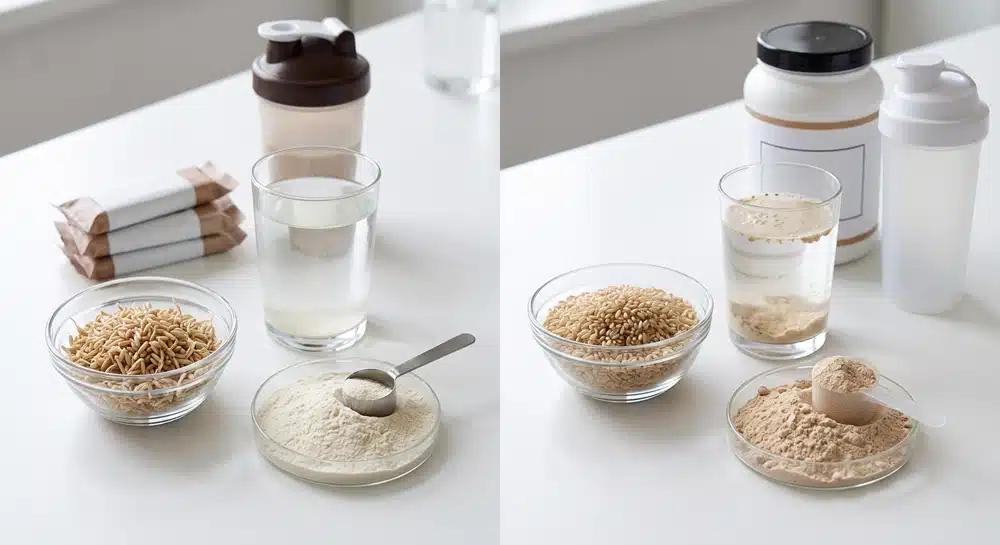
Germinated Brown Rice Protein vs Brown Rice Protein: Key Differences
| Factor | Proteína de arroz integral | Proteína de arroz integral germinado | Qué marcas deben verificar |
|---|---|---|---|
| Materia prima | Brown rice used without a defined germination claim | Brown rice sprouted under controlled conditions before protein processing | Botanical source, germination declaration, country of origin, and traceability |
| Protein concentration | Varies by concentrate or isolate grade | Also varies by concentrate or isolate grade | Protein assay, test method, dry-basis or as-is basis, and batch COA |
| Perfil de aminoácidos | Contains all essential amino acids but is commonly limited by lysine relative to some other proteins | Germination can alter amino acid composition in whole rice, but the final powder must be tested | Full amino acid profile, lysine, leucine, total essential amino acids, and protein quality calculations |
| Phytate and grain composition | Depends on raw material and extraction process | Sprouting can reduce phytic acid in whole brown rice | Do not assume the effect remains meaningful after fractionation; request relevant testing when it supports a claim |
| Taste and color | Often beige with mild cereal, earthy, or toasted notes | May have a different cereal profile depending on germination and drying | Organoleptic specification, retained sample, flavor trials, and color limits |
| Solubility and texture | Can be gritty or settle in beverages | Not automatically more soluble or smoother | Particle size, dispersibility, sedimentation, viscosity, and finished-formula trials |
| Commercial positioning | Familiar plant-protein and rice-protein story | Supports “sprouted” or “germinated” positioning when documentation is available | Claim wording, supplier evidence, organic/non-GMO records, and destination-market review |
| Cost and supply | Often has broader availability | May involve extra processing and narrower supplier availability | MOQ, lead time, origin, annual capacity, price stability, and alternate-source plan |
¿Qué es la proteína de arroz integral?
Brown proteína de arroz is a concentrated protein ingredient produced from Oryza sativa. Manufacturing commonly uses milling, water or enzyme-assisted processing, separation of starch-rich fractions, filtration, concentration, drying, and final milling. The commercial name may cover a concentrate, isolate, hydrolyzed grade, instantized grade, organic grade, or another supplier-specific specification.
The name alone does not establish protein percentage, amino acid balance, digestibility, allergen status, or suitability for a particular claim. Buyers should review a current specification and batch COA from a qualified rice protein manufacturer and supplier.
What Is Germinated Brown Rice Protein?
Germinated brown rice protein—also called sprouted brown rice protein—is produced from brown rice that has undergone a controlled soaking and germination stage before protein extraction. During germination, enzymes become active and the composition of the whole grain can change. Research on germinated brown rice has reported changes in phytic acid, free amino acids, phenolic compounds, GABA, and other grain constituents.
However, whole-grain findings should not be automatically transferred to a concentrated protein ingredient. Protein extraction, washing, enzymatic treatment, filtration, heat, and drying can substantially change the finished powder. A commercial polvo de proteína de arroz integral germinado should therefore be evaluated by its actual test results, not by the sprouted label alone.
Does Germination Make Brown Rice Protein Better?
Not in every formula. Germination may create a useful sourcing and label story, and research on whole brown rice shows that sprouting can reduce phytic acid and change certain amino acids and bioactive compounds. But a supplier should not claim that every germinated protein powder is automatically more digestible, more bioavailable, higher in lysine, higher in antioxidants, or better for sensitive digestion unless the specific ingredient and claim are supported by relevant evidence.
For a protein supplement, the practical comparison should focus on:
- protein assay and test basis;
- amino acid profile per 100 g of protein and per proposed serving;
- lysine, leucine, and total essential amino acids;
- protein quality methodology when a quality score or claim is used;
- taste, aroma, color, texture, solubility, and sedimentation;
- heavy metals, including arsenic where relevant to the sourcing risk assessment;
- microbiology, pesticides, residual solvents, and processing aids;
- organic, non-GMO, gluten-free, vegan, allergen, and country-of-origin documentation;
- MOQ, lead time, price, and supply continuity.
Amino Acid Profile and Protein Quality
Brown rice protein contains essential amino acids, but lysine is commonly the limiting amino acid in rice-based proteins. This does not mean that the protein contains no lysine; it means the lysine level may be lower relative to the reference pattern used for protein-quality evaluation.
Some studies of germinated whole rice report increases in selected amino acids, including lysine under certain conditions. That does not establish a universal advantage for every commercial germinated rice protein concentrate or isolate. Cultivar, germination time, temperature, extraction, fractionation, drying, and protein test method can all affect the final result.
For a sports nutrition or meal replacement formula, request an amino acid profile for the exact commercial grade. If lysine balance is important, the formula may use a complementary plant protein such as pea protein rather than relying on a generalized “complete protein” statement. A qualified fabricante de suplementos proteicos can assess total protein per serving, amino acid balance, serving size, flavor, and claim feasibility together.

Digestibility, Phytate, and Tolerance
Germination can activate phytase and reduce phytic acid in whole brown rice. This is a legitimate processing difference, but it does not prove that a finished germinated protein powder will be clinically easier to digest than a regular brown rice protein powder. Much of the starch, fiber, and other grain material is removed during protein concentration, and different manufacturers use different processes.
Digestive tolerance is also product-specific. Sweeteners, gums, fibers, flavors, sugar alcohols, serving size, other protein sources, and individual sensitivity may affect the consumer experience. Brands should avoid describing either rice protein type as “hypoallergenic” or “easier on the stomach” as an absolute claim. More defensible wording includes “dairy-free and soy-free positioning when supported by the formula and supplier documentation” or “designed for plant-based protein formulations.”
Taste, Texture, Solubility, and Finished-Product Performance
Rice proteins can contribute cereal, earthy, toasted, or slightly bitter notes. They may also create grittiness, sedimentation, foam, or a dry mouthfeel. Germination does not automatically solve these issues. Performance depends on particle size, degree of hydrolysis, agglomeration or instantization, protein concentration, heat history, flavor system, sweetener system, stabilizers, serving size, and packaging.
Before commercial production, run bench and pilot trials for:
- dispersibility in water and the intended milk alternative;
- sedimentation after 5, 15, and 30 minutes;
- viscosity and mouthfeel at the target serving size;
- flavor masking and aftertaste;
- color stability;
- moisture pickup, clumping, and flowability;
- shelf-life and packaging compatibility.
These trials are especially important for tubs, pouches, sachets, and stick packs developed through a fabricación de suplementos en polvo project.
Which One Is Better for Consumers?
For most consumers, the difference between germinated and regular brown rice protein is less important than the finished product’s protein per serving, amino acid balance, added ingredients, taste, third-party testing, and personal tolerance.
- Choose regular brown rice protein when the product has a suitable amino acid profile, good sensory quality, transparent testing, and a better price.
- Choose germinated brown rice protein when the sprouted sourcing story matters, the supplier provides credible documentation, and the product performs well in the finished formula.
- Choose a blended plant protein when the goal is to balance amino acids, improve taste or texture, or create a more differentiated formula.
Consumers with allergies, celiac disease, medical conditions, pregnancy, breastfeeding, or medication use should review the complete product label and consult an appropriate healthcare professional when necessary.
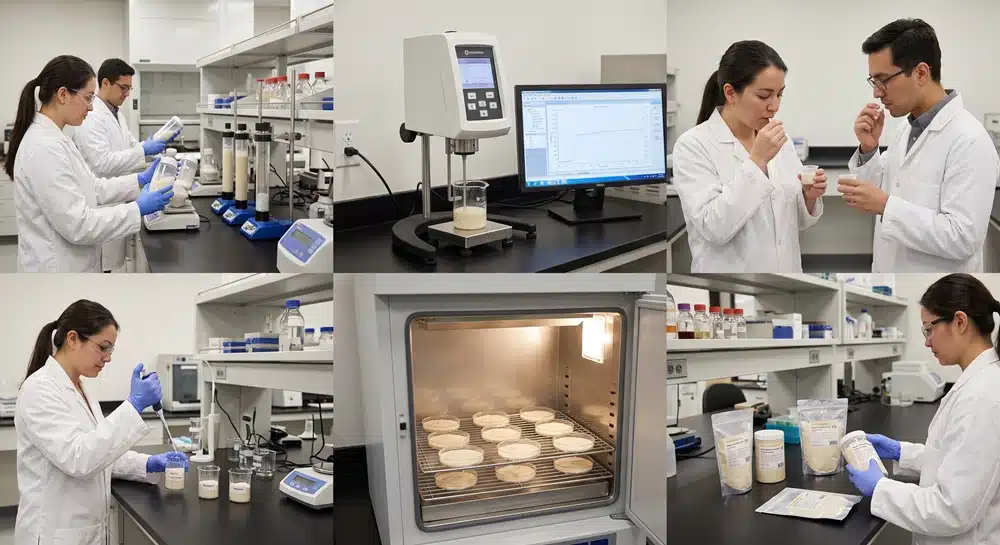
¿Cuál es la mejor opción para las marcas de suplementos?
Germinated brown rice protein is not automatically the premium technical choice, and regular brown rice protein is not automatically inferior. Select the grade that best meets the product brief.
| Objetivo del producto | Preferred Starting Point | Razón |
|---|---|---|
| Cost-sensitive vegan protein powder | Regular brown rice protein or a pea-rice blend | Broader sourcing and flexible amino acid balancing |
| Sprouted or germinated clean-label story | Documented germinated brown rice protein | Supports a differentiated raw-material narrative |
| High protein per serving | Whichever grade has the required verified assay and acceptable serving size | The “germinated” name does not determine protein concentration |
| Smooth ready-to-mix beverage | Grade selected through sensory and dispersibility trials | Instantization, particle size, and formula design matter more than the name |
| Amino acid-focused sports formula | Rice protein with verified amino acid data, often combined with complementary proteins | Supports deliberate lysine and EAA planning |
| Organic product | Certified organic grade with chain-of-custody documents | Organic status must be documented separately from germination |
Buyer Checklist: What to Request from a Rice Protein Supplier
- Product identity: brown rice protein, germinated brown rice protein, concentrate, isolate, hydrolyzed, instantized, or another defined grade.
- Raw material records: botanical source, germination process declaration, country of origin, traceability, organic and non-GMO documentation where applicable.
- Protein data: specification limit, batch COA, nitrogen-to-protein conversion factor, method, and dry-basis versus as-is reporting.
- Perfil de aminoácidos: full profile, lysine, leucine, BCAAs, total EAAs, and proposed serving calculations.
- Sensory and functionality: color, odor, flavor, particle size, bulk density, flowability, solubility or dispersibility, viscosity, and sedimentation.
- Contaminant testing: heavy metals, arsenic risk review, microbiology, pesticides, mycotoxins, residual solvents, and foreign material as appropriate.
- Allergen and dietary documents: allergen statement, gluten-free support, vegan statement, cross-contact controls, and processing-aid declaration.
- Manufacturing quality: facility certifications, supplier qualification, change-control procedure, lot traceability, retained samples, and complaint handling.
- Condiciones comerciales: MOQ, sample availability, lead time, packaging, storage, shelf life, annual capacity, incoterms, and alternate-source plan.
- Revisión de la reclamación: confirm that “germinated,” “sprouted,” “organic,” “non-GMO,” “complete protein,” “high protein,” digestibility, and health-related wording are supported for the target market.
Red Flags When Comparing Supplier Offers
- The supplier cannot define whether the material is a concentrate, isolate, hydrolysate, or whole-grain powder.
- “Germinated” is used without a process declaration or traceability record.
- The sales sheet promises a fixed protein percentage, lysine advantage, digestibility benefit, or antioxidant benefit without product-specific data.
- The amino acid profile is from a different product, old batch, or generic database.
- The COA omits the protein test method or reporting basis.
- Heavy-metal and microbiological limits do not match the destination market or finished-product risk assessment.
- The sample performs well, but the approved specification does not control taste, color, particle size, or other critical sensory attributes.
Related Rice Protein Comparisons
Brands choosing a broader protein system may also review rice protein vs collagen to understand how a plant protein differs from a connective-tissue protein in amino acid profile, positioning, and formulation purpose.
Preguntas frecuentes
Is germinated brown rice protein the same as brown rice protein?
They are both rice-derived proteins, but germinated brown rice protein uses rice that is sprouted before protein extraction. The exact commercial difference depends on the supplier’s raw material, process, and finished specification.
Does germinated brown rice protein contain more protein?
Not necessarily. Protein concentration depends on whether the ingredient is a concentrate or isolate, the extraction process, and the agreed specification. Verify the batch COA rather than assuming the germinated grade is higher in protein.
Does sprouted brown rice protein have more lysine?
Germination can change amino acid composition in whole rice under some conditions, but a higher lysine level is not guaranteed in every commercial protein powder. Request a full amino acid profile for the exact grade.
Is germinated brown rice protein easier to digest?
Sprouting can reduce phytic acid in whole brown rice, but there is not enough product-specific evidence to assume every germinated protein powder is easier to digest than every regular rice protein. Processing and the complete finished formula also affect tolerance.
Is brown rice protein a complete protein?
Brown rice protein contains all essential amino acids, but lysine is commonly limiting relative to reference amino acid patterns. For formulation and labeling, evaluate the actual amino acid profile and protein quality rather than relying only on the word “complete.”
Can germinated brown rice protein be labeled organic or non-GMO?
Only when the ingredient and finished-product supply chain meet the applicable certification or documentation requirements. Germination alone does not establish organic or non-GMO status.
What tests should a supplement brand request?
At minimum, request identity, protein assay, amino acid profile, moisture, microbiology, heavy metals, relevant arsenic testing, pesticides where applicable, particle size, sensory specifications, allergen documentation, and supplier quality records.
Conclusión
Germinated brown rice protein and regular brown rice protein can both work well in plant-based supplements. Germination is a meaningful raw-material and process distinction, but it is not a substitute for specification review. The better ingredient is the one that delivers the required protein assay, amino acid profile, sensory performance, testing, documentation, supply reliability, and compliant market positioning.
For a sourcing or formulation project, compare representative samples and current documents before selecting the commercial grade.
Referencias
- Amino Acid Composition of an Organic Brown Rice Protein Concentrate and Isolate Compared to Soy and Whey
- Effects of Soaking, Germination and Fermentation on Phytic Acid in Brown Rice
- Sprouted Grains: A Comprehensive Review
- FDA: Dietary Supplement Current Good Manufacturing Practice Guide
- FDA: Declaraciones sobre estructura y función
- FTC: Directrices sobre el cumplimiento normativo de los productos sanitarios

Warren Wan es un experto con una amplia trayectoria en la cadena de suministro de complementos alimenticios, que cuenta con una gran experiencia práctica en la investigación, el desarrollo, el control de procesos y el abastecimiento global de ingredientes clave como los péptidos de colágeno, la proteína de caldo de huesos y la queratina. Como autor de esta columna, se dedica a desmontar los argumentos de marketing, transformando la compleja ciencia de los ingredientes y las normas de control de calidad de la producción en divulgación científica rigurosa y fácil de entender, ayudando a los lectores a comprender la verdad que se esconde tras las etiquetas y a tomar decisiones más racionales en materia de salud.