
サプリメントブランドにとって、重要なのは「カプセルは安全か」という質問だけでなく、「この処方に最適なカプセル殻、充填材、賦形剤システム、および製造管理体制はどれか」という点です。カプセル製品を開発する場合は、有資格の サプリメント OEM 生産前に、シェルの選定、配合の流動性、試験要件、包装、およびラベル表示の許容範囲について検討できるものです。.
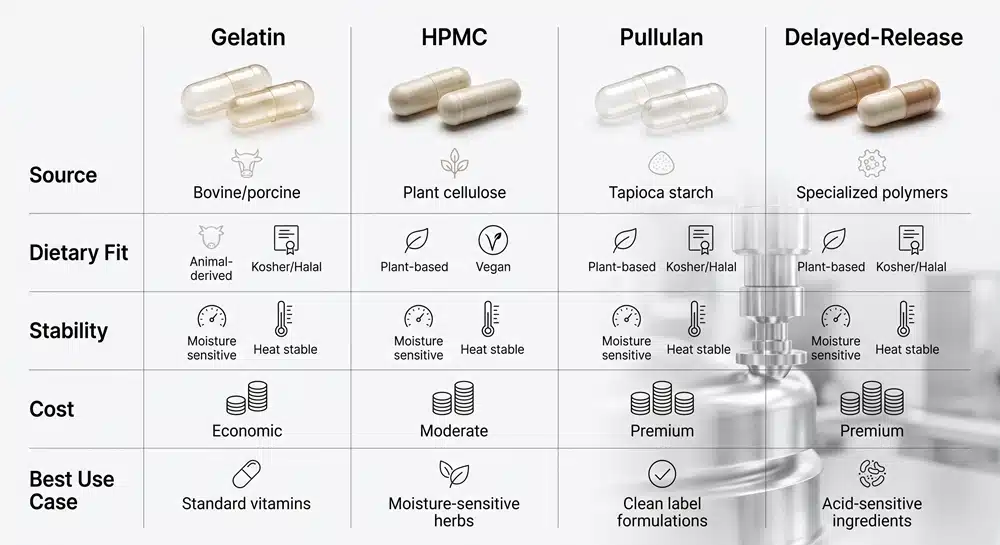
サプリメント・カプセルとは?
サプリメントカプセルは、ビタミン、ミネラル、植物成分、アミノ酸、プロバイオティクス、コラーゲン、その他の栄養補助食品成分を封入するために使用される、小さな経口剤形です。 一般的なカプセルは、カプセル殻と充填物の2つの部分で構成されています。カプセル殻は内容物を保護し、味や臭いをマスキングし、携帯性を高め、定量の摂取を可能にする役割を果たします。充填物には、粉末、顆粒、ビーズレット、ペレットのほか、特殊な形態のものには液体や半固体も使用されます。.
カプセルは、粉末よりも投与が容易で、通常グミよりも糖分が少なく、味や香りが強い製剤にも適しているため、人気があります。しかし、カプセルの品質は、単にカプセル殻だけによって決まるわけではありません。 優れたカプセル製剤には、充填重量、密度、流動性、湿気への感受性、成分間の相互作用、1回分の摂取量、表示内容、そして製造元の品質管理体制などを考慮する必要があります。.
サプリメントのカプセルは何でできているのでしょうか?
サプリメントのカプセルの多くは、ゼラチン、HPMC、またはプルランなどの特殊な植物由来素材という、3つのカプセル素材群のいずれかを原料として作られています。また、カプセルの種類や供給業者の仕様に応じて、少量の水、着色料、不透明化剤、あるいは加工助剤が含まれている場合もあります。.
| カプセル殻のタイプ | 主材料 | 最適なサイズ | 主な考慮事項 |
|---|---|---|---|
| ゼラチンカプセル | 動物由来のゼラチン。通常、ウシまたはブタのコラーゲンから作られる。 | 汎用サプリメントカプセル、コスト重視の処方、おなじみのカプセル形状 | ヴィーガンやベジタリアン向けではありません。牛・豚由来の成分、アレルゲンの有無、ハラール・コーシャの要件、および水分との相性を確認してください。 |
| HPMCカプセル | ヒドロキシプロピルメチルセルロース:セルロース由来の植物性素材 | ベジタリアン向け、ヴィーガン対応、クリーンラベル、および一部の湿気に弱い処方の製品 | ゼラチンよりもコストが高くなる場合が多い。サプライヤーの仕様、溶解性、および充填剤との適合性を確認すること。 |
| プルランカプセル | 発酵由来の多糖類 | 高品質な植物由来の処方と、酸素に敏感な成分 | 通常、価格は高めです。入手可能性、最小注文数量(MOQ)、および酸素バリア性の要件については、早めに確認しておく必要があります。 |
| 徐放性カプセル | 放出を遅らせるように設計された特殊なシェルまたはコーティングシステム | 胃酸から保護する必要がある成分、または標的放出機能が必要な成分 | 製造元から安全であることが確認されるまでは、開封したり潰したりしないでください。溶解試験および表示内容を確認してください。 |
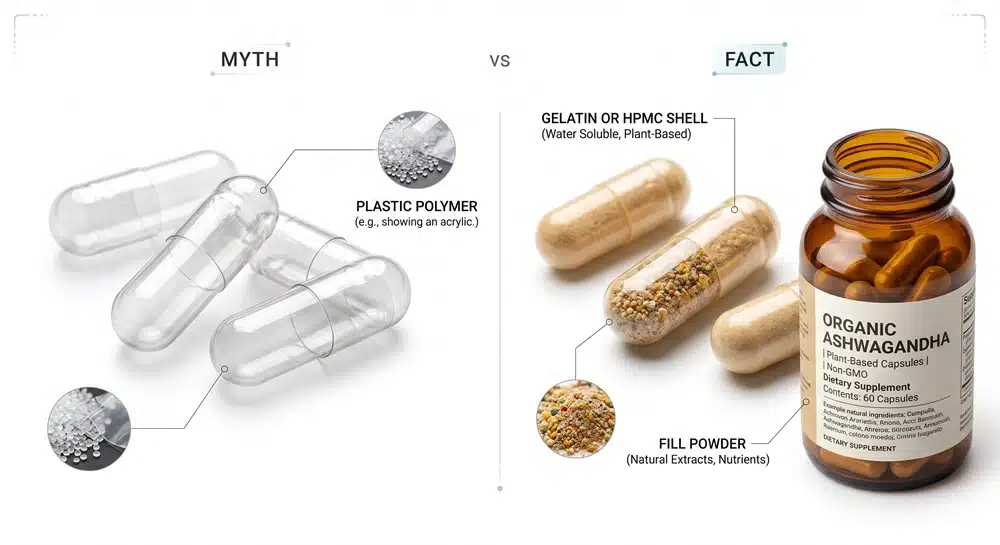
サプリメントのカプセルはプラスチック製ですか?
いいえ。サプリメントのカプセルは通常、プラスチックでできていません。「カプセル」という言葉から硬いプラスチック製の容器を連想するかもしれませんが、食用サプリメントのカプセル殻は、飲み込んだ後に溶けるように設計されています。最も一般的な素材はゼラチンとHPMCです。ゼラチンは動物由来のコラーゲンを原料としていますが、HPMCはセルロースを原料としており、ベジタリアン向けのカプセル殻によく使用されています。.
とはいえ、サプリメントのラベルには他にもさまざまな成分が記載されている場合があります。 「栄養成分表示」欄には有効成分が記載されていますが、「その他の成分」の欄には、カプセルの被膜材料、米粉、ステアリン酸マグネシウム、二酸化ケイ素、着色料、その他の賦形剤などが含まれている場合があります。これらの成分はプラスチックとは異なりますが、アレルゲンの懸念、食の好み、クリーンラベルとしての位置づけ、および配合の品質の観点から、依然として確認する必要があります。.
サプリメント・カプセルは安全か?
サプリメントのカプセルは、信頼できるメーカーが製造し、ラベルの指示に従い、その人に適した成分が使用されている場合、多くの成人にとって適切な選択肢となり得ます。しかし、「カプセルは安全である」ということを、絶対的な保証として捉えるべきではありません。 安全性は、配合、用量、成分の品質、製造管理、包装、保管方法、そして使用者の健康状態によって左右されます。.
シェルの安全性
ほとんどのユーザーにとって、一般的なゼラチンやHPMC製のカプセル殻は概ね問題なく受け入れられています。主な問題は、通常、カプセル殻そのものの「毒性」ではなく、適合性にあります。ゼラチンカプセルは、ヴィーガンやベジタリアン、あるいは特定の宗教上の食事制限に適合しない場合があります。植物由来をアピールする製品には、HPMCカプセルがしばしば選ばれます。 また、各ブランドは、カプセルサプライヤーの資料、原産国に関する要件、着色料、二酸化チタンの取り扱い方針、およびカプセル殻の仕様がターゲット市場に適しているかどうかについても確認する必要があります。.
充填材料および添加剤の安全性
充填物は、カプセルの殻と同じくらい重要です。高用量のビタミン、濃縮植物エキス、刺激物、管理が不十分なミネラル、あるいは汚染された原材料を含むカプセルは、たとえカプセルの殻自体が基準を満たしていても、リスクをもたらす可能性があります。 流動剤、充填剤、固結防止剤、着色料などの添加物については、機能、投与量、表示の透明性、および消費者の期待という観点から評価を行う必要があります。.
どちらがもっと注意すべきでしょうか?
妊娠中または授乳中の方、お子様、高齢者、慢性疾患をお持ちの方、および薬を服用中の方は、栄養補助食品を使用する前に、資格を持つ医療専門家に相談してください。各ブランドは、カプセル製品が病気の診断、治療、治癒、または予防に効果があるかのような印象を与えることを避けるべきです。製品ページやラベルには、実証された構造・機能に関する表現を使用し、必要に応じて適切な免責事項を記載する必要があります。.
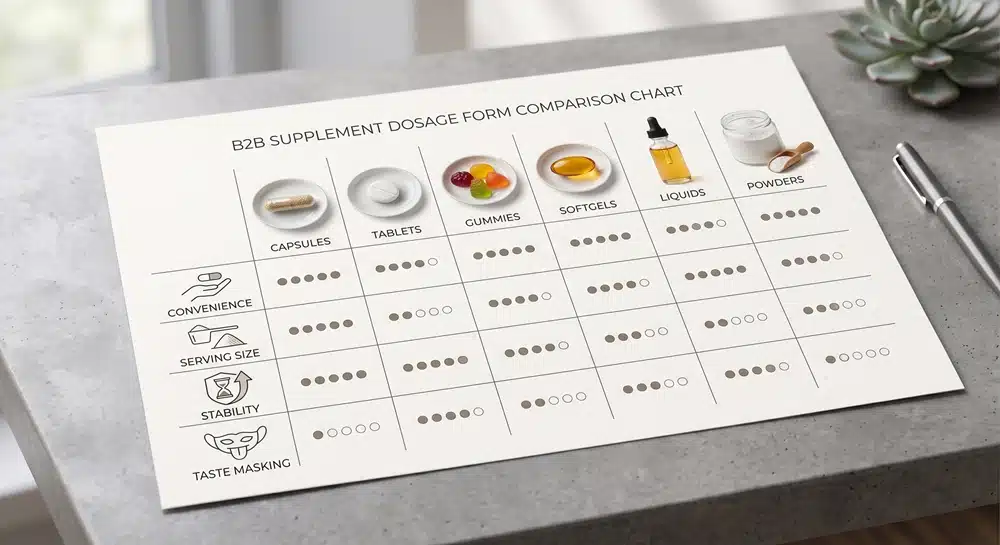
サプリメントのカプセルと、錠剤、グミ、ソフトジェル、液体、粉末の比較
カプセルは、数ある剤形の一つに過ぎません。最適な剤形は、有効成分、1回分の量、投与量、味、安定性、消費者の使用感、ターゲット市場、および製造予算によって異なります。.
| フォーマット | 強み | 制限事項 | 最良の使用例 |
|---|---|---|---|
| カプセル | 正確な分量調整、持ち運びに便利、味のマスキング効果、粉末やブレンドへの柔軟な対応 | 飲み込みにくい場合がある;充填量が限られている;すべてのオイルに適しているわけではない | ビタミン、ミネラル、植物由来成分、コラーゲンブレンド、プロバイオティクス、スポーツ栄養 |
| タブレット | 高出力、コンパクトなサイズ、優れた保存安定性 | バインダーや圧縮補助具が必要になる場合があり、口当たりが硬めです | 毎日摂取する高容量の栄養補助食品およびミネラル配合製品 |
| グミ | 消費者に親しまれる味わいと、噛みやすい形状 | 単位あたりの効力が低い、糖分や甘味料に関する課題、熱・湿気に対する感受性 | 家族みんなで楽しめるウェルネス、美容、免疫サポート、ライフスタイル関連商品 |
| ソフトジェル | 油や脂溶性成分との相性が非常に良い | 通常はゼラチンベースで、乾燥粉末の場合は柔軟性が低い | オメガ3、, ビタミンD, 、CoQ10、およびその他の油性製剤 |
| 液体 | 飲み込みやすく、摂取量を調整できる | 賞味期限が短くなるリスク、味に関する課題、計量誤差 | 乳児用粉ミルク、液体ミネラル、および錠剤を避けるユーザー |
| 粉類 | 大容量で、味のバリエーションも豊富 | 混ぜ合わせる必要があり、味や食感がうまく調整しにくい場合がある | タンパク質、コラーゲン、食物繊維、電解質、および高用量配合の製品 |
カプセルと他の剤形を比較検討するメーカーは、まず1回分の摂取量を再確認すべきです。有効成分の投与量が1回あたり数グラムを必要とする場合、カプセルよりも粉末の方が現実的な選択肢となる可能性があります。また、処方が油性である場合は、, ソフトジェル製造 の方が適しているかもしれません。その製品が味を重視したもので、含有量が少ない場合は、グミタイプと比較してみる価値があるかもしれません。 グミサプリ製造.
サプリメントのカプセルは開けられるか?
サプリメントのカプセルの中には開封してもよいものもありますが、すべてのカプセルを開封してよいわけではありません。一般的な粉末入りカプセルの場合、ラベルや製造元が許可していることが確認できれば、カプセルの殻を開けても問題ない場合があります。ただし、カプセルを開封すると、味、投与量の正確さ、安定性、刺激の可能性、および成分が空気や湿気にさらされるリスクに影響を与える可能性があります。.
徐放性、腸溶性、時間放出型、ビーズ型、または湿気に敏感なカプセルは、製造元または医療従事者から適切であると確認されない限り、開封しないでください。 プロバイオティクス、酵素、特定の植物由来成分、および味が強い、あるいは刺激性がある可能性のある成分を含むカプセルは、開封には適さない場合があります。飲み込みにくい場合は、メーカーに、粉末、液剤、グミ、チュアブル錠、またはより小さなサイズのカプセルが販売されていないか確認することを検討してください。.
サプリメントブランドはカプセルの殻をどのように選ぶべきか
サプリメントブランドにとって、カプセルの選定は、処方が完成した後ではなく、処方段階で行うべきです。適切なカプセルを選ぶことは、製品のポジショニング、成分の相性、溶解性、消費者の使用感、コスト、最小発注数量(MOQ)、包装、そして生産の実現可能性に影響を与えます。.
| 決定要因 | 確認すべき事項 | その重要性 |
|---|---|---|
| 食事における位置づけ | ゼラチン、ベジタリアン向けHPMC、ヴィーガン、ハラール、コーシャ、アレルゲンに関する要件 | 消費者の価値観やターゲット市場のニーズに合致している |
| 数式の互換性 | 湿気への感受性、吸湿性成分、酸素への感受性、pH、油分含有量 | 安定性の低下やカプセルの脆化、あるいは漏れを低減します |
| プロパティの入力 | 嵩密度、流動性、粒子径、静電気的挙動、目標充填重量 | 正確な充填とカプセルの重量の均一化を実現します |
| 1回分の量 | カプセルのサイズ、1日あたりのカプセル数、1カプセルあたりの実用的な投与量 | 消費者の順守率を高め、分量の多すぎる提供方法を回避します |
| 質の高い文書 | COA、アレルゲン表示、殻の仕様書、着色に関する資料、溶出データ | QAレビュー、小売要件、および規制関連書類に対応しています |
| パッケージング | ボトル、ブリスターパック、乾燥剤、酸素吸収剤、誘導シール、湿気防止 | 保管および輸送中の安定性を確保します |
カプセル製造品質チェックリスト
A カプセルタイプのサプリメント メーカーは、単に薬莢に火薬を充填するだけでは不十分です。生産に先立ち、各ブランドは明確な品質基準を提示し、仕様について合意すべきです。.
- 原材料の検討: 原材料の特定、供給業者の適格性評価、分析証明書(COA)の審査、アレルゲンの有無、重金属、農薬、残留溶剤、および該当する場合は微生物基準。.
- 数式の実現可能性: 充填重量、カプセルのサイズ、流動性、賦形剤の必要性、成分間の相性、および1回分の摂取量の利便性。.
- 工程内管理: カプセルの重量ばらつき、充填の均一性、機械の設定、外観上の欠陥、研磨、および必要に応じて金属検出。.
- 完成品の試験: 同一性、純度、強度、組成、微生物基準、重金属、崩壊性または溶解性、および製品のリスクに基づく安定性計画。.
- ドキュメンテーション 製造マスター記録、ロット別製造記録、包装記録、ラベルの確認、試料の保存、および変更管理。.
- 請求の審査: 主張は、真実であり、誤解を招くものであってはならず、裏付けのあるものでなければならず、また、疾患の治療、治癒、緩和、または予防をほのめかすものであってはならない。.
カプセルサプリメントメーカーに尋ねるべきRFPに関する質問
正式な見積もりを依頼する前に、以下の質問を参考にしてください:
- どのようなカプセル殻のオプションに対応していますか?ゼラチン、HPMC、プルラン、徐放性、またはカスタムカラーのカプセルなどですか?
- 吸湿性、プロバイオティクス、酵素、植物由来、ミネラル、あるいは高用量処方のシェルとの適合性について確認していただけますか?
- 各カプセル素材、カプセルサイズ、および包装形態ごとの最小注文数量(MOQ)はどれくらいですか?
- カプセル殻、原材料、添加剤、および完成品について、どのような書類をご提供いただけますか?
- 充填重量、カプセルの欠陥、およびロット間の一貫性については、どのような工程内検査が行われていますか?
- サードパーティによる試験、安定性試験、または顧客固有の仕様への対応は可能ですか?
- 表示内容の審査や、構造・機能に関する表示の範囲設定については、どのように対応していますか?
- 処方審査、サンプル開発、量産、包装、出荷にかかる一般的なリードタイムはどのくらいですか?
- プライベートブランド向けのパッケージング、ボトルの本数指定、乾燥剤、誘導シール、および段ボール箱への梱包に対応していただけますか?
- 承認後に、原材料、カプセル殻、または包装部品に変更が生じた場合はどうなりますか?
カプセルサプリメントプロジェクトにおける「GENSEI」の役割
GENSEIは、サプリメントブランドに対し、カプセルの独自配合、原料調達、カプセル充填、プライベートブランド向けパッケージング、および品質管理のサポートを提供しています。カプセル製品を開発するブランドにとって、初期段階で最も重要な決定事項は、カプセル殻の選定、配合との適合性、カプセルのサイズ、試験要件、パッケージング、およびターゲット市場におけるポジショニングです。.
ゼラチン製、ベジタリアン向け、ヴィーガン向け、カスタムカラー、またはプライベートブランドカプセルの各オプションを比較検討される場合は、ラベルやパッケージを確定する前に、製造チームと配合内容について確認してください。まずはGENSEIの カプセルサプリメントの受託製造サービス または、以下の方法を通じてサポートを依頼してください OEMサプリメント製造.
よくあるご質問
サプリメントのカプセルは何でできているのですか?
サプリメントのカプセルの多くは、ゼラチンまたはHPMCでできています。ゼラチンは動物由来ですが、HPMCは植物由来のセルロース系素材です。一部のプレミアムカプセルでは、プルランや特殊な徐放システムが採用されています。.
サプリメントのカプセルはプラスチック製ですか?
いいえ。サプリメントのカプセルは通常、プラスチックでできていません。これらは、飲み込んだ後に溶けるように設計された、食用可能な被膜です。被膜の材料として最も一般的なのは、ゼラチンとHPMCです。.
サプリメントのカプセルは体に悪いのか?
カプセル自体が必ずしも悪いわけではありませんが、安全性は成分、用量、添加物、製品の品質、製造管理、そしてご自身の健康状態によって異なります。ラベルの指示に従い、妊娠中、授乳中、薬を服用中、または何らかの疾患を抱えている場合は、医療専門家に相談してください。.
ビタミンカプセルは何でできているのですか?
ビタミンカプセルには、通常、ゼラチンまたはHPMC製の被膜が使用されています。内容物には、ビタミン、ミネラル、充填剤、流動剤、および「栄養成分表示」や「その他の成分」の欄に記載されているその他の成分が含まれる場合があります。.
サプリメントのカプセルは開けることができますか?
一般的な粉末入りカプセルの中には開封できるものもありますが、徐放性、腸溶性、時間放出型、プロバイオティクス、酵素、および湿気に敏感なカプセルは、開封に適さない場合があります。必ずラベルを確認するか、事前にメーカーに問い合わせてください。.
ベジタリアン用カプセルは、ゼラチンカプセルよりも優れているのでしょうか?
ベジタリアン用カプセルは、ヴィーガン、ベジタリアン、ハラール、コーシャ、および植物由来の製品としてのポジショニングに適しています。一方、ゼラチンカプセルはコストパフォーマンスに優れ、広く使用されています。どちらが適しているかは、配合、ターゲット市場、安定性の要件、およびブランドのポジショニングによって異なります。.
ブランドは、カプセルタイプのサプリメントを製造する前に、どのような点を確認すべきでしょうか?
各ブランドは、カプセルの材質、処方の適合性、充填量、カプセルのサイズ、添加剤、COA、GMP関連文書、完成品の試験、包装、最小注文数量(MOQ)、リードタイム、およびラベル記載内容の適合性を確認する必要があります。.
参考文献
- NIH(米国国立衛生研究所)栄養補助食品局:栄養補助食品 ― 知っておくべきこと
- FDA:栄養補助食品
- eCFR:21 CFR 第111部 – 栄養補助食品の製造、包装、表示、または保管業務における適正製造規範(GMP)
- FDA:構造・機能に関する主張
- FTC:健康関連製品のコンプライアンスに関するガイダンス
- USP:栄養補助食品検証プログラム
- Prakashら。そのカプセルはベジタリアン用ですか、それとも非ベジタリアン用ですか?
ウォーレン・ワン氏は、栄養補助食品のサプライチェーンにおいて豊富な経験を持つベテランの専門家であり、コラーゲンペプチド、骨スープ由来タンパク質、ケラチンといった主要成分の研究、開発、工程管理、およびグローバルな調達において、豊富な実務経験を有しています。 本コラムの執筆者として、彼はマーケティング的な装いを剥ぎ取り、難解な成分科学や製造品質管理基準を、分かりやすい本格的な科学普及記事へと変換することに尽力しています。これにより、読者がラベルの裏にある真実を理解し、より合理的な健康に関する選択を行えるよう支援しています。.


