本ガイドは、ソフトジェルやその他の栄養補助食品向けにこれらのオイルを比較検討している消費者、製品開発担当者、サプリメントブランド、および調達担当者向けです。本ガイドでは、いずれのオイルも、湿疹、月経前症候群(PMS)、更年期障害、関節炎、喘息、糖尿病、減量、その他の病状に対する治療法として紹介するものではありません。.
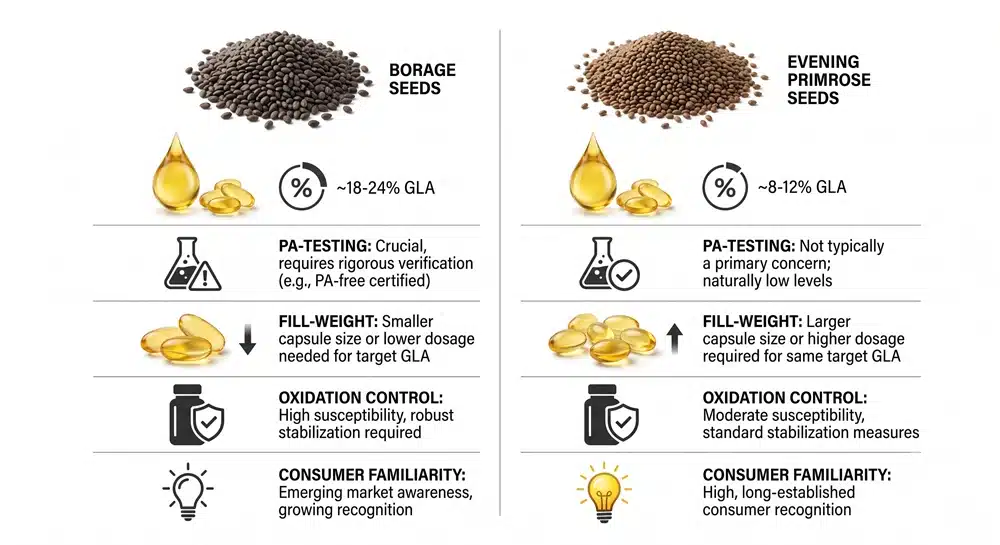
ボラージ種子油と月見草オイルの比較一覧
| ファクター | ボラージシードオイル | 月見草オイル |
|---|---|---|
| 植物由来 | ボラゴ・オフィシナリス seed; also marketed as starflower oil | オオエノテラ 種 |
| GLAの標準仕様 | 品種、製造工程、ロット仕様によって異なりますが、多くの場合、およそ18%~26%です。 | 品種、製造工程、ロット仕様によって異なりますが、多くの場合、およそ7%~10%です。 |
| 同じGLA目標を達成するために必要な油の量 | 通常はそれより少ない | 通常はもっと |
| 特有の安全性・品質上の問題 | 関連するピロリジジンアルカロイドの管理および試験に関する記録 | ボラージ特有のPAに関する問題は認められないが、通常の同定、酸化、および汚染物質に関する管理基準は依然として適用される |
| 商業上の優位性 | GLA濃度を高めると、充填重量を減らすことができる | 消費者からの高い認知度と確立された市場での地位 |
| 主な製剤上のリスク | PAに関する文書、酸化、原料のばらつき、臭気、およびソフトジェルの安定性 | 酸化、GLAのばらつき、充填量の増加、およびソフトジェルの安定性 |
ボラージ種子油とは?
ボラージ種子油は、の種子から抽出されます。 ボラゴ・オフィシナリス. スターフラワーオイルは、この種子油の一般的な商品名です。その主な配合上の価値は、GLAの含有量が比較的高いことにあります。.
サプリメントの仕様書において、「ボラージオイル」については、学名、植物部位としての種子、抽出・精製工程、原産国、脂肪酸組成、およびロットごとの品質検査結果を明記する必要があります。ボラージの葉、花、あるいは未精製のハーブ製剤と混同してはなりません。.
月見草オイルとは?
月見草 油は、その種子から抽出されます。 オオエノテラ. 。このオイルにはリノール酸が含まれており、市販のボラージ種子油の多くに比べてGLAの含有量は少ない。液体オイルやソフトジェルなどの形態で広く販売されている。.
消費者に広く知られているからといって、特定の健康状態に対する有効性が証明されるわけではありません。完成品については、依然として、検証済みの脂肪酸組成、酸化防止対策、安定性データ、および効能表示の審査が必要となります。.
ボラージオイルとスターフラワーオイルは同じものですか?
はい。「スターフラワーオイル」とは、一般にボラージ種子油を指します。しかし、購入にあたっては商品名だけでは不十分です。調達書類には、依然として以下を明記する必要があります。 ボラゴ・オフィシナリス, 、種子油、抽出・精製プロセス、および求められるGLAおよびPAの規格。.
GLAコンテンツ:パーセンテージだけでは不十分な理由
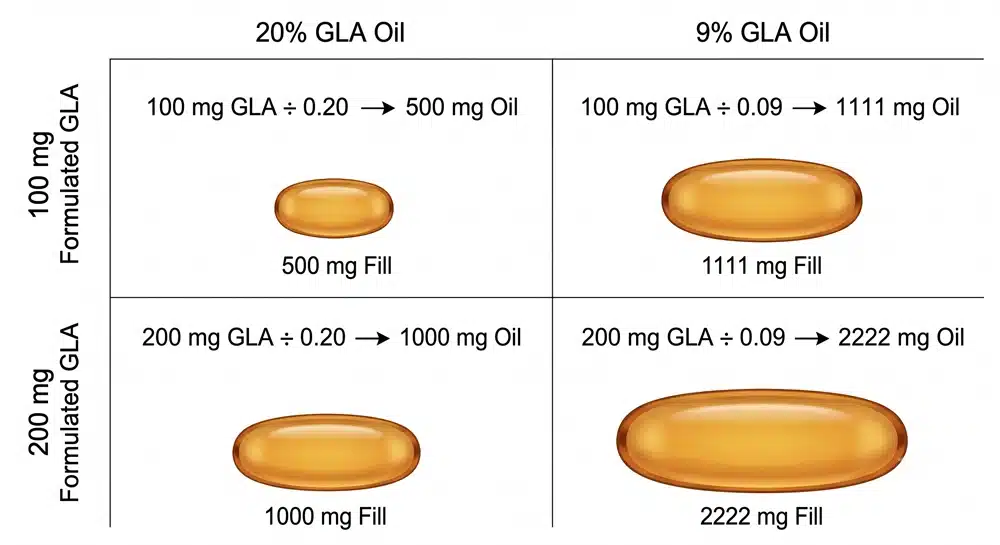
GLAの含有率が高いということは、同じ量のGLAを配合するために必要な油の総量が少なくて済む可能性があることを意味します。しかし、それだけでは、その油の作用が速いことや、より強力な臨床効果が得られること、あるいは特定の疾患に対してより効果的であることを証明するものではありません。.
| 配合例 | 原油 20% GLA | 原油 9% GLA |
|---|---|---|
| 100 mgのGLA配合 | 500 mgのオイル | 約1,111 mgの油 |
| 200 mgのGLA配合 | 1,000 mgのオイル | 約2,222 mgの油 |
| ソフトジェルに関する留意点 | 充填量が少なくなる可能性や、ユニット数が減少する可能性がある | 充填量を増やすか、ユニット数を増やす必要がある場合があります |
これらの計算は配合例であり、消費者への摂取量の推奨値ではありません。実際のロットごとの脂肪酸分析結果に基づき、過剰分、充填重量の許容誤差、1回分の摂取回数、および賞味期限の変動を考慮して計算してください。.
それぞれの製品目標には、どのオイルが適しているのでしょうか?
| 製品目標 | 有力な先発候補 | 理由 |
|---|---|---|
| より少ないオイル充填量で、GLAの含有量が増加 | PA認証書類付きのボラージ種子油 | GLA濃度を高めると、充填総重量が減少する可能性がある |
| 一般消費者向けの、お馴染みの女性向けウェルネス用ソフトジェル | 月見草オイル | 確立された成分の認識であり、控えめな主張に基づいている |
| 低酸化性のプレミアムソフトジェル | 以下のいずれかの条件を満たす油:完全な酸化および安定性規格に適合するもの | 原材料名そのものよりも、鮮度や包装の方が重要です |
| PAに敏感な市場または買い手 | 月見草オイル、またはロットごとのPA値が検証済みのボラージオイル | サプライヤーの適格性審査における曖昧さを軽減します |
| GLAオイル配合フォーミュラ | 明確な策定の根拠があってこそ | 類似したオイルを組み合わせても、GLAの含有量を増加させるだけで、実質的な差別化にはつながらない。 |
エビデンスと健康強調表示の境界
皮膚と湿疹
経口摂取する月見草油およびボラージ油は、湿疹に対する効果が研究されてきましたが、コクラン・レビューでは、プラセボと比較して臨床的に有用な効果は認められませんでした。いずれの油も、湿疹、乾癬、酒さ、またはにきびの治療薬として販売しないでください。.
PMS、更年期、そして「ホルモンバランス」“
月見草オイルは、PMSや更年期障害の対策として頻繁に販売されていますが、権威あるレビューでは、その根拠は不十分であるか、あるいは決定的ではないとされています。「ホルモンのバランスを整える」という表現は曖昧であり、治療効果を暗示する恐れがあります。具体的かつ裏付けのある構造・機能に関する表現のみを使用してください。.
炎症、関節、その他の症状
GLAは脂肪酸代謝に関与していますが、その事実だけでは、関節炎、喘息、神経障害、慢性疼痛、あるいは心血管疾患の治療効果を裏付けるものではありません。研究においては、成分、用量、対象集団、および最終的な配合が、本製品と完全に一致している必要があります。.
体重とエストロゲンに関する質問
いずれのオイルも、減量、お腹周りの脂肪の減少、あるいはエストロゲンを増やすサプリメントとして確立されているわけではありません。これらの質問に対しては、ホルモンや体組成に予測可能な影響があることを示唆することなく、率直に答えるべきです。.
安全性:ピロリジジンアルカロイドとボラージオイル
ルリジサの植物には、有毒な不飽和ピロリジジンアルカロイドが含まれている場合があります。加工や精製によって不純物を低減することは可能ですが、「PAフリー」という表現は、定義が不明確な販売用フレーズとして受け入れるべきではありません。購入者には、分析方法、分析対象物質リスト、検出限界、およびロットごとの分析結果が必要です。.
- パネルに含まれる対象のPAおよびPA-N-オキシドの分析対象物質を指定してください。.
- 分析方法およびバリデーション、あるいは検査室の業務範囲についてご請求ください。.
- 検出限界および定量限界を記録する。.
- 区画ごとの数値結果、または明確に定義された「検出されなかった」という結果を求める。.
- 製品仕様を、ターゲット市場および想定される1日あたりの摂取量に合わせて設定してください。.
- 種子の調達元から精製油、そして完成品に至るまでのトレーサビリティを確保する。.
原油を調達しているブランドは、認定を受けた ボラージオイルの成分規格, 、ただし、実際の購入決定にあたっては、ウェブサイトの記載内容ではなく、最新のバッチ文書を参照する必要があります。.
安全および相互作用に関する総合的な検討
- どちらのオイルも、吐き気、下痢、腹部不快感などの胃腸への影響を引き起こす可能性があります。.
- 処方薬を服用している方、特に出血や発作の抑制に影響を与える薬を服用している方は、使用前に医療従事者に相談してください。.
- 妊娠中および授乳中は、製品ごとに専門家による確認が必要です。一般的な「安全」という表示だけを鵜呑みにしないでください。.
- 肝臓疾患、発作性疾患、手術を控えている方、または複雑な病状をお持ちの方は、個別のアドバイスを受けるようにしてください。.
- この2種類のオイルを組み合わせると、GLAの摂取量が増加する可能性がある一方で、それによる追加の効果が実証されているわけではありません。.
ソフトジェル製剤に関する考慮事項
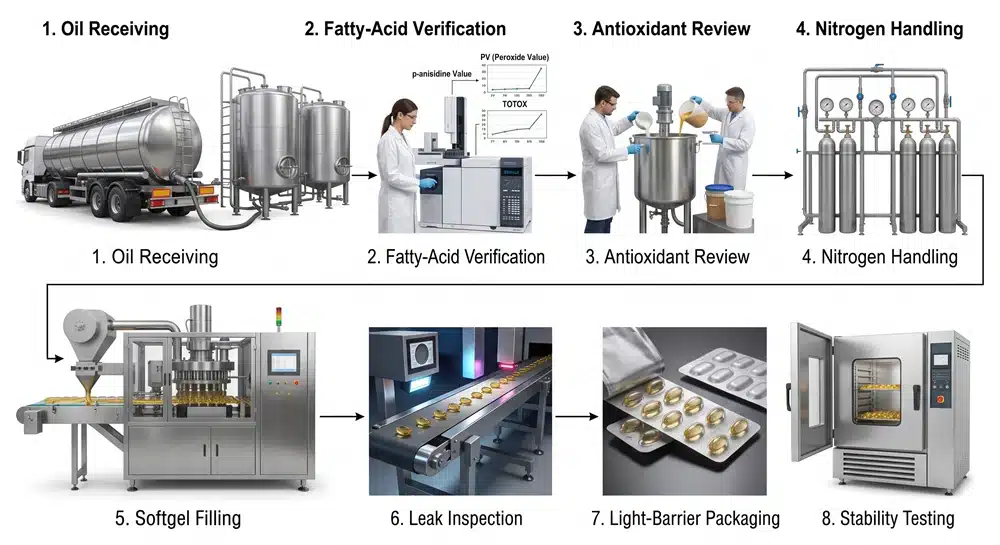
どちらのオイルも適合します 液体充填式 ソフトジェルシステム。GLAの含有率を高めれば充填重量を軽減できますが、製品の安定性と品質が保たれるかどうかは、酸化抑制とカプセル殻との相性に左右されます。.
- ロットごとの脂肪酸組成およびGLA含有率を確認してください。.
- 必要に応じて、過酸化物価、p-アニシジン価、およびTOTOXの基準値を定める。.
- 酸価、水分、臭気、色、および透明度を確認してください。.
- 「抗酸化剤」および「加工助剤」を定義してください。.
- 適切な取り扱い、窒素ガス、およびヘッドスペースの管理により、酸素への曝露を制御する。.
- シェルフィルの適合性、漏れ、継ぎ目の品質、および移行性を試験する。.
- 光や酸素を通しにくい包装材を使用してください。.
- 最終パッケージにおいて、リアルタイムおよび加速安定性試験を実施する。.
製剤開発については、GENSEIの ソフトジェルカプセルの製造 機能。.
品質仕様チェックリスト
| 品質部門 | 確認すべき事項 | なぜ重要なのか |
|---|---|---|
| 植物学的同定 | 種、植物部位としての種子、原産地および加工工程 | 正しい原材料であることを確認する |
| 脂肪酸組成 | GLA、リノール酸、オレイン酸、およびその他の主要な脂肪酸 | 身元確認および配合された有効成分の確認 |
| ボラージのPA制御 | 方法、分析対象物質、検出限界(LOD)/定量限界(LOQ)、ロット分析結果および出荷基準 | ボラージ特有の安全リスクを管理する |
| 酸化 | 過酸化物価、p-アニシジン価、および必要に応じてTOTOX | 鮮度や賞味期限に関する判断を支援します |
| その他の汚染物質 | 農薬、重金属、残留溶剤、および必要に応じて微生物検査 | 成分の放出促進および市場規制への準拠をサポートします |
| 物理的性質 | 色、臭い、透明度、密度、粘度 | 充填、官能品質、および食感に影響を与える |
| 追加された資料 | トコフェロール、抗酸化剤、担体、および加工助剤 | 配合および表示の徹底的な確認を保証します |
| ドキュメント | ロットCOA、仕様書、TDS/SDS、トレーサビリティ、および変更管理 | サプライヤーの適格性評価および監査対応の準備を支援します |
| 完成品 | 充填重量、漏れ、崩壊性、安定性、および包装との適合性 | 原油の品質だけでは、ソフトジェルの品質は保証されません |
原材料の出荷基準を完成品に紐付ける サプリメント品質管理 および文書化された変更管理手順。.
石油供給業者またはソフトジェル製造業者向けのRFPに関する質問
- どのような植物種、植物の部位、原産国が該当しますか?
- このオイルは、コールドプレス製法、溶剤抽出、精製、脱臭、あるいはその他の加工が施されていますか?
- 保証されているGLAの最低比率および標準的な比率はどのくらいですか?
- そのロットに関する直近の脂肪酸組成分析結果とCOAを3件ご提供いただけますか?
- ボラージオイルについては、PAおよびPA-N-オキシドのうち、どの分析対象物質が検査されますか?
- PA試験には、どのような方法、試験所、検出限界(LOD)、定量限界(LOQ)、および出荷基準が用いられていますか?
- 過酸化物、p-アニシジン、TOTOX、および酸価の規格とは何ですか?
- どのような抗酸化剤、担体、または加工助剤が含まれていますか?
- どのような農薬、重金属、残留溶剤、および微生物に関する検査が含まれていますか?
- どのような包装、保管、および保存期間の条件に対応していますか?
- 最小発注数量(MOQ)、サンプル数量、リードタイム、および変更管理に関する条件はどのようなものですか?
- メーカーは、パイロット用ソフトジェルおよび最終包装品の安定性について保証できますか?
- 肌、女性の健康、炎症、ホルモンに関連する効能表示は、どのように審査されるのでしょうか?
よくある質問
ボラージオイルと月見草オイル、どちらが良いですか?
ボラージオイルは通常、GLAの含有濃度が高いため、配合上のGLA量が同じ場合でも、必要なオイルの量が少なくて済む場合があります。一方、消費者の親しみやすさという観点からは、月見草オイルが好まれる場合もあります。より優れた原料とは、安全性、酸化安定性、保存安定性、および文書化に関する仕様要件を満たすものです。.
ボラージオイルと月見草オイルを一緒に飲んでもいいですか?
これらは重複する脂肪酸を含んでいるため、併用するとGLAの摂取量が重複する恐れがあり、それによる追加の効果が証明されていない。医療従事者が、摂取しているすべての栄養補助食品と医薬品の組み合わせを確認すべきである。.
ボラージオイルはエストロゲンを増やすのでしょうか?
ボラージオイルが確実にエストロゲンを増加させるという信頼できる証拠はありません。ホルモン療法として販売しないでください。.
ボラージオイルは体重増加の原因になりますか?
体重増加に特定の効果があることを示す確かな証拠はありません。他の油と同様、カロリーは摂取されますが、体重は全体的な食事内容やその他多くの要因によって決まります。.
「PAフリーのボラージオイル」とは、どういう意味なのでしょうか?
これは、定義された分析項目群について、文書化された方法および定量下限を用いて試験が行われ、ロットごとの結果が購入者の出荷基準を満たしていることを意味するべきである。単なる宣伝文句だけでは不十分である。.
コールドプレスオイルは、常に優れているのでしょうか?
いいえ。コールドプレス製法は特定の原料の特性を活かすことができるかもしれませんが、臭気、不純物、あるいは安定性を管理するためには、精製や脱臭処理が必要になる場合があります。品質は、仕様書全体およびロットごとの分析結果に基づいて判断すべきです。.
最終的な収穫
ボラージ種子油と月見草油はどちらもGLAを含む種子油ですが、GLAの含有率が高いことは配合上の利点であるものの、臨床結果が優れていることの証明にはなりません。適切な製品選定には、検証済みの脂肪酸組成、ボラージ油におけるPAの管理、酸化限度、ソフトジェルとの適合性、最終包装における安定性、そして控えめな効能表示が求められます。.
ブランドは GENSEIへのお問い合わせ 目標GLA含有量、PA仕様、剤形、包装、販売市場、注文数量をご指定の上、サンプル、COA、または見積書の請求をお願いいたします。.
参考文献

ウォーレン・ワン氏は、栄養補助食品のサプライチェーンにおいて豊富な経験を持つベテランの専門家であり、コラーゲンペプチド、骨スープ由来タンパク質、ケラチンといった主要成分の研究、開発、工程管理、およびグローバルな調達において、豊富な実務経験を有しています。 本コラムの執筆者として、彼はマーケティング的な装いを剥ぎ取り、難解な成分科学や製造品質管理基準を、分かりやすい本格的な科学普及記事へと変換することに尽力しています。これにより、読者がラベルの裏にある真実を理解し、より合理的な健康に関する選択を行えるよう支援しています。.