天然油の世界を探求していると、「亜麻仁油」と「亜麻仁油」という言葉がしばしば登場し、大きな混乱を引き起こします。これらは同じものなのでしょうか、それとも重要な違いがあるのでしょうか。どちらも亜麻植物(シナノキ)であるが、その名称の違いは、通常、その用途に決定的な違いがあることを示唆している。一方はオメガ3脂肪酸を豊富に含む健康食品として高く評価されているサプリメントであり、もう一方は工業用や住宅改修プロジェクトによく使われるものである。この記事では、亜麻仁油と亜麻仁油の主な違いを説明し、どちらを使うべきか、またその理由を説明します。.
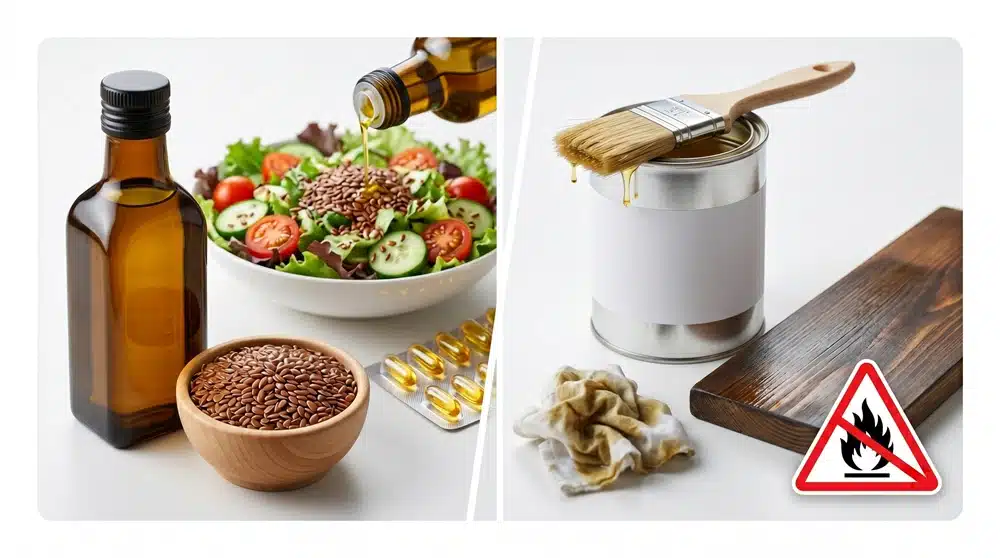
簡単な答え: Linseed oil and flaxseed oil come from the same flax plant (シナノキ), but they are not interchangeable in most consumer contexts. Food-grade flaxseed oil is made for human consumption and omega-3 ALA nutrition, while industrial or boiled linseed oil is processed for drying, wood finishing, paints, and varnishes.
Are Linseed Oil and Flaxseed Oil the Same?
Botanically, yes. Commercially, not always. Both oils can be derived from the seeds of the flax plant, シナノキ. The Codex standard for named vegetable oils even treats “flaxseed (linseed) oil” as the oil from cultivated flax seeds. However, product labels often use the two names differently: “flaxseed oil” usually signals a food-grade or dietary supplement oil, while “linseed oil” is commonly used for industrial, woodworking, painting, or varnish products.
The safest rule is to judge the grade and label, not the botanical name. If a bottle is sold as a dietary supplement or edible oil and clearly states food-grade, cold-pressed, and intended for human consumption, it may be suitable for food use. If it is sold in a hardware store, labeled boiled linseed oil, wood finish, paint medium, drying oil, or contains metallic driers/solvents, do not consume it and do not use it on food-contact surfaces.
亜麻の種と亜麻仁とは何ですか?
それは素晴らしい質問で、この2つの用語をめぐる混乱の核心を突いています。亜麻の種と亜麻仁は、実は同じものです。どちらも同じ植物から採れる、, シナノキ. .ネーミングの違いは、主に地域的な用語の問題であり、さらに重要なのは、使用目的に基づいた区別である。.
- 米国とカナダでは、「亜麻の種子」という用語は、特に食品や栄養補助食品の文脈で、ほとんど独占的に使用されている。.
- 英国やその他の地域では、特に工業用に使用される種子を指す場合、「亜麻仁」がより一般的な呼び方である。.
そのため、種子そのものは同じであるが、「亜麻の種子」という用語は通常、料理用、食品用のものを指し、「亜麻仁」は多くの場合、塗料、ニス、リノリウムのような製品の製造に使用される工業用の種子を指す。この区別は非常に重要である。なぜなら、工業用の加工方法は、油や種子を人間の食用としては安全でなくしてしまう可能性があるからである。.
Terminology matters: seed, oil, and grade
| Term on label | 通常、それはどういう意味か | What to check before use |
|---|---|---|
| Flaxseed oil / flax oil | Usually food-grade oil or supplement oil | Food-grade label, cold-pressed process, dark bottle, batch COA, peroxide value, acid value |
| Edible linseed oil | Food-grade name used in some regions | Must clearly state edible/food-grade and be processed for human consumption |
| Raw linseed oil | May be pure oil for wood or paint, but not necessarily produced under food standards | Do not assume edible; verify label, supplier, and food-contact suitability |
| Boiled linseed oil | Industrial drying oil, often with metal driers | Not for ingestion; not for cutting boards or food-contact surfaces unless the manufacturer specifically certifies food-contact safety |
亜麻仁油の作り方
食品グレードの製造には、最も一般的で好ましい方法である。 亜麻仁油 はコールドプレスである。このプロセスには以下が含まれる:
- 種の洗浄 最初のステップは、亜麻の種を徹底的に洗浄し、異物やほこり、その他の不純物を取り除くことである。.
- 機械プレス: 洗浄された種子は、機械式圧搾機(多くはスクリュー式エクスペラー)に投入される。機械は種子に強い圧力をかけ、油を絞り出す。.
- 温度管理: これが “コールドプレス ”の最も重要な部分である。この工程では、摩擦によって多少の熱が発生するが、一定の基準値(通常49℃前後、120°F)以下の温度になるように注意深く制御される。熱に非常に弱く、劣化して腐敗したり効果が低下したりする可能性がある。.
- フィルタリング: その後、オイルを濾過し、残った固体粒子や沈殿物を取り除く。.
- パッケージング: 最後に、オイルは瓶詰めされ、しばしば暗くて不透明な容器に入れられ、時には酸素を除去するために窒素で洗浄される。これはオイルを光や酸化から守り、鮮度と栄養価を保つためである。.
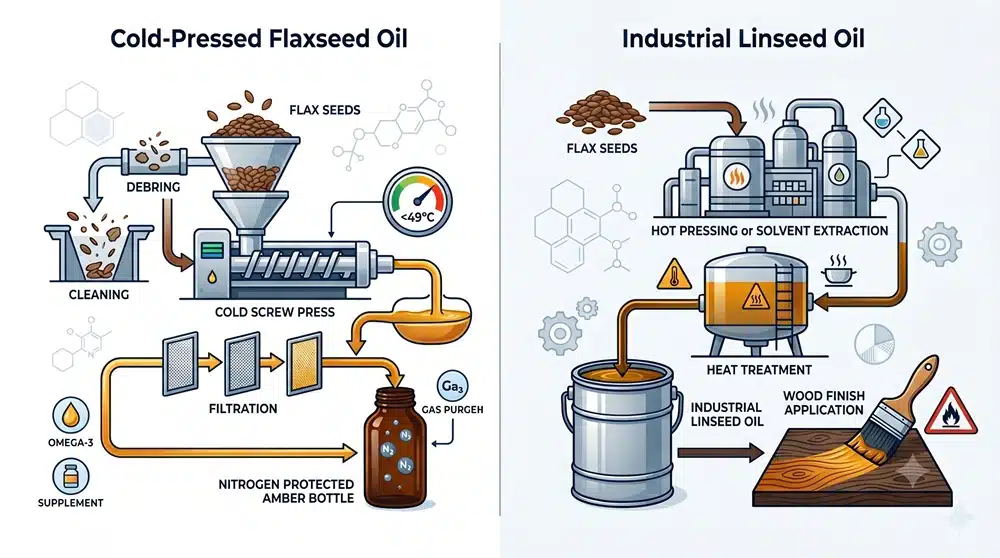
この “低温圧搾 ”プロセスにより、健康食品店で見かける高品質で栄養豊富なオイルが作られる。.
Food-grade quality indicators suppliers should verify
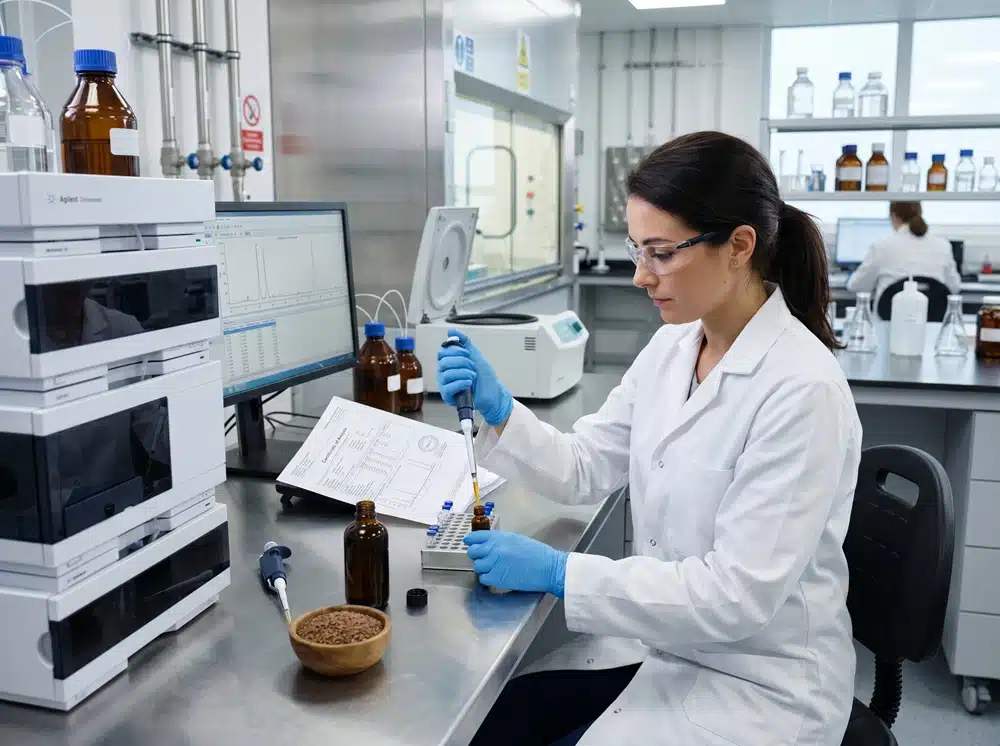
For supplement brands, “cold-pressed” is only the starting point. A food-grade flaxseed oil should be backed by a specification sheet and a certificate of analysis (COA). Key checks include fatty acid profile, peroxide value, acid value, iodine value, trace metals, and packaging protection from oxygen and light.
| Quality check | その重要性 | Practical target or note |
|---|---|---|
| Fatty acid profile | Confirms the oil is rich in alpha-linolenic acid (ALA) | USP-style monographs list alpha-linolenic acid around 50-65% for flax seed oil |
| Peroxide value | Indicates early oxidation and rancidity risk | Lower is better; supplement buyers should request current COA values |
| Acid value / free fatty acids | Shows hydrolytic rancidity and poor seed/oil handling | Use as a freshness and process-control marker |
| Iodine value | Reflects high unsaturation; also explains why linseed oil can act as a drying oil | High iodine values mean the oil is reactive with oxygen and requires careful storage |
| パッケージング | ALA-rich oils oxidize quickly when exposed to heat, light, and oxygen | Use dark bottles, nitrogen flushing when possible, tight closures, and refrigerated storage after opening |
対照的に、工業用亜麻仁油は、高温圧搾や溶剤抽出など、高熱や化学薬品を使用する別の方法で作られることが多い。これらの方法は、油の収量を最大化するために考案されたもので、栄養価の保持には無頓着である。.
利点:亜麻仁油と亜麻仁油の比較
この2つのオイルは同じ植物から採れるが、その効能は加工方法と使用目的によってまったく異なる。.
Flaxseed Oil: A Focus on ALA Omega-3 Nutrition
Food-grade flaxseed oil is valued mainly because it is a concentrated plant source of alpha-linolenic acid (ALA), an essential omega-3 fatty acid. According to the NIH Office of Dietary Supplements, ALA is found mainly in plant oils such as flaxseed, soybean, and canola oils, but conversion from ALA to EPA and DHA is limited. For this reason, flaxseed oil is best positioned as a plant-based ALA source, not as a direct replacement for fish oil EPA/DHA.フィッシュオイルと亜麻仁油の比較
- Plant-based omega-3 support: Useful for vegan, vegetarian, or fish-allergy formulations that need a plant-sourced omega-3 claim.
- Heart-health positioning: Mayo Clinic notes that some research suggests flaxseed and flaxseed oil may help with blood pressure and heart-health markers, but claims should remain conservative and compliant.
- No fiber or lignans in standard oil: Whole or ground flaxseed contains fiber and lignans; standard flaxseed oil usually does not. Do not transfer every whole-flaxseed benefit to the oil unless the product is specifically lignan-enriched.
- Use limitations: Flaxseed oil should not be used for high-heat cooking because ALA-rich oils oxidize easily. It is better used in capsules, smoothies, salad dressings, or cold applications.
亜麻仁油産業大国
一方、「亜麻仁油」は通常、加工された工業製品を指す。亜麻仁油の効能はまったく食用ではなく、そのユニークな物理的・化学的特性によって珍重されている。.
- 乾燥」オイル: これが亜麻仁油の最も大きな利点である。空気に触れると、オイルは重合して固まり、丈夫で耐水性のある皮膜を作る。例えば、新しい木のまな板やデッキ、家具の仕上げに煮沸した亜麻仁油を使えば、湿気から保護し、色を豊かにすることができます。.
- ペイントバインダー: 何世紀もの間、亜麻仁油は油絵具のバインダーとして使われてきました。伝統的な画家用絵具や住宅用絵具がなめらかに塗れ、乾燥すると耐久性があり、柔軟で長持ちするのはこのためです。.
- 保存と保護: 亜麻仁油は保護バリアを形成するため、木材や金属を含む様々な素材の保存に優れている。錆を防ぐために金属製の道具をコーティングしたり、鋳鉄製のスキレットの表面を密封して保護する(「シーズニング」と呼ばれる)ためによく使われる。.
Why Industrial or Boiled Linseed Oil Is Not Food-Grade
The issue is not the flax plant itself; it is the processing standard. Industrial linseed oil is optimized for drying performance, surface penetration, paint binding, or wood finishing. To achieve faster curing, some products are heat-treated, solvent-extracted, polymerized, or blended with metallic drying agents. These choices are useful for a wood finish, but they are not the same as a food-grade, cold-pressed supplement oil.
In bulk supplement sourcing, we treat edible flaxseed oil as a sensitive omega oil: it needs oxidation control, COA verification, suitable packaging, and clear food-grade documentation. Hardware-store linseed oil should never be substituted for dietary supplement manufacturing, even if the botanical source is similar.
亜麻仁油と亜麻仁油の比較:比較表
| 特徴 | Food-Grade Flaxseed Oil | Industrial / Boiled Linseed Oil |
|---|---|---|
| 植物由来 | Flax seeds from シナノキ | Also usually derived from flax seeds |
| Primary purpose | Dietary supplement, cold food use, plant-based omega-3 ALA | Wood finishing, paint binder, varnish, putty, linoleum, industrial coatings |
| Processing goal | Preserve freshness, ALA content, and food safety | Improve drying, penetration, hardening, and film formation |
| Typical process | Cold pressing, filtration, oxidation-controlled packaging | Heat processing, polymerization, solvent extraction, or added drying agents depending on product |
| Key nutritional value | High in ALA omega-3; standard oil has no fiber and little/no lignans | Not formulated for nutrition |
| Food safety | Yes, if clearly labeled food-grade and intended for human consumption | No, unless specifically certified as food-grade or food-contact safe by the manufacturer |
| 高品質な文書 | COA, fatty acid profile, peroxide value, acid value, trace metals, microbial/contaminant checks | SDS, application instructions, drying time, VOC/safety guidance |
| ストレージ | Dark, tightly sealed container; refrigerate after opening; protect from oxygen, light, and heat | Follow product label; keep away from heat/flame; handle oily rags as a fire hazard |
| Best answer to “Can I eat it?” | Only if the label says food-grade/edible | No for hardware-store, boiled, wood finish, paint, or industrial products |
Supply Chain Checklist for Supplement Brands
From a supplement manufacturing perspective, the biggest risk is not confusing two plant names; it is sourcing an oil that was never produced for ingestion. Before using flaxseed oil in capsules, softgels, liquids, or private label formulas, brands should request:
- Full specification sheet and recent COA for the exact batch
- Fatty acid profile confirming ALA content
- Peroxide value and acid value for freshness and oxidation control
- Heavy metal and contaminant testing appropriate for the target market
- Packaging details such as dark bottles, oxygen control, and shelf-life/stability data
- Clear confirmation that the oil is food-grade and suitable for dietary supplement use
If the product is described mainly as a wood finish, paint medium, varnish ingredient, boiled linseed oil, or drying oil, it should be rejected for supplement use.
結論
結局のところ、「両者を同じように使えるか」という問いに対する答えは、「ノー」である。亜麻仁油と亜麻仁油の違いは、安全性と効能の問題です。亜麻仁油は健康のため、亜麻仁油は住宅改修のためと理解することで、危険な間違いを避け、正しい作業に正しい製品を使うことができます。オメガ3の摂取量を増やしたい場合でも、お気に入りの木製まな板を保護したい場合でも、必ずその用途に特化したラベルのオイルを選びましょう。このシンプルな習慣が、混乱や潜在的な危険からあなたを守ります。.
よくあるご質問
亜麻仁と亜麻仁、どちらが良い?
どちらが “良い ”ということはない。. 亜麻仁油 は人間の食用と健康のためである。 亜麻仁油 は木材の仕上げのような工業用である。.
人間は亜麻仁油を食べることができますか?
「食品用」または「食用」と明記されている場合に限ります。ホームセンターで販売されている亜麻仁油、煮込み亜麻仁油、木工用ニス、絵の具用メディウム、および乾燥剤や溶剤を含む製品は絶対に食べないでください。.
亜麻仁油は妊娠中でも安全ですか?
妊娠中や授乳中は、医師の指示がない限り、亜麻仁油の摂取を開始しないでください。メイヨー・クリニックは、妊娠中や授乳中は亜麻や亜麻仁油を避けるよう勧めています。.
亜麻の種の最大の欠点は何ですか?
主な欠点は、すぐに腐ってしまうことだ。鮮度と栄養価を保つためには、丸ごとか冷蔵庫で正しく保存しなければならない。.
亜麻仁油の欠点は何ですか?
最大の欠点は、人体に安全ではないということだ。さらに、亜麻仁油に浸した布は自然発火する可能性があるため、処分には注意が必要である。.
関節痛に亜麻仁を使うには?
亜麻仁油には抗炎症作用のあるオメガ3 系脂肪酸が含まれており、関節痛の軽減に役立 つ可能性がある。として摂取することができる。 カプセル入りサプリメント スムージーやサラダなどの食品に加える。.
亜麻仁は女性の体に何をもたらすのか?
亜麻仁にはリグナンが豊富に含まれており、ホルモンのバランスを整え、更年期障害の症状を軽減する可能性がある。食物繊維も豊富で、消化と心臓の健康をサポートします。.
亜麻仁油を摂ってはいけない人は?
血液をサラサラにする薬を服用している人や、特定の持病を持つ人は、亜麻仁油を摂取する前に医師に相談する必要がある。.
亜麻仁は膝の痛みに効きますか?
そう、亜麻仁に含まれるオメガ3系の抗炎症作用は、膝を含む関節の炎症や痛みを抑えるのに役立つ。.
亜麻仁を毎日食べるとどうなりますか?
亜麻仁を毎日食べることで、消化器系の健康を改善し、心臓の健康をサポートし、食物繊維とオメガ3系を摂取することができる。少量から始めて、水をたくさん飲むようにしましょう。.
最も健康的な亜麻仁の種類は?
最も健康的な亜麻仁の種類は、ゴールデン・フラックスシードかブラウン・フラックスシードである。どちらも栄養価は同じである。最も重要なのは、鮮度を保つための加工方法と保存方法である。.
亜麻仁油と挽いた亜麻の種は同じものですか?
いいえ。粉砕した亜麻仁には食物繊維とリグナンが含まれていますが、一般的な亜麻仁油は主に脂肪、特にALAオメガ3を供給します。希望する栄養成分に応じて、適切な形態を選んでください。.
まな板に煮込み亜麻仁油を使ってもいいですか?
いいえ、製造元が食品接触用途について明示的に認証していない限り、使用できません。一般的な煮沸亜麻仁油は工業用の乾性油であり、金属系乾燥剤が含まれている可能性があります。
なぜ亜麻仁油は乾くのに、亜麻種子油は食品として販売されているのでしょうか?
この乾燥特性は、高い不飽和度と酸化作用に起因しています。工業用亜麻仁油は、酸化・重合して表面膜を形成するよう最適化されていますが、食品用亜麻仁油は、鮮度と栄養価を維持するために酸化から保護されています。.
サプリメントブランドは、亜麻仁油を大量購入する前に、どのような点を確認すべきでしょうか?
COA、脂肪酸組成、過酸化物価、酸価、微量金属、包装の保護性能、保存期間に関するデータ、および食品グレードであることを明記した文書を請求してください。.
参考文献
- NIH Office of Dietary Supplements – Omega-3 Fatty Acids Fact Sheet: https://ods.od.nih.gov/factsheets/Omega3FattyAcids-HealthProfessional/
- Mayo Clinic – Flaxseed and flaxseed oil: https://www.mayoclinic.org/drugs-supplements-flaxseed-and-flaxseed-oil/art-20366457
- FDA GRN No. 256 – High linolenic acid flaxseed oil: https://hfpappexternal.fda.gov/scripts/fdcc/index.cfm?id=256&set=GRASNotices
- Codex Alimentarius CXS 210-1999 – Standard for Named Vegetable Oils: https://www.fao.org/fao-who-codexalimentarius/
- USP Flax Seed Oil monograph mirror: https://www.drugfuture.com/Pharmacopoeia/usp38/data/v38332/usp38nf33s2_m33191.html
- Klean-Strip Boiled Linseed Oil SDS: https://images.thdstatic.com/catalog/pdfImages/5c/5caa37df-3ea9-4b49-83a7-b602de97da9e.pdf
- East Sussex Fire & Rescue Service – The Fire Hazards of Linseed Oil: https://www.esfrs.org/the-fire-hazards-of-linseed-oil
- Flax Farm – Linseed or Flax: what’s the difference?: https://www.flaxfarm.co.uk/health/linseed-or-flax-whats-the-difference/
- Treeboard – Nine Myths About Linseed Oil and Flaxseed Oil: https://treeboard.com/blog/nine-myths-about-linseed-oil-and-flaxseed-oil/
- Range Products – Linseed Oil vs Flaxseed Oil: https://www.rangeproducts.com.au/linseed-oil-vs-flaxseed-oil/
- PureFlax – Linseed Oil vs Flax Seed Oil: https://pureflax.co.uk/linseed-oil-of-flax-seed-oil/

ウォーレン・ワン氏は、栄養補助食品のサプライチェーンにおいて豊富な経験を持つベテランの専門家であり、コラーゲンペプチド、骨スープ由来タンパク質、ケラチンといった主要成分の研究、開発、工程管理、およびグローバルな調達において、豊富な実務経験を有しています。 本コラムの執筆者として、彼はマーケティング的な装いを剥ぎ取り、難解な成分科学や製造品質管理基準を、分かりやすい本格的な科学普及記事へと変換することに尽力しています。これにより、読者がラベルの裏にある真実を理解し、より合理的な健康に関する選択を行えるよう支援しています。.