はじめに
栄養補助食品ブランドのオーナー、処方開発者、およびOEM調達チームにとって、寒天とゼラチンのどちらを選ぶかは、単なる食の好みの問題ではありません。この選択によって、製品をヴィーガンとして位置づけられるかどうか、グミの成形ラインでの挙動、夏の輸送中の安定性、そして商業生産バッチ間で食感の一貫性をどの程度再現できるかが決まります。.
アガーアガーは紅藻由来のハイドロコロイドで、硬く熱安定性の高いゲルを形成する一方、ゼラチンはコラーゲン由来のタンパク質で、弾力があり口の中でとろけるようなゲルを形成します。 本ガイドでは、両者の栄養成分、ゲル化特性、製剤形態との適合性、品質管理要件、およびグミ、ソフトジェル、カプセル、粉末、その他のカスタムサプリメント形態における実用的な使用法について比較しています。.
主なポイント: アガーは紅藻由来のヴィーガン向け多糖類で、加熱すると硬く熱安定性の高いゲルを形成しますが、ゼラチンは動物性コラーゲン由来のタンパク質で、水分を加えて冷却すると、より柔らかく弾力性のあるゲルを形成します。 アガーは、ヴィーガン向けや常温で安定した製品に適しています。一方、弾力性のあるグミ、ソフトジェル、およびコラーゲンを主成分とする製剤には、依然としてゼラチンが好まれています。.
寒天とは?
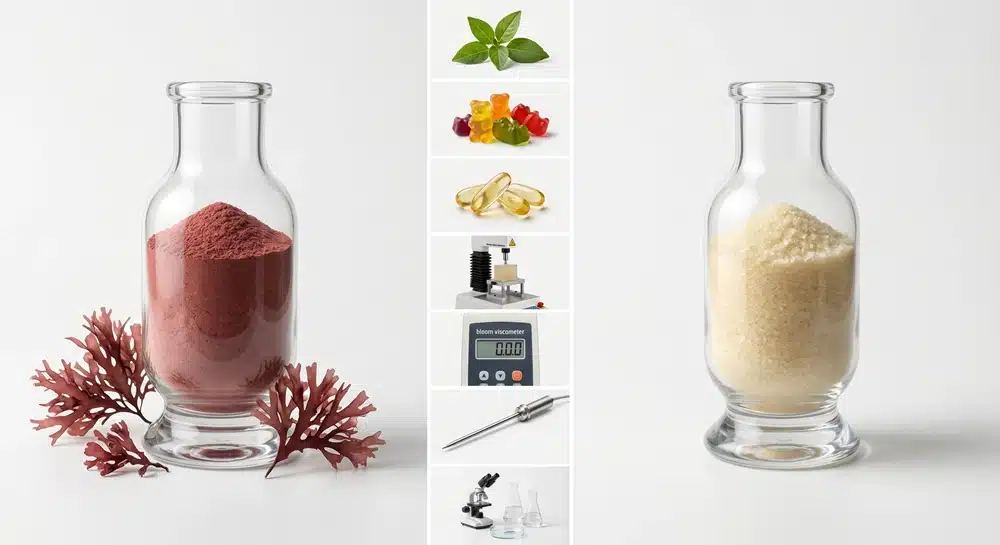
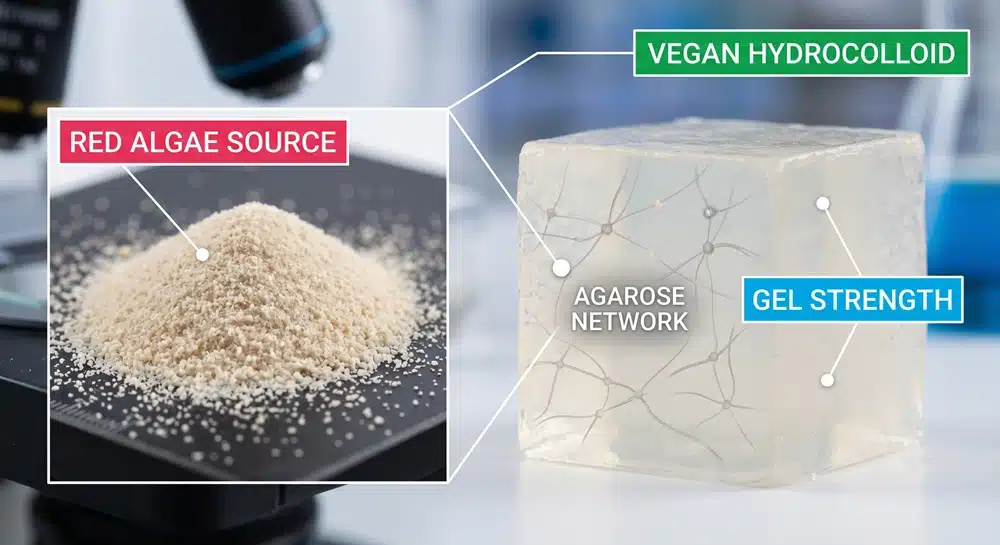
アガーは、紅藻から抽出される植物由来のハイドロコロイドであり、主にアガロースとアガロペクチンで構成されています。サプリメントの配合において、アガーは栄養素としての価値というよりは、動物由来のコラーゲンやゼラチンを使用せずにしっかりとした構造を作り出すことができる、ヴィーガン向けのゲル化・安定化剤として重宝されています。.
B2B用途向けの寒天粉末を選定する際、単に「ヴィーガン」であるかどうかだけで評価するのは不十分です。ゲル強度、メッシュサイズ、乾燥減量、灰分、溶液のpH、重金属の許容値、微生物の許容限度、目に見える塊ができずに水和する能力など、包括的な技術仕様は、最終製品の一貫性を確保するために不可欠です。 ゼラチン不使用の菓子やサプリメントを開発するブランドにとっては、これらの厳密な原材料仕様を、デンプン不使用の グミサプリ製造 商業規模への拡大に先立ち、テクスチャーを最適化し、有効成分の回収を確保し、長期的な保存安定性を保証するためには、この論理が不可欠である。.
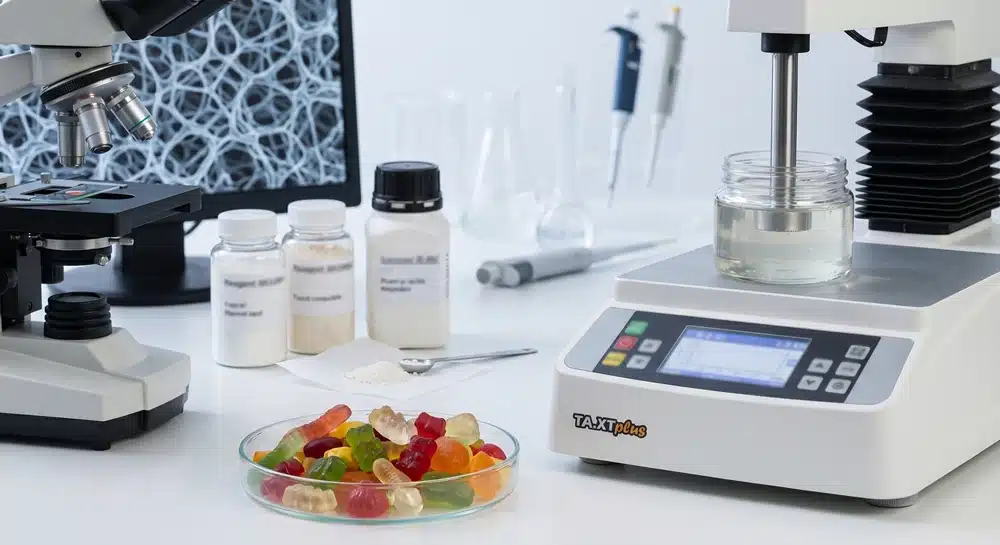
これらの重要なパラメータが実際のアプリケーションにおいてどのように機能するかを示すため、当社独自の配合により、高度なデポジット工程において、当社の高仕様寒天がシームレスに統合されている様子をご紹介します:
先進的な寒天ベースのグミ製造システム
デンプンフリーの成形用充填および有効成分の回収に最適化されています
| フェーズ | 原材料名 | %(重量比) | 職務/技術職 |
|---|---|---|---|
| フェーズA | 精製水 | 24.50% | 水和培地 |
| フェーズA | 独自開発の高強度寒天粉末 | 1.80% | 主たるゲル化・テクスチャリング剤 |
| フェーズB | ブドウ糖シロップ(42 DE) | 42.00% | 結晶化防止剤 |
| フェーズB | 上質なサトウキビ糖 | 28.00% | 甘味料および固形分の含有量 |
| フェーズC | 活性栄養素ブレンド(例:ビタミン/植物由来成分) | 2.00% | 機能性強化 |
| フェーズC | クエン酸溶液(50% w/w) | 1.20% | pH調整剤(目標pH:3.5~3.8) |
| フェーズC | 天然の風味・着色料ブレンド | 0.50% | 有機食品プロファイル |
| 合計 | 商業用バッチ重量 | 100.00% | 最終的な調理後固形分目標値:78~80ブリックス |
- 水和と溶解: 専用寒天粉末を、冷たいフェーズAの水に溶かします。目に見える微細な塊がなくなるまで完全に溶解するまで、穏やかに撹拌しながら95°C~100°Cまでゆっくりと加熱します。.
- スラリー調理: B相(ブドウ糖シロップとサトウキビ糖)を混ぜ合わせます。混合物を、最終的な目標値であるブリックス78°~80°(沸点約108°C~110°C)になるまで煮詰めます。.
- 冷却および能動的添加: バッチを90°Cまで冷却する。フェーズC(有効成分、香料、着色料、酸溶液)を混合する。気泡が入らないよう、空気をできるだけ取り込まないように注意しながら、よく混ぜ合わせる。.
- デンプンを含まない塗布: あらかじめ温めておいた、清潔ででんぷんを含まないシリコン製または金属製の型に、直ちに流し込みます。早期のゲル化を防ぐため、流し込み温度を85°Cに保ってください。.
- 硬化・脱型: 制御された環境条件(20°C~22°C、相対湿度45%未満)で30~45分間養生した後、きれいに型から取り出してください。.
ゼラチンとは何か?
ゼラチンは、牛や豚の皮膚、骨、皮などの動物の結合組織を部分的に加水分解して得られる、コラーゲン由来のタンパク質です。寒天とは異なり、ゼラチンはグリシンやプロリンなどのアミノ酸を供給するほか、体温付近で溶ける弾力性のあるゲルネットワークを形成します。.
工業生産において、ゼラチンは、ブルーム値、粘度、粒子径、微生物基準、原料の産地、ハラール/コーシャ認証、および包括的なアレルゲン関連文書といった重要なパラメータに基づき、厳格な品質基準を満たすことが求められます。 ブルーム値が高いほど、ゲルネットワークの密度が高くなり、これがグミの噛みごたえ、ソフトジェルの被膜の弾力性、およびカプセル全体の性能を決定づけます。ゼラチンが使用される場合、 ソフトジェルカプセルの製造 または カスタムサプリメント処方, 、エンジニアリングチームと配合チームは、表面のべたつき、構造的なひび割れ、あるいはテクスチャーの早期不安定化といったリスクを軽減するため、水和の動態、溶液のpH、水分の移動、および乾燥室の湿度を綿密に管理しなければならない。.
原材料の仕様と実際の生産とのギャップを埋めるため、当社独自の配合技術により、高品質でブルーム値の高いゼラチンマトリックスと精密な温度管理をどのようにバランスよく組み合わせ、最適化された商業用レベルのチュアブル製剤システムを実現しているかを以下に示します。
独自開発のハイブルームゼラチン・グミシステム
弾力性、熱安定性、および活性成分の安定した放出を実現するよう設計されています
| フェーズ | 原材料名 | %(重量比) | 技術的機能 |
|---|---|---|---|
| フェーズA | 精製水(水分補給) | 15.00% | ゼラチン膨潤マトリックス |
| フェーズA | 独自開発のプレミアムゼラチン(250ブルーム) | 7.50% | 主たる構造性ゲル化剤 |
| フェーズB | 液体ブドウ糖シロップ(42 DE) | 41.50% | ビスコシティ・ビルダー&ドクター・シュガー |
| フェーズB | 精製グラニュー糖 | 31.00% | 固形分の寄与と結晶構造の制御 |
| フェーズC | 栄養機能食品用有効成分/ビタミン複合体 | 3.00% | 標的生物における生物学的利用能 |
| フェーズC | クエン酸溶液(50% w/w) | 1.40% | 風味調整剤およびpH調整(3.2~3.4) |
| フェーズC | 天然の官能評価プロファイラー(風味・色) | 0.60% | 外観および嗜好性プロファイル |
| 合計 | バッチ処理の完了結果 | 100.00% | 目標の加熱後総固形分:79~81ブリックス |
- ゼラチンの水和: A相のゼラチンを、あらかじめ60°Cに温めた水に分散させる。穏やかに撹拌し、液体が完全に透明になるまで30~45分間、十分に水和させる。熱分解を防ぐため、60°Cに保つ。.
- シロップの大量調理: フェーズBの材料を混ぜ合わせる。このスラリーを真空または常圧下で114°C~116°Cまで加熱し、余分な水分を飛ばして、82°ブリックスに達するようにする。.
- ブレンド工程: 調理したシロップベースを90°Cまで冷まします。水で溶かしたフェーズAのゼラチン溶液を、ゆっくりと混ぜ合わせます。空気の混入やゼラチンの分解を防ぐため、温度を80°C~85°Cに一定に保ちます。.
- 酸性化と薬剤の投与: インターロック・フェーズCの活性成分、フレーバー、着色料を混合します。クエン酸溶液は最後に添加し、急速な転化制御を開始します。酸処理後のpHを3.3に調整します。.
- 塗布・硬化: 75°C~80°Cの温度で、油を塗った澱粉製または澱粉を含まないシリコーン型に直ちに流し込みます。その後、22°C、相対湿度30~35%の条件に保たれた硬化室に移し、24時間放置して、最適な水分移動と理想的な平衡状態の食感を確保します。.
アガーアガーとゼラチン:その根本的な違い
寒天とゼラチンはどちらも液体をゲル状にしますが、その化学的メカニズムは異なります。 寒天は海藻由来の炭水化物系ハイドロコロイドです。ゼラチンはコラーゲン由来のタンパク質系ハイドロコロイドです。寒天は通常、室温でも形をしっかりと保つ、硬く、短く、もろいゲルを形成します。一方、ゼラチンはより柔らかく弾力性のあるゲルを形成し、あの典型的なグミのような噛みごたえを生み出し、口の中で心地よく溶けていきます。.
消費者にとって、その選択はしばしば「ヴィーガン」か「動物由来」かの二者択一のように聞こえる。 一方、サプリメントブランドにとっての選択肢はより広範です。ラベルのポジショニング、有効成分との相性、製造工程の温度、包装の安定性、目指す食感、保存条件、そして原価など、あらゆる要素が重要となります。ヴィーガンブランドは寒天を好むかもしれませんが、従来のコラーゲン入りグミやソフトジェルカプセルの製品ラインでは、通常、ゼラチン、あるいは入念に開発された代替素材が必要となります。.
寒天の利点
Agar agar’s main formulation advantage is its dietary and textural role rather than direct therapeutic activity. Because it is plant-derived and high in soluble fiber, agar can support vegan positioning, digestive-wellness product concepts, and low-calorie gel systems. However, claims around weight loss, blood sugar, or disease management should be treated as evidence-limited and reviewed by a qualified regulatory team before label use. [Cite: literature review + regulatory review]
B2B製品開発において、アガーは、動物由来成分を含まないゲル化システム、しっかりとした食感、そして従来のゼラチンデザートよりも優れた耐熱性が求められるレシピにおいて、特に有用です。とはいえ、製造が必ずしも容易になるわけではありません。 寒天は、早期のゲル化を防ぐために、慎重な水和処理、より高い加工温度、そして制御された充填工程を必要とします。そのため、寒天ベースのグミは、市販化前に試作バッチを行う必要がある場合が多いのです。.
ゼラチンの利点
ゼラチンの主な利点は、コラーゲン由来のタンパク質であるという点と、弾力性のあるゲルとしての機能性です。 完成品のサプリメントにおいて、ゼラチンはコラーゲン関連のポジショニング、関節の快適さを訴求するコンセプト、あるいはタンパク質を含むスナック形式の製品を後押しする可能性がありますが、病気の治療法として表現してはなりません。B2B市場におけるより大きな価値は、その予測可能な咀嚼感、ソフトジェルカプセルのシェル性能、そしてグミやカプセル向けの長年にわたり確立されたサプライチェーンにあります。.
グミの場合、弾力のある食感と消費者の親しみやすさという点で、ゼラチンは依然として基準となっています。 ソフトジェルにおいては、ゼラチンが伝統的な被膜形成材料として用いられています。これは、柔軟なリボンを形成し、液体や油の充填物を密閉でき、湿度や水分を適切に管理すれば安定したカプセルに乾燥させることができるためです。ベジタリアンやヴィーガンをターゲットとするブランドは、単にゼラチンを寒天に置き換えるのではなく、ハイドロコロイドシステム全体を見直す必要があります。.
それぞれの健康効果を簡単に比較してみよう:
| ベネフィット | 寒天 | ゼラチン |
|---|---|---|
| 減量 | 食物繊維による満腹感の促進 | タンパク質による満腹感の促進 |
| 消化器系の健康 | 食物繊維が多く、下剤として働く | 腸内環境の修復 |
| 関節/骨の健康 | カルシウム、マグネシウム含有 | コラーゲン生成をサポート |
| 皮膚の健康 | 限られた証拠 | 弾力性、保湿性の向上 |
| 栄養成分 | 食物繊維、ミネラルが豊富 | 高タンパク、高アミノ酸 |
| 血糖コントロール | グルコースを調整する可能性がある | 限られた証拠 |
ゼラチンの代わりに寒天を使用できますか?
一部の配合では、ゼラチンの代わりに寒天を使用できますが、決して1:1の比率で直接置き換える工業用代替品として扱うべきではありません。 寒天を使用すると、食感が短く、もろくなりやすいのに対し、ゼラチンを使用すると、弾力のある噛みごたえと、口の中ですっきりと溶ける食感になります。サプリメント用グミにおいて、ゼラチンを寒天に置き換える場合は、通常、パイロットバッチを作成して、ハイドロコロイドの含有量、シロップの固形分、酸の添加タイミング、水分活性、風味の放出、および有効成分の安定性を再調整する必要があります。.
開発における一般的な出発点として、ゼラチンに比べて寒天の使用量を大幅に減らすことが挙げられますが、最終的な配合比率は、目標とする食感、pH、可溶性固形分、充填重量、および包装条件によって異なります。 一般消費者向けのレシピでは、アガー粉末1ティースプーンで、ゼラチン粉末約3ティースプーンを置き換えることができます。一方、市販のグミの場合、家庭用のレシピをそのまま真似るのではなく、食感分析、安定性試験、および官能評価を通じてその比率を検証する必要があります。.
寒天 vs ゼラチン:どう選ぶ?
完成品がヴィーガン、ベジタリアン対応、耐熱性、または動物由来成分不使用である必要がある場合は、寒天(アガーアガー)を選択してください。 製品に弾力のある噛みごたえ、クラシックなグミのような食感、コラーゲン由来の形状保持性、あるいは従来のソフトジェルと同等の性能が求められる場合は、ゼラチンを選んでください。ブランドとしては、最終的な決定は、処方のターゲットとなる消費者層、有効成分の安定性、求める食感、包装方法、および保存条件に基づいて行うべきです。.
製品がヴィーガン向けグミの場合、寒天が解決策の一部となり得ますが、もろい食感にならないようにするには、ペクチン、カラギーナン、またはその他の親水性コロイドの助けが必要になることがよくあります。製品がソフトジェルである場合、専用のベジタリアン向けソフトジェルシステムが採用されない限り、通常はゼラチンがベースとなる被膜材料となります。 製品が粉末や錠剤の場合、寒天やゼラチンは機能面において軽微な役割を果たすことはありますが、その食感面での利点は、グミやソフトジェルほど重要ではありません。.
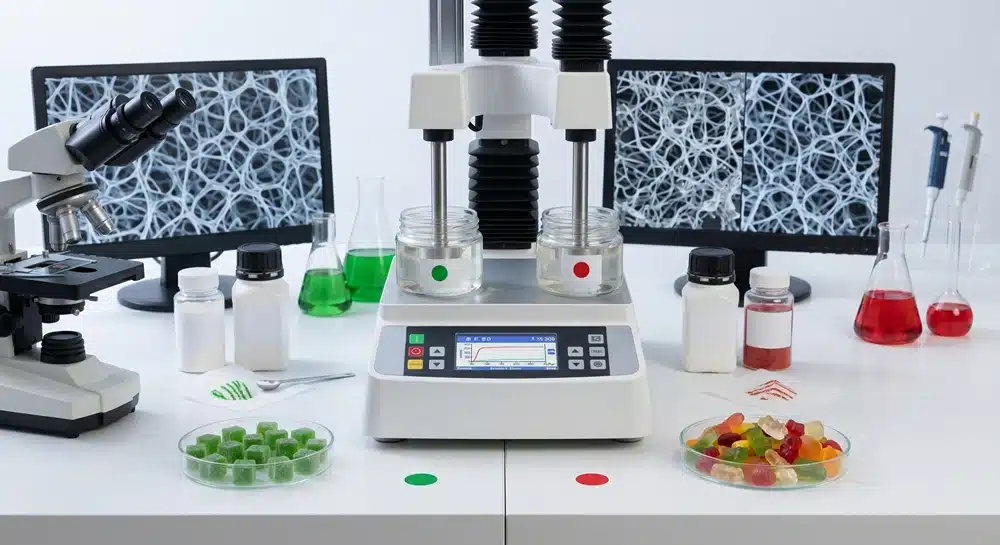
B2B仕様比較表:アガーアガー対ゼラチン
原材料の適格性評価や剤形の選定を行う際は、以下のマトリックスを活用してください。.
ハイドロコロイドの意思決定マトリックス
成分の適格性評価および配合調整に関する技術的比較
| パラメータ | 寒天 | ゼラチン | B2Bにおける意思決定への影響 |
|---|---|---|---|
| 出典/表示 | 紅藻由来の多糖類;ヴィーガン対応 | 動物性コラーゲン由来のタンパク質 | アガーはヴィーガン向け表示に適しており、ゼラチンはコラーゲンやタンパク質を前面に打ち出すのに適しています。. |
| 主要なテクスチャ指標 | 所定の試験条件におけるゲルの強度(g/cm²) | ブルーム値と粘度 | 一般的な表現ではなく、方法とCOAに基づいて比較してください。. |
| 加工温度 | 高温での水和が必要 | 開花と温水での溶解が必要 | アガーは加熱移送が必要であり、ゼラチンは水分補給と乾燥室の管理が必要である。. |
| テクスチャプロファイル | 硬く、短く、もろい | 弾力があり、もちもちしていて、口の中でとろける | 感覚ターゲットと一致させる。. |
| 主な剤形 | ヴィーガン用グミ, 、固形ゲル、安定化システム | グミ、ソフトジェル、カプセル、コラーゲンスナック | 製造ラインおよびラベル記載内容と一致させる。. |
製造の知見:グミ、ソフトジェル、カプセル、粉末システム
サプリメントの製造において、アガーとゼラチンは、消費者が最終製品を口にするずっと前から、異なる挙動を示します。アガーは活性化温度が高く、凝固が早いという特性があるため、加熱ケトル、移送ホース、マニホールド、充填機などで問題が生じる可能性があります。 製造ラインの温度が十分に保たれていないと、早期のゲル化によりノズルが詰まったり、単位重量にばらつきが生じたりする可能性があります。また、配合の酸性度が高すぎたり、高温の状態が長く続いたりすると、ゲルの強度が低下し、最終製品の食感が不均一になる恐れがあります。.
ゼラチンは、従来のグミのような食感を実現する上で扱いやすい反面、製造上の管理要件が異なります。 製造現場では、水和度、pH、温度、粘度、乾燥室の湿度、および包装への水分移行を管理する必要があります。ソフトジェルカプセルの場合、ゼラチンシェルの弾力性、リボンの厚さ、継ぎ目の強度、および乾燥条件によって、流通中にカプセルから液体が漏れたり、くっついたり、ひび割れたりするか、あるいは安定した外観を保てるかが決まります。.
ブランドオーナーが寒天とゼラチンを比較する際、重要な問いは「どちらの原料がより健康的か」ではなく、「どのハイドロコロイドシステムが、目標とする表示内容、有効成分の含有量、製造ライン、包装形態、および目標とする保存期間に対応できるか」です。Genseiは、この意思決定を以下の点と整合させることができます。 グミサプリ製造, ソフトジェルカプセルの製造, capsule supplement manufacturing, and 粉末サプリメント製造 ワークフロー。.
寒天およびゼラチンサプリメント製品の品質管理チェックリスト
サプリメント用寒天またはゼラチン系製品は、外観のみではなく、規格に基づいて承認されるべきです。一般的な入荷原材料の検査項目には、同定、原産地証明書、水分含有量または乾燥減量、灰分、pH、ゲル強度またはブルーム値、粘度、微生物限度、重金属、および異物検査が含まれます。 完成したグミについては、単位重量のばらつき、食感プロファイル、水分活性、ブリックス値、pH、有効成分の回収率、微生物放出試験、および包装の完全性検査も必要となる場合がある。.
栄養補助食品のcGMPに基づき、製造業者は、成分規格、製造工程管理、製造マスター記録、ロット追跡可能性、保存サンプル、および設備・品質管理に関する書面による手順を確立する必要があります。 B2Bのバイヤーにとって、これは、アガーとゼラチンの選択を、発注を行う前にリリース試験計画と連動させるべきであり、最初の商業生産ロットが食感や保存期間の試験に不合格となってからでは遅いことを意味します。.
よくあるご質問
結論
アガーとゼラチンは、互いに置き換え可能な商品ではありません。これらは、原料、栄養成分、製造条件、および商業的リスクが異なる、それぞれ異なるハイドロコロイド系です。アガーは、ヴィーガン向け製品や、硬めで熱安定性の高い製品に適しています。一方、ゼラチンは、弾力性のあるグミ、ソフトジェル、およびコラーゲンを主成分とする製品において、依然として好まれる選択肢です。.
B2B向けサプリメントブランドにおいて、成功につながる判断は、単なる「キッチンでの代替ルール」に基づいたものではありません。それは、ゲル化剤を、剤形、有効成分の含有量、表示内容、製造設備、包装、放出試験、および目標保存期間に合わせて選定することから生まれます。明確な仕様に基づいた小規模なパイロットバッチを実施することで、本格生産におけるコストのかかるテクスチャーの不具合を防ぐことができます。.
参考文献
- FDAのDS CGMPガイダンス: https://www.fda.gov/regulatory-information/search-fda-guidance-documents/small-entity-compliance-guide-current-good-manufacturing-practice-manufacturing-packaging-labeling
- eCFR 21 CFR 第111部: https://www.ecfr.gov/current/title-21/chapter-I/subchapter-B/part-111
- GELITA Bloomの価値に関する説明: https://www.gelita.com/en/knowledge/blog/gelatin-know-how-gelling-power
- Modernist Pantryのゼラチンから寒天への換算ガイド: https://blog.modernistpantry.com/advice/the-starting-guide-to-replacing-gelatin-with-agar/
- ゼラチン不使用のCapPlusニュートラシューティカルグミ: https://capplustech.com/2021/08/30/gummies-without-gelatin/
- RSC誌掲載の寒天熱ヒステリシスに関する論文: https://pubs.rsc.org/en/content/articlehtml/2017/ra/c7ra08590g
ウォーレン・ワン氏は、栄養補助食品のサプライチェーンにおいて豊富な経験を持つベテランの専門家であり、コラーゲンペプチド、骨スープ由来タンパク質、ケラチンといった主要成分の研究、開発、工程管理、およびグローバルな調達において、豊富な実務経験を有しています。 本コラムの執筆者として、彼はマーケティング的な装いを剥ぎ取り、難解な成分科学や製造品質管理基準を、分かりやすい本格的な科学普及記事へと変換することに尽力しています。これにより、読者がラベルの裏にある真実を理解し、より合理的な健康に関する選択を行えるよう支援しています。.