For consumers, the better option depends on whether you want a tea beverage or a concentrated supplement. For supplement brands and formulators, the decision should be based on the ingredient specification, intended dosage form, caffeine target, sensory profile, safety review and permitted label claims—not on the assumption that one format is universally “healthier.”
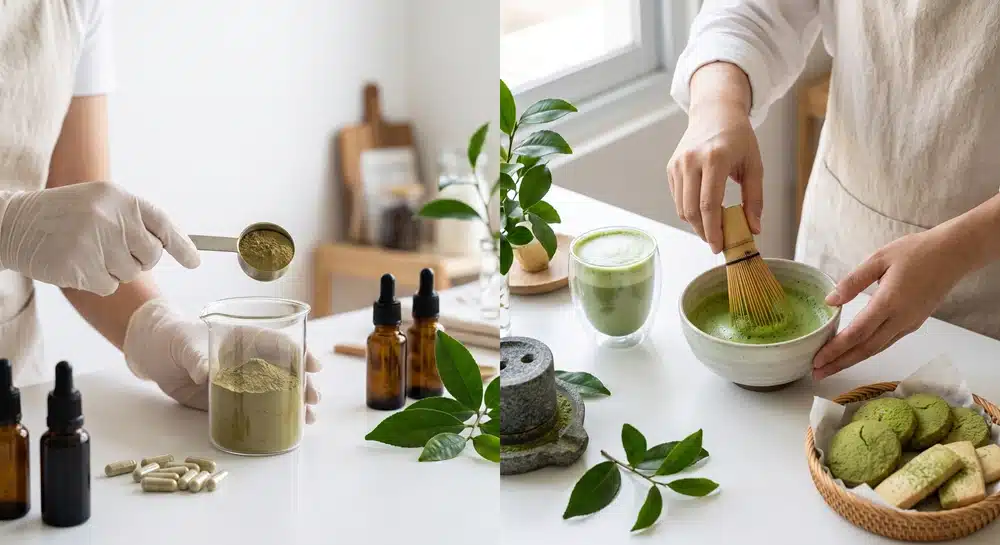
緑茶エキスと抹茶:主な違い
| 比較係数 | 緑茶エキス | 抹茶 |
|---|---|---|
| 基本的な定義 | An extracted and concentrated green tea ingredient, sometimes standardized for polyphenols, catechins or EGCG. | A finely ground powder made from tea leaves, traditionally tencha, that is consumed as a whole-leaf suspension. |
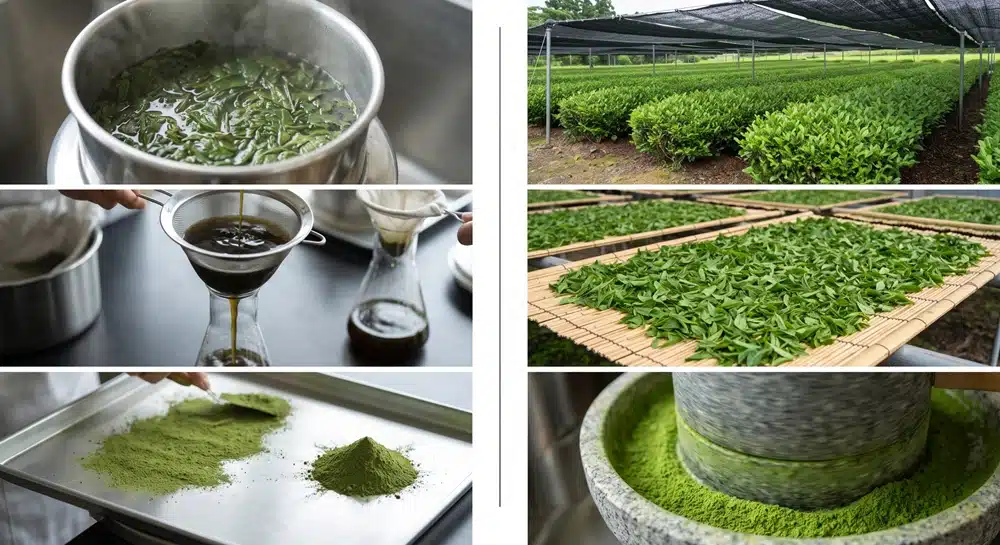
| 加工 | Tea leaves are extracted with a specified process, filtered, concentrated and dried. Water or food-grade hydroalcoholic systems may be used depending on the supplier. | Tea leaves are cultivated and processed for tencha, then dried and ground into a 粉末. |
| 標準化 | May be standardized for total polyphenols, total catechins, EGCG and caffeine. | Usually sold by origin, sensory quality, particle size and grade positioning rather than a standardized EGCG claim. |
| 構成 | Concentrates selected soluble compounds; the final profile depends on the extraction and standardization process. | Contains the milled tea leaf, including naturally variable catechins, caffeine, amino acids, pigments and plant material. |
| カフェイン | Can be caffeinated, caffeine-controlled or decaffeinated. The COA or finished-product label must be checked. | Naturally contains caffeine, but the amount varies by raw material, serving size and test method. |
| 味と色 | Often bitter and astringent as a powder; capsules can reduce direct taste exposure. | Provides a distinctive green color and vegetal, umami or bitter tea flavor. |
| 一般的な形式 | Capsules, tablets, gummies, liquids, drink powders and premixes. | Tea beverages, latte powders, smoothies, foods and whole-tea powder products. |
| Primary formulation advantage | Defined marker compounds and compact delivery. | Whole-tea story, sensory experience and recognizable consumer format. |
| Main formulation limitation | Concentration increases the importance of dose, safety, caffeine and claim review. | Variable active content, larger serving size, taste and color stability considerations. |
緑茶エキスとは何か?
Green tea extract is produced from ツバキ leaves by extracting soluble compounds and concentrating the resulting material. The finished powder may be standardized for total tea polyphenols, total catechins, EGCG or caffeine. However, “green tea extract” is not one universal specification. Two extracts with the same ingredient name can differ substantially in EGCG level, caffeine, carrier content, extraction solvent, color, taste and recommended use.
Supplement brands should review the supplier specification and COA rather than relying only on the front-label ingredient name. A qualified green tea extract ingredient specification should clarify botanical identity, plant part, marker compounds, assay methods, caffeine, carrier, contaminants and batch documentation.
What Does “Standardized Green Tea Extract” Mean?
Standardization means the supplier targets a defined amount or range of one or more measurable compounds. Common markers include total polyphenols, total catechins and EGCG. The word “standardized” does not automatically prove that the ingredient is more effective, safer or higher quality. The assay method, serving amount, finished-product matrix and target market still matter.
Does Green Tea Extract Always Contain Caffeine?
No. Some extracts retain naturally occurring caffeine, while others are processed to reduce it. “Decaffeinated” also should not be interpreted as necessarily caffeine-free. Brands should obtain an actual caffeine specification and include all caffeine sources when reviewing the finished formula.
抹茶とは何か?
Matcha is a powdered green tea traditionally made by grinding tencha. Because the powder is whisked or blended into a beverage rather than removed after steeping, the tea leaf material is consumed. Matcha is valued for its green color, tea flavor and whole-leaf positioning, but its composition naturally varies by cultivar, growing conditions, harvest, processing, storage and serving size.
Terms such as “ceremonial grade” and “culinary grade” are widely used in commerce, but they should not replace objective quality checks. For commercial sourcing, brands should review origin, raw-material identity, color, flavor, particle size, moisture, microbiology, pesticide residues, heavy metals and authenticity testing.
Is Matcha the Same as Green Tea Extract?
そうだ。. Matcha is a whole-leaf tea powder, while green tea extract is a concentrated extract. They share a botanical source but are not interchangeable on a gram-for-gram basis. Matcha usually requires a larger serving and contributes noticeable taste, texture and color. Green tea extract can deliver defined catechin or EGCG levels in a smaller amount, but concentration also requires closer safety and claim review.
Matcha should also be distinguished from “matcha extract.” A product called matcha extract may be an extracted ingredient rather than conventional ground matcha. Buyers should confirm the manufacturing process and specification instead of assuming that every ingredient using the word “matcha” is whole-leaf powder.
EGCG and Catechins: Which One Has More?
There is no reliable universal answer without testing the specific products. Green tea extract is often formulated to provide a defined EGCG or catechin level, so it can be easier to quantify. Matcha naturally contains catechins, including EGCG, but the amount varies and is not normally guaranteed unless the supplier provides analytical data.
For formulation work, compare milligrams of the tested marker compound per intended serving—not just milligrams of raw material. Also confirm the analytical method and whether the declared value refers to total polyphenols, total catechins or EGCG, because these terms are not interchangeable.
Caffeine: Green Tea Extract vs Matcha
Both ingredients may contribute caffeine. Matcha naturally contains caffeine, while green tea extract can range from naturally caffeinated to caffeine-controlled or decaffeinated. Generic internet ranges should not be used to finalize a commercial formula because ingredient batches and serving sizes differ.
Brands should calculate total caffeine from every source in the product, including tea ingredients, coffee ingredients, guarana and added caffeine. Consumers who are pregnant, breastfeeding, sensitive to caffeine, taking medication or managing a health condition should discuss caffeine intake with a qualified healthcare professional.
消費者にとってはどちらが良いのでしょうか?
Choose Matcha When You Want:
- A tea beverage or food ingredient rather than a concentrated extract.
- A recognizable green color and tea flavor.
- A whole-leaf product story and preparation ritual.
- A format that can be whisked, blended or incorporated into recipes.
Choose Green Tea Extract When You Want:
- A capsule, tablet, gummy or compact supplement serving.
- A defined EGCG, catechin, polyphenol or caffeine specification.
- Less bulk than a whole-leaf powder serving.
- A supplement format where flavor can be masked or avoided.
Green tea extract should not be treated as a concentrated replacement for unlimited tea consumption. Follow the product label, avoid combining multiple concentrated green tea products without professional review and seek medical advice if adverse symptoms occur.
Which Is Better for Supplement Brands and Formulators?
| 製品コンセプト | Usually Better Starting Point | なぜ |
|---|---|---|
| Standardized EGCG capsule or tablet | 緑茶エキス | Marker compounds can be specified and delivered in a compact format. |
| Matcha latte or whole-tea drink powder | 抹茶 | Provides the expected flavor, color and whole-tea consumer experience. |
| Caffeine-controlled botanical formula | Green tea extract with a verified caffeine specification | Caffeine can be measured and controlled more precisely. |
| Green-colored wellness powder | Matcha, or a matcha/extract combination after sensory testing | Matcha supports color and flavor; extract can add defined markers but may increase bitterness. |
| Gummy or liquid supplement | Green tea extract, subject to taste and stability trials | Smaller active mass may be easier to formulate, although bitterness and oxidation still need control. |
| Food or culinary application | 抹茶 | Whole-leaf powder is more aligned with culinary positioning. |
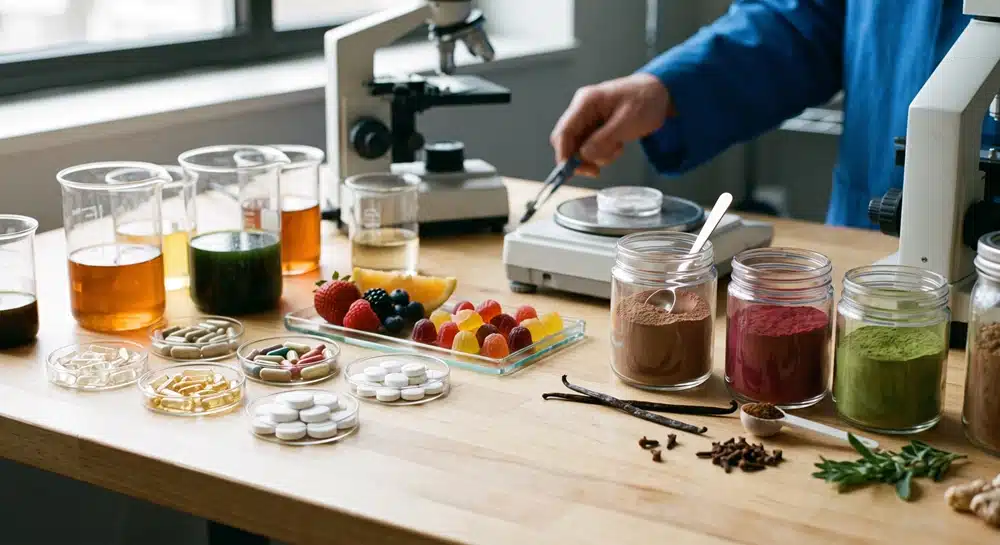
Successful ハーブサプリメント製造 requires more than selecting the ingredient name. The formula team should align the extract or matcha specification with serving size, dosage form, taste, stability, packaging, testing and label claims.
For tea-based sachets, tubs and drink mixes, 粉末サプリメント製造 should include dispersibility, sedimentation, flavor masking, color stability and moisture-control trials. A related guide comparing 緑茶エキスと緑茶の飲み比べ can help separate supplement standardization from beverage positioning.
安全性および表示に関する考慮事項
Concentrated green tea extract deserves more caution than ordinary tea use because it can deliver a larger amount of catechins in a smaller serving. Rare cases of liver injury have been reported primarily with green tea extracts in tablets or capsules. Safety assessment should consider the actual EGCG level, caffeine, serving directions, other ingredients, target consumer and destination-market requirements.
- Do not describe a green tea extract or matcha product as FDA-approved.
- Avoid claims that the ingredient treats obesity, cancer, liver disease, cardiovascular disease or other medical conditions.
- Do not promise guaranteed fat loss, detoxification, anti-inflammatory treatment or disease prevention.
- Review total caffeine and stimulant exposure across the complete formula.
- Include appropriate warnings and directions based on the formula, evidence and target market.
- Consumers with liver conditions, medication use, pregnancy, breastfeeding or caffeine sensitivity should seek professional advice before using concentrated supplements.
確認すべき品質仕様
Green Tea Extract Buyer Checklist
- Botanical name and plant part.
- Extraction solvent and extraction ratio, where applicable.
- Total polyphenols, total catechins and EGCG specification.
- Assay method used for each marker.
- Caffeine specification, including decaffeinated claims.
- Carrier or excipient content.
- Residual solvent limits.
- Heavy metals, pesticide residues and microbiological limits.
- Identity or fingerprint testing.
- Stability, packaging and storage requirements.
- COA, specification sheet, SDS and allergen documentation.
Matcha Buyer Checklist
- Country and region of origin.
- Confirmation that the material is matcha/ground tencha rather than generic green tea powder.
- Harvest, cultivar and grade information when relevant to the product positioning.
- Color, aroma, taste and particle-size specifications.
- Moisture, water activity and storage requirements.
- Pesticide residues, heavy metals and microbiological limits.
- Authenticity and adulteration controls.
- Caffeine or catechin testing if the label or formula requires a defined value.
- Packaging with appropriate protection from moisture, oxygen, heat and light.
How to Choose: A Simple Decision Framework
- Define the consumer experience. Is the product a tea, food, latte powder or concentrated supplement?
- Set measurable targets. Determine whether the formula needs a specific EGCG, catechin, polyphenol or caffeine level.
- Select the dosage form. Matcha suits beverage and culinary formats; extract is often more practical for capsules, tablets, gummies and compact servings.
- Review safety and claims. Evaluate the final serving, total caffeine, warnings and evidence for every proposed claim.
- Verify the supplier documents. Compare specifications, COAs, test methods, carriers, contaminants and stability—not only price per kilogram.
- Run finished-product testing. Confirm identity, potency, microbiology, heavy metals, stability and sensory performance as applicable.
最終的な提言
Matcha and green tea extract should not be presented as identical products. Matcha is best for brands that want a whole-tea beverage, distinctive flavor, green color and culinary positioning. Green tea extract is best for formulas that need standardized markers, controlled caffeine options or a compact supplement serving.
For a commercial product, the correct choice is the ingredient that meets the formula’s specification, safety, sensory, testing and label requirements. Brands developing a tea-based capsule, gummy, tablet, powder or liquid can work with a サプリメント OEM to evaluate ingredient options before committing to scale.
よくある質問
Is green tea extract the same as matcha?
No. Green tea extract is an extracted and concentrated ingredient. Matcha is powdered whole tea leaf, traditionally ground from tencha.
Does matcha contain EGCG?
Yes, matcha naturally contains catechins including EGCG, but the amount varies. It should not be treated as a standardized EGCG ingredient unless supported by testing.
Which has more EGCG: matcha or green tea extract?
A standardized green tea extract may provide more EGCG per serving, but the only reliable comparison is based on the tested specification and intended serving of the two actual ingredients.
緑茶エキスにはカフェインが含まれていますか?
It depends on the specification. Some extracts contain naturally occurring caffeine, while others are caffeine-controlled or decaffeinated. Check the COA and finished-product label.
Can matcha replace green tea extract in a supplement formula?
Not as a one-to-one substitution. Matcha contributes more bulk, flavor, color and plant material, while extract can provide concentrated marker compounds. The formula, serving size and label must be reassessed.
Which is better for weight management?
Neither ingredient should be marketed as a guaranteed weight-loss solution. Evidence and permitted claims depend on the specific ingredient, dose, finished formula and target market. Diet, activity, sleep and overall energy balance remain important.
Can matcha or green tea extract be used every day?
Suitability depends on the product, serving, total caffeine, health status and medication use. Follow the label and consult a qualified healthcare professional when individual risk factors apply.
What should supplement brands request from a supplier?
Request the specification, recent batch COA, identity method, marker-compound assays, caffeine result, contaminant testing, carrier information, stability data, packaging details, MOQ and lead time.
参考文献
- NCCIH: Green Tea—Usefulness and Safety
- EFSA: Safety of Green Tea Catechins
- FDA:栄養補助食品の使用に関する消費者向け情報
- FDA: How Much Caffeine Is Too Much?
- FTC:健康関連製品のコンプライアンスに関するガイダンス
- Japan MAFF: Uji Tea and Matcha Production
Disclaimer: This article is for educational and formulation-planning purposes and is not medical advice. Ingredient specifications, product directions, safety warnings and permitted claims must be reviewed for the finished product and destination market.

ウォーレン・ワン氏は、栄養補助食品のサプライチェーンにおいて豊富な経験を持つベテランの専門家であり、コラーゲンペプチド、骨スープ由来タンパク質、ケラチンといった主要成分の研究、開発、工程管理、およびグローバルな調達において、豊富な実務経験を有しています。 本コラムの執筆者として、彼はマーケティング的な装いを剥ぎ取り、難解な成分科学や製造品質管理基準を、分かりやすい本格的な科学普及記事へと変換することに尽力しています。これにより、読者がラベルの裏にある真実を理解し、より合理的な健康に関する選択を行えるよう支援しています。.