本ガイドは、表示内容を比較検討する消費者、およびメチオニン原料を選定するサプリメントブランド、製品開発担当者、調達担当者向けに作成されています。動物飼料を用いた研究結果は、ヒトにおける生物学的利用能や健康への影響に関する直接的な証拠とはなりません。高用量の摂取、持病、妊娠中または授乳中の場合は、有資格の専門家による審査が必要です。.
各ブランドは、以下の「エビデンス」、「仕様」、「RFP」の各セクションを、GENSEIの アミノ酸原料の総合サイト.
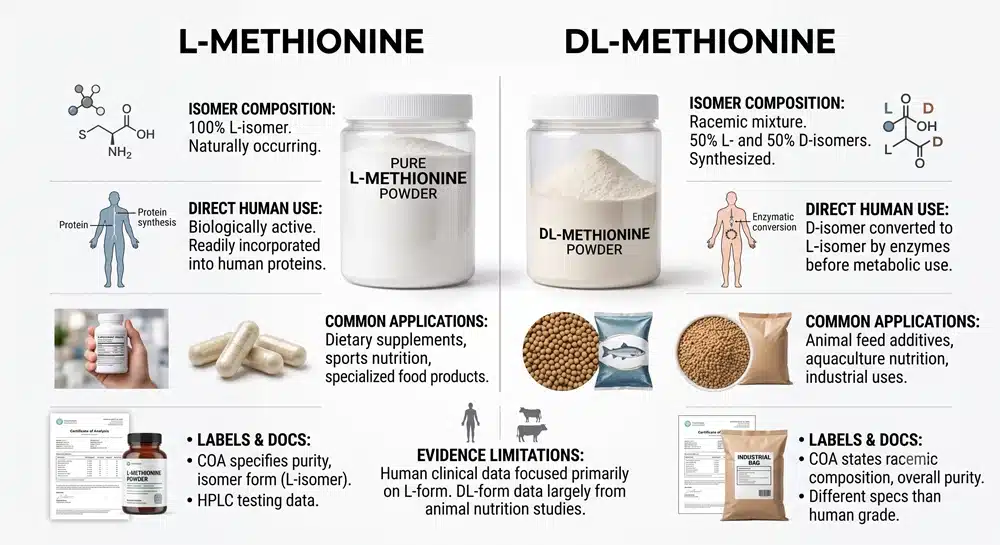
L-メチオニンとDL-メチオニンの比較概要
| ファクター | L-メチオニン | DL-メチオニン |
|---|---|---|
| 異性体の組成 | 単一のL-エナンチオマー | 約50%のL-メチオニンおよび50%のD-メチオニンを含むラセミ混合物 |
| ヒトにおける代謝利用 | タンパク質に直接組み込まれ、硫黄アミノ酸代謝に関与する | L分画はそのまま利用可能ですが、D分画はL-メチオニン代謝経路に入る前に変換が必要です。 |
| 人間に関する証拠 | タンパク質に含まれる生理学的食事形態 | これまでのヒトに関するデータによると、D分画の利用効率は、動物飼料に関する文献で示唆されているほど高くない可能性がある。 |
| 一般的な商業的ポジショニング | 人間の栄養、アミノ酸ブレンド、食品およびサプリメントの配合 | 動物栄養分野で広く使用されており、FDAにも特定の食品成分としての機能が記載されている |
| ラベルの明瞭さ | 通常、L-メチオニンとして表示される | 該当する場合は、DL-メチオニンまたはラセミメチオニンとして表示すべきである |
| 主な購入者からの質問 | 当該材料は、同一性、キラル純度、および完成品の要件を満たしていますか? | ヒトへの使用に関する根拠、適用可能なエビデンス、および市場固有の規制審査に関する文書化された記録は存在しますか? |
L-メチオニンとは何ですか?
L-メチオニンは、必須の硫黄含有アミノ酸です。人体では通常の必要量を満たすだけの量を合成できないため、メチオニンは食事中のタンパク質やその他の適切な栄養源から摂取する必要があります。メチオニンはタンパク質合成に関与し、S-アデノシルメチオニン、システイン、その他の硫黄含有代謝産物の前駆体となります。.
商業的な調達において、「L-メチオニン」という名称はL-エナンチオマーを指すものですが、名称だけでは完全な仕様とはなりません。購入者は、COA(品質証明書)に記載されている含有量、成分、比旋光度またはエナンチオマー純度、関連物質、水分、粒子径、および報告基準を確認する必要があります。以下の内容を確認してください。 L-メチオニン粉末の仕様ページ 文脈を把握するために。.
DL-メチオニンとは何ですか?
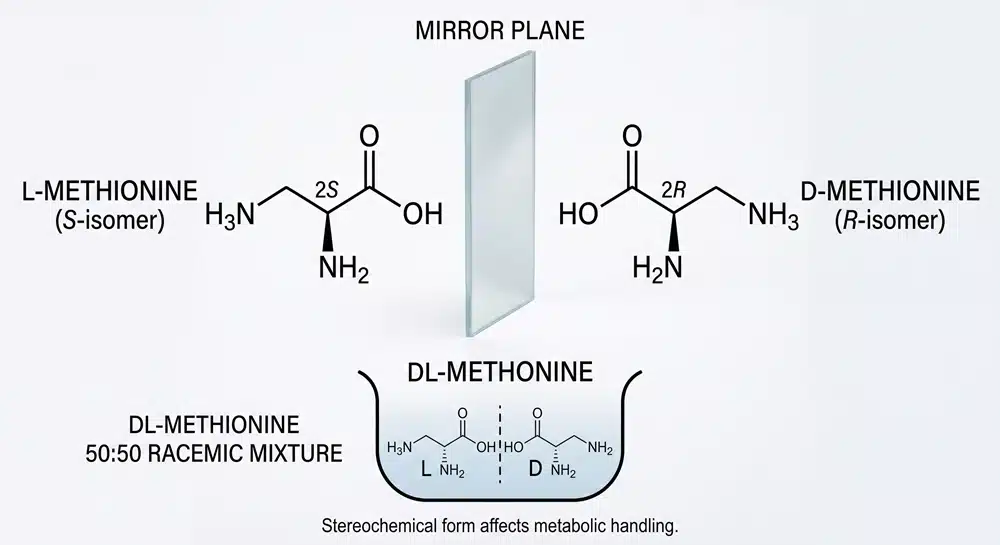
DL-メチオニンは、D-メチオニンとL-メチオニンのラセミ混合物である。これらの分子は化学式は同じだが、立体構造が異なる。L型は、ヒトの通常のメチオニン代謝経路に直接取り込まれることができる。一方、D型は、L-メチオニンの代謝に寄与する前に、まず酵素による変換を経なければならない。.
DL-メチオニンは、動物飼料において広く研究・利用されています。その利用率は種によって異なるため、家禽、豚、その他の動物に関するデータを、成人におけるサプリメントの生物学的利用能、投与量、または有効性に関する直接的な根拠として用いるべきではありません。.
メチオニンとL-メチオニンは同じものですか?
必ずしもそうとは限りません。栄養学において、「メチオニン」とは、タンパク質に含まれるL-アミノ酸を指すことがよくあります。しかし、商業文書では、この言葉の意味が曖昧になる場合があります。「メチオニン」とだけ記載されている原料は、L-メチオニン、DL-メチオニン、プレミックス、あるいはその他のメチオニン源である可能性があります。.
Brands should confirm the stereochemical form before approving a specification or label. A separate comparison of SAMe vs L-methionine is useful when the commercial ingredient is S-adenosyl-L-methionine rather than free methionine.
ヒトにおけるD-メチオニンの利用方法
ヒトには、特定のD-アミノ酸を、L-アミノ酸代謝に入り得る中間体へと変換できる酵素を持っています。しかし、これは、D-メチオニンとL-メチオニンが、あらゆる投与量、あらゆる食品マトリックス、あるいはあらゆる評価指標において、同一の栄養価を持つことを意味するものではありません。.
オート麦をベースとした食事へのL-、DL-、およびD-メチオニンの補給を比較した、以前に行われた対照ヒト試験では、L-メチオニンの方が窒素バランスが良好であることが報告され、D-メチオニンは被験者によって十分に利用されていないようだと結論づけられた。 ヒトに関するデータは限られているため、「95% 対 80% の生物学的利用能」といった断定的な主張は、直接適用可能なヒトの証拠がない限り、公表すべきではない。.
ヒトを対象とした証拠と動物用飼料を対象とした証拠の比較
| 証拠の種類 | 対応機能 | 対応していない機能 |
|---|---|---|
| ヒトの代謝およびバランスに関する研究 | 試験対象の食事、投与量および評価項目におけるヒトへの利用状況 | すべてのサプリメントにおける普遍的な生体利用率(%) |
| 人の安全性に関する研究またはレビュー | 対象集団における用量依存性の代謝マーカーおよび忍容性 | あらゆる年齢層、妊娠中、疾患のある方、あるいは長期にわたる高用量使用においても安全です |
| 家禽、豚、その他の飼料に関する研究 | 種ごとの飼料効率、成長および動物の代謝 | ヒトにおけるサプリメントの有効性、吸収性、または用量同等性 |
| in vitro 試験または酵素試験 | 考えられる生化学的経路または変換メカニズム | 臨床上の有益性または完成品の性能 |
人間のサプリメントには、どちらの形態が適しているのでしょうか?
ヒト向けのサプリメント開発プロジェクトのほとんどにおいて、L-メチオニンがより明確な出発点となります。これは、L-メチオニンがヒトのタンパク質合成に直接利用される生理学的エナンチオマーであるためです。DL-メチオニンは、特定の食品や工業用途においては適している場合もありますが、単に安価であるとか、動物飼料の研究で良好な結果が得られているという理由だけで選択すべきではありません。.
| 製品活用例 | おすすめのスタート地点 | 理由 |
|---|---|---|
| 単一成分のヒト用サプリメント | L-メチオニン | 明確な立体化学的同一性と、ヒトの代謝との直接的な関連性 |
| 多アミノ酸ブレンド | L-メチオニン | 処方の根拠、仕様、およびラベル記載の伝達を簡素化します |
| 食品への栄養強化 | 市場別のレビュー | 食品に関する許可、技術的機能、使用レベル、およびマトリックスを評価しなければならない |
| 動物用飼料 | 種ごとに異なる製剤の選定 | 動物栄養学には、独自の科学的根拠と規制の枠組みが存在する |
| コスト主導の代替 | 自動的に置き換えないでください | 原材料コストが低いからといって、人間の栄養価が同等であるとは限らない |
安定性、溶解性、および製造上の違い
DL-メチオニンが本質的に安定性が高く、したがって栄養補助食品に好ましいと一概に言うのは、あまりにも大雑把すぎる。安定性や製造のしやすさは、実際のグレード、製造工程、粒子径、水分含有量、添加剤、加工条件、包装、および完成品の保存期間によって左右される。.
開発においては、以下の点を評価すべきである:
- 分析および立体化学的同定
- 粒子径、嵩密度、および粉末の流動性
- 目標含有量における混合の均一性
- 水分、吸湿性および固結
- 香り、味、風味の相性
- ビタミン、ミネラル、タンパク質、およびその他のアミノ酸との相互作用
- カプセルの充填量、錠剤の圧縮、または粉末の分散挙動
- 完成品の有効成分濃度および保存期間中の劣化
安全性および投与量に関する考慮事項
メチオニンは必須アミノ酸ですが、サプリメントによる摂取が、どのような用量であっても必ずしも有益であるとは限りません。ヒトを対象としたレビューや臨床試験によると、サプリメントによる高用量の摂取は、ホモシステインやその他の代謝マーカーに影響を及ぼす可能性があります。現時点で入手可能なエビデンスからは、すべての人に適した単純な摂取量を特定することはできません。.
妊娠中または授乳中の方、肝臓や腎臓の疾患がある方、先天性代謝異常のある方、処方薬を服用している方、あるいは高用量の単一アミノ酸製剤の使用を計画している方は、専門家の指導を受ける必要があります。各ブランドは、メチオニンサプリメントを、肝臓疾患、うつ病、中毒、脱毛、その他の病状の治療薬として販売してはなりません。.
メチオニンとホモシステイン
メチオニンの代謝によりホモシステインが生成されることがあります。葉酸、ビタミンB12、ビタミンB6などの栄養素は、一炭素代謝および硫黄含有アミノ酸代謝に関与しています。しかし、この生化学的な関係があるからといって、すべてのメチオニン製品にビタミンB群を添加すれば心血管疾患を予防できる、あるいはそのリスクを排除できるという主張を正当化するものではありません。.
メチオニンの高用量配合が提案される場合、当該ブランドは、1日あたりの総摂取量、対象集団、投与期間、併用栄養素、薬剤の使用状況、警告文、およびヒトにおける安全性のエビデンスの質について検討すべきである。.
品質仕様チェックリスト
| 仕様 | 確認すべき事項 | なぜ重要なのか |
|---|---|---|
| アイデンティティ | 化学名、CAS番号および検証済みの同定法 | L-メチオニン、DL-メチオニン、およびその他の供給源を区別する |
| キラル同一性 | 比旋光度、エナンチオマー純度、または適切なキラル法 | 申告された立体化学形態を確認する |
| アッセイ | 目標含有率、乾燥基準または現状基準、および分析方法 | 数式およびラベルの計算に対応しています |
| 関連物質 | プロセス不純物、酸化生成物および許容限度 | 表向きの分析結果以上の純度を示す |
| 残留溶剤 | プロセス別のパネルおよびバッチ結果 | 製造残留物が管理されていることを確認する |
| 元素不純物 | 鉛、ヒ素、カドミウム、水銀 | 原材料および完成品のリスク評価を支援します |
| 微生物学 | 総個体数および特定生物種 | 成分の放出を促進します |
| 物理的性質 | 粒子径、嵩密度、流動性、および外観 | ブレンド、カプセル化、および圧縮に影響します |
| 由来と製造工程 | 発酵・合成プロセス、原産国、アレルゲンおよび遺伝子組み換えに関する表示 | 調達およびマーケティング上の主張を裏付ける |
| 安定性と変更管理 | 保管、再試験期間、完成品データ、および仕入先変更の通知 | 保存期間を通じて、その特性と効力を維持します |
サプリメントブランドにおける製品開発上の考慮事項
カプセル
カプセルは、単一成分および多アミノ酸配合の製剤に対応可能です。製剤開発者は、粉末の流動性、充填重量、カプセルのサイズ、臭気、湿気に対する耐性、および1回投与量の均一性を確認する必要があります。確認事項 カプセル・サプリメント製造 パイロット事業および商業化の実現可能性を評価する際には。.
タブレット
錠剤については、圧縮性、崩壊性、硬度および安定性の検証が必要です。有効成分の含有量が高い場合は、適切な結合剤、潤滑剤、滑剤、および保護包装が必要となる場合があります。選定された添加剤は、定量試験や分解制御に悪影響を及ぼしてはなりません。.
粉類
粉末ブレンドには、味や香りの管理、成分の分離防止、検証済みの混合時間、および充填装置の精度が求められます。完成品の均一性については、原材料の分析結果だけに頼るのではなく、実際に評価を行う必要があります。.
タンパク質およびアミノ酸のブレンド
メチオニンは調製乳のアミノ酸組成を調整することができますが、その判断は、完全タンパク質またはアミノ酸組成、1回分の摂取量、対象集団、および表示規則に基づいて行う必要があります。すべての製品にメチオニンの添加が必要であるという根拠として、単一の「制限アミノ酸」という記述のみを用いることは避けてください。.
メチオニン供給業者または製造業者へのRFPに関する質問
- その成分はL-メチオニン、DL-メチオニン、それとも別のメチオニン源ですか?
- どのような同定法およびキラル純度測定法が用いられているか?
- どのような測定基準および分子形態が適用されますか?
- どのような製造工程が用いられており、原産国はどこですか?
- そのロットに関する直近のCOAを3通ご提供いただけますか?
- どのような関連物質、残留溶媒、元素不純物、および微生物試験が含まれていますか?
- 粒子径、嵩密度、溶解度、および流動特性はどのようなものですか?
- 推奨される保管条件、包装、および再試験期間はどのようなものですか?
- 対象市場向けに、どのようなヒト用規制関連文書が用意されていますか?
- 最小発注数量(MOQ)、サンプル数量、納期、および変更管理に関する条件はどのようなものですか?
- カプセル、錠剤、粉末のパイロット開発に対応していただけますか?
- 表示審査の際、人間の栄養に関する表示と動物用飼料に関する証拠は、どのように区別されているのでしょうか?
GENSEIの活用シーン
GENSEIは、アミノ酸原料の調達、文書審査、剤形の実現可能性評価、およびサプリメント製造プロジェクトを支援しています。適切な剤形は、ターゲット市場、投与量、規格、最終剤形、および効能表示戦略に応じて選定する必要があります。.
ブランドは L-メチオニンのサンプル、COA、または配合に関する見積もりのご依頼 必要な様式、分析方法、用量、剤形、販売先市場、必要書類、および注文数量を明記してください。.
よくある質問
L-メチオニンとDL-メチオニンの違いは何ですか?
L-メチオニンには、ヒトのタンパク質合成に直接利用されるL-エナンチオマーが含まれています。DL-メチオニンにはL-メチオニンとD-メチオニンの両方が含まれており、D-メチオニンはL-メチオニンの代謝経路に入る前に変換される必要があります。.
DL-メチオニンは人間にとって安全ですか?
その適否は、摂取量、製品カテゴリー、市場、個々のリスク要因、および最終的な配合によって異なります。FDAの食品成分目録には特定の食品機能が記載されていますが、これはあらゆる摂取量やサプリメントとしての用途が適切であることを証明するものではありません。.
L-メチオニンはDL-メチオニンよりも生体利用率が高いのでしょうか?
限られたヒトを対象としたエビデンスによると、特定の栄養状態において、D分画の利用効率が低下する可能性があることが示唆されています。直接適用可能なヒトを対象とした研究によるものでない限り、固定された割合での比較は避けるべきです。.
メチオニンとL-メチオニンは同じものですか?
生物学の議論において、「メチオニン」とは多くの場合、L-メチオニンを指します。サプライヤーの資料やラベルでは、正確な立体化学的形態を確認する必要があります。.
なぜDL-メチオニンは動物用飼料によく使われているのでしょうか?
D-メチオニンは商業的に確立されており、多くの動物種がこれを効率的に利用することができます。ただし、種ごとに得られた飼料に関する知見を、ヒト向けのサプリメントに一般化すべきではありません。.
メチオニンのサプリメントは、髪の健康や肝臓の健康をサポートできるのでしょうか?
メチオニンは、正常なタンパク質および硫黄含有アミノ酸の代謝に関与していますが、一般的なサプリメントを脱毛症や肝疾患の治療薬として販売してはなりません。構造・機能に関するいかなる主張についても、完成品に対する実証が必要です。.
最終的な収穫
L-メチオニンとDL-メチオニンは、化学的には関連しているものの、同一ではない栄養成分です。L-メチオニンは、ヒトのタンパク質合成に直接利用される生理学的エナンチオマーです。DL-メチオニンにはD型分画が含まれており、その利用率は種によって異なり、ヒトでは利用率が低くなる可能性があります。 ヒト向けサプリメントブランドは、動物用飼料に関する主張や根拠のない生体利用率の数値よりも、明確な成分特定、ヒトに関するエビデンス、用量の安全性、キラル仕様、および完成品の品質を優先すべきである。.
参考文献

ウォーレン・ワン氏は、栄養補助食品のサプライチェーンにおいて豊富な経験を持つベテランの専門家であり、コラーゲンペプチド、骨スープ由来タンパク質、ケラチンといった主要成分の研究、開発、工程管理、およびグローバルな調達において、豊富な実務経験を有しています。 本コラムの執筆者として、彼はマーケティング的な装いを剥ぎ取り、難解な成分科学や製造品質管理基準を、分かりやすい本格的な科学普及記事へと変換することに尽力しています。これにより、読者がラベルの裏にある真実を理解し、より合理的な健康に関する選択を行えるよう支援しています。.