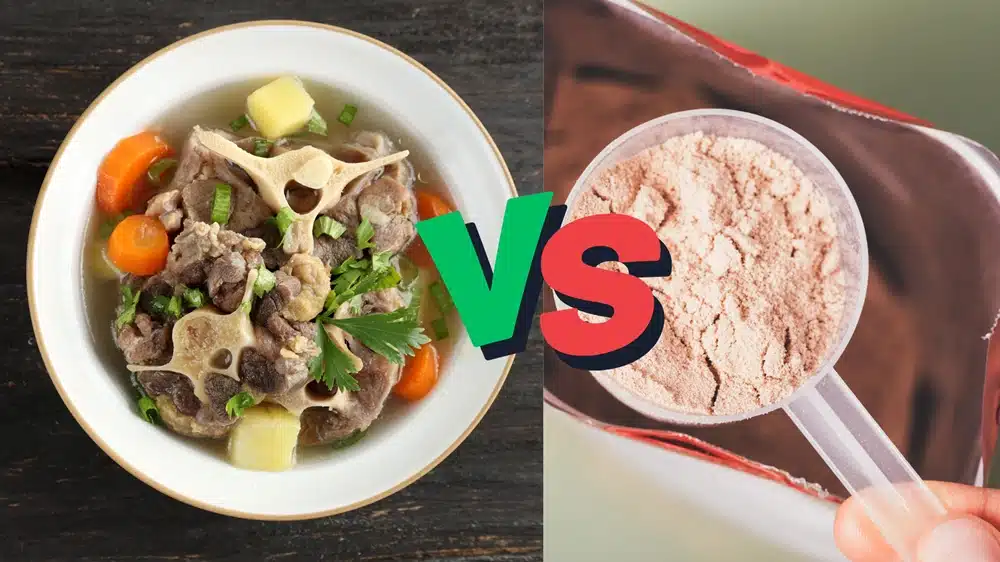
Для владельцев брендов пищевых добавок и разработчиков препаратов для здоровья суставов практическое различие между неденатурированным коллагеном II типа и денатурированным коллагеном II типа заключается не просто в том, что один из них “натуральный”, а другой — «обработанный». Речь идет о различиях в активной структуре, механизме действия, стратегии дозирования и контроле производственного процесса.
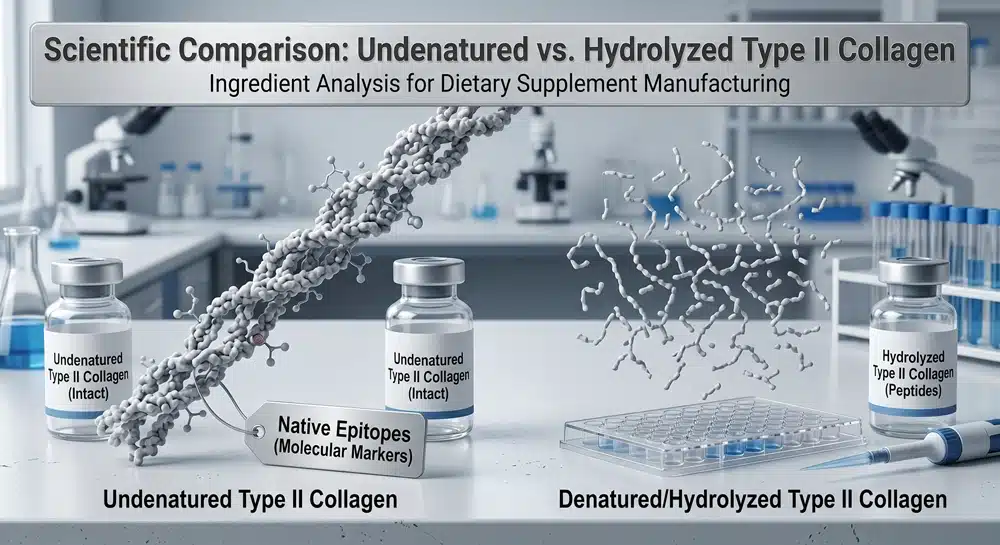
Неденатурированный коллаген II типа — это нативный ингредиент, полученный из хрящевой ткани, предназначенный для сохранения конформационных эпитопов, связанных с оральной толерантностью, и используемый в формулах для обеспечения комфорта суставов при приеме низких доз; его дозировка в готовых продуктах часто составляет около 40 мг в сутки. Денатурированный или гидролизованный коллаген II типа утратил нативную тройную спиральную структуру и в основном используется в качестве субстрата аминокислот или пептидов для более широкой поддержки соединительной ткани.
В данном руководстве проводится сравнение обоих материалов с точки зрения разработки рецептур для сегмента B2B: механизм действия, совместимость с лекарственными формами, риски, связанные со стабильностью, контроль качества, ограничения, установленные в указаниях на этикетке, а также требования к поставщикам в отношении Ингредиенты для здоровья суставов и Ингредиенты коллагенового протеина.
- Неденатурированный коллаген II типа сохраняет нативные конформационные эпитопы тройной спирали и используется в препаратах для облегчения болей в суставах с низкой дозировкой посредством механизма иммуноопосредованной пероральной толерантности.
- Денатурированный коллаген II типа утратила свою исходную структуру и выполняет в основном функцию источника аминокислот или пептидов для общей поддержки соединительной ткани.
- Для бренды пищевых добавок, при этом выбор оптимального варианта зависит от назначения изделия, формы дозировки, температуры технологического процесса и контроля качества.
Обзор коллагена II типа
Коллаген II типа является основным структурным коллагеном, входящим в состав хрящевой ткани. При разработке пищевых добавок коллаген II типа обычно выбирают для продуктов, предназначенных для поддержания здоровья суставов, а не для косметических средств, в которых чаще используются пептиды коллагена I и III типов.
Ключевой коммерческий вопрос заключается не только в том, содержит ли формула коллаген II типа. Ключевой вопрос заключается в том, является ли данный материал нативным/неденатурированным коллагеном II типа с сохраненными эпитопами или же денатурированным/гидролизованным коллагеном, используемым в качестве источника пептидов или аминокислот.
При закупках в сегменте B2B это различие должно отражаться в спецификации сырья, сертификате анализа, выборе лекарственной формы и проверке информации на этикетке.
Что означает «денатурированный коллаген II типа»
Денатурированный коллаген II типа не обязательно является ингредиентом низкого качества. Термин “денатурированный” означает, что под воздействием высокой температуры, изменения pH, ферментативной обработки или механической обработки исходная тройная спиральная структура была развернута. Если коллаген подвергается дальнейшему ферментативному расщеплению, он может превратиться в гидролизованные коллагеновые пептиды с более низкой молекулярной массой и лучшей диспергируемостью в порошковых смесях.
Для брендов ключевым моментом является соответствие заявлений о свойствах продукта. Денатурированный или гидролизованный коллаген II типа не следует позиционировать как эквивалент натурального UC-II, если активность натурального коллагена II типа не была подтверждена. Он лучше подходит для продуктов с высоким содержанием граммов в порошковой форме, напитков или продуктов в виде протеиновых добавок, где основным преимуществом является поступление аминокислот, растворимость и питание соединительной ткани, а не переносимость при пероральном приеме.
Типичные денатурированные или гидролизованные коллагеновые материалы проще использовать в составе порошков, напитков, таблеток и белковых смесей, поскольку они в меньшей степени зависят от сохранения нативной конформации тройной спирали. Они могут стать оптимальным выбором, если концепция продукта предполагает создание питательной формулы с высокой дозой коллагена, а не формулы с низкой дозой нативного коллагена II типа.
Что означает «неденатурированный коллаген II типа»
Неденатурированный коллаген II типа, как правило, получают из хряща, чаще всего из грудного хряща курицы, и подвергают обработке с целью сохранения нативных конформационных эпитопов. Именно эти эпитопы являются функциональной причиной того, что данный ингредиент часто используется в готовых продуктах в гораздо меньших дозах, чем гидролизованные коллагеновые пептиды.
С точки зрения производства термин “неденатурированный” должен подкрепляться данными контроля технологического процесса и контроля качества. Поставщик должен быть в состоянии объяснить, каким образом процессы экстракции, сушки, измельчения, смешивания и упаковки позволяют сохранить нативную структуру коллагена, а также предоставить документацию по каждой партии, позволяющую отличить нативный коллаген II типа от термически денатурированного или гидролизованного коллагена.
В связи с этим неденатурированный коллаген II типа предъявляет более высокие требования с точки зрения производства. Данный ингредиент выбирается не столько для обеспечения поступления белка в граммовых дозах, сколько для сохранения его естественной структуры и обеспечения комфорта суставов при приеме в малых дозах.
Сравнительная таблица неденатурированного и денатурированного коллагена II типа
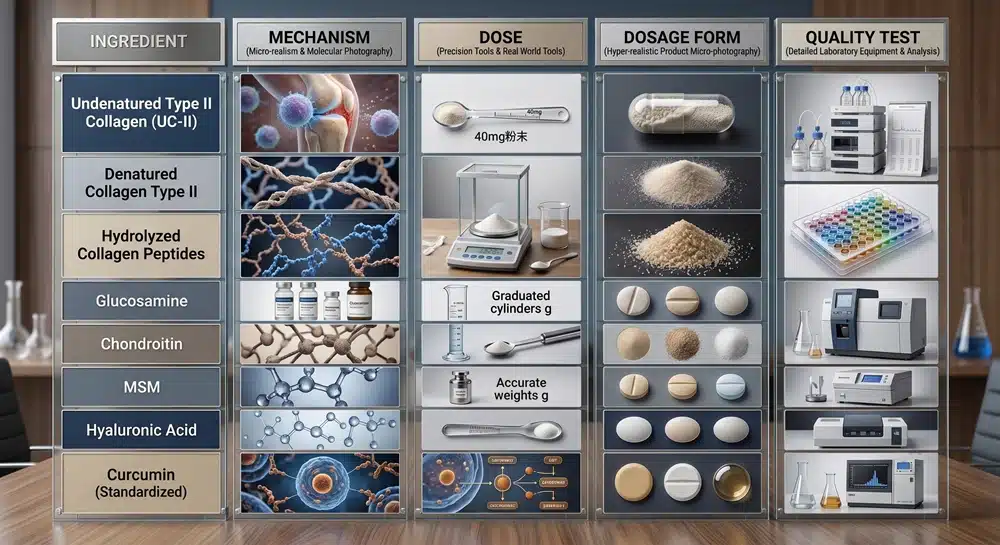
| Размер | Неденатурированный коллаген II типа | Денатурированный / гидролизованный коллаген II типа | Значение термина «B2B-формулировка» |
|---|---|---|---|
| Естественная структура | Конформационные эпитопы тройной спирали сохраняются намеренно. | Тройная спираль распрямляется; гидролизованные формы могут далее расщепляться на пептиды. | Не следует позиционировать гидролизованный коллаген как аналог UC-II, если не было проведено определение содержания нативного коллагена II типа. |
| Основной механизм | Иммуноопосредованная оральная толерантность и удобное положение суставов. | Аминокислотный/пептидный субстрат для питания соединительной ткани. | Различные механизмы требуют использования разных формулировок в заявлениях. |
| Типичная готовая доза | Часто около 40 мг/день в составах для суставов типа UC-II. | Обычно на уровне грамма использовать в качестве коллагеновых пептидов. | UC-II подходит для небольших капсул; гидролизованный коллаген — для порошков и напитков. |
| Риск обработки | Чувствителен к воздействию высоких температур, резким изменениям pH и агрессивной влажной обработке. | Более устойчива к нагреванию и перемешиванию после гидролиза. | Для жевательных конфет и жидких форм UC-II требуется подтверждение стабильности. |
| Основной контроль качества | Анализ нативного/неденатурированного коллагена II типа, например, ИФА валидация метода. | Общее содержание белка, профиль коллагеновых пептидов, молекулярная масса, микробиологические показатели. | COA должен соответствовать заявке и механизму. |
| Оптимальный формат | Капсулы, таблетки с медленным высвобождением, смеси в пакетиках с защитным слоем. | Порошки, напитки, таблетки, жевательные конфеты, протеиновые смеси. | Прежде чем выбрать сорт коллагена, выберите формат. |
| Концепция идеального продукта | Комфорт суставов, подвижность, поддержка хрящевой матрицы. | Beauty, protein, connective tissue, general collagen support. | Не следует давать чрезмерно оптимистичных прогнозов относительно исхода заболевания. |
Различие в механизмах: оральная толерантность и аминокислотный субстрат
Неденатурированный коллаген II типа обычно рассматривается в контексте пероральной толерантности. Проще говоря, небольшие количества нативного коллагена II типа взаимодействуют с иммуноассоциированными тканями кишечника и могут способствовать формированию нормального иммунного ответа на белки, связанные с хрящевой тканью.
Денатурированный или гидролизованный коллаген действует иначе. Его действие не основано на той же структуре нативных эпитопов. Вместо этого он поставляет аминокислоты и пептиды, полученные из коллагена, которые могут способствовать питанию соединительной ткани и общему обмену веществ, связанному с коллагеном.
Это различие в механизме действия имеет важное значение для копирайтинга. Продукт типа UC-II не следует описывать как порошок с высоким содержанием коллагенового белка, а порошок гидролизованных коллагеновых пептидов — как нативный неденатурированный коллаген II типа.
Клинические данные и пределы заявлений
В ходе ряда клинических исследований оценивалось действие 40 мг/сутки неденатурированного коллагена II типа на группы пациентов с нарушениями функции суставов и проводилось его сравнение с плацебо или комбинациями глюкозамина и хондроитина. Эти исследования полезны для обоснования эффективности ингредиента, однако на странице готовой пищевой добавки по-прежнему следует использовать формулировки, соответствующие требованиям к описанию структуры и функций, такие как “способствует комфорту суставов, подвижности и здоровью хрящевой матрицы”, а не заявления о лечении заболеваний.
При составлении маркировки для рынка США следует избегать таких формулировок, как “лечит остеоартрит”, “предотвращает артрит” или “лечит ревматоидный артрит”. Более безопасная формулировка для B2B-маркетинга: “Неденатурированный коллаген II типа может быть выбран для формул, обеспечивающих комфорт суставов, если концепция продукта предполагает поддержку с помощью нативного коллагена в низких дозах и позиционирование как средства, вызывающего нормальную иммунную реакцию”.”
Досье с практическим обоснованием должно содержать краткое изложение результатов клинического исследования, информацию о дозировке, популяции участников исследования, конечных точках, результатах по безопасности, а также точные заявления, указанные в инструкции по применению. Маркетинговая команда должна отдельно рассматривать обсуждение доказательной информации, предназначенной для ознакомления специалистов, от заявлений о свойствах готового продукта.
Производство и контроль качества: сохранение естественного коллагена II типа
Наибольший риск для качества неденатурированного коллагена II типа заключается не только в загрязнении, но и в потере его нативной структуры в процессе переработки. Спецификация для B2B должна включать следующие показатели: идентификацию, определение содержания нативного коллагена II типа, общее содержание коллагена или белка, влажность, зольность, размер частиц, насыпную плотность, микробиологические показатели, содержание тяжелых металлов, аллергены и протокол стабильности.
В случае нативного коллагена II типа в сертификате анализа (COA) в идеале следует разграничивать показатели “общий коллаген/белок” и “неденатурированный/нативный коллаген II типа”, поскольку высокое содержание общего белка не свидетельствует о сохранности нативных эпитопов. Обнаружение нативного коллагена II типа с помощью ИФА, подкрепленное отрицательными контрольными образцами, подвергнутыми термической денатурации, или валидацией метода, является более релевантным, чем общее тестирование белков, для подтверждения коммерческой ценности неденатурированного материала.
In finished dosage forms, high heat, aggressive wet granulation, long liquid holding times, and acidic syrup systems may reduce native epitope retention. For this reason, capsule filling is usually the lowest-risk format, while tablets, gummies, and liquid shots require additional stability validation through the product’s shelf life. Explore process selection through Capsule Supplement Manufacturing, Производство таблетированных добавок, и Производство жевательных добавок.
Сертификат соответствия (COA) производителя на неденатурированный коллаген II типа должен содержать не только сведения о внешнем виде и микробиологических показателях. В нём должно быть четко указано, является ли количественно определённый активный компонент нативным коллагеном II типа, общим коллагеном II типа, общим коллагеном или общим белком. Это разные технические характеристики, и их не следует использовать как взаимозаменяемые.
Выбор лекарственной формы
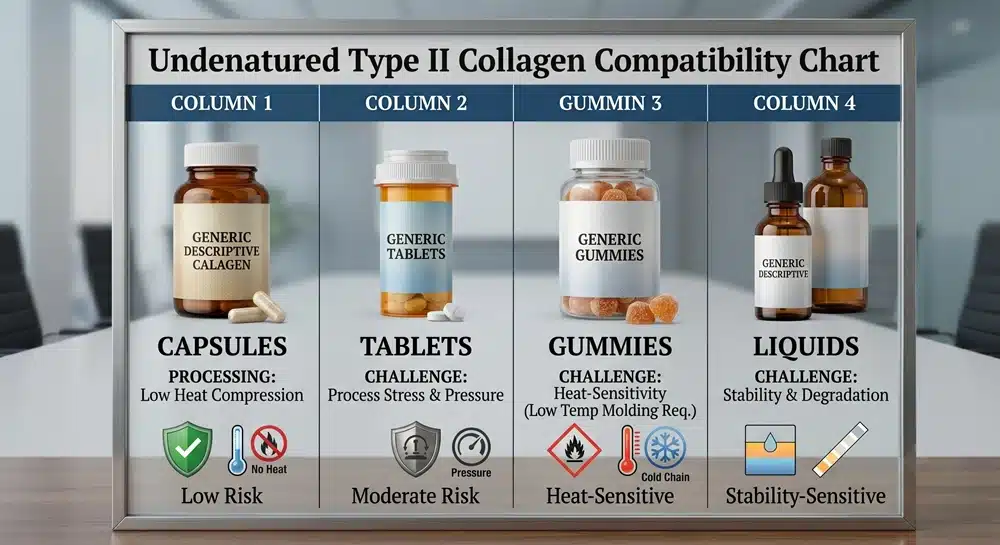
Капсулы, как правило, являются наиболее практичной формой выпуска неденатурированного коллагена II типа, поскольку активная доза невелика, а при производстве удается избежать воздействия высоких температур. Таблетки могут быть пригодны для использования при условии контроля силы прессования, выбора вспомогательных веществ и воздействия влаги. При использовании жевательных конфет и жидких форм требуется особая осторожность, поскольку тепло, кислотность и водная активность могут негативно повлиять на сохранность нативных эпитопов.
Денатурированные или гидролизованные коллагеновые пептиды более универсальны при использовании в порошках, напитках, протеиновых смесях и косметических средствах. Их можно добавлять в дозах, измеряемых в граммах, и их свойства — растворимость, аминокислотный профиль и питательная ценность для соединительной ткани — проще объяснить.
При разработке индивидуальных продуктов следует учитывать выбор ингредиентов в связи с Индивидуальная рецептура перед тем как утвердить текст этикетки и лекарственную форму.
Что лучше?
Руководство по выбору состава: Выбирайте неденатурированный коллаген II типа, если концепция продукта предполагает использование ингредиента для поддержания здоровья суставов в низких дозах, подходящего для выпуска в капсулах и позиционируемого как натуральный коллаген. Выбирайте денатурированный или гидролизованный коллаген II типа, если концепция продукта предполагает использование коллагенового белка с более высоким содержанием в граммах, порошковых палочек, смесей для напитков или более широкое позиционирование в качестве средства для питания соединительной ткани.
Практическое правило для команд, занимающихся разработкой брендов, заключается в следующем: если информация на этикетке зависит от устной переносимости и нативного коллагена II типа, необходимо защитить ингредиент от воздействия высокой температуры и проверить наличие нативного коллагена II типа после обработки. Если информация на этикетке зависит от содержания белка, растворимости и доставки аминокислот, гидролизованные коллагеновые пептиды, как правило, проще включить в рецептуру и масштабировать в Производство порошковых добавок.
Вкратце: Неденатурированный коллаген II типа, как правило, является лучшим выбором для обеспечения комфорта суставов и поддержания их подвижности при приеме в малых дозах, тогда как денатурированный или гидролизованный коллаген II типа обычно лучше подходит для общего питания с использованием коллагена, протеиновых порошков и препаратов с высокой грамматурой.
Контрольный список по поиску поставщиков в сегменте B2B
Прежде чем выбрать неденатурированный тип II поставщик коллагена, запросите следующие документы:
- Виды-источники и происхождение хряща
- Метод анализа нативного/неденатурированного коллагена II типа
- Указание общего содержания белка или общего содержания коллагена
- Данные по отрицательному контролю, полученные методом термической денатурации или с использованием метода, характерного для данной методики (при наличии)
- Влажность, размер частиц, насыпная плотность и сыпучесть
- Результаты исследований по микробиологии и тяжелым металлам
- Указания об аллергенах и ингредиентах животного происхождения
- Данные о стабильности в предполагаемой лекарственной форме
- Поддержка проверки заявлений на этикетках
- Производственная документация по готовым пищевым добавкам, составленная в соответствии с 21 CFR, часть 111
В случае гидролизованного или денатурированного коллагена II типа следует уделять первостепенное внимание пептидному профилю, растворимости, органолептическим характеристикам, содержанию белка и совместимости с форматными требованиями.
| Размер | Неденатурированный коллаген II типа | Денатурированный / гидролизованный коллаген II типа | Последствия для формулировки |
|---|---|---|---|
| Структура | Родной тройная спираль и конформационные эпитопы сохраняются. | Тройная спираль развернулась; гидролизованные формы — это пептидные фрагменты. | Различные формулировки претензий и тесты контроля качества. |
| Механизм | Оральная толерантность / поддержка комфорта суставов посредством иммунного механизма. | Аминокислотный или пептидный субстрат. | Не взаимозаменяемы при размещении. |
| Доза | Часто 40 мг/день в формулах типа UC-II. | Обычно на уровне грамма для коллагеновых пептидов. | Капсулы или порошки. |
| Основные направления контроля качества | Анализ с использованием нативного CII, сохранение естественного эпитопа, стабильность. | Белок, пептидный профиль, растворимость, микробиология. | Номер сертификата соответствия (COA) должен совпадать с заявкой. |
| Оптимальный формат | Капсулы, таблетки, прошедшие тщательный контроль качества. | Порошки, напитки, протеиновые смеси, жевательные конфеты. | Температура процесса имеет значение. |
Вопросы и ответы
Заключение
Неденатурированный коллаген II типа и денатурированный коллаген II типа не являются взаимозаменяемыми ингредиентами. Неденатурированный коллаген II типа выбирают из-за его нативной структуры, возможности обеспечения комфорта в суставах при низких дозах и механизмов переносимости при пероральном приеме. Денатурированный или гидролизованный коллаген II типа выбирают для более широкого спектра аминокислот, белкового питания и гибкости в выборе лекарственной формы. Для брендов пищевых добавок ключевое решение при разработке рецептуры заключается в согласовании механизма действия, дозировки, технологического процесса, контроля качества и заявлений на этикетке до запуска продукта на рынок.
ссылки
- Луго, Дж. П. и др. (2016). Эффективность и переносимость пищевой добавки с неденатурированным коллагеном II типа в лечении симптомов остеоартроза коленного сустава. Журнал о питании, 15, 14. https://link.springer.com/article/10.1186/s12937-016-0130-8
- Чжоу, Ю. и др. (2024). Потенциал неденатурированного коллагена II типа в лечении артрита: обзор. Коллаген и кожа, 6, 16. https://link.springer.com/article/10.1186/s42825-024-00160-y
- Arthritis Foundation. (n.d.). Can Collagen Supplements Help Arthritis? [Clinical Overview Summary]. https://www.arthritis.org/health-wellness/treatment/complementary-therapies/supplements-and-vitamins/can-collagen-supplements-help-arthritis
- Chondrex, Inc. (n.d.). Undenatured Type II Collagen Detection [Technical Flyer & ELISA Specificity Notes]. https://www.chondrex.com/flyers/view/36/download
- Управление по контролю за продуктами и лекарствами США (FDA). (без даты). 21 CFR, часть 111 — Действующая надлежащая производственная практика (cGMP) для операций по производству, упаковке, маркировке или хранению пищевых добавок. https://www.ecfr.gov/current/title-21/chapter-I/subchapter-B/part-111
- Управление по контролю за продуктами и лекарствами США (FDA). (без даты). Руководство для представителей отрасли: Заявления о структуре и функции. https://www.fda.gov/food/nutrition-food-labeling-and-critical-foods/structurefunction-claims

Уоррен Ван — опытный специалист с обширным стажем работы в сфере цепочки поставок пищевых добавок, обладающий богатым практическим опытом в области исследований, разработки, контроля производственных процессов и глобального поиска поставщиков ключевых ингредиентов, таких как коллагеновые пептиды, белок костного бульона и кератин. Как автор этой рубрики, он стремится развенчать маркетинговую мистификацию, преобразуя малоизвестные научные факты об ингредиентах и стандарты контроля качества производства в доступные и достоверные научно-популярные материалы, помогая читателям понять правду, скрытую за этикетками, и делать более рациональный выбор в вопросах здоровья.