肌酸 vs. 膠原蛋白肽:你真正需要的是哪一種?

目錄

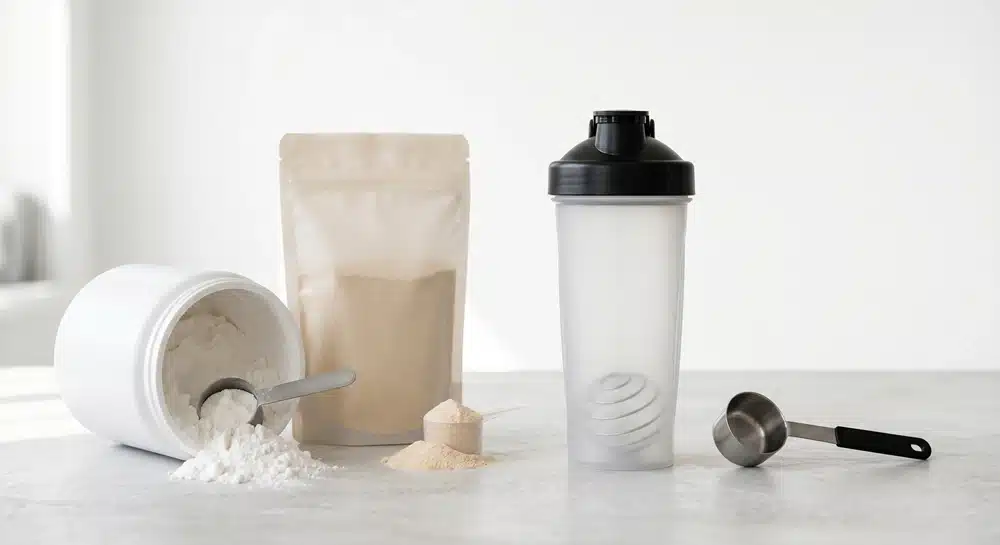
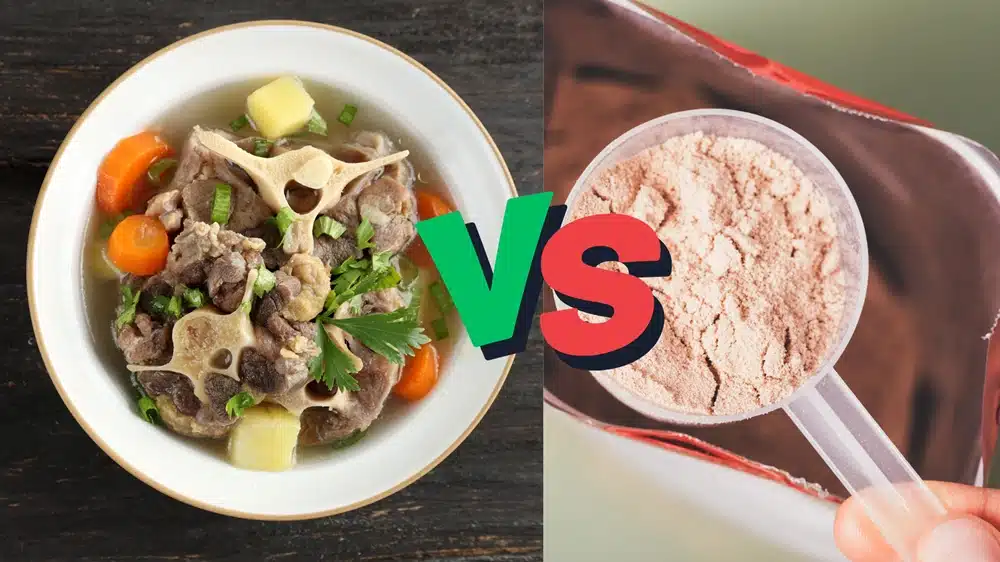
在高效能運動營養的世界裡,很少有成份能像肌酸和膠原蛋白肽一樣舉足輕重,也很少有成份能像肌酸和膠原蛋白肽一樣引起混淆。雖然兩者都在精英運動員和保健愛好者的架子上贏得一席之地,但它們在人體內的作用卻根本不同。其中一種是無可爭議的爆發力和肌肉能量之王,另一種則是將您的關節、肌腱和結締組織黏在一起的重要「膠水」。.

肌酸 vs. 膠原蛋白肽

如果您想要優化您的營養補充品組合,問題不在於哪一種「更好」,而是哪一種符合您特定的生理目標。您是想要在舉重房中打破個人記錄,還是著重長期的關節復原能力?

身為 運動營養合約製造, Gensei 瞭解這些生物活性化合物背後的科學原理。在這份全面的指南中,我們將解釋肌酸與膠原蛋白的生物機制,比較兩者的主要優點,並揭示為什麼最有效的健身方案通常會找到同時使用兩者的方法。.

Quick Answer: Creatine vs Collagen Peptides

Creatine and collagen peptides are not direct competitors. They support different parts of athletic performance and healthy aging.

Creatine is the better choice when the main goal is strength, power, muscle performance, high-intensity training, or improved training output. It works primarily through the phosphocreatine system, helping the body regenerate ATP during short bursts of intense activity.

Collagen peptides are the better choice when the main goal is joint comfort, tendon and ligament support, skin elasticity, connective tissue resilience, or long-term recovery. They provide glycine, proline, and hydroxyproline-rich peptides that support the structural proteins found in skin, tendons, ligaments, cartilage, and bone.

For modern athletes and supplement brands, the more valuable question is not “Which one is better?” but “How can creatine and collagen peptides be used together in a formula that supports both performance and structural resilience?”

That is why many sports nutrition brands are now developing hybrid performance powders that combine creatine monohydrate with hydrolyzed collagen peptides.

If you are not sure whether your product should use creatine, collagen peptides, or both, our 客製化補充劑配方 team can help evaluate dosage, flavor, serving size, and market positioning.

肌酸:力量與效能的黃金標準

在運動科學的世界裡,很少有補充劑能像一水肌酸一樣經過嚴格的同業審查。一水肌酸常被稱為「黃金標準」,它是一種存在於肌肉細胞中的天然化合物,可協助您的肌肉在舉重或高強度運動時製造能量。.

作為 bulk amino acids supplier, Gensei can help source creatine and related sports nutrition ingredients for custom performance formulas.

機制:ATP 與細胞能量

肌酸功效的核心是 ATP(三磷酸腺苷)。ATP 是細胞的主要能量貨幣。當您進行激烈運動時,肌肉會迅速消耗其 ATP 儲存。.

肌酸透過增加人體儲存的磷酸肌酸來發揮作用。將磷酸肌酸想像成肌肉的後備電池;它能讓您的身體快速再生 ATP,確保您能完成最後的重複動作或將衝刺速度多維持幾秒鐘。.

績效的主要優勢

增加強度和力量

研究一致顯示,補充肌酸可以顯著改善阻力訓練中的最大功率輸出和力量。.

肌肉肥大

肌酸可將水份吸入肌肉細胞(細胞水合作用),這不僅讓肌肉細胞看起來更豐滿,也是蛋白質合成和肌肉生長的生物信號。.

強化高強度復原

肌酸可加速能量儲存的補充,縮短運動組合與高強度有氧運動之間所需的恢復時間。.

神經保護特性

新近的研究顯示,肌酸可在睡眠不足時減少精神疲勞並改善認知功能,有助於大腦健康。.

卓越製造
Gensei Standard: Micronization and Purity
作為 運動營養補充品製造商, 我們知道並非所有肌酸都是一樣的。產品的功效通常取決於其顆粒大小和純度。.

在 Gensei,我們優先考慮 微粉肌酸, ,其中的顆粒被碾磨到更小的尺寸。這確保了優異的溶解性 - 也就是說,它不會沉澱在搖床底部,而且生物利用率更高。.
Gensei 優勢

我們的精密研磨技術可讓人體更有效率地吸收成份,幾乎消除了低等級、粗糙粉末常引起的消化道不適。.

膠原蛋白肽:長壽的內在支架

肌酸能為肌肉提供動力,而膠原蛋白肽則是肌肉的底盤。膠原蛋白是人體中含量最豐富的蛋白質,為皮膚和腸道內壁,以及對運動員最重要的關節、肌腱和韌帶提供結構完整性。.

For brands sourcing hydrolyzed collagen, our collagen peptide ingredients can be selected by source, molecular weight, solubility, flavor profile, and application.

機制:細胞外基質

與乳清蛋白或肌酸不同,膠原蛋白獨特地富含三種特定的氨基酸:甘氨酸、脯氨酸和羥脯氨酸。這些胺基酸是構成「細胞外基質」的原始構造塊 - 維持結締組織彈性的生物網狀結構。.

隨著年齡增長,或在重度訓練的壓力下,人體的天然膠原蛋白生產量開始下降。. 補充膠原蛋白肽可提供人體所需的特定訊號分子,以刺激「纖維母細胞」,這些細胞負責修補和強化我們的內部支架。.

延年益壽的主要好處

關節和軟骨支援

膠原蛋白勝肽有助於維持軟骨的完整性,而軟骨是保護關節免受高強度訓練衝擊的橡膠狀組織。.

肌腱與韌帶彈性

透過提供結締組織修復所需的特定胺基酸,膠原蛋白可大幅降低拉傷和撕裂等常見運動傷害的風險。.

優異的生物利用率

水解膠原蛋白勝肽會被分解成較小的分子,以確保它們能被快速吸收,並直接送到最需要的組織。.

全面組織修復

除了健身之外,膠原蛋白還能維持皮膚彈性和腸道內壁的完整性,這些都是長壽和全身健康整體方法的重要組成部分。.

精密配方
Gensei 標準:水解和採購
膠原蛋白的功效取決於其分子量(以道爾頓計算)。大的膠原蛋白分子難以被人體處理。.

在 Gensei,我們專精於 先進的酵素水解. .此製程會將膠原蛋白分解成短鏈勝肽,這些勝肽具有高溶解性和中性味道,是高效能運動配方的理想選擇。.
品質控制

我們確保我們的膠原蛋白來自優質、可追溯的產地,為您的品牌提供符合最高安全和純度標準的無標籤產品。.

並排比較:肌酸與膠原蛋白

在選擇肌酸和膠原蛋白肽時,從能量與結構的角度來看是很有幫助的。肌酸提供肌肉收縮所需的直接燃料,而膠原蛋白則提供結構框架,讓這些肌肉能安全地運動和有效地恢復。.

下表總結了每位運動員和品牌擁有者都應該瞭解的主要差異:

主要特點 一水肌酸 膠原蛋白勝肽
主要目標 爆發力與力量 關節健康與長壽
生物機制 ATP (能量) 再生 細胞外基質支援
目標組織 骨骼肌肉細胞與大腦 肌腱、韌帶、皮膚與內臟
結果時間表 1-2 週(含裝載) 4-12 週(持續使用)
最佳用途 增肌與表現 復原與傷害預防

Can You Take Creatine and Collagen Together?

Creatine and collagen peptide daily stack for sports nutrition

Yes. Creatine and collagen peptides can be taken together because they work through different biological pathways. Creatine supports rapid energy production inside muscle cells, while collagen peptides support connective tissue structure, including tendons, ligaments, cartilage, skin, and bones.

Creatine helps replenish phosphocreatine stores, which allows the body to regenerate ATP during high-intensity exercise. This is why creatine is commonly used in strength, sprint, resistance training, and power-focused formulas.

Collagen peptides do not work like creatine. They do not directly increase ATP production or explosive power. Instead, hydrolyzed collagen provides a concentrated source of collagen-specific amino acids and peptides, especially glycine, proline, and hydroxyproline. These nutrients are associated with the extracellular matrix, the structural network that supports connective tissues.

Because the two ingredients serve different roles, they do not replace each other. A creatine-only formula may support training output, but it does not provide the same structural peptide profile as collagen. A collagen-only formula may support connective tissue resilience, but it does not provide the same performance mechanism as creatine.

Why the Combination Makes Sense

Training progress depends on more than muscle energy. Stronger muscles create greater mechanical load on tendons, ligaments, and joints. If a consumer improves strength faster than their connective tissues can adapt, they may experience more discomfort, stiffness, or recovery limitations.

A creatine-collagen stack addresses both sides of the training equation:

– Creatine supports the output system: strength, power, high-intensity performance, and repeated effort.
– Collagen peptides support the structural system: tendons, ligaments, cartilage, and connective tissue resilience.

This is why the combination has become attractive in hybrid sports nutrition products. Instead of forcing consumers to choose between performance and recovery, a well-designed formula can position itself around stronger movement, better training consistency, and long-term resilience.

Practical Daily Stack Example

A simple daily stack may include:

– Creatine monohydrate: 3-5 g per serving
– Hydrolyzed collagen peptides: 5-15 g per serving
– Vitamin C: included when the formula is positioned around collagen synthesis support
– Electrolytes or flavor system: optional, depending on powder format

For brands, the most common commercial challenge is not ingredient compatibility. It is serving size, taste, solubility, mouthfeel, and cost. Creatine may create sediment if the particle size is too coarse. Collagen peptides may create bitterness or animal-source notes if the raw material quality is inconsistent. A good manufacturer should optimize both the ingredient specifications and the sensory profile before scale-up.

底線

Creatine and collagen peptides can be taken together, and for active consumers they may be more valuable together than separately. Creatine supports the engine. Collagen peptides support the chassis. A strong formula needs both performance and structure.

強勢夫婦」:為什麼您不需要選擇

過去,運動員經常覺得他們必須在「表現」(肌酸)和「恢復」(膠原蛋白)之間做出選擇。然而,現代運動科學已轉向更全面的觀點。在 Gensei,我們越來越發現最有效的補充品方案是將這兩種成份當成協同作用的「Power Couple」。“

身體的協同作用:能量與彈性的結合

肌酸與膠原蛋白之間的關係是互補而非競爭。肌酸可提供舉重或加速衝刺所需的爆發力,而膠原蛋白則可確保 「支架」(您的肌腱和韌帶)的強度足以承受增加的機械負荷。.

透過堆疊,您基本上可以同時強化您身體的馬達和底盤。.

理想的堆疊:結合使用的好處

結合這兩種強大的功能,可提供全面的實體最佳化方法:

  • 全身復原: 肌酸負責恢復細胞能量,而膠原蛋白則負責組織結構的修復。.
  • 傷害緩解: 更強大的肌肉(來自肌酸)結合更有彈性的結合組織(來自膠原蛋白),對常見的訓練傷害有顯著的緩衝作用。.
  • 效率: 兩種營養都攝取,可確保從肌肉肥大到健康老化的所有基礎營養都能涵蓋,而不會出現營養不足的情況。.

Creatine vs Collagen for Women

Creatine vs collagen peptides for women sports nutrition

For women, creatine and collagen peptides should not be viewed as competing supplements. They support different goals, and the better choice depends on the consumer’s stage of life, training routine, and product expectation.

Creatine is often underused in women’s sports nutrition because it has historically been marketed toward male bodybuilders. In reality, creatine can be valuable for women who want to support strength, power, lean muscle, training capacity, and active aging. It is especially relevant for women who do resistance training, high-intensity exercise, sprint training, or strength-focused programs.

Collagen peptides are often more familiar to female consumers because they are commonly associated with skin, hair, nails, joints, and beauty-from-within products. However, collagen is not only a beauty ingredient. For active women, collagen peptides can also support connective tissue resilience, tendon and ligament structure, joint comfort, and recovery positioning.

For brands expanding from collagen into broader protein blends, our 蛋白質補充品製造 capabilities can support collagen, whey, plant protein, and hybrid recovery formulas.

Which One Should Women Choose?

If the primary goal is strength, muscle performance, and gym progress, creatine is usually the stronger first choice.

If the primary goal is skin elasticity, joint support, tendon resilience, or beauty-plus-recovery positioning, collagen peptides are usually the stronger first choice.

If the consumer is active, training regularly, or entering a stage of life where muscle maintenance and joint resilience both matter, the combination may be the most complete option.

目標Better Ingredient Choice
Strength and power肌酸
Muscle performance肌酸
Skin elasticity膠原蛋白勝肽
Joint and tendon support膠原蛋白勝肽
Active aging兩者
Recovery-focused sports nutrition兩者
Beauty plus performance formula兩者

Formulation Note for Brands

Women-focused products should avoid outdated messaging that implies creatine is only for “bulking.” A more modern positioning is lean strength, training consistency, muscle maintenance, and active aging. Collagen can then complement this by supporting the structural side of movement: skin, joints, tendons, ligaments, and connective tissue.

This is why creatine-collagen powders for women are becoming more common. They allow a brand to combine performance, recovery, and beauty-from-within positioning in one daily product.

配方創新:組合」粉末的興起

作為運動營養品的合約製造合作夥伴,Gensei 注意到一個主要趨勢:品牌正在摒棄單一成分的產品。具創意的公司現在要求 “All-in-One ”高效能粉末,將肌酸微粉與水解膠原蛋白肽混合在一起。.

配方優勢
透過堆疊使用,最大化生物利用率

在為 Gensei 客戶配制配方時,我們會優化溶解度和口感,確保肌酸和膠原蛋白可以一起食用,而不會結塊或產生砂礫質感。.

  • 增強運動中的耐力
  • 加速運動後的組織修復
  • 簡化日常補充程序

Why Sports Nutrition Brands Are Combining Creatine and Collagen

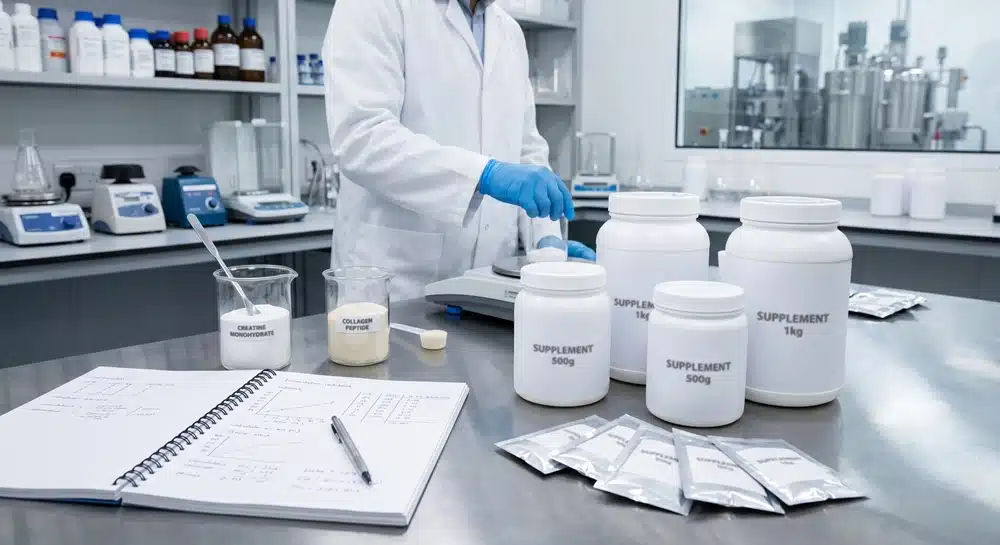
Sports nutrition formulation lab for creatine collagen powder development

The sports nutrition market is moving beyond single-ingredient powders. Consumers increasingly want formulas that solve more than one problem at a time. They do not only want muscle power; they also want recovery, mobility, joint support, and a product that fits into a simple daily routine.

This shift has created strong demand for creatine-collagen combination products.

For a brand owner, the appeal is clear. Creatine is one of the most recognizable performance ingredients in sports nutrition. Collagen peptides are one of the strongest structural support ingredients in the wellness and active aging categories. When combined correctly, they allow a product to sit at the intersection of performance, recovery, joint health, and beauty-from-within.

For brands developing hybrid performance powders, our sports nutrition supplement manufacturing service can help optimize creatine-collagen blends for solubility, taste, texture, and serving size.

Why Combination Powders Are Commercially Attractive

Creatine-collagen formulas can support multiple consumer angles:

– Strength and power
– Muscle performance
– Joint and connective tissue support
– Recovery positioning
– Active aging
– Women’s sports nutrition
– Beauty plus performance
– Daily wellness for active consumers

This broader positioning can make the product easier to differentiate from a basic creatine monohydrate tub or a basic collagen peptide powder.

Example Commercial Formula Direction

A common concept for a hybrid performance powder may include:

– 5 g creatine monohydrate
– 10 g hydrolyzed collagen peptides
– Vitamin C for collagen synthesis support positioning
– Electrolytes for hydration positioning
– Natural flavor system
– Optional magnesium or hyaluronic acid for recovery and joint-positioned formulas

The exact formula should depend on market, price point, flavor system, claims strategy, serving size, and regional regulatory requirements.

Manufacturing Challenges Brands Should Expect

A creatine-collagen blend is not difficult in theory, but it must be engineered properly for consumer experience. The most common technical challenges include:

– Creatine sediment or gritty mouthfeel
– Collagen bitterness or animal-source notes
– Poor dispersibility in cold water
– Large serving size
– Moisture sensitivity
- 掩味
– Powder flowability during filling
– Scoop accuracy
– Shelf-life and caking risk

This is where an experienced sports nutrition manufacturer can create meaningful value. The goal is not simply to mix two powders together. The goal is to create a finished product that tastes clean, dissolves well, fills consistently, and remains stable throughout its shelf life.

製造品質

在評估肌酸和膠原蛋白的製造商時,有三個關鍵因素決定了產品是否能達到效果,或是因為品質不佳而被擱在架上閒置。.

原料採購與純度

成分的來源很重要。對於膠原蛋白來說,這意味著要區分牛、海洋或家禽來源,並確保它們不含荷爾蒙和抗生素。對於肌酸來說,這意味著要確保不含雙氰胺或雙氫三嗪等污染物。.

可追蹤的原產地
溶解性科學

高品質的製造過程可透過顆粒工程解決「結團」或「顆粒狀」的問題。製造商透過使用微粉化肌酸和水解肽,可確保產品立即溶解於水中,改善使用者的體驗和吸收。.

微粉化技術
第三方驗證

信任是透過透明度來建立的。聲譽良好的品牌會尋找嚴格遵守 GMP(優良生產規範)的製造商,並提供重金屬、過敏原和禁用物質的第三方測試。.

通過 GMP 認證
Before launch, a structured 補充品品質控制 review can verify active content, heavy metals, microbial limits, moisture, and athlete-focused testing requirements.

How Gensei Improves Creatine-Collagen Powder Performance

Creatine and collagen peptide solubility comparison in supplement formulation

A successful creatine-collagen product depends on more than ingredient selection. It depends on how those ingredients behave together in the finished formula.

At Gensei, the formulation goal is to improve the consumer experience while protecting the functional identity of each ingredient.

For high-serving-size formulas, professional 粉末補充劑製造 support can improve blending uniformity, flowability, scoop accuracy, and shelf-life stability.

Micronized Creatine for Better Mouthfeel

Coarse creatine can settle at the bottom of a shaker and create a gritty texture. For premium powders, micronized creatine can improve dispersibility and mouthfeel. This does not change creatine into a different ingredient, but it can improve how the finished product feels and mixes.

Low Molecular Weight Collagen Peptides

Collagen peptide performance is influenced by molecular weight distribution, taste, odor, and solubility. Low molecular weight hydrolyzed collagen peptides are generally easier to formulate into instant powders, flavored blends, and daily stick packs.

For B2B projects, brands should ask for peptide specifications, source origin, allergen status, heavy metal testing, and solubility performance before choosing a 膠原蛋白供應商.

Flavor and Odor Optimization

Creatine is usually neutral, but collagen peptides can introduce source-dependent notes. Bovine, marine, and poultry collagen each behave differently in flavor systems. Flavor masking is especially important for vanilla, berry, citrus, and unflavored products.

Powder Flowability and Fill Accuracy

Creatine and collagen have different densities and powder behaviors. A stable blend must flow properly during filling and maintain uniform distribution. Poor flow can lead to scoop variation, uneven serving size, and consumer complaints.

Stability Review Before Scale-Up

Before moving into mass production, brands should review moisture content, caking risk, packaging barrier properties, and accelerated stability data. This is especially important for stick packs, tubs, and products sold in humid markets.

Representative OEM Case Study: Building a Creatine + Collagen Recovery Powder

Creatine collagen OEM powder formulation prototype

A sports nutrition brand wanted to develop a daily recovery powder that combined 5 g creatine monohydrate with 10 g hydrolyzed collagen peptides. The brand’s target audience was active consumers who wanted strength support, joint resilience, and a simple daily routine.

The initial prototype had three issues:

– The creatine created a gritty texture in cold water.
– The collagen peptide base created a mild bitterness.
– The serving size was large, making flavor balance difficult.

The formulation approach focused on three improvements:

1. Switching to a finer creatine particle specification to improve mouthfeel.
2. Selecting a low-odor collagen peptide grade with better instant dispersion.
3. Rebuilding the flavor system around acidity, sweetness, and masking notes.

The final concept became a daily hybrid performance powder positioned around strength, recovery, and connective tissue support. Instead of competing directly with basic creatine powders, the product created a broader performance-and-resilience story.

For brands, the lesson is clear: a creatine-collagen formula should not be developed by simply blending two commodity ingredients. It should be engineered around solubility, flavor, serving size, shelf life, and market positioning.

FAQs About Creatine vs Collagen Peptides

Can you take creatine and collagen peptides together?

Yes. Creatine and collagen peptides can be taken together because they work through different mechanisms. Creatine supports ATP regeneration and high-intensity performance, while collagen peptides support connective tissue structure. They are complementary rather than competitive.

Which is better, creatine or collagen peptides?

Creatine is better for strength, power, and muscle performance. Collagen peptides are better for joint, tendon, ligament, skin, and connective tissue support. For active consumers, the best answer is often both.

Does creatine contain collagen?

No. Creatine does not contain collagen. Creatine is a nitrogen-containing compound involved in energy metabolism, while collagen peptides are hydrolyzed protein fragments derived from collagen-rich animal sources.

Can collagen replace creatine?

No. Collagen peptides cannot replace creatine because they do not directly support the phosphocreatine energy system. Collagen supports structural tissues, while creatine supports high-intensity energy production.

Can creatine replace collagen?

No. Creatine does not provide the collagen-specific peptide profile associated with connective tissue support. It can support training output, but it does not replace collagen peptides in a joint, tendon, or beauty-from-within formula.

What is the best creatine-to-collagen ratio?

A common commercial starting point is 3-5 g creatine monohydrate with 5-15 g collagen peptides. The final ratio depends on product positioning, serving size, flavor system, price point, and target consumer.

Is creatine or collagen better for women?

Creatine is often better for women focused on strength, lean muscle, training performance, and active aging. Collagen peptides are often better for skin elasticity, joint comfort, and connective tissue support. A combination formula can serve both goals.

Are creatine-collagen powders stable?

They can be stable when properly formulated. Brands should evaluate moisture content, caking risk, powder flowability, flavor stability, packaging barrier properties, and shelf-life data before launch.

What should brands test before launching a creatine-collagen powder?

Brands should test active content, heavy metals, microbial limits, banned substances if targeting athletes, moisture, particle size, bulk density, solubility, flavor stability, and packaging compatibility.

What is the MOQ for creatine-collagen products?

MOQ depends on dosage form, formula complexity, flavor, packaging format, and ingredient sourcing. A simple unflavored powder typically has a different MOQ than a flavored stick pack or multi-ingredient sports nutrition blend.

總結

在肌酸與膠原蛋白肽之間做選擇,不一定要做 「非此即彼 」的決定。正如我們所探討的,這兩種營養補充品在完全不同的生物通路上運作。肌酸是增加細胞能量和肌肉表現的主要工具,而膠原蛋白肽則是關節和結締組織的重要結構基礎。.

If your goal is a finished market-ready product, our private label sports nutrition supplements service can support formula development, packaging, testing, and production.
最後判斷
1
動力與效能

如果您的重點是原始力量、爆發速度和肌肉肥大、, 一水肌酸 是您不可或缺的補充品。.

2
長壽與韌性

如果您優先重視關節健康、結締結組織拉傷的快速復原,以及整體結構的完整性、, 膠原蛋白勝肽 是關鍵。.

3
競爭優勢

適合現代運動員、, 兩者堆疊 提供全面的能量和支援系統,讓您持續進步,並降低受傷風險。.

準備好推出您的高效能方程式了嗎?

在 Gensei,我們專門將複雜的科學轉化為領先市場的運動營養產品。.

今天就與 Gensei 合作

引用

滾動到頂端