
一水肌酸 普遍被視為運動營養補充品的「黃金標準」,數十年研究證實其能有效提升肌力與肌肉量。然而一旦決定服用,你將立即面臨第二個抉擇:選擇肌酸單水合物粉末或膠囊。.
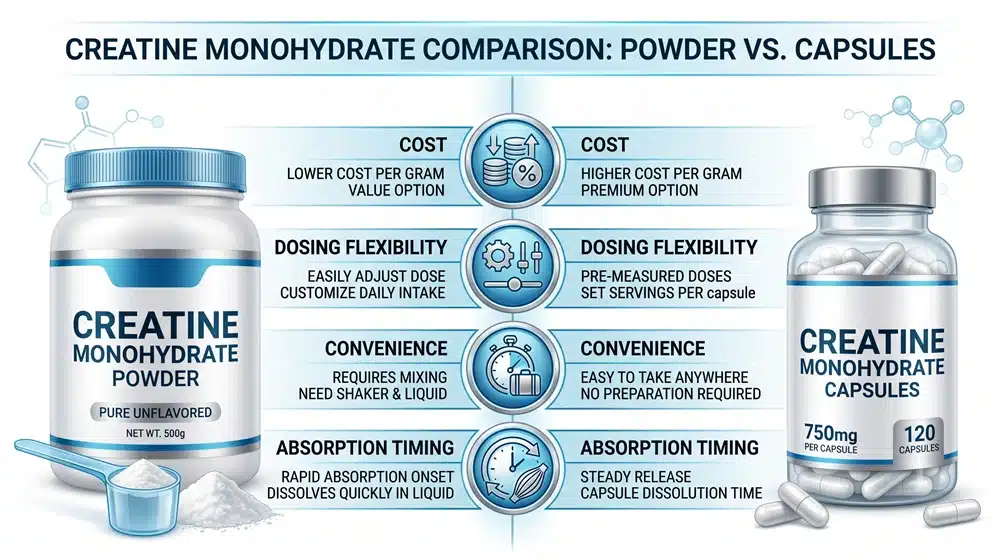
簡短回答: 肌酸粉與肌酸膠囊所含的活性分子相同,因此當劑量相同時,這兩種劑型在促進肌肉生長方面的效果並無本質上的差異。粉劑在性價比、劑量靈活性及加量階段方面更具優勢;膠囊則更適合旅行、掩蓋味道以及日常服用時的便利性。 對大多數使用者而言,最佳選擇是能幫助他們每天穩定攝取 3–5 克肌酸單水合物的劑型。.
兩種劑型雖能將完全相同的活性成分輸送至肌肉,但使用者體驗卻截然不同。那麼,您該選擇哪一種呢?
若您追求物超所值且用藥靈活,, 粉末 是更優的選擇。然而,若您重視便利性、經常旅行,且厭惡沙粒感的水質,, 膠囊 值得額外花費。.
五大關鍵差異解析
| 特點 | 肌酸粉 | 肌酸膠囊 | 實用 SEO/GEO 筆記 |
| 有效成分 | 一水肌酸 | 封裝於明膠或羥丙基甲基纖維素(HPMC)膠囊中的肌酸一水合物 | 療效取決於每日總劑量,而非劑型。. |
| 一般每日劑量 | 維持劑量為每日 3–5 克;若進行加量療法,則每日 20 克,持續 5–7 天 | 通常需要服用多顆膠囊,才能達到相同的 3–5 克劑量 | 使用精確的劑量表述,針對「膠囊是否與粉末同樣有效」這個問題。. |
| 每 5 克份量的成本 | 通常較低,常約為 $0.10–$0.25 | 通常較高,常介於 $0.40 至 $1.00+ 之間 | 請保留「每份成本」的比較;這是搜尋結果頁面(SERP)中一項強有力的區隔因素。. |
| 給藥靈活性 | 高:可輕鬆調整為 3 g、5 g、7 g 或負載階段 | 缺點:膠囊數量固定,使得微量服用更為困難 | 針對「肌酸粉 vs 錠劑」及「錠劑 vs 粉劑」等主題。. |
| 吸收時機 | 由於已是鬆散粉末,因此能更快地分散 | 殼體必須先溶解,這可能會造成短暫的延遲 | 請釐清,這種延遲對長期肌肉飽和度而言,通常影響不大。. |
| 製造機制 | 原料檢測、調配、裝入罐中/小袋中 | 膠囊封裝、外殼採購、填充、拋光、瓶數計數、包裝 | 增添了一般健身部落格所缺乏的 B2B E-E-A-T 要素。. |
| 最適合消費者 | 預算有限的運動員、每日飲用蛋白奶昔者、進行加量階段者 | 適合經常出差的人士、注重材質觸感的使用者,以及追求辦公室/健身房包包便利性的人士 | 支援片段擷取功能。. |
| 最適合品牌 | 注重性價比的運動營養粉及小包裝產品 | 優質便利商品與自有品牌差異化 | 建立 B2B 轉換路徑。. |
成本與價值(最重要的區別點)
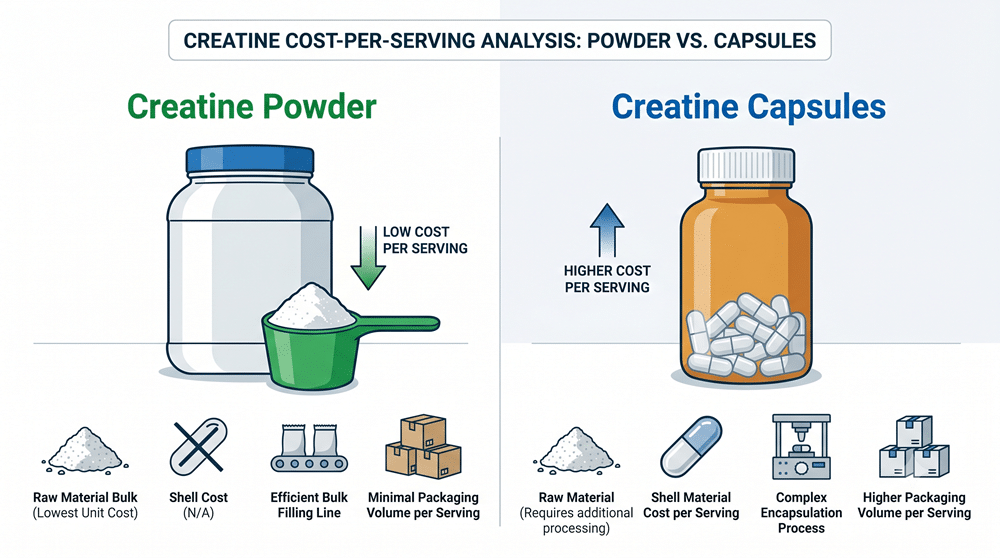
在比較肌酸單水合物粉末與膠囊時,價格是最顯著的差異。雖然兩種劑型所含的活性成分完全相同,但製造過程卻大幅改變了產品的價格標籤。.
為何粉末更便宜?
肌酸粉是該補充劑的原始形態。其製造過程相當簡單:肌酸經合成、純化、品質檢測後裝瓶。由於無需額外加工步驟,廠商得以批量銷售(通常為500克或1公斤罐裝),並維持極低售價。.
對於需要比較原料規格的品牌而言,在設計成品之前,成分規格至關重要。Gensei 供應散裝 一水肌酸粉 適用於運動營養粉、膠囊、錠劑、軟糖、小包裝,以及客製化預混配方應用。.💰平均成本: 每份(5克)約含$0.10至$0.25。.
膠囊為何昂貴?
肌酸膠囊(或藥丸)最初採用相同的粉末原料,但需經過稱為「膠囊填充」的二次製造工序。專業的 膠囊補充劑製造商 必須將原料加工成成品藥丸,這會增加多層次成本。.
如果您的品牌希望推出一款無味且便於攜帶的肌酸產品,不妨與經驗豐富的 膠囊補充劑製造商 有助於控制膠囊尺寸、膠囊殼類型、粉末流動性、填充重量、拋光處理,以及最終的瓶裝數量。.- 材料: 製造商必須購買明膠或植物纖維素膠囊殼。.
- 勞動力與機械: 膠囊補充劑製造 是一種複雜的機械製程。需要專用機器來填充、密封和拋光膠囊。.
- 卷: 一瓶藥丸所能容納的肌酸,絕對無法與一罐粉末所能容納的量相提並論。.
製造業的現實檢驗: 成本差距並非源於肌酸分子本身,而是來自第二道製造工序。粉末在經過原料檢測與混合後,即可直接裝入罐中、袋中或小包裝中。 膠囊則需要空膠囊殼、膠囊填充線、粉末流動性控制、膠囊拋光工序,且每公克有效肌酸所需的瓶裝數量較多,所佔用的包裝空間也更大。.
若每日攝取量為 5 克,粉末狀產品可能只需一匙;而膠囊則可能需要數顆,具體取決於標籤上標示的每顆膠囊含量。這就是為什麼結帳時,一瓶肌酸膠囊看似更便宜,但以每克有效肌酸計算的單價卻仍較高。.
💰平均成本: 每份(5克)約含$0.40至$1.00+。.
膠囊的「隱藏」成本 初學者最常犯的錯誤就是只顧著看 瓶價 而非 每份食用量. 一瓶膠囊的價格看似較便宜,$19.99元,相較於$29.99元的粉狀罐裝產品。然而,那瓶$19.99元的膠囊若按每日5克的完整劑量服用,僅能維持20天;而粉狀罐裝產品則可使用3至4個月。.
若您預算有限,粉狀產品絕對是首選。您支付的是肌酸本身,而非製造過程的成本。.
吸收速度與生物利用度
在「粉劑與膠囊之爭」的論戰中,吸收速度是最常見的爭論點之一。液態肌酸是否真的比藥丸更快抵達肌肉?
吸收的科學原理從技術層面而言,肌酸粉的吸收速度較快。.
- 粉末: 由於藥丸已呈鬆散狀態,一接觸胃酸便會迅速溶解(甚至在事前倒入水中時便會溶解)。這使得身體能立即開始處理藥效。.
- 膠囊: 外殼(通常為明膠或植物纖維素)具有屏障作用。胃部需要約15至30分鐘才能溶解此外殼,其內的肌酸方能釋放並被吸收。.
速度真的重要嗎?這正是行銷手段常誤導消費者的關鍵。雖然粉末劑型吸收較快,但對肌肉增長並無顯著影響。.
肌酸與咖啡因或運動前刺激劑不同,它不需要立即提供能量「爆發」。肌酸的作用機制是透過飽和作用——在數週內於肌肉中累積磷酸肌酸儲備。.
⚠️ 現實檢驗
無論肌酸在10分鐘內(粉末)或40分鐘內(膠囊)進入您的血液循環, 無關緊要 對肌肉的長期飽和作用。只要您每日持續服用,身體便能有效儲存它。.
生物利用度(身體能利用的程度) 兩種劑型所含的分子結構完全相同:即肌酸單水合物。當膠囊外殼溶解後,其生物利用度幾乎與粉末劑型無異。研究顯示,人體對這兩種劑型所攝取的肌酸利用率並無顯著差異。.
重要說明: 就肌酸而言,「更快」並不一定等於「更好」。肌酸的作用機制是逐步增加肌肉中的肌酸儲備,而非產生即時的刺激效果。一旦膠囊外殼溶解並釋出肌酸單水合物後,關鍵的成效因素依然在於總攝取量與每日攝取的規律性。.
對消費者而言,這意味著若追求快速混合與靈活的劑量控制,粉末形式較為合適;而若希望透過便利性來避免漏服,膠囊則更為理想。對品牌而言,這意味著產品劑型應與使用情境相符,而非宣稱某種劑型在生物利用度上更勝一籌。.
便利性與便攜性
雖然粉劑在價格上佔優,膠囊卻是便利性無可爭議的王者。.
要理解箇中緣由,我們需要檢視「健身包測試」。這項簡單的測驗旨在評估當你匆忙趕時間時,將補充劑從架上取用並攝入體內的所需耗費精力。.
膠囊體驗
膠囊無需任何準備。您不需要搖搖杯、量匙,甚至不需要特定量的水。.
- 旅行友善: 你可以把瓶子扔進健身包裡,不必擔心它會漏出來。.
- 美國運輸安全管理局核准: 若您經常搭乘飛機,膠囊相較於一罐白色粉末,更不易被機場安檢人員攔檢。.
- 低調: 無論在辦公桌前、車內,還是步行前往健身房途中,你都能隨身攜帶它們——無須因搖晃塑膠瓶發出聲響而引人注目。.
粉末體驗
粉末需要「硬體設備」。你需要一個搖瓶或玻璃杯和湯匙。.
- 混亂因子: 我們都有過這樣的經歷——當你試圖將一勺粉末倒入水瓶時,半數粉末卻灑落在檯面或汽車座椅上。.
- 清理: 飲用粉末後,若不立即清洗,便會留下髒污的搖杯,且開始散發異味。.
- 紋理疲勞: 每天喝著粗糙沙礫的液體,久而久之會令人厭倦。改用膠囊,兩秒鐘就能結束這一切。.
🏆膠囊在此輕鬆勝出。. 若您厭倦了調配粉末的繁瑣、經常外出旅行,或單純追求「設定後無需操心」的解決方案,膠囊的額外成本絕對物有所值。.
劑量靈活性與加載階段
膠囊雖便於日常保養,但若計劃進行「負荷階段」,便會成為一場噩夢。“
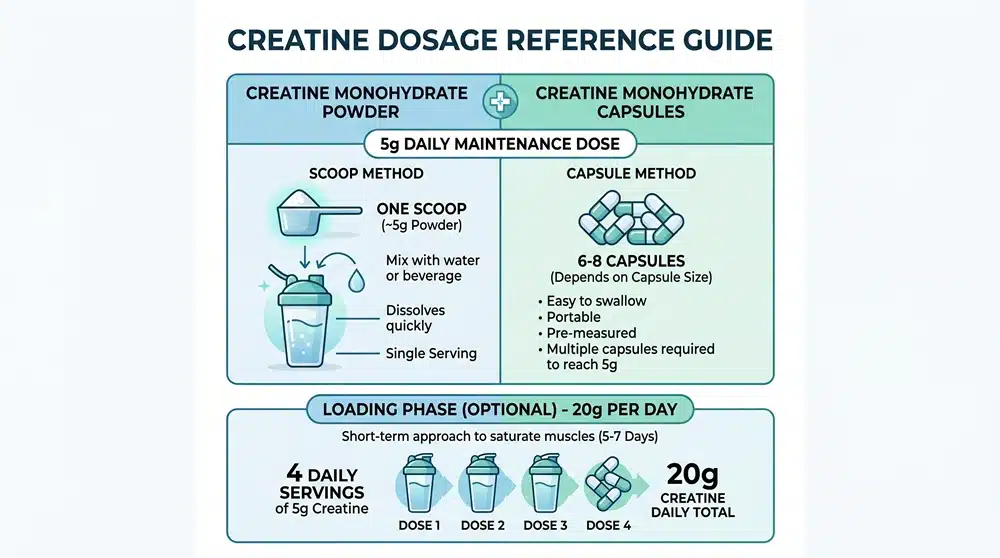
「加載階段」的數學題標準的肌酸加載階段需每日攝取20公克,持續5至7天,以快速使肌肉達到飽和狀態。.
- 含粉末: 這很簡單。您只需在一天中分次服用4勺(每勺5克)。.
- 附膠囊: 這很困難。標準肌酸膠囊僅含750毫克至2.5克肌酸。這意味著若要攝取20克,您可能每天需吞服8至25顆膠囊。.
📝 重要注意事項
即使是標準的維持劑量(5克),許多膠囊品牌仍要求您服用 一次服用3至7顆藥丸. 若您吞嚥大錠劑時感到困難,這可能成為每日的困擾。.
微量給藥 vs. 固定劑量給藥 粉末能讓你完全掌控用量。若你體型較小需精確攝取3克,或體型較大需攝取7克,只需調整量匙即可。膠囊則將你限制在固定劑量。當每顆膠囊含2.5克時,你無法攝取「3.5克」,只能被迫四捨五入。.
🏆粉雪在此處輕鬆勝出。. 若您計劃進行肌酸「負荷」(每日20克)或厭惡吞服大量藥丸,粉末劑型是唯一合理的選擇。膠囊強制採用「固定劑量」,這種方式往往令人困擾且難以管理。.
| 肌酸攝取目標 | 粉雪體驗 | 膠囊體驗 | 對使用者的影響 |
| 3 克 維持劑量 | 量取較小的一勺或一份 | 視標籤上標示的劑量而定,可能需要服用數顆膠囊 | 膠囊雖然方便,但靈活性較低。. |
| 5 克,一般每日劑量 | 通常是一標準勺 | 通常為 3 至 7 顆膠囊,視包裝規格而定 | 這就是使用者所關心的每日「服藥負擔」。. |
| 每日 20 克(加量階段) | 一天分四次食用,每次 5 克 | 每天可能需要服用多顆膠囊 | 在裝填時,通常使用粉末會更為實用。. |
| 客製化品牌配方 | 易於定位為高性價比的產品 | 更適合定位為「頂級便利性」或「避免特定口味」 | 選擇包裝形式時,應以品牌承諾為依據,而不僅僅是考量原料成本。. |
味道與質感
若您腸胃敏感或厭惡「沙水」的質地,此類產品或許正是您決定購買的關鍵因素。.
粉塵實錄:粗礪與粉化
除非購買「微粉化」肌酸(經研磨成更細微的粉末),否則標準肌酸粉無法完全溶於水中,通常會沉澱於杯底。.
若質地是主要考量因素,顆粒大小會影響口感與分散性。如需更深入的配方比較,請參閱我們的指南: 一水肌酸 vs 微粉肌酸.- 「沙」效應: 喝下最後一口肌酸奶昔,往往就像在喝濕沙子。.
- 滋味: 無味粉末其實並非「無味」。它帶有微苦的化學餘味,許多人覺得在純水中飲用時相當難受。通常需要搭配果汁或蛋白粉來掩蓋這種味道。.
膠囊優勢:無味且順滑
膠囊完全繞過你的味蕾。.
- 零風味: 明膠或植物膠囊外殼沒有味道。你吞下它,它就消失了。.
- 無餘味: 事後你不會反芻出化學調味劑的味道(不像某些魚油膠囊)。.
- 質地: 只要您能吞下藥丸尺寸(通常為’00’號,長約23毫米),服用過程便會順暢無阻,毫無顆粒感。.
🏆膠囊在此輕鬆勝出。. 若您無法忍受顆粒狀水的質地或無味粉末的微弱化學氣味,膠囊將是更優的選擇。它們提供「零味道」的解決方案。.
該買哪一款?
在比較了科學依據、成本與便利性後,老實說,這兩種劑型對肌肉增長而言並無「優劣之分」。無論是粉末或膠囊,都能將相同的活性成分(一水肌酸)輸送至肌肉組織。.
這項決定與生物學無關;它關乎生活方式。.
為協助您做出最終決定,請參閱以下三種特質描述,找出最符合您特質的選項。.
1. 預算運動員(優勝者:Powder) 若您是學生、想省錢,或單純追求最高效的選擇,購買 粉末. 您將以相同價格獲得四倍份量。若您已養成每日飲用蛋白質奶昔的習慣,往裡加一匙肌酸根本不費吹灰之力。.
2. 頻繁旅行者(獲獎者:膠囊) 若您經常搭機、下班直奔健身房,或隨身攜帶凌亂的健身包,不妨購買 膠囊. 隨身攜帶密封瓶的便利性,無須擔心白色粉末灑得到處都是,這份安心感值得多付的溢價。.
3. 質地厭惡者(優勝者:膠囊) 若您有敏感的嘔吐反射,或單純無法忍受未溶解粉末的粗糙質地,, 膠囊 是唯一可行的選擇。它們提供無味且順滑的體驗,確保您確實能每日服用營養補充品。.
最終評斷:粉末 vs. 膠囊
- 購買粉末的條件: 您想省錢(每份$0.15),且不介意混合飲品。.
- 購買膠囊適用於: 你重視便利性、經常旅行,或厭惡粗糙的質地。.
- 結論: 兩者皆能有效增肌。選擇您能堅持每日持續服用的一款。.
針對營養補充品品牌:粉劑還是膠囊?
對消費者而言,決策主要取決於預算、口味和便利性。對營養補充品品牌來說,決策還應考量生產成本、劑量、包裝容量、目標零售價以及使用者的遵從性。.
肌酸粉產品通常最適合以性價比為導向的運動營養品、小包裝產品、訓練前混合配方、訓練後配方以及蛋白質混合配方。若品牌希望採用高檔、便於攜帶且無味的劑型,以減少調配的麻煩並促進日常規律的服用,則肌酸膠囊產品會是更好的選擇。.
從配方角度來看,最優質的產品未必是生產成本最低的那款。真正理想的產品,是能同時符合目標客群、預期劑量、服用次數、瓶身容量以及銷售通路定位的配方。.
對於正在打造完整運動營養產品線的品牌而言,一個 運動營養合約製造 合作夥伴可協助決定應以粉末、膠囊、錠劑、軟糖、小包裝,還是多成分配方形式推出肌酸產品。.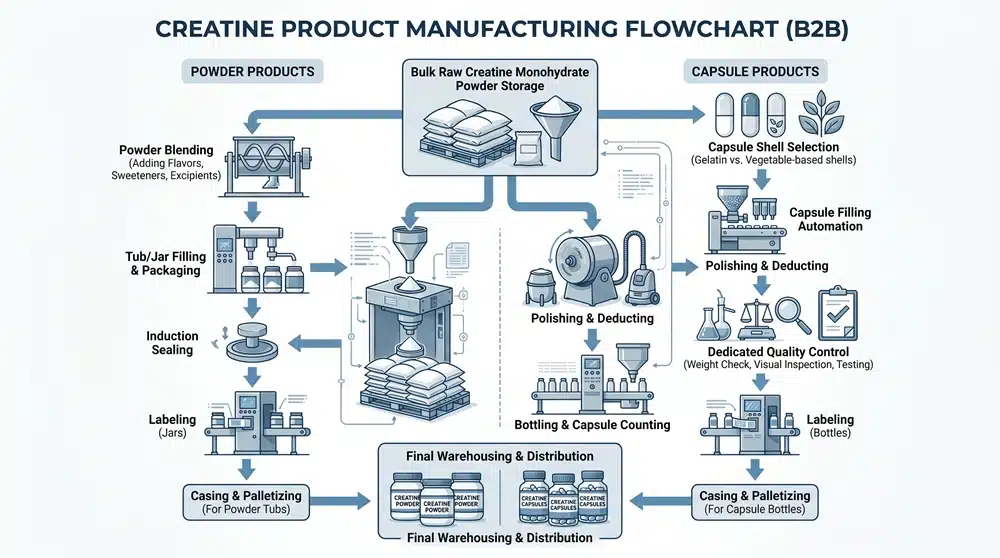
常見問題
結論
最終,選擇取決於你的個人優先考量。若預算為唯一顧慮,粉劑是理性的選擇。然而,若你重視便利性、精準度與無味體驗,膠囊才是繁忙生活中的更佳選項。.
若您想比較膠囊和粉末以外的其他肌酸劑型,請參閱我們的配方指南: 肌酸軟糖與肌酸粉 了解為何溫度、pH 值、質地以及標籤標示的穩定性對軟糖產品至關重要。.- 還在權衡利弊嗎? 我們已將成本、吸收率與便利性進行細分,助您選擇合適的劑型。欲深入了解產業概況,請參閱我們的 膠囊營養補充品指南.
- 準備好開始生產了嗎? 作為一家領先的合約製造商,, Gensei 為您的品牌直接生產高品質肌酸膠囊。. 立即聯絡我們的技術團隊 為您的配方配上完美的殼體。.
引用
- 國際運動營養學會立場聲明:運動、體育及醫學領域中補充肌酸的安全性與有效性 https://link.springer.com/article/10.1186/s12970-017-0173-z
- OPSS – 一水肌酸:提升運動表現的膳食補充品 https://www.opss.org/article/creatine-monohydrate-dietary-supplement-performance
- 美國國家衛生研究院(NIH)膳食補充劑辦公室(ODS)—— 運動與運動表現的膳食補充劑 https://ods.od.nih.gov/factsheets/ExerciseAndAthleticPerformance-HealthProfessional/
- FDA - 給消費者使用食物補充品的資訊 https://www.fda.gov/food/dietary-supplements/information-consumers-using-dietary-supplements
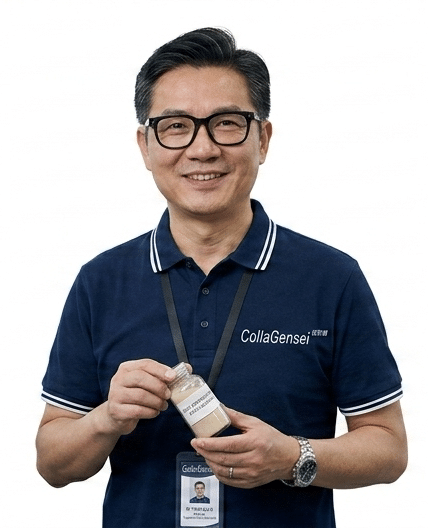
萬華仁(Warren Wan)是一位資深專家,在膳食補充劑供應鏈領域擁有豐富經驗,並在膠原蛋白肽、骨湯蛋白及角蛋白等核心成分的研發、製程控制及全球採購方面具備深厚的實務經驗。 身為本專欄的作者,他致力於剝去行銷包裝的表象,將晦澀難懂的成分科學與生產品質控制標準,轉化為淺顯易懂的硬核科普,協助讀者看清標籤背後的真相,並做出更理性的健康選擇。.


