
Herbal Supplement Manufacturer for Custom & Private Label Products
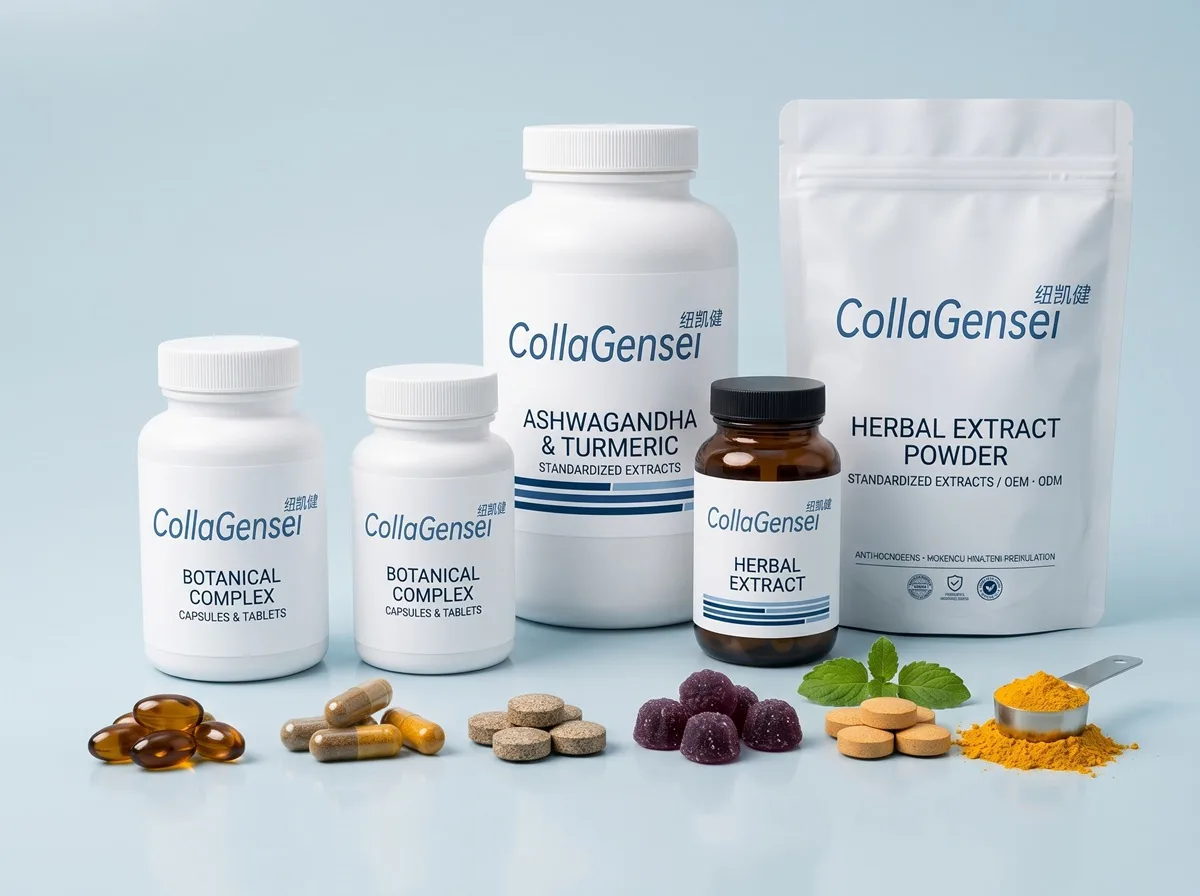
Gensei Global manufactures finished botanical and herbal supplements for international nutrition brands. We transform standardized plant extracts and whole-herb powders into hard capsules, compressed tablets, powder blends, gummies, chewables, and oil-based softgels—supported by botanical marker verification, pilot sampling, and turnkey retail packaging.
Sourcing bulk raw ingredients rather than finished retail supplements? Visit our Bulk Herbal Extracts Supplier página.
Start With Your Formula, Extract Specification or Brand
Choose a manufacturing model based on whether you have a locked-in botanical Bill of Materials (BOM), a target functional concept, or a ready-to-brand private label requirement.
Manufacture Your Existing Formula
Submit your formulation sheet, Latin botanical names, plant parts, and target marker percentages. We audit bulk density, hygroscopicity, capsule/tablet fill limits, and packaging compatibility.
Develop a Botanical Supplement
Formulate a custom herbal or synergistic herb-vitamin complex around your target consumer positioning, daily serving count, bitterness-masking needs, and destination-market regulations.
Launch a Branded Herbal Line
Select from proven single-herb and multi-botanical formulas and customize bottle, pouch, or blister packaging with your brand artwork and compliant Supplement Facts panels.
Core Herbal Extract & Phytochemical Categories
We work with both single-herb extracts and multi-ingredient botanical complexes. Each project is engineered around verified plant parts, active marker assays, and destination-market compliance.
Ashwagandha, Rhodiola, Ginseng & Maca
Formulate with standardized Ashwagandha root extract (Withania somnifera, 2.5%–5% Withanolides), Rhodiola rosea (Rosavins & Salidroside), Panax ginseng (Ginsenosides), and gelatinized or concentrated Maca root powders.
Turmeric, Green Tea, Resveratrol & Quercetin
Develop high-potency Turmeric root formulas (Curcuma longa, 95% Curcuminoids paired with Piperine or phospholipid carriers), Green Tea extract (EGCG / Catechins), Grape Seed OPCs, and Sophora-derived Quercetin.
Berberine HCl, Milk Thistle, Saw Palmetto & Elderberry
Produce targeted capsules, tablets, or gummies using Berberine HCl (97%), Milk Thistle seed extract (Silybum marianum, 80% Silymarin), Saw Palmetto fatty acids, Ginkgo biloba (24/6), and Black Elderberry (Sambucus nigra).
Botanical + Vitamin, Mineral & Amino Complexes
Combine herbal extracts with chelated minerals (Magnesium Bisglycinate, Zinc), active B-vitamins, L-Theanine, or digestive enzymes while controlling moisture transfer and cross-reactivity.
Developing Lion's Mane, Reishi, or Cordyceps products? Explore our dedicated Mushroom Supplement Manufacturing page. For bulk raw ingredient specs, visit Herbal Extracts Supplier.
Know the Plant Part, Extract Ratio & Active Marker
A common botanical name is never a complete manufacturing specification. Our R&D and QC teams verify taxonomic identity, plant part, marker assay method, and physical powder behavior before locking in your formula.

Species & Plant Part
Specify Latin binomials and exact plant parts (e.g., Ashwagandha root-only vs. root-and-leaf) verified via macroscopic/microscopic review and HPTLC / TLC fingerprinting.
Ratio vs. Standardized Marker
Distinguish between straight concentration ratios (e.g., 10:1) and quantitative phytochemical markers (e.g., 95% Curcuminoids by HPLC or 80% Silymarin by UV-Vis).
Pesticides, Heavy Metals & Solvents
Screen botanical lots against target-market thresholds for Pb, As, Cd, Hg, USP <561> / EU pesticide panels, mycotoxins (aflatoxins/ochratoxin), and Class 1–3 residual solvents.
Hygroscopicity & Flow Control
Manage sticky, moisture-sensitive botanical extracts using controlled-humidity blending, anti-caking carriers (silica, rice hull concentrate, or MCC), and high-barrier packaging.
Formulation benchmark: A 10:1 extract ratio indicates that 10 kg of dried raw herb was processed to yield 1 kg of extract—it does not mean the powder contains 10% active marker. If your label claims a specific milligram amount of an active constituent, we specify and verify the exact marker percentage by HPLC or UV assay.
Plan Your Botanical Product Specification
Procurement and R&D teams can use the technical checklist below to build a quote-ready botanical brief. Final tolerances are locked in upon pilot sample sign-off.
| Procurement Parameter | Standard Manufacturing Range & Technical Options |
|---|---|
| Identidade botânica | Full Latin binomial (genus & species), designated plant part (root, leaf, bark, berry, seed, aerial part), botanical origin, and HPTLC/TLC identity profile. |
| Ingredient Format | Standardized dry extract powder, concentration ratio extract (4:1, 10:1, 20:1), straight milled whole-herb powder, granulated DC grade, or supercritical CO2 oil extract. |
| Marker & Assay Method | Defined phytochemical percentage (e.g., Withanolides, Curcuminoids, Berberine, Silymarin, Ginsenosides) with specified assay method (HPLC vs. UV-Vis; anhydrous vs. as-is basis). |
| Solvents & Excipient Carriers | Water-only or hydroethanolic extraction; carrier declarations (maltodextrin, gum acacia, non-GMO rice flour, or carrier-free native extract); 80–100 mesh particle sizing. |
| Payload & Serving Size | Single-capsule fill weights typically 300 mg–750 mg (#1, #0, #00 shells) depending on extract bulk density (0.35–0.65 g/mL); multi-capsule or tablet serving splits for high-dose blends. |
| Contaminant & Micro Scope | Non-irradiated / ETO-free compliance; heavy metals (Pb, As, Cd, Hg), microbiological limits (TPC, Yeast & Mold, Salmonela, E. coli), and PAHs / pesticide screening per market. |
| Retail & Bulk Packaging | Amber PET/glass bottles, HDPE canisters, Alu-Alu / PVDC moisture-barrier blisters, gusseted stand-up pouches, single-serve stick packs, or bulk double-lined cartons. |
Available Finished-Product Formats
Herbal Hard Capsules
Our most popular format for bitter and hygroscopic dry extracts. Available in #00, #0, and #1 vegan HPMC, pullulan, or bovine gelatin shells.
Capsule Manufacturing ↗Botanical Tablets
High-load compressed and aqueous film-coated tablets engineered for multi-herb complexes with optimized hardness and disintegration times.
Tablet Manufacturing ↗Herbal Powder Blends
Instantized botanical drink mixes, greens + adaptogen blends, and single-serve sachets formulated with natural flavor maskers and sweeteners.
Powder Manufacturing ↗Botanical Gummies
Pectin or gelatin gummies for Elderberry, Ashwagandha, Apple Cider Vinegar, and Turmeric—balanced for active loading and bitterness masking.
Gummy Manufacturing ↗Oil & Suspension Softgels
Hermetically sealed softgels for lipophilic botanicals (Saw Palmetto oil, Evening Primrose, Black Seed oil, or Curcumin + MCT suspensions).
Softgel Manufacturing ↗Chewable & Fizzy Tablets
Direct-compression herbal chewables and fast-dissolving effervescent tablets ideal for immune (Elderberry + Vitamin C + Zinc) and throat-care lines.
Effervescent & Chewable ↗Dosage-form engineering note: Not every botanical extract suits every delivery format. Water-soluble hydroethanolic powders cannot be dissolved directly into clear oil softgels without a validated suspension matrix, and intensely bitter alkaloids (such as Berberine HCl) are best suited to two-piece capsules or film-coated tablets rather than gummies or chewables.
Reference MOQ & Lead Times by Dosage Form
Use these dosage-form production benchmarks to estimate your launch volume and schedule. Final pricing depends on botanical marker potency, extract grade, and packaging format.
| Herbal Dosage Form | Typical Starting MOQ | Pilot Sample Preparation | Indicative Bulk Schedule |
|---|---|---|---|
| Cápsulas duras | 100,000 capsules / SKU | 7–15 working days for density check & lab hand-fills | 6–8 weeks after material readiness and sample approval |
| Comprimidos comprimidos | 100,000 tablets / SKU | 2–3 weeks for standard samples using stocked tooling | 6–8 weeks after material readiness and sample approval |
| Misturas em pó | 100 kg / formula & flavor | 100–300 g trial blend; ~2 weeks preparation | 4–6 weeks from deposit payment to China export port |
| Cápsulas moles | 100,000 softgels / SKU | 2–4 weeks for oil-fill / paste suspension lab samples | 6–8 weeks after material readiness and sample approval |
| Herbal Gummies | Quoted by mold & piece weight (typically 150,000+ gummies / SKU) | 2–3 weeks for pectin/gelatin base & bitterness-masking trials | 6–8 weeks after formula, mold, and packaging sign-off |
Schedule & logistics scope: Capsule, tablet, softgel, and gummy timelines reflect production windows after deposit receipt, botanical raw material readiness, and packaging artwork sign-off. Powder lead times reference arrival at the designated China export port (FOB/EXW). Custom-extracted specialty botanicals, third-party pesticide panels, and international ocean/air freight are scheduled according to your project requirements.
A Traceable Route from Botanical Lot to Finished Batch
Botanical raw materials exhibit natural harvest-to-harvest variation. Our quality workflow standardizes incoming extracts, controls humidity during blending, and verifies finished batch compliance.
Verify the Botanical
Confirm Latin species, plant part, extraction solvent, active marker assay method, and target-market regulatory status.
Approve Pilot Samples
Evaluate capsule fill density, tablet disintegration, gummy/powder taste masking, and physical stability.
Dehumidified Processing
Execute GMP blending, encapsulation/tableting, metal detection, induction sealing, and desiccant dosing.
Assay & Release
Verify active marker potency, microbiological limits, and heavy metal clearance prior to batch release.
Botanical-Specific QC Checkpoints
- Botanical species and plant-part authentication (HPTLC / TLC and supplier traceability records).
- Quantitative active marker assay verification by HPLC or UV-Vis spectrophotometry.
- Heavy metals (Pb, As, Cd, Hg), microbiological screening, and risk-based pesticide / mycotoxin / residual solvent checks.
- Loss on drying (moisture), water activity ($a_w$), weight variation, and disintegration testing.
Standard Qualification & Batch Documents
- Master Formula Record (MFR) & Finished Product Specification sheet.
- Incoming botanical extract COAs, extraction solvent statements, and carrier declarations.
- Batch-specific Certificate of Analysis (COA) issued prior to shipment dispatch.
- Non-GMO, Irradiation-Free / ETO-Free, Allergen, and Vegan/Halal suitability statements per formula.
- Optional third-party lab testing (SGS, Eurofins, or Intertek) available upon request.
ISO & Halal System Certificates
Review our quality management and food safety certifications below. Complete supplier qualification packages, botanical extract COAs, and batch-specific analytical reports are provided during project onboarding.
Product-specific Halal coverage (including hydroethanolic solvent review and vegan vs. bovine shell selection) and destination export documents are confirmed per approved formula.
Herbal Supplement Manufacturing Questions
Direct answers for botanical supplement brand owners, formulators, and sourcing teams.
Can Gensei manufacture herbal supplements using our custom formula?
Yes. Share your Bill of Materials (BOM) or Supplement Facts panel including Latin botanical names, plant parts, extract ratios or standardized marker percentages, and target dosage form. Our R&D team audits bulk density, excipient compatibility, and daily serving size before preparing pilot samples.
What is the difference between an extract ratio (e.g., 10:1) and a standardized active marker?
An extract ratio (such as 10:1) describes the weight of raw dried botanical material used to produce one unit of extract, whereas a standardized active marker specifies the exact percentage of a bioactive compound (such as 95% Curcuminoids by HPLC or 5% Withanolides) verified by quantitative laboratory assay. A 10:1 ratio does not equal 10% active marker.
Which dosage forms work best for herbal extracts?
Two-piece hard capsules (vegan HPMC or gelatin) and film-coated compressed tablets are the most versatile formats for high-load or bitter botanical extracts. We also manufacture flavored herbal powder blends, pectin/gelatin gummies (for compatible doses like Elderberry or Ashwagandha), chewable/effervescent tablets, and oil-suspension softgels.
What are your starting MOQs for herbal capsules, tablets, powders, and gummies?
Our standard starting MOQ is 100,000 units per SKU for herbal hard capsules, compressed tablets, and softgels, and 100 kg per formula for botanical powder blends. Herbal gummy minimums depend on piece weight and mold setup, typically starting around 150,000+ gummies per SKU.
How do you control botanical identity, pesticides, and heavy metals?
We verify incoming botanical lots for species/plant-part identity (including HPTLC/TLC profiles where specified), quantitative marker potency (HPLC/UV-Vis), heavy metals (Pb, As, Cd, Hg), microbiological limits, and target-market pesticide or residual solvent compliance.
How long do herbal supplement samples and bulk production take?
Pilot sample preparation typically takes 7–15 working days for hard capsules and 2–3 weeks for tablets, powders, and gummies (assuming stocked extracts). Commercial bulk production generally takes 6–8 weeks for solid dose/gummy/softgel runs and 4–6 weeks for powder blends after material readiness and approvals.
Can you package herbal supplements in private label bottles, pouches, or blisters?
Yes. Because many herbal extracts are highly hygroscopic (moisture-absorbing), we pair your product with amber PET/glass bottles, HDPE canisters with heat-induction seals and silica gel desiccants, high-barrier stand-up pouches, or PVDC/Alu-Alu blister packs.
Request an Herbal Supplement Manufacturing Quote
Send your botanical formula or product concept. Sharing your exact extract specifications and preferred delivery format helps our team return an accurate technical and commercial quotation.
- Botanical name (Latin species), plant part, and whole powder vs. extract
- Extract ratio (e.g., 10:1) or standardized active marker % + assay method
- Target milligram dose per serving and preferred dosage form
- Estimated order volume, packaging format, and destination country