
เมื่อสำรวจโลกของน้ำมันธรรมชาติ คำว่า “น้ำมันเมล็ดแฟลกซ์” และ “น้ำมันลินสีด” มักปรากฏขึ้น ทำให้เกิดความสับสนอย่างมาก ทั้งสองอย่างนี้เหมือนกันหรือไม่ หรือมีความแตกต่างที่สำคัญที่ควรทราบ? แม้ว่าทั้งสองจะสกัดมาจากต้นแฟลกซ์ (ลินั่ม ยูซิทาติสซิมัม), ความแตกต่างในชื่อของทั้งสองมักบ่งบอกถึงความแตกต่างที่สำคัญในการใช้งาน หนึ่งในนั้นเป็นอาหารเสริมเพื่อสุขภาพที่ได้รับการยกย่องอย่างสูงและมีกรดไขมันโอเมก้า-3 สูง ในขณะที่อีกชนิดหนึ่งเป็นตัวเลือกยอดนิยมสำหรับโครงการอุตสาหกรรมและการปรับปรุงบ้าน บทความนี้จะอธิบายความแตกต่างที่สำคัญระหว่างน้ำมันเมล็ดแฟลกซ์และน้ำมันเมล็ดลินซีด เพื่อช่วยให้คุณเข้าใจว่าควรใช้ชนิดใดและเพราะเหตุใด.
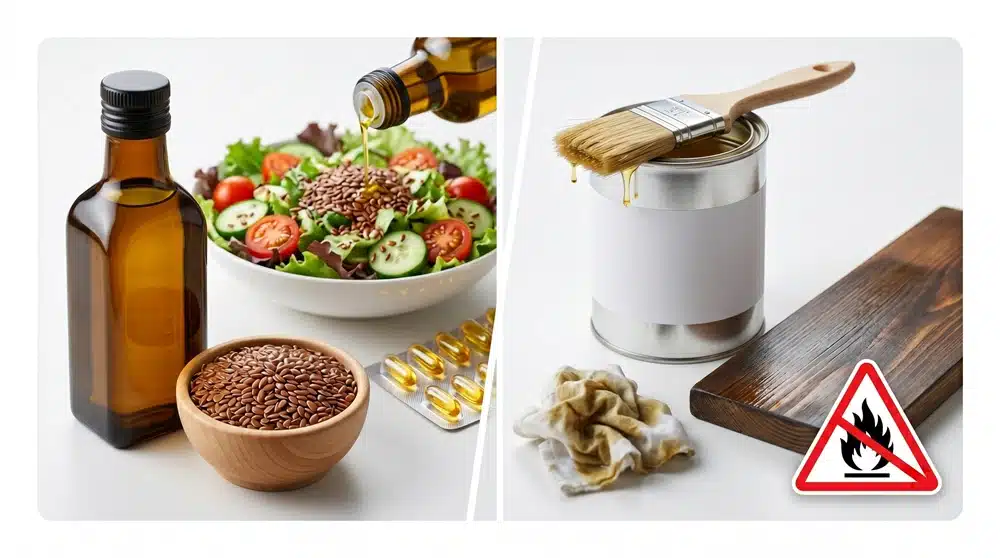
Quick answer: Linseed oil and flaxseed oil come from the same flax plant (ลินั่ม ยูซิทาติสซิมัม), but they are not interchangeable in most consumer contexts. Food-grade flaxseed oil is made for human consumption and omega-3 ALA nutrition, while industrial or boiled linseed oil is processed for drying, wood finishing, paints, and varnishes.
Are Linseed Oil and Flaxseed Oil the Same?
Botanically, yes. Commercially, not always. Both oils can be derived from the seeds of the flax plant, ลินั่ม ยูซิทาติสซิมัม. The Codex standard for named vegetable oils even treats “flaxseed (linseed) oil” as the oil from cultivated flax seeds. However, product labels often use the two names differently: “flaxseed oil” usually signals a food-grade or dietary supplement oil, while “linseed oil” is commonly used for industrial, woodworking, painting, or varnish products.
The safest rule is to judge the grade and label, not the botanical name. If a bottle is sold as a dietary supplement or edible oil and clearly states food-grade, cold-pressed, and intended for human consumption, it may be suitable for food use. If it is sold in a hardware store, labeled boiled linseed oil, wood finish, paint medium, drying oil, or contains metallic driers/solvents, do not consume it and do not use it on food-contact surfaces.
เมล็ดแฟลกซ์และเมล็ดลินคืออะไร?
นั่นเป็นคำถามที่ดีมาก และมันตรงประเด็นของความสับสนเกี่ยวกับสองคำนี้ เมล็ดแฟลกซ์และเมล็ดลินสีนั้น จริงๆ แล้วคือสิ่งเดียวกัน ทั้งคู่มาจากพืชชนิดเดียวกัน, ลินั่ม ยูซิทาติสซิมัม. ความแตกต่างในการตั้งชื่อเป็นเพียงเรื่องของคำศัพท์ในภูมิภาค และที่สำคัญกว่านั้นคือความแตกต่างที่อิงตามการใช้งานที่ตั้งใจไว้.
- ในสหรัฐอเมริกาและแคนาดา คำว่า “เมล็ดแฟลกซ์” ถูกใช้เกือบจะเฉพาะเจาะจงเท่านั้น โดยเฉพาะในบริบทของอาหารและผลิตภัณฑ์เสริมอาหาร.
- ในสหราชอาณาจักรและส่วนอื่น ๆ ของโลก “ลินซีด” เป็นคำที่ใช้กันทั่วไปมากกว่า โดยเฉพาะเมื่อกล่าวถึงเมล็ดที่ใช้ในทางอุตสาหกรรม.
ดังนั้น แม้ว่าเมล็ดพันธุ์เองจะเหมือนกัน แต่คำว่า “เมล็ดแฟลกซ์” มักหมายถึงเมล็ดพันธุ์ที่ใช้ในอาหารหรือเกรดอาหาร ในขณะที่คำว่า “เมล็ดลินสี” มักหมายถึงเมล็ดพันธุ์ที่ใช้ในอุตสาหกรรม เช่น การผลิตสี, น้ำยาเคลือบเงา, และลิโนเลียม ความแตกต่างนี้มีความสำคัญอย่างยิ่ง เนื่องจากวิธีการแปรรูปที่ใช้ในอุตสาหกรรมอาจทำให้ไขมันและเมล็ดไม่ปลอดภัยสำหรับการบริโภคของมนุษย์.
Terminology matters: seed, oil, and grade
| Term on label | What it usually means | What to check before use |
|---|---|---|
| Flaxseed oil / flax oil | Usually food-grade oil or supplement oil | Food-grade label, cold-pressed process, dark bottle, batch COA, peroxide value, acid value |
| Edible linseed oil | Food-grade name used in some regions | Must clearly state edible/food-grade and be processed for human consumption |
| Raw linseed oil | May be pure oil for wood or paint, but not necessarily produced under food standards | Do not assume edible; verify label, supplier, and food-contact suitability |
| Boiled linseed oil | Industrial drying oil, often with metal driers | Not for ingestion; not for cutting boards or food-contact surfaces unless the manufacturer specifically certifies food-contact safety |
คุณทำน้ำมันเมล็ดแฟลกซ์ได้อย่างไร
วิธีการที่พบมากที่สุดและเป็นที่นิยมสำหรับการผลิตอาหารเกรด น้ำมันเมล็ดแฟลกซ์ คือการสกัดเย็น กระบวนการนี้ประกอบด้วย:
- การทำความสะอาดเมล็ด: ขั้นตอนแรกคือการทำความสะอาดเมล็ดแฟลกซ์อย่างละเอียดเพื่อขจัดสิ่งแปลกปลอม ฝุ่น หรือสิ่งเจือปนอื่น ๆ ออกให้หมด.
- การกดด้วยเครื่องจักรกล เมล็ดที่ทำความสะอาดแล้วจะถูกป้อนเข้าสู่เครื่องอัดเชิงกล ซึ่งมักจะเป็นเครื่องสกรูแบบอัดสกัด เครื่องจะออกแรงกดอย่างหนักต่อเมล็ดเพื่อบีบเอาน้ำมันออกมา.
- การควบคุมอุณหภูมิ: นี่คือส่วนที่สำคัญที่สุดของกระบวนการ “การบีบอัดเย็น” กระบวนการนี้ทำให้เกิดความร้อนบางส่วนจากแรงเสียดทาน แต่จะถูกควบคุมอย่างระมัดระวังเพื่อให้อุณหภูมิอยู่ต่ำกว่าเกณฑ์ที่กำหนดไว้ (โดยทั่วไปประมาณ 49°C หรือ 120°F) วิธีการที่ใช้ความร้อนต่ำนี้มีความสำคัญอย่างยิ่งในการรักษาไขมันโอเมก้า-3 ที่บอบบาง (ALA) ในน้ำมัน ซึ่งมีความไวต่อความร้อนสูงและสามารถเสื่อมสภาพได้กลายเป็นกลิ่นเหม็นหรือมีประสิทธิภาพน้อยลง.
- การกรอง: จากนั้นน้ำมันจะถูกกรองเพื่อกำจัดอนุภาคของแข็งหรือตะกอนที่เหลืออยู่.
- บรรจุภัณฑ์: ในที่สุด น้ำมันจะถูกบรรจุลงในขวด ซึ่งมักจะเป็นขวดทึบแสงหรือขวดทึบแสง และบางครั้งอาจมีการเติมไนโตรเจนเพื่อกำจัดออกซิเจนออก การทำเช่นนี้เพื่อปกป้องน้ำมันจากแสงสว่างและออกซิเดชัน ซึ่งช่วยรักษาความสดใหม่และความสมบูรณ์ทางโภชนาการของน้ำมันไว้ได้.
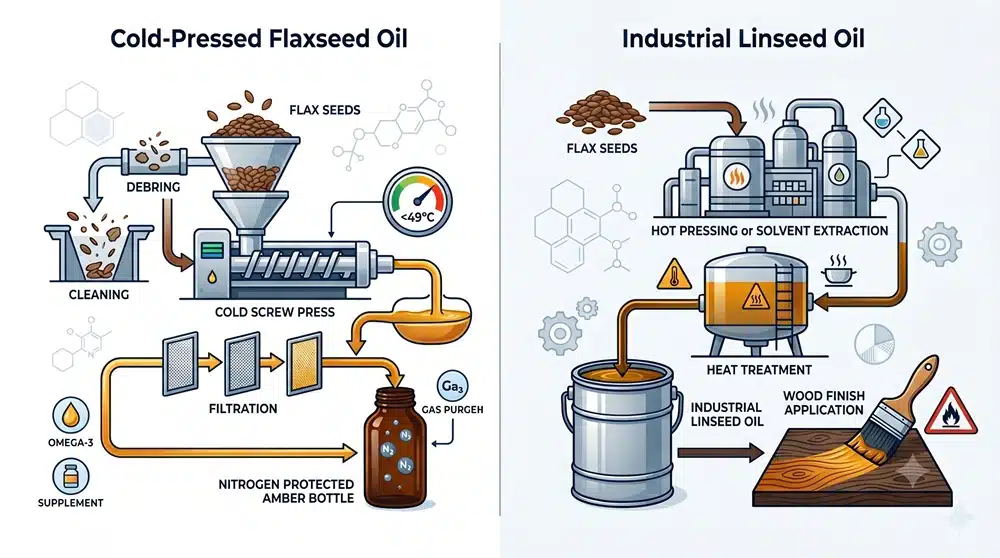
กระบวนการ “สกัดเย็น” นี้ผลิตน้ำมันคุณภาพสูงที่อุดมไปด้วยสารอาหาร ซึ่งคุณสามารถพบได้ในร้านอาหารเพื่อสุขภาพ โดยมีวัตถุประสงค์เพื่อบริโภคสำหรับมนุษย์ในฐานะอาหารเสริมหรือส่วนผสมในอาหาร.
Food-grade quality indicators suppliers should verify
For supplement brands, “cold-pressed” is only the starting point. A food-grade flaxseed oil should be backed by a specification sheet and a certificate of analysis (COA). Key checks include fatty acid profile, peroxide value, acid value, iodine value, trace metals, and packaging protection from oxygen and light.
| Quality check | Why it matters | Practical target or note |
|---|---|---|
| Fatty acid profile | Confirms the oil is rich in alpha-linolenic acid (ALA) | USP-style monographs list alpha-linolenic acid around 50-65% for flax seed oil |
| Peroxide value | Indicates early oxidation and rancidity risk | Lower is better; supplement buyers should request current COA values |
| Acid value / free fatty acids | Shows hydrolytic rancidity and poor seed/oil handling | Use as a freshness and process-control marker |
| Iodine value | Reflects high unsaturation; also explains why linseed oil can act as a drying oil | High iodine values mean the oil is reactive with oxygen and requires careful storage |
| บรรจุภัณฑ์ | ALA-rich oils oxidize quickly when exposed to heat, light, and oxygen | Use dark bottles, nitrogen flushing when possible, tight closures, and refrigerated storage after opening |
ในทางตรงกันข้าม น้ำมันเมล็ดแฟลกซ์เกรดอุตสาหกรรมมักผลิตโดยใช้วิธีการที่แตกต่างกัน เช่น การบีบอัดด้วยความร้อนหรือการสกัดด้วยตัวทำละลาย ซึ่งใช้ความร้อนสูงและ/หรือสารเคมี วิธีการเหล่านี้ถูกออกแบบมาเพื่อเพิ่มปริมาณน้ำมันให้ได้มากที่สุด และไม่ได้คำนึงถึงการรักษามูลค่าทางโภชนาการ เนื่องจากน้ำมันนี้มีไว้สำหรับการใช้งาน เช่น การเคลือบไม้ ไม่ใช่การบริโภค.
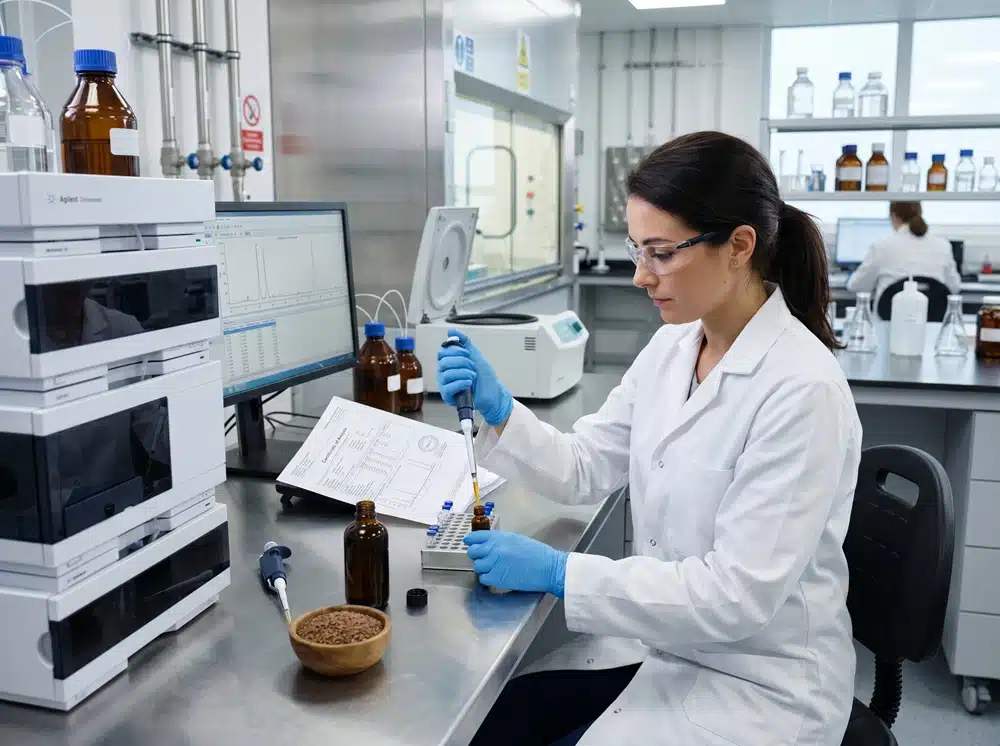
ประโยชน์: น้ำมันเมล็ดแฟลกซ์ vs น้ำมันเมล็ดแฟลกซ์
แม้ว่าน้ำมันทั้งสองชนิดจะมาจากพืชชนิดเดียวกัน แต่ประโยชน์ของมันแตกต่างกันอย่างสิ้นเชิง ซึ่งถูกกำหนดโดยกระบวนการผลิตและการใช้งานที่ตั้งใจไว้.
Flaxseed Oil: A Focus on ALA Omega-3 Nutrition
Food-grade flaxseed oil is valued mainly because it is a concentrated plant source of alpha-linolenic acid (ALA), an essential omega-3 fatty acid. According to the NIH Office of Dietary Supplements, ALA is found mainly in plant oils such as flaxseed, soybean, and canola oils, but conversion from ALA to EPA and DHA is limited. For this reason, flaxseed oil is best positioned as a plant-based ALA source, not as a direct replacement for fish oil EPA/DHA.น้ำมันปลา vs น้ำมันเมล็ดแฟลกซ์
- Plant-based omega-3 support: Useful for vegan, vegetarian, or fish-allergy formulations that need a plant-sourced omega-3 claim.
- Heart-health positioning: Mayo Clinic notes that some research suggests flaxseed and flaxseed oil may help with blood pressure and heart-health markers, but claims should remain conservative and compliant.
- No fiber or lignans in standard oil: Whole or ground flaxseed contains fiber and lignans; standard flaxseed oil usually does not. Do not transfer every whole-flaxseed benefit to the oil unless the product is specifically lignan-enriched.
- Use limitations: Flaxseed oil should not be used for high-heat cooking because ALA-rich oils oxidize easily. It is better used in capsules, smoothies, salad dressings, or cold applications.
น้ำมันเมล็ดแฟลกซ์: พลังงานอุตสาหกรรม
ในทางกลับกัน “น้ำมันเมล็ดแฟลกซ์” มักเป็นคำที่ใช้เรียกผลิตภัณฑ์ที่ผ่านการแปรรูปและใช้ในอุตสาหกรรม ประโยชน์ของน้ำมันชนิดนี้ไม่เกี่ยวข้องกับการบริโภคอาหารแต่อย่างใด และได้รับการยกย่องในด้านคุณสมบัติทางกายภาพและเคมีที่เป็นเอกลักษณ์.
- น้ำมัน “แห้ง”: นี่คือประโยชน์ที่สำคัญที่สุดของน้ำมันเมล็ดแฟลกซ์ เมื่อสัมผัสกับอากาศ น้ำมันจะเกิดการพอลิเมอร์และแข็งตัว สร้างฟิล์มที่แข็งแรงและทนน้ำได้ ตัวอย่างเช่น คุณสามารถใช้น้ำมันเมล็ดแฟลกซ์ที่ต้มแล้วเพื่อเคลือบไม้ตัดใหม่ ไม้พื้น หรือเฟอร์นิเจอร์ชิ้นหนึ่ง ปกป้องมันจากความชื้นและเพิ่มความสวยงามให้กับสีของไม้.
- สารยึดเกาะสี: เป็นเวลาหลายศตวรรษที่น้ำมันเมล็ดแฟลกซ์ถูกใช้เป็นสารยึดเกาะสำหรับสีน้ำมัน นี่คือเหตุผลที่สีสำหรับศิลปินแบบดั้งเดิมและสีทาบ้านสามารถทาได้อย่างเรียบเนียนและแห้งเป็นพื้นผิวที่ทนทาน ยืดหยุ่น และคงทนยาวนาน.
- การอนุรักษ์และการคุ้มครอง: เนื่องจากน้ำมันเมล็ดแฟลกซ์สร้างชั้นป้องกัน จึงเหมาะอย่างยิ่งสำหรับการรักษาวัสดุต่างๆ รวมถึงไม้และแม้กระทั่งโลหะ มักใช้เคลือบเครื่องมือโลหะเพื่อป้องกันการเกิดสนิมหรือเพื่อปิดผนึกและปกป้องพื้นผิวของกระทะเหล็กหล่อ (ที่เรียกว่า “การปรุง” กระทะ).
Why Industrial or Boiled Linseed Oil Is Not Food-Grade
The issue is not the flax plant itself; it is the processing standard. Industrial linseed oil is optimized for drying performance, surface penetration, paint binding, or wood finishing. To achieve faster curing, some products are heat-treated, solvent-extracted, polymerized, or blended with metallic drying agents. These choices are useful for a wood finish, but they are not the same as a food-grade, cold-pressed supplement oil.
In bulk supplement sourcing, we treat edible flaxseed oil as a sensitive omega oil: it needs oxidation control, COA verification, suitable packaging, and clear food-grade documentation. Hardware-store linseed oil should never be substituted for dietary supplement manufacturing, even if the botanical source is similar.
น้ำมันเมล็ดแฟลกซ์ vs น้ำมันเมล็ดแฟลกซ์: ตารางเปรียบเทียบ
| คุณสมบัติ | Food-Grade Flaxseed Oil | Industrial / Boiled Linseed Oil |
|---|---|---|
| Botanical source | Flax seeds from ลินั่ม ยูซิทาติสซิมัม | Also usually derived from flax seeds |
| Primary purpose | Dietary supplement, cold food use, plant-based omega-3 ALA | Wood finishing, paint binder, varnish, putty, linoleum, industrial coatings |
| Processing goal | Preserve freshness, ALA content, and food safety | Improve drying, penetration, hardening, and film formation |
| Typical process | Cold pressing, filtration, oxidation-controlled packaging | Heat processing, polymerization, solvent extraction, or added drying agents depending on product |
| Key nutritional value | High in ALA omega-3; standard oil has no fiber and little/no lignans | Not formulated for nutrition |
| Food safety | Yes, if clearly labeled food-grade and intended for human consumption | No, unless specifically certified as food-grade or food-contact safe by the manufacturer |
| Quality documents | COA, fatty acid profile, peroxide value, acid value, trace metals, microbial/contaminant checks | SDS, application instructions, drying time, VOC/safety guidance |
| การจัดเก็บ | Dark, tightly sealed container; refrigerate after opening; protect from oxygen, light, and heat | Follow product label; keep away from heat/flame; handle oily rags as a fire hazard |
| Best answer to “Can I eat it?” | Only if the label says food-grade/edible | No for hardware-store, boiled, wood finish, paint, or industrial products |
Supply Chain Checklist for Supplement Brands
From a supplement manufacturing perspective, the biggest risk is not confusing two plant names; it is sourcing an oil that was never produced for ingestion. Before using flaxseed oil in capsules, softgels, liquids, or private label formulas, brands should request:
- Full specification sheet and recent COA for the exact batch
- Fatty acid profile confirming ALA content
- Peroxide value and acid value for freshness and oxidation control
- Heavy metal and contaminant testing appropriate for the target market
- Packaging details such as dark bottles, oxygen control, and shelf-life/stability data
- Clear confirmation that the oil is food-grade and suitable for dietary supplement use
If the product is described mainly as a wood finish, paint medium, varnish ingredient, boiled linseed oil, or drying oil, it should be rejected for supplement use.
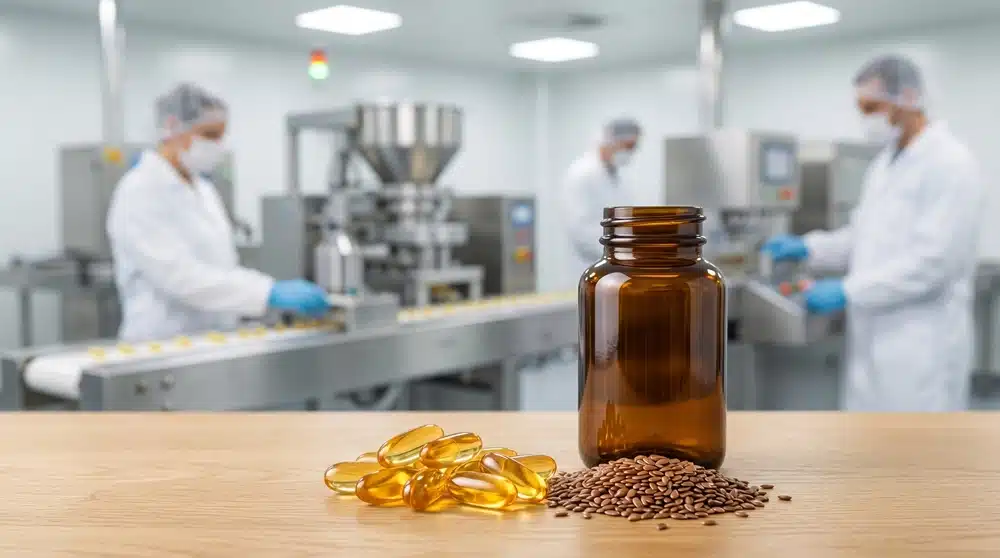
บทสรุป
ท้ายที่สุด คำตอบสำหรับคำถามที่ว่า “สามารถใช้แทนกันได้หรือไม่?” คือ ไม่สามารถทำได้อย่างแน่นอน ความแตกต่างระหว่างน้ำมันลินสีดกับน้ำมันเมล็ดแฟลกซ์นั้นเกี่ยวข้องกับความปลอดภัยและประสิทธิภาพการใช้งาน การเข้าใจว่าน้ำมันเมล็ดแฟลกซ์เหมาะสำหรับสุขภาพของคุณ และน้ำมันลินสีดเหมาะสำหรับโครงการปรับปรุงบ้าน จะช่วยให้คุณหลีกเลี่ยงความผิดพลาดที่อาจเป็นอันตราย และมั่นใจได้ว่าคุณกำลังใช้ผลิตภัณฑ์ที่เหมาะสมกับงานอย่างแท้จริง ไม่ว่าคุณต้องการเพิ่มปริมาณโอเมก้า-3 ในร่างกายหรือปกป้องเขียงไม้ที่คุณชื่นชอบ ให้เลือกใช้น้ำมันที่มีฉลากระบุไว้สำหรับวัตถุประสงค์นั้นโดยเฉพาะเสมอ นิสัยง่ายๆ นี้จะช่วยคุณประหยัดเวลาจากความสับสนและอันตรายที่อาจเกิดขึ้นได้.
คำถามที่พบบ่อย
เมล็ดแฟลกซ์หรือเมล็ดแฟลกซ์ดีกว่ากัน?
ไม่มีอะไรที่ “ดีกว่า” — พวกมันมีวิธีการใช้งานที่แตกต่างกัน. น้ำมันเมล็ดแฟลกซ์ สำหรับบริโภคของมนุษย์และประโยชน์ต่อสุขภาพ น้ำมันเมล็ดแฟลกซ์ ใช้สำหรับวัตถุประสงค์ทางอุตสาหกรรม เช่น การตกแต่งไม้.
มนุษย์สามารถกินน้ำมันเมล็ดแฟลกซ์ได้หรือไม่?
Only if it is clearly labeled food-grade or edible. Do not eat hardware-store linseed oil, boiled linseed oil, wood finish, paint medium, or any product containing drying agents or solvents.
น้ำมันเมล็ดแฟลกซ์ปลอดภัยระหว่างตั้งครรภ์หรือไม่?
Do not start flaxseed oil during pregnancy or breastfeeding without medical advice. Mayo Clinic advises avoiding flaxseed and flaxseed oil during pregnancy or breastfeeding.
อะไรคือข้อเสียที่ใหญ่ที่สุดของเมล็ดแฟลกซ์?
ข้อเสียหลักคือพวกมันสามารถเสียรสชาติได้อย่างรวดเร็ว. ต้องเก็บรักษาอย่างถูกต้อง ไม่ว่าจะเป็นทั้งลูกหรือในตู้เย็น เพื่อรักษาความสดและคุณภาพทางโภชนาการ.
ข้อเสียของน้ำมันเมล็ดแฟลกซ์คืออะไร?
ข้อเสียที่ใหญ่ที่สุดคือมันไม่ปลอดภัยสำหรับการบริโภคของมนุษย์. นอกจากนี้ ผ้าที่ชุบด้วยน้ำมันลินสีดสามารถลุกไหม้ได้เอง และต้องทิ้งอย่างระมัดระวัง.
วิธีใช้เมล็ดแฟลกซ์สำหรับอาการปวดข้อ?
น้ำมันเมล็ดแฟลกซ์มีกรดไขมันโอเมก้า-3 ที่มีคุณสมบัติต้านการอักเสบ ซึ่งอาจช่วยลดอาการปวดข้อได้ คุณสามารถรับประทานเป็น อาหารเสริมในรูปแบบแคปซูล หรือเพิ่มลงในอาหาร เช่น สมูทตี้และสลัด.
เมล็ดแฟลกซ์มีประโยชน์ต่อร่างกายผู้หญิงอย่างไร?
เมล็ดแฟลกซ์อุดมไปด้วยลิกแนน ซึ่งอาจช่วยปรับสมดุลฮอร์โมนและลดอาการของวัยหมดประจำเดือนได้ นอกจากนี้ เส้นใยอาหารในเมล็ดแฟลกซ์ยังช่วยส่งเสริมสุขภาพระบบย่อยอาหารและหัวใจอีกด้วย.
ใครที่ไม่ควรรับประทานน้ำมันเมล็ดแฟลกซ์?
บุคคลที่ใช้ยาละลายลิ่มเลือดหรือมีภาวะทางการแพทย์บางประการควรปรึกษาแพทย์ก่อนรับประทานน้ำมันเมล็ดแฟลกซ์.
เมล็ดแฟลกซ์ดีต่ออาการปวดเข่าหรือไม่?
ใช่, คุณสมบัติต้านการอักเสบของโอเมก้า-3 ในเมล็ดแฟลกซ์สามารถช่วยลดการอักเสบและอาการปวดในข้อต่อ รวมถึงข้อเข่าได้.
จะเกิดอะไรขึ้นถ้าฉันกินเมล็ดแฟลกซ์ทุกวัน?
การรับประทานเมล็ดแฟลกซ์ทุกวันสามารถช่วยปรับปรุงสุขภาพทางเดินอาหาร, สนับสนุนสุขภาพหัวใจ, และให้แหล่งที่ดีของเส้นใยและโอเมก้า-3. เพียงแค่แน่ใจว่าคุณเริ่มต้นด้วยปริมาณน้อยและดื่มน้ำให้เพียงพอ.
เมล็ดแฟลกซ์ชนิดใดที่มีประโยชน์ต่อสุขภาพมากที่สุด?
เมล็ดแฟลกซ์ที่มีประโยชน์ต่อสุขภาพมากที่สุดคือเมล็ดแฟลกซ์สีทองหรือสีน้ำตาล ทั้งสองชนิดมีคุณค่าทางโภชนาการที่คล้ายคลึงกัน ปัจจัยที่สำคัญที่สุดคือวิธีการแปรรูปและเก็บรักษาเพื่อคงความสดใหม่.
Is flaxseed oil the same as ground flaxseed?
No. Ground flaxseed contains fiber and lignans, while standard flaxseed oil mainly provides fat, especially ALA omega-3. Choose the form based on the desired nutrient profile.
Can I use boiled linseed oil on a cutting board?
No, not unless the manufacturer explicitly certifies it for food-contact use. Standard boiled linseed oil is an industrial drying oil and may contain metallic drier
Why does linseed oil dry but flaxseed oil is sold as food?
The drying behavior comes from high unsaturation and oxidation. Industrial linseed oils are optimized to oxidize and polymerize into a surface film; food-grade flaxseed oils are protected from oxidation to preserve freshness and nutrition.
What should supplement brands check before buying bulk flaxseed oil?
Ask for a COA, fatty acid profile, peroxide value, acid value, trace metals, packaging protection, shelf-life data, and explicit food-grade documentation.
เอกสารอ้างอิง
- NIH Office of Dietary Supplements – Omega-3 Fatty Acids Fact Sheet: https://ods.od.nih.gov/factsheets/Omega3FattyAcids-HealthProfessional/
- Mayo Clinic – Flaxseed and flaxseed oil: https://www.mayoclinic.org/drugs-supplements-flaxseed-and-flaxseed-oil/art-20366457
- FDA GRN No. 256 – High linolenic acid flaxseed oil: https://hfpappexternal.fda.gov/scripts/fdcc/index.cfm?id=256&set=GRASNotices
- Codex Alimentarius CXS 210-1999 – Standard for Named Vegetable Oils: https://www.fao.org/fao-who-codexalimentarius/
- USP Flax Seed Oil monograph mirror: https://www.drugfuture.com/Pharmacopoeia/usp38/data/v38332/usp38nf33s2_m33191.html
- Klean-Strip Boiled Linseed Oil SDS: https://images.thdstatic.com/catalog/pdfImages/5c/5caa37df-3ea9-4b49-83a7-b602de97da9e.pdf
- East Sussex Fire & Rescue Service – The Fire Hazards of Linseed Oil: https://www.esfrs.org/the-fire-hazards-of-linseed-oil
- Flax Farm – Linseed or Flax: what’s the difference?: https://www.flaxfarm.co.uk/health/linseed-or-flax-whats-the-difference/
- Treeboard – Nine Myths About Linseed Oil and Flaxseed Oil: https://treeboard.com/blog/nine-myths-about-linseed-oil-and-flaxseed-oil/
- Range Products – Linseed Oil vs Flaxseed Oil: https://www.rangeproducts.com.au/linseed-oil-vs-flaxseed-oil/
- PureFlax – Linseed Oil vs Flax Seed Oil: https://pureflax.co.uk/linseed-oil-of-flax-seed-oil/

W. Wenyang is a seasoned expert with extensive experience in the dietary supplement supply chain, possessing rich practical experience in the research, development, process control, and global sourcing of core ingredients such as collagen peptides, bone broth protein, and keratin. As the author of this column, he is dedicated to stripping away the marketing packaging, transforming obscure ingredient science and production quality control standards into easy-to-understand, hardcore science popularization, helping readers understand the truth behind the labels and make more rational health choices.
