
Quick Answer: CoQ10 vs Fish Oil

Coenzyme Q10 and fish oil are not the same ingredient. CoQ10 is a fat-soluble antioxidant involved in mitochondrial energy production, while fish oil provides omega-3 fatty acids such as EPA and DHA that are commonly used for lipid, inflammation, and cardiovascular wellness positioning.
For consumers, the better choice depends on the health goal and medication status. CoQ10 is often discussed in the context of cellular energy, statin use, and antioxidant support. Fish oil is more closely associated with omega-3 intake, triglyceride support, and systemic inflammation.
For supplement brands, the more important question is not simply “which is better?” It is: which ingredient fits the dosage form, claim strategy, oil system, COA requirements, stability target, and market positioning?
In many product development projects, CoQ10 and fish oil are not competitors. They can be complementary ingredients, especially in softgel products designed around heart health, healthy aging, and premium omega-3 positioning.
Early custom CoQ10 omega-3 formulation support can help define the right CoQ10 form, EPA/DHA target, carrier oil, and antioxidant system.โคเอนไซม์ Q10 คืออะไร?
Coenzyme Q10, often shortened to CoQ10, is a naturally occurring compound found in human cells. It plays an important role in mitochondrial energy production and also functions as an antioxidant. The highest concentrations are found in high-energy organs such as the heart, liver, kidneys, and pancreas.
In supplement formulation, CoQ10 is usually used in two commercial forms: ubiquinone and ubiquinol. Ubiquinone is the oxidized form and is widely used because it is stable and cost-effective. Ubiquinol is the reduced form and is often positioned as more bioavailable, especially in premium formulas or products targeting older adults.
Because CoQ10 is fat-soluble, its delivery system matters. A CoQ10 ingredient blended into an oil-based softgel may behave very differently from a dry powder tablet or capsule. For supplement brands, this means CoQ10 selection should consider not only dosage, but also solubility, carrier oil, antioxidant system, softgel compatibility, and stability testing.
ประโยชน์ของโคเอนไซม์ Q10
ทำไมคุณอาจพิจารณาเพิ่มโคเอนไซม์คิวเท็น (CoQ10) เข้าไปในกิจวัตรประจำวันของคุณ? มาดูกัน:
- สุขภาพหัวใจ: โคเอนไซม์คิวเท็น (CoQ10) เป็นเพื่อนที่ดีที่สุดของหัวใจ โดยเฉพาะอย่างยิ่งสำหรับผู้ที่มีภาวะหัวใจล้มเหลว งานวิจัย เช่น การศึกษาในวารสาร วารสารวิทยาลัยโรคหัวใจแห่งอเมริกา, พบว่าการเสริม CoQ10 ช่วยลดเหตุการณ์หัวใจและหลอดเลือดที่สำคัญได้ถึง 39% ในผู้ป่วยภาวะหัวใจล้มเหลว โดยเฉพาะอย่างยิ่งมีประโยชน์สำหรับผู้ที่ใช้ยาสแตติน ซึ่งสามารถลดระดับ CoQ10 ในร่างกาย ส่งผลให้เกิดอาการปวดกล้ามเนื้อหรืออ่อนเพลีย.
- บรรเทาอาการปวดศีรษะไมเกรน หากไมเกรนเป็นแขกที่ไม่ได้รับเชิญที่แวะมาบ่อย ๆ โคเอนไซม์คิวเท็น (CoQ10) อาจช่วยได้ งานวิจัยที่ตีพิมพ์ใน อาการปวดศีรษะ แสดงให้เห็นว่า 150 มิลลิกรัมของโคเอนไซม์คิวเท็น (CoQ10) ต่อวัน ช่วยลดวันที่มีอาการไมเกรนได้ถึง 481 วันเมื่อเทียบกับยาหลอก นั่นเป็นการเปลี่ยนแปลงครั้งใหญ่สำหรับใครก็ตามที่เหนื่อยล้าจากอาการปวดหัวรุนแรงเหล่านั้น.
- พลังต้านอนุมูลอิสระ: โดยการกำจัดอนุมูลอิสระ โคเอนไซม์คิวเท็นช่วยปกป้องเซลล์จากความเครียดออกซิเดชัน ซึ่งเชื่อมโยงกับโรคเรื้อรังเช่นโรคเบาหวานและโรคความเสื่อมของระบบประสาท บางการศึกษาชี้ว่าอาจช่วยปรับปรุงความไวต่ออินซูลินในผู้ป่วยโรคเบาหวานได้ อย่างไรก็ตามยังต้องการการวิจัยเพิ่มเติม.
- สิทธิประโยชน์เพิ่มเติมที่อาจได้รับ: มีการวิจัยอย่างต่อเนื่องเกี่ยวกับบทบาทของโคเอนไซม์คิวเท็น (CoQ10) ในการเพิ่มประสิทธิภาพการออกกำลังกายและชะลอการลุกลามของโรคต่างๆ เช่น พาร์กินสันหรืออัลไซเมอร์ แต่ผลการศึกษาในประเด็นนี้ยังไม่ชัดเจน.
โคเอนไซม์คิวเท็น (CoQ10) เปรียบเสมือนผู้ช่วยคู่ใจที่คอยสนับสนุนความต้องการพลังงานของร่างกายและปกป้องเซลล์จากความเสียหาย แต่เมื่อเปรียบเทียบกับน้ำมันปลาแล้วเป็นอย่างไร?
น้ำมันปลาคืออะไร?
Fish oil is a marine oil ingredient that provides long-chain omega-3 fatty acids, mainly EPA and DHA. These fatty acids are naturally found in oily fish such as sardine, anchovy, mackerel, salmon, and herring. In supplement manufacturing, fish oil is most commonly used in softgels, liquid oils, and omega-3 combination products.
The quality of fish oil is not determined by the words “fish oil” alone. Brands should compare the actual EPA and DHA content, oxidation markers, contaminant testing, source traceability, odor profile, and shelf-life performance.
For fish oil ingredients, oxidation control is a major quality issue. A high-quality oil should be supported by COA data such as peroxide value, p-anisidine value, and TOTOX. Heavy metals, PCBs, dioxins, and microbial limits should also be reviewed before bulk purchasing or production.
ประโยชน์ของน้ำมันปลา
น้ำมันปลาเป็นที่รู้จักจากประโยชน์ที่หลากหลาย โดยเฉพาะต่อหัวใจและสมอง นี่คือสิ่งที่วิทยาศาสตร์กล่าวไว้:
- สุขภาพหัวใจ: น้ำมันปลาเป็นซูเปอร์สตาร์สำหรับสุขภาพหัวใจและหลอดเลือด สมาคมโรคหัวใจแห่งอเมริกา แนะนำให้รับประทานอาหารเสริมโอเมก้า-3 สำหรับผู้ที่มีไตรกลีเซอไรด์สูง เนื่องจากสามารถลดระดับได้ 20-50% ขึ้นอยู่กับปริมาณที่รับประทาน ลด-IT การทดลอง, เผยแพร่ใน วารสารการแพทย์นิวอิงแลนด์, พบว่า EPA ขนาดสูงช่วยลดเหตุการณ์ทางหัวใจและหลอดเลือดได้ 25% ในผู้ป่วยที่มีไตรกลีเซอไรด์สูง.
- สุขภาพสมอง: โอเมก้า-3 โดยเฉพาะ DHA มีความสำคัญอย่างยิ่งต่อการทำงานของสมอง เป็นส่วนประกอบสำคัญของเยื่อหุ้มเซลล์สมอง และอาจช่วยลดความเสี่ยงของการเสื่อมถอยทางสติปัญญาและภาวะซึมเศร้า การศึกษาในวารสาร วารสารจิตเวชศาสตร์คลินิก พบว่า การเสริมโอเมก้า-3 สามารถเป็นการรักษาเพิ่มเติมที่มีประสิทธิภาพสำหรับโรคซึมเศร้ารุนแรง.
- ฤทธิ์ต้านการอักเสบ: โอเมก้า-3 ช่วยลดการอักเสบ ซึ่งสามารถบรรเทาอาการของโรคต่าง ๆ เช่น โรคข้ออักเสบรูมาตอยด์. งานวิจัยใน สุขภาพ.com หมายเหตุว่า น้ำมันปลาอาจช่วยลดอาการปวดข้อและอาการแข็งตึงในผู้ป่วยโรคข้ออักเสบ.
- สิทธิประโยชน์อื่น ๆ: น้ำมันปลาอาจช่วยสนับสนุนสุขภาพตา, ปรับปรุงการทำงานของตับ, และอาจช่วยปรับปรุงสุขภาพผิวโดยการลดภาวะที่เกี่ยวข้องกับการอักเสบเช่นสิว.
น้ำมันปลาเปรียบเสมือนบาล์มที่ช่วยปลอบประโลมร่างกายของคุณ ลดการอักเสบและสนับสนุนการทำงานของอวัยวะสำคัญ แต่เมื่อเปรียบเทียบกับโคเอนไซม์คิวเท็นแล้วเป็นอย่างไร?
โคเอนไซม์ Q10 กับ น้ำมันปลา: ความแตกต่างคืออะไร?
แม้ว่าทั้งโคเอนไซม์คิวเท็นและน้ำมันปลาจะได้รับการยกย่องในด้านประโยชน์ต่อสุขภาพ แต่ทั้งสองทำงานในรูปแบบที่แตกต่างกัน:
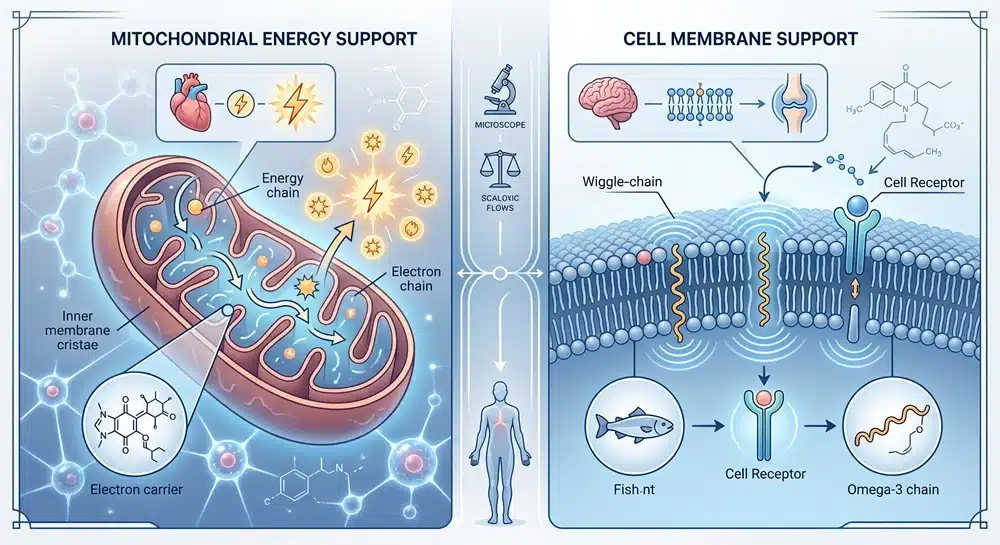
- โคเอนไซม์คิวเท็น มุ่งเน้นการผลิตพลังงานและการปกป้องด้วยสารต้านอนุมูลอิสระ มันถูกเข้มข้นในอวัยวะที่มีพลังงานสูง เช่น หัวใจ ตับ และไต เพื่อให้แน่ใจว่าอวัยวะเหล่านี้มีพลังงานเพียงพอในการทำงานอย่างมีประสิทธิภาพสูงสุด มันมีประโยชน์อย่างยิ่งสำหรับภาวะที่เกี่ยวข้องกับการขาดพลังงานหรือความเครียดจากอนุมูลอิสระ.
- น้ำมันปลาให้โอเมก้า-3 กรดไขมันที่ช่วยลดการอักเสบและช่วยรักษาความสมบูรณ์ของโครงสร้างเยื่อหุ้มเซลล์ โดยเฉพาะในหัวใจและสมอง เหมาะอย่างยิ่งสำหรับการจัดการการอักเสบทั่วร่างกายและปรับปรุงโปรไฟล์ไขมันในเลือด.
จินตนาการว่าร่างกายของคุณเป็นโรงงานที่พลุกพล่าน: CoQ10 ทำหน้าที่รักษาเครื่องกำเนิดไฟฟ้าให้ทำงานอย่างต่อเนื่อง ในขณะที่น้ำมันปลาช่วยให้เครื่องจักรไม่ร้อนเกินไป ทั้งสองเสริมซึ่งกันและกัน แต่การใช้งานจะแตกต่างกันตามความต้องการด้านสุขภาพของคุณ.
ตารางเปรียบเทียบโคเอนไซม์คิวเท็นกับน้ำมันปลา
เพื่อให้เห็นความแตกต่างได้ชัดเจนยิ่งขึ้น นี่คือตารางเปรียบเทียบแบบเคียงข้างกัน:
| ปัจจัย | โคเอนไซม์คิวเท็น | น้ำมันปลา | หมายเหตุเกี่ยวกับการกำหนดสูตร |
| Primary role | Mitochondrial energy and antioxidant support | EPA/DHA omega-3 delivery | They solve different product positioning problems. |
| Common form | Ubiquinone or ubiquinol | EPA/DHA-rich marine oil | Both are fat-soluble and fit oil-based dosage forms. |
| Best dosage form | Softgel, capsule, tablet, oil-based formula | Softgel or liquid oil | Combination softgels can be commercially attractive. |
| Key quality marker | Assay, purity, residual solvents, form | EPA/DHA potency, PV, p-AV, TOTOX, contaminants | การตรวจสอบ COA เป็นสิ่งจำเป็นก่อนการผลิต. |
| Main manufacturing issue | Poor water solubility, dispersion, color stability | Oxidation, odor, leakage risk | Carrier oil, antioxidant system, and shell compatibility matter. |
| ตำแหน่งที่ดีที่สุด | Healthy aging, cellular energy, heart wellness | Omega-3, triglyceride support, inflammation balance | Combined products can target premium heart-health formulas. |
อะไรดีกว่าสำหรับสุขภาพหัวใจ: โคเอนไซม์คิวเท็น หรือ น้ำมันปลา?
เมื่อพูดถึงสุขภาพหัวใจ ทั้งสองผลิตภัณฑ์เสริมอาหารมีจุดเด่นที่เป็นเอกลักษณ์ และตัวเลือกที่ดีที่สุดขึ้นอยู่กับความต้องการเฉพาะของคุณ:
- โคเอนไซม์คิวเท็น มีประสิทธิภาพเป็นพิเศษสำหรับผู้ป่วยโรคหัวใจล้มเหลวและผู้ที่ใช้ยาสแตติน. การศึกษาจาก ซีดาร์ส-ซีนาย ระบุว่า CoQ10 อาจช่วยเพิ่มการผลิตพลังงานในเซลล์หัวใจและลดความเครียดออกซิเดชัน ซึ่งอาจช่วยลดความเสี่ยงของเหตุการณ์ที่เกี่ยวข้องกับหัวใจได้ โดยเฉพาะอย่างยิ่งมีประโยชน์ในการต่อต้านการลดลงของ CoQ10 ที่เกิดจากยาสแตติน ซึ่งอาจทำให้เกิดอาการปวดกล้ามเนื้อ.
- น้ำมันปลา โดดเด่นในการลดไตรกลีเซอไรด์และปรับปรุงโปรไฟล์คอเลสเตอรอล สมาคมโรคหัวใจแห่งอเมริกา เน้นย้ำว่าโอเมก้า-3 สามารถลดไตรกลีเซอไรด์ได้ถึง 20-30% ในผู้ที่มีภาวะไตรกลีเซอไรด์ในเลือดสูง และ EPA ในปริมาณสูงได้แสดงให้เห็นว่าสามารถลดเหตุการณ์ทางหัวใจและหลอดเลือดได้ น้ำมันปลาช่วยลดความดันโลหิตและทำให้จังหวะการเต้นของหัวใจคงที่.
งานวิจัยมีทั้งด้านบวกและลบเกี่ยวกับผลกระทบโดยรวมต่อการป้องกันโรคหัวใจ ตัวอย่างเช่น การศึกษาในปี 2018 ในวารสาร วารสารการแพทย์นิวอิงแลนด์ ไม่พบการลดความเสี่ยงของโรคหัวใจวายอย่างมีนัยสำคัญจากอาหารเสริมน้ำมันปลาในผู้ที่ไม่มีความเสี่ยงต่อโรคหัวใจ. ในขณะเดียวกัน โคเอนไซม์คิวเท็น (CoQ10) แสดงให้เห็นถึงศักยภาพในโรคหัวใจบางชนิด แต่ยังไม่ได้รับการรับรองอย่างกว้างขวางสำหรับการป้องกันโรคหัวใจทั่วไป. หากคุณเลือกตามสุขภาพหัวใจ น้ำมันปลาอาจมีความได้เปรียบเล็กน้อยในการจัดการกับไขมันในเลือด ในขณะที่โคเอนไซม์คิวเท็นอาจดีกว่าสำหรับภาวะหัวใจล้มเหลวหรือปัญหาที่เกี่ยวข้องกับสแตติน. การผสมผสานทั้งสองอาจให้การสนับสนุนที่ครอบคลุม เนื่องจากพวกมันมุ่งเน้นไปที่แง่มุมต่าง ๆ ของสุขภาพหัวใจและหลอดเลือด.
เมื่อใดควรใช้โคเอนไซม์ Q10 แทนน้ำมันปลา
การเลือกระหว่าง CoQ10 และ น้ำมันปลา ขึ้นอยู่กับเป้าหมายสุขภาพของคุณ นี่คือคำแนะนำเพื่อช่วยคุณตัดสินใจ:
- เลือก CoQ10 หาก:
- คุณกำลังรับประทานยาสแตติน ซึ่งสามารถลดระดับโคเอนไซม์คิวเท็น (CoQ10) ได้ ส่งผลให้เกิดอาการเหนื่อยล้าหรือปวดกล้ามเนื้อ.
- คุณมีภาวะหัวใจล้มเหลวหรือภาวะหัวใจอื่น ๆ ที่การผลิตพลังงานมีความสำคัญอย่างยิ่ง.
- คุณมีอาการปวดศีรษะไมเกรนบ่อยครั้ง—การศึกษาแสดงให้เห็นว่า CoQ10 สามารถลดจำนวนวันที่มีอาการปวดศีรษะไมเกรนได้อย่างมีนัยสำคัญ.
- คุณต้องการเพิ่มพลังงานของเซลล์และปกป้องจากความเครียดออกซิเดชัน.
- เลือกน้ำมันปลาหาก:
- คุณมีระดับไตรกลีเซอไรด์หรือคอเลสเตอรอลสูง เนื่องจากโอเมก้า-3 ได้รับการพิสูจน์แล้วว่าสามารถปรับปรุงโปรไฟล์ไขมันในเลือดได้.
- คุณกำลังมองหาวิธีลดการอักเสบ ซึ่งสามารถช่วยบรรเทาอาการของโรคข้ออักเสบได้.
- คุณต้องการสนับสนุนสุขภาพสมอง โดยเฉพาะการทำงานของสมองหรือความมั่นคงทางอารมณ์.
- คุณไม่กินปลาที่มีไขมันเพียงพอ (ปลาที่มีไขมัน) สมาคมโรคหัวใจแห่งอเมริกา แนะนำให้รับประทานอย่างน้อยสองครั้งต่อสัปดาห์.
ซาร่าห์ หญิงวัย 45 ปี ที่รับประทานยาสแตติน อาจเลือกใช้โคเอนไซม์คิวเท็นเพื่อช่วยบรรเทาอาการเหนื่อยล้าและสนับสนุนการทำงานของหัวใจ ในขณะเดียวกัน จอห์น เพื่อนของเธอที่มีไตรกลีเซอไรด์สูงและแทบไม่รับประทานปลา อาจได้รับประโยชน์มากกว่าจากการรับประทานน้ำมันปลา ผู้ให้บริการด้านสุขภาพของคุณสามารถช่วยปรับคำแนะนำให้เหมาะสมกับความต้องการของคุณได้.
คุณสามารถทานโคเอนไซม์คิวเท็นและน้ำมันปลาพร้อมกันได้หรือไม่?
CoQ10 and fish oil are commonly used together because they work through different mechanisms. CoQ10 is involved in mitochondrial energy production and antioxidant protection, while fish oil supplies EPA and DHA omega-3 fatty acids. From a general nutrition perspective, they are not the same ingredient and do not replace each other.
However, consumers taking anticoagulants, blood pressure medication, diabetes medication, or prescription lipid-lowering drugs should speak with a healthcare professional before combining supplements. Fish oil at higher intakes may affect bleeding risk, and CoQ10 may interact with certain medications such as warfarin.
From a supplement manufacturing perspective, CoQ10 and fish oil can make sense in the same softgel because both are compatible with oil-based delivery systems. A combination product may be positioned around heart health, healthy aging, omega-3 intake, and cellular energy support.
The main challenge is not whether the ingredients can sit together on a label. The real challenge is manufacturing execution: CoQ10 dispersion in the oil phase, fill uniformity, oxidation control, shell compatibility, fishy odor control, and stability over shelf life. A well-designed formula should define the carrier oil, antioxidant system, CoQ10 form, EPA/DHA potency, and quality specifications before pilot production.
For brands planning a combined oil-based product, CoQ10 and fish oil softgel manufacturing requires careful control of fill uniformity, oxidation, and shell compatibility.Manufacturing Considerations for CoQ10 + Fish Oil Softgels
A CoQ10 + fish oil softgel can be attractive for supplement brands, but it requires more formulation control than a simple single-ingredient capsule.
First, CoQ10 is a lipophilic ingredient, but it still needs proper dispersion in the oil phase. If dispersion is poor, the finished softgel may have inconsistent active content from capsule to capsule. Brands should confirm whether the formula uses ubiquinone or ubiquinol and how the ingredient is suspended or dissolved in the carrier system.
Second, fish oil is sensitive to oxidation. The formulation should be built with oxidation control in mind, including raw oil quality, antioxidant selection, nitrogen flushing if applicable, packaging protection, and accelerated stability testing.
Third, shell compatibility must be checked. Marine oils, carrier oils, and suspended actives can affect softgel sealing, leakage risk, and appearance. A pilot batch is important before commercial-scale production.
For B2B buyers, the ideal development path is:
1. Define target CoQ10 dosage.
2. Define EPA and DHA target per serving.
3. Review raw material COAs.
4. Confirm carrier oil and antioxidant system.
5. Run pilot softgel filling.
6. Test fill uniformity, oxidation, leakage, and appearance.
7. Confirm packaging and shelf-life strategy.
Quality Checklist Before Buying CoQ10 or Fish Oil Ingredients

For supplement brands, quality control should start before production. Ask suppliers for a complete COA and confirm the test methods used.
For CoQ10 ingredients, review:
– CoQ10 assay and purity
– Ubiquinone vs ubiquinol form
– Residual solvents
– Heavy metals
– ขีดจำกัดของจุลินทรีย์
– Particle size or dispersion properties
– ประเทศต้นกำเนิด
– Allergen and GMO statements
– Stability data if available
For fish oil ingredients, review:
– EPA content
– DHA content
– Total omega-3 content
– Peroxide value (PV)
– p-anisidine value (p-AV)
– TOTOX value
– Heavy metals
– PCBs
– Dioxins
– Odor and sensory profile
– Source traceability
– Third-party testing or certification
A low-cost ingredient is not always the lower-cost product in the long run. Poor CoQ10 dispersion, oxidized fish oil, or weak documentation can lead to production delays, failed stability results, customer complaints, or regulatory risk.
โครงสร้าง การควบคุมคุณภาพของผลิตภัณฑ์เสริม review can help verify CoQ10 assay, EPA/DHA potency, oxidation values, heavy metals, and supplier documentation before production.Need Help Developing a CoQ10 + Fish Oil Product?
If you are developing a CoQ10 softgel, fish oil softgel, or combined CoQ10 + omega-3 formula, เจนเซ can help review ingredient form, carrier oil selection, EPA/DHA target, antioxidant system, pilot batch feasibility, packaging options, and quality testing requirements.
Send us your target dosage, dosage form, and market positioning, and our formulation team can help evaluate whether a single-ingredient softgel, combination softgel, or multi-SKU product line is the better commercial direction.
If you are building a finished retail product, our private label CoQ10 and fish oil supplements service can support formulation, packaging, quality testing, and launch planning.สรุป
ในการประชันกันระหว่างโคเอนไซม์คิวเท็นกับน้ำมันปลา ไม่มีผู้ชนะที่เหมาะกับทุกคน โคเอนไซม์คิวเท็นเป็นตัวเลือกที่เหมาะสำหรับการเพิ่มพลังงานให้กับเซลล์และปกป้องจากความเครียดออกซิเดชัน ทำให้เหมาะสำหรับผู้ที่มีภาวะหัวใจล้มเหลว ผู้ที่ใช้ยาสแตติน หรือผู้ที่มีอาการไมเกรน น้ำมันปลาที่มีกรดไขมันโอเมก้า-3 เป็นแชมป์ในการลดการอักเสบ ลดไตรกลีเซอไรด์ และสนับสนุนสุขภาพหัวใจและสมอง.
สำหรับหลายๆ คน การผสมผสานอาหารเสริมทั้งสองชนิดนี้เข้าด้วยกันถือเป็นคู่หูที่ทรงพลัง ช่วยดูแลสุขภาพในหลายด้าน ไม่ว่าคุณจะเป็นเหมือนซาราห์ที่ต้องการลดผลข้างเคียงจากยาสแตติน หรือจอห์นที่ต้องการควบคุมไตรกลีเซอไรด์ อาหารเสริมเหล่านี้สามารถเป็นส่วนเสริมที่มีคุณค่าสำหรับวิถีชีวิตที่มีสุขภาพดี อย่าลืมปรึกษาแพทย์หรือผู้เชี่ยวชาญด้านสุขภาพของคุณเสมอเพื่อให้แน่ใจว่าอาหารเสริมเหล่านี้เหมาะสมกับคุณ และเลือกผลิตภัณฑ์ที่มีคุณภาพสูงเพื่อผลลัพธ์ที่ดีที่สุด.
คำถามที่พบบ่อย
Q: Is CoQ10 the same as fish oil?
A: No. CoQ10 is a fat-soluble antioxidant involved in mitochondrial energy production. Fish oil is a marine oil that provides EPA and DHA omega-3 fatty acids. They are different ingredients and serve different supplement positioning needs.
Q: Can you take CoQ10 and fish oil together?
A: Many consumers use CoQ10 and fish oil together, and the two ingredients are often considered complementary. However, people taking blood thinners, blood pressure medication, diabetes medication, or prescription heart medication should consult a healthcare professional before combining supplements.
Q: Which is better for heart health, CoQ10 or fish oil?
A: They support different aspects of heart wellness. Fish oil is commonly used for omega-3 intake and triglyceride support, while CoQ10 is often discussed for cellular energy and statin-related contexts. Neither should be positioned as a treatment without medical supervision.
Q: Is CoQ10 the same as omega-3?
A: No. Omega-3 refers to fatty acids such as EPA and DHA. CoQ10 is not an omega-3 fatty acid. They can appear in the same formula, but they are chemically and functionally different.
Q: What is better, CoQ10 or krill oil?
A: Krill oil is another omega-3 source, while CoQ10 is an antioxidant ingredient. The better choice depends on whether the product goal is omega-3 delivery, antioxidant positioning, or a combination heart-health formula.
Q: Can CoQ10 and fish oil be made in one softgel?
A: Yes, this is possible from a dosage-form perspective because both are compatible with oil-based systems. However, the formula must be tested for CoQ10 dispersion, fish oil oxidation, shell compatibility, fill uniformity, and leakage risk.
Q: What should brands check before sourcing fish oil?
A: Brands should review EPA, DHA, total omega-3 content, PV, p-AV, TOTOX, heavy metals, PCBs, dioxins, odor profile, source traceability, and third-party testing.
Q: What should brands check before sourcing CoQ10?
A: Brands should review CoQ10 assay, form, purity, residual solvents, heavy metals, microbial limits, particle size, country of origin, allergen status, and stability information.
เอกสารอ้างอิง
- NCCIH. Coenzyme Q10. https://www.nccih.nih.gov/health/coenzyme-q10
- สำนักงานเสริมอาหารแห่งชาติ สถาบันสุขภาพแห่งชาติ สหรัฐอเมริกา กรดไขมันโอเมก้า-3 – ข้อมูลสำหรับบุคลากรทางการแพทย์. https://ods.od.nih.gov/factsheets/Omega3FattyAcids-HealthProfessional/
- Mortensen SA et al. Q-SYMBIO randomized trial, PubMed. https://pubmed.ncbi.nlm.nih.gov/25282031/
- Sandor PS et al. Efficacy of coenzyme Q10 in migraine prophylaxis, PubMed. https://pubmed.ncbi.nlm.nih.gov/15728298/
- Bhatt DL et al. REDUCE-IT trial, New England Journal of Medicine. https://www.nejm.org/doi/full/10.1056/NEJMoa1812792
- AHA Science Advisory: Omega-3 fatty acids for management of hypertriglyceridemia. https://www.ahajournals.org/doi/10.1161/CIR.0000000000000709
- GOED Voluntary Monograph for EPA and DHA Omega-3 Oils. https://goedomega3.com/storage/app/media/Monograph/GOED%20Monograph%20-%202022%2001%2006%20-%20FINAL.pdf
- FDA. ข้อความเกี่ยวกับโครงสร้าง/หน้าที่. https://www.fda.gov/food/nutrition-food-labeling-and-critical-foods/structurefunction-claims
- Oxidation levels of North American OTC n-3 supplements. https://pmc.ncbi.nlm.nih.gov/articles/PMC4678768/

W. Wenyang เป็นผู้เชี่ยวชาญที่มีประสบการณ์ยาวนานในห่วงโซ่อุปทานของผลิตภัณฑ์เสริมอาหาร โดยมีประสบการณ์เชิงปฏิบัติที่กว้างขวางในการวิจัย พัฒนา ควบคุมกระบวนการ และจัดหาวัตถุดิบหลัก เช่น คอลลาเจนเปปไทด์ โปรตีนจากน้ำซุปกระดูก และเคราติน ในฐานะผู้เขียนคอลัมน์นี้ เขาทุ่มเทในการลอกเปลือกการตลาดออก เปลี่ยนวิทยาศาสตร์ของส่วนผสมที่คลุมเครือและมาตรฐานการควบคุมคุณภาพการผลิตให้กลายเป็นวิทยาศาสตร์ที่เข้าใจง่ายและเข้าถึงได้ ช่วยผู้อ่านเข้าใจความจริงที่อยู่เบื้องหลังฉลากและทำการเลือกสุขภาพที่มีเหตุผลมากขึ้น.
