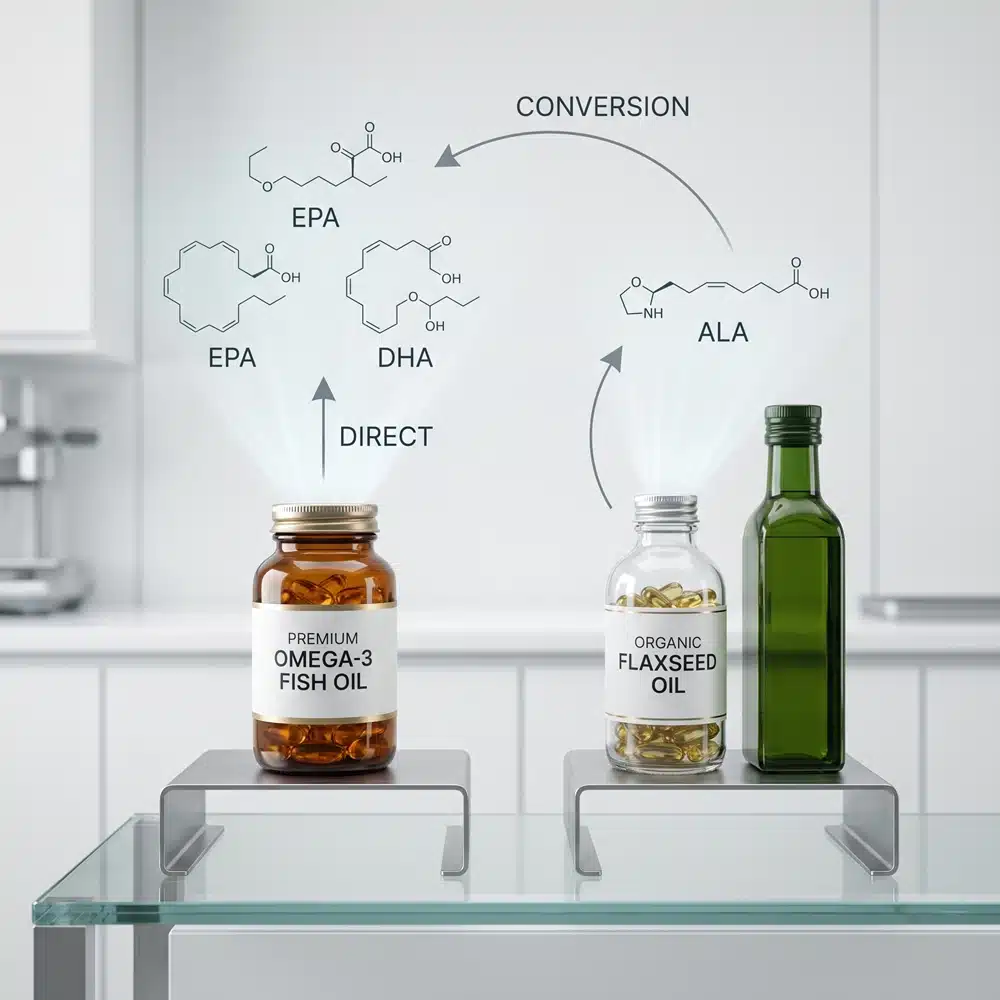
在探索天然油的世界時,「亞麻籽油」和「亞麻籽油」這兩個名詞經常出現,造成很大的混淆。它們是一回事,還是有重要的區別需要注意?雖然兩者都來自亞麻植物 (亞麻),其名稱上的差異通常意味著其用途上的重要差異。亞麻籽油和亞麻籽油是兩種不同的油,一種是富含奧米加-3 脂肪酸、備受推崇的健康食品補充劑,另一種則是工業和家庭裝潢工程的熱門選擇。本文將分析亞麻籽油和亞麻籽油的主要差異,幫助您瞭解應該使用哪一種油,以及使用的原因。.
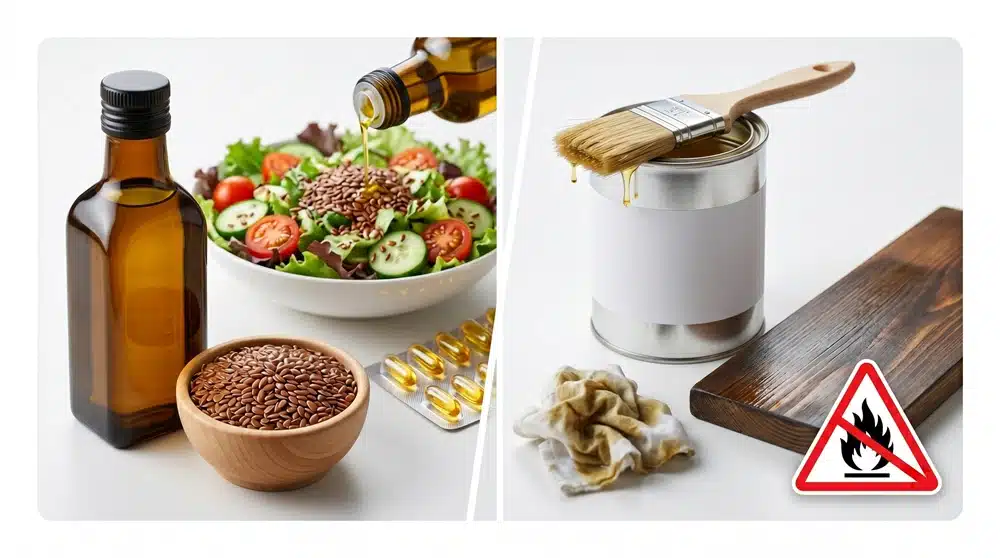
簡短回答: 亞麻籽油和亞麻油都來自同一种亞麻植物(亞麻),但在大多數消費情境中,這兩者並不能互換使用。食品級亞麻籽油是專為人類食用及攝取 omega-3 ALA 營養而製成,而工業用或煮製亞麻籽油則經加工後用於乾燥、木材塗裝、油漆及清漆。.
亞麻籽油和亞麻籽油是一樣的嗎?
從植物學的角度來看,是的。但從商業角度來看,則未必總是如此。. 這兩種油均可從亞麻植物的種子中提取,, 亞麻. 《食品法典》中關於命名植物油的標準,甚至將「亞麻籽油」定義為來自栽培亞麻籽的油。 然而,產品標籤上常會區分這兩種名稱的用法:「亞麻籽油」通常指食品級或膳食補充劑用的油,而「亞麻油」則常用於工業、木工、油漆或清漆產品。.
最穩妥的做法是判斷 分級與標示, ,而非植物學名稱。若某瓶產品以膳食補充劑或食用油名義販售,且明確標示為食品級、冷壓製成,並標明供人類食用,則該產品可能適合用於食品。 若該產品在五金行販售,標示為「煮亞麻籽油」、「木器塗料」、「油漆調和劑」、「乾性油」,或含有金屬乾燥劑/溶劑,請勿食用,亦請勿用於食品接觸表面。.
什麼是亞麻籽和亞麻籽?
這是個很好的問題,也是這兩個名詞混淆的核心所在。亞麻籽和亞麻仁其實是一回事。它們都來自同一種植物、, 亞麻. .命名上的差異主要是地區術語的問題,更重要的是,這是基於其預期用途的區別。.
- 在美國和加拿大,「亞麻籽」一詞幾乎是專用的,尤其是在食品和膳食補充品方面。.
- 在英國和世界其他地區,「亞麻籽 」是比較常用的術語,尤其是指用於工業用途的種子。.
因此,雖然種子本身是相同的,但「亞麻籽」一詞通常是指烹飪、食品級的亞麻籽,而「亞麻籽」通常是指用於製造油漆、清漆和油氈等產品的工業級種子。這個區別非常重要,因為工業用途的加工方法會使油和種子對人類食用不安全。.
術語很重要:種子、油與等級
| 標籤上的術語 | 通常的含義是 | 使用前應檢查的事項 |
|---|---|---|
| 亞麻籽油/亞麻油 | 通常為食品級油或營養補充油 | 食品級標籤、冷壓製程、深色瓶、批次分析報告、過氧化值、酸值 |
| 食用亞麻籽油 | 某些地區使用的食品級名稱 | 必須明確標示為「可食用/食品級」,且須經加工處理以供人類食用 |
| 生亞麻籽油 | 可能是用於木材或油漆的純油,但不一定符合食品標準 | 切勿假設可食用;請確認標籤、供應商及是否適合與食品接觸 |
| 煮熟的亞麻籽油 | 工業用乾性油,通常含有金屬乾燥劑 | 不可吞食;除非製造商明確認證其符合食品接觸安全標準,否則不得用於砧板或與食品接觸的表面 |
如何製作亞麻籽油
生產食品等級的最常用和最優先的方法是 亞麻籽油 是冷壓。這個過程包括:
- 清潔種子: 第一步是徹底清洗亞麻籽,去除任何異物、灰塵或其他雜質。.
- 機械沖壓: 清洗後的種子會被送入機械式榨油機,通常是螺旋式榨油機。機器對種子施加強大的壓力,將油擠出。.
- 溫度控制: 這是 「冷壓」 最關鍵的部分。這個過程會因摩擦而產生一些熱量,但會經過小心控制,使溫度低於某個臨界值(通常約為 49°C 或 120°F)。這種低溫方法對於保存油中脆弱的奧米加-3 脂肪酸 (ALA) 非常重要,因為奧米加-3 脂肪酸非常容易受熱而降解,變得酸敗或降低功效。.
- 過濾: 然後將油過濾以去除任何剩餘的固體微粒或沉澱物。.
- 包裝: 最後,油會被裝瓶,通常裝在深色、不透明的容器中,有時還會用氮氣沖洗,以去除氧氣。這樣做的目的是保護油免受光線和氧化的影響,進一步保持其新鮮和營養的完整性。.
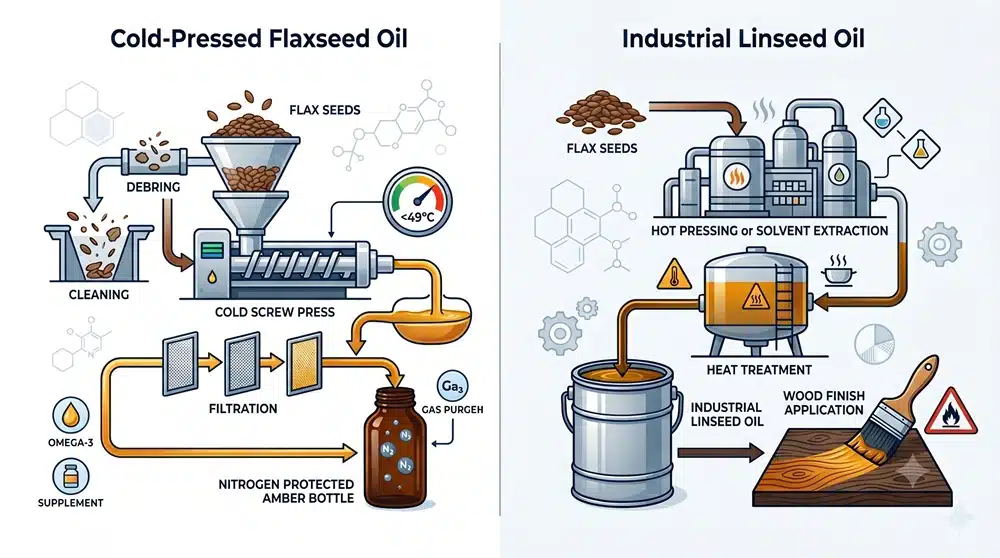
這種「冷壓」過程能產生您在健康食品店找到的高品質、營養豐富的油,這種油是供人食用的膳食補充品或食品原料。.
食品級品質指標——供應商應進行驗證
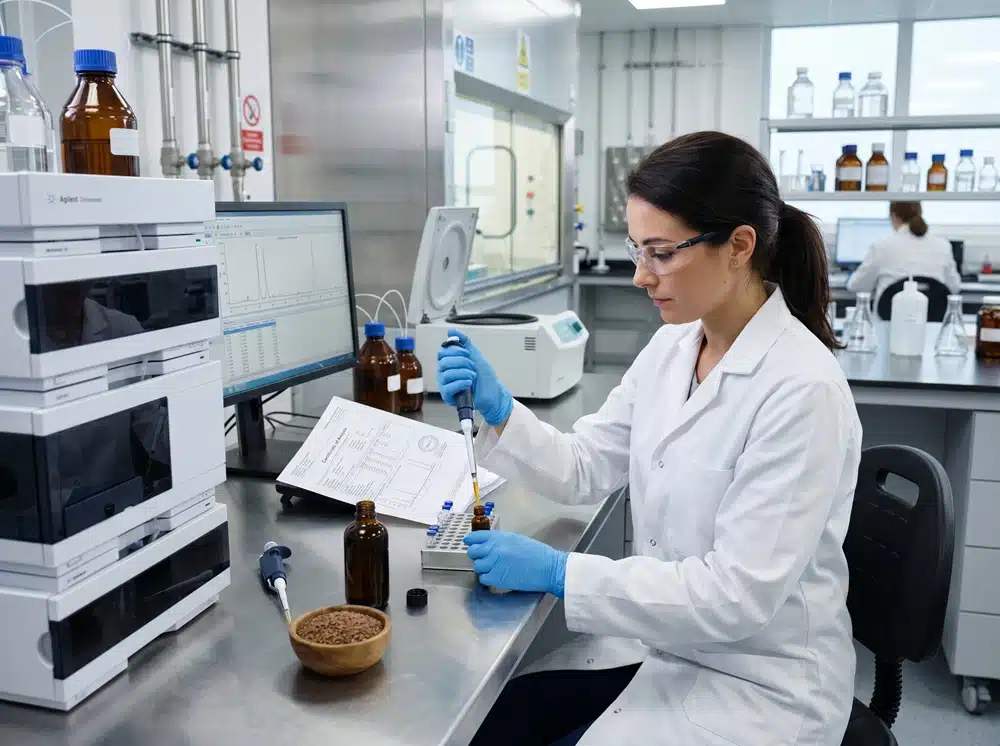
對營養補充品品牌而言,「冷壓」僅是起點。食品級亞麻籽油應附有規格表及分析證明書(COA)。關鍵檢查項目包括脂肪酸組成、過氧化值、酸值、碘值、微量金屬,以及包裝對氧氣與光線的防護能力。.
| 品質檢查 | 為何這很重要 | 實用目標或備註 |
|---|---|---|
| 脂肪酸組成 | 證實該油富含α-亞麻酸(ALA) | 《美國藥典》(USP)風格的專論中,亞麻籽油的α-亞麻酸含量約為 50-65% |
| 過氧化值 | 表示存在早期氧化及變質的風險 | 數值越低越好;營養補充品購買者應要求提供最新的分析報告(COA)數值 |
| 酸值/游離脂肪酸 | 呈現水解酸敗現象,且種子/油品處理效果不佳 | 用作新鮮度與製程控制的指標 |
| 碘值 | 這反映出其不飽和度很高;也解釋了為何亞麻籽油能作為乾性油 | 碘值偏高表示該油易與氧氣發生反應,因此必須謹慎儲存 |
| 包裝 | 富含 ALA 的油脂在接觸熱、光和氧氣時會迅速氧化 | 請使用深色瓶裝,盡可能進行氮氣沖洗,採用密封良好的瓶蓋,並於開瓶後冷藏保存 |
相反地,工業等級的亞麻籽油通常使用不同的方法製成,例如熱壓或溶劑萃取,這些方法會使用高溫及/或化學物質。這些方法都是為了最大化出油率而設計的,並不注重保存營養價值,因為這些油是用來做木材表面處理等用途,而不是食用。.
好處亞麻籽油 vs 亞麻籽油
雖然這兩種精華油來自同一種植物,但它們的功效卻完全不同,這是由加工過程和用途所決定的。.
亞麻籽油:聚焦 ALA 歐米伽-3 營養
食品級亞麻籽油之所以備受推崇,主要是因為它是α-亞麻酸(ALA)——一種必需的ω-3脂肪酸——的濃縮植物來源。 根據美國國家衛生研究院(NIH)膳食補充劑辦公室的資料,ALA主要存在於亞麻籽油、大豆油和芥花籽油等植物油中,但ALA轉化為EPA和DHA的能力有限。 因此,亞麻籽油最適合定位為植物性 ALA 來源,而非直接取代魚油中的 EPA/DHA。.魚油與亞麻籽油
- 植物性 omega-3 補充: 適用於需要標示「植物來源的歐米伽-3」聲明的純素、素食或對魚類過敏配方。.
- 心臟健康定位: 梅奧診所指出,部分研究顯示亞麻籽和亞麻籽油可能有助於改善血壓及心臟健康指標,但相關主張應保持謹慎並符合相關規範。.
- 標準油中不含纖維或木酚素: 整粒或研磨過的亞麻籽含有膳食纖維和木酚素;而一般的亞麻籽油通常不含這些成分。除非產品是特別添加了木酚素的,否則不要將整粒亞麻籽的所有益處都歸因於亞麻籽油。.
- 使用限制: 亞麻籽油不應用於高溫烹調,因為富含α-亞麻酸(ALA)的油類容易氧化。建議將其用於膠囊、果昔、沙拉醬或冷食料理中。.
亞麻子油:工業動力
另一方面,「亞麻籽油」通常是指加工過的工業產品。這種油的好處完全不屬於飲食,並因其獨特的物理和化學特性而備受推崇。.
- 一種「乾燥」油: 這是亞麻籽油最顯著的優點。當暴露在空氣中時,油會聚合變硬,形成一層堅韌的防水膜。例如,您可以使用煮過的亞麻籽油來修飾新的木砧板、甲板或傢俱,保護其不受潮並豐富其顏色。.
- 塗料黏合劑: 幾個世紀以來,亞麻子油一直被用作油畫顏料的黏合劑。正因如此,傳統的藝術家繪畫顏料和家用繪畫顏料才能塗得平滑、乾燥後呈現耐用、柔軟且持久的效果。.
- 保存和保護: 由於亞麻籽油可形成保護層,因此非常適合保存各種材料,包括木材甚至金屬。亞麻籽油常被用來塗在金屬工具上以防止生銹,或用來密封和保護鑄鐵平底鍋的表面(稱為「調味」)。.
為何工業用或煮熟的亞麻籽油不屬於食品級
問題不在於亞麻植物本身,而在於加工標準。工業用亞麻籽油是針對乾燥性能、表面滲透性、塗料黏合性或木材表面處理等用途所進行優化的。 為了加快固化速度,部分產品會經過熱處理、溶劑萃取、聚合處理,或與金屬乾燥劑混合。這些處理方式雖對木器塗裝有所助益,但與食品級的冷壓營養補充油並不相同。.
在批發營養補充品採購過程中,我們將食用亞麻籽油視為一種敏感的歐米伽油脂:其需進行氧化控制、分析報告(COA)驗證、採用適當包裝,並具備明確的食品級文件。即使植物來源相似,也絕不可將五金行販售的亞麻籽油用作膳食補充品製造的替代品。.
亞麻籽油與亞麻籽油:比較表
| 特點 | 食品級亞麻籽油 | 工業用/煮熟亞麻籽油 |
|---|---|---|
| 植物來源 | 亞麻籽來自 亞麻 | 通常也取自亞麻籽 |
| 主要目的 | 膳食補充劑、適用於冷食、植物性 omega-3 ALA | 木器塗裝、油漆黏合劑、清漆、填縫膏、油氈、工業塗料 |
| 處理目標 | 保持新鮮度、ALA 含量及食品安全 | 改善乾燥、滲透、硬化及成膜性能 |
| 典型流程 | 冷壓、過濾、控制氧化程度的包裝 | 視產品而定,可能進行熱處理、聚合、溶劑萃取或添加乾燥劑 |
| 主要營養價值 | 富含ALA omega-3;標準油不含膳食纖維,且木酚素含量極少或完全沒有 | 本產品並非為營養目的而配製 |
| 食品安全 | 是的,只要明確標示為食品級且供人類食用即可 | 不,除非製造商已明確認證為食品級或符合食品接觸安全標準 |
| 品質文件 | 總灰分(COA)、脂肪酸組成、過氧化值、酸值、微量金屬、微生物/污染物檢測 | 安全資料表(SDS)、使用說明、乾燥時間、揮發性有機化合物(VOC)/安全指引 |
| 儲存 | 應存放於深色、密封良好的容器中;開封後請冷藏;避免接觸氧氣、光線及熱源 | 請遵循產品標籤上的指示;遠離熱源/明火;處理油漬抹布時須注意其火災風險 |
| 針對「我可以吃這個嗎?」的最佳答案“ | 只有當標籤上標示為「食品級/可食用」時才行 | 不適用於五金行商品、煮沸處理產品、木器塗料、油漆或工業產品 |
營養補充品品牌的供應鏈檢查清單
從營養補充品製造的角度來看,最大的風險並非將兩種植物名稱混淆,而是採購了原本並非供人體攝取而生產的油品。在將亞麻籽油用於膠囊、軟膠囊、液體或自有品牌配方之前,品牌方應要求:
- 該批次的完整規格表及最新分析報告
- 確認α-亞麻酸含量的脂肪酸組成分析
- 過氧化值與酸值在新鮮度及氧化控制中的應用
- 針對目標市場所適用的重金屬與污染物檢測
- 包裝細節,例如深色瓶、氧氣控制,以及保存期限/穩定性數據
- 明確確認該油品為食品級,且適合用於膳食補充劑
若該產品主要被描述為木器塗料、油漆介質、清漆成分、煮熟亞麻籽油或乾性油,則不應批准其作為營養補充品使用。.
結論
最終,「您可以交替使用它們嗎?」的答案是絕對不可以。亞麻籽油和亞麻籽油之間的區別在於安全性和功效。瞭解亞麻籽油是為了您的健康,而亞麻籽油是為了您的家庭裝潢工程,您就可以避免潛在的危險錯誤,並確保您使用正確的產品來完成正確的工作。無論您是要增加 Omega-3 的攝取,或是要保護您最愛的木質砧板,請務必選擇標示有特定用途的油。這個簡單的習慣可以讓您免於困惑和潛在的傷害。.
常見問題
亞麻籽和亞麻仁哪種較好?
兩者都不是「更好」,它們有不同的用途。. 亞麻籽油 是供人食用和有益健康,而 亞麻子油 是用於工業用途,如木材表面處理。.
人類可以食用亞麻子油嗎?
唯有在明確標示為「食品級」或「可食用」的情況下才可食用。請勿食用五金行販售的亞麻籽油、熟亞麻籽油、木器塗料、油漆調和劑,或任何含有乾燥劑或溶劑的產品。.
亞麻籽油在懷孕期間是否安全?
在懷孕或哺乳期間,請勿在未經醫師建議的情況下開始服用亞麻籽油。梅奧診所建議,懷孕或哺乳期間應避免食用亞麻籽及亞麻籽油。.
亞麻籽最大的缺點是什麼?
主要缺點是會很快變馊。為了保持新鮮度和營養品質,必須正確儲存,可以整顆或放入冰箱。.
亞麻仁油有哪些缺點?
最大的缺點是人類食用不安全。此外,浸泡過亞麻籽油的抹布可能會自燃,必須謹慎處理。.
如何使用亞麻籽治療關節疼痛?
亞麻籽油含有抗發炎的 Omega-3 脂肪酸,可能有助於減少關節疼痛。您可以將它當作 膠囊補充 或加入冰沙和沙拉等食物中。.
亞麻籽對女性身體有什麼幫助?
亞麻籽含有豐富的木酚素,有助於平衡荷爾蒙和減輕更年期症狀。其纖維成分也有助於消化和心臟健康。.
哪些人不宜服用亞麻籽油?
服用血液稀釋藥物或患有某些疾病的人,在服用亞麻籽油前應先諮詢醫生。.
亞麻籽對膝蓋疼痛有幫助嗎?
是的,亞麻籽中Ω-3 的抗發炎特性可以幫助減輕包括膝蓋在內的關節發炎和疼痛。.
如果我每天都吃亞麻籽會怎麼樣?
每天食用亞麻籽可以改善消化道健康、支持心臟健康,並提供良好的纖維和omega-3來源。只要確保從少量開始,並多喝水即可。.
哪種亞麻籽最健康?
最健康的亞麻籽種類是黃金亞麻籽或棕色亞麻籽。兩者的營養成分相似。最重要的因素是如何加工和儲存以保持新鮮。.
亞麻籽油和磨碎的亞麻籽是一樣的嗎?
不。研磨亞麻籽含有膳食纖維和木酚素,而一般的亞麻籽油則主要提供脂肪,尤其是α-亞麻酸(ALA)這類ω-3脂肪酸。請根據所需的營養成分來選擇合適的形態。.
砧板上可以使用熟亞麻籽油嗎?
不,除非製造商明確認證其可供食品接觸使用。標準的煮熟亞麻籽油屬於工業用乾性油,可能含有金屬乾燥劑
為什麼亞麻籽油會乾涸,而亞麻籽油卻作為食品販售?
其乾燥特性源於高度不飽和性及氧化作用。工業用亞麻籽油經過優化處理,能透過氧化與聚合形成表面薄膜;而食品級亞麻籽油則經過防氧化處理,以保持新鮮度與營養價值。.
營養補充品品牌在批量採購亞麻籽油前,應檢查哪些事項?
請索取原產地證明(COA)、脂肪酸組成分析、過氧化值、酸值、微量金屬含量、包裝防護措施、保存期限資料,以及明確的食品級認證文件。.
引用
- 美國國家衛生研究院(NIH)膳食補充劑辦公室——Omega-3 脂肪酸資料單張: https://ods.od.nih.gov/factsheets/Omega3FattyAcids-HealthProfessional/
- 梅奧診所 – 亞麻籽與亞麻籽油: https://www.mayoclinic.org/drugs-supplements-flaxseed-and-flaxseed-oil/art-20366457
- FDA GRN 第 256 號——高亞麻酸亞麻籽油: https://hfpappexternal.fda.gov/scripts/fdcc/index.cfm?id=256&set=GRASNotices
- 《食品法典》CXS 210-1999 – 命名植物油標準: https://www.fao.org/fao-who-codexalimentarius/
- USP 亞麻籽油專論對照表: https://www.drugfuture.com/Pharmacopoeia/usp38/data/v38332/usp38nf33s2_m33191.html
- Klean-Strip 煮熟亞麻籽油 安全資料表 (SDS): https://images.thdstatic.com/catalog/pdfImages/5c/5caa37df-3ea9-4b49-83a7-b602de97da9e.pdf
- 東薩塞克斯消防及救援局——亞麻籽油的火災風險: https://www.esfrs.org/the-fire-hazards-of-linseed-oil
- 亞麻農場——亞麻籽還是亞麻:兩者有何區別?: https://www.flaxfarm.co.uk/health/linseed-or-flax-whats-the-difference/
- Treeboard – 關於亞麻油與亞麻籽油的九大迷思: https://treeboard.com/blog/nine-myths-about-linseed-oil-and-flaxseed-oil/
- Range 產品系列——亞麻籽油與亞麻籽油的比較: https://www.rangeproducts.com.au/linseed-oil-vs-flaxseed-oil/
- PureFlax – 亞麻籽油 vs 亞麻籽油: https://pureflax.co.uk/linseed-oil-of-flax-seed-oil/

萬華仁(Warren Wan)是一位資深專家,在膳食補充劑供應鏈領域擁有豐富經驗,並在膠原蛋白肽、骨湯蛋白及角蛋白等核心成分的研發、製程控制及全球採購方面具備深厚的實務經驗。 身為本專欄的作者,他致力於剝去行銷包裝的表象,將晦澀難懂的成分科學與生產品質控制標準,轉化為淺顯易懂的硬核科普,協助讀者看清標籤背後的真相,並做出更理性的健康選擇。.