
快速解答:月見草油 vs 魚油

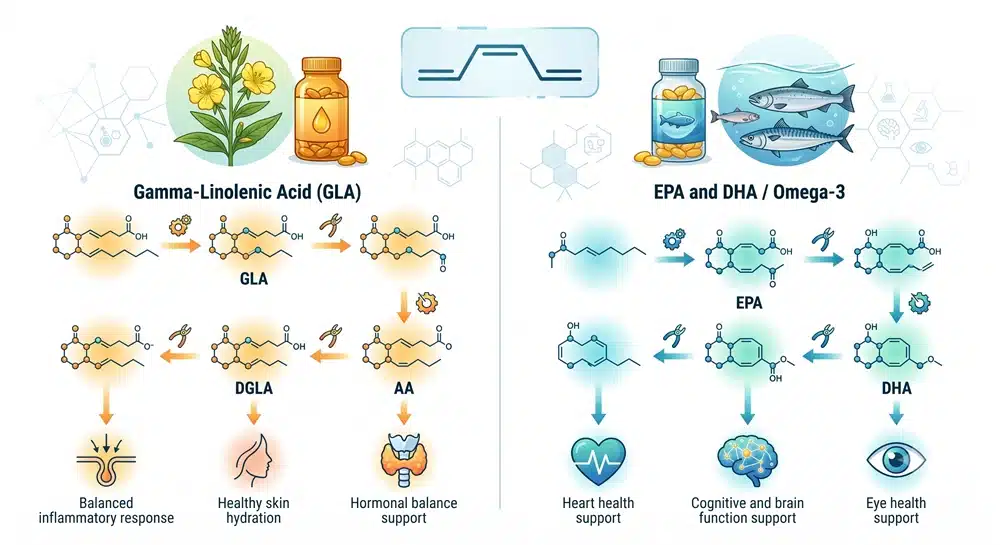
月見草油和魚油並非直接的替代品。 月見草油的主要價值在於其所含的γ-亞麻酸(GLA),這是一種 omega-6 脂肪酸,常應用於肌膚保養、女性健康及抗發炎領域。魚油的主要價值則在於其所含的 EPA 和 DHA,這兩種長鏈 omega-3 脂肪酸常應用於心血管、腦部、眼睛及關節保健配方中。.
對消費者而言,簡單的答案是:若產品目標是強化肌膚屏障或定位於女性健康領域,則應選擇月見草油;若目標是補充 EPA/DHA 及提供 omega-3 營養,則應選擇魚油。.
對營養補充品品牌而言,更關鍵的問題並非「哪種油更健康?」,而是:哪種油源最符合貴公司的產品宣稱、劑型、抗氧化控制計畫、供應商分析報告(COA)、永續發展理念以及目標市場?
這兩種油皆可製成軟膠囊,但各自在製造過程中會面臨不同的挑戰。魚油需嚴格控制氧化程度、氣味、重金屬、多氯聯苯(PCBs)、二噁英,以及EPA/DHA的含量。月見草油則需進行GLA標準化、冷壓品質控制、過氧化值檢測,並需防範熱、光及氧氣的影響。.
起源與生產
月見草油 (EPO) 是從月見草 (Oenothera biennis) 植物的種子中提煉出來的,月見草原產於北美洲,但目前在世界許多地方都有發現。月見草油透過冷壓程序萃取,有助於保存活性化合物,主要是 gammalinolenic acid (GLA),一種 omega6 脂肪酸。橄欖油呈淡金色,味道溫和。
另一方面,魚油的來源是鮭魚、鯖魚、沙丁魚和鯷魚等高脂魚類的組織。魚油含有高濃度的 omega3 脂肪酸,特別是 EPA (二十碳五烯酸) 和 DHA (二十二碳六烯酸),這兩種脂肪酸對大腦、心臟和眼睛的健康非常重要。魚油通常使用各種方法萃取,包括壓榨、蒸餾或分子過濾,有助於去除雜質和污染物。
月見草油與魚油:B2B 配方比較
| 因子 | 月見草油 | 魚油 | 配方說明 |
| 主要脂肪酸 | GLA 與亞油酸 | EPA 與 DHA | EPO 是一種 omega-6 油脂;魚油則是一種 omega-3 油脂。兩者在產品定位上有所不同。. |
| 最佳定位 | 肌膚保養、女性健康、由內而外的美、荷爾蒙平衡調理 | 心臟、大腦、眼睛、關節及Omega-3營養補充 | 請使用更安全的結構/功能性措辭;避免提出疾病治療的宣稱。. |
| 常見劑型 | 軟膠囊、液態油、美容油配方 | 軟膠囊、液態油、Omega-3 配方 | 這兩者都是油性成分,非常適合用於軟膠囊專案。. |
| 品質指標 | GLA 含量、過氧化值、酸值、冷壓品質 | EPA/DHA 含量、PV、p-AV、TOTOX、重金屬、多氯聯苯、二噁英 | 在投入生產前,必須進行 COA 審查。. |
| 製造風險 | 氧化、酸敗、受熱/受光、GLA 含量波動 | 氧化、魚腥味、污染物風險、洩漏風險 | 包裝與抗氧化系統至關重要。. |
| 永續發展故事 | 植物來源的種子油 | 源自海洋的油;藻油是一種植物性替代品 | 魚油的採購應著重於可追溯性與永續性。. |
| 最佳品牌策略 | 美容、女性健康、專為肌膚設計的軟膠囊 | Omega-3、心臟健康、活躍老齡化、關節保健 | 就 omega 3-6-9 的定位而言,這兩者可以謹慎地結合使用。. |
月見草油和魚油可以一起服用嗎?
是的。月見草油和魚油可以納入同一個營養補充概念中,因為它們提供的脂肪酸種類不同。 月見草油提供GLA,而魚油則提供EPA和DHA。這使得此組合對開發Omega 3-6-9軟膠囊、由內而外的美肌配方、活力抗老化產品或女性健康營養補充品的品牌而言極具吸引力。.
然而,將這兩種油混合並非僅僅是行銷上的決策。從製造的角度來看,必須針對配方中的脂肪酸比例、填充重量、膠囊尺寸、氧化風險、風味特徵以及包裝保護等面向進行審查。.
舉例來說,某個品牌可能希望研發一款軟膠囊,其成分包含:
– 經標準化處理以含特定濃度GLA的月見草油,,
– 經標準化處理以確保 EPA 和 DHA 含量的魚油,,
– 維生素 E 或混合生育酚,作為抗氧化輔助,,
– 以及一種專為減少滲漏並保護油劑免受氧氣影響而設計的軟膠囊殼。.
挑戰在於穩定性。多不飽和油脂容易受氧氣、熱和光線的影響。即使配方在標籤上看起來很吸引人,但若油類混合物產生異味、過氧化值上升,或是膠囊殼與填充物不相容,該配方仍可能失敗。.
因此,營養補充品品牌應將「促紅血球生成素(EPO)+魚油」視為一項配方開發專案,而非單純的成分混合。.
健康效益
月見草油:
- 皮膚健康: EPO 常用於改善濕疹、牛皮癬和粉刺等皮膚問題。油中的 GLA 有助於減少發炎,促進皮膚修復。許多人使用 EPO 來保持肌膚滋潤,並減少細紋和皺紋。
- 荷爾蒙支援: 月見草油常用於控制經前綜合症 (PMS) 和更年期相關症狀。它被認為可以透過影響前列腺素的分泌來幫助平衡荷爾蒙,而前列腺素在調節發炎和疼痛方面扮演一定的角色。EPO 可幫助減輕情緒不穩、乳房漲痛和潮熱等症狀。
- 抗發炎: 由於 GLA 含量高,EPO 能有效減少全身性發炎。這使它成為類風濕關節炎或其他發炎性疾病患者的有益補充品。
- 心臟健康: 有些研究顯示 EPO 可降低膽固醇含量並改善血液循環,有助於心血管健康,不過與魚油相比,這種益處較不確切。
魚油:
- 心臟健康: 魚油的主要好處之一是能幫助心臟健康。已知 EPA 和 DHA 可減少動脈發炎、降低三酸甘油脂水平,並改善血液循環。補充魚油已被證明可以降低心血管疾病的風險,包括心臟病發作和中風。
- 大腦健康: DHA 是大腦的主要結構成分,在認知功能上扮演關鍵的角色。研究顯示 DHA 可以改善記憶力、專注力和整體腦部健康。它對嬰兒、兒童和老年人尤其重要。懷孕期間補充魚油也能幫助胎兒腦部發育。
- 眼睛健康: DHA 是維持眼睛視網膜健康的必要元素。定期攝取魚油與降低老年黃斑病變 (AMD) 的風險有關,而老年黃斑病變是老年人失明的主要原因。它也可以幫助解決眼睛乾澀和其他與視力有關的問題。
- 抗發炎與情緒調節: 如同 EPO,魚油具有抗發炎的特性,可以幫助控制類風濕關節炎等疾病。此外,魚油中的 EPA 有助於心理健康,可減輕憂鬱症、焦慮症和躁郁症的症狀。
永續性與環境衝擊
月見草油是一種以植物為主的油,因此被認為比動物衍生的油更具永續性。種植月見草植物不會像捕魚一樣對環境造成影響,尤其是在過度捕魚和海洋生態系統退化方面。然而,就像所有農產品一樣,月見草仍然需要土地、水和能源來栽培。
相較之下,魚油則引發了對過度捕撈及海洋生物資源枯竭的擔憂。儘管許多 魚油製造商 採用來自永續漁業的魚類,但對大規模捕撈環境影響的擔憂依然存在。對於尋求比傳統魚油更環保替代品的人們,藻類基底的Omega-3油脂(例如 藻油 DHA正逐漸成為越來越受歡迎的植物性且更具永續性的選擇。.
關於促紅細胞生成素(EPO)及魚油的軟膠囊製造注意事項

月見草油和魚油都適合用於 軟膠囊製造, ,但在配方調製、灌裝、乾燥及包裝過程中,必須進行仔細的控制。.
關於 EPO、魚油或 omega 3-6-9 產品,, 軟膠囊製造 這通常是進行精準注油、控制異味及延長保存期限時最實用的形式。.就魚油軟膠囊而言,關鍵的技術考量包括氧化、異味、EPA/DHA 含量,以及污染物檢測。高品質的魚油專案應審查過氧化值、p-苯甲醯胺值、TOTOX 值、重金屬、多氯聯苯(PCBs)、二噁英,以及原料來源的可追溯性。.
就月見草油軟膠囊而言,關鍵考量因素包括GLA標準化、酸值、過氧化值、冷壓品質,以及防熱與防氧措施。由於月見草油也屬於多不飽和油脂,若供應鏈或包裝管控不當,便可能產生酸敗。.
對於混合油軟膠囊,品牌方還應評估:
– 填充重量與膠囊尺寸,,
– 機油黏度,,
– 殼層相容性,,
– 洩漏風險,,
– 抗氧化系統,,
– 氮氣沖洗或氧氣控制選項,,
– 瓶裝與鋁箔泡罩包裝,,
– 以及加速穩定性測試。.
對於高階配方而言,鋁箔泡殼包裝或防氧瓶的表現可能優於基本塑膠瓶。若產品同時使用 EPO 與魚油,應在擴大生產規模之前決定包裝方式,而非在配方定案之後。.
購買 EPO 或魚油原料前的品質檢查清單

對保健食品品牌而言,成分分析證明書(COA)比成分名稱更為重要。在購買月見草油或魚油之前,請索取能確認成分身分、有效濃度、氧化狀態、污染物及儲存要求的相關文件。.
關於月見草油,請參閱:
– GLA 百分比,,
– 亞油酸含量,,
– 過氧化值,,
– 酸值,,
– 萃取方法,,
– 過敏原聲明,,
– 原產國,,
– 如有需要,進行農藥及溶劑檢測,,
– 以及儲存條件。.
關於魚油,請參閱:
– EPA 內容,,
– DHA 含量,,
– 總ω-3含量,,
– 過氧化值,,
– p-苯甲苯胺值,,
– TOTOX 值,,
– 重金屬,,
– 印刷電路板(PCB),,
– 二噁英,,
– 魚類品種及來源的可追溯性,,
– 除臭等級,,
– 以及若有第三方測試結果,亦應一併提供。.
低成本的油品,其生產成本未必總是較低。原料品質不佳可能導致客戶投訴異味、膠囊滲漏、穩定性測試未通過、保存期限縮短,以及客戶退貨率上升。.
副作用和注意事項
以適當的劑量服用月見草油和魚油時,一般都被認為是安全的,但它們可能會對某些人造成副作用。
月見草油有時會引起輕微的腸胃不適、頭痛或皮膚反應。此外,月見草油也有與血液稀釋藥物交互作用的風險,因此使用前請先諮詢醫療保健提供者,尤其是正在服用抗凝血劑的人。
魚油可能會引起腥味、打嗝或消化不適,尤其是大量服用時。有些人可能會對魚類產品產生過敏反應。如同 EPO,魚油也可能與血液稀釋藥物產生交互作用,增加出血的風險。
補充劑品牌的最終建議
月見草油與魚油在營養補充策略上各有側重。月見草油更適合用於肌膚保養、女性健康、由內而外的美麗,以及以GLA為核心的定位;魚油則更適合用於補充EPA/DHA、提供Omega-3營養、促進活躍老化、關節保健,以及心血管健康的定位。.
對品牌而言,最佳選擇取決於期望的宣稱、油品品質、劑型、分析報告(COA)結果、氧化狀態、永續發展理念,以及目標客群。.
如果您正在開發軟膠囊、液態油或 Omega 3-6-9 產品,請勿僅憑成分的熱門程度來做出選擇。在產品上市前,請務必審視其脂肪酸組成、穩定性要求、包裝形式及生產可行性。.
需要協助開發油基營養補充品嗎?
Gensei 可提供月見草油軟膠囊、魚油軟膠囊、混合型 Omega 3-6-9 配方、液態油產品、自有品牌營養補充品,以及客製化配方專案。請將您的目標脂肪酸組成、劑型、膠囊尺寸、包裝方案及市場定位提供給我們,以便在生產前評估可行性。.
常見問題
月見草油和魚油是一樣的嗎?
不。月見草油是一種富含 omega-6 脂肪酸(尤其是 GLA)的植物種子油;魚油則是一種富含 omega-3 脂肪酸(主要是 EPA 和 DHA)的海洋油脂。兩者的補充目的各不相同。.
Omega-3 和月見草油,哪一種比較好?
兩者皆無絕對優劣之分。就 EPA/DHA 的定位而言,Omega-3 魚油較為合適;而就 GLA、肌膚保養及女性健康定位而言,月見草油則更為合適。正確的選擇取決於產品的目標。.
月見草油和魚油可以一起服用嗎?
由於它們所提供的脂肪酸不同,因此可以納入同一种保健食品配方中。對於成品而言,品牌在將其搭配使用前,應評估總用量、氧化穩定性、分析報告(COA)的品質,以及可能涉及的消費者安全考量。.
月見草油是歐米加-3 嗎?
不。月見草油主要是一種 omega-6 脂肪酸。其關鍵的活性脂肪酸是γ-亞麻酸(GLA)。魚油則是更廣為人知的 omega-3 EPA 和 DHA 來源。.
品牌在採購魚油前應進行哪些檢測?
品牌應審查 EPA、DHA、總 omega-3 含量、過氧化值、p-茴香胺值、TOTOX 值、重金屬、多氯聯苯(PCBs)、二噁英、魚類品種、除臭程度,以及可追溯性文件。.
品牌在採購月見草油前應進行哪些測試?
品牌應審查總脂肪酸含量、過氧化值、酸值、萃取方法、農藥或溶劑檢測(如適用)、過敏原聲明、產地及儲存條件。.
對於紅血球生成素(EPO)或魚油來說,哪種劑型最為合適?
軟膠囊通常是最實用的劑型,因為它能保護油性成分、掩蓋味道,並能精確控制填充重量。液態油雖然也能使用,但在開封後,包裝與氧化控制就變得更加重要。.
這些產品能否宣稱具有治療疾病的功效?
不。膳食補充品標籤應避免使用任何聲稱能診斷、治療、治癒或預防疾病的說法。較安全的結構/功能表述包括諸如「有助維持肌膚健康」、「有助促進女性健康」、「有助攝取Omega-3」或「有助維持心血管健康」等用語,但須視情況而定,且須有實證支持。.
參考資料
- NCCIH。《月見草油:功效與安全性》。.
https://www.nccih.nih.gov/health/evening-primrose-oil - 美國國家衛生研究院(NIH)膳食補充劑辦公室。《Omega-3 脂肪酸——醫療專業人員參考資料》。.
https://ods.od.nih.gov/factsheets/Omega3FattyAcids-HealthProfessional/ - NCCIH。《Omega-3 營養補充品:您需要了解的事項》。.
https://www.nccih.nih.gov/health/omega3-supplements-what-you-need-to-know - GOED。《Omega-3 EPA 與 DHA 油類自願性專論》。.
https://goedomega3.com/storage/app/media/Monograph/GOED%20Monograph%20-%202022%2001%2006%20-%20FINAL.pdf - Bannenberg 等人。《紐西蘭魚油補充劑中的 Omega-3 長鏈多不飽和脂肪酸含量及其氧化狀態》。《科學報告》。.
https://www.nature.com/articles/s41598-017-01470-4 - FDA。結構/功能聲稱。.
https://www.fda.gov/food/nutrition-food-labeling-and-critical-foods/structurefunction-claims - 美國食品藥物管理局(FDA)。關於膳食補充劑的問答。.
https://www.fda.gov/food/information-consumers-using-dietary-supplements/questions-and-answers-dietary-supplements

萬華仁(Warren Wan)是一位資深專家,在膳食補充劑供應鏈領域擁有豐富經驗,並在膠原蛋白肽、骨湯蛋白及角蛋白等核心成分的研發、製程控制及全球採購方面具備深厚的實務經驗。 身為本專欄的作者,他致力於剝去行銷包裝的表象,將晦澀難懂的成分科學與生產品質控制標準,轉化為淺顯易懂的硬核科普,協助讀者看清標籤背後的真相,並做出更理性的健康選擇。.


