
Per i proprietari di marchi di integratori alimentari, i distributori di ingredienti e i ricercatori che si occupano di formulazione, la scelta tra calcio chelato e citrato di calcio non riguarda solo l’assorbimento da parte del consumatore. Essa influisce sull’apporto di calcio elementare, sul carico utile delle capsule, sulla compressione delle compresse, sulla scorrevolezza della polvere, sulla compatibilità con le caramelle gommose, sul controllo dell’umidità, sulla formulazione delle indicazioni in etichetta e sul costo totale per porzione finita. Il citrato di calcio è un sale di acido organico ben consolidato con circa 21% di calcio elementare, mentre il calcio chelato si riferisce solitamente al calcio legato a ligandi aminoacidici come la glicina o a un sistema chelato di aminoacidi più ampio. La scelta ottimale dipende dalla forma di dosaggio, dalla popolazione target, dal posizionamento nelle informazioni nutrizionali e dalle specifiche di qualità a livello di lotto.
Risposta breve: Il citrato di calcio rappresenta spesso la soluzione di base più pratica per le formule destinate a prodotti a bassa acidità e con vincoli di costo, mentre il calcio chelato viene solitamente scelto quando un marchio necessita di un profilo minerale più delicato, di un posizionamento dei ligandi aminoacidici o di indicazioni nutrizionali di alto livello relative ai minerali. Questa guida mette a confronto entrambe le forme dal punto di vista della formulazione B2B e del controllo qualità, con collegamenti al sito di Gensei Fornitore di ingredienti per la nutrizione minerale, Produttore di integratori con formula personalizzata e Produttore di integratori in polvere funzionalità.
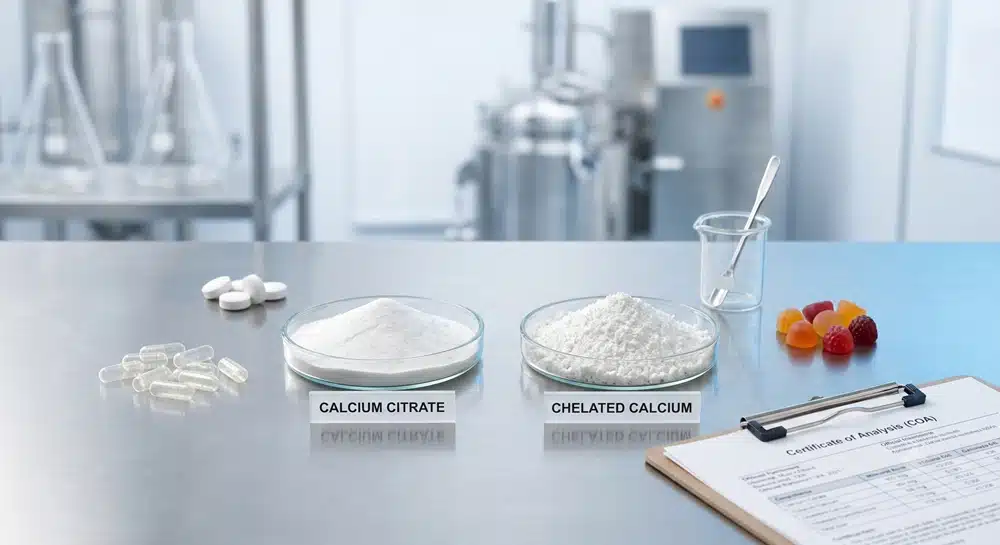
Capire cos'è il chelato di calcio
Il calcio chelato è una fonte minerale di calcio in cui il Ca2+ è coordinato con ligandi organici, solitamente aminoacidi come la glicina, per formare un complesso minerale più stabile. Nella formulazione degli integratori, il “calcio chelato” dovrebbe essere specificato in base al tipo di ligando, alla percentuale di calcio elementare, alla verifica della chelazione, alla dimensione delle particelle e alla compatibilità con la forma di dosaggio, anziché essere considerato come un unico ingrediente generico.
In termini tecnici, la chelazione del calcio significa che uno ione calcio è associato a ligandi organici tramite interazioni di coordinazione. Per quanto riguarda gli integratori alimentari, gli esempi commercialmente più rilevanti includono il chelato di calcio e aminoacidi e il bisglicinato di calcio. Queste forme sono diverse da un semplice sale minerale o da una miscela fisica secca di calcio e aminoacidi. Una specifica di approvvigionamento dovrebbe identificare il ligando, la percentuale di calcio elementare, il metodo di analisi, la perdita all’essiccamento, il pH, la granulometria, i limiti relativi ai metalli pesanti e ai microrganismi.
Per gli acquirenti B2B, questa distinzione è importante perché una generica “polvere di calcio chelato” può comportarsi in modo diverso in capsule, compresse, caramelle gommose e bevande in polvere a seconda del sistema di chelazione. Un’opzione a base di bisglicinato di calcio può supportare un posizionamento di fascia alta come chelato di aminoacidi, mentre un chelato di calcio e aminoacidi più generico può risultare più conveniente in termini di costi per le formule multiminerali. Prima di procedere all’approvvigionamento, richiedere il COA, il TDS e un campione dal Fornitore di ingredienti per la nutrizione minerale pagina e verificare se la percentuale di calcio indicata si riferisce al calcio elementare o al peso totale del composto.
Il calcio chelato non è un ingrediente unico: la specificità del ligando è fondamentale
L'espressione “calcio chelato” è il nome di una categoria, non una specifica chimica univoca. L'etichetta di un integratore o un preventivo B2B può riferirsi a chelato di calcio e aminoacidi, bisglicinato di calcio, glicinato di calcio, L-treonato di calcio o chelati minerali misti. Ciascun ligando modifica il profilo della formula finale: percentuale di calcio elementare, sapore, solubilità, igroscopicità, densità, diciture in etichetta e costo per milligrammo fornito.
Per l'alta velocità Produzione di integratori in capsule, gli aspetti determinanti sono il peso di riempimento delle capsule, la scorrevolezza della polvere e l’uniformità della miscela. Per Produzione di integratori in compresse, l'attenzione si sposta sulla comprimibilità, sulla sensibilità al lubrificante, sulla friabilità e sulle dimensioni delle compresse. Per Produzione di integratori gommosi, la mascheratura del sapore, il pH, l’interazione ionica con il sistema gelatinoso e l’attività dell’acqua assumono un’importanza fondamentale. Ecco perché il calcio chelato dovrebbe sempre essere acquistato in base alle specifiche tecniche, e non solo in base al nome.
Citrato di calcio: il sale di calcio dell’acido organico per eccellenza
Il citrato di calcio è il sale di calcio dell’acido citrico ed è ampiamente utilizzato negli integratori alimentari poiché offre un’alternativa familiare e indipendente dall’acidità per i consumatori che potrebbero non tollerare bene il carbonato di calcio. L’Ufficio degli integratori alimentari del NIH indica che il citrato di calcio corrisponde a circa 21% di calcio in peso; ciò significa che i formulatori devono tenere conto del peso maggiore del composto quando mirano a una specifica quantità di calcio elementare.
Dal punto di vista della formulazione, il citrato di calcio è solitamente più facile da spiegare ai consumatori ed è ben consolidato in compresse, capsule e formule masticabili. Il suo svantaggio è il carico utile: fornire 500 mg di calcio elementare richiede una quantità di citrato di calcio sostanzialmente maggiore rispetto al carbonato di calcio, e questo può aumentare le dimensioni delle compresse, il numero di capsule o la dose di polvere. Per i marchi che sviluppano formule per la salute ossea da assumere quotidianamente, la decisione non verte quindi semplicemente su “quale dei due si assorbe meglio”, ma piuttosto sul fatto che la dimensione finale della dose, il gusto, l’ingombro delle compresse e il costo del venduto rimangano commercialmente accettabili.
Il citrato chela il calcio?
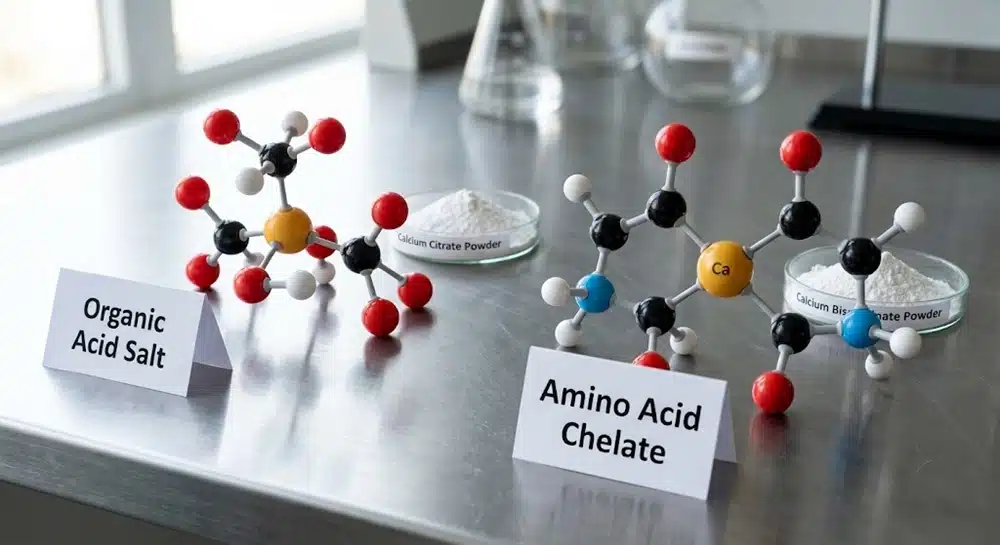
Sì, il citrato può coordinare gli ioni calcio, e il citrato di calcio può essere descritto come un complesso di calcio-citrato. Tuttavia, non si tratta dello stesso posizionamento commerciale di un calcio chelato con aminoacidi, come il bisglicinato di calcio. Il citrato di calcio utilizza l’acido citrico come sistema ligando, mentre i chelati di aminoacidi utilizzano aminoacidi o ligandi di tipo peptidico.
Ai fini dello sviluppo pratico di integratori, il citrato di calcio dovrebbe essere valutato come sale di calcio di un acido organico con contenuto di calcio elementare noto e impiego indipendente dall'acidità, mentre il calcio chelato con aminoacidi dovrebbe essere valutato in base al tipo di ligando, alla verifica della chelazione e al comportamento durante la produzione.
Combinazioni chelate di calcio e magnesio
Le combinazioni di calcio e magnesio chelati vengono utilizzate quando un marchio desidera posizionare una formula multiminerale a supporto del normale funzionamento delle ossa, dei muscoli e dei nervi. L’aspetto fondamentale della formulazione non è solo il rapporto calcio-magnesio, ma anche la possibilità di incorporare entrambi i minerali in una dose realistica sotto forma di capsula, compressa, caramella gommosa o polvere.
Nel caso delle capsule, un elevato contenuto di minerali spesso richiede una dose compresa tra due e quattro capsule. Per le compresse, la densità dei minerali e la comprimibilità influenzano le dimensioni della compressa e la facilità di deglutizione da parte del consumatore. Per le caramelle gommose, il calcio e il magnesio possono influenzare il pH, la consistenza del gel e la mascheratura del sapore. Quando si sviluppa una formula a base di calcio e magnesio, è necessario verificare la quantità elementare di ciascun minerale, la forma del ligando o del sale e l’indicazione prevista in etichetta prima di procedere alla produzione pilota tramite Produttore di integratori con formula personalizzata.
Scegliere il modulo giusto: Come decidere
Per i marchi di integratori, la forma corretta di calcio dipende dalla forma farmaceutica finale, dal contenuto di calcio elementare desiderato, dalla tolleranza relativa alla dose per porzione, dal posizionamento sull’etichetta e dal costo. Il calcio chelato non è automaticamente “migliore” per ogni progetto, e il citrato di calcio non è automaticamente una scelta dettata esclusivamente dal budget. La decisione più efficace consiste nell’adattare il veicolo minerale al formato commerciale.
Matrice decisionale sul calcio premium
Analisi comparativa per lo sviluppo di integratori alimentari
| Fattore decisionale | Citrato di calcio Fit | Calcio chelato Fit |
|---|---|---|
| Obiettivo: calcio elementare |
Utile quando è accettabile una fonte di calcio elementare 21% già nota e si riesce a gestire il numero di compresse/capsule.
|
Utile quando il posizionamento dei minerali di alta qualità è più importante del costo più basso per peso del composto.
|
| Capsule |
Potrebbe essere necessario aumentare il numero di porzioni per raggiungere livelli elevati di calcio.
|
Può funzionare bene se si controllano la scorrevolezza e la densità apparente; verificare il peso di riempimento delle capsule.
|
| Compresse |
Opzione predefinita, ma il payload potrebbe generare tablet di grandi dimensioni.
|
È necessaria una valutazione della comprimibilità; per alcuni chelati potrebbe essere necessario ottimizzare l’uso di leganti/lubrificanti.
|
| Caramelle gommose / Compresse masticabili |
Il profilo di acidità potrebbe essere adatto ad alcuni prodotti masticabili, ma è necessario valutare il gusto e il pH.
|
Potenziale posizionamento nella fascia premium, ma occorre verificare la compatibilità con il gel e le interazioni ioniche.
|
| Preparati in polvere per bevande |
Potrebbe aumentare la dimensione della porzione e la sensazione in bocca.
|
È necessario verificare la dispersibilità, le proprietà antiagglomeranti e la capacità di mascherare il sapore.
|
| Affermazioni e posizionamento |
Riconoscimento familiare dell’etichetta “citrato di calcio”.
|
Posizionamento come prodotto “premium a base di chelati di aminoacidi” o “bisglicinato”, se supportato da documentazione.
|
| Costo |
Spesso convenienti e ampiamente riconosciuti.
|
Spesso il costo dei materiali è più elevato; occorre valutare il costo per porzione finita, non solo il prezzo degli ingredienti.
|

Considerazioni sulla produzione e sulla qualità
Gli ingredienti a base di calcio devono essere conformi ai requisiti delle buone pratiche di fabbricazione (GMP) vigenti per gli integratori alimentari, compresi i controlli relativi all’identità, alla purezza, al dosaggio, alla composizione e alla contaminazione. Per gli integratori alimentari destinati al mercato statunitense, i processi di produzione, confezionamento, etichettatura e stoccaggio devono essere conformi ai requisiti del 21 CFR Parte 111.
Una specifica del calcio pronta per l’approvvigionamento dovrebbe includere: dosaggio del calcio elementare, forma di ligando o di sale, metodo di identificazione, granulometria, densità apparente, densità compattata, perdita all’essiccamento, pH, metalli pesanti, analisi microbiologica, solventi residui (ove applicabile), presenza di allergeni, presenza di OGM, paese di origine, durata di conservazione, condizioni di confezionamento e stoccaggio. Per i progetti B2B, questi valori dovrebbero essere confermati prima della definizione del prezzo e della produzione pilota, non dopo che la formula è già stata venduta ai rivenditori.
Specifiche tecniche di formulazione che gli acquirenti dovrebbero richiedere
La maggior parte degli articoli destinati ai consumatori si limita a considerare l'assorbimento. Un team di formulazione ha bisogno di conoscere le caratteristiche fisiche e qualitative che determinano se l'ingrediente a base di calcio sia effettivamente in grado di passare attraverso gli impianti di produzione e di rimanere stabile nel prodotto finito.
Specifiche e requisiti di controllo qualità
Caratteristiche fondamentali per la verifica delle materie prime e l'integrazione della produzione
| Attributo "Spec" | Perché è importante | Azione B2B consigliata |
|---|---|---|
| Calcio elementare % | Determina la quantità effettiva di calcio fornita per porzione e i calcoli relativi alle informazioni nutrizionali. |
Non confrontare il peso del composto; confronta invece il contenuto di calcio elementare e la dimensione della porzione.
|
| Identità del ligando / del sale | Distingue il citrato di calcio dal chelato di calcio e aminoacidi, dal bisglicinato di calcio o da altre forme. |
Richiedere l'inserimento del sistema di leganti nel COA/TDS e allinearlo con la terminologia delle etichette.
|
| Verifica della chelazione | Consente di distinguere la vera chelazione/complessazione da una semplice miscela a secco. |
Request FT-IR/XRD or validated supplier documentation. Add [Cite: internal SOP or supplier TDS].
|
| Densità apparente e densità compattata | Influisce sul riempimento delle capsule, sul volume delle bustine, sul flusso di compressione e sull’uniformità della miscela. |
Eseguire prove pilota di riempimento e portata prima di confermare il numero di confezioni e la dimensione della porzione.
|
| Dimensione delle maglie / dimensione delle particelle | Influisce sulla sensazione in bocca, sulla dispersibilità, sulla superficie della compressa, sul rischio di segregazione e sull’uniformità del contenuto. |
Specificare una granulometria compresa tra 60 e 100 mesh oppure quella specifica per il progetto; verificare tramite il certificato di analisi (COA) del lotto.
|
| Perdita per essiccazione / attività dell'acqua | L'umidità influisce sulla capacità di aggregazione, sulla stabilità gommosa, sulla durezza delle compresse e sulla durata di conservazione. |
Se necessario, utilizzare imballaggi con barriera contro l'umidità e ricorrere a essiccanti.
|
| pH / acidità | Importante per caramelle gommose, compresse masticabili, compresse effervescenti e bevande in polvere. |
Verificare il comportamento del gel, il gusto e la compatibilità acido-base nei campioni prototipali.
|
| Metalli pesanti e microbiologia | Necessario per garantire la sicurezza del prodotto finito e la conformità dei rivenditori. |
Richiedere i limiti per Pb, As, Cd, Hg e i microrganismi per ogni lotto; allinearsi ai requisiti del mercato di destinazione.
|
Verifica della chelazione e controllo qualità: vero chelato vs miscela secca
Per le formule minerali di alta qualità, un’indicazione in etichetta come “chelato di calcio e aminoacidi” dovrebbe essere supportata da documentazione. Come minimo, gli acquirenti dovrebbero richiedere la scheda tecnica e il certificato di analisi (COA) che indichino il contenuto di calcio elementare, l’identità del ligando e i test di identificazione. Per progetti di maggior valore, è opportuno chiedere se il fornitore sia in grado di fornire prove convalidate, quali analisi FT-IR, XRD o di altro tipo, a conferma della formazione di un complesso piuttosto che di una semplice miscela fisica.
Ciò è particolarmente importante quando il prodotto finito viene posizionato come prodotto di alta gamma, ad esempio con diciture quali “minerali chelati con aminoacidi”, “complesso minerale ad alto assorbimento” o “formula delicata a base di calcio”. In questi casi, Gensei può allineare la valutazione degli ingredienti con Controllo di qualità degli integratori e Integratori personalizzati a marchio privato sviluppo, in modo che la formula finale, il certificato di analisi (COA) e il testo dell'etichetta non siano in contraddizione tra loro.
Note normative e relative all’etichettatura per le indicazioni relative al calcio
I testi relativi agli integratori alimentari a base di calcio dovrebbero evitare formulazioni che suggeriscano un trattamento o una prevenzione casuale delle malattie. Negli Stati Uniti, le indicazioni relative alla struttura e alla funzione possono descrivere in che modo un nutriente contribuisca alla normale struttura o funzione dell’organismo, ad esempio “il calcio aiuta a rafforzare le ossa”, ma le indicazioni relative alle malattie sono regolamentate in modo diverso.
Se un marchio vuole parlare di calcio, vitamina D e la riduzione del rischio di osteoporosi, il testo deve rispettare i requisiti previsti per l’indicazione sulla salute autorizzata e deve essere sottoposto alla revisione di un consulente legale specializzato in materia di regolamentazione. Le linee guida della FDA relative all’indicazione sulla salute riguardante il calcio/vitamina D e l’osteoporosi richiedono un’attenta formulazione e non consentono che l’indicazione lasci intendere che il calcio, o il calcio associato alla vitamina D, sia l’unico fattore di rischio riconosciuto per l’osteoporosi.
Formulazioni più sicure consigliate per questo articolo: utilizzare “favorisce la normale salute delle ossa”, “aiuta a mantenere la struttura ossea”, “favorisce la normale funzione muscolare e nervosa” oppure “per formule di integratori per la salute delle ossa”. Evitare di utilizzare “prevenzione dell’osteoporosi” come voce generica della tabella, a meno che non venga fornito il contesto esatto dell’indicazione sulla salute autorizzata.
Tabella comparativa: calcio chelato vs citrato di calcio
Confronto tra gli ingredienti a base di calcio
Analisi tecnica e commerciale: citrato di calcio vs. calcio chelato
| Attributo di confronto | Citrato di calcio | Calcio chelato |
|---|---|---|
| Categoria di ingredienti |
Sale di calcio di un acido organico / complesso di citrato di calcio.
|
Termine generico che indica il calcio legato o complessato con ligandi organici, spesso aminoacidi come la glicina.
|
| Calcio elementare tipico |
Circa 21% di calcio in peso, a seconda dello stato di idratazione e delle specifiche.
|
Spesso intorno a 18-20% per le opzioni di chelati di calcio con aminoacidi/bisglicinati, in base al certificato di analisi (COA) e al sistema ligando specifico.
|
| Riconoscimento da parte dei consumatori |
Elevato; ampiamente riconosciuto negli integratori per la salute delle ossa.
|
Da moderata ad alta nelle formule minerali premium; massima quando il ligando è indicato chiaramente.
|
| Inquadratura per assorbimento |
Non dipende in misura così marcata dall’acidità gastrica come il carbonato di calcio; è indicato per l’uso in condizioni di bassa acidità.
|
Può sostenere un posizionamento basato su una biodisponibilità superiore, ma le affermazioni devono essere collegate al chelato specifico e alle prove scientifiche. Evitare affermazioni generiche del tipo 85-95%.
|
| Contenuto della capsula/compressa |
Per ottenere una determinata quantità di calcio elementare è necessario un peso del composto maggiore.
|
Il carico utile dipende dal calcio elementare % e dalla densità; è necessario verificare la scorrevolezza e il peso di riempimento.
|
| Comportamento della polvere / della bustina |
Con valori target elevati di calcio elementare, la dimensione della porzione e la consistenza in bocca possono aumentare.
|
A seconda del ligando, potrebbero essere necessari agenti antiagglomeranti, per il controllo dell’umidità e per mascherare il sapore.
|
| Comportamento "gommoso" / masticabile |
Può influire sull'acidità e sul gusto; è necessario effettuare dei test sul prototipo.
|
Può favorire un posizionamento di fascia alta, ma è necessario verificare la compatibilità con il gel e le interazioni ioniche.
|
| Documenti di qualità |
COA, analisi, metalli pesanti, microbiologia, granulometria, pH, perdita per essiccazione.
|
Come per il citrato, oltre all’identificazione del ligando e alla verifica della chelazione/del complesso, ove possibile.
|
| La scelta più adatta |
Formule a base di calcio convenienti e familiari; posizionamento sul mercato orientato ai consumatori che prediligono prodotti a bassa acidità; compresse/capsule in cui la dose per porzione è accettabile.
|
Complessi minerali di alta qualità, formulazioni a base di chelati di aminoacidi, formule multiminerali, progetti che richiedono una presentazione differenziata degli ingredienti e relativa documentazione.
|
Il bilancio
Sia il citrato di calcio che il calcio chelato svolgono entrambi un ruolo legittimo nell’apporto minerale. Il citrato di calcio è una fonte di calcio ben nota, indipendente dall’acidità, che gode di un chiaro riconoscimento da parte dei consumatori e di un impiego consolidato in compresse, capsule e prodotti masticabili. Il calcio chelato va invece considerato come una categoria di ingredienti basata su specifiche precise, in cui l’identità del ligando, il calcio elementare, la documentazione relativa alla chelazione e il comportamento nella forma di dosaggio determinano se si tratta della scelta più adatta.
Per i progetti relativi agli integratori nel settore B2B, la scelta migliore si ottiene confrontando il costo per porzione finita, il contenuto di calcio elementare previsto, la forma di somministrazione finale, la documentazione relativa alla qualità, la formulazione delle indicazioni normative e i requisiti di stabilità. Se il progetto richiede l’approvvigionamento di minerali, la revisione del certificato di analisi (COA), la formulazione di prototipi o la produzione con marchio privato, Gensei può fornire supporto nella valutazione attraverso Fornitore di ingredienti per la nutrizione minerale, Produttore di integratori con formula personalizzata e Controllo di qualità degli integratori.
Domande frequenti
Riferimenti
- Ufficio degli integratori alimentari del NIH. Calcio – Scheda informativa per gli operatori sanitari. https://ods.od.nih.gov/factsheets/Calcium-HealthProfessional/
- FDA. Guida alla conformità per le piccole imprese: Buone pratiche di fabbricazione (GMP) nelle operazioni di produzione, confezionamento, etichettatura o stoccaggio degli integratori alimentari. https://www.fda.gov/regulatory-information/search-fda-guidance-documents/small-entity-compliance-guide-current-good-manufacturing-practice-manufacturing-packaging-labeling
- FDA. Indicazioni sulla struttura/funzione. https://www.fda.gov/food/nutrition-food-labeling-and-critical-foods/structurefunction-claims
- FDA. Guida alla conformità per le piccole imprese: indicazioni sulla salute relative al calcio e all’osteoporosi, nonché al calcio, alla vitamina D e all’osteoporosi. https://www.fda.gov/regulatory-information/search-fda-guidance-documents/small-entity-compliance-guide-health-claims-calcium-and-osteoporosis-and-calcium-vitamin-d-and
- Harvard Health Publishing. Come scegliere un integratore di calcio. https://www.health.harvard.edu/diet-and-nutrition/choosing-a-calcium-supplement
- Garg MK, et al. Integratori di calcio: perché, quali e come? https://pmc.ncbi.nlm.nih.gov/articles/PMC6844170/
- Sakhaee K, et al. Meta-analisi sulla biodisponibilità del calcio. https://pubmed.ncbi.nlm.nih.gov/11329115/

Warren Wan è un esperto di grande esperienza nel settore della filiera degli integratori alimentari, con una vasta esperienza pratica nella ricerca, nello sviluppo, nel controllo dei processi e nell’approvvigionamento globale di ingredienti fondamentali quali i peptidi di collagene, le proteine del brodo d’ossa e la cheratina. In qualità di autore di questa rubrica, si impegna a smascherare le strategie di marketing, trasformando la complessa scienza degli ingredienti e gli standard di controllo della qualità della produzione in una divulgazione scientifica approfondita e di facile comprensione, aiutando i lettori a comprendere la verità che si cela dietro le etichette e a compiere scelte più razionali in materia di salute.


