For formulators and buyers, the decision should be based on the exact material: source, hydrolysis method, peptide or molecular-weight profile, protein assay, solubility, sensory properties, intended route of use, vegan positioning, and finished-product claims.
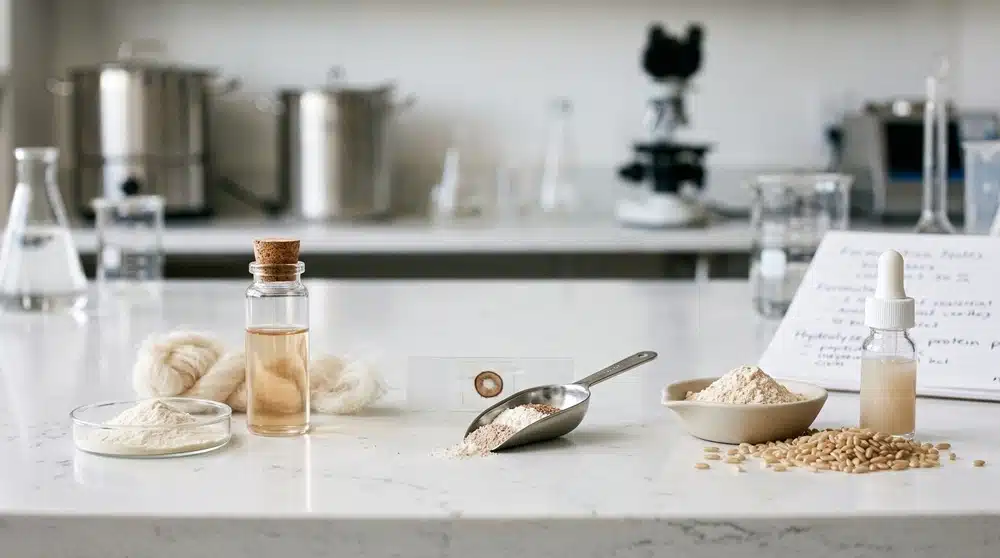
Hydrolyzed Keratin vs Rice Protein at a Glance
| Fattore | Cheratina idrolizzata | Rice Protein / Hydrolyzed Rice Protein |
|---|---|---|
| Fonte tipica | Animal keratin such as wool or feathers | Rice, usually Oryza sativa |
| Posizionamento vegano | Usually not vegan | Plant-derived; suitable for vegan positioning when documentation supports it |
| Hair-care form | Peptidi di cheratina idrolizzati | Hydrolyzed rice protein is more relevant than standard food-grade rice protein |
| Direct hair-fiber evidence | Stronger: molecular-weight-dependent penetration and mechanical effects have been studied | More limited in peer-reviewed hair-fiber literature; recognized as a conditioning ingredient |
| Oral supplement role | Specialty keratin hydrolysate / beauty ingredient depending on grade | Widely used as dietary plant protein; isolate/concentrate grades are common |
| Primary B2B specification | Source, peptide/MW profile, amino-acid profile, protein/peptide content, solubility | First identify isolate/concentrate vs hydrolysate, then verify protein content, MW if hydrolyzed, solubility and application grade |
Che cos’è la cheratina idrolizzata?
Keratin is a structural protein naturally present in hair, nails and the outermost layers of skin. Native keratin is highly cross-linked and difficult to disperse in many formulations, so manufacturers use hydrolysis to break it into smaller peptides and amino-acid-rich fractions.
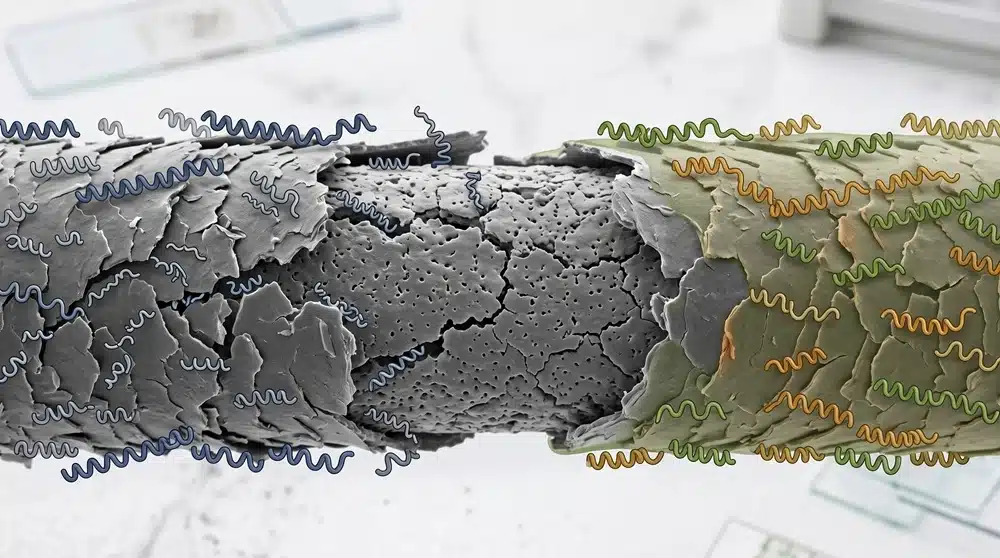
For topical hair-care applications, peptide size matters. A peer-reviewed study using wool-derived hydrolyzed keratins found that low- and mid-molecular-weight fractions penetrated more deeply into relaxed textured hair, while higher-molecular-weight keratin was found mainly on the surface and outer fiber layers. Some peptide fractions also changed mechanical properties under the study conditions. That supports a formulation-specific conditioning or damage-repair narrative, but it does not mean every hydrolyzed keratin product has the same performance.
When sourcing cheratina idrolizzata sfusa, request the actual source, hydrolysis method, molecular-weight distribution, protein/peptide content, amino-acid profile, solubility, odor, color, moisture, microbiology, heavy metals and intended application grade.
Che cos'è la proteina del riso?
Rice protein is a plant-derived protein ingredient commonly made from rice, including brown rice. In dietary supplements, rice protein isolate or concentrate is used primarily as a protein source in powders, meal replacements, bars and other nutrition formats.
For hair care, however, the ingredient of interest is often hydrolyzed rice protein, not standard rice protein isolate. Hydrolysis breaks rice proteins into smaller peptide fractions that can behave differently in water-based cosmetic systems. Cosmetic Ingredient Review literature identifies hydrolyzed rice protein as a hair- or skin-conditioning ingredient and reports a generally favorable safety profile in the evaluated uses.
For supplement sourcing, review the exact rice protein specification and determine whether you need isolate, concentrate, germinated brown rice protein, or a separately specified hydrolysate. A dietary supplement rice protein grade should not automatically be treated as a cosmetic-grade hydrolyzed rice protein.
Does Rice Have Keratin?
No. Rice does not naturally contain keratin. Keratin is an animal structural protein. Rice contains plant proteins with a different amino-acid sequence and structure.
Terms such as “vegetable keratin,” “plant keratin,” or “keratin alternative” are usually marketing shorthand for hydrolyzed plant proteins or amino-acid blends designed to provide keratin-like cosmetic functionality. They should not be presented as chemically identical to true keratin.
Hydrolyzed Rice Protein vs Rice Protein Isolate vs Rice Water
| Materiale | What It Is | Uso tipico | What Not to Assume |
|---|---|---|---|
| Hydrolyzed rice protein | Rice protein broken into smaller peptide fractions | Hair/skin conditioning in cosmetic-grade systems; specialty formulations | Do not assume every grade has the same molecular weight or performance |
| Rice protein isolate / concentrate | Concentrated dietary plant protein | Protein powders, meal replacements, bars, supplements | Do not assume food-grade isolate behaves like cosmetic hydrolysate on hair |
| Rice water | Water left after soaking/boiling/fermenting rice, with variable dissolved components | DIY or traditional rinse; some commercial formulas use fermented rice fractions | Do not treat it as standardized hydrolyzed rice protein |
This distinction is especially important for queries comparing rice water and keratin/protein treatments. A salon keratin smoothing treatment is also a different category from a shampoo or conditioner that simply contains hydrolyzed keratin. Always compare the complete product and process, not only the word “keratin.”
Hydrolyzed Keratin vs Hydrolyzed Rice Protein for Hair
Where hydrolyzed keratin has an evidence advantage
Hydrolyzed keratin has more direct peer-reviewed research on hair fibers. Studies have examined peptide penetration, surface deposition, tensile behavior and protection under specific damage models. The results show that performance varies with molecular weight and test conditions, which is why formulators should avoid generic claims such as “all keratin penetrates deeply” or “keratin permanently rebuilds hair.”
Where hydrolyzed rice protein fits
Hydrolyzed rice protein is used as a hair-conditioning protein, especially in plant-based or vegan-positioned formulas. Cosmetic safety literature recognizes it as a conditioning ingredient, but the public peer-reviewed evidence base directly comparing rice protein hydrolysates with keratin on human hair fibers is much thinner.
That means a rice-protein hair formula should be supported by supplier technical data and, ideally, finished-product testing for endpoints such as wet/dry combing, breakage, tensile strength, fiber diameter appearance, frizz, shine, stiffness and sensory feel. For a deeper consumer-intent page, see rice protein for hair.
Which Is Better for Hair?
Choose hydrolyzed keratin when the goal is a keratin-aligned, repair-focused story and animal-derived sourcing is acceptable. It has a stronger direct hair-fiber evidence base and can be specified by molecular-weight range for different deposition/penetration behavior.
Choose hydrolyzed rice protein when the goal is plant-derived or vegan positioning, lighter protein-conditioning concepts, or a rice-based beauty story. Because published head-to-head evidence is limited, the formula should earn its claims through ingredient specifications and finished-product testing.
| Obiettivo del prodotto | Likely Better Starting Point | Perché |
|---|---|---|
| Intensive damaged-hair mask | Cheratina idrolizzata | Stronger direct keratin/hair-fiber rationale |
| Vegan conditioner or leave-in | Hydrolyzed rice protein | Plant-derived positioning and conditioning function |
| Volumizing plant-protein shampoo | Hydrolyzed rice protein | Better fit for plant-based protein positioning; validate sensory/volume claims |
| Premium keratin repair serum | Cheratina idrolizzata | Keratin-identical source story and MW-dependent technical positioning |
| Standard vegan protein powder | Rice protein isolate/concentrate | Dietary protein role rather than topical hair-conditioning role |
Is Hydrolyzed Keratin Better Absorbed as an Oral Supplement?
This question needs a route-specific answer. Hydrolysis can change peptide size and digestibility, but there is no robust head-to-head human evidence showing that hydrolyzed keratin is universally better absorbed than rice protein.
A 2026 study of one specific poultry-feather keratin hydrolysate in healthy men found that plasma amino acids increased after ingestion, with a reported peak around 20 minutes. The study then used post-ingestion serum in cell experiments related to skin biology. This shows that metabolites from that specific keratin hydrolysate became bioavailable; it does non prove superiority over rice protein, and it was not a clinical hair-growth comparison against rice protein.
Rice protein, meanwhile, is an established dietary plant-protein category. Its nutritional value depends on protein quality, amino-acid composition, processing and the finished diet. If the product goal is a high-protein supplement, rice protein isolate/concentrate and keratin hydrolysate serve different formulation purposes and should not be ranked by a single “absorption” claim.
Can Hydrolyzed Keratin and Rice Protein Be Used Together?
Potentially, yes, but the rationale depends on the product category. In a topical formula, combining animal-derived keratin peptides with plant-derived rice peptides may create a multi-protein conditioning system. In an oral supplement, combining keratin hydrolysate with dietary rice protein may be technically possible but can dilute the positioning of each ingredient and increase serving-size complexity.
Before combining them, test:
- solubility and precipitation;
- compatibilità con il pH;
- odore e colore;
- viscosity and sensory feel;
- protein/peptide assay through shelf life;
- microbial stability for water-based cosmetic grades;
- finished-product performance versus a control;
- claim language for the intended market.
Specifiche di qualità B2B da richiedere
| Specifiche | Cheratina idrolizzata | Rice Protein / Hydrolyzed Rice Protein |
|---|---|---|
| Raw material identity | Wool, feather or other declared keratin source | Oryza sativa; identify isolate/concentrate/hydrolysate |
| Hydrolysis information | Method and target peptide/MW range | Required if buying hydrolyzed rice protein; not the same as standard isolate |
| Protein / peptide assay | Define test method and acceptance range | Protein % for dietary grades; peptide/MW information for hydrolysates |
| Profilo aminoacidico | Useful for keratin-like positioning and batch consistency | Useful for nutrition quality and ingredient consistency |
| Solubilità / dispersibilità | Critical for liquids, shampoos and oral powders | Critical for both cosmetic hydrolysates and supplement powders |
| Sostanze contaminanti | Heavy metals, microbiology, residual processing chemicals as applicable | Heavy metals, microbiology, pesticide/residue review and market-specific limits |
| Claim/source documents | Animal source, allergen/source statement, origin and traceability | Vegan/non-GMO/gluten-related claims only with appropriate documentation |
| Application grade | Confirm cosmetic vs food/supplement suitability | Confirm cosmetic hydrolysate vs dietary protein grade |
Considerazioni relative alla sicurezza e ai sinistri
For topical products, hydrolyzed rice protein has been reviewed in cosmetic safety literature as a conditioning ingredient. Even so, finished-product safety still depends on concentration, impurities, preservation, the rest of the formula and intended exposure.
For hydrolyzed keratin, source and peptide profile can influence product characteristics. Protein-derived ingredients can also create individual sensitivity concerns, so formulators should follow appropriate raw-material and finished-product safety assessment practices.
For U.S. cosmetics, avoid disease-treatment and biological hair-growth claims unless the product meets the requirements that apply to drugs. Statements such as “treats alopecia,” “regrows follicles,” or “permanently repairs hair” can move beyond ordinary cosmetic positioning. Appearance and conditioning claims should be truthful, non-misleading and supported by the finished-product evidence.
FAQ
Does rice have keratin?
No. Rice contains plant proteins, not keratin. “Plant keratin” is generally a marketing term for plant-derived proteins or amino-acid blends that aim to provide keratin-like cosmetic functionality.
What is the difference between hydrolyzed rice protein and rice protein?
Hydrolyzed rice protein has been broken into smaller peptide fractions. Standard rice protein isolate or concentrate is primarily a dietary protein ingredient. They can have different molecular profiles, solubility, applications and specifications.
Is hydrolyzed rice protein good for hair?
It is recognized as a hair-conditioning ingredient and is used in shampoos, conditioners and treatment formulas. However, direct peer-reviewed hair-fiber efficacy evidence is more limited than for hydrolyzed keratin, so strong performance claims should be backed by supplier and finished-product data.
Is hydrolyzed keratin better than rice protein for damaged hair?
Hydrolyzed keratin is a stronger starting point when a formula needs a keratin-aligned repair narrative and animal-derived sourcing is acceptable. Hydrolyzed rice protein is a stronger fit for plant-based or vegan positioning. The finished formula—not the ingredient name alone—determines real-world performance.
Is rice water the same as hydrolyzed rice protein?
No. Rice water is a variable water extract produced by soaking, boiling or fermenting rice. Hydrolyzed rice protein is a manufactured protein hydrolysate with a defined ingredient identity and, ideally, a controlled specification.
Is hydrolyzed keratin better absorbed as a supplement?
One specific keratin hydrolysate has shown measurable post-ingestion metabolites in human plasma, but there is no strong head-to-head evidence showing that hydrolyzed keratin is universally better absorbed than rice protein. Compare products by their exact grade, dose, processing, evidence and intended nutritional role.
Can hydrolyzed keratin and hydrolyzed rice protein be used together?
Yes, they can potentially be combined in a multi-protein formula, but compatibility, sensory performance, stability and claims should be validated in the finished product.
Riferimenti
- Penetrazione di cheratine idrolizzate con diverso peso molecolare nelle fibre capillari e loro effetti sulle proprietà fisiche dei capelli crespi
- Efficacia e meccanismo d’azione della cheratina idrolizzata nella prevenzione del fotoinvecchiamento dei capelli
- Safety assessment of rice-derived cosmetic ingredients, including Hydrolyzed Rice Protein
- Cosmetic Ingredient Review: Hydrolyzed Rice Protein
- Bioavailable human metabolites of a keratin-derived hydrolysate promote primary human dermal fibroblast activities
- FDA: Dichiarazioni riportate sulle etichette dei cosmetici

Warren Wan è un esperto di grande esperienza nel settore della filiera degli integratori alimentari, con una vasta esperienza pratica nella ricerca, nello sviluppo, nel controllo dei processi e nell’approvvigionamento globale di ingredienti fondamentali quali i peptidi di collagene, le proteine del brodo d’ossa e la cheratina. In qualità di autore di questa rubrica, si impegna a smascherare le strategie di marketing, trasformando la complessa scienza degli ingredienti e gli standard di controllo della qualità della produzione in una divulgazione scientifica approfondita e di facile comprensione, aiutando i lettori a comprendere la verità che si cela dietro le etichette e a compiere scelte più razionali in materia di salute.