
Le polveri di collagene, le bevande in bustina, le capsule, le compresse e le caramelle gommose sono ampiamente vendute presso Watsons, Mercury Drug, Lazada, Shopee, Healthy Options e sui siti web dei marchi nelle Filippine. Questa guida mette a confronto le principali forme di integratori di collagene, spiega come valutare la registrazione presso la FDA e le indicazioni riportate in etichetta e illustra come i marchi di integratori possano sviluppare una formula a base di collagene più adatta al mercato filippino.
Per i marchi che sviluppano prodotti a base di collagene in polvere, bustine, compresse o caramelle gommose, Gensei può fornire supporto produzione di integratori in polvere, revisione della formula personalizzata, e integratori a marchio privato personalizzati.
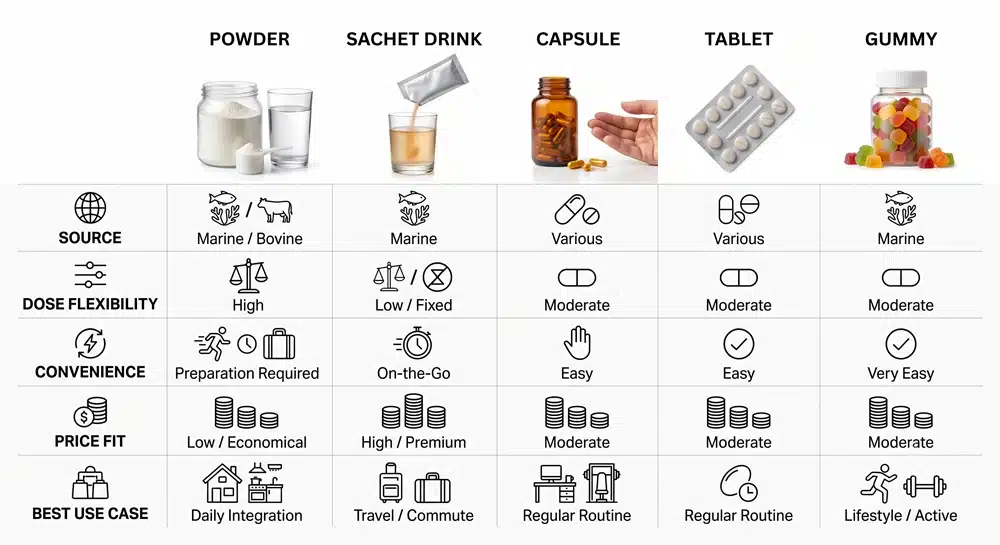
Il miglior integratore di collagene nelle Filippine: confronto rapido
| Formato del collagene | Il migliore per | Punti di forza tipici | Limitazioni | Cosa controllare prima dell'acquisto |
|---|---|---|---|---|
| Collagene in polvere | Maggiore apporto giornaliero di collagene e un miglior rapporto qualità-prezzo per porzione | Porzioni flessibili, facile da mescolare al caffè o ai frullati, adatto per dosi più elevate di collagene | Va miscelato; il sapore e la solubilità variano | Fonte di collagene, grammi per porzione, sistema aromatizzante, analisi dei metalli pesanti, dettagli sul lotto e sulla data di scadenza |
| Bevanda al collagene in bustina | Praticità, viaggi e un'immagine incentrata sulla bellezza interiore | Formato monodose, facile da usare, ideale per formule aromatizzate con vitamina C o acido ialuronico | Di solito ha un costo per porzione più elevato; può contenere edulcoranti o correttori di acidità | Quantità di collagene per bustina, contenuto di zucchero, avvertenza relativa all'allergia al pesce in caso di utilizzo di collagene marino |
| Capsule o compresse di collagene | Chi non ama le polveri o le bevande aromatizzate | Portatile, facile da dosare, non richiede miscelazione | Dose di collagene inferiore per capsula; per dosi dell'ordine dei grammi potrebbero essere necessarie più capsule | Dose giornaliera, numero di compresse al giorno, eccipienti, qualità della dissoluzione |
| Caramelle gommose al collagene | Consumatori attenti al gusto e integratori di bellezza per principianti | Facile da consumare, gusto accattivante, ideale per gli acquisti d’impulso | Spesso la dose di collagene è inferiore; lo zucchero e la stabilità della consistenza sono fattori importanti | Zuccheri aggiunti, quantità di collagene, base di pectina/gelatina, stabilità termica, informazioni sugli allergeni |
| Collagene liquido | Massima praticità e posizionamento come prodotto pronto da bere | Non richiede miscelazione, forte appeal commerciale, facile da abbinare alla vitamina C o all'acido ialuronico | Logistica più impegnativa, requisiti di stabilità e imballaggio più complessi | Conservanti, dati sulla durata di conservazione, integrità del flacone, contenuto di zucchero, formulazione delle indicazioni |
Qual è il miglior integratore di collagene nelle Filippine?
Non esiste un unico integratore di collagene “migliore” adatto a tutti i consumatori. Una polvere di collagene idrolizzato ad alto dosaggio e senza aromi potrebbe essere la scelta migliore in termini di rapporto qualità-prezzo e versatilità. Una bevanda in bustina a base di collagene marino potrebbe essere la scelta migliore in termini di praticità e per il suo posizionamento specifico per la cura della pelle. Le capsule, le compresse e le caramelle gommose potrebbero essere più adatte ai consumatori che cercano la praticità di trasporto, ma solitamente forniscono una quantità di collagene per porzione inferiore rispetto alle polveri.
Quando si confrontano i prodotti, non bisogna limitarsi al nome del marchio. La lista di controllo più utile comprende: la fonte del collagene, la quantità di collagene per porzione, la forma di presentazione, il contenuto di zuccheri, gli ingredienti aggiunti, le informazioni sugli allergeni, l’affidabilità del venditore e lo stato di registrazione a livello locale. I prodotti che promettono di curare malattie, di schiarire la pelle, di combattere l’invecchiamento o di garantire una trasformazione dovrebbero essere valutati con attenzione.
Collagene in polvere vs bevanda vs capsule vs caramelle gommose
Per i consumatori filippini, il collagene in polvere e le bevande in bustina rappresentano solitamente i formati più pratici per un apporto significativo di collagene, poiché consentono di assumere dosi dell’ordine dei grammi. Le capsule e le compresse sono comode, ma la dimensione della porzione può richiedere l’assunzione di diverse unità al giorno. Le caramelle gommose sono facili da commercializzare, ma i marchi devono trovare un equilibrio tra gusto, dose di collagene, contenuto di zucchero, stabilità della consistenza ed esposizione al calore durante la spedizione.
Per i marchi di integratori, la scelta del formato influisce sui costi di produzione, sul quantitativo minimo ordinabile (MOQ), sul confezionamento, sul peso di spedizione, sulla conformità alle esigenze dei consumatori, sullo spazio disponibile sull’etichetta e sulla strategia di comunicazione. I formati in polvere e in bustina sono spesso più indicati per le formule premium volte a promuovere la bellezza dall’interno, mentre le compresse e le caramelle gommose possono rivelarsi efficaci per i prodotti di ingresso destinati al mercato di massa.
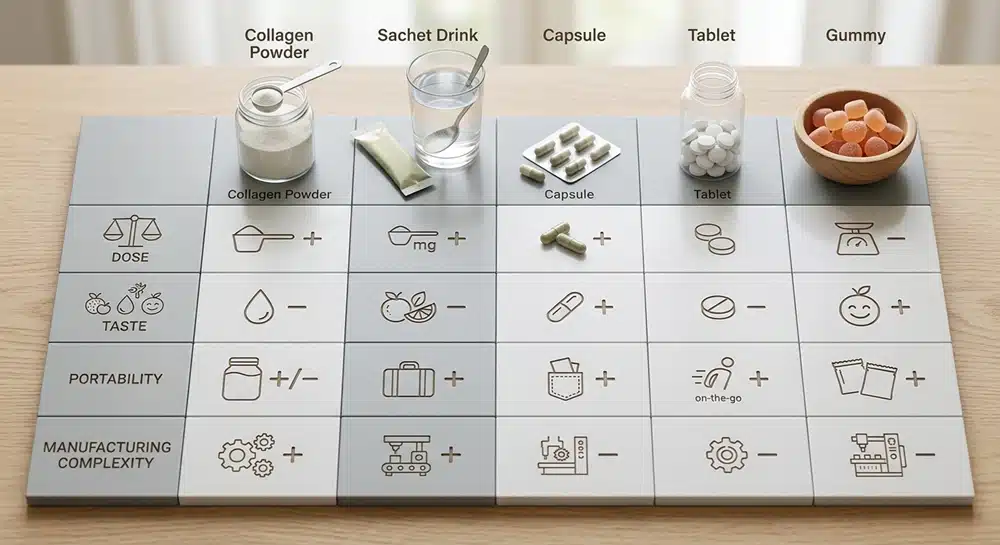
Collagene marino contro collagene bovino nelle Filippine
Il collagene marino è comunemente utilizzato nei prodotti di bellezza poiché è naturalmente associato al collagene di tipo I e alle formule specifiche per la pelle. Il collagene bovino viene spesso impiegato per un approccio più ampio, che comprende pelle, capelli, unghie e supporto articolare, poiché è in grado di fornire peptidi di collagene di tipo I e di tipo III. Entrambe possono rappresentare valide opzioni, purché la qualità degli ingredienti, il profilo peptidico, il gusto, i test effettuati e le indicazioni riportate in etichetta siano adeguati.
I consumatori dovrebbero evitare di dare per scontato che il collagene marino sia sempre migliore o che quello bovino sia sempre più efficace. La scelta migliore dipende dalla dose, dalle caratteristiche dei peptidi, dalla trasparenza sulla provenienza, dal rischio di allergeni, dal profilo aromatico e dal formato del prodotto. Chi soffre di allergia al pesce dovrebbe prestare attenzione al collagene marino, mentre chi evita gli ingredienti di origine bovina dovrebbe controllare attentamente le etichette dei prodotti a base di collagene bovino.
Quanto collagene dovresti cercare?
Molti studi sul collagene per via orale prevedono dosi giornaliere dell’ordine dei grammi, spesso comprese tra pochi grammi al giorno a seconda dell’ingrediente, del prodotto, del disegno dello studio e del parametro misurato. Ciò non significa che ogni prodotto richieda la stessa dose né che una dose più elevata sia sempre migliore. Significa invece che i consumatori dovrebbero verificare la quantità effettiva di collagene per porzione, anziché basarsi esclusivamente sulle dimensioni della confezione o sulle affermazioni di marketing.
Nel caso delle polveri e delle bevande in bustina, è solitamente più facile raggiungere la dose di collagene raccomandata. Per le capsule, le compresse e le caramelle gommose, è bene confrontare la quantità di collagene per porzione e il numero di pezzi necessari al giorno. Un prodotto che sembra più economico per confezione potrebbe rivelarsi meno conveniente se la porzione giornaliera è bassa o richiede l’assunzione di molti pezzi.
Registrato presso la FDA o approvato dalla FDA: cosa devono sapere i consumatori filippini
Molti consumatori cercano “collagene approvato dalla FDA nelle Filippine”, ma è necessario prestare attenzione alla formulazione delle descrizioni degli integratori. Nelle Filippine, gli acquirenti dovrebbero verificare se un prodotto sia correttamente registrato o inserito nell’elenco secondo i requisiti applicabili della FDA, anziché considerare la dicitura “approvato dalla FDA” come una garanzia delle prestazioni del prodotto. Un integratore alimentare non dovrebbe essere commercializzato come trattamento, cura o prevenzione di malattie.
Prima dell'acquisto, verifica che l'etichetta riporti il nome del prodotto, il nome del produttore o del distributore, il numero di lotto, la data di scadenza, le istruzioni per l'uso, le informazioni sugli allergeni e la dicitura appropriata relativa agli integratori alimentari. Diffida dei venditori che utilizzano screenshot, dichiarazioni di registrazione vaghe o promesse esagerate senza una scheda prodotto verificabile.
Dove acquistare integratori di collagene nelle Filippine
I canali di acquisto più comuni includono Watsons, Mercury Drug, Healthy Options, Lazada, Shopee, i negozi ufficiali dei marchi e alcuni supermercati o negozi specializzati in prodotti di bellezza. I negozi fisici possono essere utili per controllare la confezione e le date di scadenza. I marketplace online possono offrire sconti più vantaggiosi, ma è consigliabile verificare l’affidabilità del venditore, leggere le recensioni recenti, controllare le condizioni di spedizione ed evitare prodotti dal prezzo sospettosamente basso.
Per gli acquisti online, scegliete i negozi ufficiali o venditori con ottime recensioni che forniscano foto chiare dei prodotti, dettagli sul lotto e politiche di reso. Evitate i prodotti con etichette poco chiare, senza data di scadenza, che promettono risultati irrealistici o per i quali non sia identificabile il distributore.
Il miglior integratore di collagene in base all'uso previsto
| Caso d'uso | Formato ottimale | Perché | Controlli chiave delle etichette |
|---|---|---|---|
| Supporto per l'idratazione e l'elasticità della pelle | Collagene idrolizzato in polvere o in bustina da bere | Consente di assumere il collagene in dosi precise al grammo e di integrarlo facilmente nella routine quotidiana | Fonte di collagene, porzione, vitamina C, contenuto di zuccheri, informazioni sugli allergeni |
| Per un uso quotidiano attento al budget | Collagene in polvere non aromatizzato | Di solito un costo al grammo più conveniente e un dosaggio flessibile | COA, sapore, solubilità, provenienza, autenticità del venditore |
| Comodità e viaggi | Bustine, capsule o compresse | Portatile e più facile da mantenere in condizioni ottimali | Quantità di collagene per porzione giornaliera e numero di pezzi necessari |
| Integratore di bellezza che mette il gusto al primo posto | Caramelle gommose o bevanda aromatizzata | Ottima tollerabilità per i consumatori che non amano i prodotti in polvere | Zucchero, acidificanti, dosaggio del collagene, stabilità durante la conservazione |
| Preferenza per il collagene marino | Bustina o polvere di collagene marino | Comune nel posizionamento incentrato sulla bellezza che viene dall'interno | Avviso relativo all'allergia al pesce, origine, controllo degli odori, stato di registrazione |
| Lancio di un marchio privato nel settore B2B | Polvere, bustina, compressa o caramella gommosa, a seconda del prezzo di riferimento | Il formato determina il quantitativo minimo ordinabile (MOQ), lo sviluppo del gusto, il confezionamento, lo spazio sull'etichetta e il margine | Certificato di analisi degli ingredienti, analisi microbiologica, metalli pesanti, verifica delle indicazioni, stabilità della confezione |
Quali ingredienti si abbinano bene al collagene?
I prodotti a base di collagene nelle Filippine contengono spesso vitamina C, acido ialuronico, glutatione, biotina, zinco o aromi di frutta. La vitamina C è comunemente utilizzata perché favorisce la normale formazione di collagene nell’organismo. L’acido ialuronico viene spesso impiegato per le sue proprietà idratanti. Tuttavia, un numero maggiore di ingredienti non è sempre sinonimo di qualità. Ogni ingrediente aggiunto influisce sul costo, sul gusto, sulla stabilità, sulle indicazioni riportate in etichetta e sulla tollerabilità da parte dei consumatori.
I marchi dovrebbero evitare di combinare troppi ingredienti di tendenza senza una ragione chiara. Una formula essenziale con peptidi di collagene idrolizzati, un dosaggio ragionevole di vitamina C, un buon profilo aromatico e rigorosi controlli di qualità possono risultare più credibili di una formula sovraccarica con promesse esagerate.
Precauzioni da seguire prima di assumere il collagene
Gli integratori di collagene sono generalmente utilizzati come integratori alimentari, ma non sono adatti a tutti. Le persone allergiche al pesce o ai crostacei dovrebbero prestare attenzione al collagene marino. Chi evita gli ingredienti di origine bovina dovrebbe controllare le etichette dei prodotti a base di collagene bovino. Le donne in gravidanza o in allattamento, i bambini, le persone affette da malattie renali, chi soffre di patologie mediche e chi assume farmaci dovrebbero consultare un medico prima di assumere integratori.
Interrompere l'uso del prodotto e consultare un medico in caso di reazioni allergiche, disturbi digestivi, eruzioni cutanee, gonfiori o altri sintomi inattesi. Non utilizzare gli integratori di collagene in sostituzione di cure mediche, di una dieta equilibrata, di creme solari, del sonno o dell'attività fisica.
Per i marchi di integratori: come sviluppare un prodotto a base di collagene per il mercato filippino
Il mercato filippino del collagene è trainato dalla domanda legata al concetto di “bellezza dall’interno”, dalla praticità, dall’accessibilità economica e dal forte interesse nei confronti dei canali di vendita al dettaglio locali. Per i marchi, la formula vincente non consiste solo nell’aggiungere collagene. Richiede infatti il formato, il gusto, la dimensione della porzione, il testo in etichetta, la confezione, la fascia di prezzo e il processo di conformità adeguati.
Utilizza questa lista di controllo per lo sviluppo del prodotto prima di lanciare un integratore a base di collagene:
- Scegli la fonte: peptidi di collagene di origine marina, bovina o mista.
- Definire il formato desiderato: vasetto di polvere, bustina per bevanda, capsula, compressa, caramella gommosa o liquido.
- Stabilisci una porzione giornaliera realistica, adeguata al formato e alla fascia di prezzo.
- Richiedere il certificato di analisi (COA), la dichiarazione sugli allergeni, le analisi microbiologiche, quelle sui metalli pesanti e le analisi di identificazione.
- Eseguire prove di profilo organolettico e solubilità nelle condizioni d'uso locali.
- Esaminare le affermazioni relative alla prevenzione delle malattie, allo sbiancamento, all’anti-invecchiamento, alla cura o che contengano espressioni di garanzia.
- Preparare le informazioni da riportare sull'etichetta in base al mercato di destinazione, comprese le istruzioni per l'uso e le avvertenze.
- Verificare la stabilità dell'imballaggio in relazione al calore, all'umidità, al trasporto e alla movimentazione sui marketplace online.
Gensei supporta i marchi di collagene nelle fasi di approvvigionamento degli ingredienti, sviluppo delle formule, valutazione sensoriale, miscelazione, riempimento, confezionamento e documentazione per progetti internazionali nel settore degli integratori. Per i marchi che stanno valutando i diversi formati dei prodotti a base di collagene, si consiglia di iniziare con revisione della formula personalizzata prima di finalizzare la scheda tecnica del prodotto.
Specifiche di qualità da richiedere
| Specifiche | Perché è importante | Cosa richiedere |
|---|---|---|
| Fonte di collagene | Determina gli allergeni, la dieta, il costo e il posizionamento | Dichiarazione relativa alle fonti: marina, bovina, suina, avicola o mista |
| Idrolisi e profilo peptidico | Influisce sulla solubilità, sul sapore e sull'uso previsto | Specifiche degli ingredienti e intervallo di peso molecolare, se disponibile |
| Contenuto di proteine o collagene | Garantisce la precisione delle etichette | Metodo di analisi e certificato di analisi (COA) |
| Metalli pesanti | Informazioni importanti sugli ingredienti di origine animale e marina | Risultati relativi a piombo, arsenico, cadmio e mercurio |
| Microbiologia | Garantisce la sicurezza e la qualità durante la conservazione | Conteggio batterico totale, lieviti/muffe, agenti patogeni, se del caso |
| Profilo sensoriale | Indispensabile per le polveri e le bevande in bustina | Note su sapore, odore, colore, sensazione in bocca e solubilità |
| Esame delle richieste di risarcimento | Riduce i rischi normativi e legati alle piattaforme | Testo approvato relativo al supporto alla struttura/funzionalità e al benessere generale |
FAQ
Qual è il miglior integratore di collagene nelle Filippine?
La scelta migliore dipende dal tuo obiettivo e dal formato che preferisci. Per un maggiore apporto di collagene e un miglior rapporto qualità-prezzo, il collagene idrolizzato in polvere è spesso la soluzione più pratica. Per una maggiore praticità, le bevande in bustina, le capsule, le compresse o le caramelle gommose potrebbero risultare più facili da assumere con regolarità. Verifica sempre l'etichetta, la provenienza, la dimensione della porzione, il venditore e lo stato di registrazione.
Il collagene è approvato dalla FDA nelle Filippine?
I consumatori usano spesso l'espressione “approvato dalla FDA”, ma è necessario prestare attenzione alla formulazione delle indicazioni riportate sugli integratori. Per quanto riguarda gli integratori alimentari, è bene verificare che il prodotto sia correttamente registrato o inserito nell'elenco della FDA filippina ed evitare quei prodotti che avanzano affermazioni terapeutiche simili a quelle dei farmaci.
Qual è il migliore: il collagene marino o quello bovino?
Il collagene marino è comunemente presente nelle formule dedicate alla bellezza, mentre il collagene bovino viene spesso utilizzato per un approccio più ampio, a sostegno di pelle, capelli, unghie e articolazioni. Nessuno dei due è automaticamente migliore dell’altro. Confronta la trasparenza sulla provenienza, il dosaggio, le specifiche dei peptidi, il rischio di allergeni, il gusto e i test effettuati.
Le caramelle gommose al collagene sono efficaci?
Le caramelle gommose al collagene possono essere comode e piacevoli da assumere, ma spesso contengono meno collagene per porzione rispetto alle polveri o alle bevande in bustina. Prima dell’acquisto, controlla la quantità di collagene, il contenuto di zucchero, la dimensione della porzione e le indicazioni riportate sull’etichetta.
Quanto tempo ci mette il collagene a fare effetto?
Molti studi valutano gli effetti del collagene nell'arco di diverse settimane o mesi, ma i risultati individuali variano. Gli integratori di collagene dovrebbero essere assunti con costanza, nell'ambito di uno stile di vita più ampio che comprenda un'alimentazione equilibrata, una corretta idratazione, un sonno adeguato, l'attività fisica e la protezione dai raggi solari.
Riferimenti
- Agenzia per gli alimenti e i medicinali delle Filippine
- FDA delle Filippine – Elenco dei prodotti sanitari non registrati
- FDA statunitense – Domande e risposte sugli integratori alimentari
- FTC – Linee guida sulla conformità dei prodotti per la salute
- Effetti del collagene per via orale sull’anti-invecchiamento cutaneo: una revisione sistematica e una meta-analisi
- Effetti degli integratori di collagene sull'invecchiamento cutaneo
- Collagene idrolizzato – Fonti e applicazioni

Warren Wan è un esperto di grande esperienza nel settore della filiera degli integratori alimentari, con una vasta esperienza pratica nella ricerca, nello sviluppo, nel controllo dei processi e nell’approvvigionamento globale di ingredienti fondamentali quali i peptidi di collagene, le proteine del brodo d’ossa e la cheratina. In qualità di autore di questa rubrica, si impegna a smascherare le strategie di marketing, trasformando la complessa scienza degli ingredienti e gli standard di controllo della qualità della produzione in una divulgazione scientifica approfondita e di facile comprensione, aiutando i lettori a comprendere la verità che si cela dietro le etichette e a compiere scelte più razionali in materia di salute.