
Per i consumatori, la sola dicitura riportata sull’etichetta non dovrebbe costituire il fattore determinante nella scelta. Per i marchi di integratori, la domanda più pertinente è se la provenienza degli ingredienti, l’intervallo di peso molecolare, la solubilità, il gusto, i test effettuati, la documentazione e la formulazione delle indicazioni corrispondano al prodotto finito che si intende lanciare sul mercato.
Se state valutando diverse materie prime a base di collagene per una formula, Gensei fornisce peptidi di collagene sfusi e supporta progetti relativi a integratori a base di collagene in polvere, capsule, compresse, caramelle gommose e a marchio privato.
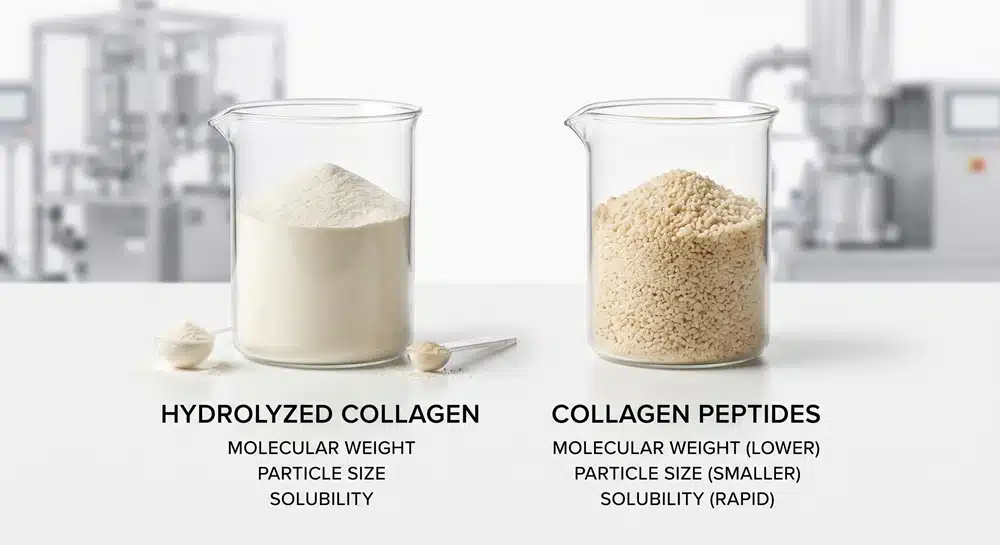
Risposta rapida: Collagene idrolizzato vs peptidi di collagene
Cosa significa “collagene idrolizzato”?
Il collagene idrolizzato è un collagene che è stato sottoposto a un processo di idrolisi. Nella produzione di integratori, si ricorre comunemente all’uso di enzimi per scomporre le lunghe proteine native del collagene in peptidi più piccoli. Ciò rende l’ingrediente più facile da utilizzare in bevande in polvere, capsule, compresse, caramelle gommose, bustine pronte da miscelare e alimenti funzionali.
Il termine “idrolizzato” si riferisce al processo di produzione. Indica all’acquirente che la proteina di collagene originale è stata scomposta. Di per sé, però, non fornisce informazioni sulla provenienza, sulla distribuzione del peso molecolare, sul sapore, sull’odore, sulla solubilità o sugli standard di analisi.
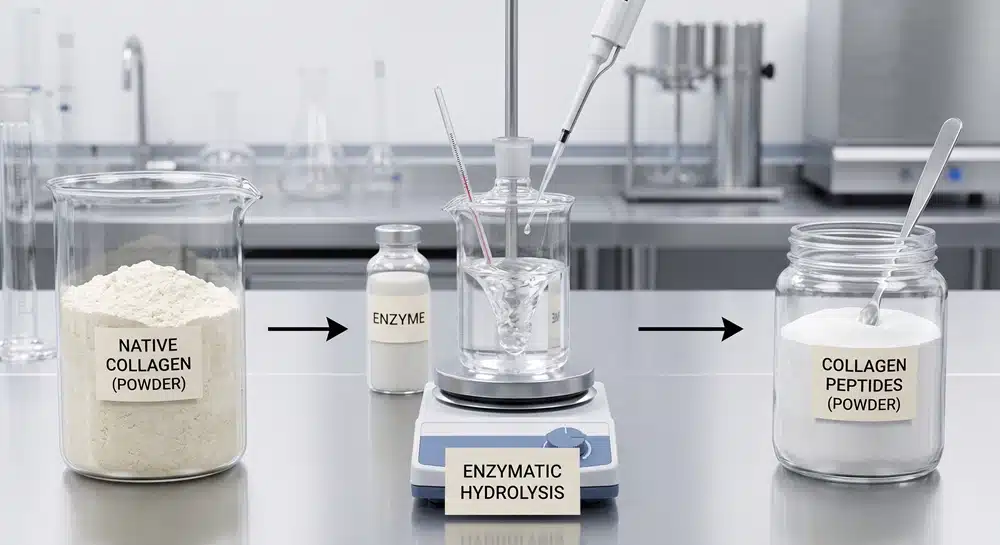
Cosa sono i peptidi di collagene?
I peptidi di collagene sono le catene peptidiche più piccole che si formano in seguito all'idrolisi del collagene. In altre parole, l'idrolisi è il processo, mentre i peptidi di collagene ne sono il risultato. Ecco perché i termini “collagene idrolizzato”, “idrolizzato di collagene” e “peptidi di collagene” vengono spesso utilizzati in modo intercambiabile sulle etichette degli integratori.
Per quanto riguarda il posizionamento del prodotto finito, l’espressione “peptidi di collagene” risulta spesso più accattivante per i consumatori, soprattutto nel caso di prodotti dedicati alla bellezza dall’interno, all’invecchiamento sano, al benessere delle articolazioni e alla nutrizione sportiva. Per quanto riguarda le specifiche tecniche, sui certificati di analisi (COA), negli elenchi degli ingredienti e nella documentazione dei fornitori possono comparire le diciture “collagene idrolizzato” o “idrolizzato di collagene”.
Collagene idrolizzato vs peptidi di collagene: principali differenze
Collagene, gelatina, idrolizzato di collagene e peptidi di collagene
Chi effettua ricerche spesso confronta più di due termini, quindi è importante distinguere tra collagene nativo, gelatina, idrolizzato di collagene e peptidi di collagene.
Se il tuo prodotto si basa sul processo di gelificazione, confronta questo argomento con peptidi di collagene vs. gelatina. Se il tuo prodotto si posiziona come un alimento, confronta i peptidi di collagene con brodo di ossa al collagene prima di scegliere la storia definitiva dell'ingrediente.
Il cambio di nome comporta una modifica dei benefici?
No. Se la provenienza del prodotto, il profilo peptidico, il dosaggio e le specifiche di qualità sono gli stessi, la dicitura riportata sull’etichetta non comporta alcun beneficio aggiuntivo. Un prodotto etichettato come “collagene idrolizzato” non è automaticamente più potente di uno etichettato come “peptidi di collagene”, e un prodotto etichettato come “peptidi di collagene” non è automaticamente più puro o più efficace.
Per garantire la conformità dei contenuti relativi agli integratori, evitare di affermare che il collagene “tratta”, “cura” o “previene” le malattie. Formulazioni più sicure includono “favorisce l’idratazione della pelle”, “sostiene il tessuto connettivo”, “favorisce il benessere articolare negli adulti attivi” o “contribuisce a fornire aminoacidi derivati dal collagene”, purché tali affermazioni siano supportate da prove scientifiche e siano state valutate in relazione al mercato di riferimento.
Come scegliere un ingrediente a base di collagene per la formulazione di integratori
Per i marchi di integratori, la scelta migliore non consiste nel decidere tra due nomi, bensì nel selezionare le specifiche degli ingredienti più adatte al formato del prodotto e al pubblico di riferimento.
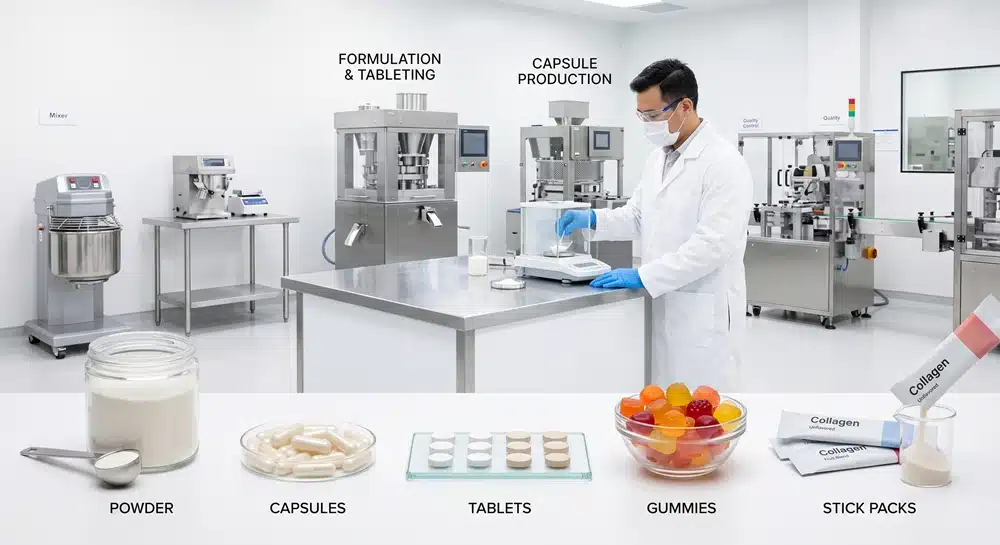
Per la pianificazione della produzione, i peptidi di collagene vengono comunemente utilizzati in produzione di integratori in polvere, capsule, compresse, stick pack, bustine, bevande funzionali, caramelle gommose e integratori a marchio privato personalizzati.
Specifiche di qualità da richiedere prima dell'acquisto
Prima di scegliere un fornitore, richiedete la documentazione relativa ai singoli lotti, anziché affidarvi esclusivamente alle affermazioni di marketing.
- Fonte: bovino, marino, suino, pollame, membrana del guscio d'uovo, oppure una fonte specializzata.
- Tipo di collagene: tipo I, II, III o una configurazione mista, ove applicabile.
- Distribuzione del peso molecolare: aiuta a valutare le dimensioni dei peptidi e l'idoneità della formula.
- Contenuto di proteine o peptidi: necessari per la pianificazione delle dosi e delle etichette.
- Metalli pesanti: analisi per piombo, arsenico, cadmio e mercurio.
- Microbiologia: conta batterica totale, lieviti e muffe, E. coli, Salmonella e altre analisi pertinenti.
- Dati relativi alla solubilità e alle caratteristiche sensoriali: particolarmente importante per le polveri e le bevande.
- Informazioni sugli allergeni e sull'origine: necessario per le indicazioni relative a prodotti di origine marina, bovina, avicola o di altra origine animale.
- Certificato di analisi e scheda tecnica: la base per la procedura di approvvigionamento e la revisione della qualità.
Per le capsule, verificare anche la densità apparente e la scorrevolezza. Per le polveri ad alto dosaggio, verificare anche il sapore, l’odore, il colore, la formazione di schiuma e il comportamento durante la miscelazione. Per i progetti relativi alle capsule, consultare produzione di integratori in capsule.
Considerazioni relative alle indicazioni riportate sulle etichette e alla conformità
I prodotti a base di collagene sono integratori alimentari, non farmaci. I contenuti non devono suggerire che il collagene idrolizzato o i peptidi di collagene servano a diagnosticare, trattare, curare o prevenire malattie. Le affermazioni devono essere veritiere, specifiche e supportate da prove adeguate.
I marchi che intendono lanciare un prodotto a base di collagene dovrebbero verificare le indicazioni relative agli ingredienti, la formulazione relativa a struttura e funzione, il dosaggio, il pubblico di riferimento e le avvertenze obbligatorie prima dell’approvazione definitiva della grafica. Se state sviluppando un concetto di prodotto a base di collagene destinato alla cura della pelle, delle articolazioni, dei tendini, all’attività sportiva o all’invecchiamento in salute, Gensei può fornirvi assistenza nella revisione di formulazioni personalizzate e nella produzione del prodotto finito.
FAQ
Il collagene idrolizzato è la stessa cosa dei peptidi di collagene?
Sì, nella maggior parte dei contesti relativi agli integratori, questi termini si riferiscono alla stessa categoria di ingredienti. Il termine “collagene idrolizzato” descrive il processo, mentre “peptidi di collagene” indica l’ingrediente peptidico ottenuto tramite tale processo.
L'idrolizzato di collagene è la stessa cosa dei peptidi di collagene?
Di solito sì. "Idrolizzato di collagene" è un altro termine tecnico comunemente usato per indicare i peptidi di collagene idrolizzati.
Cos’è meglio, il collagene idrolizzato o i peptidi di collagene?
Nessuno dei due termini è automaticamente migliore dell’altro. Confronta la provenienza, il peso molecolare, il contenuto proteico, la solubilità, la qualità sensoriale, i test effettuati e la documentazione fornita dal fornitore.
I peptidi di collagene sono una proteina completa?
No. I peptidi di collagene forniscono aminoacidi derivati dal collagene, in particolare glicina, prolina e idrossiprolina, ma in genere non vengono considerati un sostituto completo delle proteine.
I marchi possono utilizzare entrambi i termini sullo stesso prodotto?
Sì, molti marchi utilizzano la dicitura “peptidi di collagene” sul pannello frontale e “collagene idrolizzato” o “idrolizzato di collagene” nella tabella nutrizionale, nell’elenco degli ingredienti o nella documentazione tecnica. La formulazione deve essere coerente con le specifiche degli ingredienti e con le norme locali in materia di etichettatura.
Qual è la specifica più importante per l'approvvigionamento B2B?
Non esiste un unico capitolato tecnico che copra tutte le formule. Per quanto riguarda l’approvvigionamento, occorre partire da: origine, distribuzione del peso molecolare, contenuto proteico o peptidico, certificato di analisi (COA), metalli pesanti, analisi microbiologica, solubilità, dati sensoriali, dichiarazione sugli allergeni, quantità minima ordinabile (MOQ) e tempi di consegna.
Riferimenti
- Collagene idrolizzato – Fonti e applicazioni, Molecules, 2019
- L’idrolisi enzimatica di un idrolizzato di collagene migliora il tasso di assorbimento postprandiale, Nutrients, 2019
- Supplementazione orale di specifici peptidi di collagene e fisiologia della pelle umana, Skin Pharmacology and Physiology, 2014
- FDA: Informazioni per i consumatori sull'uso degli integratori alimentari
- FTC: Linee guida sulla conformità dei prodotti per la salute

Warren Wan è un esperto di grande esperienza nel settore della filiera degli integratori alimentari, con una vasta esperienza pratica nella ricerca, nello sviluppo, nel controllo dei processi e nell’approvvigionamento globale di ingredienti fondamentali quali i peptidi di collagene, le proteine del brodo d’ossa e la cheratina. In qualità di autore di questa rubrica, si impegna a smascherare le strategie di marketing, trasformando la complessa scienza degli ingredienti e gli standard di controllo della qualità della produzione in una divulgazione scientifica approfondita e di facile comprensione, aiutando i lettori a comprendere la verità che si cela dietro le etichette e a compiere scelte più razionali in materia di salute.