概要: ホエイプロテインは、1回分あたりのロイシン含有量が多く(約2.5~3g、一方、多くの牛肉タンパク質分離物は1.8~2.2g)、研究による裏付けも強いため、筋肉のタンパク質合成には依然としてより良い選択肢と言えます。 牛肉タンパク質分離物は、乳製品を摂取しない方、パレオダイエットを実践している方、または乳糖不耐症の方には最適ですが、各ブランドは、その製品が筋肉由来のものか、それともコラーゲンが主成分のものかを確認する必要があります。.
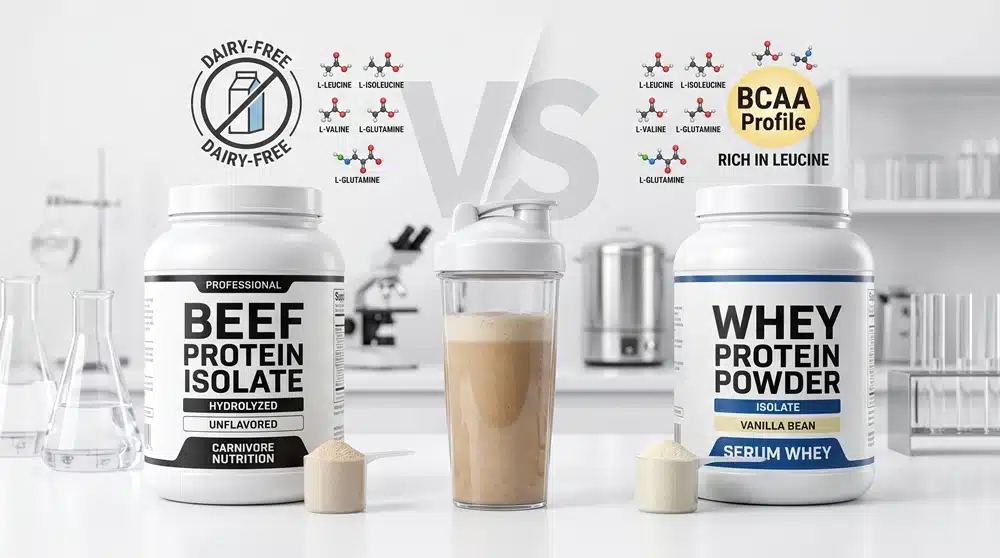
プロテインサプリメントはフィットネスと栄養の世界における定番であり、筋肉の成長、回復、そして全体的な健康のために必要なタンパク質摂取を支援します。数ある選択肢の中でも、高品質なタンパク源を求める人々にとって、ビーフプロテインアイソレートとホエイプロテインの比較は特に注目されています。どちらも動物性由来ですが、組成、利点、そして理想的な使用場面において違いがあります。本記事では両者の違いを深く掘り下げます。 ビーフ プロテイン そしてホエイプロテインについて、あなたの目標に最適な選択をするための洞察を提供します。.
サプリメント製造の観点から見ると、最大の違いは単に「牛肉か牛乳か」ということだけではありません。それは、ラベルに記載されているタンパク質そのものの品質にあります。高品質な牛肉タンパク質分離物は、必須アミノ酸組成、ロイシン含有量、タンパク質定量法、溶解性、風味マスキング性能、および不純物検査によって評価されるべきです。 これは特に重要な点です。なぜなら、一部の牛肉タンパク質製品はコラーゲンを豊富に含む原料に大きく依存している場合があり、それによりグリシンやプロリンの含有量は向上するものの、ホエイアイソレートと比較して、筋肉増強に有効なアミノ酸の全体的な濃度が低下する可能性があるからです。.
ビーフ・プロテイン・アイソレートとは?
ビーフ プロテイン は牛肉から作られるプロテインパウダーで、通常、赤身の切り身や、骨や結合組織のようなコラーゲンを多く含む部位から抽出される。製造工程では、タンパク質を加水分解して分離し、脂肪と炭水化物を最小限に抑えた濃縮パウダーを作る。通常、1食あたり25~30グラムのタンパク質と、ロイシン、バリン、イソロイシンなどの必須アミノ酸を含む完全なアミノ酸プロファイルを含んでいます。.
このプロテインは、乳糖のような一般的なアレルゲンを避けることができるため、パレオダイエットや乳製品を使わないダイエットをしている人に人気がある。また、バイオアベイラビリティ(生物学的利用能)が高いこと、つまり体がタンパク質を効率的に吸収して利用できることも売りです。ビーフ・プロテイン・アイソレートは、筋肉の回復を目的とするアスリートや、特定の食事嗜好に沿ったタンパク質源を求める人々によく利用されている。
牛肉タンパク質分離物を評価する実用的な方法は、そのタンパク質の由来を確認することです。筋肉由来の牛肉タンパク質は、スポーツ栄養の観点から見て、より優れた必須アミノ酸プロファイルを提供する傾向があります。一方、コラーゲンを豊富に含む牛肉タンパク質は、結合組織の形成に重要なグリシン、プロリン、ヒドロキシプロリンをより多く含んでいます。どちらも価値のあるものですが、同一のものとして販売されるべきではありません。 真の筋肉増強用プロテインパウダーを選ぶ際には、ブランド側は、パッケージ前面に「タンパク質25g」と記載されているという表示だけに頼るのではなく、アミノ酸組成、ロイシン値、全窒素法による分析結果、および第三者機関による検査報告書の提示を求めるべきです。.
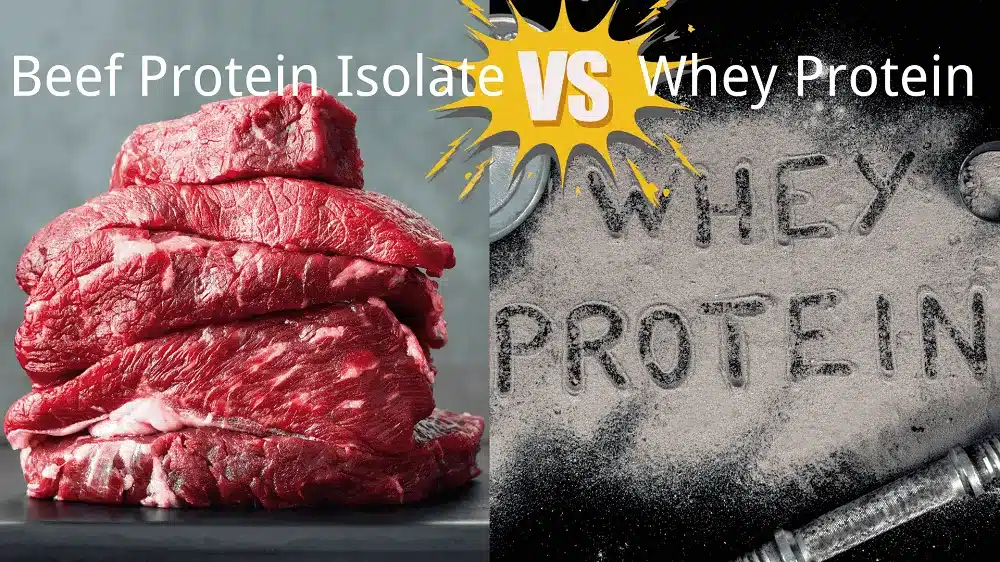
ホエイプロテインとは?
ホエイプロテインは牛乳から作られ、チーズを作る過程でできる副産物です。濃縮乳、分離乳、加水分解乳の3種類がある。ホエイ濃縮物は70~80%のタンパク質に乳糖と脂肪が含まれ、ホエイ分離物は90%以上のタンパク質に最小限の乳糖が含まれる。加水分解物は、より早く吸収されるようにあらかじめ消化されています。一般的な1食分には20~25gのタンパク質としっかりとしたアミノ酸プロフィールが含まれており、特に筋タンパク質合成の重要な促進因子であるロイシンが豊富に含まれています。
ホエイは、そのような食品における金字塔である。 プロテイン・サプリメント その広範な研究、手頃な価格、汎用性のため。運動後の回復、筋肉増強、さらには体重管理のための食事代替としても広く使われている。.
ホエイ製品において、品質上の主な違いは加工グレードにあります。ホエイコンセントレートには通常、乳糖、脂肪、および生物活性のある乳成分が多く含まれていますが、ホエイアイソレートはより精製されており、一般的にタンパク質濃度が高く、乳糖含有量ははるかに低くなっています。 加水分解ホエイは、吸収を早めるためにあらかじめ消化処理が施されていますが、苦味が強くなる場合があり、市販の粉末フォーミュラではより強力な風味マスキングが必要になることがあります。このため、スポーツ栄養分野ではホエイが依然として標準的なベンチマークとして位置づけられているのに対し、ビーフプロテインアイソレートは、すべてのユーザーにとっての直接的な代替品というよりは、通常、プレミアムな乳製品不使用の代替品として位置づけられています。.
ビーフ・プロテイン・アイソレートとホエイ・プロテインの主な違い
その違いを理解するために、ビーフ・プロテイン・アイソレートとホエイ・プロテインを区別する主な要素を説明しよう。
ソースと加工
ビーフ プロテイン は牛の組織を原料とし、脂肪や不純物を取り除くためにしばしば加工される。 プロテインパウダー.コラーゲンペプチドが配合されているブランドもあるが、筋肉由来のビーフプロテインに比べ、必須アミノ酸の含有量が低くなる可能性がある。一方、ホエイプロテインは、乳糖と脂肪からタンパク質を分離するためにろ過された牛乳に由来する。ホエイ単離物または加水分解物に加工することで、乳糖をほとんど含まないため、軽度の乳糖過敏症の方に魅力的です。
製造現場の実情:牛肉タンパク質分離物はすべて同じではない
サプリメントの製造において、「牛肉タンパク質分離物」という言葉は、原料戦略によってその内容が大きく異なる場合があります。 高品質なスポーツ栄養製品は、総タンパク質含有率だけでなく、アミノ酸の品質を基に設計されるべきです。牛肉タンパク質粉末にコラーゲン由来のペプチドが大量に含まれている場合、総窒素含有量は高い値を示すかもしれませんが、必須アミノ酸の密度やロイシン含有量はホエイアイソレートよりも低くなる可能性があります。.
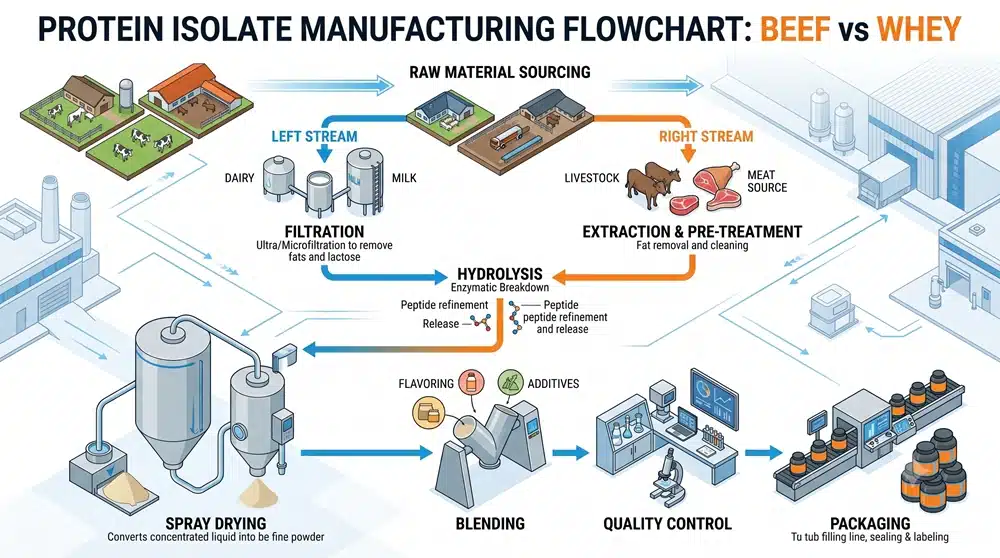
ブランドオーナーにとって、品質チェックリストには以下の項目を含める必要があります:
– 完全なアミノ酸組成、特にロイシン、リジン、イソロイシン、バリン。.
– タンパク質源の開示:赤身牛肉、コラーゲンを豊富に含む牛由来原料、または動物由来ペプチドのブレンド。.
– 冷水における溶解性および分散性の試験。.
– 風味のマスキング効果。牛肉のタンパク質には、うま味や苦味のようなニュアンスが含まれることがあるため。.
– 重金属、微生物学、およびアレルゲン管理に関する文書。.
– 栄養補助食品のcGMP要件に基づくロット間の均一性。.
| 品質チェックポイント | 牛肉タンパク質単離物 | ホエイプロテインアイソレート | その重要性 |
|---|---|---|---|
| タンパク質源の確認 | 筋肉由来の牛由来材料と、コラーゲンを豊富に含む牛由来材料を明確に区別すべきである | 乳清を原料とし、通常、濃縮物・分離物・加水分解物へとろ過される | タンパク質配置の誤りを防ぎ、ユーザーの目標に合わせたフォーミュラ選びを支援します |
| 1食分あたりのロイシン | 原産地や加工方法によって異なりますが、多くの場合1.8~2.2g程度です | 1食分あたり、たいてい2.5~3g程度です | ロイシンは、筋肉のタンパク質合成を促進する重要な要因である |
| EAA密度 | コラーゲンが多い場合は、それより低くなる可能性があります | 概して水準が高く、研究も十分に進んでいる | 筋肉増強に関する主張に関する重要事項 |
| 消化耐性 | 天然由来で乳製品不使用、乳糖不使用 | コンセントレートには乳糖が含まれている場合がありますが、アイソレートには通常、乳糖の含有量がはるかに少ないです。 | 牛乳アレルギーや乳糖不耐症のあるユーザーにマッチングします |
| 風味のマスキング | より難易度が高い。香ばしさ、苦味、あるいは肉のような風味が感じられる場合がある | より簡単;幅広いフレーバーシステムとの互換性 | リピート購入や顧客満足度に影響を与える |
| 製造品質管理 | アミノ酸組成、重金属、微生物検査、溶解度、原産地追跡可能性 | タンパク質定量、乳糖濃度、微生物学的検査、アレルゲン管理、溶解性 | 消費者とプライベートブランド双方からの信頼を築く |
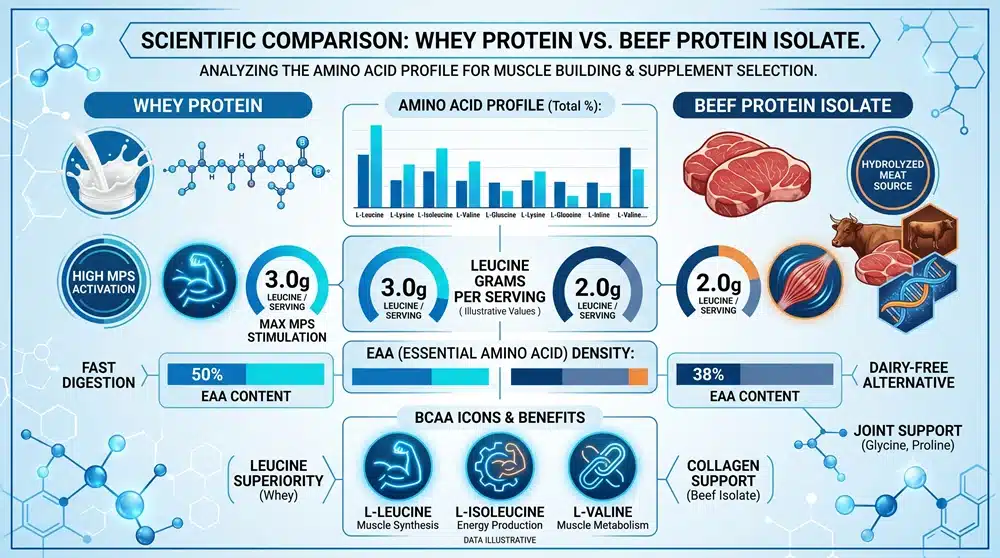
栄養成分
どちらのプロテインもタンパク質含有量は高いが、アミノ酸プロフィールは若干異なる。ホエイプロテインは、筋肉の成長に重要なロイシンを特に多く含む(1食あたり約2.5~3グラム)。ビーフ・プロテイン・アイソレートは完全なアミノ酸プロフィールを提供するが、ロイシンレベルは低いかもしれない(1食あたり約1.8~2.2グラム)。ビーフプロテインには、グリシンやプロリンといったコラーゲン由来のアミノ酸が含まれていることが多く、関節や皮膚の健康には有益だが、筋肉の合成にはあまり効果がない。
一方、ビーフ・プロテイン・アイソレートは通常、乳糖を含まず、牛肉由来の微量ミネラルを含む。
消化率と吸収率
ホエイプロテインは消化が早いことで知られ、中でもホエイ加水分解物は最も消化が早く、運動後の摂取に最適です。ビーフ・プロテイン・アイソレートも生物学的利用能が高いが、コラーゲンを含むため消化がやや遅い。乳糖不耐症の人には、ホエイ単離物でも非常に敏感な人には問題を引き起こす可能性があるため、ビーフ・プロテイン・アイソレートがより安全な選択となる。
味と食感
ホエイプロテインは、チョコレートからバニラまで様々なフレーバーがあり、一般的に水や牛乳とよく混ざり、滑らかなテクスチャーを作り出します。しかし、ビーフ・プロテイン・アイソレートは、独特の、時には肉のような味がすることがあり、すべてのユーザーが好むとは限りません。特にコラーゲンをベースにしている場合、そのテクスチャーは粒状になることがあり、滑らかに混ぜるのに手間がかかることが多い。
価格とアクセシビリティ
ホエイプロテインは、ブランドや種類(濃縮物か分離物か)によって1食あたり$0.80~$1.50と、より手頃な価格となっている。ビーフ・プロテイン・アイソレートは一般的に価格が高く、特殊な加工が施されているため、1食あたり$1.50~$2.50となる。ホエイは店舗やオンラインで広く入手できるが、ビーフ・プロテイン・アイソレートは一般的ではないが、人気が高まっている。
比較表
| 特徴 | ビーフ プロテイン | ホエイプロテイン | 最適化に関する注意事項 |
| ソース | 供給元によって、牛の組織、赤身牛肉、またはコラーゲンを豊富に含む牛由来の原料 | 乳清の副産物を、濃縮物、分離物、または加水分解物に加工したもの | 「情報源の透明性」を確保し、汎用的なコンテンツに伴うリスクを軽減する |
| 1食分あたりのタンパク質 | 通常25~30g | 通常20~25g | 既存のデータはそのまま残しつつ、総タンパク質だけでは不十分であることを説明する |
| ロイシン | 1食あたり約1.8~2.2g | 1食あたり約2.5~3g | これは、AIによって抽出可能なデータポイントの中で最も有力なものです |
| 乳糖/乳製品 | 乳製品不使用・乳糖不使用 | コンセントレートには乳糖が多く含まれていますが、アイソレートは少なくなっています。牛乳アレルギーのある方は摂取を避けてください。 | 不耐性やアレルギーに関するキーワードの意図に合致する |
| タンパク質の品質リスク | コラーゲンが多く含まれる場合があり、必須アミノ酸(EAA)の濃度が低下する可能性がある | 一般的に、必須アミノ酸(EAA)および分枝鎖アミノ酸(BCAA)の含有量が高い | 業界ならではの独自の知見を提供します |
| 最優秀ユーザー | 乳製品不使用、パレオ、乳製品過敏症、コラーゲンサポートを謳った商品 | 筋肉増強、トレーニング後の回復、手頃な価格 | 直接的な推奨表現を使う |
| ブランドの活用事例ベスト | 高品質な乳製品不使用のスポーツ栄養食品、パレオプロテイン、関節サポートを目的とした製品群 | 主流のスポーツ用プロテイン、コストパフォーマンスに優れたトレーニング後のサプリメント | B2B間の転換の架け橋を構築する |
| ラベルの確認 | アミノ酸組成および原料の開示を要請する | 分離物/濃縮物の比率、乳糖、およびアレルゲンの表示を確認する | 実践的な購入者向けガイダンスを追加 |
利点と欠点
ビーフ プロテイン
メリット:
- ラクトースフリー:乳製品アレルギーや乳糖不耐症の方に最適。
- パレオ・フレンドリー:動物性食品を中心とした食生活に合う。
- コラーゲン含有量:関節、皮膚、結合組織の健康をサポート。
- 高いバイオアベイラビリティ:筋肉の修復と成長のために吸収されやすい。
欠点:
- 限定調査:ホエイよりも研究が進んでいないため、長期的な効果は不明。
- 味へのこだわり:味に不快感を覚えるユーザーもいる。
- より高いコスト:ホエイに比べ、1食あたりの価格が高い。
ホエイプロテイン
メリット:
- 徹底的なリサーチ:数十年にわたる研究が、筋肉の成長と回復に対する有効性を裏付けている。
- 費用対効果:最も手頃なプロテインサプリメントのひとつ。
- 多用途:さまざまなニーズに応じて、さまざまな形状やフレーバーがある。
- 高いロイシン含有量:筋タンパク質合成の刺激に最適。
欠点:
- 乳糖の問題:乳糖不耐症の人は消化不良を起こすことがある。
- アレルゲンの可能性:乳由来なので、乳製品アレルギーの方には適さない。
誰がどちらを選ぶべきか?
ビーフ・プロテイン・アイソレートとホエイ・プロテインのどちらを選ぶかは、食事のニーズ、フィットネスの目標、好みによって異なる。
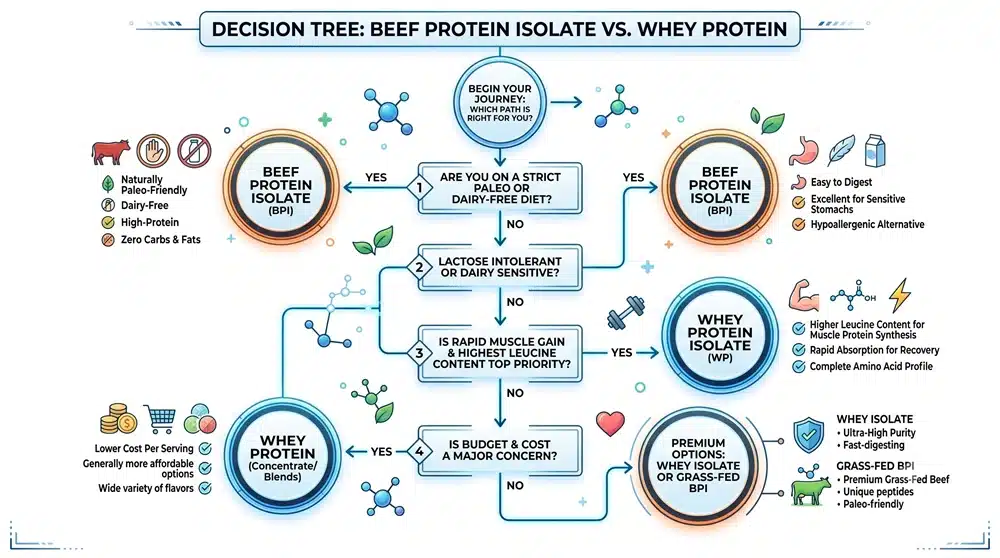
単純な決定木
- 主な目標が筋肉のタンパク質合成を最大限に高めることであり、乳製品に問題がなく、1回分のコストパフォーマンスを重視し、まろやかな味わいと溶けやすさを好む場合は、ホエイプロテインを選びましょう。.
- 乳製品不使用または乳糖フリーの動物性タンパク質が必要な場合、パレオ式ダイエットを実践している場合、乳由来の成分が苦手な場合、あるいはコラーゲンに関連するアミノ酸を特に摂取したい場合は、「ビーフプロテインアイソレート」をお選びください。.
純粋な筋肉増強を目的としており、製品のアミノ酸組成が明記されていない場合は、牛肉由来のプロテインの使用には注意が必要です。コラーゲンを多く含む配合の場合、ラベルに記載されている総タンパク質量がホエイアイソレートと同程度であっても、必須アミノ酸の含有量はホエイアイソレートほど高くない可能性があります。.
- ビーフ・プロテイン・アイソレートを選ぶなら:
- 乳糖不耐症または乳製品アレルギーのある方。
- パレオダイエットや乳製品抜きダイエットをしている。
- 関節や皮膚の健康に役立つ可能性のあるタンパク源を求めている。
- 特化した製品にプレミアムを支払うことを厭わない。
- ホエイプロテインを選ぶなら:
- 筋肉増強に重点を置き、ロイシンが豊富なプロテインを求める。
- 予算がなく、費用対効果の高いオプションが必要。
- バラエティに富んだ味わいと滑らかな舌触りを好む。
- あなたは乳製品や乳糖に問題はない。
具体的な目標のために:
- 筋肉増強:ホエイプロテインは、ロイシンの含有量が高く、その有効性を裏付ける広範な研究があるため、より良い選択である。
- 減量:どちらも低カロリーで高タンパクな選択肢として有効だが、ホエイは手頃な価格なので、日常使いにはより実用的だ。
- 健康全般:ビーフ・プロテイン・アイソレートは、そのコラーゲン含有量により、関節と皮膚の健康に役立つ可能性があります。
サプリメントブランドにとって、ビーフプロテインアイソレートとホエイプロテインのどちらを選ぶかは、配合やポジショニングに関する判断でもあります。 ホエイは、風味付けが容易で、原料の調達も容易であり、一般的なスポーツ栄養製品においては通常、コストパフォーマンスに優れています。ビーフプロテインアイソレートは、より厳格な原料の検証、より優れた風味のマスキング、そしてより明確なラベル表示が必要ですが、アミノ酸プロファイルが適切に検証されれば、「乳製品不使用」や「パレオダイエット対応」という強力な製品コンセプトを打ち出すことができます。.
乳製品不使用のプロテインパウダーや、パフォーマンス向上を重視したプロテインパウダーを開発しているブランドにとっては、経験豊富な プロテインサプリメントメーカー アミノ酸プロファイルの検証、風味のマスキング効果の向上、重金属や微生物の管理、そしてパイロットバッチから商業生産へのスケールアップを支援します。.プロテイン・サプリメントの実用的な利用法
どちらのプロテインも最大限に活用するには、以下のヒントを参考にしてほしい:
- タイミング:筋肉の回復を最大化するために、運動後1~2時間以内に20~30gのプロテインを摂取する。どちらのプロテインも効果的だが、吸収の速さではホエイがやや有利かもしれない。
- ミキシング:水、牛乳(乳清の場合)、またはアーモンドミルクのような乳製品以外の代替品とブレンドする。フルーツ、ナッツバター、オーツ麦などを加えれば、栄養たっぷりのスムージーに。
- 1日の摂取量:活動レベルに応じて、体重1ポンドあたり0.8~1.2グラムのたんぱく質を毎日摂取する。全食品からのタンパク質摂取量の不足を補うためにサプリメントを利用する。
- コンビネーション:グリコーゲンの補給を高めるために、運動後に炭水化物(例:バナナ)と組み合わせたり、バランスの取れた食事の代わりとして健康的な脂肪(例:アボカド)と組み合わせたりする。
完成品を比較する際は、タンパク質の含有量(グラム)だけで判断してはいけません。アミノ酸組成、1食分あたりのロイシン含有量、添加されたコラーゲンペプチド、甘味料の配合、アレルゲン表示、および第三者機関による検査結果を確認してください。 アスリートの場合、国際スポーツ栄養学会(ISSN)は、高品質なタンパク質を1回あたり約20~40g摂取することを推奨しており、理想的には約700~3,000mgのロイシンと、バランスの取れた必須アミノ酸組成を含むものが望ましいとされています。 このため、筋肉増強用フォーミュラではホエイが依然として基準となることが多い一方で、乳製品不使用を謳う場合や、消化への耐性、原料の透明性を重視する場合は、ビーフプロテインアイソレートを選ぶべきです。.
お使いの配合において、より優れた口当たり、溶解性、および1回分の分量の均一性が求められる場合は、専用の 粉末サプリメントメーカー ホエイプロテインパウダーとビーフプロテインパウダーの両方について、流動性、インスタント化、風味システム、および包装形態を最適化することができます。.結論
ビーフ・プロテイン・アイソレートとホエイ・プロテインはどちらも優れたプロテイン・サプリメントですが、それぞれ異なるニーズに対応しています。ビーフ・プロテイン・アイソレートは、乳製品を避けている方やパレオダイエットを実践している方に最適で、次のようなユニークな利点があります。 関節の健康のためのコラーゲン.しかし、ホエイプロテインは、その手頃な価格、ロイシンの含有量、筋肉の成長をサポートする広範な研究のために、依然として最も人気のある商品です。選ぶ際には、食事制限、フィットネスの目標、予算を考慮しよう。それぞれのプロテインを少量ずつ試してみて、どれが自分の好みやライフスタイルに合うかを確認し、栄養士に相談して、自分に合ったアドバイスをもらいましょう。あなたはどのプロテインを選びますか?ご意見、ご感想をお聞かせください!
よくあるご質問
情報源
[1] International Society of Sports Nutrition Position Stand: protein and exercise. PubMed. URL: https://pubmed.ncbi.nlm.nih.gov/28642676/
[2] International Society of Sports Nutrition Position Stand full text. 国際スポーツ栄養学会誌. URL: https://link.springer.com/article/10.1186/s12970-017-0177-8
[3] Sharp et al. Effects of Beef Protein Isolate and Whey Protein Isolate Supplementation. PMC. URL: https://pmc.ncbi.nlm.nih.gov/articles/PMC4595383/
[4] Valenzuela et al. Does Beef Protein Supplementation Improve Body Composition and Exercise Performance? PMC. URL: https://pmc.ncbi.nlm.nih.gov/articles/PMC6628355/
[5] Naclerio et al. Effects of supplementation with beef or whey protein versus carbohydrate. PubMed. URL: https://pubmed.ncbi.nlm.nih.gov/28910233/
[6] Gorissen et al. Protein content and amino acid composition of commercially available plant-based protein isolates. PMC. URL: https://pmc.ncbi.nlm.nih.gov/articles/PMC6245118/
[7] eCFR 21 CFR Part 111 – Dietary Supplement cGMP. URL: https://www.ecfr.gov/current/title-21/chapter-I/subchapter-B/part-111

ウォーレン・ワン氏は、栄養補助食品のサプライチェーンにおいて豊富な経験を持つベテランの専門家であり、コラーゲンペプチド、骨スープ由来タンパク質、ケラチンといった主要成分の研究、開発、工程管理、およびグローバルな調達において、豊富な実務経験を有しています。 本コラムの執筆者として、彼はマーケティング的な装いを剥ぎ取り、難解な成分科学や製造品質管理基準を、分かりやすい本格的な科学普及記事へと変換することに尽力しています。これにより、読者がラベルの裏にある真実を理解し、より合理的な健康に関する選択を行えるよう支援しています。.