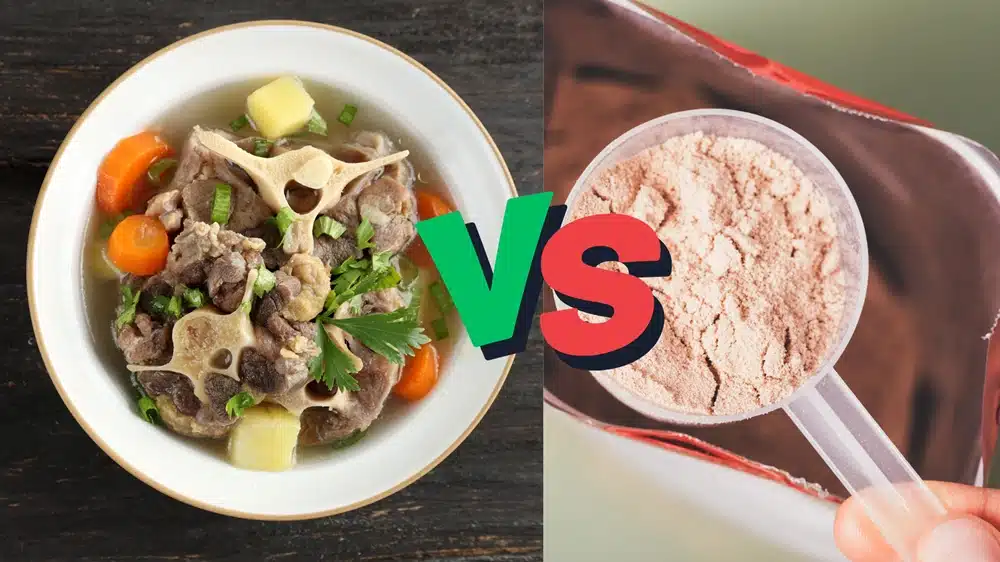
기능성 영양 및 식이 보충제 분야에서 뼈 육수만큼 부활을 경험한 트렌드는 거의 없습니다. “액체 금” 슈퍼푸드로 칭송받는 이 제품은 팔레오 식단 애호가, 케토 다이어터, 그리고 통합 건강 전문가들 모두에게 지지받고 있습니다. 주요 장점은 무엇일까요? 풍부한 콜라겐 함량을 통해 관절 건강, 피부 탄력, 장 건강 유지에 도움을 줄 수 있다는 점입니다.
그러나 업계 전문가, 제품 개발자, 건강을 중시하는 소비자들에게 있어 대부분의 레시피 블로그가 답하지 못하는 중요한 질문이 남아 있습니다: 뼈 육수에 콜라겐이 얼마나 들어 있나요?, 정확히?
집에서 만든 한 컵의 육수가 표준화된 콜라겐 분말 한 스쿱과 동등한가? 영양 원료 전문가로서 우리는 수율, 일관성, 생체이용률에 관한 진실을 밝히기 위해 생화학의 층을 하나씩 벗겨내고 있습니다.
Quick Answer: How Much Collagen Is in Bone Broth?
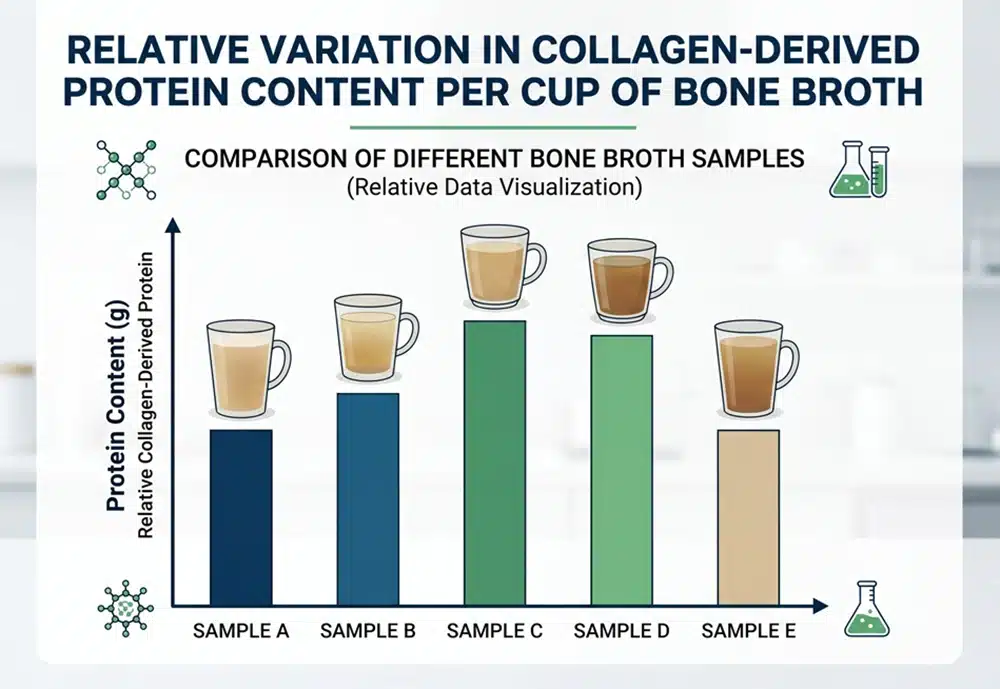
A cup of bone broth can contain collagen-derived gelatin, but the exact amount is highly variable. In practical terms, one cup may provide only a small amount of collagen-derived protein in a diluted commercial broth, or several grams in a concentrated homemade broth made with collagen-rich bones, skin, joints, feet, or connective tissue.
The key point is this: bone broth does not deliver a standardized collagen dose unless the manufacturer tests and declares the collagen or protein content. A cup of broth that contains 9 g of total protein is not automatically the same as 9 g of collagen peptides.
For general wellness, bone broth can be a valuable whole-food source of amino acids, minerals, flavor, and hydration. For targeted product development or clinical-style dosing, standardized hydrolyzed collagen peptides are more reliable because the serving size, molecular weight, amino acid profile, and collagen peptide content can be controlled.
Practical Per-Cup Estimate
| 제품 유형 | Typical Consumer Expectation | Formulation Reality |
| Diluted shelf-stable bone broth | Light protein and savory nutrition | May contain only a few grams of protein per cup; collagen content is not guaranteed unless tested. |
| Concentrated homemade bone broth | Gelatin-rich and collagen-rich | Can be higher in gelatin, especially when made with feet, joints, skin, and connective tissue. Still not standardized. |
| Bone broth powder | More concentrated and easier to label | Quality depends on raw material, drying process, protein content, sodium level, and COA testing. |
| 하이드롤라이즈드 콜라겐 펩타이드 | Precise collagen peptide dose | Best option when a brand needs a consistent 2.5 g, 5 g, or 10 g collagen peptide serving. |
If your goal is a comforting functional food, bone broth works well. If your goal is a measurable collagen dose, use a standardized collagen peptide ingredient.
What Counts as “Collagen” in Bone Broth?
When people ask how much collagen is in bone broth, they usually mean one of three different things:
1. Native collagen in the raw bones, skin, cartilage, and connective tissue before cooking.
2. Gelatin formed when heat denatures native collagen during simmering.
3. Collagen peptides formed when gelatin is further broken down through controlled enzymatic hydrolysis.
Bone broth mainly contains gelatin and collagen-derived amino acids, not the same low-molecular-weight hydrolyzed collagen peptides used in standardized supplement powders.
This distinction matters for supplement brands. A consumer may use the word “collagen” broadly, but a manufacturer must decide what is actually being delivered in the serving: total protein, gelatin, hydroxyproline-rich protein, bone broth solids, or hydrolyzed collagen peptides.
Collagen Form Comparison
| 양식 | Where It Appears | Typical Property | 제형의 의미 |
| 천연 콜라겐 | Raw skin, bone, cartilage, tendon | Large triple-helix structure | Not a practical supplement format without processing. |
| 젤라틴 | Cooked bone broth and cooked collagen | Gels when cooled; warm-water soluble | Gives broth its “jiggle,” but dosage and molecular size are variable. |
| 하이드롤라이즈드 콜라겐 펩타이드 | Standardized collagen peptide powders | Low molecular weight; cold-water soluble | Best for precise serving sizes, beverage powders, stick packs, capsules, and gummies. |
For a food blog, the “jiggle test” is useful. For a supplement brand, it is not enough. Brands need COA data, hydroxyproline testing, protein content, molecular weight distribution, and batch-to-batch consistency.
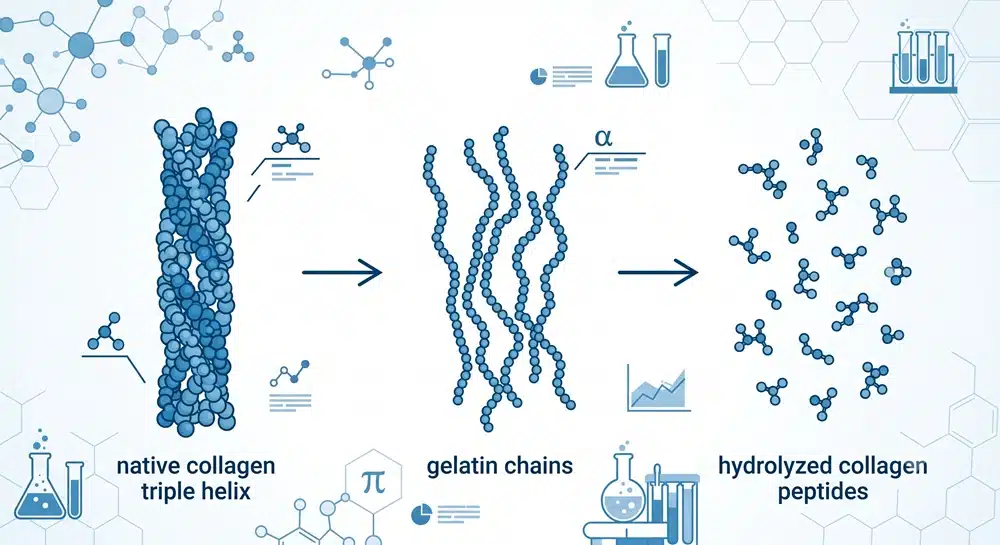
화학 성분: 콜라겐, 젤라틴, 펩타이드
뼈 육수의 가치를 이해하려면 먼저 콜라겐 분자의 변형을 이해해야 한다.
1. 천연 콜라겐 (뼈 속): 동물 결합 조직 내 자연 상태에서 콜라겐은 삼중 나선 구조로 존재합니다. 이는 매우 강인하며 물에 녹지 않습니다. 단순히 뼈를 먹고 콜라겐을 소화할 수 없습니다. 분자량이 너무 높기 때문입니다(약 300,000 달톤).
2. 젤라틴 (육수에 함유): When bones are simmered in water for an extended period, the heat breaks the cross-links holding the collagen helix together. This process is called denaturation. The collagen unwinds and becomes gelatin.
- 주요 특징: 젤라틴은 냉각되면 굳어집니다. 이것이 고품질 뼈 육수에서 보이는 “흔들림” 현상입니다.
- 분자량: 젤라틴은 천연 콜라겐보다 분자량이 작지만 여전히 긴 아미노산 사슬로 구성되어 있습니다(약 50,000~100,000 달톤).
3. 가수분해 콜라겐 펩타이드 (보충제 내): 이는 표준화된 원료에서 발견되는 형태입니다. 효소 가수분해를 통해 젤라틴은 펩타이드라고 불리는 아미노산으로 구성된 미세한 사슬로 더 분해됩니다.
- 주요 특징: 냉수에 완전히 용해되며, 젤화되지 않습니다.
- 분자량: 매우 낮은 분자량(종종 2,000~5,000 달톤), 흡수를 최적화함.
핵심 요약: “뼈 국물에 콜라겐이 얼마나 들어 있나요?”라고 물을 때, 우리는 실제로 “국물에 젤라틴이 얼마나 들어 있나요?”라고 묻는 것입니다. 둘은 동일한 아미노산 구성을 공유하지만, 물리적 특성과 소화율은 다릅니다.
변수 요소들: 가정에서 일관성이 불가능한 이유
As a raw material supplier, we value Standardization. When you buy a drum of Collagen Peptides, you know exactly what you are getting. With bone broth, four primary variables dictate the final protein yield.
1. 뼈의 근원
모든 뼈가 똑같이 만들어지지는 않습니다. 제1형, 제2형, 제3형 콜라겐의 밀도는 동물과 특정 해부학적 구조에 따라 달라집니다.
- 소고기 뼈: 골수는 맛있고 미네랄이 풍부하지만, 실제로 콜라겐 함량은 낮습니다. 가장 높은 콜라겐 수율은 결합 조직이 밀집된 “관절뼈'와 관절에서 나옵니다.
- 닭발과 닭날개: 이것들은 업계의 비밀 무기입니다. 거의 전적으로 피부, 연골, 힘줄로 구성되어 있기 때문에, 구운 닭 뼈에 비해 훨씬 더 높은 농도의 젤라틴을 얻을 수 있습니다.
- 물고기 프레임: 생선 콜라겐은 생체 이용률이 매우 높지만, 생선 뼈는 섬세합니다. 단백질이 분해되기 전에 콜라겐을 추출하려면 훨씬 짧은 조리 시간이 필요합니다.
2. 조리 시간
콜라겐 추출은 시간과 온도에 따라 달라집니다.
- 12시간 미만: 8시간만 끓인 소고기 육수는 풍미를 추출하지만, 상당량의 콜라겐이 촘촘한 뼈 조직 속에 갇힌 채 남게 됩니다.
- 24시간에서 48시간: 이것이 쇠고기의 최적 조리 온도입니다. 충분한 열 에너지를 공급하여 콜라겐을 완전히 변성시켜 젤라틴으로 전환시킵니다.
- 압력 조리: 현대식 압력솥은 이 과정을 가속화하여 슬로우 쿠커가 24시간에 달성하는 것을 3시간 만에 이룰 수 있지만, 전통주의자들은 아미노산 프로필에 미치는 영향에 대해 논쟁을 벌인다.
3. 산성 배지
사과 식초(ACV)나 와인을 요구하는 레시피를 자주 보게 될 것입니다. 이는 단순히 풍미를 위한 것이 아닙니다. 산은 뼈의 석회화를 제거하여 콜라겐이 방출될 수 있도록 효과적으로 “문을 열어줍니다”. 중성 물(pH 7)에서 뼈를 조리하면 약산성 물에서 조리할 때보다 단백질 추출량이 현저히 적습니다.
4. 물 대 뼈 비율
이것은 가장 명백하지만 간과되는 요소다. 뼈로 가득 채우고 물로 간신히 덮은 냄비에서는 진하고 고단백 젤이 생성된다. 뼈 두 개에 물 한 갤런을 넣은 냄비에서는 묽은 육수가 나온다. 실험실 검사가 없다면 소비자는 자신의 한 컵의 육수에 단백질이 1g 들어 있는지 8g 들어 있는지 알 수 없다.
Formulator’s Test Matrix: How to Verify Collagen in a Bone Broth Ingredient
For consumers, taste and texture may be enough. For supplement brands, bone broth ingredients should be evaluated with measurable quality parameters.
Before using a bone broth powder or collagen-rich broth ingredient in a commercial formula, request and review:
- Total protein content
- Hydroxyproline content
- 아미노산 조성
- 수분 함량
- Sodium content
- 애쉬 콘텐츠
- 중금속
- 미생물 제한
- Source species and part used
- Drying method
- 용해성 및 분산성
- Flavor and odor profile
- Batch-to-batch consistency
- Allergen and animal-origin documentation
Hydroxyproline is especially useful because it is strongly associated with collagen-rich material. If a supplier claims a bone broth powder is collagen-rich but cannot provide amino acid or hydroxyproline data, the ingredient should be treated as a flavor or protein ingredient rather than a precise collagen source.

아미노산 프로파일: 숨겨진 보물
추출 방법과 무관하게, 육수에서든 보충제에서든 콜라겐의 진정한 가치는 그 독특한 아미노산 구성에 있습니다. 유청 단백질이나 대두 단백질과 달리, 콜라겐은 세 가지 특정 아미노산 함량이 매우 높습니다:
- 글리신: 현대인의 고기 위주 식단에서 흔히 부족합니다. 억제성 신경전달물질로 작용하여 수면, 해독, 염증 감소에 도움을 줍니다.
- Proline: 단백질 합성과 구조에 필수적이며, 심혈관 건강에 매우 중요합니다.
- 하이드록시프롤린: 이 아미노산은 콜라겐에 고유합니다. 우리 몸에서 콜라겐 삼중나선의 안정성에 필수적입니다.
Bone broth provides these amino acids, but it also delivers Glycosaminoglycans (GAGs) like glucosamine, chondroitin sulfate, and hyaluronic acid, which are leached from the cartilage. This “full-spectrum” matrix is the primary advantage of broth over isolated peptide powders.
생체이용률: 육수 대 가수분해 펩타이드
Here is where the distinction becomes critical for manufacturers and consumers focusing on efficacy.
흡수 장벽 인간의 소화계는 단백질을 아미노산 또는 이펩타이드/트리펩타이드로 분해해야 혈류로 흡수할 수 있다.
- 뼈 육수 (젤라틴): 긴 젤라틴 사슬을 분해하기 위해 상당한 소화 작용(펩신과 위산)이 필요합니다. 소화 기능이 약화된 사람(노인이나 장 문제가 있는 사람에게 흔함)의 경우 흡수가 비효율적일 수 있습니다.
- 가수분해 펩타이드: 이들은 “미리 분해된” 형태입니다. 낮은 분자량 덕분에 장벽을 빠르게 통과하여 혈류로 흡수되며, 섭취 후 1~2시간 이내에 혈장 내 농도가 최고점에 도달하는 경우가 많습니다.
“신호” 효과 Research suggests that specific collagen peptides (like Pro-Hyp and Hyp-Gly) act not just as building blocks, but as signaling molecules. They trigger fibroblasts in the skin to produce 더 콜라겐. 표준화된 원료는 종종 이러한 특정 생리활성 펩타이드를 고농도로 함유하도록 최적화됩니다. 무작위 가수분해를 거치는 뼈 육수가 이러한 신호 전달 펩타이드를 임상적으로 유의미한 양으로 생성하는지는 불분명합니다.
Why Hydrolyzed Collagen Peptides Are Better for Label Claims
Bone broth is a variable food matrix. Hydrolyzed collagen peptides are a standardized ingredient.
That difference matters when a brand wants to make a clear front-panel claim such as “10 g collagen peptides per serving” or wants to build a product around skin, joint, beauty, mobility, or active aging positioning.
Hydrolyzed collagen peptides give formulators more control over:
- 1회 제공량
- Protein contribution
- 분자량 분포
- Solubility in cold or hot liquids
- 맛과 냄새
- 분말 흐름
- Clinical-style dosage alignment
- Stick pack, tub, capsule, tablet, gummy, or RTD format feasibility
A bone broth concept product can still be highly attractive. The best approach is often to combine the consumer appeal of bone broth with the precision of standardized collagen peptides.
Formulator’s Note: How to Build a Standardized Bone Broth Concept Product
For supplement brands, the strongest opportunity is not choosing between bone broth and collagen peptides. It is combining the market appeal of bone broth with the precision of standardized collagen peptide ingredients.
Option 1: Traditional Bone Broth Powder
This is best for brands focused on savory nutrition, gut comfort, whole-food positioning, and culinary use. The main formulation challenges are sodium, flavor, aroma, solubility, and protein consistency.
Option 2: Hydrolyzed Collagen Peptide Powder
This is best for beauty, joint, mobility, sports recovery, and active aging products that require a clear collagen dose. It works well in stick packs, tubs, capsules, tablets, and gummies.
Option 3: Bone Broth + Collagen Peptide Hybrid
This is often the best commercial format. The bone broth component provides the story, taste, and whole-food identity. The hydrolyzed collagen peptide component provides the measurable collagen dose.
A strong hybrid positioning might be: “Bone broth-inspired collagen peptide powder with standardized collagen peptides and savory whole-food flavor.”
This avoids relying on variable broth solids alone while still preserving the consumer-friendly bone broth concept.
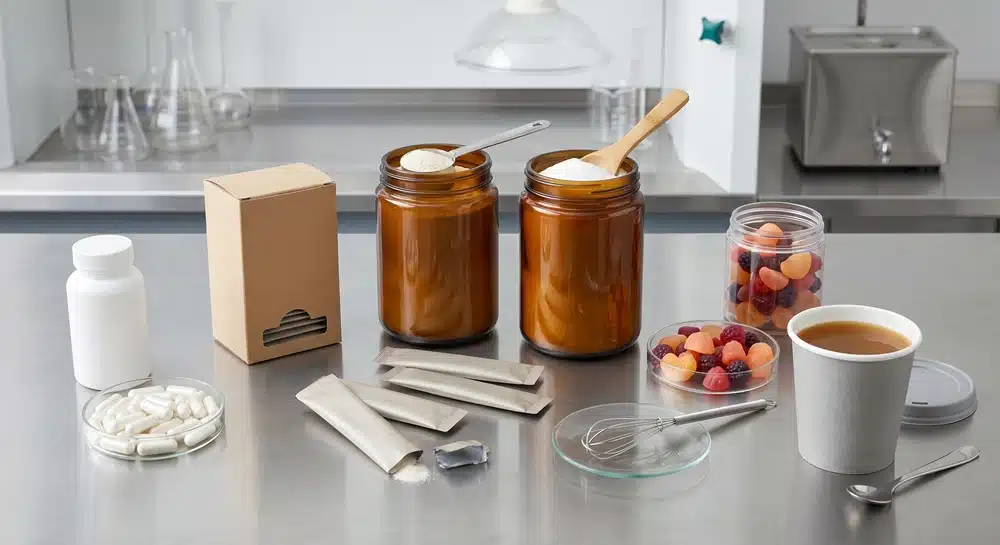
Example Product Architecture
| 공식 유형 | Main Ingredient Strategy | Best Format | 브랜드 포지셔닝 |
| Pure bone broth powder | Bone broth solids | Savory drink powder | Whole-food nutrition and comfort. |
| Collagen peptide powder | 하이드롤라이즈드 콜라겐 펩타이드 | Stick pack or tub | Beauty, joint, mobility, active aging. |
| Bone broth collagen blend | Bone broth powder + standardized collagen peptides | Savory powder or capsule | Bone broth story with precise collagen dose. |
| Joint-health collagen formula | Collagen peptides + vitamin C + 공동 지원 재료 | Powder, tablet, capsule | Mobility and connective tissue support. |
판결: 보충제, 음식, 아니면 둘 다?
그렇다면 영양 관리 측면에서 뼈 육수를 어떻게 바라봐야 할까요?
뼈 육수의 효능: 뼈 육수는 종합적인 식품입니다. 수분 공급과 전해질(칼슘, 마그네슘, 인)을 제공하며, 알약으로는 얻을 수 없는 감칠맛 나는 위안을 선사합니다. 장 건강 유지와 전반적인 식단 보강에 탁월합니다.
표준화된 보충제의 필요성: 주름 깊이 감소, 피부 탄력 증진, 손상 회복 촉진과 같은 목표 치료 효과를 얻기 위해서는 꾸준함이 핵심입니다.
- 정밀도: 이 보충제를 통해 매일 정확히 10g의 콜라겐을 섭취할 수 있습니다.
- 편리함: 24시간 조리 시간 없음.
- 효율성: 생체이용률이 높아지면 아미노산이 표적 조직에 도달할 수 있습니다.
Conclusion: Bone Broth Is Valuable, But Not Precise
Bone broth can be a nutritious whole food and a strong product story. It provides gelatin, amino acids, minerals, flavor, and a comforting format that many consumers understand.
But if the goal is a reliable collagen dose, bone broth alone is not precise enough. The collagen-derived content depends on raw material selection, cooking time, acid level, water ratio, concentration, drying method, and batch testing.
For consumers, bone broth can be part of a healthy diet. For supplement brands, standardized hydrolyzed collagen peptides are the better foundation for measurable collagen claims, consistent formulation, and repeatable product performance.
The most commercially useful solution is often a hybrid: use bone broth for the story and sensory identity, and use standardized collagen peptides for the actual collagen dose.
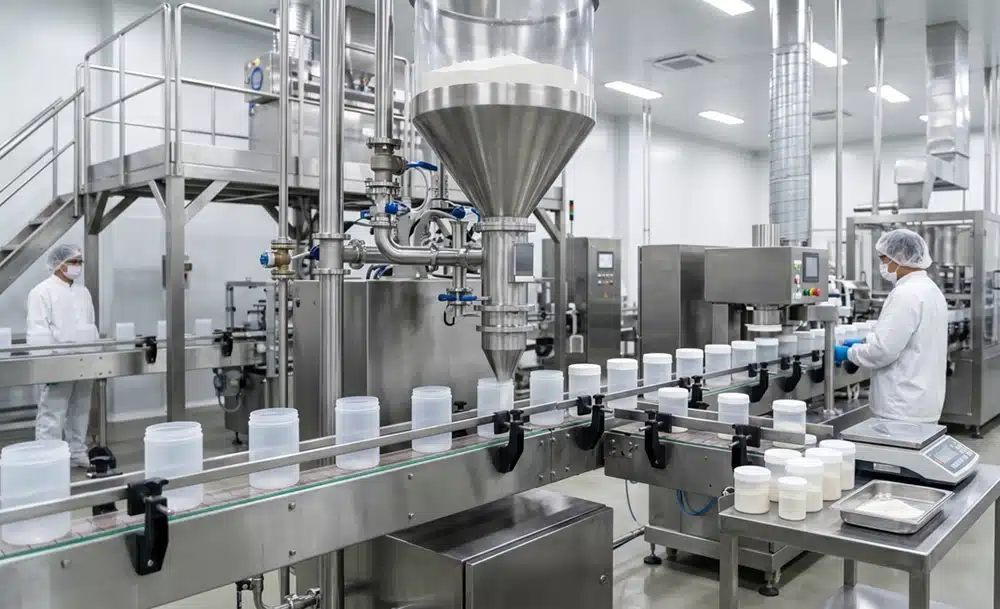
Need help developing a bone broth collagen product?
If you are developing a bone broth powder, collagen peptide formula, savory protein drink, capsule, gummy, tablet, or private-label collagen product, send us your target serving size, protein claim, flavor direction, and dosage format. Our formulation team can help evaluate collagen peptide selection, bone broth powder feasibility, label-claim strategy, and manufacturing options.
FAQs About Collagen in Bone Broth
How much collagen is in one cup of bone broth?
There is no universal number. One cup of bone broth may contain only a small amount of collagen-derived gelatin if it is diluted, or several grams if it is concentrated and made with collagen-rich bones and connective tissue. The only reliable way to know is to check tested protein and amino acid data.
Is the protein in bone broth the same as collagen?
Not exactly. Bone broth protein may come from gelatin, meat residues, connective tissue, and other soluble proteins. Gelatin is derived from collagen, but total protein grams should not automatically be treated as collagen peptide grams.
뼈 육수가 콜라겐 펩타이드보다 더 좋을까요?
Bone broth is better as a whole-food, savory nutrition product. Collagen peptides are better when a precise collagen dose, solubility, low molecular weight, and consistent serving size are required.
Can a supplement brand make a collagen claim from bone broth powder?
Only if the ingredient and finished product support the claim through testing and documentation. Brands should request COA data, amino acid profile, protein content, hydroxyproline data, and label compliance review before making collagen-related claims.
Why does homemade bone broth gel in the refrigerator?
The gel texture comes from gelatin, which forms when collagen-rich connective tissue is heated and denatured. A strong gel usually indicates a higher gelatin content, but it still does not provide a precise collagen peptide dose.
What bones produce the most collagen-rich broth?
Bones and parts rich in connective tissue usually produce the most gelatin. Examples include knuckle bones, oxtail, chicken feet, wings, necks, fish heads, and fish frames. Marrow bones add flavor and fat but are not always the highest collagen source.
Is bone broth collagen bioavailable?
Bone broth provides gelatin and amino acids that can be digested, but gelatin chains are generally larger and less standardized than hydrolyzed collagen peptides. Hydrolyzed collagen peptides are processed to a lower molecular weight for better solubility and more predictable absorption.
Should a brand use bone broth powder or hydrolyzed collagen peptides?
Use bone broth powder when the main goal is flavor, whole-food positioning, and savory nutrition. Use hydrolyzed collagen peptides when the main goal is a measurable collagen serving size, beauty, joint, mobility, or active-aging positioning. Use both when you want a bone broth story with a standardized collagen dose.
참조
- Alcock, R. D. et al. Bone Broth Unlikely to Provide Reliable Concentrations of Collagen Precursors Compared With Supplemental Sources of Collagen Used in Collagen Research. PubMed.
https://pubmed.ncbi.nlm.nih.gov/29893587/ - Shaw, M. H. & Flynn, N. E. Amino acid content of beef, chicken, and turkey bone broth. Journal of Undergraduate Chemistry Research, 2019.
https://www.westmont.edu/sites/default/files/users/user1231/V19No4/Nick%20Flynn_final.pdf - Khatri, M. et al. The effects of collagen peptide supplementation on body composition, collagen synthesis, and recovery from joint injury and exercise. Amino Acids, 2021.
https://pmc.ncbi.nlm.nih.gov/articles/PMC8521576/ - Pu, S. Y. et al. Effects of Oral Collagen for Skin Anti-Aging: A Systematic Review and Meta-Analysis. Nutrients, 2023.
https://pmc.ncbi.nlm.nih.gov/articles/PMC10180699/ - Martínez-Puig, D. et al. Collagen Supplementation for Joint Health: The Link between Composition and Scientific Knowledge. Nutrients, 2023.
https://pmc.ncbi.nlm.nih.gov/articles/PMC10058045/ - Sato, K. Collagen-Derived Di-Peptide, Prolylhydroxyproline (Pro-Hyp): A New Low Molecular Weight Growth-Initiating Factor. International Journal of Molecular Sciences, 2020.
https://pmc.ncbi.nlm.nih.gov/articles/PMC7728856/ - Virgilio, N. et al. Absorption of bioactive peptides following collagen hydrolysate intake: effect of molecular weight and raw material source. 2024.
https://pmc.ncbi.nlm.nih.gov/articles/PMC11325589/ - Harvard Health Publishing. Savoring the benefits of bone broth: Worth a taste?
https://www.health.harvard.edu/diet-and-nutrition/savoring-the-benefits-of-bone-broth-worth-a-taste - FDA. 구조/기능 클레임.
https://www.fda.gov/food/nutrition-food-labeling-and-critical-foods/structurefunction-claims - UCLA Health. Should you take collagen supplements?
https://www.uclahealth.org/news/article/should-you-take-collagen-supplements

워렌 완은 식이 보충제 공급망 분야에서 폭넓은 경험을 갖춘 노련한 전문가로, 콜라겐 펩타이드, 뼈 육수 단백질, 케라틴과 같은 핵심 원료의 연구, 개발, 공정 관리 및 글로벌 조달에 풍부한 실무 경험을 보유하고 있습니다. 이 칼럼의 필자로서 그는 마케팅적 포장만을 벗겨내고, 난해한 원료 과학 및 생산 품질 관리 기준을 누구나 쉽게 이해할 수 있는 심도 있는 과학 대중화 콘텐츠로 재구성함으로써, 독자들이 라벨 뒤에 숨겨진 진실을 파악하고 보다 합리적인 건강 선택을 할 수 있도록 돕는 데 전념하고 있습니다.