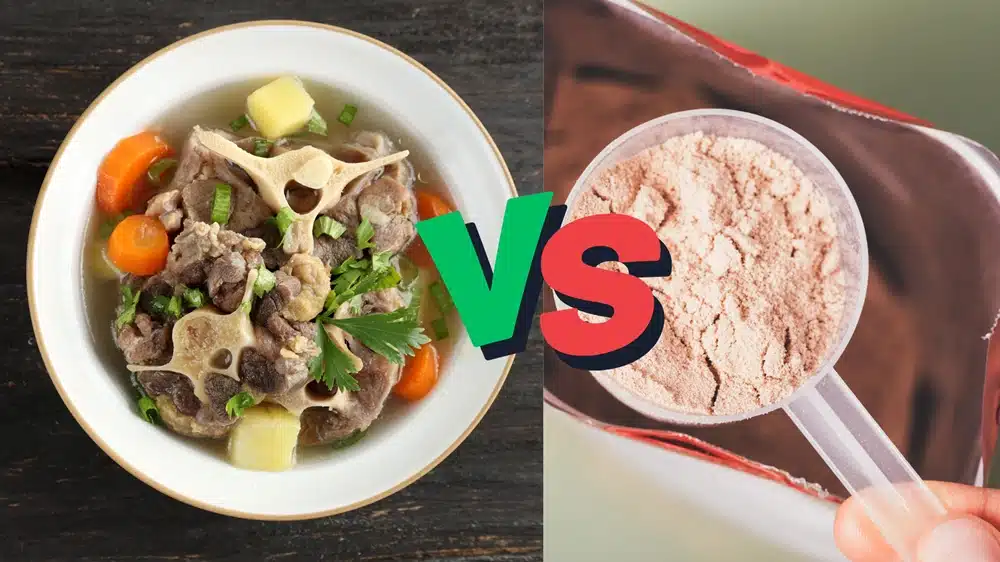
In the world of functional nutrition and dietary supplements, few trends have experienced a renaissance quite like bone broth. Heralded as a “liquid gold” superfood, it is championed by paleo enthusiasts, keto dieters, and holistic health practitioners alike. The primary selling point? Its potential to support joint health, skin elasticity, and gut integrity through its rich collagen content.
However, for industry professionals, product formulators, and health-conscious consumers, a critical question remains unanswered by most recipe blogs: How much collagen is in bone broth, exactly?
Is a cup of homemade broth equivalent to a scoop of standardized collagen powder? As experts in nutritional raw materials, we are peeling back the layers of biochemistry to reveal the truth about yield, consistency, and bioavailability.
Quick Answer: How Much Collagen Is in Bone Broth?
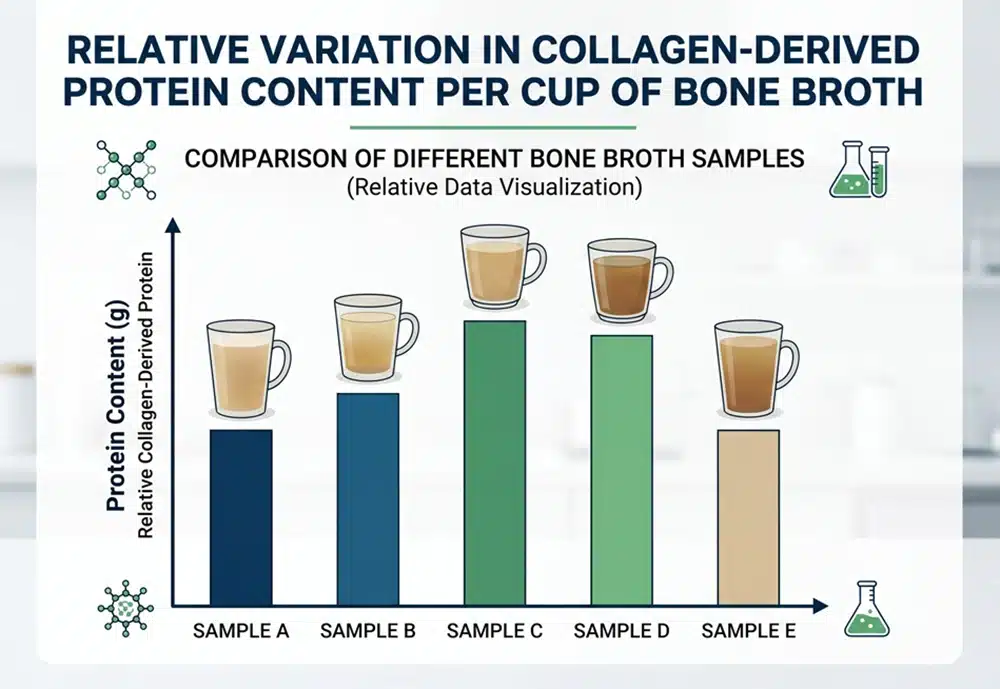
A cup of bone broth can contain collagen-derived gelatin, but the exact amount is highly variable. In practical terms, one cup may provide only a small amount of collagen-derived protein in a diluted commercial broth, or several grams in a concentrated homemade broth made with collagen-rich bones, skin, joints, feet, or connective tissue.
The key point is this: bone broth does not deliver a standardized collagen dose unless the manufacturer tests and declares the collagen or protein content. A cup of broth that contains 9 g of total protein is not automatically the same as 9 g of collagen peptides.
For general wellness, bone broth can be a valuable whole-food source of amino acids, minerals, flavor, and hydration. For targeted product development or clinical-style dosing, standardized hydrolyzed collagen peptides are more reliable because the serving size, molecular weight, amino acid profile, and collagen peptide content can be controlled.
Practical Per-Cup Estimate
| Product Type | Typical Consumer Expectation | Formulation Reality |
| Diluted shelf-stable bone broth | Light protein and savory nutrition | May contain only a few grams of protein per cup; collagen content is not guaranteed unless tested. |
| Concentrated homemade bone broth | Gelatin-rich and collagen-rich | Can be higher in gelatin, especially when made with feet, joints, skin, and connective tissue. Still not standardized. |
| Bone broth powder | More concentrated and easier to label | Quality depends on raw material, drying process, protein content, sodium level, and COA testing. |
| Hydrolyzed collagen peptides | Precise collagen peptide dose | Best option when a brand needs a consistent 2.5 g, 5 g, or 10 g collagen peptide serving. |
If your goal is a comforting functional food, bone broth works well. If your goal is a measurable collagen dose, use a standardized collagen peptide ingredient.
What Counts as “Collagen” in Bone Broth?
When people ask how much collagen is in bone broth, they usually mean one of three different things:
1. Native collagen in the raw bones, skin, cartilage, and connective tissue before cooking.
2. Gelatin formed when heat denatures native collagen during simmering.
3. Collagen peptides formed when gelatin is further broken down through controlled enzymatic hydrolysis.
Bone broth mainly contains gelatin and collagen-derived amino acids, not the same low-molecular-weight hydrolyzed collagen peptides used in standardized supplement powders.
This distinction matters for supplement brands. A consumer may use the word “collagen” broadly, but a manufacturer must decide what is actually being delivered in the serving: total protein, gelatin, hydroxyproline-rich protein, bone broth solids, or hydrolyzed collagen peptides.
Collagen Form Comparison
| Form | Where It Appears | Typical Property | Formulation Meaning |
| Native collagen | Raw skin, bone, cartilage, tendon | Large triple-helix structure | Not a practical supplement format without processing. |
| Gelatin | Cooked bone broth and cooked collagen | Gels when cooled; warm-water soluble | Gives broth its “jiggle,” but dosage and molecular size are variable. |
| Hydrolyzed collagen peptides | Standardized collagen peptide powders | Low molecular weight; cold-water soluble | Best for precise serving sizes, beverage powders, stick packs, capsules, and gummies. |
For a food blog, the “jiggle test” is useful. For a supplement brand, it is not enough. Brands need COA data, hydroxyproline testing, protein content, molecular weight distribution, and batch-to-batch consistency.
The Chemistry: Collagen, Gelatin, and Peptides
To understand the value of bone broth, one must first understand the transformation of the collagen molecule.
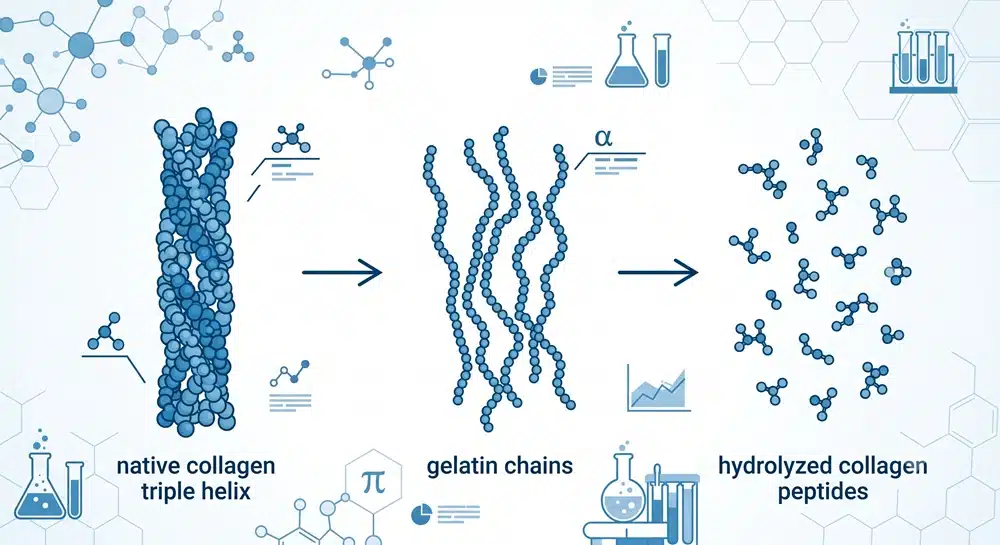
1. Native Collagen (In the Bone): In its natural state within animal connective tissue, collagen exists as a triple helix structure. It is incredibly tough and insoluble in water. You cannot simply eat a bone and digest the collagen; the molecular weight is too high (approx. 300,000 Daltons).
2. Gelatin (In the Broth): When bones are simmered in water for an extended period, the heat breaks the cross-links holding the collagen helix together. This process is called denaturation. The collagen unwinds and becomes gelatin.
- Key Characteristic: Gelatin gels when cooled. This is the “jiggle” you see in high-quality bone broth.
- Molecular Weight: Gelatin is smaller than native collagen but still composed of long chains of amino acids (approx. 50,000 – 100,000 Daltons).
3. Hydrolyzed Collagen Peptides (In Supplements): This is the form found in standardized raw materials. Through enzymatic hydrolysis, gelatin is further broken down into tiny chains of amino acids called peptides.
- Key Characteristic: Fully soluble in cold water; does not gel.
- Molecular Weight: Extremely low (often 2,000 – 5,000 Daltons), optimizing absorption.
The Takeaway: When we ask “how much collagen is in bone broth,” we are actually asking “how much gelatin is in the broth?” While they share the same amino acid profile, their physical properties and digestibility differ.
The Variable Factors: Why Consistency is Impossible at Home
As a raw material supplier, we value Standardization. When you buy a drum of Collagen Peptides, you know exactly what you are getting. With bone broth, four primary variables dictate the final protein yield.
1. The Source of the Bones
Not all bones are created equal. The density of Type I, II, and III collagen varies depending on the animal and the specific anatomy.
- Beef Bones: Marrow bones are delicious and rich in minerals, but they are actually lower in collagen. The highest collagen yield comes from “knuckle bones” and joints where connective tissue is dense.
- Chicken Feet and Wings: These are the industry’s secret weapon. Because they consist almost entirely of skin, cartilage, and tendons, they yield a significantly higher concentration of gelatin compared to a roasted chicken carcass.
- Fish Frames: Fish collagen is highly bioavailable, but fish bones are delicate. They require much shorter cooking times to extract the collagen before the proteins degrade.
2. The Cooking Duration
Collagen extraction is a function of time and temperature.
- Under 12 Hours: A beef broth simmered for only 8 hours will extract flavor but leave a significant amount of collagen locked in the dense bone matrix.
- 24 to 48 Hours: This is the “sweet spot” for beef. It allows sufficient thermal energy to fully denature the collagen into gelatin.
- Pressure Cooking: Modern pressure cookers can accelerate this process, achieving in 3 hours what a slow cooker achieves in 24, though purists argue about the impact on the amino acid profile.
3. The Acid Medium
You will often see recipes calling for Apple Cider Vinegar (ACV) or wine. This isn’t just for flavor. The acid helps decalcify the bone, effectively “opening the door” for collagen to be released. Cooking bones in neutral water (pH 7) yields significantly less protein than cooking in slightly acidic water.
4. Water-to-Bone Ratio
This is the most obvious but overlooked factor. A pot packed with bones and barely covered with water will yield a thick, high-protein gel. A pot with two bones and a gallon of water will yield a dilute tea. Without laboratory testing, a consumer cannot know if their cup of broth contains 1g or 8g of protein.
Formulator’s Test Matrix: How to Verify Collagen in a Bone Broth Ingredient
For consumers, taste and texture may be enough. For supplement brands, bone broth ingredients should be evaluated with measurable quality parameters.
Before using a bone broth powder or collagen-rich broth ingredient in a commercial formula, request and review:
- Total protein content
- Hydroxyproline content
- Amino acid profile
- Moisture content
- Sodium content
- Ash content
- Heavy metals
- Microbial limits
- Source species and part used
- Drying method
- Solubility and dispersibility
- Flavor and odor profile
- Batch-to-batch consistency
- Allergen and animal-origin documentation
Hydroxyproline is especially useful because it is strongly associated with collagen-rich material. If a supplier claims a bone broth powder is collagen-rich but cannot provide amino acid or hydroxyproline data, the ingredient should be treated as a flavor or protein ingredient rather than a precise collagen source.

The Amino Acid Profile: The Hidden Gold
Regardless of the extraction method, the true value of collagen—whether from broth or supplements—lies in its unique amino acid profile. Unlike whey or soy protein, collagen is exceptionally high in three specific amino acids:
- Glycine: Often lacking in modern muscle-meat diets. It acts as an inhibitory neurotransmitter, supporting sleep, detoxification, and inflammation reduction.
- Proline: Essential for protein synthesis and structure, critical for cardiovascular health.
- Hydroxyproline: This amino acid is unique to collagen. It is vital for the stability of the collagen triple helix in our own bodies.
Bone broth provides these amino acids, but it also delivers Glycosaminoglycans (GAGs) like glucosamine, chondroitin sulfate, and hyaluronic acid, which are leached from the cartilage. This “full-spectrum” matrix is the primary advantage of broth over isolated peptide powders.
Bioavailability: Broth vs. Hydrolyzed Peptides
Here is where the distinction becomes critical for manufacturers and consumers focusing on efficacy.
The Absorption Barrier The human digestive system must break down proteins into amino acids or di/tri-peptides to absorb them into the bloodstream.
- Bone Broth (Gelatin): Requires significant digestive effort (pepsin and stomach acid) to break down the long gelatin chains. For individuals with compromised digestion (common in the elderly or those with gut issues), absorption may be inefficient.
- Hydrolyzed Peptides: These are “pre-digested.” Their low molecular weight allows them to pass through the intestinal barrier rapidly and enter the bloodstream, often peaking in the plasma within 1-2 hours after ingestion.
The “Signal” Effect Research suggests that specific collagen peptides (like Pro-Hyp and Hyp-Gly) act not just as building blocks, but as signaling molecules. They trigger fibroblasts in the skin to produce more collagen. Standardized raw materials are often optimized to contain high levels of these specific bioactive peptides. It is unclear if bone broth, with its random hydrolysis, produces these signaling peptides in clinically relevant amounts.
Why Hydrolyzed Collagen Peptides Are Better for Label Claims
Bone broth is a variable food matrix. Hydrolyzed collagen peptides are a standardized ingredient.
That difference matters when a brand wants to make a clear front-panel claim such as “10 g collagen peptides per serving” or wants to build a product around skin, joint, beauty, mobility, or active aging positioning.
Hydrolyzed collagen peptides give formulators more control over:
- Serving size
- Protein contribution
- Molecular weight distribution
- Solubility in cold or hot liquids
- Taste and odor
- Powder flow
- Clinical-style dosage alignment
- Stick pack, tub, capsule, tablet, gummy, or RTD format feasibility
A bone broth concept product can still be highly attractive. The best approach is often to combine the consumer appeal of bone broth with the precision of standardized collagen peptides.
Formulator’s Note: How to Build a Standardized Bone Broth Concept Product
For supplement brands, the strongest opportunity is not choosing between bone broth and collagen peptides. It is combining the market appeal of bone broth with the precision of standardized collagen peptide ingredients.
Option 1: Traditional Bone Broth Powder
This is best for brands focused on savory nutrition, gut comfort, whole-food positioning, and culinary use. The main formulation challenges are sodium, flavor, aroma, solubility, and protein consistency.
Option 2: Hydrolyzed Collagen Peptide Powder
This is best for beauty, joint, mobility, sports recovery, and active aging products that require a clear collagen dose. It works well in stick packs, tubs, capsules, tablets, and gummies.
Option 3: Bone Broth + Collagen Peptide Hybrid
This is often the best commercial format. The bone broth component provides the story, taste, and whole-food identity. The hydrolyzed collagen peptide component provides the measurable collagen dose.
A strong hybrid positioning might be: “Bone broth-inspired collagen peptide powder with standardized collagen peptides and savory whole-food flavor.”
This avoids relying on variable broth solids alone while still preserving the consumer-friendly bone broth concept.
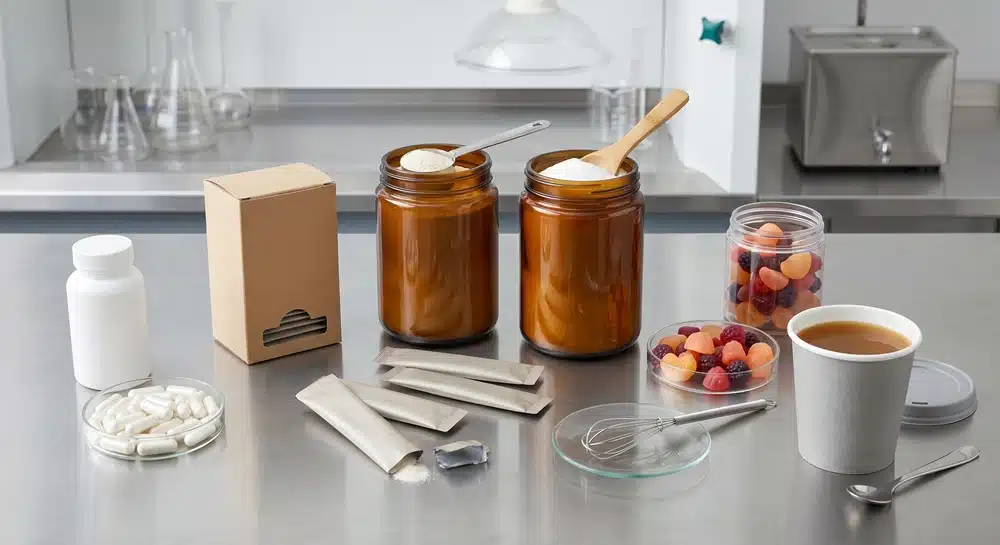
Example Product Architecture
| Formula Type | Main Ingredient Strategy | Best Format | Brand Positioning |
| Pure bone broth powder | Bone broth solids | Savory drink powder | Whole-food nutrition and comfort. |
| Collagen peptide powder | Hydrolyzed collagen peptides | Stick pack or tub | Beauty, joint, mobility, active aging. |
| Bone broth collagen blend | Bone broth powder + standardized collagen peptides | Savory powder or capsule | Bone broth story with precise collagen dose. |
| Joint-health collagen formula | Collagen peptides + vitamin C + joint support ingredients | Powder, tablet, capsule | Mobility and connective tissue support. |
The Verdict: Supplement, Food, or Both?
So, how should we view bone broth in the context of a nutritional regimen?
The Case for Bone Broth: Bone broth is a holistic food. It offers hydration, electrolytes (calcium, magnesium, phosphorus), and a savory comfort that a pill cannot provide. It is excellent for gut maintenance and general dietary enrichment.
The Case for Standardized Supplements: For targeted therapeutic results—such as reducing wrinkle depth, increasing skin elasticity, or accelerating injury recovery—consistency is key.
- Precision: A supplement allows you to consume exactly 10g of collagen daily.
- Convenience: No 24-hour cooking times.
- Efficiency: Higher bioavailability ensures the amino acids reach the target tissues.
Conclusion: Bone Broth Is Valuable, But Not Precise
Bone broth can be a nutritious whole food and a strong product story. It provides gelatin, amino acids, minerals, flavor, and a comforting format that many consumers understand.
But if the goal is a reliable collagen dose, bone broth alone is not precise enough. The collagen-derived content depends on raw material selection, cooking time, acid level, water ratio, concentration, drying method, and batch testing.
For consumers, bone broth can be part of a healthy diet. For supplement brands, standardized hydrolyzed collagen peptides are the better foundation for measurable collagen claims, consistent formulation, and repeatable product performance.
The most commercially useful solution is often a hybrid: use bone broth for the story and sensory identity, and use standardized collagen peptides for the actual collagen dose.
Need help developing a bone broth collagen product?
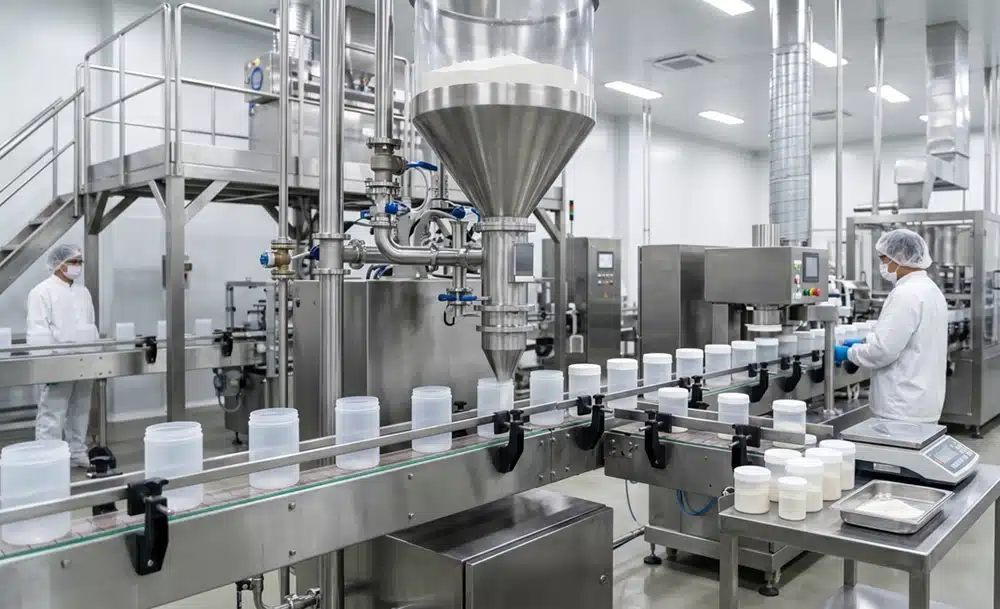
If you are developing a bone broth powder, collagen peptide formula, savory protein drink, capsule, gummy, tablet, or private-label collagen product, send us your target serving size, protein claim, flavor direction, and dosage format. Our formulation team can help evaluate collagen peptide selection, bone broth powder feasibility, label-claim strategy, and manufacturing options.
FAQs About Collagen in Bone Broth
How much collagen is in one cup of bone broth?
There is no universal number. One cup of bone broth may contain only a small amount of collagen-derived gelatin if it is diluted, or several grams if it is concentrated and made with collagen-rich bones and connective tissue. The only reliable way to know is to check tested protein and amino acid data.
Is the protein in bone broth the same as collagen?
Not exactly. Bone broth protein may come from gelatin, meat residues, connective tissue, and other soluble proteins. Gelatin is derived from collagen, but total protein grams should not automatically be treated as collagen peptide grams.
Is bone broth better than collagen peptides?
Bone broth is better as a whole-food, savory nutrition product. Collagen peptides are better when a precise collagen dose, solubility, low molecular weight, and consistent serving size are required.
Can a supplement brand make a collagen claim from bone broth powder?
Only if the ingredient and finished product support the claim through testing and documentation. Brands should request COA data, amino acid profile, protein content, hydroxyproline data, and label compliance review before making collagen-related claims.
Why does homemade bone broth gel in the refrigerator?
The gel texture comes from gelatin, which forms when collagen-rich connective tissue is heated and denatured. A strong gel usually indicates a higher gelatin content, but it still does not provide a precise collagen peptide dose.
What bones produce the most collagen-rich broth?
Bones and parts rich in connective tissue usually produce the most gelatin. Examples include knuckle bones, oxtail, chicken feet, wings, necks, fish heads, and fish frames. Marrow bones add flavor and fat but are not always the highest collagen source.
Is bone broth collagen bioavailable?
Bone broth provides gelatin and amino acids that can be digested, but gelatin chains are generally larger and less standardized than hydrolyzed collagen peptides. Hydrolyzed collagen peptides are processed to a lower molecular weight for better solubility and more predictable absorption.
Should a brand use bone broth powder or hydrolyzed collagen peptides?
Use bone broth powder when the main goal is flavor, whole-food positioning, and savory nutrition. Use hydrolyzed collagen peptides when the main goal is a measurable collagen serving size, beauty, joint, mobility, or active-aging positioning. Use both when you want a bone broth story with a standardized collagen dose.
References
- Alcock, R. D. et al. Bone Broth Unlikely to Provide Reliable Concentrations of Collagen Precursors Compared With Supplemental Sources of Collagen Used in Collagen Research. PubMed.
https://pubmed.ncbi.nlm.nih.gov/29893587/ - Shaw, M. H. & Flynn, N. E. Amino acid content of beef, chicken, and turkey bone broth. Journal of Undergraduate Chemistry Research, 2019.
https://www.westmont.edu/sites/default/files/users/user1231/V19No4/Nick%20Flynn_final.pdf - Khatri, M. et al. The effects of collagen peptide supplementation on body composition, collagen synthesis, and recovery from joint injury and exercise. Amino Acids, 2021.
https://pmc.ncbi.nlm.nih.gov/articles/PMC8521576/ - Pu, S. Y. et al. Effects of Oral Collagen for Skin Anti-Aging: A Systematic Review and Meta-Analysis. Nutrients, 2023.
https://pmc.ncbi.nlm.nih.gov/articles/PMC10180699/ - Martínez-Puig, D. et al. Collagen Supplementation for Joint Health: The Link between Composition and Scientific Knowledge. Nutrients, 2023.
https://pmc.ncbi.nlm.nih.gov/articles/PMC10058045/ - Sato, K. Collagen-Derived Di-Peptide, Prolylhydroxyproline (Pro-Hyp): A New Low Molecular Weight Growth-Initiating Factor. International Journal of Molecular Sciences, 2020.
https://pmc.ncbi.nlm.nih.gov/articles/PMC7728856/ - Virgilio, N. et al. Absorption of bioactive peptides following collagen hydrolysate intake: effect of molecular weight and raw material source. 2024.
https://pmc.ncbi.nlm.nih.gov/articles/PMC11325589/ - Harvard Health Publishing. Savoring the benefits of bone broth: Worth a taste?
https://www.health.harvard.edu/diet-and-nutrition/savoring-the-benefits-of-bone-broth-worth-a-taste - FDA. Structure/Function Claims.
https://www.fda.gov/food/nutrition-food-labeling-and-critical-foods/structurefunction-claims - UCLA Health. Should you take collagen supplements?
https://www.uclahealth.org/news/article/should-you-take-collagen-supplements

Warren Wan is a seasoned expert with extensive experience in the dietary supplement supply chain, possessing rich practical experience in the research, development, process control, and global sourcing of core ingredients such as collagen peptides, bone broth protein, and keratin. As the author of this column, he is dedicated to stripping away the marketing packaging, transforming obscure ingredient science and production quality control standards into easy-to-understand, hardcore science popularization, helping readers understand the truth behind the labels and make more rational health choices.