For joint-health formulation, glucosamine and bone broth are therefore not direct substitutes. Glucosamine is a targeted dietary ingredient; bone broth is a broader animal-derived protein and connective-tissue matrix whose protein, collagen-related amino acids, minerals, sodium, and GAG profile can vary with source tissues and processing.
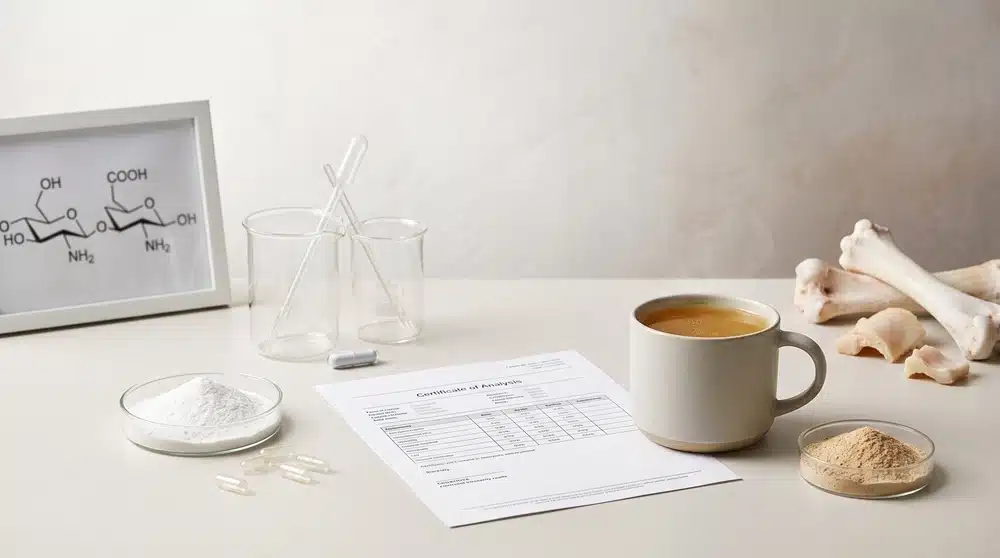
Glucosamine vs Bone Broth at a Glance
| Fator | Glucosamine Supplement | Bone Broth / Bone Broth Powder |
|---|---|---|
| O que é isto | A defined amino sugar ingredient | A complex food or protein ingredient made from animal bones/connective tissues |
| Formulários comuns | Glucosamine sulfate, glucosamine HCl, N-acetyl glucosamine | Liquid broth, concentrate, spray-dried or otherwise dried powder |
| Glucosamine amount | Can be standardized and labeled as a defined dose | Natural content can be low or variable unless specifically assayed |
| Condroitina | Not inherently present unless formulated with chondroitin | May contain cartilage-derived GAGs depending on tissues/process; not automatically standardized |
| Protein / collagen matrix | No meaningful protein matrix | Can provide protein, gelatin/collagen-related peptides and amino acids depending on product |
| Joint-health evidence | Extensively studied, but results and guideline recommendations are inconsistent | Direct clinical evidence for bone broth itself is limited; do not substitute collagen or GAG studies for the finished broth |
| Foco nas especificações B2B | Salt form, assay, source, allergen status, purity and contaminants | Species/tissue source, protein, amino acids, hydroxyproline/collagen markers, GAG assays if claimed, sodium and contaminants |
What Is Glucosamine?
Glucosamine is an amino sugar naturally involved in the structure of glycosaminoglycans and cartilage-related molecules. Commercial dietary supplements commonly use glucosamine sulfate or glucosamine hydrochloride; N-acetyl glucosamine is another form used in some formulations.
Glucosamine has been researched extensively for osteoarthritis, especially knee osteoarthritis, but the evidence is not uniform. The U.S. National Center for Complementary and Integrative Health (NCCIH) states that studies have produced inconsistent results and that expert guidelines have reached conflicting conclusions. Some reviews report benefits for specific glucosamine sulfate preparations, while other guidelines recommend against routine use because the best-quality evidence has not shown a clinically important benefit.
For B2B sourcing, define the exact ingredient rather than buying “glucosamine” generically. A vegan glucosamine specification should state the salt form, assay basis, fermentation or other source, shellfish-free/allergen documentation, mesh size, pH/solubility where relevant, residual processing solvents where applicable, heavy metals, microbiology, and batch COA.
Does Bone Broth Have Glucosamine?
Bone broth may contain glucosamine-related cartilage components, but there is no universal glucosamine amount for “bone broth.” The concentration depends on which tissues are used, especially the amount of cartilage and connective tissue, plus cooking or hydrolysis conditions, concentration, filtration, drying, and any added ingredients.
This distinction matters because a standard recipe, a ready-to-drink broth, a high-protein bone broth powder, and a cartilage-rich chicken broth can have very different compositions. Research on bone broth has demonstrated variability in amino-acid and mineral content, and a 2024 study of one chicken-vegetable bone broth identified chondroitin sulfate and hialuronano in a fraction of that specific broth. That study does not establish a standard glucosamine dose for all bone broths.
Some commercial products also add glucosamine HCl or chondroitin sulfate separately. In that case, the labeled glucosamine is not evidence of the natural concentration in the broth itself. Formulators should distinguish “naturally occurring / analytically measured in the broth ingredient” from “added as a separate standardized ingredient.”
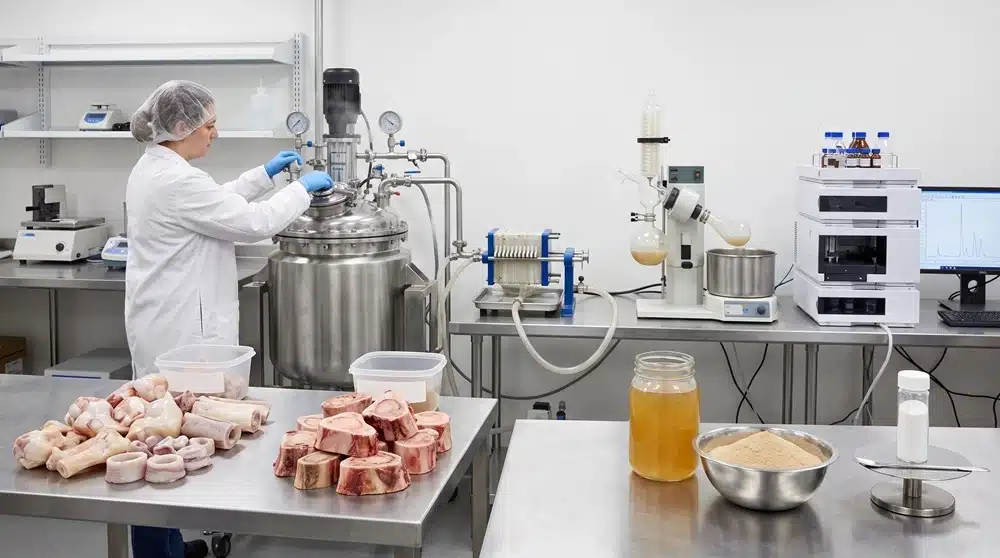
Does Bone Broth Contain Glucosamine and Chondroitin?
Cartilage-rich bone broth can contain GAG-related material, including chondroitin sulfate in some preparations, but the natural content is not predictable from the name alone. Chicken feet, sternum, joints, trachea, connective tissue, and other cartilage-rich inputs may yield a different GAG profile from a broth made mainly from marrow bones or low-cartilage skeletal material.
If the finished-product positioning depends on glucosamine, chondroitin, or hyaluronic acid, request analytical results for those compounds. A protein COA by itself does not prove a meaningful GAG content.
When reviewing a commercial caldo de osso de galinha em pó, confirm what the current batch COA actually establishes and separately request source-tissue, process, amino-acid, collagen/hydroxyproline, GAG, sodium, heavy-metal, and microbiological documentation required for the intended claim.
How Much Glucosamine Is in Bone Broth?
There is no evidence-based universal number. Published research does not support a single “mg glucosamine per cup” value that can be applied across homemade bone broth, beef broth, chicken broth, liquid concentrates, or commercial powders.
The safest formulation rule is:
- Do not estimate glucosamine from total protein.
- Do not estimate glucosamine from collagen or hydroxyproline.
- Do not infer glucosamine from the presence of bones alone.
- If you need a quantitative claim, use a validated analytical method on the actual ingredient or finished product.
- If glucosamine is separately added, list and control it as a separate dietary ingredient according to the applicable formula and label requirements.
Does Bone Marrow Contain Glucosamine?
Bone marrow should not be treated as a standardized glucosamine source. Glucosamine-related GAGs are more closely associated with cartilage and extracellular-matrix tissues than with marrow as a defined supplement raw material.
A “marrow bone broth” may still contain cartilage or connective tissue depending on the cut and process, but that is different from saying bone marrow itself provides a predictable glucosamine dose. For B2B specifications, identify the actual tissues used instead of relying on a broad term such as “bone” or “marrow.”
Which Has Better Evidence for Joint Health?
Glucosamine: more direct research, but mixed conclusions
Glucosamine has been studied directly in randomized trials and systematic reviews, most often for knee osteoarthritis. The evidence is complicated by differences in salt form, product quality, sponsorship, dose, and outcome measures. NCCIH summarizes the overall literature as inconsistent, with major guidelines reaching different recommendations.
A 2024 systematic review and meta-analysis found benefits for glucosamine sulfate on some structural outcomes, while also showing that glucosamine-plus-chondroitin combinations did not consistently improve pain or physical function. This illustrates why brands should not turn one positive analysis into a blanket statement that every glucosamine form “repairs cartilage” or “treats arthritis.”
Bone broth: less direct clinical evidence
Bone broth is a complex food/ingredient rather than one standardized active. Human evidence specifically testing bone broth for joint pain or osteoarthritis is limited. Research on collagen peptides, purified chondroitin, hyaluronic acid, or isolated amino acids should not automatically be transferred to a bone broth product unless the broth contains a verified amount of the tested material and the finished-product evidence supports the claim.
A study analyzing commonly consumed bone broths found that amino-acid concentrations varied and that bone broth could not be assumed to provide the same reliable concentrations of key collagen precursors used in collagen-supplement research. This is highly relevant to joint-health formulation: ingredient identity and assay matter more than a broad “whole-food matrix” story.

Which Is Better: Glucosamine or Bone Broth?
Neither is universally better because they solve different formulation problems.
| Objetivo | Um melhor ponto de partida | Porquê |
|---|---|---|
| Defined glucosamine dose | Standardized glucosamine | Assay and serving dose can be controlled directly |
| Broad protein / collagen-related food matrix | Bone broth powder | Provides a complex protein ingredient rather than a single amino sugar |
| Vegan or shellfish-free joint formula | Glucosamina obtida por fermentação | Bone broth is animal-derived; source documentation still matters for glucosamine |
| Natural GAG positioning | Cartilage-rich bone broth only if analytically verified | Do not assume glucosamine/chondroitin amounts from the name alone |
| High-protein savory nutrition | Bone broth protein powder | Glucosamine does not provide meaningful dietary protein |
| Precision joint-ingredient stack | Standardized glucosamine plus separately defined ingredients | Easier to control dose, claims and COA specifications |
Can Glucosamine and Bone Broth Be Used Together?
Yes, they can be formulated together, but the formula should make clear what each ingredient contributes. Bone broth can provide protein and a broader connective-tissue matrix; standardized glucosamine can provide a defined glucosamine dose.
For a combination product, avoid double-counting naturally occurring compounds. If the bone broth is not assayed for glucosamine, do not add an estimated “natural glucosamine” amount to the declared standardized dose.
Brands developing a joint-support formula can also compare glucosamine, chondroitin, sodium hyaluronate, MSM and other options through a broader gama de ingredientes para a saúde das articulações rather than forcing every joint claim onto bone broth.
Safety and Quality Considerations
Glucosamina
Glucosamine is generally well tolerated in many studies, but product form and user context matter. NCCIH notes a potential interaction between glucosamine/chondroitin products and warfarin. Source documentation is also important for shellfish-derived ingredients, and brands making shellfish-free or vegan claims should verify those claims with current supplier records rather than relying on the ingredient name alone.
Caldo de ossos
Bone broth composition varies with species, tissue, cooking time, acidity, concentration, and manufacturing method. One controlled study found that essential mineral extraction changed with process conditions and that calcium and magnesium in the tested broths contributed less than 5% of recommended daily amounts per serving. This is a useful reminder not to describe bone broth as automatically “mineral rich” without testing the actual product.
Marine or animal-derived raw materials should be tested for contaminants relevant to the source and target market. For commercial powders, sodium, heavy metals, microbiology, moisture, protein, amino-acid profile, flavor, solubility, and source traceability can be more important to product quality than generic wellness language.
Especificações de qualidade B2B a solicitar
| Especificação | Glucosamine Ingredient | Bone Broth / Bone Broth Powder |
|---|---|---|
| Identidade | Exact glucosamine form / salt | Animal species, tissues used, process description |
| Primary assay | Glucosamine assay with stated basis and method | Protein; plus glucosamine/chondroitin/GAG only if claimed |
| Fonte | Shellfish-derived, fermentation-derived, or other documented source | Chicken, beef, fish or other declared animal source |
| Protein / collagen markers | Not applicable as a protein ingredient | Protein, amino-acid profile, hydroxyproline/collagen data where relevant |
| Minerals / sodium | Review carrier/counter-ion contribution where relevant | Sodium, ash and relevant minerals by batch |
| Contaminantes | Heavy metals, residual solvents/process residues as applicable, microbiology | Heavy metals, microbiology and source-specific risks |
| Claims documentation | Vegan, shellfish-free, allergen, non-GMO or origin statements when applicable | Species/source, tissue, veterinary, origin, collagen/GAG claims and traceability |
| Propriedades físicas | Mesh, solubility, pH, moisture | Mesh, solubility/dispersibility, bulk density, flavor, moisture |

Claim Review for Supplement Brands
For U.S. dietary supplements, brands may use appropriately substantiated structure/function or general well-being claims, but they cannot claim to diagnose, treat, cure, or prevent osteoarthritis or another disease. FDA requires applicable structure/function labeling claims to be truthful and non-misleading, carry the required disclaimer, and be notified to FDA within the required period. FTC advertising guidance also requires health-related claims to be supported by competent and reliable scientific evidence.
Safer starting language is therefore product-specific and limited, such as “provides a defined amount of glucosamine” or “provides protein and collagen-related amino acids,” rather than “rebuilds damaged cartilage,” “treats arthritis,” “repairs joints,” or “heals the gut.” The final claim still needs substantiation for the actual formula.
FAQ
Does bone broth have glucosamine?
It can contain glucosamine-related cartilage components, especially when cartilage-rich tissues are used, but the amount is not reliably standardized. If a specific glucosamine amount matters, use analytical testing or add a separately standardized glucosamine ingredient.
Does bone broth contain glucosamine and chondroitin?
Some cartilage-rich broths can contain glycosaminoglycans such as chondroitin sulfate, but concentrations vary by tissues and processing. Do not assume a fixed dose from the term “bone broth.”
How much glucosamine is in bone broth?
There is no universal evidence-based amount per cup or serving. Homemade broth, liquid commercial broth and high-protein powders can differ substantially. Use batch testing if a quantitative claim is required.
Does bone marrow contain glucosamine?
Bone marrow is not a standardized glucosamine source. Cartilage and extracellular-matrix tissues are more relevant to GAG-related compounds. A marrow-bone broth may include cartilage from the cut, but that does not make marrow itself a predictable glucosamine ingredient.
Is bone broth better than glucosamine for joints?
They are different. Glucosamine offers a defined targeted ingredient with extensive but mixed joint-health evidence. Bone broth offers a variable protein/connective-tissue matrix with much less direct clinical evidence for joint outcomes.
Can I take glucosamine with bone broth?
They can be used together, but the total formula, medications, source allergies and individual health context should be considered. People using warfarin or managing a medical condition should discuss supplement use with a healthcare professional.
Is bone broth a reliable source of chondroitin?
Not unless the product is analytically standardized. Some cartilage-rich broths contain chondroitin sulfate, but concentration varies, and many bone broth COAs report protein without quantifying GAGs.
What should supplement brands test in bone broth powder?
At minimum, review source species/tissues, process, protein, moisture, sodium, amino-acid profile, heavy metals, microbiology and physical properties. If the label mentions collagen, glucosamine, chondroitin or hyaluronic acid, request specific supporting assays for those claims.
Referências
- NCCIH: Glucosamine and Chondroitin for Osteoarthritis – What You Need To Know
- 2024 Systematic Review and Meta-Analysis of Glucosamine Sulfate and Chondroitin Sulfate in Knee Osteoarthritis
- Bone Broth Unlikely to Provide Reliable Concentrations of Collagen Precursors Compared With Supplemental Sources
- Essential and Toxic Metals in Animal Bone Broths
- Hyaluronan and Chondroitin Sulfate in Chicken-Vegetable Bone Broth
- FDA: Alegações relativas à estrutura e função
- FTC: Orientações sobre a conformidade dos produtos de saúde

Warren Wan é um especialista experiente com vasta experiência na cadeia de abastecimento de suplementos alimentares, possuindo uma rica experiência prática na investigação, desenvolvimento, controlo de processos e aquisição global de ingredientes essenciais, tais como peptídeos de colagénio, proteína de caldo de ossos e queratina. Como autor desta coluna, dedica-se a ir além do discurso de marketing, transformando a ciência obscura dos ingredientes e as normas de controlo de qualidade da produção numa divulgação científica rigorosa e de fácil compreensão, ajudando os leitores a compreender a verdade por trás dos rótulos e a fazer escolhas mais racionais em matéria de saúde.