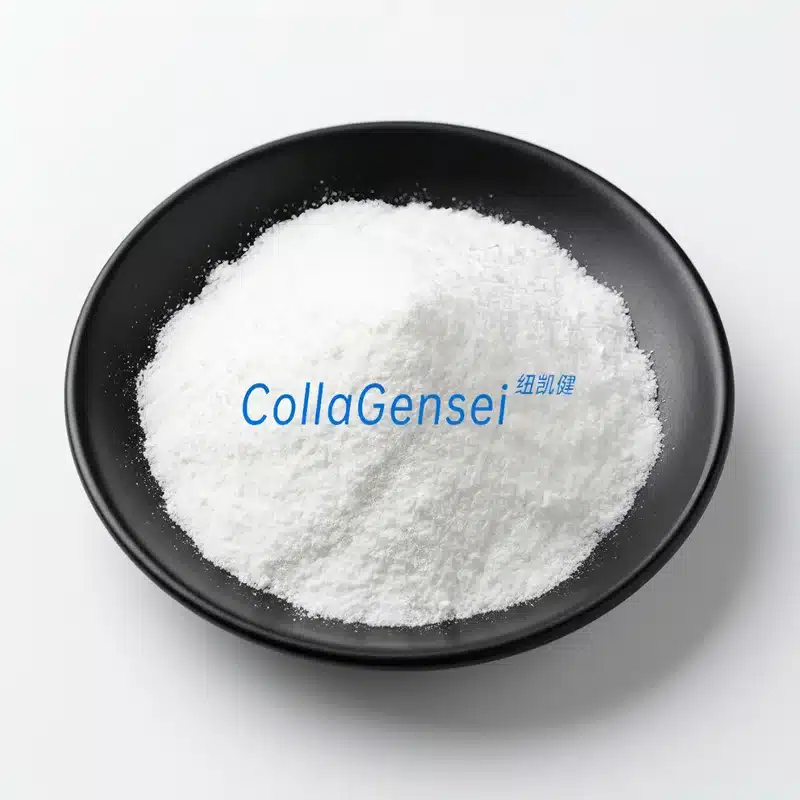
Sodium Hyaluronate Manufacturer & Bulk Powder Supplier
Gensei supplies Hialuronato de sódio, também conhecido por Hyaluronic Acid Sodium Salt, Hyaluronan Sodium Salt, HA Sodium Salt, Sodium Hyaluronate Powder, Fermentation Sodium Hyaluronate, Low Molecular Weight Sodium Hyaluronate, High Molecular Weight Sodium Hyaluronate ou Vegan Sodium Hyaluronate, for dietary supplement capsules, tablets, gummies, sachets, drink powders, joint support blends, beauty-from-within formulas and custom premix manufacturing. We support supplement brands and contract manufacturers with bulk supply, molecular weight review, viscosity review, COA, specification review, sample coordination and global sourcing support.
Product Highlights
- Bulk sodium hyaluronate raw material for dietary supplement, joint support and beauty-from-within formula manufacturing
- Available in fermentation-derived, non-animal, low molecular weight, medium molecular weight, high molecular weight or custom molecular weight options
- Molecular weight, viscosity, assay, glucuronic acid, pH, loss on drying, protein and microbiology can be reviewed according to specification and batch COA
- Suitable for capsules, tablets, gummies, sachets, drink powders, beauty blends, joint support blends and custom supplement premixes
- COA, specification sheet, SDS, TDS, allergen statement, vegan statement, non-GMO statement, BSE/TSE statement and flow chart available for qualified buyers
- Moisture, viscosity, solubility, particle size, heavy metals, microbial limits and finished dosage form behavior should be reviewed before bulk purchase
- Focused on dietary supplement ingredient sourcing, not injectable, dermal filler, medical, pharmaceutical, cosmetic or therapeutic use
What Is Sodium Hyaluronate?
Sodium Hyaluronate is the sodium salt of hyaluronic acid, a glycosaminoglycan polymer commonly sourced for supplement capsules, tablets, gummies and powder blends.
Hialuronato de sódio is a polymeric ingredient also called Hyaluronic Acid Sodium Salt or Hyaluronan Sodium Salt. In B2B supplement sourcing, it is usually evaluated by fermentation source, molecular weight range, intrinsic viscosity or limiting viscosity, assay, glucuronic acid content, pH, moisture, protein residue, ash, particle size, solubility, heavy metals, microbiology, allergen statement, vegan statement, BSE/TSE statement, packaging, storage condition and destination-market label requirements. Because molecular weight strongly affects viscosity, dissolution speed, mouthfeel and dosage-form behavior, buyers should select the grade according to the finished product format.
Molecular Weight Selection
Low, medium and high molecular weight sodium hyaluronate grades should be selected according to solubility, viscosity and application needs.
Fermentation Source Review
Fermentation-derived, non-animal and vegan-compatible options can support brands that require source transparency and BSE/TSE review.
Supplement Supply Focus
Gensei supports supplement brands, OEM factories and contract manufacturers with bulk Sodium Hyaluronate sourcing and technical documentation.
Sodium Hyaluronate Specification Options
Final specifications depend on fermentation source, molecular weight, viscosity, assay method, particle size, packaging and destination market requirements.
| Parâmetro | Typical Options for B2B Sourcing |
|---|---|
| Product Category | Sodium Hyaluronate / Hyaluronic Acid Sodium Salt / Hyaluronan Sodium Salt / HA Sodium Salt / Supplement Ingredient |
| Common Synonyms | Sodium Hyaluronate, Hyaluronic Acid Sodium Salt, Hyaluronan Sodium Salt, HA Sodium Salt, Fermentation Sodium Hyaluronate, Low Molecular Weight Sodium Hyaluronate, High Molecular Weight Sodium Hyaluronate, Vegan Sodium Hyaluronate |
| Número CAS | 9067-32-7 is commonly referenced for sodium hyaluronate / hyaluronic acid sodium salt. Buyers should confirm the CAS reference by supplier documents and batch COA. |
| Chemical Type | Polymeric glycosaminoglycan sodium salt; not a single fixed small molecule with one fixed molecular weight |
| Repeating Unit Reference | Often referenced as a polymeric repeating unit such as (C14H20NaNO11)n or similar notation depending on reference basis |
| Source Options | Fermentation-derived, non-animal, vegan-compatible, BSE/TSE-free option; animal-derived specialty references should be reviewed separately if requested |
| Molecular Weight Range | Low molecular weight, medium molecular weight, high molecular weight, oligo hyaluronic acid or custom MW range depending on dosage form and supplier capability |
| Typical MW Examples | 5–10 kDa, 10–100 kDa, 100–1000 kDa, 800 kDa, 1,000 kDa, 1,800 kDa+ or buyer-specific range. Final MW should be confirmed by batch COA. |
| Aparência | White, almost white, off-white or light beige powder or granules depending on source, drying process and particle size |
| Solubility / Viscosity | Generally water soluble, but dissolution speed and viscosity depend strongly on molecular weight and concentration. Finished formulas should be tested. |
| Common Assay Items | Sodium hyaluronate assay, glucuronic acid, intrinsic viscosity or limiting viscosity, molecular weight, pH, loss on drying, ash and protein residue |
| Particle Size / Mesh | Standard powder, granules, 60 mesh, 80 mesh, fine powder or custom particle size according to capsule, tablet, gummy, sachet or drink powder requirements |
| Application Fit | Dietary supplement capsules, tablets, gummies, sachets, drink powders, beauty-from-within blends, joint support blends and custom premixes |
| Testing Items | Identification, molecular weight, viscosity, assay, glucuronic acid, pH, loss on drying, ash, protein, heavy metals, microbiology, residual solvents and particle size upon request |
| Documents | COA, specification sheet, SDS, TDS, allergen statement, vegan statement, non-GMO statement, BSE/TSE statement, fermentation source statement, flow chart and technical files upon request |
| Embalagem | 1 kg sample pack, aluminum foil bag, moisture-barrier bag, carton, drum or customized bulk packaging according to grade, MW, moisture behavior and order quantity |
| Armazenamento | Store sealed in a cool, dry and light-protected environment. Avoid moisture, heat, direct sunlight and strong odors. |
Note: This table is for B2B sourcing reference. Final molecular weight, viscosity, assay, source, particle size, packaging, shelf life and documents should be confirmed according to the actual batch and purchase agreement.
Low MW vs. High MW Sodium Hyaluronate
Molecular weight is one of the most important purchasing variables because it influences viscosity, dissolution behavior, mouthfeel and finished product format.
| Item | Baixo peso molecular | Medium Molecular Weight | Elevado peso molecular |
|---|---|---|---|
| Typical Positioning | Faster hydration and lower viscosity for capsules, tablets, gummies and low-viscosity drink systems | Balanced viscosity and application flexibility for powders, sachets and multi-ingredient blends | Higher viscosity and stronger thickening behavior for selected powder or liquid systems |
| Buyer Check | Confirm MW range, solubility, pH, taste, powder uniformity and COA | Confirm MW, limiting viscosity, particle size, flowability and formula behavior | Confirm hydration time, viscosity, clumping risk, process compatibility and packaging |
| Formula Notes | Often easier to use in solid dosage forms and stick packs where lower viscosity is desired | Useful when brands need balance between label story, handling and sensory profile | May require stronger mixing, longer hydration and viscosity testing in finished formulas |
| Application Examples | Capsules, tablets, gummies, sachets and drink powders | Powder blends, nutrition powders, capsules and sachets | Selected drink powders, viscous systems and specialty blends after application testing |
Sodium Hyaluronate vs. Hyaluronic Acid vs. Chondroitin Sulfate
These ingredients are often searched together in joint support and beauty-from-within sourcing, but they differ in salt form, polymer behavior and procurement checks.
| Item | Hialuronato de sódio | Ácido hialurónico | Sulfato de condroitina |
|---|---|---|---|
| Ingredient Type | Sodium salt of hyaluronic acid; polymeric glycosaminoglycan | Acid form of hyaluronic acid; polymeric glycosaminoglycan | Sulfated glycosaminoglycan, commonly supplied as sodium salt |
| Common CAS | 9067-32-7 | 9004-61-9 is commonly referenced | 9082-07-9 is commonly referenced for chondroitin sulfate sodium |
| Key Buyer Check | Confirm MW, viscosity, fermentation source, assay, glucuronic acid, pH, protein residue and COA | Confirm acid form, MW, solubility, viscosity, source and COA | Confirm bovine, porcine, chicken, marine or vegan source, assay method and source declaration |
| Application Notes | Often evaluated for capsules, tablets, gummies, sachets, drink powders and beauty/joint blends | Often evaluated where acid form naming or specific formulation behavior is required | Often used in joint support blends with glucosamine, MSM and sodium hyaluronate |
Applications in Dietary Supplements
Gensei supplies Sodium Hyaluronate mainly for dietary supplement joint support and beauty-from-within projects rather than injectable, dermal filler, medical, pharmaceutical, cosmetic or therapeutic applications.
Formulation Notes for Supplement Brands
Sodium Hyaluronate selection should be aligned with molecular weight, viscosity, dosage format, taste, solubility, packaging, label claims and destination market compliance.
Choose Molecular Weight
Confirm low, medium or high molecular weight before selecting capsule, tablet, gummy, sachet or drink powder format.
Review Viscosity
Limiting viscosity, intrinsic viscosity and hydration behavior should be tested because they influence mouthfeel and processing.
Confirm Source
Fermentation-derived, non-animal and vegan-compatible statements should be reviewed before label planning and market launch.
Control Moisture
Review loss on drying, caking risk, foil packaging, desiccant strategy and production-room humidity for powder formulas.
Test Finished Formats
Gummies and drink powders should be tested for pH, heat exposure, viscosity, taste, clumping and active uniformity.
Supplement Facts Review
Final sodium hyaluronate amount, ingredient name, source declaration, serving size and Daily Value statement should be confirmed by the brand owner.
Why Choose Gensei as Your Sodium Hyaluronate Supplier?
Gensei provides procurement-oriented support for supplement brands and contract manufacturers sourcing bulk Sodium Hyaluronate Powder.
Supplement-Focused Supply
Our Sodium Hyaluronate support is focused on capsules, tablets, gummies, sachets, drink powders, beauty blends and joint support premixes.
Specification Matching
We help match molecular weight, viscosity, assay, particle size, solubility, density, flowability and application behavior to your project.
Document Support
COA, specification sheet, SDS, TDS, allergen statement, vegan statement, non-GMO statement and BSE/TSE statement can be provided for qualified buyers.
Application Matching
We support discussion around capsules, tablets, sachets, drink powders, gummies, beauty blends and custom joint support premixes.
Bulk Order Support
Packaging, MOQ, sample availability, lead time and shipment details can be discussed according to your project volume.
Global Supply Coordination
Gensei supports international buyers with quotation, sample coordination, documentation and export shipment planning.
Quality Control & Documentation
For Sodium Hyaluronate raw material purchasing, molecular weight, viscosity, assay, source, heavy metals, microbiology and batch documentation are essential for supplier qualification.
Lote COA
Certificate of Analysis can verify key batch parameters such as molecular weight, viscosity, assay, pH, loss on drying, heavy metals and microbiology.
MW & Viscosity Report
Molecular weight distribution and viscosity data can support dosage-form selection, drink powder testing and formula scale-up.
Compliance Files
SDS, TDS, allergen statement, vegan statement, non-GMO statement, BSE/TSE statement, fermentation source statement and flow chart can support supplier approval.
Buyers should confirm Sodium Hyaluronate identity, CAS reference, source, fermentation route, molecular weight, viscosity, assay, glucuronic acid, pH, loss on drying, ash, protein residue, particle size, solubility, heavy metals, microbiology, allergen status, vegan statement, BSE/TSE statement, shelf life, packaging and storage conditions before placing bulk orders.
Bulk Ordering Process
Gensei helps supplement buyers move from specification review to quotation, sampling and shipment.
Perguntas mais frequentes
Common questions from supplement brands, OEM manufacturers, contract manufacturers and ingredient buyers.
O que é o hialuronato de sódio?
Sodium Hyaluronate is the sodium salt of hyaluronic acid, also called hyaluronic acid sodium salt or hyaluronan sodium salt. In supplement raw material sourcing, it is commonly evaluated by source, molecular weight, viscosity, assay, solubility, pH, loss on drying, heavy metals, microbiology and batch COA.
What is the CAS number of Sodium Hyaluronate?
Sodium Hyaluronate is commonly referenced with CAS 9067-32-7. Buyers should confirm the CAS number, source, molecular weight and specification by supplier documents and batch COA.
Is Sodium Hyaluronate the same as Hyaluronic Acid?
Sodium Hyaluronate is the sodium salt form of hyaluronic acid. The two names are often used together in supplement sourcing, but buyers should confirm the exact ingredient identity, salt form, CAS reference and label declaration.
Is Sodium Hyaluronate a single molecule?
No. Sodium Hyaluronate is a polymeric glycosaminoglycan material, so molecular weight is expressed as a range or distribution rather than one fixed molecular weight.
What molecular weight should I choose?
Low molecular weight grades may be easier for capsules, tablets, gummies and low-viscosity powders, while high molecular weight grades can create higher viscosity. Final selection should be based on application testing and batch specification.
Is Sodium Hyaluronate vegan?
Fermentation-derived Sodium Hyaluronate is commonly used for vegan-compatible formulas, but vegan positioning should be supported by supplier statement, production route review and finished-product compliance review.
Is Sodium Hyaluronate shellfish free?
Sodium Hyaluronate is not normally a shellfish-derived ingredient when produced by fermentation, but buyers should request allergen and cross-contact statements before making shellfish-free claims.
Is Sodium Hyaluronate water soluble?
Sodium Hyaluronate is generally water soluble, but dissolution speed, viscosity and clumping behavior depend on molecular weight, concentration and mixing method. Finished formulas should be tested.
Can Sodium Hyaluronate be used in capsules or tablets?
Yes. Sodium Hyaluronate can be evaluated for capsules and tablets when serving size, molecular weight, bulk density, flowability, particle size and moisture behavior are suitable.
Can Sodium Hyaluronate be used in gummies?
Sodium Hyaluronate can be evaluated for gummy concepts, but heat, pH, moisture, texture, taste, viscosity and active retention should be tested carefully before launch.
Can Sodium Hyaluronate be used in drink powders?
Sodium Hyaluronate can be evaluated for drink powders, sachets and stick packs. Formulators should review solubility, hydration time, viscosity, clumping, flavor compatibility and active uniformity.
What quality indicators should be checked?
Buyers should review source, molecular weight, viscosity, assay, glucuronic acid, pH, loss on drying, ash, protein residue, particle size, heavy metals, microbiology, allergen status, vegan status and batch COA.
What documents can I request before ordering?
Qualified B2B buyers can request COA, specification sheet, SDS, TDS, allergen statement, vegan statement, non-GMO statement, BSE/TSE statement, fermentation source statement, flow chart, stability information and other technical files depending on the selected grade.
Does Gensei supply Sodium Hyaluronate for injectable, dermal filler, medical or cosmetic use?
This page is focused on B2B dietary supplement ingredient sourcing. If a project involves injectable, dermal filler, pharmaceutical, medical device, cosmetic or therapeutic applications, the required grade, documentation and regulatory pathway should be confirmed separately.
Source Bulk Sodium Hyaluronate from Gensei
Looking for a Sodium Hyaluronate manufacturer or bulk Hyaluronic Acid Sodium Salt supplier for dietary supplements? Contact Gensei to request quotation, COA, specification, molecular weight, viscosity, MOQ, sample availability and global shipping support.
Disclaimer: This product information is intended for B2B dietary supplement ingredient sourcing and formulation reference only. It is not intended to diagnose, treat, cure or prevent any disease. Sodium Hyaluronate ingredient selection should be reviewed by identity, CAS reference, source, fermentation route, molecular weight, viscosity, assay, pH, moisture, solubility, microbiology, heavy metals, storage condition, label declaration, Supplement Facts requirements, warning statements, import requirements and destination-market regulations. This page does not position Sodium Hyaluronate for injectable, dermal filler, pharmaceutical, medical device, cosmetic or therapeutic applications. Regulatory status and permitted claims may vary by country, platform and finished-product category. Final supplement claims, dosage, labeling, warning statements, ingredient declaration, product classification and market compliance should be reviewed according to applicable regulations in the destination market.