
Este guia de 2026 destina-se a startups do setor dos suplementos, marcas de bem-estar já estabelecidas, retalhistas, distribuidores, profissionais de saúde e equipas de formulação que pretendam comparar as opções de marca própria, marca branca e produtos personalizados fabrico de suplementos parceiros. As empresas não são apresentadas como um ranking universal de qualidade. A informação pública está sujeita a alterações, e um fabricante adequado para uma cápsula padrão pode não ser adequado para um projeto complexo que envolva gomas, probióticos, cápsulas moles ou pó em grandes quantidades.
Para uma análise direta sobre o processo de fabrico, consulte o documento da Gensei serviços personalizados de suplementos com marca própria ou envie uma descrição do projeto através do Página de pedidos de informação B2B.
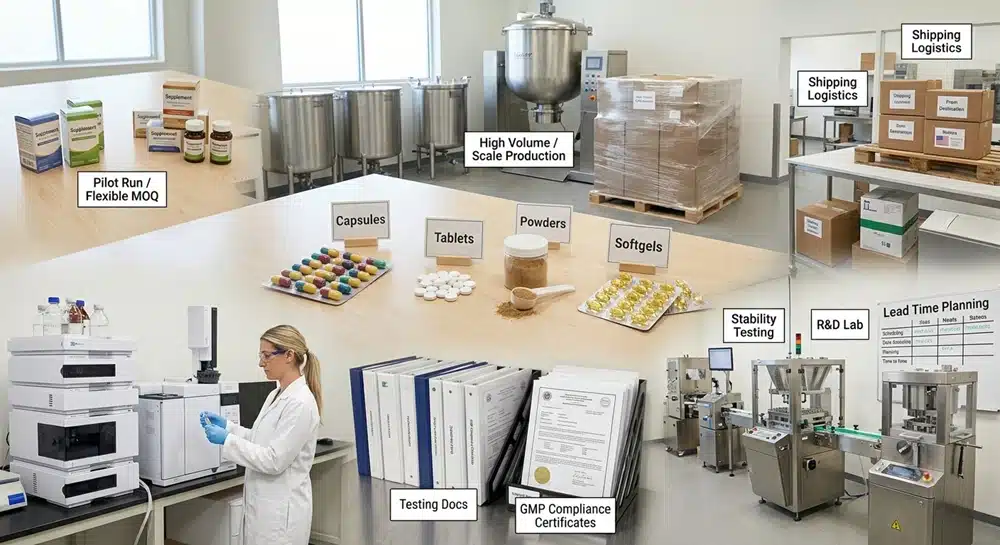
Marca própria vs. marca branca vs. fabrico por encomenda
| Modelo | Controlo de Fórmulas | Velocidade típica de lançamento | Padrão típico de MOQ | Melhor para | Principal compromisso |
|---|---|---|---|---|---|
| Marca branca | Baixa; a mesma fórmula de stock, ou uma fórmula semelhante, pode ser oferecida a várias marcas | Normalmente, o mais rápido | Muitas vezes, mais baixo do que um projeto totalmente personalizado | Testar uma categoria, lançamentos rápidos, linhas de produtos reduzidas | Diferenciação limitada e menor controlo sobre as alterações à fórmula |
| Marca própria | Baixa a média; pode utilizar uma fórmula de série, semi-personalizada ou exclusiva | Rápido a moderado | Depende da fórmula, da forma farmacêutica, da embalagem e da política do fornecedor | Marcas que pretendem ter as suas próprias embalagens com algum grau de personalização | O termo é utilizado de forma inconsistente, pelo que a exclusividade e a propriedade intelectual devem ser estipuladas no contrato |
| Fabrico por contrato totalmente personalizado | Atinge o seu nível mais elevado quando as condições relativas à responsabilidade e ao controlo de alterações são claras | Normalmente, o mais longo | Frequentemente mais elevado devido ao desenvolvimento, às matérias-primas, aos testes e à configuração | Fórmulas diferenciadas, posicionamento clínico, escala a longo prazo | Custos de desenvolvimento mais elevados, prazos de execução mais longos e maior responsabilidade regulamentar |
Não se baseie apenas na designação “marca própria”. Pergunte se a fórmula é padrão, semipersonalizada, exclusiva, licenciada ou propriedade da sua marca. Pergunte também se o fabricante pode substituir ingredientes, fornecedores, excipientes, aromas, corantes ou componentes da embalagem sem aprovação por escrito.

Tabela comparativa: Fabricantes de suplementos de marca própria a avaliar em 2026
A tabela constitui uma lista de candidatos pré-selecionados orientada para o comprador, baseada em capacidades declaradas publicamente e analisadas em julho de 2026. Não se trata de uma auditoria independente às instalações, de uma avaliação de certificação paga nem de uma garantia da qualidade do serviço. Verifique as informações atualizadas antes de tomar uma decisão de compra.
| # | Fabricante | Região | Projeto Best-Fit | Capacidades declaradas publicamente | O que verificar |
|---|---|---|---|---|---|
| 1 | Nutrição Makers | Estados Unidos | Lançamentos «chave na mão» de marcas próprias e em vários formatos | Cápsulas, cápsulas moles, pós, gomas, formulação, embalagem, distribuição | Quantidade mínima de encomenda (MOQ) atual por formato, âmbito dos testes, pressupostos relativos ao prazo de entrega e propriedade da fórmula |
| 2 | Vitaquest | Estados Unidos | Programas de desenvolvimento personalizado e de expansão de maior dimensão | Desenvolvimento de produtos, formulação personalizada, diversas formas farmacêuticas, apoio à qualidade e à embalagem | Tamanho mínimo do lote comercial, adequação do projeto a startups, requisitos de transferência de tecnologia |
| 3 | SMP Nutra | Estados Unidos | Produção multiformato e operações subcontratadas | Suplementos em stock e personalizados, pós, cápsulas, vitaminas, embalagens e apoio à gestão de encomendas | Condições contratuais, fórmula/propriedade intelectual, controlo de alterações, referências de marcas comparáveis |
| 4 | Laboratórios NutraScience | Estados Unidos | Marcas do segmento médio que necessitam de desenvolvimento de produtos e coordenação de embalagens | Cápsulas, pós, comprimidos, cápsulas moles, formulação, conceção de rótulos e apoio na embalagem | Rede de produção atual, unidade responsável, documentos de auditoria e âmbito exato |
| 5 | Vitalabs | Estados Unidos | Marcas próprias com fórmulas padrão e marcas que testam várias SKUs | Formulações em stock e personalizadas, marca própria, embalagem e catálogo de suplementos | Quantidade mínima de encomenda (MOQ) por SKU, limites de personalização, âmbito atual da certificação NSF/GMP e pacote de testes |
| 6 | Nutrição Vox | Estados Unidos | Catálogo de marcas próprias e programas personalizados/por contrato | Catálogo de marcas próprias, formulação, mistura, encapsulamento, engarrafamento, rotulagem e design | Quais são os produtos em stock e quais são os produtos personalizados, âmbito atual da certificação, condições de entrega |
| 7 | Vitamina de confiança | Estados Unidos | Programas de dosagem sólida e de retalho já consolidados | Comprimidos, cápsulas, pós, comprimidos mastigáveis, pastilhas, apoio à formulação e à produção | Quantidade mínima de encomenda (MOQ) específica para cada formato, documentação de retalho, controlos de alergénios e responsabilidades em matéria de estabilidade |
| 8 | Gemini Pharmaceuticals | Estados Unidos | Marcas que dão prioridade a sistemas do tipo farmacêutico e a acordos de qualidade | Fabrico por encomenda de suplementos alimentares e de determinados produtos de venda livre | Capacidade exata em termos de forma farmacêutica, tamanho do lote, estado da auditoria, qualidade e acordos de fornecimento |
| 9 | PURE Marca Própria | Estados Unidos | Marca própria com baixo custo de entrada e validação precoce do mercado | Formulações em stock e personalizadas, com programas de quantidades mínimas de encomenda (MOQ) reduzidas, divulgados publicamente | Se a quantidade mínima de encomenda (MOQ) indicada se aplica à fórmula, à embalagem e ao sabor; custo total de importação |
| 10 | Fabrico superior de suplementos | Estados Unidos | Produtos personalizados que requerem coordenação em matéria de formulação, aromatização ou certificação | Marca própria e fabrico por encomenda, com apoio em I&D, formulação e embalagem | Processo piloto, validação de métodos, especificações de ensaio, responsabilidade pela gestão do projeto |
| 11 | TCI Bio | Global / Taiwan | ODM/CDMO global orientado pela ciência e inovação em várias categorias | Desenvolvimento, formulação, fabrico e expansão à escala global de produtos nutracêuticos e de beleza | Responsabilidade regulamentar do mercado-alvo, condições relativas à propriedade intelectual, resultados da validação e documentos de exportação |
| 12 | SIRIO Pharma | Mundial | Gomas em embalagens de diferentes tamanhos, cápsulas moles e fornecimento multirregional | Gomas, cápsulas moles e formas farmacêuticas sólidas com serviços globais de CDMO | Local escolhido para o projeto, certificações aplicáveis, lote mínimo e plano de transferência de tecnologia |
| 13 | CAPTEK Softgel International | Estados Unidos | Programas de cápsulas moles e aumento da capacidade de produção de gomas | Cápsulas moles personalizadas de suplementos alimentares e fabrico de gomas | Compatibilidade com óleo, opções de invólucro, programa de estabilidade, ferramentas e requisitos relativos aos lotes comerciais |
| 14 | Mundo Gummi | Estados Unidos | Projetos privados e de marca branca especializados em gomas | Formulação personalizada de gomas, marca própria/marca branca, apoio na embalagem, rotulagem e envio | Viabilidade da carga ativa, quantidade mínima de encomenda (MOQ) para sabores/cores, opções sem açúcar, estabilidade e barreira da embalagem |
| 15 | Tecnologias de gel macio | Estados Unidos | Ingredientes diferenciados para cápsulas moles e fórmulas especializadas | Formulação e fabrico de cápsulas moles com tecnologias de libertação de marca ou diferenciadas | Modelo de acesso à fórmula, exclusividade, volume mínimo, licenciamento de ingredientes e testes ao produto acabado |
| 16 | Indústrias Globais Gensei | A China, com o apoio da oferta global | Fornecimento de ingredientes e marca própria personalizada em diversas formas farmacêuticas | Revisão de fórmulas, cápsulas, comprimidos, gomas, pós, líquidos, cápsulas moles, embalagens e apoio à documentação | Instalações específicas do projeto, requisitos do mercado de destino, documentos de auditoria, quantidade mínima de encomenda (MOQ) e plano de testes finais |
Como avaliámos os fabricantes
Uma comparação credível entre fabricantes deve basear-se em dados relevantes para o projeto, em vez de receitas estimadas, número de colaboradores, prémios de marketing ou alegações não verificadas. Este guia tem em conta seis aspetos práticos:
- Adequação da forma farmacêutica: cápsulas, comprimidos, pós, gomas, cápsulas moles, líquidos, comprimidos mastigáveis, pastilhas, saquetas individuais ou sistemas de administração especializados.
- Modelo de lançamento: fórmulas em stock prontas a personalizar com a marca do cliente, produtos semi-personalizados, formulações totalmente personalizadas ou desenvolvimento CDMO.
- Transparência na qualidade: disponibilidade para fornecer provas de auditoria atualizadas, especificações, planos de ensaio, registos de lotes, certificados de análise (COA), controlos de alergénios e contactos responsáveis pela qualidade.
- Adequação comercial: Quantidade mínima de encomenda (MOQ), taxas de desenvolvimento, quantidades mínimas de embalagem, condições de pagamento, prazo de entrega, capacidade, requisitos de previsão e escalabilidade das novas encomendas.
- Apoio em matéria de regulamentação: revisão de rótulos, revisão de alegações, documentação relativa ao mercado de destino, tratamento de reclamações, responsabilidades em caso de eventos adversos e procedimentos de recolha de produtos.
- Verificação do comprador: amostras, auditorias às instalações ou auditorias virtuais, referências de projetos semelhantes, contratos claros e um controlo de alterações bem definido.
Afirmações como “fabricante aprovado pela FDA”, “instalações certificadas pela FDA” ou “suplemento aprovado pela FDA” devem ser consideradas sinais de alerta. O registo ou a inspeção pela FDA não equivalem à aprovação da FDA. Os fabricantes de suplementos alimentares que abastecem o mercado dos EUA são responsáveis pelo cumprimento dos requisitos aplicáveis, incluindo as boas práticas de fabrico em vigor.
Perfis dos fabricantes
1. Nutrição dos fabricantes
O mais adequado: Lançamentos «chave na mão» de marcas próprias e em vários formatos.
A Makers Nutrition descreve publicamente as suas capacidades, que incluem cápsulas, cápsulas moles, pós, gomas, formulação, embalagem e distribuição. Isso torna-a uma opção potencial quando essas capacidades correspondem ao perfil do produto, à forma farmacêutica, ao mercado-alvo e à escala comercial.
Confirmar antes de selecionar os candidatos pré-selecionados: Quantidade mínima de encomenda (MOQ) atual por formato, âmbito dos testes, pressupostos relativos ao prazo de entrega e propriedade da fórmula.
2. Vitaquest
O mais adequado: Programas de desenvolvimento personalizado e de expansão de maior dimensão.
A Vitaquest descreve publicamente as suas capacidades, que incluem o desenvolvimento de produtos, a formulação personalizada, diversas formas farmacêuticas e apoio em matéria de qualidade e embalagem. Isso torna-a uma opção potencial quando essas capacidades correspondem às especificações do produto, à forma farmacêutica, ao mercado-alvo e à escala comercial.
Confirmar antes de selecionar os candidatos pré-selecionados: Tamanho mínimo do lote comercial, adequação do projeto a startups, requisitos de transferência de tecnologia.
3. SMP Nutra
O mais adequado: Produção multiformato e operações subcontratadas.
A SMP Nutra descreve publicamente as suas capacidades, que incluem suplementos em stock e personalizados, pós, cápsulas, vitaminas, embalagens e apoio à gestão de encomendas. Isso torna-a uma opção potencialmente adequada quando essas capacidades correspondem às especificações do produto, à forma farmacêutica, ao mercado-alvo e à escala comercial.
Confirmar antes de selecionar os candidatos pré-selecionados: Condições contratuais, fórmula/propriedade intelectual, controlo de alterações, referências de marcas semelhantes.
4. NutraScience Labs
O mais adequado: Marcas do segmento médio que necessitam de desenvolvimento de produtos e coordenação de embalagens.
A NutraScience Labs descreve publicamente as suas capacidades, que incluem cápsulas, pós, comprimidos, cápsulas moles, formulação, conceção de rótulos e apoio à embalagem. Isso torna-a uma opção potencial quando essas capacidades correspondem ao perfil do produto, à forma farmacêutica, ao mercado-alvo e à escala comercial.
Confirmar antes de selecionar os candidatos pré-selecionados: Rede de produção atual, unidade responsável, documentos de auditoria e âmbito exato.
5. Vitalabs
O mais adequado: Marcas próprias com fórmulas padrão e marcas que testam vários SKUs.
A Vitalabs descreve publicamente as suas capacidades, que incluem formulações em stock e personalizadas, marca própria, embalagem e catálogo de suplementos. Isso torna-a uma opção potencial quando essas capacidades correspondem ao perfil do produto, à forma farmacêutica, ao mercado-alvo e à escala comercial.
Confirmar antes de selecionar os candidatos pré-selecionados: Quantidade mínima de encomenda (MOQ) por SKU, limites de personalização, âmbito atual da certificação NSF/GMP e pacote de ensaios.
6. Vox Nutrition
O mais adequado: Catálogo de marcas próprias e programas personalizados/por contrato.
A Vox Nutrition apresenta publicamente as suas capacidades, que incluem catálogo de marcas próprias, formulação, mistura, encapsulamento, engarrafamento, rotulagem e design. Isso torna-a uma opção potencial quando essas capacidades correspondem ao perfil do produto, à forma farmacêutica, ao mercado-alvo e à escala comercial.
Confirmar antes de selecionar os candidatos pré-selecionados: Quais são os produtos em stock e quais são os produtos por encomenda, o âmbito atual da certificação e as condições de entrega.
7. Reliance Vitamin
O mais adequado: Programas de dosagem sólida e de retalho já consolidados.
A Reliance Vitamin descreve publicamente as suas capacidades, que incluem comprimidos, cápsulas, pós, comprimidos mastigáveis, pastilhas, formulação e apoio à produção. Isso torna-a uma opção potencial quando essas capacidades correspondem ao perfil do produto, à forma farmacêutica, ao mercado-alvo e à escala comercial.
Confirmar antes de selecionar os candidatos pré-selecionados: Quantidade mínima de encomenda (MOQ) específica para cada formato, documentação de retalho, controlos de alergénios e responsabilidades em matéria de estabilidade.
8. Gemini Pharmaceuticals
O mais adequado: Marcas que dão prioridade a sistemas semelhantes aos da indústria farmacêutica e a acordos de qualidade.
A Gemini Pharmaceuticals descreve publicamente as suas capacidades, que incluem a produção por contrato de suplementos alimentares e determinados produtos de venda livre. Isso torna-a uma opção potencialmente adequada quando essas capacidades correspondem às especificações do produto, à forma farmacêutica, ao mercado-alvo e à escala comercial.
Confirmar antes de selecionar os candidatos pré-selecionados: Capacidade exata em termos de forma farmacêutica, tamanho do lote, estado da auditoria, qualidade e acordos de fornecimento.
9. Marca própria PURE
O mais adequado: Marca própria com baixo custo de entrada e validação precoce no mercado.
A PURE Private Label descreve publicamente as suas capacidades, que incluem formulações em stock e personalizadas, com programas de quantidades mínimas de encomenda (MOQ) baixas, divulgadas publicamente. Isso torna-a uma opção potencial quando essas capacidades correspondem ao perfil do produto, à forma farmacêutica, ao mercado-alvo e à escala comercial.
Confirmar antes de selecionar os candidatos pré-selecionados: Se a quantidade mínima de encomenda (MOQ) indicada se aplica à fórmula, à embalagem e ao sabor; custo total com portes incluídos.
10. Fabrico de suplementos de qualidade superior
O mais adequado: Produtos personalizados que requerem coordenação em matéria de formulação, aromatização ou certificação.
A Superior Supplement Manufacturing descreve publicamente as suas capacidades, que incluem a produção de marcas próprias e a fabricação por contrato, com apoio em I&D, formulação e embalagem. Isso torna-a uma opção potencial quando essas capacidades correspondem ao perfil do produto, à forma farmacêutica, ao mercado-alvo e à escala comercial.
Confirmar antes de selecionar os candidatos pré-selecionados: Processo piloto, validação de métodos, especificações de ensaio, responsabilidade pela gestão de projetos.
11. TCI Bio
O mais adequado: ODM/CDMO global orientado pela ciência e inovação em várias categorias.
A TCI Bio descreve publicamente as suas capacidades, que incluem o desenvolvimento, a formulação, o fabrico e a expansão à escala global de produtos nutracêuticos e de beleza. Isso torna-a uma opção potencial quando essas capacidades correspondem ao perfil do produto, à forma farmacêutica, ao mercado-alvo e à escala comercial.
Confirmar antes de selecionar os candidatos pré-selecionados: Responsabilidades regulamentares relativas ao mercado-alvo, condições relativas à propriedade intelectual, resultados esperados da validação e documentos de exportação.
12. SIRIO Pharma
O mais adequado: Gomas em embalagens de diferentes tamanhos, cápsulas moles e fornecimento para várias regiões.
A SIRIO Pharma apresenta publicamente as suas capacidades, que incluem gomas, cápsulas moles e formas farmacêuticas sólidas, juntamente com serviços globais de CDMO. Isso torna-a uma opção potencial quando essas capacidades correspondem ao perfil do produto, à forma farmacêutica, ao mercado-alvo e à escala comercial.
Confirmar antes de selecionar os candidatos pré-selecionados: Local selecionado para o projeto, certificações aplicáveis, lote mínimo e plano de transferência de tecnologia.
13. CAPTEK Softgel International
O mais adequado: Programas de cápsulas moles e aumento da capacidade de produção de gomas.
A CAPTEK Softgel International apresenta publicamente as suas capacidades, que incluem o fabrico personalizado de cápsulas moles e gomas para suplementos alimentares. Isso torna-a uma opção potencial quando essas capacidades correspondem ao perfil do produto, à forma farmacêutica, ao mercado-alvo e à escala comercial.
Confirmar antes de selecionar os candidatos pré-selecionados: Compatibilidade com óleo, opções de invólucro, programa de estabilidade, ferramentas e requisitos relativos aos lotes comerciais.
14. Mundo Gummi
O mais adequado: Projetos privados e de marca branca especializados em gomas.
A Gummi World apresenta publicamente as suas capacidades, que incluem a formulação personalizada de gomas, marcas próprias/marcas brancas, embalagem, rotulagem e apoio ao envio. Isso torna-a uma opção potencial quando essas capacidades correspondem ao perfil do produto, à forma farmacêutica, ao mercado-alvo e à escala comercial.
Confirmar antes de selecionar os candidatos pré-selecionados: Viabilidade da carga ativa, quantidade mínima de encomenda (MOQ) para sabores/cores, opções sem açúcar, estabilidade e barreira da embalagem.
15. Tecnologias de Gel Mole
O mais adequado: Ingredientes diferenciados para cápsulas moles e fórmulas especializadas.
A Soft Gel Technologies apresenta publicamente as suas capacidades, que incluem a formulação e o fabrico de cápsulas de gel mole com tecnologias de libertação de marca ou diferenciadas. Isso torna-a uma opção potencial quando essas capacidades correspondem ao perfil do produto, à forma farmacêutica, ao mercado-alvo e à escala comercial.
Confirmar antes de selecionar os candidatos pré-selecionados: Modelo de acesso à fórmula, exclusividade, volume mínimo, licenciamento de ingredientes e testes ao produto acabado.
16. Gensei Global Industries
O mais adequado: Fornecimento de ingredientes e criação de marcas próprias personalizadas em várias formas farmacêuticas.
Indústrias Globais Gensei descreve publicamente as suas capacidades, que incluem a revisão de fórmulas, cápsulas, comprimidos, gomas, pós, líquidos, cápsulas moles, embalagem e apoio na documentação. Isso torna-a uma opção potencialmente adequada quando essas capacidades correspondem ao perfil do produto, à forma farmacêutica, ao mercado-alvo e à escala comercial.
Confirmar antes de selecionar os candidatos pré-selecionados: Instalações específicas do projeto, requisitos do mercado de destino, documentos de auditoria, quantidade mínima de encomenda (MOQ) e plano de testes finais.
Divulgação: A Gensei publica este guia. O mesmo está incluído como uma opção de fabrico própria da editora e deve ser avaliado com base na mesma documentação, amostras, auditorias, acordos de qualidade e verificações de referência aplicadas a todas as outras empresas.
O que verificar antes de escolher um fabricante
1. cGMP, registo na FDA e auditorias realizadas por entidades independentes
No que diz respeito aos produtos vendidos nos Estados Unidos, pergunte de que forma as operações de fabrico, embalagem, rotulagem e armazenamento cumprem o disposto na norma 21 CFR Parte 111 e outras regras aplicáveis. Solicite o nome e a morada legais da unidade, o âmbito e a data da última auditoria realizada por terceiros, o número do certificado e o estado de quaisquer ações corretivas relevantes para o seu projeto.
O registo de instalações alimentares junto da FDA não comprova que a FDA tenha aprovado a instalação, a fórmula ou o produto. Um logótipo de certificação num site também é insuficiente, a menos que o certificado esteja válido, que o nome da instalação corresponda ao local de fabrico e que o âmbito de aplicação abranja a operação em questão.
2. Ensaios, especificações e certificados de análise
Defina o plano de ensaio antes de aprovar um orçamento. Dependendo do produto, este pode incluir a identificação das matérias-primas, a potência ou o teor, a análise microbiológica, os metais pesados, os pesticidas, os solventes residuais, os alergénios, a humidade, a desintegração, a dissolução, o ranço, a oxidação, a contagem de probióticos ou outros atributos específicos da fórmula.
Solicite um certificado de análise (COA) de um produto acabado de um lote comparável recente. Verifique se o mesmo identifica o lote, as especificações, os resultados, o método, o laboratório, a data e o estado de aprovação. Um COA genérico do fornecedor ou um documento que indique apenas “aprovado” pode não ser suficiente para o seu programa de qualidade.
3. Apoio à estabilidade e ao prazo de validade
A data de validade impressa deve ter uma base justificada. Confirme quem concebe e quem financia os estudos de estabilidade, se os ensaios são acelerados ou em tempo real, que tipo de embalagem é utilizada, quais os parâmetros monitorizados e o que acontece se a fórmula falhar antes do prazo de validade proposto.
4. Quantidade mínima de encomenda (MOQ), preços e custo total com transporte incluído
O MOQ não é um valor único. Informe-se separadamente sobre o lote de fabrico, o número de garrafas ou saquetas por SKU, os rótulos, as caixas, os sabores, as cores, os ingredientes especiais, as películas impressas, as ferramentas de fabrico e os testes. Um MOQ de produção baixo pode, mesmo assim, gerar um excesso de stock de embalagens ou custos elevados de configuração.
Compare o custo total no destino, e não apenas o preço unitário. Inclua as taxas de desenvolvimento, amostras, matérias-primas, excedentes, testes, embalagem, frete, direitos aduaneiros, armazenamento, inspeção, comissões de pagamento e o custo do capital imobilizado durante o prazo de entrega.
5. Propriedade das fórmulas, exclusividade e controlo de alterações
Indique por escrito quem é o titular da fórmula, das especificações, do sistema de aromas, do material gráfico, dos dados de estabilidade, dos métodos de ensaio, das ferramentas e dos ficheiros regulamentares. Confirme se o fabricante pode vender uma fórmula semelhante a outras marcas e se a sua fórmula pode ser transferida para outra unidade de produção.
É necessária uma aprovação por escrito para quaisquer alterações relativas a ingredientes, fornecedores, país de origem, unidade de fabrico, excipientes, coadjuvantes de processamento, tamanho da porção, embalagem, especificações, métodos ou conteúdo do rótulo.
6. Análise de rótulos e alegações
O proprietário da marca não deve partir do princípio de que o fabricante assume toda a responsabilidade pelo rótulo. É necessário definir quem é responsável por elaborar o quadro de informações nutricionais, verificar a nomenclatura dos ingredientes, analisar as declarações relativas a alergénios, verificar a quantidade líquida, avaliar as alegações relativas à estrutura e função e manter a documentação de comprovação.
7. Acordo de Qualidade, Acordo de Fornecimento e Responsabilidades em caso de recolha de produtos
Um acordo de qualidade deve atribuir responsabilidades relativamente a especificações, ensaios, libertação de lotes, desvios, investigações de casos fora das especificações, reclamações, eventos adversos, controlo de alterações, registos, auditorias, recolhas de produtos e destruição. Um acordo de fornecimento deve abordar questões relacionadas com preços, previsões, ordens de compra, entrega, aceitação, responsabilidade, confidencialidade, propriedade intelectual, rescisão e resolução de litígios.
8. Adequação da forma farmacêutica
Escolha um fabricante com experiência comprovada neste formato específico, e não apenas em “suplementos”. Um projeto de cápsulas requer equipamento e controlos diferentes dos necessários para gomas, probióticos, comprimidos efervescentes, cápsulas moles, doses líquidas, saquetas individuais ou pó rico em proteínas.
- No caso das cápsulas, verifique o peso de enchimento, a densidade aparente, a fluidez, o invólucro da cápsula, a segregação e a dose por porção.
- No caso das gomas, analise a carga ativa, o mascaramento do sabor, o sistema de pectina ou gelatina, a atividade da água, a estabilidade e a barreira da embalagem.
- No caso das cápsulas moles, analise a compatibilidade com o óleo, a viscosidade do conteúdo, o sistema de revestimento, a possibilidade de fugas, a oxidação e a estabilidade.
- No caso dos pós, avalie a uniformidade da mistura, a capacidade de mistura, o sabor, a higroscopicidade, o tamanho das partículas e a precisão da colher.
Explore as páginas específicas de cada formato do Gensei para fabrico de cápsulas, fabrico de suplementos de gomas, fabrico de suplementos em póe fabrico por contrato de vitaminas.
Ficha de Avaliação da Verificação do Fabricante
| Categoria | Provas a solicitar | Peso recomendado |
|---|---|---|
| Sistema de qualidade | Certificado de auditoria atual, âmbito, nome das instalações, estado das ações corretivas, contacto responsável pela qualidade | 20% |
| Testes e especificações | Exemplo de Certificado de Análise (COA), métodos de ensaio, programa de identificação de matérias-primas, plano de libertação do produto acabado | 20% |
| Capacidade de produção de formas farmacêuticas | Produtos comparáveis, gama de lotes, adequação do equipamento, análise da viabilidade técnica | 15% |
| Adequação comercial | Discriminação da quantidade mínima de encomenda (MOQ), orçamento completo, condições de pagamento, capacidade e plano de reabastecimento | 15% |
| Prazo de entrega e cadeia de abastecimento | Cronograma de desenvolvimento, plano de matérias-primas, prazo de entrega da embalagem, escalonamento de atrasos | 10% |
| Apoio em matéria de regulamentação e rotulagem | Matriz de responsabilidades, âmbito da revisão dos rótulos, documentação relativa ao mercado de destino | 10% |
| Contratos e Propriedade Intelectual | Acordo de qualidade, acordo de fornecimento, titularidade, exclusividade e controlo de alterações | 10% |
Atribua uma pontuação a cada candidato apenas após analisar as provas apresentadas. A linguagem de marketing não deve receber a mesma pontuação que um documento atual, um lote de amostras concluído, uma auditoria às instalações ou uma referência de um cliente comparável.
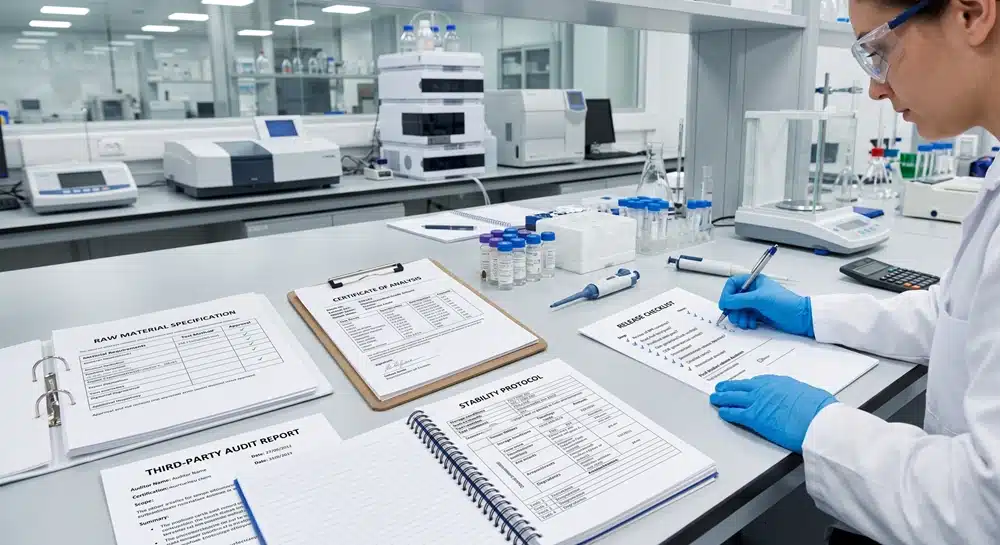
Perguntas a fazer antes de solicitar um orçamento
- Qual é a denominação legal e a morada da unidade que irá fabricar e embalar este produto?
- Que formas farmacêuticas e tamanhos de lote são produzidos nessa unidade?
- Que auditoria cGMP ou certificação por entidade independente se aplica atualmente às instalações e ao funcionamento?
- Pode fornecer o certificado mais recente, o âmbito da auditoria e a data de validade?
- A fórmula proposta é de linha de série, semipersonalizada, exclusiva, licenciada ou propriedade da nossa marca?
- Quem é o titular da fórmula, das especificações, do sabor, do design, dos métodos de ensaio, dos dados de estabilidade e das ferramentas de produção?
- Qual é a quantidade mínima de encomenda (MOQ) para o fabrico, embalagem de componentes, rótulos, caixas de cartão, aromas, corantes e ingredientes especiais?
- Que taxas de desenvolvimento, amostragem, configuração, testes e alterações de encomenda estão excluídas do preço unitário?
- Que ensaios às matérias-primas e aos produtos acabados estão incluídos?
- Que análises são realizadas internamente e quais são realizadas por laboratórios externos?
- Pode fornecer-nos um exemplo recente de um certificado de análise (COA) de um produto acabado, com os métodos utilizados e os resultados numéricos?
- Como é que se gere a identificação das matérias-primas e a qualificação dos fornecedores?
- Qual é o plano proposto em matéria de estabilidade e prazo de validade?
- Quais são os prazos previstos para a viabilidade, a amostra, as matérias-primas, a produção, os testes e a entrega?
- O que acontece quando uma matéria-prima, um fornecedor, um local, um método ou uma especificação sofre alterações?
- Quem prepara e aprova o quadro de informações nutricionais e as alegações constantes do rótulo?
- Que registos estarão disponíveis para a nossa auditoria ou revisão da libertação em lote?
- Como são tratados os desvios, os resultados fora das especificações, as reclamações e as recolhas de produtos?
- Pode fornecer exemplos de marcas com uma fórmula, formato, tamanho de lote e mercado-alvo semelhantes?
- É possível assinar um acordo de qualidade, um contrato de fornecimento, um acordo de confidencialidade e os termos relativos à propriedade da fórmula antes do início da produção comercial?
Sinais de alerta ao comparar fabricantes de suplementos de marca própria
- Referir-se à instalação ou ao suplemento como “aprovado pela FDA”.”
- Recusar-se a identificar o local de fabrico efetivo ou a entidade jurídica responsável.
- Utilização de um logótipo de certificação sem um certificado válido, âmbito de aplicação, morada e nome da empresa correspondente.
- Apresentar um MOQ muito baixo sem explicar os requisitos mínimos de embalagem, os testes, as taxas de configuração ou as limitações das fórmulas em stock.
- Apresentar apenas um certificado de análise (COA) genérico do fornecedor de ingredientes, em vez de um plano de libertação do produto acabado.
- Prometer um prazo de validade sem explicar os fatores que garantem a estabilidade.
- Afirmar que todas as fórmulas são “personalizadas”, mantendo simultaneamente todos os direitos de propriedade intelectual sobre as fórmulas e permitindo substituições sem restrições.
- Utilizar receitas estimadas, números de colaboradores, prémios ou adjetivos de marketing como substitutos de provas concretas de qualidade.
- Garantir a aprovação regulamentar, a aceitação pela Amazon, os resultados médicos ou o desempenho das vendas.
- Recusa de um acordo de qualidade, de um processo de controlo de alterações, de uma aprovação de amostra ou de uma verificação de referências.
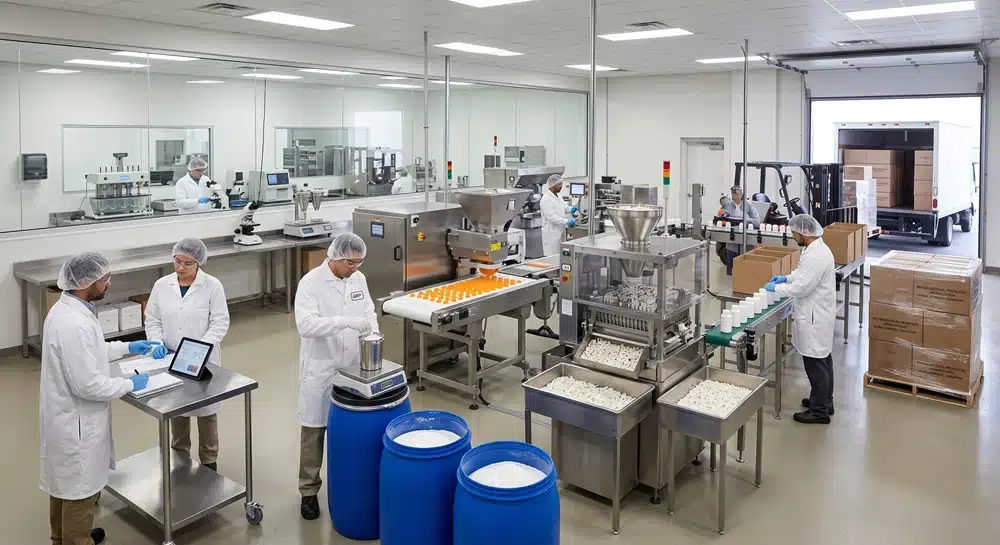
O lugar do Gensei
A Gensei presta apoio na aquisição de ingredientes, na formulação personalizada e em projetos de suplementos de marca própria, abrangendo cápsulas, comprimidos, gomas, pós, líquidos, cápsulas moles e outros formatos. A empresa pode ser uma opção adequada para marcas que pretendam coordenar as especificações dos ingredientes, as amostras, a embalagem, a documentação e o abastecimento global através de uma única equipa de projeto.
Uma vez que a Gensei publica esta comparação, esta não deve ser considerada como uma classificação independente que a coloca em primeiro lugar. Os compradores devem aplicar à Gensei os mesmos critérios de avaliação que aplicariam a qualquer outro candidato. Consulte o processo de formulação personalizada, abordagem de controlo de qualidade dos suplementose Capacidades de I&D, e, em seguida, solicitar a documentação específica do projeto.
Para receber um orçamento útil, envie a fórmula ou a categoria do produto, a forma farmacêutica, a dose por porção pretendida, o mercado de destino, o conceito de embalagem, a quantidade estimada, os requisitos de teste e o prazo previsto através do formulário de contacto.
Perguntas mais frequentes
Qual é o melhor fabricante de suplementos de marca própria?
Não existe um fabricante universalmente considerado o melhor. A escolha certa depende da forma farmacêutica, da complexidade da fórmula, da quantidade mínima de encomenda (MOQ), do mercado-alvo, dos testes, da documentação, do prazo de entrega, do orçamento e da escala. Elabore uma lista restrita com base na adequação ao projeto e, em seguida, verifique as instalações, o âmbito da auditoria, a amostra, o certificado de análise (COA), o acordo de qualidade, as referências e as condições comerciais.
Qual é a diferença entre suplementos de marca própria e de marca branca?
A expressão «marca branca» refere-se, normalmente, a uma fórmula já pronta que várias marcas podem comercializar sob diferentes marcas. A expressão «marca própria» pode referir-se a um produto em stock, semipersonalizado, exclusivo ou personalizado, dependendo do fornecedor. Uma vez que a terminologia varia, é importante definir por escrito a propriedade da fórmula, a exclusividade, a personalização e o controlo de alterações.
Os fabricantes de suplementos de marca própria são aprovados pela FDA?
Não. A FDA não aprova os suplementos alimentares quanto à segurança e eficácia antes da sua comercialização, e o registo ou a inspeção não significam que um fabricante seja aprovado pela FDA. Solicite informações sobre as instalações responsáveis, as provas atuais de conformidade e de auditoria, bem como os documentos de qualidade relevantes para o seu produto.
Qual é a quantidade mínima de encomenda (MOQ) habitual para suplementos de marca própria?
A quantidade mínima de encomenda (MOQ) varia consideravelmente consoante a fórmula, a forma farmacêutica, a embalagem, a disponibilidade dos ingredientes, o equipamento e o fabricante. As cápsulas em stock podem ter um valor mínimo de encomenda mais baixo do que as gomas personalizadas, as cápsulas moles, os probióticos, os líquidos ou as embalagens em saquetas com impressão. Confirme as quantidades mínimas específicas para a produção, a embalagem e os ingredientes especiais.
Quanto tempo demora o fabrico de suplementos de marca própria?
O lançamento de um produto com fórmula padrão pode ser mais rápido do que o de um produto totalmente personalizado. Um calendário realista pode incluir a viabilidade, o desenvolvimento da fórmula, as amostras, a aquisição de ingredientes, a embalagem, a produção, os testes do produto acabado e a sua colocação no mercado. Solicite um calendário baseado em marcos, em vez de uma única promessa de prazo de execução sem especificações.
Quanto custa lançar uma marca própria de suplementos?
O custo depende da quantidade mínima de encomenda (MOQ), da fórmula, da forma farmacêutica, do trabalho de desenvolvimento, dos ensaios, da embalagem, do frete, dos direitos aduaneiros, do armazenamento e dos requisitos dos canais de distribuição. Compare o custo total no destino e a exposição do capital de giro, e não apenas o preço por frasco.
Uma startup pode recorrer a um fabricante de suplementos de marca própria?
Sim, especialmente através de programas de stock ou semipersonalizados. As startups devem evitar comprometer-se com um número excessivo de SKUs, confirmar todos os quantidades mínimas de embalagem, calcular o capital imobilizado em stock e selecionar um parceiro capaz de apoiar tanto um lançamento piloto como futuras encomendas.
Que documentos deve um fabricante de suplementos apresentar?
Dependendo do projeto, solicite informações sobre as instalações e auditorias, especificações dos ingredientes, declarações sobre alergénios, especificações da fórmula e do produto acabado, exemplos de certificados de análise (COA), métodos de ensaio, documentação dos lotes, planos de estabilidade, acordos de qualidade, acordos de fornecimento, responsabilidades pela revisão dos rótulos e documentos de exportação.
Devo escolher um fabricante de suplementos dos EUA ou do estrangeiro?
Escolha com base no mercado-alvo, na experiência em formas farmacêuticas, nas evidências de qualidade, no custo total de importação, na comunicação, no prazo de entrega, na capacidade e no apoio regulamentar. A produção no estrangeiro pode oferecer vantagens em termos de custos ou técnicas, enquanto a produção nacional pode simplificar a logística e o acesso às instalações. Nenhuma das duas localizações, por si só, garante a qualidade.
Como devo verificar as avaliações dos fabricantes de suplementos?
Utilize as avaliações como pista, não como prova. Solicite referências a marcas com formas farmacêuticas e tamanhos de encomenda comparáveis. Informe-se sobre prazos não cumpridos, alterações às encomendas, lotes rejeitados, comunicação, falhas nos testes e novas encomendas. Verifique a entidade jurídica e as instalações, uma vez que as avaliações podem referir-se a um intermediário, a uma empresa de vendas ou a um local diferente.
Conclusão
O melhor fabricante de suplementos de marca própria é aquele parceiro cuja capacidade comprovada corresponda ao seu produto e cujas condições de qualidade, comerciais e legais estejam bem definidas antes de se efetuar qualquer pagamento. Utilize a lista de pré-seleção para identificar candidatos, mas recorra ao quadro de avaliação, às amostras, às auditorias, aos certificados de análise (COA), aos contratos e às referências para tomar a decisão final.
As marcas que procuram serviços de fabrico personalizado em vários formatos podem consultar a oferta da Gensei serviços de fabrico de suplementos sob marca própria e enviar um resumo detalhado do projeto para análise da fórmula, da quantidade mínima de encomenda (MOQ), da documentação e do calendário.
Referências
- FDA: Boas Práticas de Fabrico Atuais para Suplementos Alimentares (guia 21 CFR, Parte 111)
- FDA: Será mesmo ‘aprovado pela FDA’?
- FDA: Perguntas e respostas sobre suplementos alimentares
- FDA: Registo de instalações alimentares e outros pedidos
- Makers Nutrition — site oficial
- Vitaquest — site oficial
- SMP Nutra — site oficial
- NutraScience Labs — site oficial
- Vitalabs — site oficial
- Vox Nutrition — site oficial
- Reliance Vitamin — site oficial
- Gemini Pharmaceuticals — site oficial
- PURE Private Label — site oficial
- Superior Supplement Manufacturing — site oficial
- TCI Bio — site oficial
- SIRIO Pharma — site oficial
- CAPTEK Softgel International — site oficial
- Gummi World — site oficial
- Soft Gel Technologies — site oficial
Nota editorial: As capacidades e certificações das empresas cotadas em bolsa podem sofrer alterações. Este guia foi revisto em julho de 2026. Os compradores devem verificar todas as informações diretamente junto do fabricante e junto da entidade certificadora ou reguladora relevante antes de assinarem um contrato.
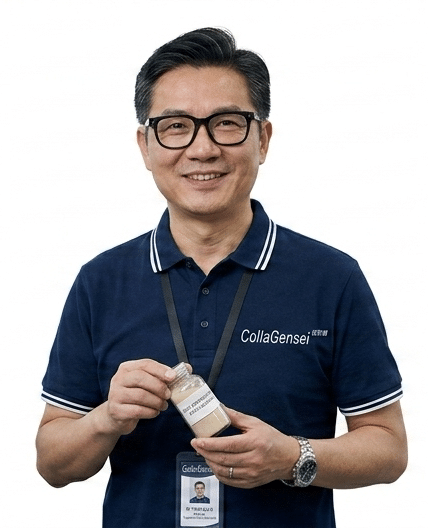
Warren Wan é um especialista experiente com vasta experiência na cadeia de abastecimento de suplementos alimentares, possuindo uma rica experiência prática na investigação, desenvolvimento, controlo de processos e aquisição global de ingredientes essenciais, tais como peptídeos de colagénio, proteína de caldo de ossos e queratina. Como autor desta coluna, dedica-se a ir além do discurso de marketing, transformando a ciência obscura dos ingredientes e as normas de controlo de qualidade da produção numa divulgação científica rigorosa e de fácil compreensão, ajudando os leitores a compreender a verdade por trás dos rótulos e a fazer escolhas mais racionais em matéria de saúde.


