
คุณเคยยืนอยู่ในแถวของยาในร้านขายยา จ้องมองไปที่กล่องยาสองกล่องที่มียาชนิดเดียวกัน แต่มีฉลากว่า “แคปซูล” และ “แคปเล็ต” หรือไม่? นี่เป็นสาเหตุของความสับสนที่พบได้บ่อย เมื่อมองผ่านๆ พวกมันดูคล้ายกันมาก—ทั้งคู่เป็นรูปทรงยาวรี ผิวเรียบ และออกแบบมาเพื่อให้กลืนได้ง่าย อย่างไรก็ตาม ภายใต้พื้นผิว พวกมันเป็นรูปแบบยาที่แตกต่างกันโดยสิ้นเชิง มีกระบวนการผลิตที่แตกต่างกันและมีพฤติกรรมในร่างกายที่แตกต่างกัน.
แม้ว่าทั้งสองรูปแบบจะสามารถส่งมอบยาได้อย่างมีประสิทธิภาพ แต่ไม่สามารถใช้แทนกันได้ในทุกสถานการณ์ การเลือกของคุณขึ้นอยู่กับลำดับความสำคัญเฉพาะในขณะนั้น: คุณต้องการบรรเทาอาการอย่างรวดเร็วที่สุด ตัวเลือกที่ประหยัดที่สุด หรือยาเม็ดที่กลืนง่ายที่สุด? ในบทความนี้ เราจะอธิบายความแตกต่างทางกายภาพ ความเร็วในการออกฤทธิ์ และข้อดีข้อเสียของแต่ละรูปแบบเพื่อช่วยให้คุณตัดสินใจได้.
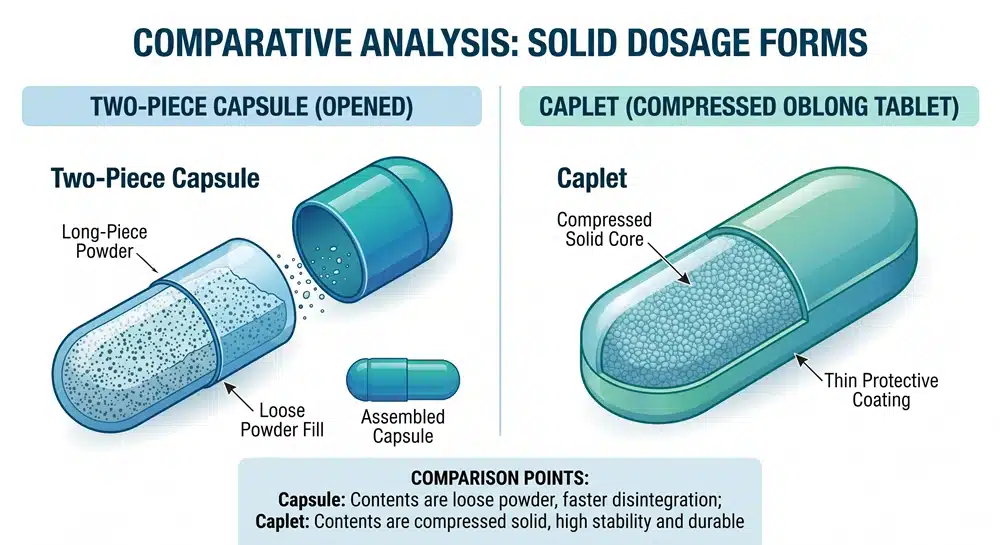
คำตอบอย่างรวดเร็ว: แคปซูลคือเปลือกสองชิ้นที่ทำจากเจลาตินหรือเซลลูโลสซึ่งบรรจุผง เม็ด หรือของเหลวไว้ข้างใน โดยทั่วไปแล้วแคปซูลจะช่วยกลบรสชาติได้ดีและแตกตัวได้อย่างรวดเร็ว ส่วนแคปเล็ตคือเม็ดยาที่มีลักษณะเรียบและเป็นรูปสี่เหลี่ยมผืนผ้า ซึ่งถูกอัดด้วยแรงดันสูง มักจะมีราคาถูกกว่า มีความหนาแน่นมากกว่า และง่ายต่อการแบ่งเมื่อมีรอยบาก แต่แคปเล็ตอาจใช้เวลานานกว่าแคปซูลในการละลาย.
ความแตกต่างทางกายภาพ
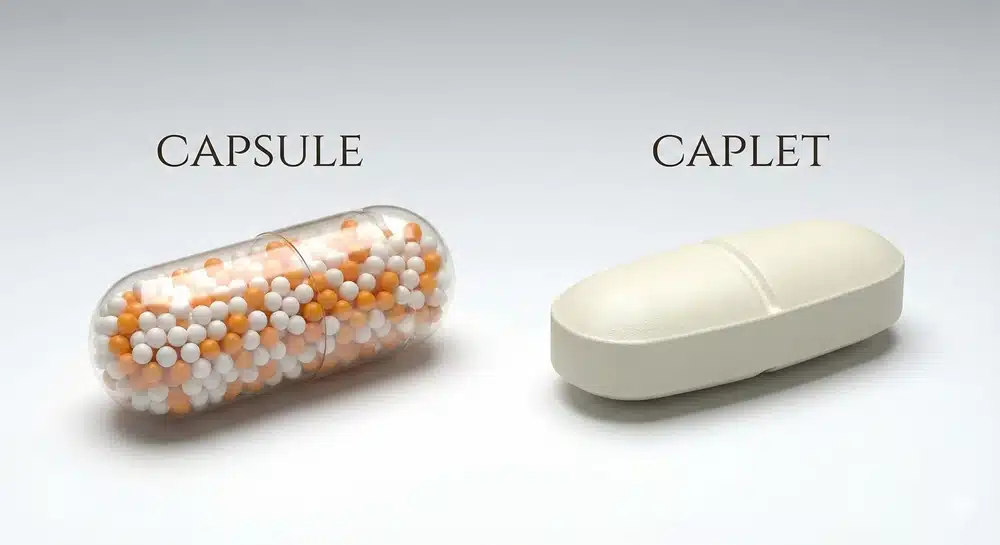
ความสับสนหลักเกิดจากข้อเท็จจริงที่ว่า โรงงานรับผลิตอาหารเสริมชนิดแคปซูล อาจตั้งใจทำให้แคปเล็ทดูคล้ายแคปซูล อย่างไรก็ตาม เมื่อคุณจับต้องแล้ว ความแตกต่างจะเห็นได้ชัดเจน.
แคปซูล vs แคปเล็ต vs เม็ดยา: คำจำกัดความอย่างรวดเร็ว
| รูปแบบยา | คำจำกัดความอย่างง่าย | มันมีลักษณะอย่างไร | อะไรอยู่ข้างในหรือมันถูกทำขึ้นมาอย่างไร | คำตอบที่ตรงกับเจตนาการค้นหาที่ดีที่สุด |
| แคปซูล | เปลือกที่บรรจุผง, เม็ด, เม็ดเล็ก, หรือของเหลว. | โดยปกติมีลักษณะเป็นทรงกระบอกหรือรูปไข่โดยมีปลายมน. | วัสดุที่ใช้งานอยู่ถูกบรรจุอยู่ภายในเปลือกแคปซูลที่ทำจากเจลาติน, HPMC หรือวัสดุอื่น ๆ. | ดีที่สุดเมื่อต้องการปกปิดรสชาติ กลืนง่าย หรือต้องการให้เปลือกแตกตัวเร็วขึ้น. |
| แคปลีต | แท็บเล็ตที่ถูกอัดเป็นรูปทรงรีคล้ายแคปซูล. | แข็ง เรียบ รูปไข่ และมักเคลือบฟิล์ม. | วัสดุที่ใช้งานจะถูกบีบอัดรวมกับสารช่วย เช่น สารยึดเกาะ สารเติมเต็ม สารหล่อลื่น และสารทำให้แตกตัว. | ดีที่สุดเมื่อคำนึงถึงต้นทุน ความทนทาน ความหนาแน่นของปริมาณยาที่สูงกว่า หรือการแบ่งยาตามเส้นคะแนน. |
| แท็บเล็ต | รูปแบบยาชนิดของแข็งอัด, โดยทั่วไปมีลักษณะกลม, วงรี, หรือรูปร่างพิเศษ. | แข็งแรงและแข็งตัว; อาจเคลือบหรือไม่เคลือบก็ได้. | ผงผสมถูกอัดภายใต้ความดันสูงให้เป็นหน่วยแข็ง. | ดีที่สุดเมื่อสูตรต้องการความเสถียรสูง, รูปทรงที่ยืดหยุ่น, การปล่อยสารควบคุม, หรือต้นทุนการผลิตที่ต่ำลง. |
รูปร่างและพื้นผิว
- แคปซูล: สิ่งเหล่านี้มักมีรูปทรงกระบอกโดยมีปลายมน คุณสมบัติที่โดดเด่นที่สุดคือพื้นผิว: เปลือกมีความเรียบมันวาว และจะลื่นทันทีเมื่อสัมผัสกับน้ำหรือน้ำลาย ความลื่นนี้เป็นปัจจัยสำคัญที่ทำให้พวกมันลื่นลงคอได้ง่าย พวกมันยังมีน้ำหนักเบาและให้ความรู้สึก “กลวง” อยู่บ้างเนื่องจากเปลือกบาง.
- แคปเล็ตส์: A แคปเล็ต มีความแข็งและหนาแน่น แม้จะมีรูปร่างคล้ายแคปซูล แต่สัมผัสจะรู้สึกแข็งและแน่นเหมือนหิน ผิวด้านนอกเคลือบด้วยฟิล์มบาง (โพลิเมอร์หรือน้ำตาล) เพื่อให้ลื่นกว่าเม็ดยาดิบ แต่ไม่ได้มีความลื่นแบบเดียวกับ แคปซูลเจลาติน.
องค์ประกอบ
- แคปซูล (ภาชนะบรรจุ): คิดถึงแคปซูลเป็นยานพาหนะสำหรับการส่งมอบ. มันคือเปลือกสองชิ้นที่บรรจุสารออกฤทธิ์ไว้ข้างใน. ยาเองมักเป็นผงละเอียด, เม็ดเล็ก ๆ (เม็ดกลม), หรือของเหลวที่แขวนลอยอยู่ในน้ำมัน. หากคุณดึงแคปซูลเปลือกแข็งออกจากกัน ผงจะหกออกมา.
- แคปเล็ตส์ (เดอะ บริค): แคปเล็ตคือก้อนที่ถูกอัดแน่นของส่วนผสมต่าง ๆ ยาที่มีฤทธิ์จะถูกผสมกับสารยึดเกาะ (กาว) และสารเติมเต็ม จากนั้นจะถูกปั๊มด้วยแรงดันสูงให้เป็นรูปทรงที่ต้องการ ยาไม่ได้อยู่ “ภายใน” เปลือก แต่ยาทั้งหมดอยู่ในเม็ดยา คือ ยา, ถูกยึดไว้ด้วยการบีบอัด.
ความสะดวกในการใช้งาน
เมื่อคุณรู้สึกไม่สบาย สิ่งสุดท้ายที่คุณต้องการคือการต่อสู้กับยา นี่คือวิธีที่ทั้งสองเปรียบเทียบกันในแง่ของประสบการณ์การใช้งาน.
1. ความสบายในการกลืน
-
🏆 ผู้ชนะ: แคปซูล
เปลือกจะลื่นทันทีเมื่อสัมผัสกับน้ำ ทำให้สามารถลื่นลงคอได้เกือบไม่มีแรงต้านทานเลย พวกมันเป็นตัวเลือกที่เหนือกว่าสำหรับผู้ที่มีความยากลำบากในการกลืน (dysphagia). -
รองชนะเลิศ: แคปเล็ตส์
แม้ว่าลักษณะทรงรีของพวกเขาจะเป็นการปรับปรุงที่ดีกว่าเม็ดยาทรงกลมหยาบ แต่แคปเล็ตยังคงมีความหนาแน่นและแข็งตัวอยู่ พวกมันขาดความยืดหยุ่นและความลื่นตามธรรมชาติของแคปซูล.
2. ความเป็นกลางทางรสชาติและกลิ่น
-
🏆 ผู้ชนะ: แคปซูล
เปลือกที่ปิดสนิทอย่างสมบูรณ์สร้างเกราะที่สมบูรณ์แบบและไม่มีรสชาติ คุณจะไม่รู้สึกถึงรสชาติของยา เว้นแต่เปลือกจะถูกทำลายทางกายภาพ. -
รองชนะเลิศ: แคปเล็ตส์
แคปเล็ตอาศัยการเคลือบด้วยน้ำตาลหรือโพลิเมอร์บาง ๆ หากคุณไม่กลืนทันที การเคลือบนี้จะละลาย ทำให้รสขมของสารออกฤทธิ์ออกมา.
3. ความยืดหยุ่นในการให้ยา (การแบ่งยา)
-
🏆 ผู้ชนะ: แคปเล็ตส์
เนื่องจากเป็นของแข็งที่ถูกอัดแน่น แคปเล็ทหลายชนิดจึงมี “รอยปรุ” (เส้นที่ทำเครื่องหมายไว้) เพื่อให้คุณสามารถแบ่งออกเป็นครึ่งเม็ดสำหรับใช้ในขนาดครึ่งหนึ่งหรือเพื่อให้กลืนง่ายขึ้น. -
รองชนะเลิศ: แคปซูล
โดยทั่วไปแล้ว แคปซูลไม่สามารถปรับเปลี่ยนได้ การตัดแคปซูลจะทำให้ผงหรือของเหลวภายในหกออกมา ทำให้ไม่สามารถแบ่งขนาดยาได้อย่างแม่นยำ.
ประสิทธิภาพ: การดูดซึมและความเร็ว
เมื่อคุณเจ็บปวด ทุกนาทีมีค่า โครงสร้างทางกายภาพของยาเม็ดเป็นตัวกำหนดว่าร่างกายของคุณจะสามารถเข้าถึงตัวยาได้เร็วเพียงใด.
เวลาการสลายตัว: ความหมายที่แท้จริงของคำว่า “เร็วขึ้น”
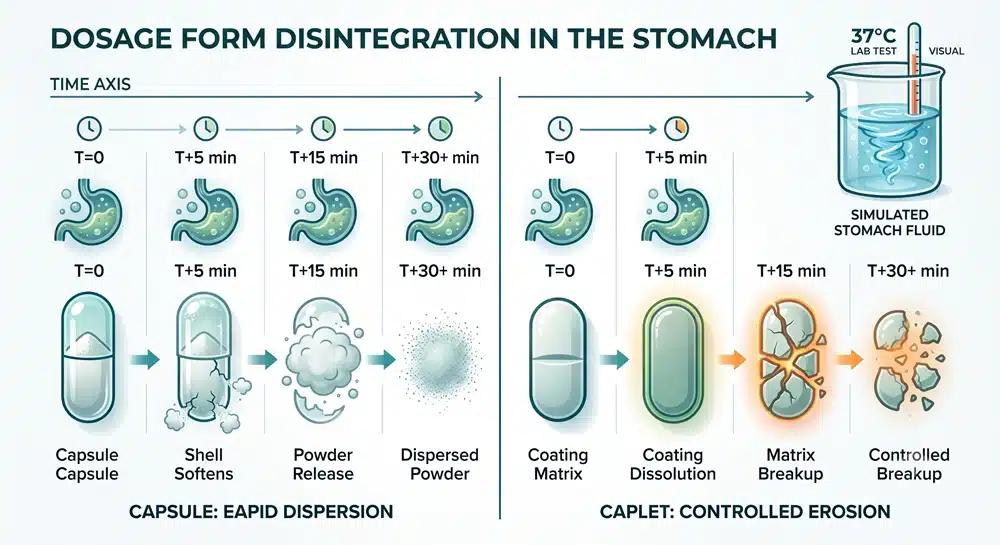
ในการผลิตและการควบคุมคุณภาพ ขั้นตอนแรกที่สำคัญคือการแตกตัว: รูปแบบของยาต้องแตกออกก่อนที่สารออกฤทธิ์จะละลายได้ วิธีการของ USP สำหรับผลิตภัณฑ์เสริมอาหารและยาใช้เครื่องมือทดสอบและสื่อมาตรฐาน ซึ่งแตกต่างอย่างมากจากการทดสอบแบบง่าย ๆ ที่ใช้ “แก้วน้ำ” ในบ้าน ในทางปฏิบัติ แคปซูลแข็งมักจะปล่อยสารภายในหลังจากที่เปลือกนิ่มและเปิดออก ในขณะที่แคปเล็ทต้องทะลุผ่านเมทริกซ์ที่ถูกอัดซึ่งประกอบด้วยสารยึดเกาะ สารเติมแต่ง สารหล่อลื่น และสารทำให้แตกตัว.
สำหรับการให้ความรู้แก่ผู้บริโภค วิธีที่ปลอดภัยที่สุดในการกล่าวคือ: แคปซูลมักจะเริ่มปล่อยสารภายในเร็วกว่า แต่แคปเล็ทก็ยังสามารถออกแบบให้ปล่อยสารได้เร็ว ช้า หรือออกฤทธิ์นานได้เช่นกัน อย่าสมมติว่าแคปซูลทุกชนิดออกฤทธิ์เร็วหรือแคปเล็ททุกชนิดออกฤทธิ์ช้า ควรตรวจสอบฉลากผลิตภัณฑ์เสมอว่ามีคำว่า “ออกฤทธิ์ทันที” “ออกฤทธิ์ช้า” “เคลือบลำไส้” หรือ “ออกฤทธิ์นาน”
ชีวปริมาณออกฤทธิ์
- แคปซูล (เดอะ สปรินเตอร์): แคปซูลโดยทั่วไปออกฤทธิ์ได้เร็วกว่า เปลือกนอกถูกออกแบบให้สลายตัวได้อย่างรวดเร็วในกระเพาะอาหาร—มักภายในไม่กี่นาที เมื่อเกราะป้องกันนั้นสลายไปแล้ว ผงหรือของเหลวภายในจะถูกปล่อยออกมาทันทีและพร้อมสำหรับการดูดซึม. บรรจุของเหลว ซอฟต์เจลมักเป็นตัวเลือกที่เร็วที่สุดเมื่อเทียบกับตัวเลือกทั้งหมด.
- แคปเล็ตส์ (นักวิ่งมาราธอน): แคปเล็ทออกฤทธิ์ช้ากว่า เนื่องจากเป็นเม็ดยาที่อัดแน่นเป็นก้อนจากผงและสารยึดเกาะในปริมาณมาก กรดในกระเพาะอาหารของคุณจึงต้องทำงานหนักขึ้นเพื่อย่อย “ก้อนอิฐ” ให้กลายเป็นอนุภาคที่สามารถดูดซึมได้ กระบวนการสลายตัวนี้ทำให้เกิดความล่าช้า (มักใช้เวลา 20-30 นาที) ก่อนที่ตัวยาออกฤทธิ์จะพร้อมสำหรับการละลายและการดูดซึม.
หมายเหตุสำคัญเกี่ยวกับการอ้างความเร็ว: “เร็วกว่า” ไม่ได้หมายความถึง “มีประสิทธิภาพมากกว่า” โดยอัตโนมัติ ผลิตภัณฑ์ที่ใช้ทางปากจะต้องแตกตัวก่อน จากนั้นจึงละลาย และสารออกฤทธิ์จึงอาจถูกดูดซึมได้ แคปซูลมักจะขจัดเปลือกหุ้มออกได้อย่างรวดเร็ว ในขณะที่แคปเล็ตต้องสลายตัวจากเมทริกซ์ของแข็งที่ถูกอัดแน่นเสียก่อน อย่างไรก็ตาม เวลาที่ตัวยาออกฤทธิ์จริงขึ้นอยู่กับสารออกฤทธิ์หลัก ประเภทของสารเคลือบ สารช่วยอื่นๆ ในผลิตภัณฑ์ เนื้อหาในกระเพาะอาหาร และว่าผลิตภัณฑ์ถูกออกแบบมาให้ออกฤทธิ์ทันที ล่าช้า หรือออกฤทธิ์ต่อเนื่อง.
ความแรง & ปริมาณการใช้
- แคปเล็ตส์: เนื่องจากถูกบีบอัดภายใต้ความดันสูง ผู้ผลิตจึงสามารถบรรจุสารออกฤทธิ์ในปริมาณเข้มข้นมากขึ้นในพื้นที่ที่เล็กลงได้ หากคุณต้องการยาในปริมาณสูง (เช่น ไอบูโพรเฟน 800 มิลลิกรัม) แคปเลตมักจะมีขนาดเล็กกว่าแคปซูลที่มีปริมาณเท่ากัน.
- แคปซูล: ปริมาณการใช้ยาถูกจำกัดโดยปริมาตรของแคปซูล เพื่อให้ได้ปริมาณยาเท่ากับแคปเล็ตรูปแบบสูง คุณมักจะต้องรับประทานแคปซูลที่มีขนาดใหญ่กว่า หรือรับประทานสองเม็ด.
ข้อจำกัดขนาดแคปซูล: เหตุใดผลิตภัณฑ์ขนาดสูงจึงมักกลายเป็นแคปเล็ท
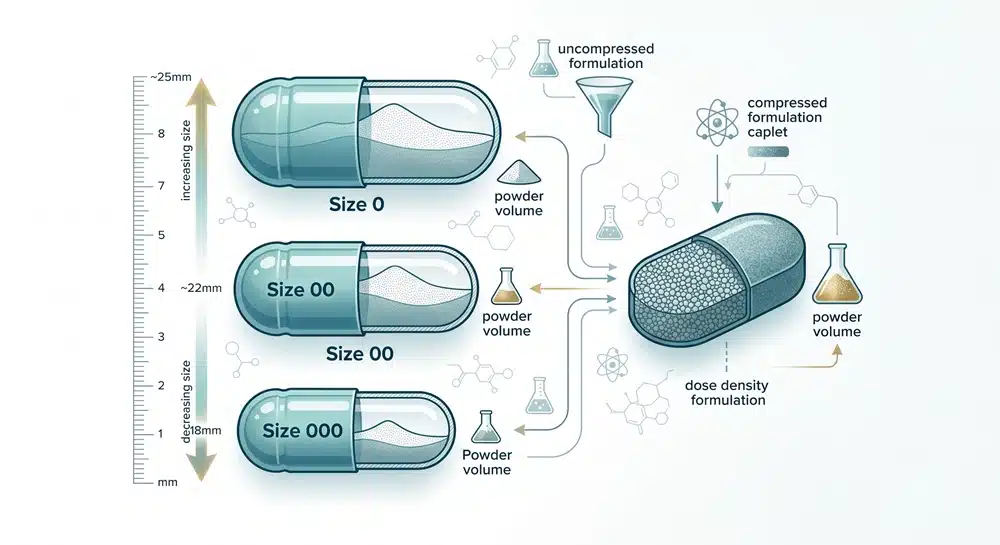
แคปซูลมีปริมาตรภายในที่คงที่. นี่คือเหตุผลว่าทำไมสูตรที่มีปริมาณสูงอาจกลายเป็นขนาดใหญ่เกินไปทางกายภาพหากถูกออกแบบให้เป็นแคปซูล. ตัวอย่างเช่น แคปซูลขนาด 00 สามารถบรรจุได้ประมาณ 0.95 มิลลิลิตร ขึ้นอยู่กับความหนาแน่นของผง อาจบรรจุได้ประมาณ 570–950 มิลลิกรัม แต่ผงสมุนไพรที่มีลักษณะฟูอาจบรรจุได้น้อยกว่าผงแร่ธาตุที่มีความหนาแน่นสูง.
| การตัดสินใจเกี่ยวกับรูปแบบ | การนำไปใช้ในทางปฏิบัติ |
| สารสกัดจากพืชในปริมาณต่ำ, วิตามิน, โปรไบโอติก, ส่วนผสมที่ไวต่อกลิ่น | แคปซูลมักมีความสะดวกเพราะการปกปิดรสชาติและความสะดวกสบายของผู้บริโภคมีความสำคัญ. |
| แร่ธาตุในปริมาณสูง, แคลเซียม, แมกนีเซียม, หรือสูตรที่มีส่วนผสมหลายชนิด | แคปเล็ท/เม็ดอาจมีความสะดวกมากกว่าเนื่องจากความอัดแน่นสามารถเพิ่มความหนาแน่นของขนาดยาได้. |
| สูตรนี้จะต้องใช้ขนาด 000 หรือหลายแคปซูลต่อหนึ่งหน่วยบริโภค | พิจารณาใช้แคปเล็ต, เม็ด, ผง, หรือแบ่งขนาดเพื่อปรับปรุงการปฏิบัติตาม. |
| กลุ่มเป้าหมายผู้บริโภคได้แก่ เด็ก ผู้สูงอายุ หรือผู้ที่มีภาวะกลืนลำบาก | หลีกเลี่ยงแคปซูลขนาดใหญ่เกินไป; ใช้แคปซูลขนาดเล็กกว่า, แคปเล็ตเคลือบ, ผง, เยลลี่ หรือของเหลว ขึ้นอยู่กับสูตร. |
แคปซูล vs แคปเล็ต: อะไรมีราคาแพงกว่ากัน?
เมื่อคุณยืนอยู่ในแผนกยาของร้านขายยาเพื่อเปรียบเทียบราคา คุณจะพบเกือบทุกครั้งว่าแคปซูลมีราคาแพงกว่าแคปเล็ท.
ความแตกต่างของราคามักจะขึ้นอยู่กับระดับความซับซ้อนในการผลิต:
- แคปซูล: การผลิตแคปซูลเป็นกระบวนการที่ช้ากว่าและซับซ้อนกว่า ประกอบด้วยขั้นตอนการผลิตเปลือกแคปซูลสองชั้นแยกกันจากเจลาตินหรือเซลลูโลส การบรรจุผงหรือของเหลวในปริมาณที่แม่นยำ และการปิดผนึกเปลือกแคปซูลให้สนิท ต้นทุนการผลิตที่สูงกว่านี้มักจะถูกส่งต่อไปยังผู้บริโภค.
- แคปเล็ตส์: เนื่องจากแคปเล็ตเป็นเพียงผงที่ถูกอัดให้อยู่ในรูปทรงและเคลือบผิวอย่างง่าย จึงสามารถผลิตในปริมาณมากได้อย่างรวดเร็วและประหยัดต้นทุนมากกว่า หากคุณกำลังมองหาตัวเลือกที่ประหยัดที่สุด แคปเล็ตมักจะเป็นทางเลือกที่คุ้มค่าสำหรับงบประมาณของคุณ.
จากมุมมองของผู้ผลิตอาหารเสริม ความแตกต่างของต้นทุนไม่ได้อยู่ที่เปลือกแคปซูลเพียงอย่างเดียว แคปซูลต้องมีการตรวจสอบความเข้ากันได้ของเปลือก การควบคุมการไหลของผง ความแม่นยำในการบรรจุ ความชื้น และบางครั้งต้องมีการพันหรือซีล ส่วนแคปเล็ทต้องมีการพัฒนาการอัดมากขึ้น แต่เมื่อสูตรมีการไหลและการอัดที่ดีแล้ว เครื่องอัดเม็ดความเร็วสูงสามารถทำงานได้อย่างมีประสิทธิภาพมากเมื่อผลิตในปริมาณมาก.
สำหรับแบรนด์อาหารเสริมที่มีฉลากส่วนตัว คำถามเรื่องต้นทุนที่ดีที่สุดไม่ใช่ “แคปซูลหรือแคปเล็ต?” แต่เป็น “รูปแบบใดที่ส่งมอบปริมาณเป้าหมายได้พร้อมกับการร้องเรียนจากผู้บริโภคที่น้อยที่สุด บรรจุภัณฑ์ที่ง่ายที่สุด และความเสี่ยงในการทำงานซ้ำที่ต่ำที่สุด?” หากสูตรเป็นขนาดต่ำและไวต่อรสชาติ แคปซูลอาจคุ้มค่ากับราคาที่สูงกว่า หากสูตรเป็นขนาดสูงและใช้เป็นประจำทุกวัน แคปเล็ทมักให้ต้นทุนต่อขนาดที่มีสารออกฤทธิ์ดีกว่า.
เบื้องหลัง: ความแตกต่างในการผลิต
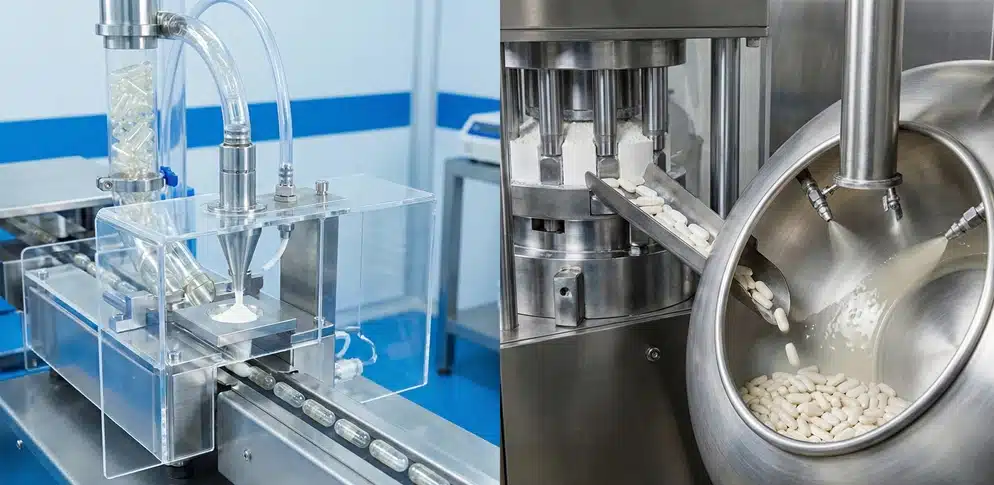
แม้ว่าพวกมันอาจดูคล้ายกันในมือของคุณ แต่การเดินทางจากวัตถุดิบสู่ผลิตภัณฑ์สำเร็จรูปนั้นแตกต่างกันอย่างมากระหว่างแคปซูลกับแคปเล็ต การเข้าใจกระบวนการเหล่านี้จะอธิบายได้ว่าทำไมต้นทุนและคุณสมบัติทางกายภาพของพวกมันจึงแตกต่างกันมาก.
แคปซูล: กระบวนการประกอบ
คิดว่าการสร้างแคปซูลเหมือนกับการทำงานในสายการผลิตขนาดเล็ก กระบวนการเริ่มต้นด้วยเปลือกแคปซูลที่เตรียมไว้ล่วงหน้าและว่างเปล่า ซึ่งทำแยกต่างหากจากเจลาตินหรือเซลลูโลสจากพืช.
ใน การผลิตอาหารเสริมแบบแคปซูล, เครื่องจักรเฉพาะทางถูกนำมาใช้เพื่อจัดการกับเปลือกที่บอบบางเหล่านี้อย่างแม่นยำ เครื่องจักรจะแยกเปลือกออกเป็นสองส่วน (ส่วนตัวและส่วนฝา) เติมส่วนตัวด้วยปริมาณผง ของเหลว หรือเม็ดยาที่แม่นยำ จากนั้นปิดฝาให้แน่นสนิทกับตัวเปลือก กระบวนการนี้มีความซับซ้อน โดยทั่วไปจะช้ากว่าการผลิตเม็ดยา และต้องการการควบคุมสภาพแวดล้อมอย่างเข้มงวด—ความชื้นมากเกินไปอาจทำให้เปลือกเปล่าเหนียวและใช้ไม่ได้ก่อนที่มันจะได้รับการเติม.
เดอะแคปลีต: กระบวนการบีบอัด
การทำแคปเล็ตนั้นโดยพื้นฐานแล้วคือการอบและขึ้นรูปในเชิงอุตสาหกรรม ยาออกฤทธิ์จะถูกผสมกับสารช่วย เช่น สารยึดเกาะ (กาวที่ยึดส่วนต่างๆ เข้าด้วยกัน), สารเติมเต็ม (เพื่อเพิ่มปริมาณ), และสารทำให้แตกตัว (ช่วยให้ยาแตกตัวในกระเพาะอาหาร)สารช่วยในการผลิตแคปเล็ตทั่วไปอาจประกอบด้วยเซลลูโลสไมโครคริสตัลไลน์เป็นสารเติมหรือช่วยในการอัด, โซเดียมครอสคาร์เมลโลสหรือครอสโพวิโดนเป็นสารช่วยให้แตกตัว, แมกนีเซียมสเตียเรตเป็นสารหล่อลื่น, และพอลิเมอร์เคลือบฟิล์มสำหรับปรับปรุงลักษณะและปกปิดรสชาติ ระบบสารเติมแต่งที่เหมาะสมที่สุดขึ้นอยู่กับสารออกฤทธิ์ ความแข็งของเป้าหมาย โปรไฟล์การละลาย การเลือกเคลือบ และข้อกำหนดในการติดฉลาก.
ส่วนผสมผงนี้จะถูกป้อนเข้าสู่เครื่องอัดเม็ดขนาดใหญ่ที่มีความเร็วสูง เหล็กที่ใช้เป็นแม่พิมพ์จะกดผงด้วยแรงดันมหาศาลเพื่อขึ้นรูปเป็น “ก้อนอิฐ” ที่แข็งและหนาแน่น ในขั้นตอนนี้ มันเป็นเพียงเม็ดยาที่มีรูปร่างเท่านั้น ขั้นตอนสุดท้ายคือการหมุนเม็ดยาเหล่านี้ในถาดเคลือบขนาดใหญ่ โดยมีการพ่นฟิล์มพอลิเมอร์หรือน้ำตาลที่เรียบลื่นลงบนพื้นผิวเพื่อสร้างเม็ดยาสำเร็จรูปที่กลืนง่าย.
ข้อดีและข้อเสียของแคปซูลกับแคปเล็ต
| คุณสมบัติ | แคปซูล | แคปลีต | ผู้ชนะ / การใช้ประโยชน์ที่ดีที่สุด |
| โครงสร้างพื้นฐาน | เปลือกสองชิ้นหรือเปลือกนิ่มที่ห่อหุ้มผง, เม็ด, เม็ดเล็ก, หรือของเหลว. | เม็ดยาอัดรูปทรงแคปซูลและมักเคลือบฟิล์ม. | ขึ้นอยู่กับสูตร. |
| กลไกการผลิต | การประกอบเปลือก + การเติม + การปิด/การซีล; ต้องมีการจัดการเปลือกและการควบคุมความชื้น. | การผสมผง + การทำเม็ด/การอัดเม็ด + การเคลือบ; ต้องการการควบคุมความอัดตัวและความแข็ง. | แคปเล็ทสำหรับสเกลความเร็วสูง; แคปซูลสำหรับการปกปิดรสชาติด้วยเปลือกหุ้ม. |
| วัสดุทั่วไป | เจลาติน, HPMC, พูลลูแลน, ระบบเจลาติน/พลาสติไซเซอร์แบบซอฟต์เจล. | สารออกฤทธิ์ร่วมกับสารช่วย เช่น สารเติมเต็ม สารยึดเกาะ สารทำให้แตกตัว สารหล่อลื่น และสารเคลือบ. | แคปซูลสำหรับบรรจุง่าย; แคปเล็ทสำหรับปริมาณของแข็งที่หนาแน่น. |
| การปกปิดรสชาติและกลิ่น | แข็งแรง; เปลือกแยกไส้ออกจากปาก. | ปานกลางถึงแรง; ขึ้นอยู่กับคุณภาพของเคลือบผิวและความเร็วในการกลืน. | แคปซูล. |
| ความรู้สึกเมื่อกลืน | เรียบลื่นหลังเปียก มักเป็นที่นิยมสำหรับผู้ใช้ที่มีความไวต่อภาวะกลืนลำบาก. | เรียบแต่แข็งและหนาแน่น; ดีกว่าเม็ดกลม แต่ลื่นน้อยกว่าแคปซูล. | แคปซูล. |
| ความหนาแน่นของขนาดยา | ถูกจำกัดโดยปริมาตรของปลอกกระสุนและความหนาแน่นของดินปืน. | สูงขึ้น; การบีบอัดสามารถบรรจุวัสดุได้มากขึ้นในปริมาตรที่น้อยลง. | ผ้าพันคอ. |
| การแบ่ง / ครึ่งโดส | โดยทั่วไปไม่เหมาะสม; ของเหลวอาจรั่วไหลและทำให้ปริมาณยาไม่ถูกต้อง. | เป็นไปได้เฉพาะเมื่อมีการให้คะแนนและฉลาก/เภสัชกรอนุญาตให้แบ่งได้. | ใช้แคปเล็ตด้วยความระมัดระวัง. |
| ตรรกะการสลายตัว | เปลือกจะเปิด/นิ่มก่อนที่สารเติมเต็มจะถูกปล่อยออกมา. | เมทริกซ์ที่ถูกอัดแน่นจะต้องแตกตัวออกเสียก่อนจึงจะสามารถละลายต่อไปได้. | แคปซูลมักจะเร็วกว่า แต่การออกแบบการปลดปล่อยมีความสำคัญ. |
| ต้นทุนเมื่อขยายขนาด | มักสูงกว่าเนื่องจากต้นทุนเปลือก ความซับซ้อนในการเติม และการควบคุมความชื้น. | มักจะต่ำกว่านี้หลังจากปรับสูตรให้เหมาะสมสำหรับการอัดเม็ด. | ผ้าพันคอ. |
| แอปพลิเคชัน B2B ที่ดีที่สุด | ส่วนผสมจากพืช, โปรไบโอติก, ส่วนผสมที่ไวต่อกลิ่น, การวางตำแหน่งวีแกน/HPMC, รูปแบบบรรจุของเหลว. | แร่ธาตุขนาดสูง, ผลิตภัณฑ์ใช้ประจำวัน, เม็ดเคลือบ, การปลดปล่อยแบบปรับเปลี่ยน, สูตรที่คำนึงถึงต้นทุน. | เลือกตามขนาดยา ความหนาแน่น ข้อเรียกร้อง และการวางตำแหน่งทางการตลาด. |
การใช้งานที่ดีที่สุด: การเลือกที่ถูกต้อง
ส่วนนี้ของ คู่มืออาหารเสริมแคปซูล จะช่วยให้คุณตัดสินใจได้ว่ารูปแบบใดควรอยู่ในตู้ยาของคุณตามความต้องการด้านสุขภาพเฉพาะของคุณ ไม่มีตัวเลือกที่ “ดีที่สุด” เพียงหนึ่งเดียว การเลือกที่ถูกต้องขึ้นอยู่กับเหตุผลที่คุณรับประทานยาหรืออาหารเสริมนั้นโดยสิ้นเชิง.
หมายเหตุการปฏิบัติตามข้อกำหนดสำหรับแบรนด์ผลิตภัณฑ์เสริมอาหาร: หากผลิตภัณฑ์เป็นอาหารเสริม ควรหลีกเลี่ยงการใช้ถ้อยคำที่สื่อถึงการรักษามะเร็ง เช่น “รักษา,” “รักษาให้หาย,” หรือ “ป้องกัน” เว้นแต่จะมีการรับรองตามกฎหมาย ในสหรัฐอเมริกา การอ้างอิงถึงโครงสร้างหรือหน้าที่ของผลิตภัณฑ์ต้องมีการสนับสนุนทางวิทยาศาสตร์และต้องมีคำปฏิเสธความรับผิดชอบจาก FDA ที่เหมาะสม สำหรับผลิตภัณฑ์แคปซูล โปรดยืนยันด้วยว่าเปลือกแคปซูลทำจากเจลาติน, HPMC, พูลลูแลน หรือวัสดุอื่น ๆ เนื่องจากผู้บริโภคที่ทานมังสวิรัติ, ฮาลาล, โคเชอร์ และผู้ที่มีอาการแพ้บางชนิดอาจตรวจสอบข้อนี้ก่อนตัดสินใจซื้อ.
เลือกแคปซูลหาก:
- ความเร็วคือสิ่งสำคัญที่สุดของคุณ (อาการเฉียบพลัน): เมื่อคุณมีอาการปวดหัวอย่างรุนแรง, อาการแพ้เฉียบพลัน, หรืออาการปวดอย่างรุนแรง, คุณต้องการการบรรเทาอาการอย่างรวดเร็วที่สุด. การละลายอย่างรวดเร็วของแคปซูล (โดยเฉพาะแคปซูลนิ่มที่บรรจุของเหลว) ทำให้เป็นตัวเลือกที่เหนือกว่าสำหรับการบรรเทาอาการทันที.
- คุณมีปัญหาในการกลืน (Dysphagia): หากคุณกำลังซื้อให้กับเด็ก ผู้สูงอายุ หรือตัวคุณเองหากคุณมีปัญหาในการกลืนยา แคปซูลที่มีลักษณะลื่นและเรียบจะกลืนได้ง่ายกว่ายาเม็ดที่หนาแน่นมาก.
- คุณมีกระเพาะอาหารที่ไวต่อความรู้สึก ผู้ใช้หลายคนพบว่าแคปซูลมีความอ่อนโยนต่อเยื่อบุกระเพาะอาหารมากกว่า หากส่วนผสมบางอย่างในยาเม็ดก่อให้เกิดการระคายเคืองต่อการย่อยอาหารของคุณ การเปลี่ยนมาใช้รูปแบบแคปซูลมักจะช่วยบรรเทาความไม่สบายนั้นได้.
- รสชาติคือตัวตัดสิน: หากคุณมีปฏิกิริยาการสำลักที่ไวต่อความรู้สึกและไม่สามารถทนต่อรสชาติฝืดหรือขมที่อาจเล็ดลอดออกมาจากเคลือบของแคปเล็ทได้ แคปซูลที่ไม่มีรสและไม่มีกลิ่นจึงเป็นทางเลือกที่ดีที่สุด.
เลือก CAPLET หาก:
- คุณอยู่ในงบประมาณ (การบำรุงรักษาประจำวัน): สำหรับวิตามินรวมประจำวันหรือยาบำรุงที่ใช้ในระยะยาว (เช่น ยาลดความดันโลหิตที่ไม่จำเป็นต้องใช้ทันที) ความแตกต่างของราคานั้นจะสะสมมากขึ้น แคปเล็ทเป็นตัวเลือกที่ประหยัดกว่าเกือบทุกครั้งสำหรับการใช้งานระยะยาว.
- คุณต้องการปริมาณสูง: หากแพทย์ของคุณสั่งให้ใช้ผลิตภัณฑ์เสริมอาหารในปริมาณสูง เช่น แคลเซียมหรือแมกนีเซียม แคปเล็ตมักสามารถให้ปริมาณที่ต้องการได้ในขนาดเม็ดที่เล็กกว่าเมื่อเทียบกับแคปซูลขนาดใหญ่.
- คุณจำเป็นต้องแบ่งขนาดยา หากคุณจำเป็นต้องลดขนาดยาหรือรับประทานยาครึ่งเม็ดเนื่องจากความไวต่อยา คุณต้องเลือกยาเม็ดที่มีรอยบากเท่านั้น คุณไม่สามารถแบ่งแคปซูลได้.
- คุณต้องการการปลดปล่อยยาแบบออกฤทธิ์นาน: หากคุณต้องการยาที่มีฤทธิ์นานกว่า 12 หรือ 24 ชั่วโมง แคปเล็ทจะเหมาะสมกว่าสำหรับสูตรเฉพาะ “ปลดปล่อยตัวยาตามเวลา” ที่ค่อยๆ ละลายในลำไส้.
สำหรับแบรนด์: วิธีเลือกฟอร์แมตที่เหมาะสมก่อนการผลิต
ก่อนเลือกแคปซูลหรือแคปเล็ตสำหรับผลิตภัณฑ์เสริมอาหาร ควรพิจารณาคำถามเกี่ยวกับการผลิต 5 ข้อนี้:
- 1. ขนาดเป้าหมาย: ขนาดที่แนะนำสามารถบรรจุในปริมาณที่เหมาะสมสำหรับผู้บริโภคได้หรือไม่ ขนาดแคปซูล, หรือจะต้องใช้แคปซูลต่อหนึ่งหน่วยบริโภคมากเกินไป?
- 2. พฤติกรรมของผง: ผงผสมไหลได้ดีพอสำหรับการบรรจุแคปซูลหรือไม่ หรือจะอัดตัวได้ดีกว่าเป็นแคปเล็ทที่มั่นคง?
- 3. คำมั่นสัญญาต่อผู้บริโภค: ประโยชน์หลักคือ การกลบรสชาติ, การกลืนง่าย, ความคุ้มค่า, ขนาดสูง, หรือการปลดปล่อยที่ปรับเปลี่ยนได้?
- 4. การวางตำแหน่งฉลาก: ตลาดต้องการการวางตำแหน่งที่ระบุว่าวีแกน, ฮาลาล, โคเชอร์, ฉลากสะอาด, ปราศจากน้ำตาล, หรืออ่อนโยนต่อผู้แพ้อาหารหรือไม่?
- 5. เศรษฐศาสตร์บรรจุภัณฑ์: รูปแบบนี้จะเพิ่มขนาดขวด น้ำหนักในการขนส่ง ความต้องการในการทดสอบความเสถียร หรือข้อร้องเรียนจากลูกค้าหรือไม่?
ผู้ผลิตอาหารเสริมมืออาชีพควรประเมินความหนาแน่นของสูตร ความสามารถในการไหล ความสามารถในการดูดความชื้น ความเข้ากันได้ของเปลือก การบีบอัด พฤติกรรมการเคลือบ และเสถียรภาพของผลิตภัณฑ์สำเร็จรูป ก่อนที่จะแนะนำแคปซูลหรือแคปเล็ต.
คำถามที่พบบ่อย
แคปเล็ตคืออะไร?
แคปเล็ตคือเม็ดยาที่ถูกอัดให้เป็นรูปทรงแคปซูลเรียบยาว มันเป็นของแข็งเหมือนเม็ดยาทั่วไปแต่มีรูปทรงที่ทำให้กลืนได้ง่ายกว่าเม็ดยาทรงกลมหลายชนิด.
แคปซูลกับแคปเล็ตต่างกันอย่างไร?
แคปซูลคือเปลือกที่บรรจุผง, เม็ดกลม, เม็ดเม็ด, หรือของเหลว. แคปเล็ตคือเม็ดยาอัดแข็งที่มีรูปร่างเหมือนแคปซูล. แคปซูลมักช่วยปกปิดรสชาติได้ดีและอาจปล่อยสารภายในได้เร็วกว่า, ในขณะที่แคปเล็ตมักจะมีความหนาแน่นมากกว่า, ราคาถูกกว่าเมื่อผลิตในปริมาณมาก, และง่ายต่อการแบ่งหากมีรอยบาก.
ความแตกต่างระหว่างแคปเล็ตกับเม็ดยาคืออะไร?
แคปเล็ตเป็นเพียงยาเม็ดชนิดหนึ่งที่มีความเฉพาะเจาะจง ความแตกต่างหลักคือรูปร่าง: แคปเล็ตจะมีลักษณะเป็นรูปยาวและเรียบเสมอ ในขณะที่ยาเม็ดมาตรฐานอาจมีรูปทรงกลม รูปไข่ เคี้ยวได้ ละลายในน้ำ เคลือบ หรือมีรูปทรงเฉพาะตามต้องการ.
แคปซูลออกฤทธิ์เร็วกว่าแคปเล็ตรึเปล่า?
แคปซูลมักจะเริ่มปล่อยสารภายในเร็วกว่าปกติเนื่องจากเปลือกแคปซูลละลายและเปิดออกก่อนที่สารภายในจะกระจายตัว อย่างไรก็ตาม การออกฤทธิ์ที่แท้จริงขึ้นอยู่กับสารออกฤทธิ์เป็นหลัก รวมถึงสารเคลือบพิเศษ สารช่วยอื่นๆ ที่ใช้ เนื้อหาในกระเพาะอาหาร และผลิตภัณฑ์ถูกออกแบบมาให้ออกฤทธิ์ทันที ช้า หรือออกฤทธิ์ยาวนาน.
แคปเล็ทราคาถูกกว่าแคปซูลหรือไม่?
บ่อยครั้ง ใช่ แคปเล็ทสามารถประหยัดต้นทุนได้มากขึ้นเมื่อผลิตในปริมาณมาก เนื่องจากเป็นของแข็งที่ถูกอัดและไม่ต้องซื้อเปลือกแคปซูลแยกต่างหาก อย่างไรก็ตาม การเพิ่มสารเคลือบที่ซับซ้อน การจัดการวัตถุดิบที่ยุ่งยาก หรือการสร้างรูปแบบการปลดปล่อยสารออกฤทธิ์เฉพาะทาง อาจทำให้ต้นทุนการผลิตโดยรวมเพิ่มขึ้น.
คุณสามารถแบ่งยาเม็ดแบบแตกตัวในช่องปากได้ไหม?
ควรแบ่งเม็ดยาแคปเล็ตเฉพาะในกรณีที่เม็ดยามีรอยบากชัดเจน และได้รับการยืนยันจากฉลาก ยา เภสัชกร หรือบุคลากรทางการแพทย์ว่าปลอดภัยในการแบ่งเท่านั้น ห้ามแบ่งยาชนิดออกฤทธิ์นาน ชนิดออกฤทธิ์ช้า ชนิดเคลือบลำไส้ หรือยาที่ไม่มีรอยบากโดยเด็ดขาด เว้นแต่ได้รับคำแนะนำจากผู้เชี่ยวชาญ.
คุณสามารถเปิดหรือแยกแคปซูลได้ไหม?
ห้ามเปิดหรือแยกแคปซูล เว้นแต่ฉลากหรือผู้เชี่ยวชาญด้านสุขภาพได้ระบุไว้อย่างชัดเจนว่าสามารถทำได้ การเปิดแคปซูลอาจทำให้การปกปิดรสชาติเปลี่ยนแปลงในทางลบ ส่งผลต่อความแม่นยำของขนาดยา เพิ่มความเสี่ยงต่อการระคายเคืองในกระเพาะอาหาร หรือทำให้รูปแบบการปลดปล่อยตัวยาตามเจตนารมณ์เสียหายโดยสิ้นเชิง.
แคปซูล HPMC เป็นวีแกนหรือไม่?
ใช่ แคปซูล HPMC (Hydroxypropyl Methylcellulose) มีฐานจากเซลลูโลสของพืชและเป็นมาตรฐานอุตสาหกรรมสำหรับผลิตภัณฑ์แคปซูลสำหรับมังสวิรัติหรือวีแกน แบรนด์อาหารเสริมควรตรวจสอบและยืนยันการรับรองจากผู้จัดจำหน่ายอีกครั้งเพื่อให้มั่นใจในสถานะวีแกน, ฮาลาล, โคเชอร์, ปราศจากสารก่อภูมิแพ้ และไม่ใช้ GMO.
อะไรดีกว่าสำหรับแบรนด์อาหารเสริม: แคปซูลหรือแคปเล็ต?
เลือกแคปซูลเมื่อต้องการปกปิดรสชาติ, สูตรที่มีปริมาณต่ำ, การวางตำแหน่งพรีเมียม, หรือตัวเลือกเปลือกแคปซูลจากพืช. เลือกแคปเล็ทเมื่อต้องการความหนาแน่นของปริมาณสูง, ต้นทุนต่อหน่วยต่ำ, ความทนทาน, หรือการแบ่งเม็ด. การตัดสินใจสุดท้ายควรพิจารณาจากความหนาแน่นของสูตร, ความสามารถในการไหล, ความสามารถในการอัด, การบรรจุ, และการทดสอบความเสถียร.
สรุป
ครั้งต่อไปที่คุณกำลังสแกนชั้นวางยาในร้านขายยา อย่าลืมว่าการเลือกระหว่าง “แคปซูล” และ “แคปเล็ต” นั้นมีความหมายมากกว่าแค่คำศัพท์ทางการตลาด แม้ว่าทีมการตลาดจะสร้าง “แคปเล็ต” ขึ้นมาเพื่อเสนอสิ่งที่ดีที่สุดจากทั้งสองโลก—ความทนทานของเม็ดยาพร้อมรูปทรงที่ง่ายต่อการกลืนของแคปซูล—แต่พวกมันยังคงเป็นเครื่องมือที่แตกต่างกันโดยพื้นฐานในการนำส่งยา.
คำแนะนำสุดท้าย: พลิกกล่องกลับด้านเสมอ ตรวจสอบรายการ “ส่วนประกอบที่ไม่ใช้งาน” สำหรับสารที่อาจก่อให้เกิดอาการแพ้ เช่น เจลาตินหรือกลูเตน และมองหาคำเช่น “ปล่อยเร็ว” หรือ “ปล่อยช้า” เพื่อให้แน่ใจว่าผลิตภัณฑ์ตรงกับความต้องการของคุณ เมื่อมีข้อสงสัย เภสัชกรในพื้นที่ของคุณคือแหล่งข้อมูลที่ดีที่สุดที่จะช่วยคุณตัดสินใจขั้นสุดท้าย.
หากคุณกำลังมองหาพันธมิตรที่เชื่อถือได้สำหรับการผลิต, เจนเซ เป็นส่วนเสริมตามธรรมชาติในรายชื่อผู้ผลิตคุณภาพสูงทุกแห่ง โดยเชี่ยวชาญทั้งในด้านผลิตภัณฑ์เสริมอาหารและผลิตภัณฑ์เสริมอาหารในรูปแบบแคปซูล. ติดต่อ Gensei ติดต่อโดยตรงวันนี้เพื่อสำรวจศักยภาพของพวกเขา.
เอกสารอ้างอิง
- USP <2040> Disintegration and Dissolution of Dietary Supplements
- USP <701> Disintegration
- Markl D, Zeitler JA. การทบทวนกลไกการสลายตัวและเทคนิคการวัด. Pharm Res. 2017.
- Almukainzi M, et al. การตรวจสอบประสิทธิภาพของการทดสอบการแตกตัวสำหรับผลิตภัณฑ์เสริมอาหาร. AAPS PharmSciTech. 2010.
- ข้อกล่าวอ้างบนฉลากของ FDA สำหรับอาหารและผลิตภัณฑ์เสริมอาหาร
- คำกล่าวอ้างเกี่ยวกับโครงสร้าง/หน้าที่ของอาหาร
- คู่มือการปฏิบัติตามข้อกำหนดสำหรับองค์กรขนาดเล็กของ FDA: หลักเกณฑ์วิธีการที่ดีในการผลิตอาหารเสริม
- eCFR 21 CFR Part 111 – แนวทางปฏิบัติที่ดีในการผลิตอาหารเสริมสำหรับกระบวนการผลิต การบรรจุ การติดฉลาก หรือการเก็บรักษา
- Healthline – แคปซูล vs. เม็ด: ประเภท, ความแตกต่าง, ข้อดีและข้อเสีย
- ตารางขนาดแคปซูลคอลลาเจนเซอิ

Warren Wan เป็นผู้เชี่ยวชาญที่มีประสบการณ์ยาวนานในห่วงโซ่อุปทานของผลิตภัณฑ์เสริมอาหาร โดยมีความรู้และประสบการณ์ทางปฏิบัติอย่างลึกซึ้งด้านการวิจัย พัฒนา การควบคุมกระบวนการผลิต และการจัดหาวัตถุดิบหลักจากทั่วโลก เช่น เปปไทด์คอลลาเจน โปรตีนจากน้ำซุปกระดูก และเคราติน ในฐานะผู้เขียนคอลัมน์นี้ เขามุ่งมั่นที่จะลอกเปลือกการตลาดออก และแปลงความรู้ทางวิทยาศาสตร์เกี่ยวกับส่วนผสมที่เข้าใจยาก รวมถึงมาตรฐานการควบคุมคุณภาพการผลิต ให้กลายเป็นเนื้อหาวิทยาศาสตร์ที่เข้าใจง่ายและเข้าถึงได้สำหรับทุกคน เพื่อช่วยให้ผู้อ่านเข้าใจความจริงที่ซ่อนอยู่เบื้องหลังฉลากผลิตภัณฑ์ และตัดสินใจเลือกผลิตภัณฑ์เพื่อสุขภาพได้อย่างมีเหตุผลมากขึ้น.


