Đối với người tiêu dùng, hãy chọn sản phẩm ghi rõ hàm lượng protein trên mỗi khẩu phần và phù hợp với chế độ ăn uống cũng như khả năng dung nạp của bạn. Đối với các thương hiệu thực phẩm bổ sung và nhà sản xuất công thức, hãy so sánh các thông số kỹ thuật cụ thể của từng lô sản phẩm thay vì chỉ dựa vào những tuyên bố chung chung rằng một nguồn nguyên liệu nào đó là “hoàn chỉnh”, dễ tiêu hóa hơn hoặc vượt trội hơn trong việc xây dựng cơ bắp.
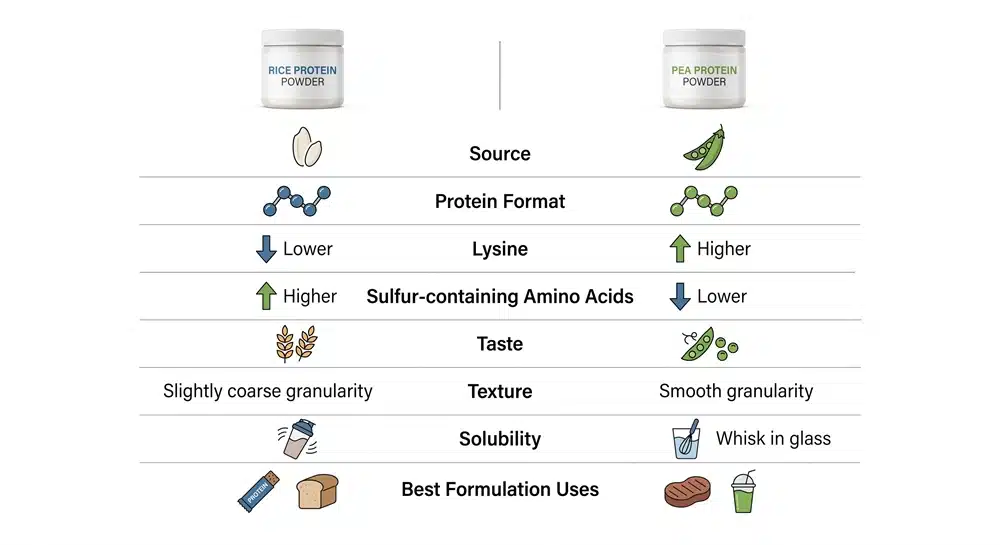
So sánh nhanh giữa protein gạo và protein đậu Hà Lan
| Yếu tố | Protein gạo | Protein đậu Hà Lan | Ý nghĩa đối với việc xây dựng công thức |
|---|---|---|---|
| Nguồn điển hình | Thông thường protein gạo lứt tập trung hoặc tách biệt | Thường là protein đậu vàng cô đặc hoặc tinh khiết | Xác nhận loài, nguyên liệu thô và phương pháp chế biến |
| Cấu trúc axit amin | Thường có hàm lượng lysine tương đối thấp hơn | Thường có hàm lượng methionine và cysteine tương đối thấp hơn | Một hỗn hợp có thể giúp cải thiện độ cân bằng, nhưng phải được tính toán dựa trên kết quả phân tích thực tế |
| Nồng độ protein | Tùy thuộc vào loại chất cô đặc/chất cô lập và phương pháp thử nghiệm | Tùy thuộc vào loại chất cô đặc/chất cô lập và phương pháp thử nghiệm | Sử dụng thông số kỹ thuật của nhà cung cấp và Giấy chứng nhận phân lô (COA) |
| Hương vị và kết cấu | Có thể có kết cấu khô, giống ngũ cốc hoặc hơi sần sật | Có thể có vị đất, vị đậu, vị đắng hoặc vị chát | Có thể cần phải che lấp hương vị và kiểm soát kích thước hạt |
| Hành vi chức năng | Thường được sử dụng trong các sản phẩm bột khô, thanh và hỗn hợp | Thường giúp tăng độ nhớt, khả năng tạo nhũ tương và độ đặc | Cần phải tiến hành thử nghiệm trên bàn thí nghiệm đối với ma trận cuối cùng |
| Vị trí điều trị dị ứng | Không nằm trong số chín chất gây dị ứng chính ở Mỹ | Không nằm trong số chín chất gây dị ứng chính ở Mỹ | Không nên coi bất kỳ loại nào là hoàn toàn không chứa chất gây dị ứng; cần đánh giá tình trạng dị ứng của từng cá nhân và nguy cơ nhiễm chéo |
| Cách sử dụng ban đầu tốt nhất | Bột, thanh hoặc hỗn hợp bổ sung có thành phần chính là gạo | Bột protein thực vật có hàm lượng lysine cao và các hệ thống tạo kết cấu | Hãy lựa chọn dựa trên mục tiêu của sản phẩm, chứ không phải dựa trên một giải pháp “phù hợp với mọi trường hợp” |
Protein gạo là gì?
Protein gạo được sản xuất bằng cách cô đặc hoặc tách chiết protein từ gạo, thường là gạo lứt. Các nguyên liệu thương mại có sự khác biệt về hàm lượng protein, kích thước hạt, màu sắc, hương vị, độ hòa tan, khả năng tiêu hóa và các tiêu chuẩn về tạp chất. Một sản phẩm chỉ được mô tả là “protein gạo” không đủ rõ ràng để sử dụng trong công thức hoặc mua sắm.
Các thương hiệu đang đánh giá Thông số kỹ thuật của protein gạo dạng số lượng lớn cần yêu cầu phương pháp thử nghiệm protein, thành phần axit amin, giới hạn kim loại nặng, giới hạn vi sinh, kích thước hạt, đặc tính cảm quan và giấy chứng nhận phân tích dành riêng cho từng lô hàng.
Protein đậu là gì?
Protein đậu Hà Lan thường được sản xuất từ đậu Hà Lan vàng và được bán dưới dạng cô đặc hoặc phân lập. Loại protein này được sử dụng rộng rãi trong các sản phẩm dạng bột, thanh ăn, sản phẩm pha sẵn và các hệ thống thay thế thịt do có hàm lượng protein cao cùng các đặc tính hữu ích như khả năng giữ nước và tạo nhũ tương. Hương vị và độ nhớt của nó có thể thay đổi đáng kể tùy theo nhà cung cấp và quy trình sản xuất.
Khi so sánh Thông số kỹ thuật của protein đậu Hà Lan dạng số lượng lớn, cần kiểm tra các thông số kỹ thuật đã công bố về thành phần protein, cấu trúc axit amin, độ hòa tan, kích thước hạt, hương vị, các chỉ tiêu vi sinh, thuốc trừ sâu và kim loại nặng, thay vì cho rằng tất cả các chủng phân lập từ đậu Hà Lan đều có đặc tính giống nhau.
Hàm lượng axit amin: Khái niệm “protein hoàn chỉnh” cần được xem xét trong bối cảnh cụ thể
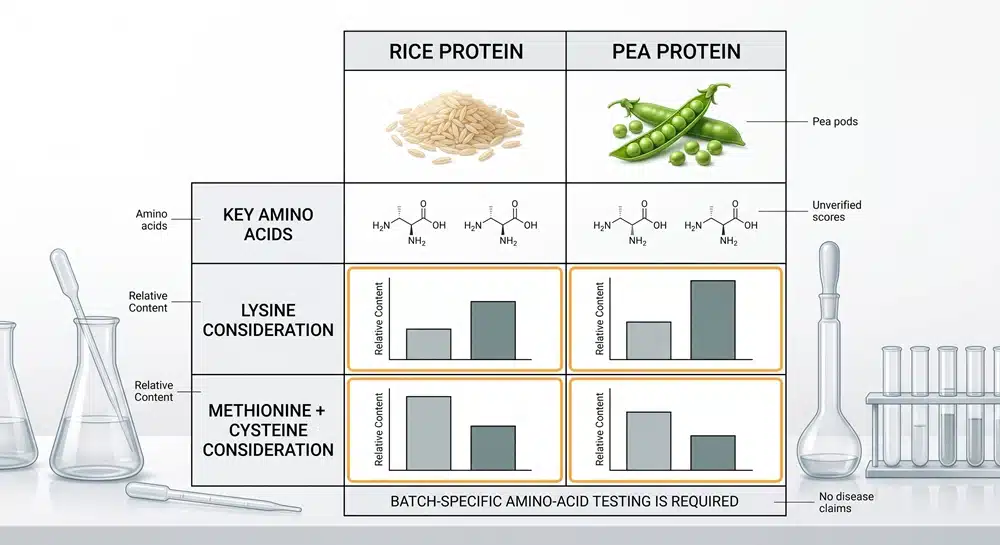
Protein gạo và protein đậu Hà Lan đều chứa đầy đủ chín loại axit amin thiết yếu, nhưng tỷ lệ các axit amin này có thể không hoàn toàn phù hợp với mẫu axit amin chuẩn ở mọi khẩu phần. Protein gạo thường được cho là tương đối thiếu lysine, trong khi protein đậu Hà Lan thường có hàm lượng các axit amin chứa lưu huỳnh như methionine và cysteine tương đối thấp hơn.
Các thuật ngữ “hoàn chỉnh” và “không hoàn chỉnh” có thể khiến các quyết định về công thức trở nên quá đơn giản hóa. Một đánh giá có ý nghĩa cần dựa trên hàm lượng axit amin trên mỗi gam protein, khẩu phần dự kiến, mẫu tham chiếu phù hợp và thông tin về khả năng tiêu hóa thích hợp. Kết quả có thể khác nhau tùy theo nhà cung cấp, lô hàng, giống cây trồng và phương pháp chế biến.
| Điểm đánh giá | Protein gạo | Protein đậu Hà Lan | Những việc mà nhà bào chế cần thực hiện |
|---|---|---|---|
| Lysine | Thường thì đây là axit amin đầu tiên cần ôn lại | Thường cung cấp lượng lysine nhiều hơn gạo | Hãy sử dụng kết quả xét nghiệm axit amin thực tế, chứ không phải bảng tham khảo chung chung |
| Methionine + cysteine | Có thể kết hợp với đậu Hà Lan trong hỗn hợp | Thường cần phải xem xét kỹ lưỡng hơn | Tính toán mức đóng góp theo tỷ lệ pha trộn đề xuất |
| Leucine | Tùy thuộc vào loại vật liệu và nồng độ protein | Tùy thuộc vào loại vật liệu và nồng độ protein | Hãy ghi rõ hàm lượng thực tế trên mỗi khẩu phần trước khi đưa ra các tuyên bố về tác dụng |
| Tổng lượng protein | Tùy thuộc vào phương pháp xét nghiệm và hệ số nitơ | Tùy thuộc vào phương pháp xét nghiệm và hệ số nitơ | Xác định phương pháp, cơ sở và thông số kỹ thuật xuất xưởng |
Khả năng tiêu hóa và chất lượng protein: Tránh sử dụng các thang điểm chung chung
Chất lượng protein không thể được quy về một chỉ số cố định duy nhất sao chép từ nhà cung cấp hoặc nghiên cứu khác. PDCAAS sử dụng hệ số điều chỉnh độ tiêu hóa protein và giới hạn chỉ số ở mức 1,0. FAO đã khuyến nghị sử dụng DIAAS như một phương pháp chi tiết hơn vì phương pháp này xem xét độ tiêu hóa của từng axit amin thiết yếu tại đoạn cuối của ruột non.
Các giá trị đã công bố có thể hỗ trợ cho công tác nghiên cứu, nhưng chúng không chứng minh được điểm số của một thành phần thương mại khác. Các yếu tố như quy trình chế biến, các yếu tố chống dinh dưỡng, tiếp xúc với nhiệt, giống cây trồng, chất nền và phương pháp thử nghiệm đều có thể ảnh hưởng đến kết quả. Nếu một thương hiệu muốn công bố tuyên bố về PDCAAS, DIAAS hoặc “protein chất lượng cao”, thương hiệu đó cần có bằng chứng liên quan đến thành phần thực tế hoặc sản phẩm hoàn chỉnh và thị trường mục tiêu.
Hỗn hợp protein từ đậu Hà Lan và gạo có hiệu quả hơn không?
Hỗn hợp đậu Hà Lan–gạo có thể cải thiện sự cân bằng axit amin, các đặc tính cảm quan hoặc tính chất chế biến, nhưng hỗn hợp này không tự động trở nên vượt trội về mặt lâm sàng, tương đương với whey hay được hấp thu tốt hơn so với protein đậu Hà Lan đơn thuần. Một nghiên cứu trên người năm 2024 cho thấy việc bổ sung protein gạo vào protein đậu Hà Lan không làm tăng nồng độ axit amin trong máu sau bữa ăn cao hơn so với protein đậu Hà Lan tinh khiết trong các điều kiện thử nghiệm.
Do đó, các quyết định về công thức pha trộn cần bắt đầu từ một mục tiêu sản phẩm có thể đo lường được: hàm lượng axit amin mục tiêu, hàm lượng protein ghi trên nhãn, hương vị, độ nhớt, độ hòa tan, chi phí, khẩu phần hoặc khả năng đảm bảo nguồn cung. Các tuyên bố về sản phẩm phải phù hợp với công thức cuối cùng và không nên sao chép từ một nghiên cứu đã sử dụng nguồn protein, liều lượng hoặc phương pháp chế biến khác.
Các thương hiệu thực phẩm bổ sung nên xác định tỷ lệ pha trộn như thế nào
- Thu thập các dữ liệu mới nhất về cấu trúc axit amin và kết quả phân tích protein của cả hai thành phần được đề xuất.
- Xác định lượng protein (tính theo gam) và khẩu phần của sản phẩm thành phẩm.
- Tính toán hàm lượng các axit amin thiết yếu theo các tỷ lệ đề xuất, dựa trên các giá trị đảm bảo hoặc giá trị giải phóng.
- Xem xét các bằng chứng về khả năng tiêu hóa và tránh gán một điểm số chưa được xác định cho hỗn hợp đó.
- Kiểm tra hương vị, mùi thơm, độ nhớt, khả năng tạo bọt, khả năng phân tán, quá trình lắng cặn và cảm giác trong miệng trong môi trường dự kiến.
- Xác nhận chi phí, số lượng đặt hàng tối thiểu (MOQ), thời gian giao hàng, tính ổn định của nguồn cung và các chứng nhận cần thiết.
- Kiểm tra sản phẩm thành phẩm thông qua các thử nghiệm về hàm lượng hoạt chất, độ đồng nhất, tạp chất và độ ổn định.
Không có tỷ lệ chung nào là 70:30, 60:40 hay 50:50. Tỷ lệ chính xác là tỷ lệ được xác định dựa trên dữ liệu về thành phần và các yêu cầu đối với sản phẩm thành phẩm.
Tùy theo mục tiêu sản phẩm, giải pháp nào tốt hơn?
| Mục tiêu sản phẩm | Điểm khởi đầu được khuyến nghị | Lý do | Cần xác minh |
|---|---|---|---|
| Bột protein đậu Hà Lan từ một nguồn duy nhất | Chất chiết xuất từ đậu Hà Lan | Sự am hiểu sâu sắc về thị trường và hàm lượng protein hữu ích | Hương vị, độ nhớt, độ hòa tan và thành phần axit amin |
| Bột protein gạo từ một nguồn duy nhất | Chất chiết xuất từ gạo | Hương vị gạo nổi bật và đặc trưng cảm quan khác biệt | Độ mịn, khả năng phân tán, kim loại nặng và hàm lượng lysine |
| Bột protein thực vật cân bằng | Hỗn hợp đậu Hà Lan và gạo được tính toán | Có thể bổ sung các đặc tính về axit amin và cảm quan | Phân tích thành phần thực tế, bằng chứng về khả năng tiêu hóa và thử nghiệm sản phẩm thành phẩm |
| Thanh protein | Thử nghiệm trên bàn thí nghiệm cả hai hoặc hỗn hợp của chúng | Khả năng giữ nước và sự thay đổi kết cấu trong thời gian bảo quản | Quá trình làm cứng, độ hoạt tính của nước, hương vị và độ ổn định của bao bì |
| Thức uống pha sẵn | Tiêu chí đánh giá dành riêng cho từng nhà cung cấp | Sự phân tán, tạo bọt và lắng đọng phụ thuộc vào quy trình | Quy trình trộn, kích thước hạt, độ pH và thử nghiệm cảm quan |
| Kẹo dẻo giàu protein hoặc dạng sản phẩm mới lạ | Cần thực hiện nghiên cứu phát triển | Protein có thể làm rối loạn cấu trúc gel và độ hoạt động của nước | Các thử nghiệm thí điểm, kết cấu, kiểm soát vi sinh và độ ổn định |
Hương vị, kết cấu, độ hòa tan và khả năng hòa trộn
Protein gạo không phải lúc nào cũng mịn hơn, và protein đậu Hà Lan cũng không phải lúc nào cũng có kết cấu hạt hơn. Chất lượng cảm quan phụ thuộc vào nhà cung cấp, nồng độ protein, kích thước hạt, quy trình xử lý thủy nhiệt, hệ thống hương vị và ma trận của sản phẩm thành phẩm.
- Protein gạo: đánh giá độ khô, hương vị ngũ cốc, độ sạn, cặn và màu sắc.
- Protein đậu Hà Lan: đánh giá hương vị đậu, vị đắng, vị chát, độ sánh, bọt và cặn.
- Hỗn hợp: kiểm tra xem liệu một thành phần có làm lu mờ hay làm nổi bật đặc tính cảm quan của thành phần kia hay không.
- Bao bì: kiểm tra mức độ bảo vệ khỏi độ ẩm và oxy, vì chất lượng cảm quan có thể thay đổi trong suốt thời hạn sử dụng.
Bằng chứng và các giới hạn của tuyên bố về lợi ích sức khỏe
Selected studies have evaluated rice protein or pea protein in resistance-training contexts, but the findings are specific to the tested ingredients, doses, diets, participants and exercise programs. The 2013 study frequently cited on this topic compared rice protein isolate with whey—not pea protein with whey. A separate 2015 trial evaluated pea protein against whey and placebo.
Các nghiên cứu này không đủ cơ sở để đưa ra những khẳng định chung chung rằng protein đậu Hà Lan giúp tăng cơ nhiều hơn protein gạo, rằng hỗn hợp đậu Hà Lan–gạo có thể sánh ngang với protein động vật trong mọi mục đích sử dụng, hay rằng bất kỳ thành phần nào trong số đó cũng giúp giảm cân, cải thiện sức khỏe tim mạch hoặc cung cấp năng lượng tức thì. Các thương hiệu cần mô tả chính xác hàm lượng protein, thành phần axit amin và cách sử dụng sản phẩm, đồng thời phải chứng minh bất kỳ tuyên bố nào về cấu trúc hoặc chức năng của sản phẩm hoàn chỉnh.
An toàn, chất gây dị ứng và khả năng dung nạp
- Gạo và đậu Hà Lan không nằm trong danh sách chín chất gây dị ứng chính mà theo luật liên bang Hoa Kỳ bắt buộc phải ghi rõ trên nhãn, nhưng vẫn có người có thể bị dị ứng với chúng.
- Không được sử dụng các thuật ngữ “không chứa chất gây dị ứng” hoặc “ít gây dị ứng” nếu không có cơ sở rõ ràng và chưa tiến hành đánh giá nguy cơ nhiễm chéo.
- Một số người có thể gặp phải tình trạng đầy hơi, cảm giác no hoặc khó chịu ở dạ dày do một loại protein, hệ thống hương liệu, chất tạo ngọt cụ thể hoặc tổng lượng mỗi phần ăn.
- Các thành phần có nguồn gốc từ gạo cần có các tiêu chuẩn về hàm lượng kim loại nặng dựa trên mức độ rủi ro, bao gồm cả asen nếu có liên quan đến thành phần và thị trường đó.
- Những người mắc bệnh thận, đang áp dụng chế độ ăn hạn chế protein, có tiền sử dị ứng nghiêm trọng hoặc mắc các bệnh lý phức tạp nên tham khảo ý kiến chuyên gia trước khi sử dụng các sản phẩm bổ sung protein cô đặc.
- Các sản phẩm dành cho phụ nữ mang thai, cho con bú và trẻ em cần được đánh giá về mặt dinh dưỡng, an toàn và tuân thủ quy định theo từng công thức cụ thể.
Các tiêu chuẩn chất lượng cần kiểm tra
| Thông số kỹ thuật | Những điều cần kiểm tra | Tại sao điều này lại quan trọng |
|---|---|---|
| Bản sắc và nguồn gốc | Loài thực vật, bộ phận, trạng thái cô đặc/tách chiết, nguồn gốc và khả năng truy xuất nguồn gốc | Xác nhận nguyên liệu thô phù hợp |
| Hàm lượng protein | Phương pháp phân tích, hệ số chuyển đổi nitơ, cơ sở tính toán theo trọng lượng khô/trọng lượng thực tế và kết quả của lô | Hỗ trợ tính toán nhãn mác và so sánh nhà cung cấp |
| Hàm lượng axit amin | Các axit amin thiết yếu trên mỗi gam protein hoặc mỗi khẩu phần | Hỗ trợ tính toán thành phần hỗn hợp và đặt ra các giới hạn đối với các tuyên bố chung chung về “protein hoàn chỉnh” |
| Bằng chứng về khả năng tiêu hóa | Tài liệu nghiên cứu, phương pháp và tính ứng dụng đối với thành phần thương mại | Ngăn chặn các tuyên bố PDCAAS hoặc DIAAS không được hỗ trợ |
| Về thể chất và giác quan | Kích thước hạt, mật độ khối, màu sắc, mùi, vị, độ hòa tan và khả năng phân tán | Dự báo về quy trình xử lý và trải nghiệm của người tiêu dùng |
| Các chất gây ô nhiễm | Chì, asen, cadmium, thủy ngân, thuốc trừ sâu và các chất dung môi còn sót lại (nếu có) | Hỗ trợ việc phê duyệt nguyên liệu dựa trên đánh giá rủi ro |
| Vi sinh học | Tổng số lượng, nấm men/nấm mốc và các vi sinh vật được chỉ định | Hỗ trợ việc kiểm soát an toàn và thời hạn sử dụng |
| Lây nhiễm chéo | Thông báo về chất gây dị ứng, các biện pháp kiểm soát tại cơ sở và thông tin về thiết bị dùng chung | Hỗ trợ việc dán nhãn chính xác và đánh giá năng lực nhà cung cấp |
| Tài liệu | Thông số kỹ thuật, Giấy chứng nhận phân lô (COA), Bảng dữ liệu kỹ thuật (TDS), Bảng dữ liệu an toàn (SDS), nguồn gốc, các chứng nhận không biến đổi gen (non-GMO)/hữu cơ/thuần chay (nếu có) | Hỗ trợ các cuộc kiểm toán và các tuyên bố về sản phẩm hoàn thiện |
| Sự ổn định | Xét nghiệm hàm lượng protein, đánh giá cảm quan, độ ẩm, vi sinh và hiệu suất bao bì | Đảm bảo chất lượng trong suốt thời hạn sử dụng đề xuất |
Các yếu tố cần lưu ý trong quá trình bào chế và sản xuất
Một dự án về protein thực vật cần được đánh giá theo dạng bào chế thực tế. GENSEI hỗ trợ Sản xuất thực phẩm bổ sung protein theo yêu cầu đối với các dạng bột, viên nén, viên nang và các dạng bào chế khác mà công thức và quy trình sản xuất là khả thi về mặt kỹ thuật.
- Hãy xác định hàm lượng protein cho mỗi khẩu phần dựa trên thị trường mục tiêu và ý tưởng sản phẩm, chứ không phải dựa trên liều lượng hàng ngày chung chung.
- Khi kết hợp protein với vitamin, khoáng chất hoặc hương liệu ở liều lượng thấp, cần áp dụng các biện pháp kiểm soát quá trình trộn trước và độ đồng nhất của hỗn hợp đã được xác nhận.
- Cần đánh giá các yếu tố như khả năng che lấp hương vị, độ ngọt, hàm lượng natri, độ nhớt, bọt và cặn trước khi hoàn thiện nhãn sản phẩm.
- Kiểm tra bao bì để đảm bảo khả năng chống ẩm, chống oxy và chống ánh sáng.
- Sử dụng các mẻ thử nghiệm và mẻ ổn định để xác nhận hàm lượng protein, đặc tính cảm quan, giới hạn vi sinh và tính toàn vẹn về mặt vật lý.
- Lưu giữ hồ sơ sản xuất chính, hồ sơ sản xuất theo lô, các văn bản phê duyệt nhà cung cấp và tài liệu kiểm soát thay đổi.
Các câu hỏi trong hồ sơ yêu cầu đề xuất (RFP) dành cho các nhà cung cấp protein từ gạo hoặc đậu
- Chất này là dạng cô đặc hay dạng tinh khiết, và nguồn thực vật cũng như quốc gia xuất xứ là gì?
- Phương pháp định lượng protein và hệ số chuyển đổi nitơ nào được sử dụng?
- Quý vị có thể cung cấp ba bản COA và bản phân tích cấu trúc axit amin cụ thể cho từng lô hàng gần đây nhất không?
- Các thông số kỹ thuật về hàm lượng protein, độ ẩm, hàm lượng tro, độ pH, kích thước hạt và mật độ thể tích là gì?
- Có những dữ liệu nào về độ hòa tan, khả năng phân tán, độ nhớt, bọt và cặn?
- Những kim loại nặng nào, bao gồm cả asen (nếu có liên quan), được kiểm tra và các giới hạn nào được áp dụng?
- Các thử nghiệm về vi sinh, thuốc trừ sâu và dung môi dư nào được bao gồm?
- Các biện pháp kiểm soát chất gây dị ứng và ô nhiễm chéo nào đang được áp dụng tại chính cơ sở này?
- Các tuyên bố về PDCAAS, DIAAS hoặc khả năng tiêu hóa có được chứng minh bằng dữ liệu về thành phần này không?
- Số lượng đặt hàng tối thiểu (MOQ), số lượng mẫu, hình thức đóng gói, thời gian giao hàng và kế hoạch đảm bảo nguồn cung là gì?
- Quý vị có thể hỗ trợ sản xuất thử nghiệm và thử nghiệm độ ổn định của sản phẩm hoàn thiện không?
- Các tuyên bố liên quan đến cơ bắp, phục hồi, kiểm soát cân nặng, tính bền vững và “protein hoàn chỉnh” được đánh giá như thế nào?
Vị trí của GENSEI
GENSEI hỗ trợ việc tìm nguồn cung ứng nguyên liệu protein từ gạo và đậu, phát triển công thức pha trộn, sản xuất bột và các sản phẩm protein, đóng gói cũng như đánh giá chất lượng. Các thương hiệu có thể liên hệ với GENSEI cùng với trọng lượng (gram) của protein mục tiêu, dạng bào chế, hương vị, các chứng nhận, yêu cầu kiểm nghiệm, số lượng đặt hàng và thị trường.
Câu hỏi thường gặp
Loại nào tốt hơn, protein gạo hay protein đậu Hà Lan?
Không có loại nào được coi là tốt hơn một cách tuyệt đối. Protein đậu thường cung cấp nhiều lysine hơn, trong khi protein gạo có thể bổ sung các axit amin chứa lưu huỳnh. Lựa chọn phù hợp phụ thuộc vào yêu cầu kỹ thuật cụ thể, khẩu phần, tiêu chí cảm quan và dạng bào chế.
Protein gạo có phải là protein hoàn chỉnh không?
Protein gạo chứa đầy đủ cả chín axit amin thiết yếu, nhưng hàm lượng lysine có thể tương đối hạn chế. Việc liệu nó có đáp ứng được mẫu axit amin tham chiếu hay không phụ thuộc vào thành phần nguyên liệu, khẩu phần và bằng chứng về khả năng tiêu hóa.
Protein đậu Hà Lan có phải là protein hoàn chỉnh không?
Protein đậu Hà Lan chứa đầy đủ cả chín axit amin thiết yếu, nhưng methionine và cysteine thường là những axit amin cần được xem xét kỹ lưỡng hơn. Không nên coi mọi loại protein đậu Hà Lan tinh chế đều giống nhau về mặt dinh dưỡng.
Việc kết hợp protein đậu Hà Lan và protein gạo có tạo thành một loại protein hoàn chỉnh không?
Một hỗn hợp có thể cải thiện sự cân bằng axit amin, nhưng kết quả cần được tính toán dựa trên các kết quả phân tích thực tế của các thành phần. Việc chỉ đơn thuần kết hợp các tên thành phần không đủ để chứng minh một chỉ số axit amin cụ thể hay lợi ích lâm sàng nào.
Protein từ đậu Hà Lan và gạo có tốt hơn so với chỉ dùng protein từ đậu Hà Lan không?
Không hẳn vậy. Một nghiên cứu năm 2024 đã không phát hiện thấy nồng độ axit amin trong máu sau bữa ăn cao hơn khi sử dụng hỗn hợp đậu Hà Lan–gạo được thử nghiệm so với khi chỉ sử dụng protein cô lập từ đậu Hà Lan. Các hỗn hợp vẫn có thể hữu ích về mặt cân bằng axit amin, thiết kế cảm quan, chi phí hoặc các lý do liên quan đến nguồn cung.
Loại protein nào dễ tiêu hóa hơn?
Khả năng dung nạp khác nhau tùy theo từng người và từng sản phẩm. Quá trình chế biến protein, khẩu phần, hệ thống hương vị, chất tạo ngọt và các thành phần khác đều có thể ảnh hưởng đến sự thoải mái khi tiêu hóa. Đừng cho rằng gạo luôn dễ tiêu hóa hơn hay đậu luôn khó tiêu hóa hơn.
Một thương hiệu thực phẩm bổ sung nên sử dụng tỷ lệ pha trộn như thế nào?
Không có tỷ lệ chung nào cả. Các thương hiệu nên tính toán tỷ lệ dựa trên dữ liệu về protein và axit amin liên quan đến từng lô sản phẩm, sau đó kiểm chứng các yếu tố như hương vị, độ hòa tan, quy trình chế biến, tạp chất và độ ổn định trong sản phẩm thành phẩm.
Điểm chính cần ghi nhớ
Protein gạo và protein đậu Hà Lan là những thành phần protein thực vật hữu ích, có các đặc tính khác nhau về axit amin, cảm quan và chức năng. Đậu Hà Lan có thể cung cấp lysine; gạo có thể bổ sung các axit amin chứa lưu huỳnh; và việc kết hợp cả hai có thể giúp cải thiện công thức. Việc lựa chọn có trách nhiệm đòi hỏi phải thực hiện các thử nghiệm cụ thể cho từng lô, bằng chứng về khả năng tiêu hóa phù hợp, thử nghiệm cảm quan, kiểm soát tạp chất và xác nhận sản phẩm hoàn thiện — chứ không phải những tuyên bố chung chung rằng một nguồn hoặc hỗn hợp nào đó tự động là đầy đủ, vượt trội hoặc tương đương với whey.
Tài liệu tham khảo
- FAO: Đánh giá chất lượng protein trong chế độ ăn uống đối với dinh dưỡng con người
- Văn phòng Phụ gia Dinh dưỡng thuộc Viện Y tế Quốc gia Hoa Kỳ (NIH): Tập thể dục và thành tích thể thao
- Tình trạng tăng nồng độ axit amin trong máu sau bữa ăn do tiêu thụ đậu Hà Lan, gạo và hỗn hợp protein đậu Hà Lan–gạo
- Thành phần axit amin và chất lượng protein của các chất chiết xuất protein thực vật
- So sánh protein gạo tinh khiết với protein whey sau khi tập luyện sức bền
- So sánh protein đậu Hà Lan với protein whey trong quá trình tập luyện sức bền
- FDA: Dị ứng thực phẩm — Những điều bạn cần biết
- FDA: Các tuyên bố về cấu trúc/chức năng
- FTC: Hướng dẫn tuân thủ đối với các sản phẩm chăm sóc sức khỏe
- 21 CFR Phần 111: Thực hành sản xuất tốt hiện hành đối với thực phẩm bổ sung
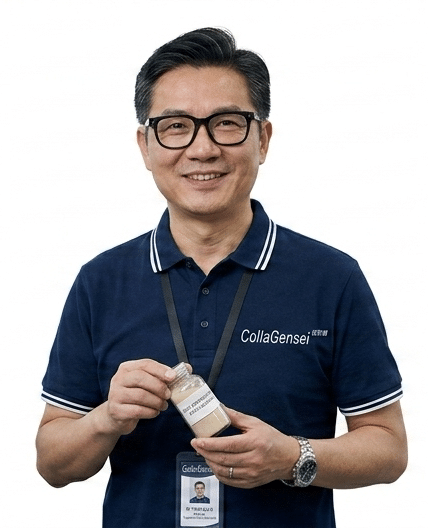
Warren Wan là một chuyên gia dày dạn với kinh nghiệm phong phú trong chuỗi cung ứng thực phẩm bổ sung, sở hữu kinh nghiệm thực tiễn sâu rộng trong nghiên cứu, phát triển, kiểm soát quy trình và tìm nguồn cung ứng toàn cầu các thành phần cốt lõi như peptit collagen, protein từ nước hầm xương và keratin. Với tư cách là tác giả của chuyên mục này, ông cam kết loại bỏ những lớp bao bọc tiếp thị, biến những kiến thức khoa học phức tạp về thành phần và các tiêu chuẩn kiểm soát chất lượng sản xuất thành những nội dung phổ biến khoa học dễ hiểu nhưng sâu sắc, giúp độc giả hiểu rõ sự thật đằng sau các nhãn mác và đưa ra những lựa chọn sức khỏe hợp lý hơn.