天然維生素 E 與合成維生素 E:標籤、效力及營養補充品配方指南

Natural vitamin E is usually labeled as d-alpha-tocopherol or RRR-alpha-tocopherol, while synthetic vitamin E is commonly labeled as dl-alpha-tocopherol or all-rac-alpha-tocopherol. For supplement brands, the better choice depends on label positioning, dosage form, potency target, stability needs, cost structure and regulatory claims.

Vitamin E is not a single ingredient. It is a family of fat-soluble compounds, and alpha-tocopherol is the form most directly used for vitamin E activity in human nutrition. In finished supplements, the label difference between natural and 合成維生素 E is more than a marketing detail: it affects declared potency, ingredient positioning, cost per active unit, formulation format and consumer perception.

For B2B buyers, this guide explains how to compare natural and synthetic vitamin E for softgels, capsules, tablets, gummies, multivitamins, nutrition powders and custom private label formulas. If your team is sourcing vitamin raw materials, you can also review our bulk vitamin ingredients supplier page, natural vitamin E manufacturer page and synthetic vitamin E manufacturer 頁面。.

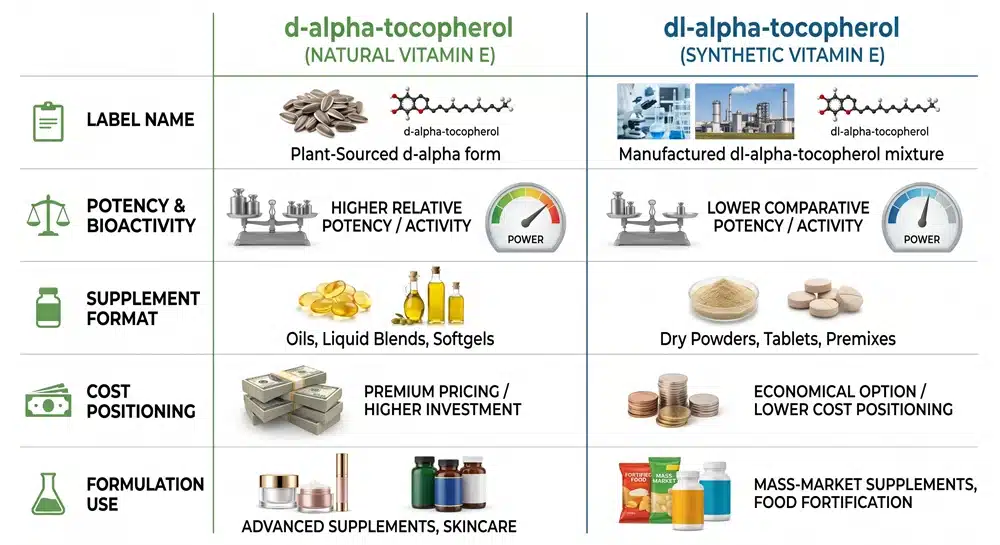
營養補充品配方中天然與合成維生素E的比較表

Natural vs Synthetic Vitamin E: The Key Difference

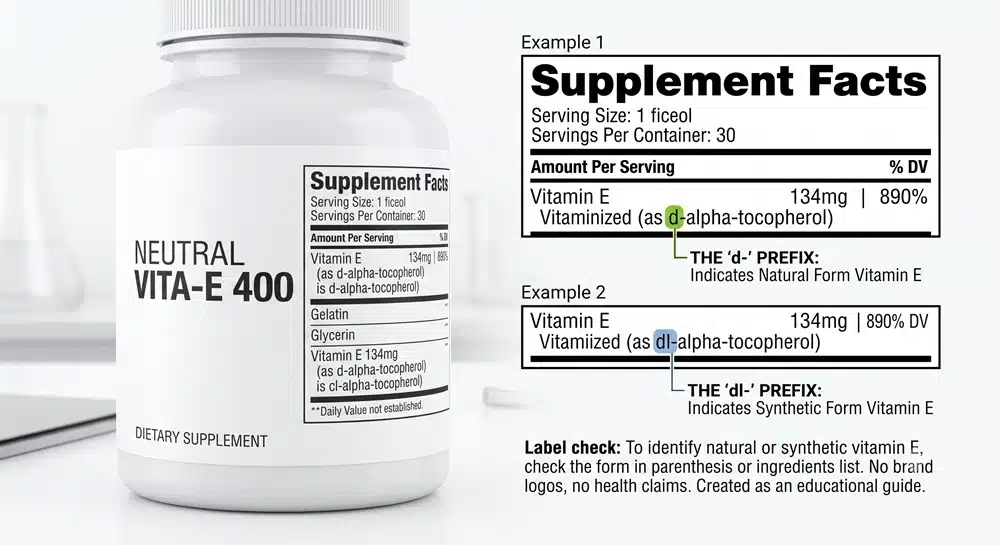
The fastest way to identify the difference is to read the ingredient name.

Label term Common meaning Typical positioning
d-alpha-生育酚 Natural-source alpha-tocopherol Premium, natural-positioned supplements
RRR-α-生育酚 Scientific name for natural alpha-tocopherol stereochemistry Technical specification, COA and regulatory documentation
dl-alpha-生育酚 Synthetic alpha-tocopherol mixture Cost-efficient standard vitamin E formulas
all-rac-alpha-tocopherol Scientific name for synthetic alpha-tocopherol mixture Technical documentation and label review
tocopheryl acetate or tocopheryl succinate Esterified vitamin E forms used for improved stability or dry formats 軟膠囊、膠囊、錠劑、軟糖及預混粉

In simple terms, d-usually points to natural-source vitamin E, while dl-usually points to synthetic vitamin E. However, supplement brands should not rely only on consumer-facing wording. Always confirm the exact form, assay method, potency, carrier system, allergen status and batch COA before purchasing.

什麼是天然維生素E?

Natural vitamin E is typically derived from vegetable oil sources and is commonly supplied as d-alpha-tocopherol, d-alpha tocopheryl acetate, d-alpha tocopheryl succinate or mixed tocopherols. In supplement manufacturing, it may be supplied as oil, powder, beadlet, microencapsulated powder or custom premix.

Natural vitamin E is often selected for products that require a premium label, natural-source positioning, clean-label storytelling, or better potency per milligram of alpha-tocopherol activity. It is commonly used in softgels, antioxidant supplements, beauty-from-within formulas, multivitamins and healthy aging products.

什麼是合成維生素E?

Synthetic vitamin E is commonly labeled as dl-alpha-tocopherol, dl-alpha tocopheryl acetate or all-rac-alpha-tocopherol. It is widely used in dietary supplements, fortified foods, premixes, tablets, gummies and mass-market formulas because it can be more cost-efficient and easier to standardize for certain applications.

Synthetic vitamin E is not automatically “bad.” The right question is whether it fits the product’s label claim, cost target, dosage form, customer expectations and regulatory requirements. For some formulas, synthetic vitamin E can be a practical option; for premium natural-positioned products, natural vitamin E is usually easier to explain to consumers.

Natural vs Synthetic Vitamin E Comparison Table

因子 Natural vitamin E Synthetic vitamin E B2B formulation note
Common label name d-alpha-tocopherol / RRR-alpha-tocopherol dl-alpha-tocopherol / all-rac-alpha-tocopherol Use the exact ingredient name from the COA and specification sheet.
Relative activity by weight Higher vitamin E activity per mg Lower activity per mg than natural alpha-tocopherol Check mg, IU and % Daily Value conversion carefully.
Consumer positioning Premium, natural-source, clean-label Standard, cost-efficient, mass-market Match the ingredient choice to the finished product price tier.
Common formats Oil, powder, beadlet, mixed tocopherols, ester forms Oil, powder, acetate forms, premix forms Format choice matters for flowability, stability and dosage uniformity.
Best-fit dosage forms Softgels, capsules, beauty formulas, premium multivitamins Tablets, gummies, standard multivitamins, cost-sensitive premixes Confirm carrier compatibility before production trials.
成本 Usually higher raw material cost Usually lower raw material cost Compare cost per declared vitamin E activity, not only cost per kg.
Quality documentation COA, assay, identity, source, carrier, allergen and non-GMO documents if needed COA, assay, identity, carrier, residual solvent and specification documents Documentation should match target market and label positioning.

Is Natural Vitamin E Better Than Synthetic Vitamin E?

For human nutrition labeling and potency, natural alpha-tocopherol is generally more active by weight than synthetic alpha-tocopherol. That is why many premium supplements use natural d-alpha-tocopherol or related natural-source forms.

However, “better” depends on the use case. For a premium softgel or beauty-from-within supplement, natural vitamin E may support a stronger product story. For a cost-sensitive tablet, gummy or premix, synthetic vitamin E may still be a practical option if the declared vitamin E amount, carrier system and quality documentation are appropriate.

How to Read a Vitamin E Supplement Label

Consumers and brand teams can use the label as a first screening tool:

  • d-alpha-生育酚 usually indicates natural vitamin E.
  • RRR-α-生育酚 is the technical stereochemical name for natural alpha-tocopherol.
  • dl-alpha-生育酚 usually indicates synthetic vitamin E.
  • all-rac-alpha-tocopherol is the technical name for synthetic alpha-tocopherol mixture.
  • Tocopheryl acetatetocopheryl succinate may be natural or synthetic depending on the source, so the prefix and supplier documentation matter.

For brands, label review should happen before commercial production. Confirm the ingredient name, form, potency, serving size and Supplement Facts declaration with qualified regulatory support for your target market.

•D-alpha vs DL-alpha tocopherol vitamin E supplement label guide

Vitamin E Forms for Supplement Manufacturing

形式 典型用途 Key formulation consideration
維他命 E 油 Softgels, oil blends, liquid supplements Check oxidation control, packaging, peroxide value and compatibility with other oils.
維生素 E 粉 Capsules, tablets, gummies, sachets and nutrition powders Check carrier system, flowability, particle size, assay and moisture sensitivity.
Beadlets or microencapsulated powder Gummies, tablets, dry blends and premixes Useful when the formula needs better handling, dispersion or stability.
Mixed tocopherols Antioxidant formulas and oil systems Check the ratio of alpha, beta, gamma and delta tocopherols.
Custom vitamin premix Multivitamins, functional foods and private label formulas Confirm overage strategy, assay, compatibility and shelf-life requirements.

Collagensei supports vitamin ingredient sourcing and finished product development through 維生素合約製造, 軟膠囊製造, 膠囊補充品製造, 軟糖補充品製造自訂自有品牌補充品 專案。.

Quality Specifications to Check Before Buying Vitamin E

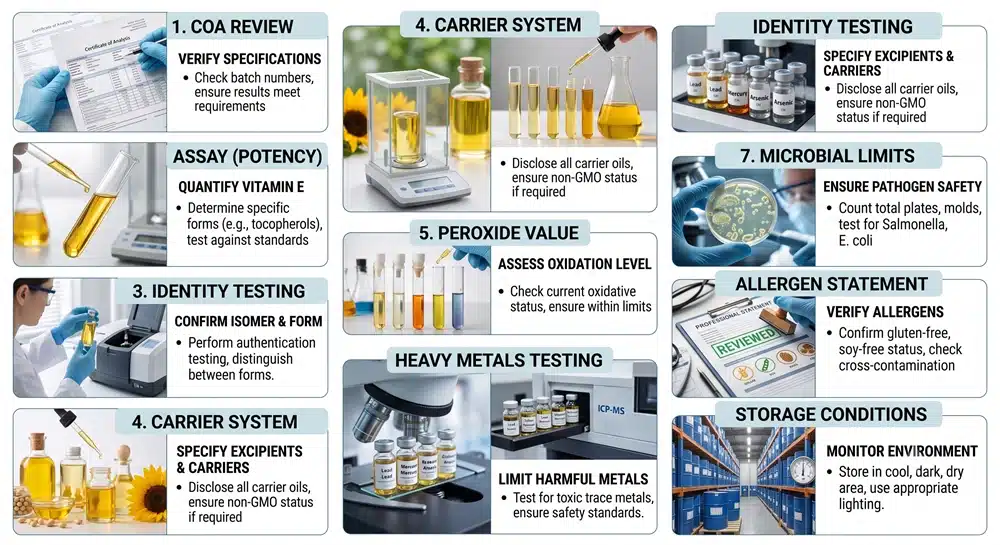
Before choosing natural or synthetic vitamin E, procurement teams should ask for batch-level documentation rather than relying only on marketing copy.

  • 身份: Confirm natural d-alpha, synthetic dl-alpha, acetate, succinate, mixed tocopherol or premix form.
  • Assay and potency: Confirm the testing method, unit conversion and declared activity.
  • Carrier system: Important for powders, beadlets, premixes, gummies and tablets.
  • Peroxide value and oxidation controls: Important for oil-based vitamin E and softgel formulas.
  • Heavy metals and microbial limits: Confirm suitability for the target supplement market.
  • Allergen and source statements: Especially relevant when the vitamin E is derived from soy, sunflower or other vegetable oil sources.
  • Stability and packaging: Check light protection, oxygen exposure, storage temperature and shelf-life assumptions.
  • Regulatory documentation: COA, specification sheet, SDS/TDS, non-GMO statement and export documents where applicable.

For batch documentation and testing support, review our 補充品品質控制 process or 聯絡我們 to request COA and specification details.

Vitamin E COA quality testing checklist for supplement brands

安全與標籤聲明須知

Vitamin E is an essential nutrient, but supplement content should avoid presenting vitamin E as a treatment, cure or prevention for disease. A compliant supplement article can discuss vitamin E’s normal role in antioxidant protection and cell function, but disease claims, exaggerated skin claims, heart disease prevention claims or guaranteed outcomes should be avoided unless reviewed by qualified regulatory counsel for the target market.

High-dose vitamin E supplements may not be suitable for everyone. People who use anticoagulant or antiplatelet medications, have bleeding disorders, are preparing for surgery, are pregnant or breastfeeding, or have a medical condition should consult a qualified healthcare professional before using vitamin E supplements.

Which Vitamin E Should Supplement Brands Choose?

Use the following decision framework:

Brand goal Suggested direction Why it fits
Premium natural supplement Natural d-alpha-tocopherol or natural tocopheryl acetate Supports natural-source positioning and higher activity per mg.
Cost-sensitive multivitamin Synthetic vitamin E may be considered Can help manage cost while still providing declared vitamin E activity.
Softgel formula Oil-based natural or synthetic vitamin E depending on positioning Oil compatibility and oxidation control are key.
Gummy or tablet Powder, beadlet or microencapsulated vitamin E Flowability, dispersion and stability matter more than oil format.
Clean-label product Natural vitamin E with source and carrier documentation Helps support label transparency and sourcing story.
Custom vitamin premix Confirm form based on overage, compatibility and target claim Premix design should be validated before scale-up.

常見問題

Is d-alpha-tocopherol natural or synthetic?

D-alpha-tocopherol is generally used to describe natural-source alpha-tocopherol. In technical documents, it may also be called RRR-alpha-tocopherol.

Is dl-alpha-tocopherol natural or synthetic?

Dl-alpha-tocopherol is generally synthetic vitamin E. It is also referred to as all-rac-alpha-tocopherol in technical contexts.

Is natural vitamin E always better?

Natural vitamin E has higher activity per mg than synthetic alpha-tocopherol, but the best ingredient depends on product positioning, dosage form, budget, stability and target market requirements.

Can synthetic vitamin E be used in supplements?

Yes. Synthetic vitamin E is widely used in supplements and premixes. Brands should confirm declared potency, label wording, safety considerations and batch documentation.

What should a supplement brand request before buying vitamin E?

Request the COA, specification sheet, SDS/TDS, assay method, identity test, source statement, allergen statement, carrier details, heavy metals and microbial limits, and packaging/storage information.

Need Help Choosing a Vitamin E Ingredient?

If you are developing a vitamin E softgel, capsule, tablet, gummy, multivitamin or antioxidant supplement, Collagensei can help compare natural and synthetic vitamin E forms, review formulation options, and provide B2B sourcing support. Contact our team to request a quotation, COA or custom formulation discussion.

參考資料

  1. NIH Office of Dietary Supplements: Vitamin E Fact Sheet for Health Professionals
  2. NIH Office of Dietary Supplements: Vitamin E Fact Sheet for Consumers
  3. Linus Pauling Institute: Vitamin E
  4. 美國食品藥物管理局(FDA):關於膳食補充劑的問答集
  5. 美國食品藥物管理局(FDA):結構/功能宣稱
  6. 聯邦貿易委員會(FTC):健康產品合規指引
滾動到頂端