
Vitamin E không phải là một thành phần duy nhất. Đây là một nhóm các hợp chất tan trong chất béo, và alpha-tocopherol là dạng được sử dụng trực tiếp nhất để phát huy tác dụng của vitamin E trong dinh dưỡng của con người. Trên nhãn mác của các sản phẩm thực phẩm chức năng thành phẩm, sự khác biệt giữa “tự nhiên” và vitamin tổng hợp Chất E không chỉ là một chi tiết trong chiến lược tiếp thị: nó ảnh hưởng đến hàm lượng công bố, vị trí của thành phần trong công thức, chi phí trên mỗi đơn vị hoạt chất, dạng bào chế và nhận thức của người tiêu dùng.
Đối với các nhà mua hàng B2B, hướng dẫn này giải thích cách so sánh vitamin E tự nhiên và tổng hợp trong các sản phẩm như viên nang mềm, viên nang cứng, viên nén, kẹo dẻo, thực phẩm chức năng đa vitamin, bột dinh dưỡng và các công thức riêng theo yêu cầu của thương hiệu riêng. Nếu đội ngũ của bạn đang tìm nguồn cung ứng nguyên liệu thô vitamin, các bạn cũng có thể tham khảo nhà cung cấp nguyên liệu vitamin số lượng lớn trang, nhà sản xuất vitamin E tự nhiên trang và nhà sản xuất vitamin E tổng hợp trang.
Vitamin E tự nhiên và Vitamin E tổng hợp: Điểm khác biệt chính
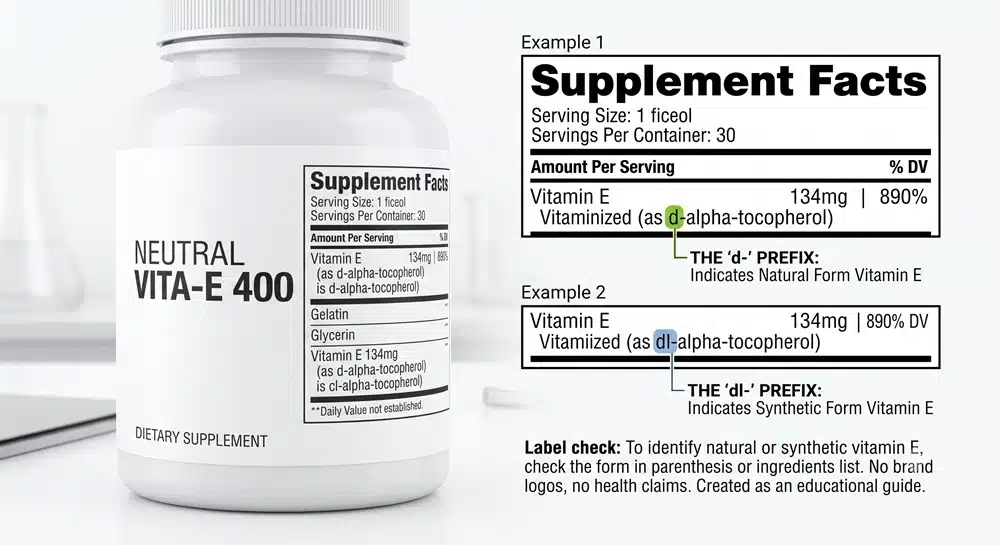
Cách nhanh nhất để nhận biết sự khác biệt là đọc tên thành phần.
Nói một cách đơn giản, ký hiệu “d” thường chỉ vitamin E có nguồn gốc tự nhiên, trong khi ký hiệu “dl” thường chỉ vitamin E tổng hợp. Tuy nhiên, các thương hiệu thực phẩm bổ sung không nên chỉ dựa vào những thông tin ghi trên nhãn dành cho người tiêu dùng. Trước khi mua, hãy luôn xác nhận chính xác dạng bào chế, phương pháp phân tích, hàm lượng hoạt chất, hệ thống mang, tình trạng chất gây dị ứng và Giấy chứng nhận phân tích (COA) của lô hàng.
Vitamin E tự nhiên là gì?
Vitamin E tự nhiên thường được chiết xuất từ các nguồn dầu thực vật và thường được cung cấp dưới dạng d-alpha-tocopherol, d-alpha tocopheryl acetate, d-alpha tocopheryl succinate hoặc hỗn hợp tocopherol. Trong sản xuất thực phẩm chức năng, nó có thể được cung cấp dưới dạng dầu, bột, viên nang nhỏ, bột vi nang hoặc hỗn hợp sẵn theo yêu cầu.
Vitamin E tự nhiên thường được lựa chọn cho các sản phẩm cần nhãn hiệu cao cấp, định vị nguồn gốc tự nhiên, thông điệp “nhãn sạch” hoặc hiệu lực cao hơn trên mỗi miligam hoạt tính alpha-tocopherol. Chất này thường được sử dụng trong viên nang mềm, thực phẩm bổ sung chống oxy hóa, công thức làm đẹp từ bên trong, thực phẩm bổ sung đa vitamin và các sản phẩm hỗ trợ lão hóa khỏe mạnh.
Vitamin E tổng hợp là gì?
Vitamin E tổng hợp thường được ghi trên nhãn là dl-alpha-tocopherol, dl-alpha tocopheryl acetate hoặc all-rac-alpha-tocopherol. Chất này được sử dụng rộng rãi trong các sản phẩm bổ sung dinh dưỡng, thực phẩm tăng cường dinh dưỡng, hỗn hợp sẵn, viên nén, kẹo dẻo và các công thức dành cho thị trường đại chúng vì nó có thể tiết kiệm chi phí hơn và dễ tiêu chuẩn hóa hơn cho một số ứng dụng cụ thể.
Vitamin E tổng hợp không phải lúc nào cũng “xấu”. Câu hỏi đúng đắn là liệu nó có phù hợp với thông tin ghi trên nhãn sản phẩm, mức giá mục tiêu, dạng bào chế, kỳ vọng của khách hàng và các yêu cầu pháp lý hay không. Đối với một số công thức, vitamin E tổng hợp có thể là một lựa chọn thiết thực; còn đối với các sản phẩm cao cấp được định vị là tự nhiên, vitamin E tự nhiên thường dễ giải thích hơn cho người tiêu dùng.
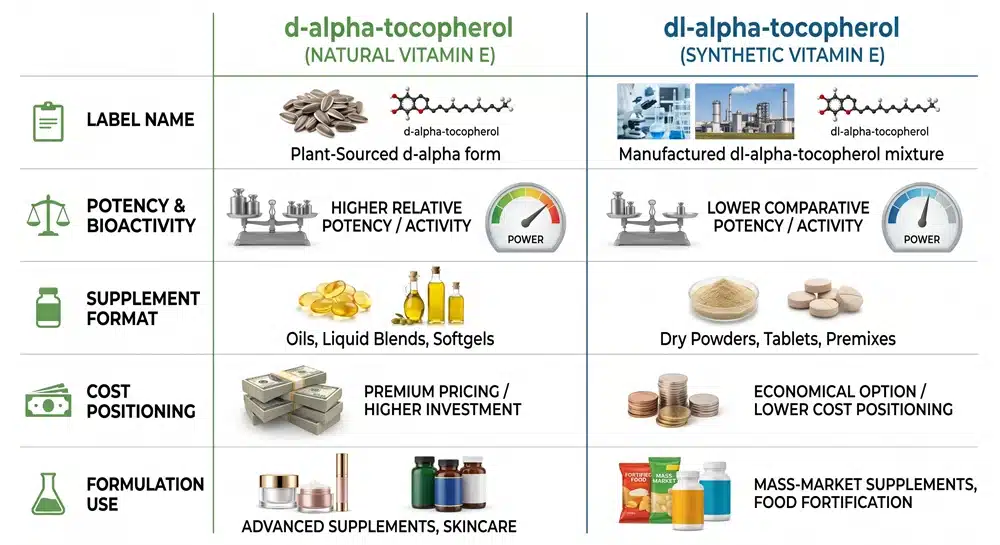
Bảng so sánh Vitamin E tự nhiên và Vitamin E tổng hợp
Vitamin E tự nhiên có tốt hơn vitamin E tổng hợp không?
Về nhãn mác dinh dưỡng và hàm lượng hoạt chất dành cho con người, alpha-tocopherol tự nhiên thường có hoạt tính cao hơn so với alpha-tocopherol tổng hợp tính theo trọng lượng. Đó là lý do tại sao nhiều sản phẩm thực phẩm chức năng cao cấp sử dụng d-alpha-tocopherol tự nhiên hoặc các dạng có nguồn gốc tự nhiên liên quan.
Tuy nhiên, khái niệm “tốt hơn” phụ thuộc vào từng trường hợp cụ thể. Đối với viên nang mềm cao cấp hoặc thực phẩm bổ sung giúp làm đẹp từ bên trong, vitamin E tự nhiên có thể giúp xây dựng câu chuyện sản phẩm thuyết phục hơn. Đối với viên nén, kẹo dẻo hoặc hỗn hợp pha sẵn có yêu cầu về chi phí, vitamin E tổng hợp vẫn có thể là một lựa chọn thực tế nếu hàm lượng vitamin E được công bố, hệ thống chất mang và các tài liệu chứng nhận chất lượng đều phù hợp.
Cách đọc nhãn sản phẩm bổ sung vitamin E
Người tiêu dùng và các đội ngũ thương hiệu có thể sử dụng nhãn này như một công cụ sàng lọc ban đầu:
- d-alpha-tocopherol thường chỉ vitamin E tự nhiên.
- RRR-alpha-tocopherol là tên gọi kỹ thuật về cấu trúc không gian của alpha-tocopherol tự nhiên.
- dl-alpha-tocopherol thường chỉ vitamin E tổng hợp.
- all-rac-alpha-tocopherol là tên gọi kỹ thuật của hỗn hợp alpha-tocopherol tổng hợp.
- Acetat tocopheryl hoặc tocopheryl succinate có thể là tự nhiên hoặc tổng hợp tùy thuộc vào nguồn gốc, do đó tiền tố và tài liệu của nhà cung cấp rất quan trọng.
Đối với các thương hiệu, việc rà soát nhãn mác cần được thực hiện trước khi đưa vào sản xuất thương mại. Cần xác nhận tên thành phần, dạng bào chế, hàm lượng, khẩu phần và thông tin dinh dưỡng trên nhãn mác với sự hỗ trợ về mặt quy định từ các chuyên gia có chuyên môn phù hợp với thị trường mục tiêu của bạn.
Các dạng vitamin E dùng trong sản xuất thực phẩm chức năng
Collagensei hỗ trợ việc tìm nguồn cung ứng các thành phần vitamin và phát triển sản phẩm hoàn chỉnh thông qua Sản xuất gia công vitamin, Sản xuất viên nang mềm, Sản xuất thực phẩm bổ sung dạng viên nang, Sản xuất thực phẩm chức năng dạng kẹo dẻo và Thực phẩm bổ sung mang nhãn hiệu riêng theo yêu cầu các dự án.
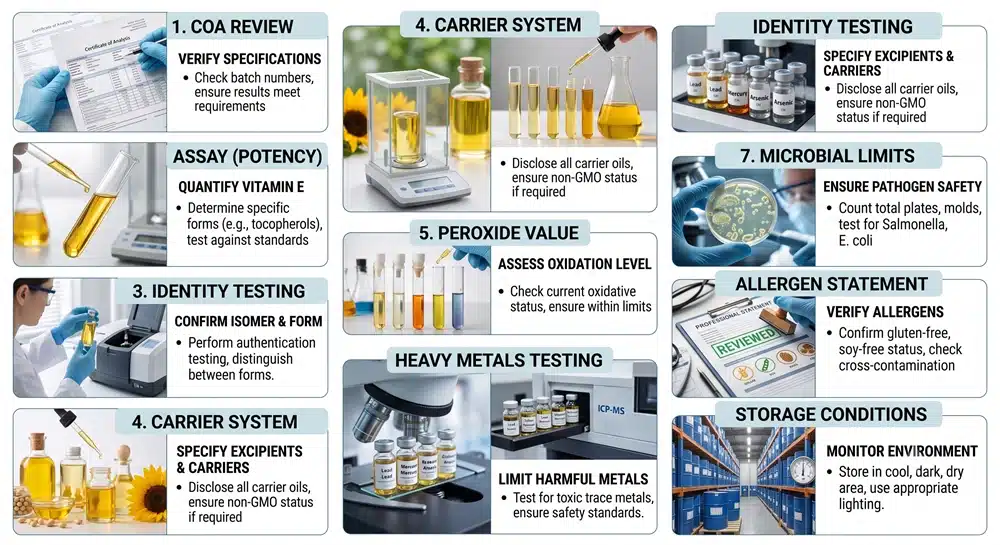
Các tiêu chuẩn chất lượng cần kiểm tra trước khi mua vitamin E
Trước khi lựa chọn vitamin E tự nhiên hay tổng hợp, các đội ngũ mua hàng nên yêu cầu cung cấp tài liệu về từng lô sản phẩm thay vì chỉ dựa vào các thông tin quảng cáo.
- Thông tin cá nhân: Xác nhận dạng d-alpha tự nhiên, dl-alpha tổng hợp, acetate, succinate, tocopherol hỗn hợp hoặc dạng premix.
- Phương pháp định lượng và độ mạnh: Xác nhận phương pháp thử nghiệm, việc chuyển đổi đơn vị và hoạt độ đã công bố.
- Hệ thống mang: Điều này rất quan trọng đối với các sản phẩm dạng bột, hạt nhỏ, hỗn hợp sẵn, kẹo dẻo và viên nén.
- Chỉ số peroxide và các biện pháp kiểm soát quá trình oxy hóa: Điều này rất quan trọng đối với vitamin E dạng dầu và các công thức viên nang mềm.
- Giới hạn về kim loại nặng và vi sinh vật: Xác nhận tính phù hợp với thị trường thực phẩm bổ sung mục tiêu.
- Thông tin về chất gây dị ứng và nguồn gốc: Điều này đặc biệt đúng khi vitamin E được chiết xuất từ đậu nành, hướng dương hoặc các nguồn dầu thực vật khác.
- Độ ổn định và bao bì: Kiểm tra các giả định về bảo vệ khỏi ánh sáng, tiếp xúc với oxy, nhiệt độ bảo quản và thời hạn sử dụng.
- Tài liệu quy định: Giấy chứng nhận nguồn gốc (COA), bảng thông số kỹ thuật, SDS/TDS, tuyên bố không chứa GMO và các tài liệu xuất khẩu (nếu có).
Để được hỗ trợ về tài liệu và kiểm thử theo lô, vui lòng tham khảo kiểm soát chất lượng thực phẩm bổ sung quy trình hoặc Liên hệ với chúng tôi để yêu cầu COA và thông tin chi tiết về thông số kỹ thuật.
Các vấn đề cần lưu ý về an toàn và thông tin trên nhãn sản phẩm
Vitamin E là một chất dinh dưỡng thiết yếu, nhưng nội dung về thực phẩm chức năng cần tránh trình bày vitamin E như một phương pháp điều trị, chữa khỏi hoặc phòng ngừa bệnh tật. Một bài viết về thực phẩm chức năng tuân thủ quy định có thể đề cập đến vai trò thông thường của vitamin E trong việc bảo vệ chống oxy hóa và chức năng tế bào, nhưng cần tránh đưa ra các tuyên bố liên quan đến bệnh tật, các tuyên bố phóng đại về tác dụng đối với da, các tuyên bố về phòng ngừa bệnh tim mạch hoặc các kết quả được đảm bảo, trừ khi đã được tư vấn pháp lý có chuyên môn về thị trường mục tiêu xem xét.
Việc bổ sung vitamin E với liều cao có thể không phù hợp với tất cả mọi người. Những người đang sử dụng thuốc chống đông máu hoặc thuốc ức chế tiểu cầu, mắc các rối loạn chảy máu, đang chuẩn bị phẫu thuật, đang mang thai hoặc cho con bú, hoặc có các vấn đề sức khỏe khác nên tham khảo ý kiến của chuyên gia y tế có chuyên môn trước khi sử dụng thực phẩm chức năng chứa vitamin E.
Các thương hiệu thực phẩm chức năng nên chọn loại Vitamin E nào?
Hãy sử dụng khung quyết định sau đây:
Câu hỏi thường gặp
D-alpha-tocopherol là chất tự nhiên hay tổng hợp?
D-alpha-tocopherol thường được dùng để chỉ alpha-tocopherol có nguồn gốc tự nhiên. Trong các tài liệu kỹ thuật, chất này còn có thể được gọi là RRR-alpha-tocopherol.
dl-alpha-tocopherol là chất tự nhiên hay tổng hợp?
Dl-alpha-tocopherol thường là vitamin E tổng hợp. Trong các bối cảnh kỹ thuật, chất này còn được gọi là all-rac-alpha-tocopherol.
Vitamin E tự nhiên có phải lúc nào cũng tốt hơn không?
Vitamin E tự nhiên có hoạt tính cao hơn trên mỗi mg so với alpha-tocopherol tổng hợp, nhưng thành phần phù hợp nhất phụ thuộc vào định vị sản phẩm, dạng bào chế, ngân sách, độ ổn định và các yêu cầu của thị trường mục tiêu.
Có thể sử dụng vitamin E tổng hợp trong các sản phẩm bổ sung không?
Đúng vậy. Vitamin E tổng hợp được sử dụng rộng rãi trong các sản phẩm thực phẩm chức năng và hỗn hợp sẵn. Các thương hiệu cần xác minh hàm lượng được công bố, nội dung ghi trên nhãn, các vấn đề liên quan đến an toàn và hồ sơ lô hàng.
Một thương hiệu thực phẩm chức năng nên yêu cầu những gì trước khi mua vitamin E?
Yêu cầu cung cấp Giấy chứng nhận xuất xứ (COA), bảng thông số kỹ thuật, SDS/TDS, phương pháp định lượng, thử nghiệm xác định thành phần, tuyên bố về nguồn gốc, tuyên bố về chất gây dị ứng, thông tin chi tiết về chất mang, giới hạn về kim loại nặng và vi sinh vật, cũng như thông tin về đóng gói và bảo quản.
Bạn cần trợ giúp trong việc lựa chọn nguyên liệu Vitamin E?
Nếu quý vị đang phát triển các sản phẩm bổ sung vitamin E dưới dạng viên nang mềm, viên nang, viên nén, kẹo dẻo, thực phẩm chức năng đa vitamin hoặc chất chống oxy hóa, Collagensei có thể hỗ trợ quý vị so sánh các dạng vitamin E tự nhiên và tổng hợp, đánh giá các phương án công thức, đồng thời cung cấp hỗ trợ tìm nguồn cung ứng trong lĩnh vực B2B. Liên hệ với đội ngũ của chúng tôi để yêu cầu báo giá, Giấy chứng nhận nguồn gốc (COA) hoặc trao đổi về công thức tùy chỉnh.
Tài liệu tham khảo
- Văn phòng Phụ gia Dinh dưỡng thuộc Viện Y tế Quốc gia Hoa Kỳ (NIH): Tờ thông tin về Vitamin E dành cho các chuyên gia y tế
- Văn phòng Phụ gia Dinh dưỡng thuộc Viện Y tế Quốc gia Hoa Kỳ (NIH): Tờ thông tin về Vitamin E dành cho người tiêu dùng
- Viện Linus Pauling: Vitamin E
- FDA: Câu hỏi và câu trả lời về thực phẩm chức năng
- FDA: Các tuyên bố về cấu trúc/chức năng
- FTC: Hướng dẫn tuân thủ đối với các sản phẩm chăm sóc sức khỏe

Warren Wan là một chuyên gia dày dạn với kinh nghiệm phong phú trong chuỗi cung ứng thực phẩm bổ sung, sở hữu kinh nghiệm thực tiễn sâu rộng trong nghiên cứu, phát triển, kiểm soát quy trình và tìm nguồn cung ứng toàn cầu các thành phần cốt lõi như peptit collagen, protein từ nước hầm xương và keratin. Với tư cách là tác giả của chuyên mục này, ông cam kết loại bỏ những lớp bao bọc tiếp thị, biến những kiến thức khoa học phức tạp về thành phần và các tiêu chuẩn kiểm soát chất lượng sản xuất thành những nội dung phổ biến khoa học dễ hiểu nhưng sâu sắc, giúp độc giả hiểu rõ sự thật đằng sau các nhãn mác và đưa ra những lựa chọn sức khỏe hợp lý hơn.


