
ビタミンEは単一の成分ではありません。これは脂溶性化合物の総称であり、人間の栄養においてビタミンEの作用に最も直接的に関与するのはα-トコフェロールです。完成品のサプリメントにおいて、「天然」と「 合成ビタミン Eは単なるマーケティング上の細部にとどまらず、表示効能、成分の位置づけ、有効成分1単位あたりのコスト、製剤形態、そして消費者の認識にも影響を及ぼします。.
B2Bバイヤー向けに、本ガイドでは、ソフトジェル、カプセル、錠剤、グミ、マルチビタミン、栄養パウダー、およびカスタムプライベートブランド製品において、天然ビタミンEと合成ビタミンEを比較する方法について解説しています。貴社のチームがビタミン原料の調達を行っている場合は、当社の ビタミン原料の卸売業者 ページ、, 天然ビタミンEのメーカー ページと 合成ビタミンEのメーカー ページ。.
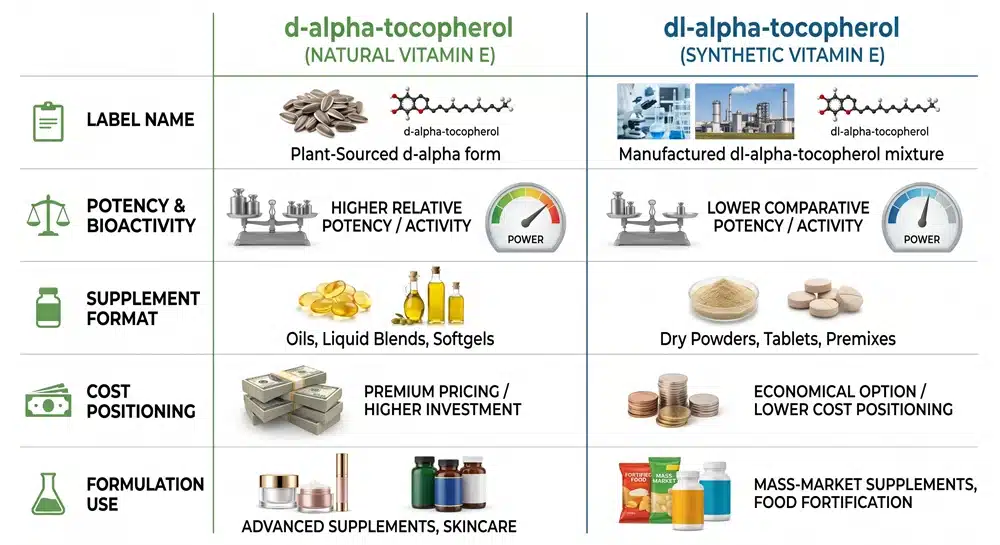
天然ビタミンEと合成ビタミンE:主な違い
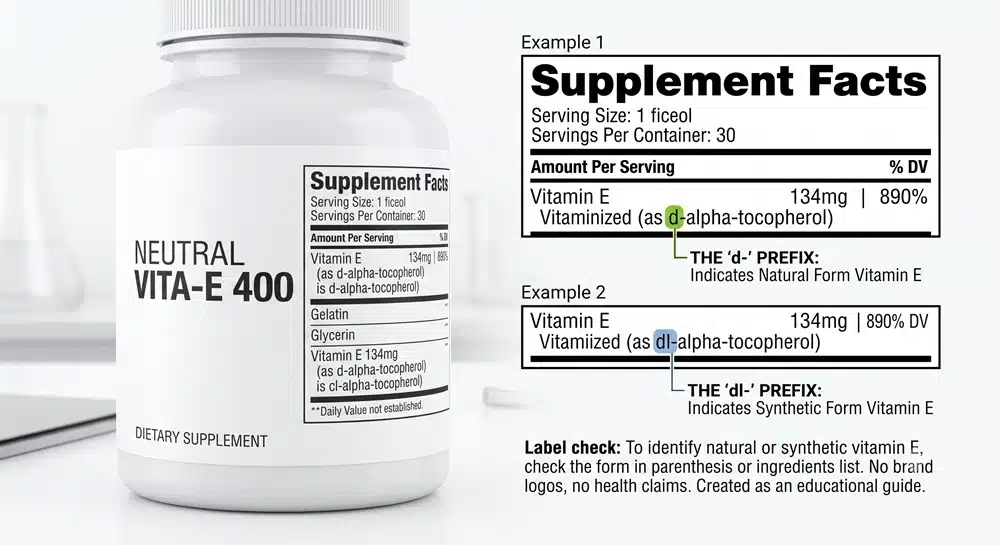
その違いを見分ける最も手っ取り早い方法は、原材料名を確認することです。.
簡単に言えば、「d-」は通常、天然由来のビタミンEを指し、「dl-」は通常、合成ビタミンEを指します。しかし、サプリメントのブランドは、消費者向けの表記だけに頼ってはいけません。購入前には、必ず正確な形態、分析方法、含有量、キャリアシステム、アレルゲン情報、およびロットごとの分析証明書(COA)を確認してください。.
天然ビタミンEとは何ですか?
天然ビタミンEは通常、植物油を原料として得られ、d-α-トコフェロール、d-α-トコフェリルアセテート、d-α-トコフェリルサクシネート、あるいは混合トコフェロールとして供給されるのが一般的です。サプリメントの製造においては、オイル、粉末、ビードレット、マイクロカプセル化粉末、あるいは特注のプレミックスとして供給される場合があります。.
天然ビタミンEは、プレミアムなイメージを打ち出す製品、天然由来をアピールする製品、クリーンラベルを謳う製品、あるいはα-トコフェロール活性量あたりの効能を高めたい製品に、しばしば選ばれます。ソフトジェル、抗酸化サプリメント、内側から美しさを引き出す製品、マルチビタミン、健康的なエイジングケア製品などに広く使用されています。.
合成ビタミンEとは何ですか?
合成ビタミンEは、一般的にdl-α-トコフェロール、dl-α-トコフェリルアセテート、またはall-rac-α-トコフェロールと表示されています。 特定の用途において、コスト効率が高く、規格管理が容易であるため、栄養補助食品、栄養強化食品、プレミックス、錠剤、グミ、および一般向け製品に広く使用されています。.
合成ビタミンEが必ずしも「悪い」というわけではありません。重要なのは、それが製品の表示内容、コスト目標、剤形、消費者の期待、および規制要件に合致しているかどうかです。一部の製品では、合成ビタミンEが実用的な選択肢となり得ますが、プレミアムで「天然由来」を謳う製品の場合、通常は天然ビタミンEの方が消費者に対して説明しやすくなります。.
天然ビタミンEと合成ビタミンEの比較表
天然のビタミンEは、合成のビタミンEよりも優れているのでしょうか?
人間の栄養表示や有効成分の含有量という点では、天然のα-トコフェロールは一般的に、重量比で合成α-トコフェロールよりも活性が高い。そのため、多くの高級サプリメントでは、天然のd-α-トコフェロールや、それに類する天然由来の形態が使用されている。.
ただし、「どちらが優れているか」は用途によって異なります。高級なソフトジェルや「内側から美しさを育む」サプリメントの場合、天然ビタミンEを採用することで、製品の訴求力を高めることができるでしょう。一方、コスト重視の錠剤、グミ、プレミックスの場合、表示されるビタミンEの含有量、担体システム、品質に関する文書が適切であれば、合成ビタミンEも依然として実用的な選択肢となり得ます。.
ビタミンEサプリメントの表示の読み方
消費者やブランド担当者は、このラベルを最初の選別ツールとして活用できます:
- d-α-トコフェロール 通常、天然のビタミンEを指します。.
- RRR-α-トコフェロール は、天然のα-トコフェロールの技術的な立体化学名である。.
- dl-α-トコフェロール 通常、合成ビタミンEを指します。.
- all-rac-α-トコフェロール は、合成α-トコフェロール混合物の学名である。.
- 酢酸トコフェリル または トコフェリルコハク酸 原料の由来によって天然由来のものもあれば合成由来のものもあるため、接頭辞や供給元の資料が重要となります。.
ブランドにとっては、ラベルの確認は商業生産の前に実施すべきです。対象市場における適切な規制上のサポートを得て、成分名、形態、含有量、1回分の摂取量、および栄養成分表示を確認してください。.
サプリメント製造用のビタミンEの形態
Collagenseiは、以下の取り組みを通じて、ビタミン原料の調達および完成品の開発を支援しています。 ビタミン受託製造, ソフトジェルカプセルの製造, カプセル・サプリメント製造, グミサプリ製造 そして カスタムプライベートブランドサプリメント プロジェクト。.
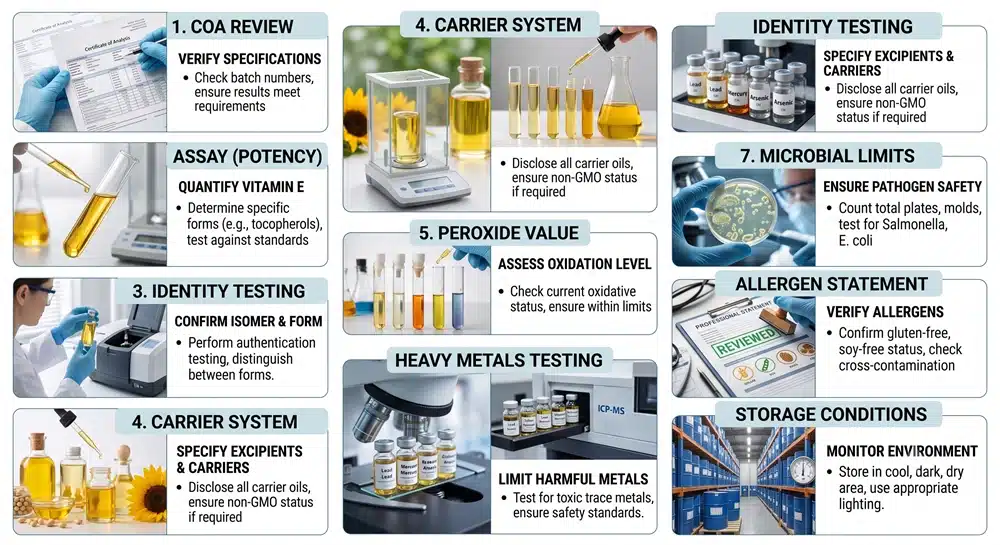
ビタミンEを購入する前に確認すべき品質基準
天然または合成のビタミンEを選定する前に、調達チームは、マーケティング資料だけに頼るのではなく、ロット単位の書類の提出を求めるべきである。.
- アイデンティティ 天然d-α、合成dl-α、酢酸エステル、コハク酸エステル、混合トコフェロール、またはプレミックス形態であることを確認してください。.
- 分析および効力: 試験方法、単位換算、および申告された活度を確認してください。.
- キャリアシステム: 粉末、ビーズ、プレミックス、グミ、錠剤において重要です。.
- 過酸化物価および酸化制御: 油性ビタミンEおよびソフトジェル製剤において重要です。.
- 重金属および微生物の基準値: 対象となるサプリメント市場への適合性を確認する。.
- アレルゲンおよび原産地に関する表示: 特に、ビタミンEが大豆、ひまわり、その他の植物油由来である場合に当てはまります。.
- 安定性と包装: 光遮断、酸素への曝露、保管温度、および保存期間に関する前提条件を確認してください。.
- 規制関連文書: COA、仕様書、SDS/TDS、非遺伝子組み換え証明書、および必要に応じて輸出関連書類。.
バッチに関するドキュメントやテストのサポートについては、当社の サプリメント品質管理 プロセス、または お問い合わせ COAおよび仕様書の詳細についてお問い合わせください。.
安全性および表示に関する考慮事項
ビタミンEは必須栄養素ですが、サプリメントに関する記事では、ビタミンEを病気の治療、治癒、または予防として提示することは避けるべきです。規制に準拠したサプリメント記事では、抗酸化作用や細胞機能におけるビタミンEの通常の役割について言及することは可能ですが、対象市場に関する有資格の規制顧問による審査を受けない限り、病気に関する効能表示、誇張された肌への効果に関する表示、心臓病の予防に関する表示、あるいは結果を保証するような表現は避けるべきです。.
高用量のビタミンEサプリメントは、すべての人に適しているとは限りません。抗凝固薬や抗血小板薬を服用している方、出血性疾患のある方、手術を控えている方、妊娠中または授乳中の方、あるいは何らかの疾患をお持ちの方は、ビタミンEサプリメントを使用する前に、資格を持つ医療専門家に相談してください。.
サプリメントブランドはどのビタミンEを選ぶべきか?
以下の意思決定の枠組みを活用してください:
よくあるご質問
d-α-トコフェロールは天然由来のものですか、それとも合成のものですか?
D-α-トコフェロールは、一般的に天然由来のα-トコフェロールを指す用語として用いられます。技術文書では、RRR-α-トコフェロールと呼ばれることもあります。.
dl-α-トコフェロールは天然由来のものですか、それとも合成のものですか?
DL-α-トコフェロールは、一般的に合成ビタミンEを指します。技術的な文脈では、オール-ラッ-α-トコフェロールとも呼ばれます。.
天然のビタミンEは、必ずしも良いものなのでしょうか?
天然ビタミンEは、合成α-トコフェロールよりも1mgあたりの活性が高いですが、最適な成分は、製品のポジショニング、剤形、予算、安定性、およびターゲット市場の要件によって異なります。.
合成ビタミンEはサプリメントに使用できますか?
はい。合成ビタミンEは、サプリメントやプレミックスに広く使用されています。各ブランドは、表示されている有効成分量、ラベルの記載内容、安全上の考慮事項、およびロットに関する文書を確認する必要があります。.
サプリメントブランドは、ビタミンEを購入する前に何を確認すべきでしょうか?
COA、仕様書、SDS/TDS、定量分析法、同定試験、原産地証明書、アレルゲン表示、担体に関する詳細、重金属および微生物の許容限度、ならびに包装・保管に関する情報を請求してください。.
ビタミンEの原料選びでお困りですか?
ビタミンEのソフトジェル、カプセル、錠剤、グミ、マルチビタミン、または抗酸化サプリメントの開発をお考えの場合、Collagenseiは、天然および合成のビタミンEの比較、配合オプションの検討、ならびにB2B調達支援をご提供いたします。. 弊社チームまでお問い合わせください お見積り、COA、またはカスタム配合に関するご相談をご希望の場合は。.
参考文献
- NIH 栄養補助食品局:医療従事者向けビタミンEファクトシート
- NIH 栄養補助食品局:消費者向けビタミンEファクトシート
- ライナス・ポーリング研究所:ビタミンE
- FDA:栄養補助食品に関するQ&A
- FDA:構造・機能に関する主張
- FTC:健康関連製品のコンプライアンスに関するガイダンス

ウォーレン・ワン氏は、栄養補助食品のサプライチェーンにおいて豊富な経験を持つベテランの専門家であり、コラーゲンペプチド、骨スープ由来タンパク質、ケラチンといった主要成分の研究、開発、工程管理、およびグローバルな調達において、豊富な実務経験を有しています。 本コラムの執筆者として、彼はマーケティング的な装いを剥ぎ取り、難解な成分科学や製造品質管理基準を、分かりやすい本格的な科学普及記事へと変換することに尽力しています。これにより、読者がラベルの裏にある真実を理解し、より合理的な健康に関する選択を行えるよう支援しています。.


