
فيتامين E ليس مكونًا واحدًا. إنه مجموعة من المركبات القابلة للذوبان في الدهون، ويُعد ألفا-توكوفيرول الشكل الذي يُستخدم بشكل مباشر أكثر من غيره لتوفير فوائد فيتامين E في التغذية البشرية. وفي المكملات الغذائية الجاهزة، يتمثل الاختلاف في الملصق بين «الطبيعي» و فيتامين صناعي يُعد الحرف «E» أكثر من مجرد تفصيل تسويقي: فهو يؤثر على الفعالية المعلنة، وترتيب المكونات، وتكلفة الوحدة الفعالة، وشكل التركيبة، وتصور المستهلك.
بالنسبة للمشترين في قطاع الأعمال بين الشركات (B2B)، يشرح هذا الدليل كيفية مقارنة فيتامين E الطبيعي والاصطناعي في المنتجات مثل الكبسولات اللينة، والكبسولات، والأقراص، والعلكات، والفيتامينات المتعددة، ومساحيق التغذية، والتركيبات المخصصة ذات العلامات التجارية الخاصة. إذا كان فريقك يعمل على توريد المواد الخام للفيتامينات، فيمكنك أيضًا الاطلاع على مورد مكونات الفيتامينات بالجملة الصفحة،, شركة مصنعة لفيتامين E الطبيعي الصفحة و شركة مصنعة لفيتامين E الصناعي الصفحة.
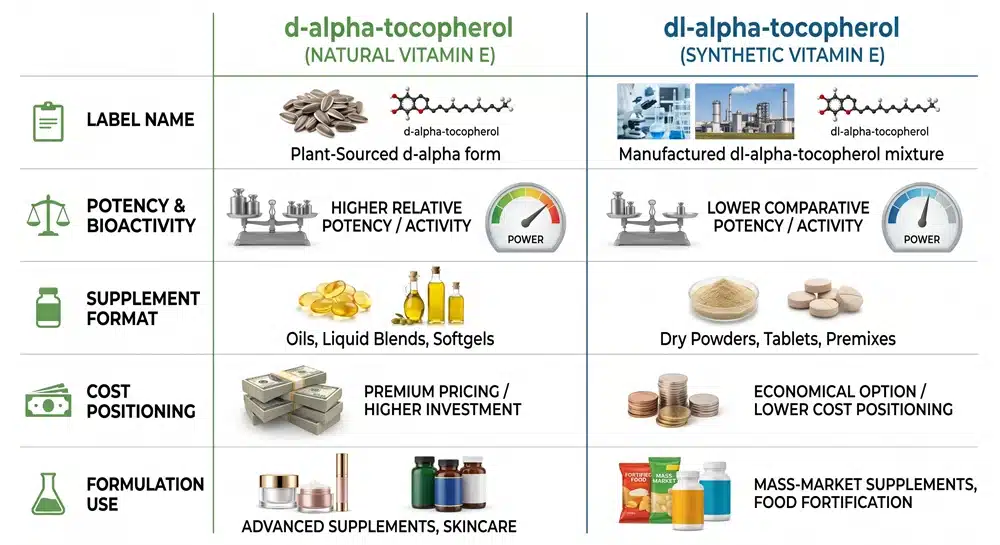
فيتامين هـ الطبيعي مقابل فيتامين هـ الصناعي: الفرق الرئيسي
أسرع طريقة للتعرف على الفرق هي قراءة اسم المكون.
بعبارات بسيطة، يشير الحرف «d» عادةً إلى فيتامين E من مصادر طبيعية، بينما يشير الحرف «dl» عادةً إلى فيتامين E الاصطناعي. ومع ذلك، يجب ألا تعتمد العلامات التجارية للمكملات الغذائية على الصياغة الموجهة للمستهلكين وحدها. لذا، يجب دائمًا التأكد من الشكل الدقيق، وطريقة التحليل، وقوة الفعالية، ونظام الناقل، وحالة مسببات الحساسية، وشهادة تحليل الدفعة (COA) قبل الشراء.
ما هو فيتامين E الطبيعي؟
يُستخلص فيتامين E الطبيعي عادةً من مصادر الزيوت النباتية، ويُوفَّر عادةً في صورة د-ألفا-توكوفيرول، أو أسيتات د-ألفا-توكوفيريل، أو سكسينات د-ألفا-توكوفيريل، أو مزيج من التوكوفيرولات. وفي صناعة المكملات الغذائية، قد يُوفَّر في صورة زيت، أو مسحوق، أو حبيبات صغيرة، أو مسحوق مغلف في كبسولات دقيقة، أو خليط جاهز حسب الطلب.
غالبًا ما يتم اختيار فيتامين E الطبيعي للمنتجات التي تتطلب علامة تجارية فاخرة، أو تسويقًا على أساس المصدر الطبيعي، أو سردًا قصصيًا يركز على «الملصق النظيف»، أو فعالية أعلى لكل ملليغرام من نشاط ألفا-توكوفيرول. ويُستخدم عادةً في الكبسولات اللينة، والمكملات الغذائية المضادة للأكسدة، وتركيبات «الجمال من الداخل»، والفيتامينات المتعددة، ومنتجات الشيخوخة الصحية.
ما هو فيتامين هـ الاصطناعي؟
يُشار إلى فيتامين E الاصطناعي عادةً باسم dl-ألفا-توكوفيرول، أو أسيتات dl-ألفا-توكوفيريل، أو all-rac-ألفا-توكوفيرول. ويُستخدم على نطاق واسع في المكملات الغذائية، والأغذية المُعززة، والمخاليط الجاهزة، والأقراص، والعلكات، والتركيبات المخصصة للسوق الشامل، لأنه يمكن أن يكون أكثر فعالية من حيث التكلفة وأسهل في توحيد مواصفاته بالنسبة لتطبيقات معينة.
فيتامين E الاصطناعي ليس “سيئًا” بالضرورة. والسؤال الصحيح هو ما إذا كان يتوافق مع الادعاءات المذكورة على ملصق المنتج، والهدف المحدد للتكلفة، وشكل الجرعة، وتوقعات العملاء، والمتطلبات التنظيمية. بالنسبة لبعض التركيبات، يمكن أن يكون فيتامين E الاصطناعي خيارًا عمليًّا؛ أما بالنسبة للمنتجات الفاخرة التي تُروَّج على أنها طبيعية، فعادةً ما يكون فيتامين E الطبيعي أسهل في شرحه للمستهلكين.
جدول مقارنة بين فيتامين هـ الطبيعي والاصطناعي
هل فيتامين E الطبيعي أفضل من فيتامين E الصناعي؟
For human nutrition labeling and potency, natural alpha-tocopherol is generally more active by weight than synthetic alpha-tocopherol. That is why many premium supplements use natural d-alpha-tocopherol or related natural-source forms.
However, “better” depends on the use case. For a premium softgel or beauty-from-within supplement, natural vitamin E may support a stronger product story. For a cost-sensitive tablet, gummy or premix, synthetic vitamin E may still be a practical option if the declared vitamin E amount, carrier system and quality documentation are appropriate.
كيفية قراءة ملصق مكمل فيتامين هـ
Consumers and brand teams can use the label as a first screening tool:
- د-ألفا توكوفيرول د-ألفا توكوفيرول usually indicates natural vitamin E.
- RRR-ألفا-توكوفيرول is the technical stereochemical name for natural alpha-tocopherol.
- د-ألفا توكوفيرول د-ألفا توكوفيرول usually indicates synthetic vitamin E.
- الراسي-ألفا-توكوفيرول is the technical name for synthetic alpha-tocopherol mixture.
- Tocopheryl acetate أو tocopheryl succinate may be natural or synthetic depending on the source, so the prefix and supplier documentation matter.
For brands, label review should happen before commercial production. Confirm the ingredient name, form, potency, serving size and Supplement Facts declaration with qualified regulatory support for your target market.
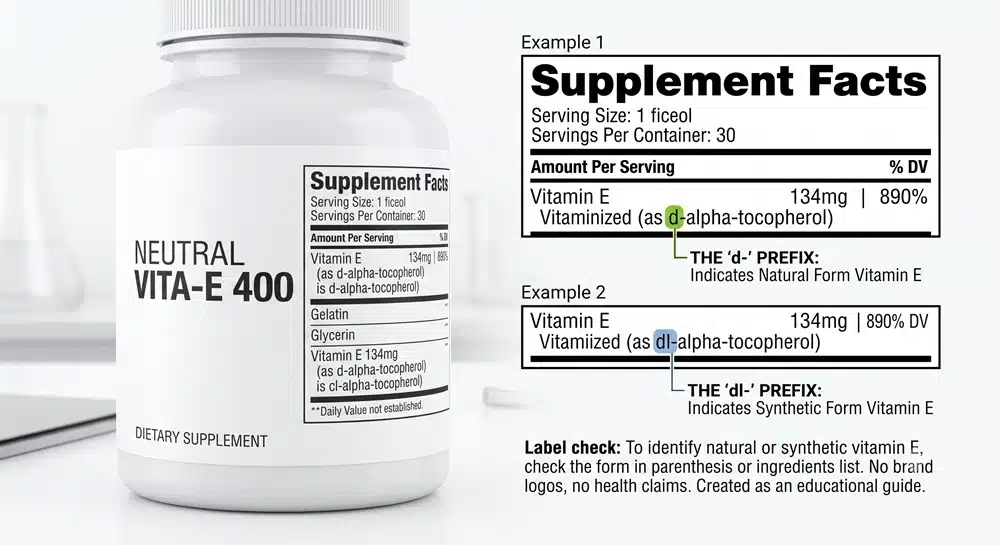
أشكال فيتامين E المستخدمة في تصنيع المكملات الغذائية
Collagensei supports vitamin ingredient sourcing and finished product development through التصنيع التعاقدي للفيتامينات, تصنيع كبسولات الجيل اللينة, تصنيع المكملات الغذائية بالكبسولات, تصنيع المكملات الغذائية الصمغية و ملحق العلامة الخاصة المخصص projects.
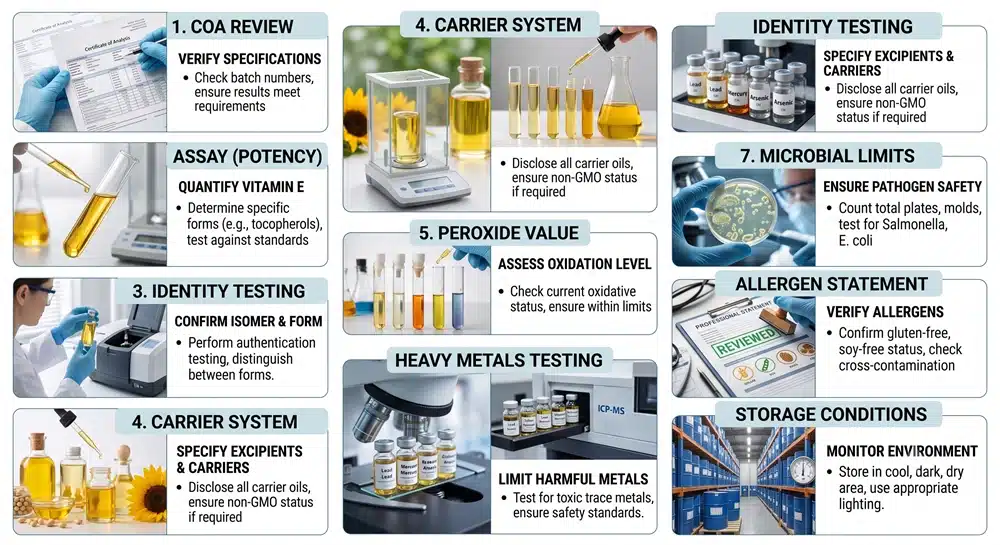
مواصفات الجودة التي يجب التحقق منها قبل شراء فيتامين هـ
Before choosing natural or synthetic vitamin E, procurement teams should ask for batch-level documentation rather than relying only on marketing copy.
- الهوية: Confirm natural d-alpha, synthetic dl-alpha, acetate, succinate, mixed tocopherol or premix form.
- Assay and potency: Confirm the testing method, unit conversion and declared activity.
- Carrier system: Important for powders, beadlets, premixes, gummies and tablets.
- Peroxide value and oxidation controls: Important for oil-based vitamin E and softgel formulas.
- Heavy metals and microbial limits: Confirm suitability for the target supplement market.
- Allergen and source statements: Especially relevant when the vitamin E is derived from soy, sunflower or other vegetable oil sources.
- Stability and packaging: Check light protection, oxygen exposure, storage temperature and shelf-life assumptions.
- Regulatory documentation: COA, specification sheet, SDS/TDS, non-GMO statement and export documents where applicable.
For batch documentation and testing support, review our مراقبة جودة المكملات الغذائية process or اتصل بنا to request COA and specification details.
اعتبارات تتعلق بالسلامة والادعاءات الواردة على الملصقات
Vitamin E is an essential nutrient, but supplement content should avoid presenting vitamin E as a treatment, cure or prevention for disease. A compliant supplement article can discuss vitamin E’s normal role in antioxidant protection and cell function, but disease claims, exaggerated skin claims, heart disease prevention claims or guaranteed outcomes should be avoided unless reviewed by qualified regulatory counsel for the target market.
High-dose vitamin E supplements may not be suitable for everyone. People who use anticoagulant or antiplatelet medications, have bleeding disorders, are preparing for surgery, are pregnant or breastfeeding, or have a medical condition should consult a qualified healthcare professional before using vitamin E supplements.
ما هو نوع فيتامين E الذي ينبغي أن تختاره العلامات التجارية للمكملات الغذائية؟
Use the following decision framework:
الأسئلة الشائعة
هل د-ألفا-توكوفيرول مادة طبيعية أم اصطناعية؟
D-alpha-tocopherol is generally used to describe natural-source alpha-tocopherol. In technical documents, it may also be called RRR-alpha-tocopherol.
هل مادة dl-ألفا-توكوفيرول طبيعية أم اصطناعية؟
Dl-alpha-tocopherol is generally synthetic vitamin E. It is also referred to as all-rac-alpha-tocopherol in technical contexts.
هل فيتامين E الطبيعي أفضل دائمًا؟
Natural vitamin E has higher activity per mg than synthetic alpha-tocopherol, but the best ingredient depends on product positioning, dosage form, budget, stability and target market requirements.
هل يمكن استخدام فيتامين E الصناعي في المكملات الغذائية؟
Yes. Synthetic vitamin E is widely used in supplements and premixes. Brands should confirm declared potency, label wording, safety considerations and batch documentation.
ما الذي يجب أن تطلبه العلامة التجارية للمكملات الغذائية قبل شراء فيتامين هـ؟
Request the COA, specification sheet, SDS/TDS, assay method, identity test, source statement, allergen statement, carrier details, heavy metals and microbial limits, and packaging/storage information.
هل تحتاج إلى مساعدة في اختيار مكون فيتامين E؟
If you are developing a vitamin E softgel, capsule, tablet, gummy, multivitamin or antioxidant supplement, Collagensei can help compare natural and synthetic vitamin E forms, review formulation options, and provide B2B sourcing support. اتصل بفريقنا to request a quotation, COA or custom formulation discussion.
المراجع
- NIH Office of Dietary Supplements: Vitamin E Fact Sheet for Health Professionals
- NIH Office of Dietary Supplements: Vitamin E Fact Sheet for Consumers
- Linus Pauling Institute: Vitamin E
- إدارة الغذاء والدواء الأمريكية (FDA): أسئلة وأجوبة حول المكملات الغذائية
- إدارة الغذاء والدواء الأمريكية (FDA): الادعاءات المتعلقة بالبنية والوظيفة
- لجنة التجارة الفيدرالية (FTC): إرشادات الامتثال الخاصة بالمنتجات الصحية

وارن وان خبير متمرس يتمتع بخبرة واسعة في سلسلة توريد المكملات الغذائية، ولديه خبرة عملية غنية في مجالات البحث والتطوير ومراقبة العمليات والتوريد العالمي للمكونات الأساسية مثل ببتيدات الكولاجين وبروتين مرق العظام والكيراتين. وبصفته كاتب هذه الزاوية، يكرس جهوده لتجريد الموضوعات من غلافها التسويقي، وتحويل العلوم الغامضة المتعلقة بالمكونات ومعايير مراقبة جودة الإنتاج إلى معلومات علمية متعمقة وسهلة الفهم، مما يساعد القراء على فهم الحقيقة الكامنة وراء الملصقات واتخاذ خيارات صحية أكثر عقلانية.


