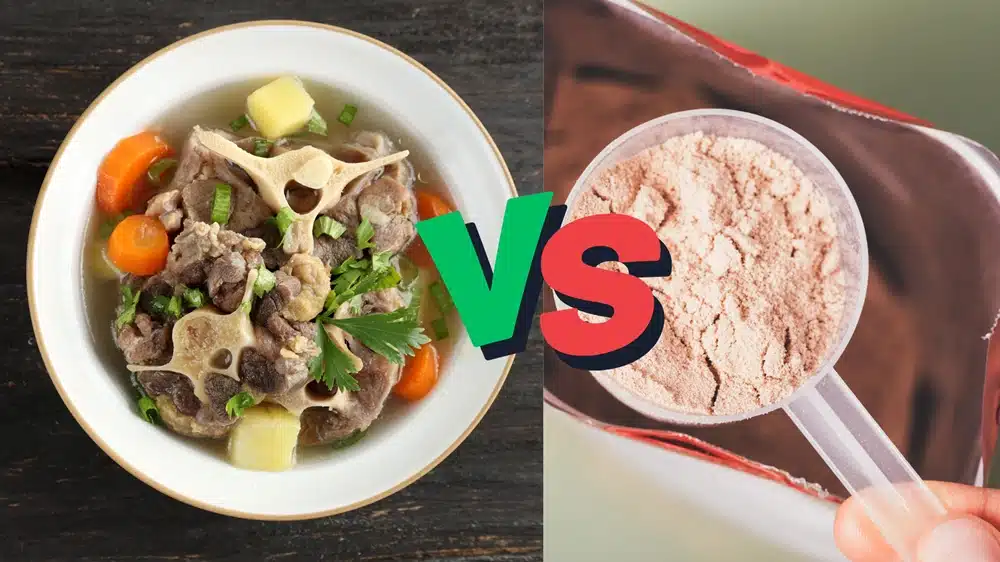

Respuesta rápida
El colágeno de origen animal suele ser la mejor opción si lo que buscas son péptidos de colágeno auténticos con una base científica más sólida para el cuidado de la piel, las articulaciones, los huesos y el tejido conectivo.
El colágeno vegano suele ser la mejor opción si evitas los ingredientes de origen animal y quieres favorecer la producción propia de colágeno de tu organismo con nutrientes como la vitamina C, los aminoácidos, los minerales y los antioxidantes.
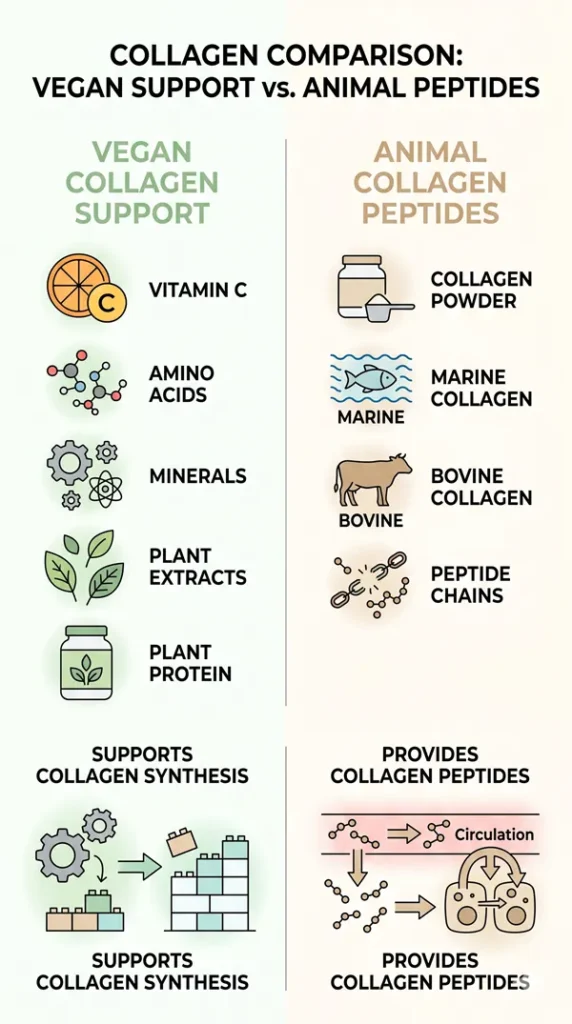
Sin embargo, la mayoría de los productos veganos de colágeno no contienen auténtico colágeno. Por lo general, son productos que favorecen la producción de colágeno o fórmulas para reforzar el colágeno. El colágeno de origen animal aporta péptidos de colágeno. El colágeno vegano suele favorecer la síntesis de colágeno. Las nuevas tecnologías de colágeno biomimético o derivado de la fermentación podrían convertirse en la próxima generación de colágeno sin origen animal, pero deben evaluarse producto por producto.
Para los consumidores, la mejor opción depende de sus preferencias alimentarias, de los objetivos que persigan en cuanto a la piel o las articulaciones, y de sus expectativas.
En el caso de las marcas de complementos alimenticios, la mejor opción depende de la propiedad que se quiera destacar, la forma farmacéutica, la procedencia de las materias primas, el marco normativo del mercado y el posicionamiento del producto.
Introducción: La verdadera cuestión no es simplemente “vegano o animal”
El colágeno se ha convertido en uno de los ingredientes más populares en los suplementos para la belleza, la salud de las articulaciones, la nutrición deportiva y el envejecimiento saludable. Desde el colágeno marino en polvo hasta las cápsulas de colágeno bovino y las opciones veganas gominolas de colágeno, la categoría sigue creciendo.
Pero a medida que el mercado crece, hay una pregunta que surge una y otra vez:
¿Es el colágeno vegano mejor que el colágeno de origen animal?
La respuesta sincera es: depende de lo que entiendas por “colágeno”.”
El colágeno de origen animal suele referirse a péptidos de colágeno hidrolizados procedentes de materiales bovinos, marinos, porcinos o avícolas. Estos productos contienen péptidos auténticos derivados del colágeno.
Sin embargo, el colágeno vegano no suele contener colágeno. La mayoría de los productos de colágeno vegano se describen mejor como «potenciadores del colágeno». Aportan nutrientes que ayudan al organismo a producir y proteger su propio colágeno.
Esa diferencia es importante.
Para los consumidores, esto influye en el tipo de resultados que pueden esperar razonablemente.
En el caso de las marcas de complementos alimenticios, esto afecta a la formulación, las declaraciones en la etiqueta, el origen de los ingredientes, la documentación, la forma farmacéutica y la confianza de los consumidores.
Esta guía compara el colágeno vegano y el de origen animal desde ambas perspectivas. Está dirigida a los consumidores habituales que buscan una respuesta clara, pero también ofrece a las marcas de complementos alimenticios, a los formuladores, a los compradores de ingredientes y a los desarrolladores de productos un marco más sólido para la toma de decisiones.
Si todavía estás comparando diferentes fuentes de colágeno, quizá te interese leer nuestra guía sobre compare los péptidos de colágeno por fuente y tipo.
El colágeno vegano frente al de origen animal: resumen
| Factor | Colágeno de origen animal | Colágeno vegano |
|---|---|---|
| ¿Contiene colágeno auténtico? | Sí | Normalmente no |
| Función principal | Aporta péptidos derivados del colágeno | Favorece la producción de colágeno del propio organismo |
| Fuentes habituales | Bovino, marino, porcino, avícola | Vitamina C, aminoácidos, minerales, extractos vegetales, proteínas vegetales |
| Lo mejor para | La elasticidad de la piel, apoyo conjunto, tejido conjuntivo, envejecimiento activo | Belleza vegana, bienestar a base de plantas, apoyo al colágeno |
| Nivel de evidencia | Más consolidado | Más específico sobre el producto |
| Formatos habituales | Polvos, sobres, bebidas, cápsulas, gominolas | Cápsulas, gominolas, polvos, comprimidos, sobres |
| Principal motivo de preocupación | Origen animal, alérgenos, abastecimiento, sostenibilidad | Etiquetado engañoso, menor solidez de las pruebas sobre los péptidos de colágeno |
| Ventaja B2B | Un gran reconocimiento por parte de los consumidores y un posicionamiento claro del colágeno | Posicionamiento vegano, libre de crueldad animal, con etiqueta limpia y sin ingredientes de origen animal |
| Reto B2B | Documentación sobre el origen, los alérgenos y los requisitos religiosos | Exactitud de las afirmaciones, adecuación de la dosis, educación del consumidor |
¿Qué es el colágeno de origen animal?
El colágeno de origen animal es aquel que se extrae de los tejidos conectivos de los animales, como la piel, los huesos, el cartílago, las pieles, las escamas o la piel de pescado. En los complementos alimenticios, suele procesarse para convertirlo en péptidos de colágeno hidrolizados.
La hidrólisis descompone las largas cadenas proteicas del colágeno en péptidos más pequeños. Esto mejora la solubilidad y facilita el uso del colágeno en polvos, bebidas, sobres, cápsulas, gominolas y alimentos funcionales.
Entre las fuentes habituales de colágeno de origen animal se encuentran:
- Colágeno bovino, normalmente de piel de vaca o de tejido conectivo bovino
- Colágeno marino, normalmente procedente de la piel, las escamas o los subproductos del pescado
- Colágeno porcino, normalmente procedente de piel de cerdo o de tejido conectivo
- Colágeno de pollo, que se utiliza a menudo en el colágeno de tipo II y en las fórmulas para el cuidado de las articulaciones
El colágeno animal es naturalmente rico en glicina, prolina e hidroxiprolina. Estos aminoácidos están estrechamente relacionados con la estructura del colágeno.
Para los consumidores, el colágeno de origen animal es la forma más directa de complementar la ingesta de péptidos de colágeno.
Para las marcas, el colágeno animal ofrece un posicionamiento claro en el mercado en lo que respecta a productos relacionados con la belleza desde dentro, la elasticidad de la piel, el bienestar articular, la salud ósea, la recuperación deportiva y el envejecimiento activo.
Para comprender cómo se procesan y se utilizan los péptidos de colágeno, consulta nuestra guía sobre péptidos de colágeno hidrolizados.
¿Qué es el colágeno vegano?
El término “colágeno vegano” puede resultar confuso, ya que las plantas no producen colágeno de forma natural. El colágeno es una proteína estructural de origen animal que se encuentra en la piel, los huesos, los cartílagos, los tendones, los ligamentos y el tejido conectivo.
La mayoría de los productos veganos de colágeno se clasifican en tres categorías diferentes.
1. Productos veganos para estimular la producción de colágeno
Estos productos no contienen colágeno. En cambio, aportan nutrientes que ayudan al organismo a producir colágeno de forma natural.
Entre los ingredientes más habituales se encuentran:
- Vitamina C
- Zinc
- Cobre
- Sílice
- Glicina
- Proline
- Lisina
- Polifenoles vegetales
- Extractos antioxidantes
- Proteínas vegetales o mezclas de aminoácidos
Para los consumidores, los suplementos veganos para estimular la producción de colágeno pueden resultar útiles si se busca una forma de origen vegetal de favorecer la síntesis de colágeno.
Para las marcas, esta categoría resulta ideal para posicionar productos de belleza veganos, productos de bienestar con etiquetas limpias, salud femenina, envejecimiento saludable y suplementos de origen vegetal.
Sin embargo, el etiquetado debe ser claro. “Suplemento de colágeno vegano” o “potenciador de colágeno de origen vegetal” suele ser más preciso que limitarse a decir simplemente “colágeno vegano”.”
Para obtener más información, consulta nuestra guía sobre productos veganos para estimular la producción de colágeno.
2. Alternativas de proteínas y péptidos de origen vegetal
Algunos productos veganos contienen proteína de guisante, péptidos de soja, proteína de arroz u otras fuentes de aminoácidos de origen vegetal.
Estos ingredientes pueden contribuir a la ingesta general de proteínas y aportar aminoácidos. Sin embargo, no son lo mismo que los péptidos de colágeno. No aportan de forma natural el mismo perfil rico en hidroxiprolina que se encuentra en el colágeno animal.
Para los consumidores, las proteínas vegetales pueden resultar útiles para la alimentación vegana, la nutrición deportiva o la ingesta diaria de proteínas. Sin embargo, no deben confundirse con los péptidos de colágeno.
Para las marcas, las proteínas vegetales pueden resultar útiles en polvos sustitutivos de comidas, mezclas de proteínas veganas, fórmulas de proteínas para el cuidado de la belleza y productos de nutrición deportiva. Sin embargo, su posicionamiento debe ser diferente al de los péptidos de colágeno.
Una comparación útil es nuestro artículo sobre Proteínas vegetales frente al colágeno.
3. Colágeno vegano biomimético o derivado de la fermentación
Esta es la categoría emergente.
Algunas tecnologías más recientes tienen como objetivo crear ingredientes similares al colágeno sin origen animal mediante el diseño biomimético, la expresión de proteínas recombinantes o la fermentación de precisión. En términos sencillos, esto significa utilizar microorganismos o sistemas modificados genéticamente para producir proteínas similares al colágeno o materiales inspirados en el colágeno sin recurrir directamente a tejido animal.
Para los consumidores, esta categoría resulta atractiva, pero aún está en fase de desarrollo.
Para las marcas, esto podría convertirse en una importante línea de futuro en materia de nutrición de belleza sin ingredientes de origen animal, ingredientes cosméticos, alimentos funcionales e innovación en suplementos veganos de alta gama.
Sin embargo, esta categoría no debe confundirse con los productos habituales para estimular la producción de colágeno a base de vitamina C. Se trata de tecnologías diferentes con distintos niveles de evidencia, coste, complejidad normativa y disponibilidad comercial.
Cada ingrediente debe evaluarse en función de sus propios datos, la documentación del proveedor, su situación normativa, su escalabilidad y su idoneidad para el producto final.
Un marco mejor: el conjunto de productos para el colágeno
En lugar de preguntarse: “¿Es mejor el colágeno vegano que el colágeno animal?”, resulta más útil preguntarse:
¿En qué aspecto del colágeno ayuda este producto?
Una estrategia eficaz basada en el colágeno suele constar de cuatro capas.
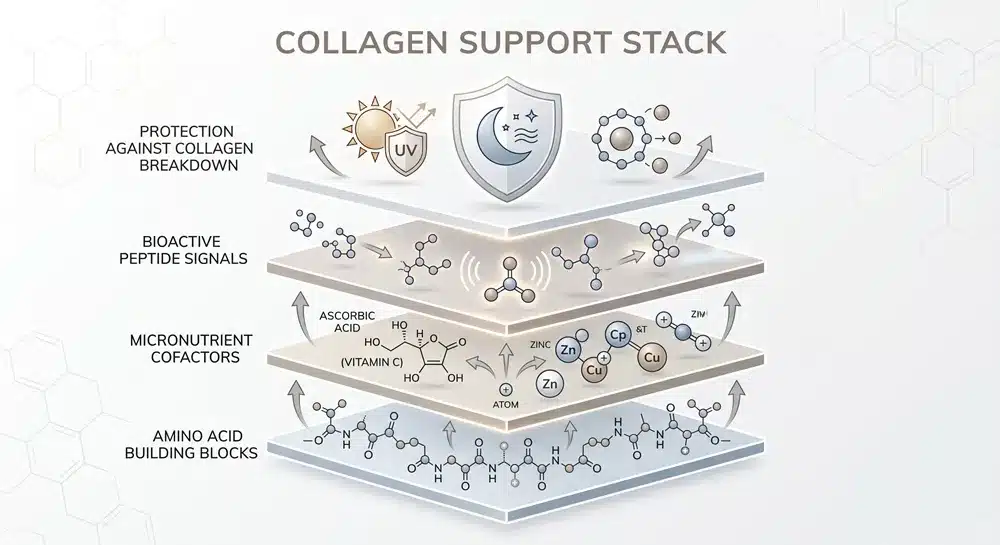
1. Elementos básicos
Tu cuerpo necesita aminoácidos para producir colágeno. Entre ellos se encuentran la glicina, la prolina, la lisina y otros componentes básicos derivados de las proteínas.
Los péptidos de colágeno animal aportan de forma natural aminoácidos específicos del colágeno.
Las fórmulas veganas pueden aportar aminoácidos a través de proteínas vegetales, aminoácidos fermentados o mezclas específicas de aminoácidos.
Para los consumidores, esto significa que la ingesta de proteínas sigue siendo importante. Un producto a base de colágeno no puede compensar por completo una dieta deficiente en general.
Para las marcas, esto significa que el perfil de aminoácidos debe coincidir con lo que se indica en la descripción del producto. Una fórmula de belleza vegana, un producto deportivo proteína en polvo, y una fórmula para el cuidado de las articulaciones puede requerir estrategias muy diferentes en cuanto a los ingredientes.
2. Cofactores
La síntesis de colágeno depende de los micronutrientes. La vitamina C es especialmente importante, ya que contribuye a la formación normal de colágeno. Los minerales como el zinc y el cobre también pueden contribuir al metabolismo normal del tejido conectivo.
Aquí es donde los suplementos veganos para estimular la producción de colágeno pueden resultar útiles.
Para los consumidores, un suplemento vegano para la producción de colágeno bien diseñado puede ayudar a cubrir las carencias nutricionales.
Para los formuladores, la clave está en la relevancia de la dosis. Añadir cantidades mínimas de vitamina C, zinc, sílice o extractos botánicos —que no son más que un “adorno” en la etiqueta— puede resultar atractivo en el envase, pero puede que no respalde una historia de producto creíble.
3. Señales bioactivas
Los péptidos de colágeno animal pueden tener más funciones que la simple aportación de aminoácidos. Algunos péptidos derivados del colágeno pueden actuar como señales biológicas relacionadas con el metabolismo de la piel, el cartílago o la matriz extracelular.
Esta es una de las razones por las que el colágeno hidrolizado de origen animal cuenta con una evidencia más sólida que las fórmulas genéricas de aminoácidos en algunas categorías relacionadas con la piel y las articulaciones.
Para los consumidores, esto ayuda a explicar por qué los péptidos de colágeno no son exactamente lo mismo que la proteína en polvo habitual.
Para las marcas, esta es la razón por la que la selección de la materia prima es importante. La procedencia, el peso molecular, el perfil peptídico, la solubilidad, el sabor y la documentación clínica pueden influir en el posicionamiento del producto.
4. Protección contra la degradación del colágeno
Fomentar la producción de colágeno no consiste solo en producir más colágeno, sino también en proteger el colágeno ya existente.
La exposición al sol, el tabaquismo, el consumo excesivo de alcohol, la falta de sueño, el estrés oxidativo y una alimentación inadecuada pueden contribuir a la degradación del colágeno.
Para los consumidores, esto significa que los suplementos de colágeno dan mejores resultados cuando se integran en una rutina más amplia de cuidado de la piel y bienestar.
Para las marcas, esto abre nuevas posibilidades de fórmulas combinadas, como el colágeno y la vitamina C, ácido hialurónico, antioxidantes, ceramidas o extractos botánicos. No obstante, todas las afirmaciones deben estar respaldadas y cumplir con la normativa.
Ventajas del colágeno de origen animal
1. Contiene péptidos de colágeno auténticos
La principal ventaja del colágeno de origen animal es muy sencilla: contiene péptidos derivados del colágeno.
Si un consumidor busca específicamente péptidos de colágeno, el colágeno de origen animal es, en la actualidad, la opción más consolidada.
Desde una perspectiva B2B, esto facilita el posicionamiento del colágeno animal. Los consumidores ya conocen términos como «colágeno marino», «colágeno bovino», «péptidos de colágeno» y «colágeno hidrolizado».
2. Cuenta con una investigación más consolidada
Los péptidos de colágeno de origen animal se han estudiado más a fondo que la mayoría de las alternativas veganas al colágeno, especialmente en lo que respecta a la hidratación y la elasticidad de la piel, las arrugas, el bienestar articular y la movilidad.
La investigación no es perfecta. Los resultados pueden variar en función de la dosis, la fuente, la duración del estudio, la población y la fórmula final. Sin embargo, en comparación con la mayoría de los suplementos veganos de colágeno, el colágeno de origen animal cuenta con una base de pruebas más amplia.
Para las marcas, esto puede contribuir a una mejor información sobre los productos y a una estrategia de mensajes más clara, siempre y cuando dichos mensajes sean responsables y cumplan con la normativa del mercado.
3. Las distintas fuentes respaldan distintas posiciones de mercado
Las distintas fuentes de colágeno animal pueden adaptarse a diferentes conceptos de producto.
El colágeno marino se utiliza a menudo en productos de belleza desde dentro, ya que se asocia principalmente con el colágeno de tipo I y con un enfoque centrado en la piel.
El colágeno bovino se utiliza ampliamente en productos de belleza, para las articulaciones, los huesos y el bienestar general. Suele contener colágeno de tipo I y de tipo III.
El colágeno de pollo, especialmente el colágeno de tipo II, se utiliza habitualmente en fórmulas destinadas al cuidado de las articulaciones y los cartílagos.
Si estás dudando entre el colágeno marino y el bovino, nuestra guía sobre colágeno bovino frente a colágeno de pescado explica las diferencias prácticas.
4. Funciona bien en muchos formatos de suplementos
Los péptidos de colágeno hidrolizado pueden utilizarse en polvos, sobres, bebidas, cápsulas, comprimidos, gominolas y alimentos funcionales.
Para los consumidores, los productos en polvo suelen ser la forma más sencilla de obtener una mayor ración de colágeno.
Para las marcas, los péptidos de colágeno son versátiles, pero siguen requiriendo una formulación cuidadosa. El sabor, el olor, la solubilidad, la estabilidad térmica, el peso molecular y la dosis influyen en la experiencia que ofrece el producto final.
5. Goza de un gran reconocimiento comercial
El colágeno animal goza de un gran reconocimiento entre los consumidores. Muchos compradores ya asocian el colágeno con la piel, el cabello, las uñas, las articulaciones y un envejecimiento saludable.
Para las marcas de complementos alimenticios, esto supone una ventaja comercial. Es posible que un producto a base de péptidos de colágeno requiera menos labor de sensibilización del mercado que un concepto más novedoso de colágeno biomimético o derivado de la fermentación.
Inconvenientes del colágeno de origen animal
1. No es vegano ni vegetariano
El colágeno animal se obtiene a partir de tejido animal, por lo que no es adecuado para consumidores veganos o vegetarianos.
También puede no ser adecuado para personas que evitan determinados alimentos de origen animal, como la carne de cerdo, la ternera, el pescado o el marisco.
Para las marcas que comercializan sus productos en los mercados internacionales, esto plantea cuestiones importantes en relación con las normas halal y kosher, el etiquetado de alérgenos y la aceptación cultural.
2. La transparencia en el origen es esencial
No todo el colágeno es igual.
Los consumidores deben fijarse en que la información sobre el origen sea clara.
Las marcas deben solicitar documentación técnica como, por ejemplo:
- Certificado de análisis
- País de origen
- Declaración de alérgenos
- Análisis de metales pesados
- Pruebas microbiológicas
- Información sobre el peso molecular
- Documentación halal o kosher, si fuera necesario
- Documentación sobre la trazabilidad
- Ficha técnica
Términos de marketing como “marino”, “alimentado con pasto” o “premium” no bastan por sí solos.
3. La sostenibilidad no es sencilla
El colágeno animal suele obtenerse a partir de subproductos de la industria cárnica o pesquera. En algunos casos, esto puede reducir los residuos y favorecer la economía circular.
Sin embargo, el hecho de que se trate de un subproducto no significa automáticamente que el colágeno no tenga ningún impacto. La ganadería, la presión pesquera, el uso del suelo, el consumo de agua y la transparencia de la cadena de suministro siguen siendo factores importantes.
Para los consumidores, esto significa que deben evaluar con cuidado las afirmaciones sobre sostenibilidad.
Para las marcas, esto significa que el abastecimiento responsable y la documentación son elementos fundamentales para generar confianza a largo plazo en la marca.
4. No es una proteína completa para el desarrollo muscular
El colágeno es rico en glicina, prolina e hidroxiprolina, pero no es una proteína completa al igual que el suero de leche, la soja o las mezclas de proteínas vegetales bien equilibradas.
Esto no significa que el colágeno sea un ingrediente de mala calidad. Simplemente significa que el colágeno no debería presentarse como una proteína completa para el desarrollo muscular.
En el caso de las marcas de nutrición deportiva, quizá sea más adecuado utilizar el colágeno para promocionar sus beneficios para el tejido conectivo, las articulaciones, los tendones y los ligamentos, o para un envejecimiento activo, en lugar de como proteína principal para la síntesis de proteínas musculares.
5. Puede ser objeto de un exceso de publicidad
El colágeno está de moda, pero no debería presentarse como una panacea.
Los consumidores deben mostrarse cautelosos ante afirmaciones como “reverte el envejecimiento”, “cura las enfermedades articulares” o “regenera el cartílago”.”
Las marcas deben asegurarse de que sus afirmaciones sean realistas y cumplan con la normativa. Es útil ofrecer información detallada sobre el producto; las afirmaciones exageradas sobre enfermedades son arriesgadas.
Ventajas del colágeno vegano
1. Se adapta a los estilos de vida veganos y sin productos de origen animal
La mayor ventaja del colágeno vegano es que se adapta perfectamente al estilo de vida.
Los productos veganos que favorecen la formación de colágeno pueden ser adecuados para los consumidores que evitan los productos de origen animal por motivos éticos, medioambientales, religiosos o dietéticos.
Para las marcas, esto abre nuevas oportunidades en el ámbito de la cosmética de origen vegetal, el bienestar vegano, los complementos alimenticios libres de crueldad animal y las líneas de productos con etiquetado limpio.
2. Favorece la producción de colágeno del propio organismo
Un suplemento vegano para la producción de colágeno bien formulado puede aportar los nutrientes que el organismo necesita para producir colágeno, como la vitamina C, los aminoácidos, el zinc, el cobre y los antioxidantes.
Para los consumidores, esta puede ser una forma práctica de favorecer la producción de colágeno de forma natural sin consumir ingredientes de origen animal.
Para los formuladores, la clave está en crear una fórmula que tenga sentido desde el punto de vista biológico. Un potente potenciador vegano del colágeno no debe basarse únicamente en un ingrediente botánico de moda, sino que debe combinar aminoácidos relevantes, cofactores y nutrientes protectores en cantidades significativas.
3. Puede contribuir a un posicionamiento más amplio en materia de bienestar
Los productos de colágeno veganos suelen combinarse fácilmente con otros ingredientes para el bienestar, como:
- Proteínas vegetales
- Polvos de fruta
- Antioxidantes de origen vegetal
- Ácido hialurónico
- Sílice
- Vitaminas y minerales
- Adaptógenos
- Mezclas para la belleza interior
Para los consumidores, esto puede suponer una experiencia de producto más integral.
Para las marcas, esto ofrece más posibilidades de diferenciación que un simple colágeno de un solo ingrediente péptido en polvo.
4. Evita algunos problemas relacionados con los productos de origen animal
Los productos veganos para estimular la producción de colágeno no contienen materias primas derivadas de bovinos, animales marinos, cerdos ni pollos.
Esto puede ayudar a las marcas a evitar ciertos problemas relacionados con los alérgenos de origen animal, las creencias religiosas o el bienestar animal.
Sin embargo, que un producto sea vegano no significa automáticamente que esté libre de alérgenos. La soja, los guisantes, el trigo y otros ingredientes de origen vegetal pueden seguir provocando problemas de alergia o intolerancia.
5. Se adapta a las futuras innovaciones en materia de ingredientes
El colágeno vegano ya no se limita únicamente a la vitamina C y a los extractos vegetales.
El colágeno biomimético y la fermentación de precisión podrían dar lugar en el futuro a nuevas soluciones de colágeno sin origen animal. Estas tecnologías podrían resultar especialmente importantes para los suplementos de belleza de alta gama, los alimentos funcionales y los ingredientes cosméticos.
Para los profesionales del sector B2B, se trata de una categoría que merece la pena seguir de cerca. Las mejores oportunidades podrían provenir de ingredientes que combinen un posicionamiento «sin ingredientes de origen animal» con una mayor funcionalidad y una mejor documentación clínica.
Inconvenientes del colágeno vegano
1. La mayoría de los productos de colágeno veganos no contienen colágeno
Esta es la mayor limitación.
La mayoría de los productos que se comercializan como «colágeno vegano» son, en realidad, estimulantes de la producción de colágeno. Favorecen la producción de colágeno, pero no aportan péptidos de colágeno.
Para los consumidores, esto significa que las expectativas deben ser claras.
Para las marcas, esto significa que el etiquetado debe ser transparente. Si el producto es un «reparador», llámalo así. Si contiene ingredientes biomiméticos o derivados de la fermentación similares al colágeno, explica la tecnología con claridad.
2. Los datos son más específicos en cuanto al producto
Los péptidos de colágeno de origen animal cuentan con una base de investigación más amplia.
Los suplementos veganos para la producción de colágeno suelen basarse en la evidencia científica relativa a nutrientes concretos, como la vitamina C o el zinc, en lugar de en la evidencia relativa a la fórmula completa del producto.
Algunos productos veganos de colágeno cuentan con estudios clínicos, pero esos resultados suelen aplicarse únicamente a la fórmula concreta que se ha sometido a prueba.
Para las marcas, esto significa que no deben tomar prestadas las afirmaciones de productos de colágeno vegano que no tengan relación con el suyo. Las pruebas sobre la fórmula final, las pruebas a nivel de ingredientes y las pruebas generales sobre la función de los nutrientes no son lo mismo.
3. Los beneficios pueden ser limitados si la dieta ya es equilibrada
Si una persona ya ingiere suficientes proteínas, vitamina C, zinc, cobre y otros nutrientes, un suplemento vegano básico para la producción de colágeno podría aportar beneficios adicionales limitados.
Para los consumidores, esto significa que los resultados pueden depender de la nutrición inicial.
Para los formuladores, esto significa que la diferenciación del producto es importante. Una fórmula genérica a base de vitamina C y polvo vegetal podría no ser suficiente en un mercado competitivo.
4. Puede que no sea tan eficaz como el colágeno de origen animal en los productos destinados a las articulaciones
En lo que respecta al bienestar de las articulaciones, el cuidado del cartílago, la movilidad y la recuperación deportiva, los péptidos de colágeno de origen animal y los productos de colágeno de tipo II gozan actualmente de un mayor reconocimiento dentro de su categoría.
Los productos veganos para estimular la producción de colágeno pueden seguir favoreciendo el tejido conectivo de forma indirecta, pero no deben presentarse como equivalentes directos a menos que la fórmula concreta cuente con pruebas que respalden esa afirmación.
En el caso de los productos para las articulaciones sin ingredientes de origen animal, las marcas también pueden plantearse utilizar ingredientes que no sean colágeno, como ingredientes de origen no animal para el cuidado de las articulaciones.
5. El término “colágeno vegano” puede confundir a los consumidores
Muchos consumidores dan por sentado que el colágeno vegano es colágeno de origen vegetal. Por lo general, eso no es cierto.
Esto genera un problema de confianza.
Un enfoque más adecuado consiste en informar con claridad:
- Los péptidos de colágeno animal aportan péptidos derivados del colágeno.
- Los suplementos veganos para el colágeno favorecen la síntesis de colágeno.
- Las proteínas vegetales aportan aminoácidos, pero no son colágeno.
- Las tecnologías basadas en el colágeno biomimético o derivado de la fermentación son alternativas emergentes que no utilizan materiales de origen animal.
Una educación clara puede convertirse en una ventaja competitiva.
Cómo leer la etiqueta de un producto vegano o con colágeno animal
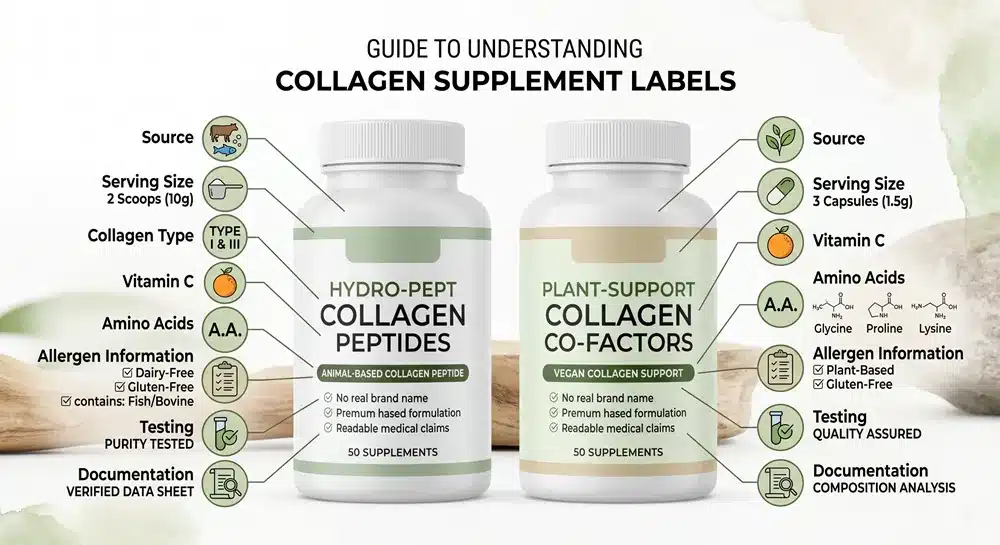
La etiqueta de un producto puede darte mucha información sobre si un producto de colágeno es fiable.
Si se trata de colágeno de origen animal, comprueba lo siguiente:
- Fuente: bovino, marino, porcino o avícola
- Forma: péptidos de colágeno hidrolizado, gelatina o Colágeno tipo II no desnaturalizado
- Tipo de colágeno: colágeno de tipo I, II, III o mixto, si se indica
- Dosis por ración: especialmente para polvos, bebidas y gominolas
- Información sobre alérgenos: especialmente para el colágeno marino
- Pruebas: metales pesados, microbiología y contaminantes
- Origen: país o región de origen de la materia prima
- Certificaciones: documentos halal, kosher u otros específicos del mercado, si procede
Un producto de colágeno animal de alta calidad debe indicar claramente su origen y su forma.
Si se trata de colágeno vegano, comprueba lo siguiente:
- ¿Contiene realmente colágeno o solo nutrientes que favorecen la producción de colágeno?
- ¿Explica la etiqueta qué significa “estimulador del colágeno” o “apoyo al colágeno”?
- ¿Contiene vitamina C?
- ¿Aporta aminoácidos, proteínas vegetales o nutrientes específicos que favorecen la producción de colágeno?
- ¿Son significativas las dosis de minerales?
- ¿Utiliza términos imprecisos como “colágeno vegetal” sin dar ninguna explicación?
- ¿Se trata de un ingrediente «constructor», un ingrediente biomimético o un ingrediente derivado de la fermentación?
- ¿Explica la marca lo que el producto puede y no puede hacer?
Un producto vegano de colágeno de alta calidad debe ser transparente en cuanto a su mecanismo de acción. No debe dar a entender que las plantas comunes contengan colágeno de forma natural.
¿Quién debería optar por el colágeno de origen animal?
El colágeno de origen animal puede ser la mejor opción si:
- ¿Quieres péptidos de colágeno auténticos?
- Se centran en la hidratación, la elasticidad o la firmeza de la piel
- ¿Necesitas ayuda para las articulaciones, los huesos, los tendones, los ligamentos o el tejido conectivo?
- Se admiten ingredientes de origen bovino, marino, porcino o avícola
- Da preferencia a los ingredientes sobre los que existan estudios en humanos más consolidados
- ¿Quieres un producto sencillo de péptidos de colágeno en polvo, en sobres, en bebida, en cápsulas o en gominolas?
El colágeno animal es especialmente adecuado para aquellos consumidores que no evitan los productos de origen animal y buscan la opción más directa de péptidos de colágeno.
¿Quién debería optar por el colágeno vegano?
El colágeno vegano puede ser la mejor opción si:
- Evita los ingredientes de origen animal
- Llevar un estilo de vida vegano o vegetariano
- Prefiero los productos de belleza o bienestar de origen vegetal
- ¿Quieres favorecer la producción de colágeno de tu propio cuerpo?
- Buscas fórmulas con vitamina C, aminoácidos, minerales y antioxidantes
- Presta atención al posicionamiento «sin crueldad» o «sin ingredientes de origen animal»
- Hay que tener en cuenta que la mayoría de los productos veganos de colágeno son «constructores», no péptidos de colágeno.
Los suplementos veganos para aumentar el colágeno son la mejor opción para los consumidores que desean reforzar sus niveles de colágeno sin consumir colágeno de origen animal.
Ten cuidado si:
- La etiqueta dice “colágeno vegetal” sin explicar qué significa eso.
- El producto afirma que “reverte el envejecimiento”
- El producto afirma que “cura la artritis” o “regenera el cartílago”.”
- La fórmula contiene muchos ingredientes de moda en dosis poco claras
- La marca no revela la procedencia del colágeno.
- No hay una ración recomendada clara
- No hay pruebas ni documentación sobre la calidad.
- El producto no aclara si contiene péptidos de colágeno o nutrientes que favorecen la producción de colágeno.
Los mejores productos de colágeno no son aquellos que prometen resultados espectaculares. Son aquellos que cuentan con ingredientes claros, un posicionamiento realista y una documentación transparente.
Colágeno vegano frente a colágeno de origen animal: ¿cuál es mejor para los consumidores?
Para la mayoría de los consumidores, la elección depende de cinco cuestiones.
1. ¿Quieres péptidos de colágeno auténticos?
En caso afirmativo, el colágeno de origen animal es, en la actualidad, la opción más consolidada.
Elige péptidos de colágeno hidrolizado de origen claro, como el colágeno bovino o marino.
2. ¿Evitas los productos de origen animal?
Si es así, elige un producto vegano que favorezca la producción de colágeno o una tecnología de colágeno sin ingredientes de origen animal.
Busca fórmulas que aporten vitamina C, aminoácidos, minerales y propiedades antioxidantes, en lugar de afirmaciones vagas sobre el “colágeno vegetal”.
3. ¿Tu objetivo principal es el cuidado de la piel?
Los péptidos de colágeno de origen animal cuentan con una mayor evidencia científica en lo que respecta a la hidratación y la elasticidad de la piel.
Los suplementos veganos para el colágeno pueden contribuir a favorecer la síntesis de colágeno, sobre todo si la fórmula está bien diseñada.
4. ¿Tu objetivo principal es el cuidado de las articulaciones?
Los péptidos de colágeno animal o el colágeno de tipo II son actualmente los más habituales en los productos para el cuidado de las articulaciones.
Los productos veganos pueden favorecer el tejido conectivo de forma indirecta, pero deben evaluarse con cuidado.
5. ¿Qué es lo que más te importa: la ética, la sostenibilidad o el hecho de que no se utilicen ingredientes de origen animal?
Los potenciadores del colágeno veganos y los nuevos ingredientes derivados de la fermentación podrían ser la mejor opción.
Sin embargo, la sostenibilidad sigue dependiendo de la transparencia en el abastecimiento, el procesamiento, el envasado y la cadena de suministro.
Perspectiva B2B: ¿Qué estrategia de colágeno se adapta mejor a tu producto?
En el caso de las marcas de suplementos, la decisión es más compleja que simplemente preguntarse “cuál funciona mejor”.”
Un mejor punto de partida es:
¿Qué afirmación pretendes respaldar, qué forma farmacéutica vas a lanzar y quién es tu consumidor objetivo?
Elige colágeno de origen animal si:
- Quieres ofrecer péptidos de colágeno auténticos
- Tu mercado objetivo acepta los ingredientes de origen animal
- Tu producto está enfocado a la piel, las articulaciones, los huesos o el envejecimiento activo
- Quieres que los consumidores te reconozcan mejor
- Necesitas una historia clara sobre la belleza desde dentro o sobre el cuidado de las articulaciones.
- Puedes gestionar la documentación relativa al abastecimiento, los alérgenos y la calidad
El colágeno animal es especialmente adecuado para productos en polvo, sobres, bebidas de belleza, gominolas de colágeno y productos para la salud de las articulaciones.
Elige el suplemento de colágeno vegano si:
- Tu público objetivo es vegano, vegetariano o sigue una dieta basada en plantas
- Tu marca se centra en un posicionamiento «cruelty-free» o «sin ingredientes de origen animal»
- Quieres crear una fórmula más amplia de belleza o bienestar
- Estás tomando vitamina C, minerales, aminoácidos y antioxidantes
- Debes evitar los ingredientes derivados de bovinos, animales marinos, cerdos o pollos
- Puedes explicar claramente que la fórmula favorece la producción de colágeno, en lugar de aportar péptidos de colágeno.
Los potenciadores de colágeno veganos son especialmente adecuados para polvos de belleza, comprimidos, cápsulas, gominolas, sobres y mezclas de bienestar de origen vegetal.
Elige colágeno biomimético o derivado de la fermentación si:
- ¿Quieres conocer una historia más innovadora sobre el colágeno de origen no animal?
- Tu mercado objetivo acepta las nuevas tecnologías en materia de ingredientes
- Puedes hacer frente al aumento de los costes de las materias primas
- Tienes acceso a una sólida documentación de los proveedores
- Conoces el proceso regulatorio de tu mercado objetivo
- Quieres diferenciarte de los productos estándar para estimular la producción de colágeno a base de vitamina C
Esta categoría puede resultar atractiva para las marcas de gama alta, pero la selección de ingredientes debe realizarse con cuidado y basarse en datos contrastados.
Consideraciones sobre la formulación: polvos, cápsulas, gominolas y bebidas
El mejor ingrediente de colágeno también depende del formato del producto.

Polvos
Los polvos suelen ser la forma más sencilla de tomar dosis adecuadas de colágeno.
Los colágenos animales en polvo pueden aportar dosis de péptidos de colágeno del orden de los gramos. Los colágenos veganos en polvo pueden combinar proteínas vegetales, aminoácidos, vitamina C, minerales y extractos de frutas o plantas.
Para las marcas que están desarrollando fórmulas a base de proteínas vegetales y de colágeno, el primer paso es decidir si el producto es proteína en polvo, un producto a base de péptidos de colágeno o una mezcla que favorece la producción de colágeno.
Cápsulas
Las cápsulas son prácticas, pero tienen una capacidad de llenado limitada.
Pueden resultar adecuadas para productos veganos que favorecen la producción de colágeno, mezclas de minerales, fórmulas antioxidantes o ingredientes activos en dosis bajas. No son la opción más adecuada para productos con péptidos de colágeno en dosis altas, a menos que los consumidores estén dispuestos a tomar varias cápsulas.
La elección del recubrimiento de la cápsula también es importante. Una fórmula puede contener principios activos de origen vegetal, pero si utiliza cápsulas de gelatina, no es vegana. Las marcas dirigidas a consumidores veganos deberían tener en cuenta Opciones de cápsulas veganas, como las cápsulas de HPMC.
Gominolas
Las gominolas son muy populares en el sector de la belleza y el bienestar, pero el margen de dosificación es limitado.
Es posible que las gominolas de colágeno no aporten la misma cantidad de colágeno que los productos en polvo. Gominolas veganas Se puede utilizar pectina en lugar de gelatina, pero la fórmula debe diseñarse cuidadosamente teniendo en cuenta la textura, la estabilidad, el sabor y la dosis activa.
Si una marca quiere desarrollar gominolas de belleza o gominolas veganas que favorezcan la producción de colágeno, resulta útil evaluar Fabricación de suplementos veganos en forma de gominolas en las primeras fases del proceso de desarrollo.
Bebidas y sobres
Las bebidas y los sobres de colágeno son muy populares como productos de belleza desde dentro. En estos formatos se suelen utilizar el colágeno marino y los péptidos de colágeno de bajo peso molecular.
Los suplementos veganos para estimular la producción de colágeno también pueden tener buena acogida en sobres, sobre todo si tienen sabores frutales, vitamina C, antioxidantes y se posicionan como productos de belleza de origen vegetal.
Tanto en el caso de los productos de origen animal como en el de los veganos, el sabor, la solubilidad, la estabilidad y el tamaño de la ración son retos clave a la hora de elaborar la fórmula.
Lista de comprobación de calidad para los consumidores
Si vas a comprar un producto de colágeno o de colágeno vegano, fíjate en lo siguiente:
- Origen claro de los ingredientes
- Tamaño de la ración transparente
- Afirmaciones realistas
- Información sobre alérgenos
- Pruebas realizadas por terceros, cuando estén disponibles
- Análisis de metales pesados en ingredientes de origen marino
- Explicación clara sobre si el producto contiene péptidos de colágeno o nutrientes que favorecen la formación de colágeno
- No se deben hacer afirmaciones exageradas sobre el tratamiento de enfermedades
Un producto de confianza debería permitir comprender fácilmente qué es lo que estás tomando y por qué.
Lista de comprobación de calidad para marcas y compradores B2B
Si estás buscando colágeno o ingredientes de colágeno veganos, solicita:
- Certificado de análisis
- Ficha técnica
- País de origen
- Declaración de alérgenos
- Análisis de metales pesados
- Pruebas microbiológicas
- Datos sobre disolventes residuales o contaminantes, si procede
- Documentación sobre productos halal, kosher, veganos o vegetarianos, si fuera necesario
- Datos sobre el peso molecular de los péptidos de colágeno
- Información sobre la estabilidad y la solubilidad
- Documentos de apoyo normativo
- Datos clínicos o justificación de los ingredientes, si se dispone de ellos
En el caso del colágeno animal, el origen y la trazabilidad son fundamentales.
En el caso de los suplementos veganos para estimular la producción de colágeno, la lógica de la fórmula y la importancia de la dosis son fundamentales.
En el caso del colágeno biomimético o derivado de la fermentación, es fundamental que exista claridad normativa y que se disponga de la documentación técnica correspondiente.
Sostenibilidad: ¿Es siempre mejor el colágeno vegano?
No de forma automática.
Los productos veganos para la síntesis de colágeno evitan las materias primas de origen animal, lo que puede mitigar las preocupaciones relacionadas con el bienestar animal, las restricciones religiosas y algunos aspectos de las cadenas de suministro ganaderas o pesqueras.
Sin embargo, «vegano» no significa automáticamente «sostenible». Los ingredientes de origen vegetal siguen requiriendo tierra, agua, procesamiento, envasado y transporte.
El colágeno animal puede elaborarse a partir de subproductos que, de otro modo, no se aprovecharían plenamente, lo que puede contribuir a la economía circular. Sin embargo, el hecho de que se trate de subproductos no exime de la necesidad de un abastecimiento responsable y de la trazabilidad.
Una conclusión más equilibrada sería:
El colágeno vegano no es sostenible por defecto, y el colágeno animal no es insostenible por defecto. La cadena de suministro es más importante que la etiqueta.
Para los consumidores, esto significa buscar una cadena de suministro transparente y unas afirmaciones responsables.
Para las marcas, esto significa que la cualificación de los proveedores, la documentación y la trazabilidad deben formar parte del desarrollo del producto desde el principio.
Mitos comunes sobre el colágeno vegano y el de origen animal
Mito n.º 1: El colágeno vegano es colágeno procedente de plantas
Las plantas no producen colágeno de forma natural. La mayoría de los productos veganos de colágeno son estimulantes de la producción de colágeno, no colágeno vegetal.
Mito n.º 2: El colágeno de origen animal llega directamente a la piel
El colágeno se digiere y se transforma en aminoácidos y péptidos. No pasa intacto desde la cucharada del suplemento directamente a la piel. El mecanismo es más complejo y puede implicar tanto componentes básicos como señales biológicas.
Mito n.º 3: El colágeno marino siempre es mejor que el colágeno bovino
El colágeno marino es muy utilizado en fórmulas de belleza, pero el colágeno bovino puede resultar más versátil. La mejor opción depende del objetivo del producto, el mercado al que va dirigido, las preocupaciones relacionadas con los alérgenos y los requisitos de abastecimiento.
Mito n.º 4: El colágeno vegano siempre es más seguro
Los productos veganos no contienen ingredientes de origen animal, pero pueden contener alérgenos, una dosificación inadecuada, contaminantes o afirmaciones exageradas.
Mito n.º 5: Los suplementos de colágeno pueden sustituir a un estilo de vida saludable
Los productos con colágeno pueden contribuir a la salud de la piel o las articulaciones, pero no pueden sustituir a la ingesta de proteínas, el sueño, el ejercicio, la protección solar y una dieta equilibrada.
PREGUNTAS FRECUENTES
¿Existe realmente el colágeno vegano?
La mayoría de los productos veganos de colágeno no contienen colágeno auténtico. Por lo general, se trata de estimulantes del colágeno que aportan nutrientes para favorecer la producción propia de colágeno del organismo. Sin embargo, las nuevas tecnologías biomiméticas y derivadas de la fermentación podrían permitir la creación de ingredientes similares al colágeno que no procedan de animales.
¿Las plantas contienen colágeno?
No. Las plantas no producen colágeno de forma natural. El colágeno es una proteína estructural de origen animal. Los productos de origen vegetal pueden aportar aminoácidos, vitamina C, minerales y antioxidantes que favorecen la síntesis de colágeno.
¿Es el colágeno vegano tan eficaz como el colágeno de origen animal?
Depende del producto y del objetivo. Los péptidos de colágeno de origen animal cuentan con una evidencia científica más consolidada en lo que respecta a sus aplicaciones para la piel y las articulaciones. Los suplementos veganos para el colágeno pueden favorecer la producción de colágeno, pero no suelen ser sustitutos directos de los péptidos de colágeno.
¿Es el colágeno marino mejor que el colágeno bovino?
El colágeno marino se utiliza a menudo en productos de belleza destinados al cuidado de la piel, mientras que el colágeno bovino se emplea ampliamente en fórmulas para la piel, las articulaciones, los huesos y el bienestar general. La mejor opción depende del objetivo del producto, las preocupaciones relacionadas con los alérgenos, los requisitos de origen y el posicionamiento en el mercado.
¿Pueden los veganos obtener colágeno de forma natural?
Sí. Las personas veganas pueden favorecer la producción de colágeno consumiendo una cantidad suficiente de proteínas, vitamina C, zinc, cobre y otros nutrientes que intervienen en la síntesis del colágeno. Los suplementos veganos para el colágeno pueden ayudar a aportar algunos de estos nutrientes.
¿Cuál es la señal de alerta más importante que puede aparecer en la etiqueta de un producto vegano con colágeno?
La señal de alarma más importante es el uso de expresiones vagas como “colágeno vegetal”, sin aclarar si el producto contiene nutrientes que favorecen la producción de colágeno, proteínas vegetales, ingredientes biomiméticos o ingredientes similares al colágeno derivados de la fermentación.
¿Cuál es la señal de alerta más importante que puede aparecer en la etiqueta de un producto de colágeno animal?
La señal de alerta más importante es la falta de claridad sobre el origen. Un producto de colágeno animal de calidad debe indicar su origen —por ejemplo, bovino, marino, porcino o avícola— y aportar la documentación pertinente sobre calidad y seguridad.
Veredicto final: ¿Cuál deberías elegir?
El colágeno de origen animal es la mejor opción si lo que buscas son péptidos de colágeno auténticos, estudios científicos más sólidos y un efecto específico para el cuidado de la piel, las articulaciones, los huesos o el tejido conectivo.
El colágeno vegano es la mejor opción si evitas los ingredientes de origen animal o si buscas una fórmula de origen vegetal que favorezca la producción propia de colágeno del organismo.
El colágeno biomimético y el derivado de la fermentación podrían convertirse en la próxima generación de tecnología de colágeno sin origen animal, pero estos ingredientes deben evaluarse de forma individual en función de la evidencia, la documentación, el coste y su situación normativa.
El resumen más preciso es el siguiente:
El colágeno de origen animal aporta péptidos de colágeno. El colágeno vegano suele favorecer la producción de colágeno. Es posible que las tecnologías de última generación basadas en colágeno sin origen animal logren salvar esta brecha en el futuro.
Para los consumidores, la mejor opción depende de su dieta, sus objetivos y sus expectativas.
Para las marcas, la mejor opción depende de su estrategia de alegaciones, la forma farmacéutica, el mercado objetivo, la historia del origen de los ingredientes y los requisitos técnicos.
¿Necesitas ayuda para desarrollar un suplemento de colágeno o de colágeno vegano?
Elegir entre el colágeno de origen animal, los potenciadores de colágeno veganos, las proteínas vegetales y las tecnologías emergentes de colágeno sin origen animal no es solo una decisión de marketing. Afecta a la formulación, la dosificación, la textura, la solubilidad, el etiquetado, el origen de las materias primas, el cumplimiento normativo y la confianza de los consumidores.
GENSEI ofrece apoyo a marcas de complementos alimenticios con péptidos de colágeno, fórmulas nutricionales de origen vegetal, gominolas, cápsulas, polvos y el desarrollo de complementos a medida.
Tanto si estás desarrollando un polvo de belleza con colágeno marino, una fórmula para las articulaciones con colágeno bovino, unas gominolas veganas que favorecen el colágeno o una mezcla de proteínas de origen vegetal, nuestro equipo puede ayudarte a evaluar las opciones de ingredientes, las formas de dosificación, la lógica de la formulación y los procesos de fabricación.
Descubre nuestra soluciones de fabricación de suplementos a medida o ponte en contacto con nosotros para analizar cuál es la mejor estrategia en materia de colágeno o colágeno vegano para tu próximo producto.
Referencias
- Global Witness. El precio de la belleza: las marcas populares de colágeno provocan la deforestación y violaciones de derechos en Paraguay .
- Facultad de Salud Pública T.H. Chan de Harvard. Colágeno .
- Clínica Cleveland. Colágeno: qué es, tipos, funciones y beneficios .
- Oficina de Suplementos Dietéticos de los NIH. Vitamina C – Ficha informativa para profesionales de la salud .
- Pu, S.Y. y otros. Efectos del colágeno oral en el antienvejecimiento cutáneo: una revisión sistemática y un metaanálisis .
- Dewi, D.A.R. y otros. Análisis del impacto de los suplementos orales de colágeno hidrolizado en el rejuvenecimiento de la piel .
- Lin, C.R. y otros. Eficacia analgésica de los péptidos de colágeno en la osteoartritis de rodilla: un metaanálisis de ensayos controlados aleatorizados .
- Warma, S. y otros. Descubre la belleza y el bienestar con el colágeno vegano .
- Knychala, M.M. y otros. La fermentación de precisión como alternativa a la proteína animal .
- Administración de Alimentos y Medicamentos de EE. UU. (FDA). Notificación GRAS n.º 1171: Polipéptido de colágeno de origen no animal .
- Administración de Alimentos y Medicamentos de EE. UU. (FDA). Afirmaciones sobre estructura y función .
- Administración de Alimentos y Medicamentos de EE. UU. (FDA). Justificación de las afirmaciones sobre los complementos alimenticios .
- USP. Verificación de suplementos alimenticios / Sello «USP Verified» .
- La Oficina de Periodismo de Investigación. La fiebre por el colágeno provoca la deforestación y violaciones de los derechos humanos .

Warren Wan es un experto con una amplia trayectoria en la cadena de suministro de complementos alimenticios, que cuenta con una gran experiencia práctica en la investigación, el desarrollo, el control de procesos y el abastecimiento global de ingredientes clave como los péptidos de colágeno, la proteína de caldo de huesos y la queratina. Como autor de esta columna, se dedica a desmontar los argumentos de marketing, transformando la compleja ciencia de los ingredientes y las normas de control de calidad de la producción en divulgación científica rigurosa y fácil de entender, ayudando a los lectores a comprender la verdad que se esconde tras las etiquetas y a tomar decisiones más racionales en materia de salud.