Per i proprietari di marchi di integratori alimentari, i formulatori di prodotti per la nutrizione sportiva e i team che si occupano di marchi privati, il coenzima Q10 e la L-carnitina vengono spesso valutati insieme poiché supportano due diverse fasi del metabolismo energetico cellulare. La L-carnitina aiuta a trasportare gli acidi grassi a catena lunga nei mitocondri per la beta-ossidazione, mentre il CoQ10 favorisce il trasferimento di elettroni nella catena respiratoria mitocondriale e contribuisce a mantenere l’equilibrio antiossidante cellulare. La sfida formulativa risiede nel fatto che il CoQ10 è liposolubile e poco adatto alle semplici capsule secche, mentre molte forme di L-carnitina sono idrosolubili, ad alto dosaggio e sensibili all’umidità.
La presente guida mette a confronto il CoQ10 e la L-carnitina sia dal punto di vista della scienza della nutrizione che da quello della produzione: meccanismo d'azione, casi d'uso ottimali, scelta della forma farmaceutica, fattibilità dell'uso di softgel rispetto alle capsule, test di controllo qualità e formulazione delle indicazioni relative alla struttura e alla funzione conformi alle norme della FDA.
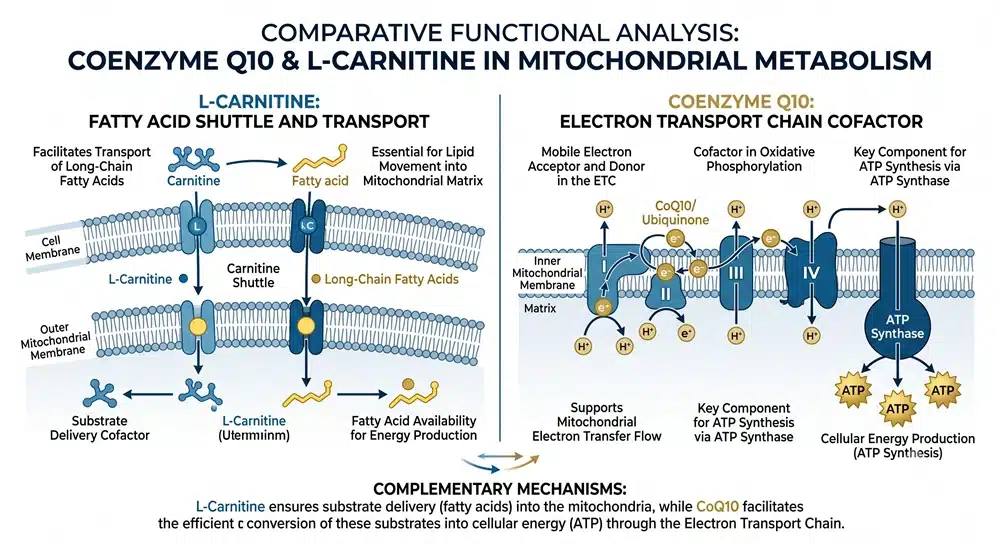
CoQ10 e L-Carnitina sono complementari ma non intercambiabili. La L-carnitina trasporta gli acidi grassi nei mitocondri, mentre il CoQ10 aiuta la catena di trasporto degli elettroni mitocondriale a convertire il combustibile in ATP. Per i marchi di integratori, la scelta fondamentale riguarda la forma di dosaggio: il CoQ10 si presta meglio alle capsule molli a base lipidica o alle polveri potenziate; la L-carnitina richiede spesso capsule a umidità controllata, compresse o miscele in polvere.
Coenzima Q10 - Che cos'è?
Il coenzima Q10 (CoQ10, ubichinone/ubichinolo) è un chinone liposolubile presente nelle membrane cellulari e nei mitocondri. Nelle formule energetiche, il CoQ10 trova la sua migliore applicazione come cofattore nel trasferimento di elettroni a livello mitocondriale e come antiossidante in fase lipidica, non come stimolante. Poiché il CoQ10 cristallino presenta una bassa solubilità in acqua e una scarsa dispersibilità in polvere, le sue prestazioni commerciali dipendono fortemente dalla scelta dell’olio vettore, dal controllo della granulometria e dalla progettazione della forma farmaceutica.
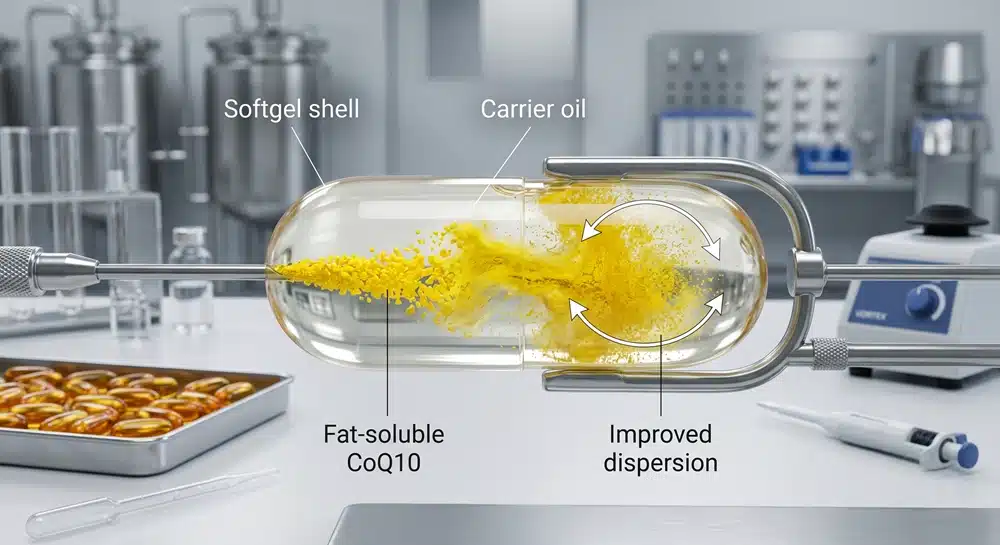
Il CoQ10 è naturalmente presente nell’organismo e partecipa alla catena di trasporto degli elettroni mitocondriale, dove le cellule producono l’adenosina trifosfato (ATP). I livelli possono variare in base all’età, alla dieta, allo stato di salute e all’assunzione di farmaci. Nei testi relativi agli integratori alimentari, un linguaggio conforme alle normative dovrebbe concentrarsi sul supporto strutturale e funzionale, utilizzando espressioni quali “sostiene la produzione di energia cellulare” o “aiuta a mantenere lo stato antiossidante”, piuttosto che sui risultati relativi al trattamento delle malattie.
Perché si dovrebbe assumere il coenzima Q10?
Per l'energia cellulare e uno stile di vita attivo
Il CoQ10 sostiene il meccanismo di produzione energetica all’interno dei mitocondri. Ciò lo rende importante per la nutrizione sportiva, la vitalità quotidiana e i prodotti per un invecchiamento attivo. Tuttavia, le indicazioni riportate sulla formulazione dovrebbero evitare di promettere il trattamento della stanchezza o di patologie mediche. Una pagina di prodotto conforme dovrebbe descrivere il sostegno al metabolismo energetico cellulare e all’equilibrio antiossidante.
Per una postura salutare per il cuore
Il cuore è un organo ad alto consumo energetico, pertanto il CoQ10 viene comunemente inserito nelle formule per il benessere cardiovascolare. La qualità delle prove scientifiche varia a seconda dei risultati e della popolazione di riferimento; pertanto, i testi B2B dovrebbero utilizzare formulazioni prudenti come “favorisce la salute del cuore” ed evitare di suggerire un trattamento per l’insufficienza cardiaca, l’infarto o gli effetti collaterali delle statine, a meno che tali affermazioni non siano state esaminate da consulenti legali qualificati in materia di regolamentazione.
Come antiossidante in fase lipidica
Il CoQ10 viene spesso considerato un antiossidante poiché la sua forma ridotta, l’ubiquinolo, partecipa all’attività redox in fase lipidica. Nei prodotti finiti, ciò solleva anche alcune problematiche di formulazione: l’ossigeno, il calore e la qualità dell’olio vettore possono influire sulla stabilità del prodotto. I marchi dovrebbero richiedere specifiche adeguate relative alle materie prime e ai prodotti finiti prima del lancio.
Come scegliere il miglior integratore di coenzima Q10?
1. Ubichinone vs ubichinolo
L'ubichinone è la forma ossidata del CoQ10 ed è ampiamente utilizzato negli integratori. L'ubichinolo è la forma ridotta ed è spesso presentato come più direttamente biodisponibile, soprattutto per gli anziani. La scelta migliore dipende dal mercato di riferimento, dal costo, dalla stabilità, dalla forma di dosaggio e dal posizionamento sull'etichetta.
2. Qualità dell'approvvigionamento e della produzione
Per gli acquirenti B2B, l’approvvigionamento di CoQ10 dovrebbe includere dati relativi all’identità, al dosaggio, ai solventi residui (ove applicabile), ai metalli pesanti, alla microbiologia e alla stabilità. La CoQ10 ottenuta tramite fermentazione naturale è comune nei prodotti di alta gamma, ma la forma di somministrazione è importante tanto quanto la materia prima.
Nota del formulatore: il CoQ10 è raramente un ingrediente sotto forma di “semplice polvere” nelle formule commerciali ad alte prestazioni. Per le capsule molli a base di CoQ10 in olio, le variabili principali sono il titolo del CoQ10, il tipo di olio vettore, l’uniformità delle particelle in sospensione, la viscosità del riempimento, l’esposizione all’ossigeno, la compatibilità con l’involucro e il controllo dei perossidi nella fase oleosa. Per le capsule secche o le compresse, i marchi dovrebbero verificare se il CoQ10 sia polvere cristallina standard, CoQ10 micronizzato, granuli, polvere emulsificata o un’altra forma a dispersione potenziata. I marchi possono esaminare queste opzioni tramite Produzione di integratori con formula personalizzata o Produzione di capsule softgel.
3. Dosaggio e biodisponibilità
Le dosi commerciali di CoQ10 variano solitamente da 100 mg a 200 mg per porzione, ma la dose corretta dipende dal posizionamento e dal formato del prodotto. Poiché la CoQ10 è liposolubile, i vettori lipidici, le capsule molli, le polveri emulsificate o le tecnologie a microsfere possono migliorare l'esperienza del consumatore rispetto alla semplice polvere cristallina.
Qual è il momento migliore per assumere il coenzima q10?
Poiché il CoQ10 è liposolubile, è generalmente consigliabile assumerlo durante un pasto che contenga grassi. L’assunzione al mattino è diffusa per i prodotti pensati per fornire energia quotidiana, mentre quella serale può essere indicata per i consumatori che lo tollerano bene. Dal punto di vista dell’etichettatura, l’indicazione “assumere con il cibo” è spesso più sicura e pratica rispetto alla promessa di effetti energetici immediati.
La regola d'oro: Prendetelo con un pasto
Questo è il consiglio più importante. Il CoQ10 è un composto liposolubile, cioè ha bisogno di grassi per essere assorbito correttamente dall'organismo. L'assunzione dell'integratore a stomaco vuoto ne riduce notevolmente l'efficacia. Per garantire un assorbimento ottimale, assumete sempre il CoQ10 con un pasto che contenga grassi sani, come ad esempio:
- Avocado
- Noci e semi
- Olio d'oliva o altri oli da cucina sani
- Pesci grassi come il salmone o il tonno
- Uova
Molti integratori di CoQ10, soprattutto le popolari varietà in softgel, sono già sospesi in una base oleosa per migliorarne la biodisponibilità, ma l'abbinamento con un pasto resta la pratica migliore.
Mattina o sera?
Qui entrano in gioco le preferenze personali e un po' di auto-osservazione.
- Mattina: Molte persone scelgono di assumere il CoQ10 a colazione. Questa può essere un'ottima opzione perché il CoQ10 è coinvolto nella produzione di energia, quindi assumerlo al mattino può aiutare a sostenere i livelli di energia per tutta la giornata. Inoltre, aiuta a stabilire una routine costante, che è fondamentale per ottenere benefici a lungo termine da qualsiasi integratore.
- Sera: Per alcuni, l'assunzione di CoQ10 a cena può essere una buona scelta, soprattutto se si tratta del pasto più importante della giornata e con il maggior contenuto di grassi. Tuttavia, un piccolo numero di persone riferisce che il CoQ10 ha un effetto "energizzante" che può interferire con il sonno. Se ci si sente irrequieti dopo una dose notturna, è meglio passare al mattino.
La linea di fondo: La coerenza è fondamentale
Anche se la tempistica può influenzare le sensazioni, ciò che conta è la costanza. Possono essere necessarie diverse settimane per portare i livelli di CoQ10 nell'organismo a un livello terapeutico. La strategia più efficace consiste nello scegliere un momento della giornata in cui ricordarsi di assumere l'integratore ogni giorno, che sia con il caffè e le uova del mattino o con il pasto serale. Per ottenere i migliori risultati, ricordatevi di abbinarlo a dei grassi sani.
L-Carnitina - Che cos'è?
La L-carnitina è un nutriente condizionatamente essenziale coinvolto nel trasporto degli acidi grassi a catena lunga nei mitocondri, dove tali acidi grassi possono essere ossidati per produrre energia. Nella formulazione degli integratori, la L-carnitina non è disponibile in un’unica forma: L-carnitina base, L-carnitina L-tartrato, acetil-L-carnitina, la propionil-L-carnitina e le forme di fumarato si differenziano per l'uso previsto, il sapore, le caratteristiche della polvere, l'igroscopicità, la dimensione della dose e la fattibilità del riempimento delle capsule.
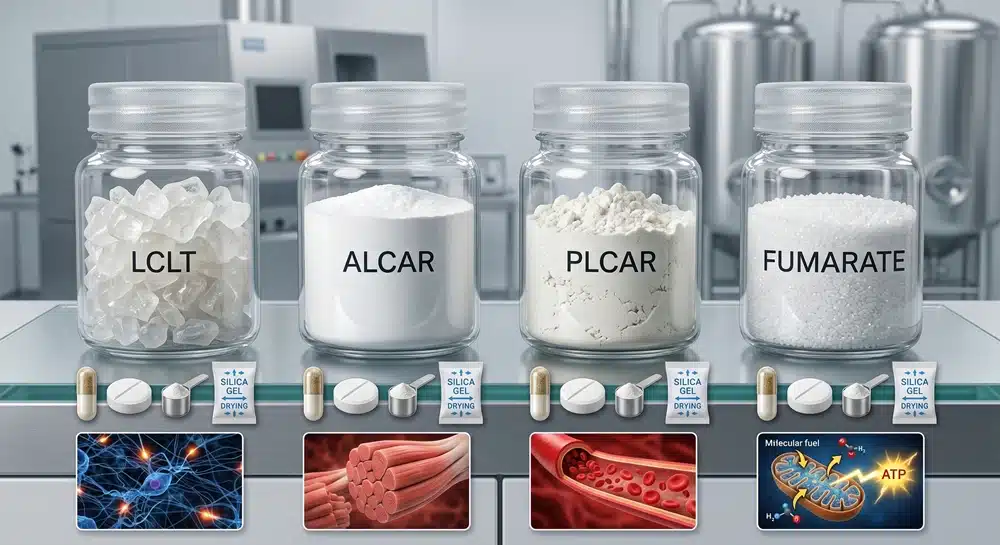
La L-carnitina è prodotta naturalmente dall’organismo ed è presente anche negli alimenti, in particolare in quelli di origine animale. Negli integratori, viene spesso utilizzata in formule destinate a chi conduce uno stile di vita attivo, al recupero post-allenamento, al supporto nella gestione del peso e al miglioramento delle prestazioni maschili. Il linguaggio da utilizzare deve concentrarsi su espressioni quali “favorisce il metabolismo dei grassi” o “favorisce il recupero dopo l’esercizio fisico”, senza garantire la perdita di grasso.
Perché si dovrebbe assumere la L-carnitina?
Favorisce il trasporto degli acidi grassi
La L-carnitina favorisce il trasporto degli acidi grassi a catena lunga nei mitocondri. Questa è la spiegazione meccanicistica più plausibile del motivo per cui viene abbinata al CoQ10: un ingrediente aiuta a convogliare il “carburante” nei mitocondri, mentre l’altro sostiene il processo di trasferimento degli elettroni a livello mitocondriale.
Prestazioni fisiche e posizionamento per il recupero
L'L-carnitina L-tartrato è ampiamente utilizzata nelle formule di nutrizione sportiva. Viene comunemente associata al recupero post-allenamento e agli stili di vita attivi. I marchi dovrebbero evitare di affermare che la sola L-carnitina determini la perdita di grasso o curi direttamente l'affaticamento. Per i prodotti sportivi, Produzione a contratto di nutrizione sportiva può aiutare a stabilire se siano più praticabili le capsule, le compresse, le polveri o le confezioni giornaliere.
Posizionamento cognitivo e specialistico
L'acetil-L-carnitina è comunemente utilizzata nelle formule per le funzioni cognitive e l'energia mentale grazie alla sua struttura acetilata e al suo ruolo. Non dovrebbe essere automaticamente sostituita all'L-carnitina L-tartrato nelle formule per lo sport senza prima valutare il mercato di riferimento, il dosaggio, il gusto e il formato del prodotto.
Come scegliere il miglior integratore di L-Carnitina?
Inizia considerando la funzione dichiarata del prodotto e il suo formato. Se il prodotto è un integratore alimentare in polvere per lo sport, l’L-carnitina L-tartrato potrebbe essere una scelta pratica. Se invece si tratta di una capsula per il supporto cognitivo, l’acetil-L-carnitina potrebbe essere più indicata. Se il prodotto è finalizzato al sostegno energetico generale con CoQ10, valuta se una singola capsula, una compressa, una bustina di polvere o una confezione a doppio formato possa fornire la dose richiesta senza compromettere la stabilità.
Le formulazioni a base di L-carnitina devono essere sottoposte a controlli relativi a titolo, perdita per essiccamento, granulometria, scorrevolezza, sapore, odore, metalli pesanti e analisi microbiologica. L’igroscopicità è particolarmente importante nelle capsule e nelle miscele in polvere. Uno scarso controllo dell’umidità può causare la formazione di grumi, variazioni di peso e una percezione di una durata di conservazione più breve.
Note di sicurezza relative alle formule ad alte prestazioni per uomini: L-carnitina, sinefrina, SR9011 e GW0742
La L-carnitina è un ingrediente legale per integratori alimentari se utilizzata in prodotti conformi alle normative. La sinefrina è un composto derivato dall’arancia amara con proprietà stimolanti che richiede un’attenta valutazione del dosaggio, della caffeina, della pressione sanguigna e delle avvertenze riportate sull’etichetta. I composti di tipo SR9011 e GW0742/GW1516 non sono ingredienti appropriati per gli integratori alimentari e non dovrebbero essere inclusi nella formulazione di un integratore legale. Gli atleti devono inoltre essere consapevoli che i modulatori metabolici di tipo GW1516/Cardarine sono vietati nello sport e sono stati associati a rischi di violazione delle norme antidoping.
Per le formule destinate alle prestazioni maschili o a uno stile di vita attivo, la strategia B2B più sicura consiste nel basarsi su ingredienti consentiti, etichette trasparenti, analisi di contaminanti effettuate da terzi e formulazioni conformi relative a struttura e funzione, quali “favorisce il metabolismo energetico” o “favorisce il recupero dopo l’esercizio fisico”. Evitare affermazioni relative al trattamento di malattie, posizionamenti che richiamino gli steroidi e qualsiasi implicazione che una formula contenga o sostituisca sostanze chimiche di ricerca vietate.
Coenzima Q10 e L-Carnitina: le differenze principali
Il CoQ10 e la L-carnitina sono spesso venduti insieme, ma non sono lo stesso ingrediente. Il CoQ10 sostiene la catena di trasferimento degli elettroni mitocondriale e i sistemi antiossidanti della fase lipidica. La L-carnitina favorisce il trasporto degli acidi grassi nei mitocondri. Questa distinzione è importante perché influisce sia sul messaggio rivolto al consumatore sia sulla forma farmaceutica finale.
Ecco un modulo che aiuta a comprendere le differenze principali tra il coenzima Q10 e la L-carnitina:
| Punto di confronto | Coenzima Q10 (CoQ10) | L-Carnitina | Implicazioni per la formulazione nel settore B2B |
|---|---|---|---|
| Meccanismo di base | Favorisce il trasferimento di elettroni nella catena respiratoria mitocondriale e l'equilibrio antiossidante cellulare. | Favorisce il trasporto degli acidi grassi a catena lunga nei mitocondri per la beta-ossidazione. | Sono complementari, non intercambiabili. |
| Profilo di solubilità | Liposolubile, poco adatto alla somministrazione semplice in soluzione acquosa. | Generalmente solubili in acqua; molte forme sono sensibili all'umidità. | Il CoQ10 viene spesso formulato in capsule molli o con vettori lipidici; la L-carnitina viene invece formulata in capsule, compresse, polveri o sistemi a dosaggio frazionato. |
| Dose commerciale standard | Spesso 100–200 mg al giorno, a seconda del posizionamento del prodotto. | Spesso da 500 a 2.000 mg al giorno, a seconda della forma e dell'uso previsto. | La dose di L-carnitina può determinare il numero di capsule e la strategia di confezionamento. |
| Attenzione al controllo qualità | Analisi mediante HPLC/UPLC, stato di ossidazione, qualità dell'olio vettore, indice di perossido nel caso di prodotti a base di olio. | Analisi, identità, perdita per essiccazione, metalli pesanti, microbiologia e scorrevolezza. | Le formule combinate richiedono specifiche di rilascio distinte per ciascun principio attivo. |
| Formati di prodotto più adatti | Capsule molli, liquidi a base lipidica, polveri a dispersione migliorata, microsfere. | Capsule, compresse, bustine di polvere, bevande pronte da bere, miscele per l'alimentazione sportiva. | Le confezioni a doppia capsula potrebbero risultare più efficaci rispetto ai modelli a capsula singola in cui “tutto è racchiuso insieme”. |
Perché funzionano meglio insieme
La loro sinergia può essere spiegata come un apporto di energia unito a un supporto alla conversione energetica. La L-carnitina aiuta a trasportare gli acidi grassi a catena lunga nei mitocondri, mentre il CoQ10 favorisce il trasferimento di elettroni nei mitocondri. Insieme, sono indicati per l’apporto energetico quotidiano, il sostegno alla salute cardiaca, la nutrizione sportiva, l’invecchiamento attivo e le formule per migliorare le prestazioni prive di stimolanti.
Dal punto di vista di un formulatore, “meglio insieme” non significa sempre “meglio nella stessa capsula”. Una capsula molle da 100 mg di CoQ10 in olio e una dose da 1.000 mg di L-carnitina in polvere potrebbero richiedere piattaforme di produzione diverse. Per i prodotti di alta gamma, si consiglia di optare per una confezione giornaliera a doppio formato: una capsula morbida di CoQ10 per l’assorbimento in fase lipidica più una capsula, una compressa o una bustina di L-carnitina in polvere per garantire l’efficacia della dose.
Approfondimenti sul settore manifatturiero: le sfide legate alla formulazione di CoQ10 + L-carnitina
Il CoQ10 e la L-carnitina sembrano semplici su un’etichetta, ma si comportano in modo molto diverso in fase di produzione. Il CoQ10 è lipofilo e offre prestazioni migliori se disperso in una fase oleosa o trasformato in una polvere a dispersione ottimizzata. Le forme di L-carnitina sono solitamente sostanze a dosaggio elevato e molte sono igroscopiche, il che può ridurre la scorrevolezza, aumentare il rischio di agglomerazione e causare variazioni nel peso delle capsule in caso di scarso controllo dell’umidità.
Una valutazione pratica dello stabilimento dovrebbe partire da quattro domande: (1) La formula è monodose o a dosi frazionate? (2) Il CoQ10 viene fornito sotto forma di sospensione oleosa, microsfere, polvere micronizzata o polvere emulsificata? (3) Quale forma di L-carnitina si adatta meglio all’indicazione terapeutica e alla forma farmaceutica previste? (4) Quali specifiche di rilascio confermeranno l’identità, il titolo, la qualità microbica, la presenza di metalli pesanti, l’umidità e l’uniformità delle capsule/compresse?
Per quanto riguarda i prodotti combinati, GENSEI può valutare la fattibilità di confezioni doppie contenenti softgel e capsule, bustine di polvere con una migliore dispersione del CoQ10 o formule in capsule che utilizzano eccipienti accuratamente selezionati.
conclusione
Il coenzima Q10 e la L-carnitina costituiscono una combinazione efficace per le formule energetiche prive di stimolanti, poiché supportano diverse fasi del metabolismo energetico mitocondriale. Il CoQ10 favorisce il trasferimento di elettroni e l’equilibrio antiossidante nella fase lipidica, mentre la L-carnitina favorisce il trasporto degli acidi grassi nei mitocondri. Per i consumatori, il punto fondamentale è che si tratta di sostanze complementari. Per i marchi di integratori, il punto fondamentale è che le proprietà di questi ingredienti richiedono scelte diverse in termini di forma di dosaggio, test di rilascio e controlli di stabilità.
Un prodotto efficace a base di CoQ10 + L-carnitina non dovrebbe basarsi esclusivamente su affermazioni di marketing. Dovrebbe invece fondarsi su materie prime validate, forme di dosaggio adeguate, controllo dell’umidità e dell’ossidazione, documentazione COA a livello di lotto e una formulazione conforme in termini di struttura e funzione.
Domande frequenti
riferimenti
- Ufficio NIH per gli integratori alimentari. “Scheda informativa sulla carnitina per gli operatori sanitari”. Disponibile all’indirizzo: https://ods.od.nih.gov/factsheets/Carnitine-HealthProfessional/
- NCCIH. “Coenzima Q10”. Disponibile all’indirizzo: https://www.nccih.nih.gov/health/coenzyme-q10
- PubChem. “Coenzima Q10”. Disponibile all’indirizzo: https://pubchem.ncbi.nlm.nih.gov/compound/Coenzyme-Q10
- PubMed. “Oleogel arricchiti con CoQ10 / Riferimento sulla formulazione in termini di biodisponibilità.” Disponibile all’indirizzo: https://pubmed.ncbi.nlm.nih.gov/30529659/
- FDA. “Affermazioni relative alla struttura e alla funzione”. Disponibile all’indirizzo: https://www.fda.gov/food/nutrition-food-labeling-and-critical-foods/structurefunction-claims
- eCFR. “Dichiarazioni relative agli integratori alimentari ai sensi del 21 CFR 101.93.” Disponibile all’indirizzo: https://www.ecfr.gov/current/title-21/chapter-I/subchapter-B/part-101/subpart-F/section-101.93
- eCFR. “21 CFR Parte 111 – cGMP per gli integratori alimentari”. Disponibile all’indirizzo: https://www.ecfr.gov/current/title-21/chapter-I/subchapter-B/part-111
- FDA. “Guida alla conformità alle norme cGMP per le piccole imprese nel settore degli integratori alimentari”. Disponibile all’indirizzo: https://www.fda.gov/regulatory-information/search-fda-guidance-documents/small-entity-compliance-guide-current-good-manufacturing-practice-manufacturing-packaging-labeling
- USADA. “Cosa dovrebbero sapere gli atleti sul GW1516?” Disponibile all’indirizzo: https://www.usada.org/spirit-of-sport/what-should-athletes-know-gw1516/
- WADA. “Avviso su GW501516.” Disponibile all’indirizzo: https://www.wada-ama.org/en/news/wada-issues-alert-gw501516

Warren Wan è un esperto di grande esperienza nel settore della filiera degli integratori alimentari, con una vasta esperienza pratica nella ricerca, nello sviluppo, nel controllo dei processi e nell’approvvigionamento globale di ingredienti fondamentali quali i peptidi di collagene, le proteine del brodo d’ossa e la cheratina. In qualità di autore di questa rubrica, si impegna a smascherare le strategie di marketing, trasformando la complessa scienza degli ingredienti e gli standard di controllo della qualità della produzione in una divulgazione scientifica approfondita e di facile comprensione, aiutando i lettori a comprendere la verità che si cela dietro le etichette e a compiere scelte più razionali in materia di salute.