スーパーで、骨スープが所狭しと並んだ棚をじっと見つめながら、どれを選べばいいか迷ったことはありませんか? 私もそんな経験があります。鶏肉と牛肉のどちらにすべきか迷い、自分の健康目標に最適な「魔法の霊薬」はどちらかを見極めようとしていました。骨スープは、喉の痛みを和らげることから肌の輝きを高めることまで、あらゆる効果で称賛され、ウェルネス界の寵児となっています。しかし、鶏の骨スープと牛の骨スープ、どちらを選べばいいのでしょうか? ここでは、骨スープの煮立つような世界へと飛び込み、それぞれの特徴や健康効果、そして両方を飲むべきかどうかを探っていきましょう。ネタバレになりますが、万人に当てはまる答えはありません。でも、あなたに最適なものを見つけるお手伝いをします。.
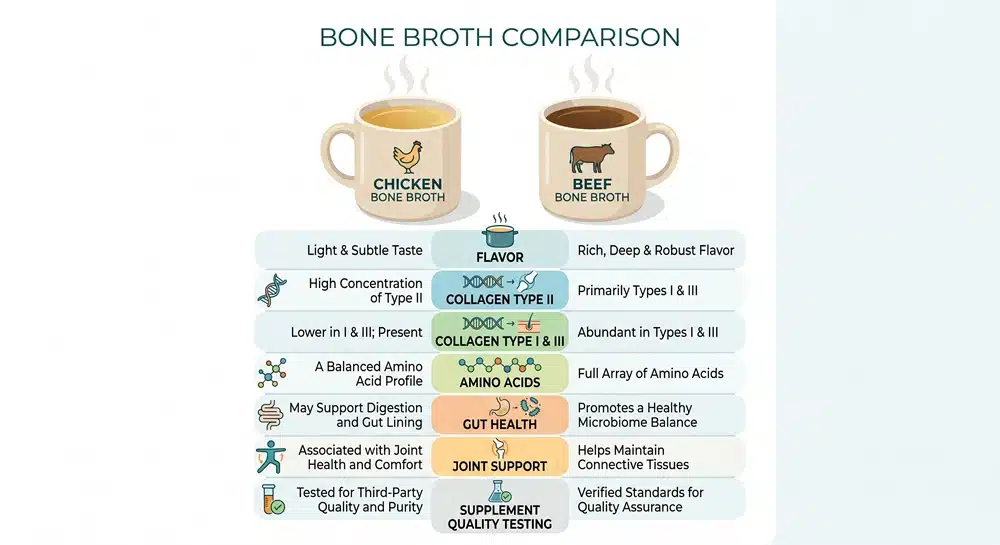
簡単な答え: 鶏の骨スープは、あっさりとした味わい、調理時間の短縮、軟骨を主成分とする製品には通常、より適しています。一方、牛肉の骨スープは、コクのある味わいと牛コラーゲンを主成分とする製品には通常、より適しています。 しかし、「最適な」ブイヨンは、動物の種類そのものよりも、アミノ酸組成、タンパク質含有量、ナトリウム含有量、重金属検査の結果、そして製品が液体ブイヨン、粉末、あるいは加水分解骨ブイヨンタンパク質のいずれであるかといった点によって決まります。.
ボーンブロスとは何か?
ボーン・ブロス 鶏肉、牛肉、豚肉、あるいは魚などの動物の骨を、野菜、ハーブ、酢と一緒に12時間から24時間以上煮込む。このじっくりとした工程によって、コラーゲン、アミノ酸、ゼラチン、カルシウムやマグネシウムなどのミネラルといった栄養素の宝庫が引き出される。肉から作られ、2、3時間煮込むだけの普通のスープとは違い、ボーンブロスは煮込む時間が長いため、栄養の宝庫となるのだ。単なるストックではなく、ストックは4~6時間煮込むが、ボーンブロスは旨味を余すところなく抽出するため、さらに1マイル余分に煮込むのだ。
なぜ大げさなのか?ボーンブロスは万能だ 健康補助食品成分, 、スープからスムージーまで、あらゆる料理に使われています。筋肉をサポートするアミノ酸を含むことから、スポーツ栄養の定番となっており、その役割がしばしば称賛されています。 関節健康サプリメント.風邪を和らげるために飲むにせよ、ボリュームのあるシチューのベースとして使うにせよ、ボーンブロスはキッチンのMVPだ。
基本チキン・ボーン・ブロス vs ビーフ・ボーン・ブロス
本題に入ろう。チキンとビーフのボーンブロスの栄養価はどうだろうか?どちらも栄養満点だが、そのプロフィールは異なるため、選ぶ際に迷うかもしれない。
栄養比較
骨スープの栄養成分は一定ではありません。骨の切り方、軟骨の含有量、調理時間や加水分解時間、濃度、ナトリウムの添加量、そして最終製品が「そのまま飲めるスープ」か「噴霧乾燥された骨スープタンパク質粉末」かによって、その成分は変化します。 以下の比較表は一般的な違いをまとめたものですが、サプリメントブランドは、特にアミノ酸、タンパク質、ナトリウム、灰分、重金属については、ロットごとの分析証明書(COA)を確認した上で最終判断を下すべきです。.
| ファクター | 鶏がらスープ | 牛骨スープ | ベスト・ユースケース |
|---|---|---|---|
| 典型的な風味 | より軽やかで、よりすっきりとした味わいで、スープやソース、飲み物などに使いやすくなっています。. | よりコクがあり、深みがあり、風味豊かで、ボリュームのあるレシピや高級スープのポジションに最適です。. | 鶏肉は使い勝手が良く、牛肉はコクのある味わいが魅力です。. |
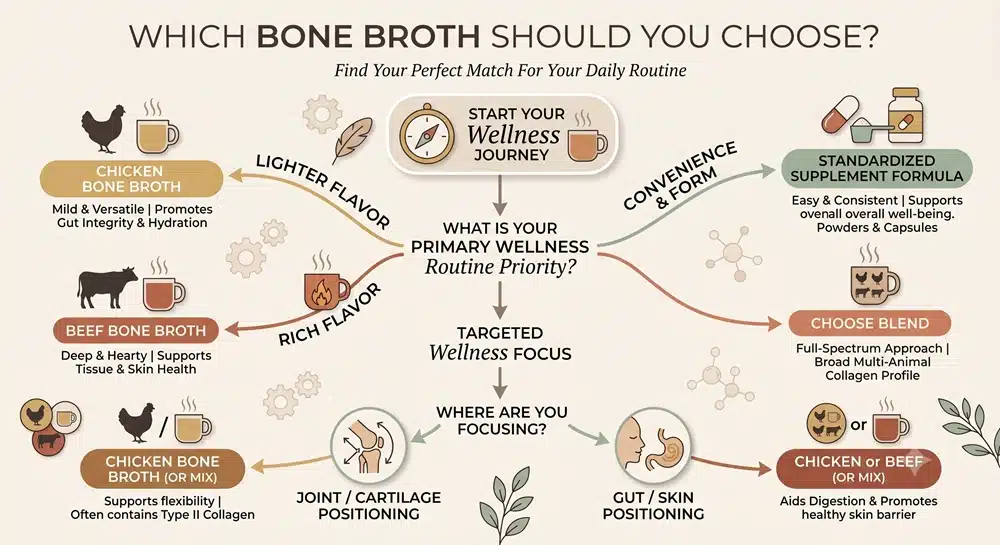
| 一般的なコラーゲンの配置 | 鶏の足、胸骨、あるいは軟骨を多く含む部位を使用する場合、しばしば軟骨由来のII型コラーゲンと関連付けられる。. | 多くの場合、骨や結合組織由来のウシ型IおよびIIIコラーゲン源と関連付けられている。. | 関節・軟骨のマッサージには鶏肉、皮膚・腸・コラーゲンペプチドの整えには牛肉。. |
| 1カップあたりのタンパク質 | 1カップあたり9~12g程度が一般的ですが、レシピや濃度によって異なります。. | 通常、1カップあたり8~10g程度ですが、レシピや濃度によって異なります。. | 必ず栄養成分表示またはCOAを確認してください。. |
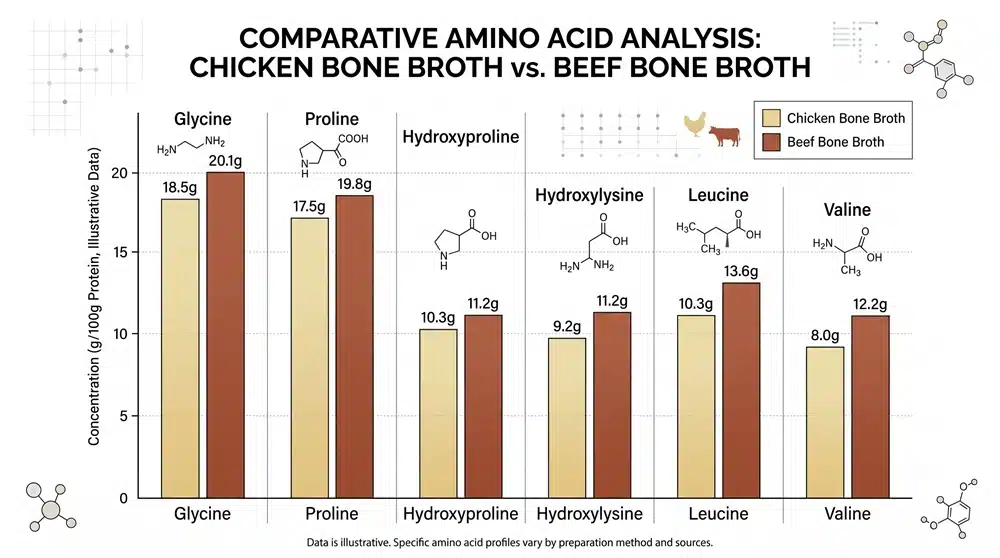
| アミノ酸組成 | 公表されている市販のサンプルデータによると、チキンブロスには、グリシン、プロリン、ヒドロキシプロリン、ロイシン、イソロイシン、バリンの含有量がビーフブロスよりもわずかに多いことが示された。. | 公表されている市販のサンプルデータによると、ビーフブロスにはヒドロキシリシンがわずかに多く含まれていることがわかった。. | 動物由来の原料のみに頼らず、アミノ酸の分析証明書(COA)を請求してください。. |
| ミネラルとナトリウム | 配合、添加塩分、濃度、およびろ過方法に大きく左右されます。. | 配合、添加塩分、濃度、およびろ過方法に大きく左右されます。. | 1食分あたりのナトリウム、灰分、カルシウム、マグネシウム、カリウムの含有量を確認してください。. |
| 工業製品の品質に関する懸念 | 微生物学、ナトリウム、噴霧乾燥による安定性、家禽由来のトレーサビリティ、およびアレルゲン・表示表示。. | 重金属検査、牛由来のトレーサビリティ、牧草飼育の表示、噴霧乾燥の安定性、および微生物学。. | いずれも、ロット単位での成分分析(COA)および汚染物質検査が必要です。. |
- タンパク質:250mlあたり、牛肉が10gであるのに対し、鶏がらスープは12gと、ややタンパク質が多い。このため、筋肉の回復に重点を置く人、特にスポーツ栄養学に最適な選択となる。
- コラーゲン: 牛肉の骨スープは、通常、骨密度の高い骨を使って作られることが多く、コラーゲン、特に皮膚や 腸の健康. 鶏の骨から取ったブイヨンには、関節の健康をサポートするサプリメントの主役とも言えるII型コラーゲンが豊富に含まれています。.
- アミノ酸:鶏ガラスープには、筋肉の成長をサポートするロイシンなどの分岐鎖アミノ酸(BCAA)が多く含まれている。一方、ビーフブロスはグリシンとプロリンが多く、腸の修復と睡眠を助ける。
- 電解質:鶏がらスープにはカリウムやマグネシウムなどの電解質が多く含まれ、水分補給に最適。
- 脂肪酸:牧草飼育牛の牛骨スープは、穀物飼育鳥の鶏骨スープに比べ、オメガ3とオメガ6の比率がよく、炎症を抑える可能性がある。
どちらもカロリーは低く、調理法にもよるが、カップ1杯あたり30~60カロリーが一般的だ。自家製ブロスは添加物が少ないが、市販のものはナトリウムやタンパク質の含有量にばらつきがある。
なぜアミノ酸のCOAが、動物由来の原料よりも重要なのか
多くの記事では、「鶏肉は関節に、牛肉は腸や皮膚に良い」と簡略化して比較しています。これは大まかな目安としては有用ですが、栄養補助食品の配合を決定するには不十分です。 2019年にShawとFlynnが行った市販の骨スープの分析では、牛肉、鶏肉、七面鳥の骨スープのサンプルに含まれる19種類のアミノ酸を定量し、最終的なアミノ酸組成が一般的なマーケティング上の想定とは異なる場合があることを示しました。.
例えば、分析対象となった市販サンプルでは、鶏の骨スープは、グリシン、プロリン、ヒドロキシプロリン、ロイシン、イソロイシン、バリンの含有量が牛肉の骨スープよりわずかに多かったのに対し、ヒドロキシリジンの含有量は牛肉の骨スープの方がわずかに多かった。 これは、すべての鶏骨スープが優れているという意味ではありません。つまり、動物由来であるという事実だけでは、信頼できる基準とはならないということです。サプリメントブランドに関しては、正しい問いは「鶏か牛肉か?」だけでなく、「そのロット固有の分析証明書(COA)には何が記載されているか?」であるべきです。“
| アミノ酸、mg/g(製品) | 牛骨スープ | 鶏がらスープ | 実践的な解釈 |
|---|---|---|---|
| グリシン | 3.709 ± 0.059 | 4.063 ± 0.027 | このサンプルセットでは鶏肉の含有量が高かった。COAで確認してください。. |
| プロライン | 2.211 ± 0.034 | 2.440 ± 0.078 | このサンプルセットでは、コラーゲンの配置に関連して、チキンの含有量が高かった。. |
| ヒドロキシプロリン | 1.967 ± 0.314 | 2.158 ± 0.017 | このサンプルセットでは、チキンの含有量が高かった。コラーゲンのマーカーとして有用である。. |
| ヒドロキシリジン | 0.285 ± 0.006 | 0.276 ± 0.003 | このサンプルセットでは、牛肉の含有量がわずかに高かった。. |
| ロイシン | 0.726 ± 0.011 | 1.053 ± 0.036 | 鶏肉の方が栄養価は高かったが、骨スープは依然として完全なスポーツ用タンパク質とは言えない。. |
| バリン | 0.487 ± 0.008 | 0.645 ± 0.022 | チキンの値が高かったことから、アミノ酸の全項目検査が必要であることが裏付けられた。. |
出典注記:数値はShaw & Flynn(2019)によるもので、市販の骨スープのサンプルを用いて算出されたものです。これらは、公表された分析結果の一例として引用すべきであり、すべての製品に普遍的に当てはまる保証として扱うべきではありません。.
の類似点と相違点 チキン・ボーン・ブロス vs ビーフ・ボーン・ブロス 健康上の利点?

どちらのブロスも核となる効能を共有しているが、独自の栄養プロフィールを持つため、それぞれに異なる利点がある。
共有のメリット
- 腸の健康:両方のスープに含まれるゼラチンとアミノ酸は、腸内環境の修復を助け、リーキーガット症候群などの問題を緩和する可能性がある。そのため、消化器系の健康には貴重な栄養補助食品素材となる。
- 関節の健康:コラーゲンは軟骨と結合組織をサポートし、関節の痛みやこわばりを軽減する。
- 皮膚の健康:コラーゲンは肌の弾力と潤いを高め、シワを減らす可能性がある。
- 免疫サポート:アミノ酸やミネラルなどの栄養素は免疫システムを強化し、風邪や感染症を撃退するのに役立つ。
ユニークなメリット
鶏がらスープ:
- 関節の健康:鶏のコラーゲンII型が豊富で、関節の健康に特に効果的。ある研究が 栄養素 II型コラーゲンが変形性膝関節症患者の膝の痛みを軽減できることがわかった。.
- 皮膚の健康:同じ種類のコラーゲンは、肌の保湿を高め、シワを減らす可能性があり、天然の美容ブースターとなる。
- 筋肉の回復:BCAA含有量が高く、筋肉の成長と修復をサポート。アスリートやスポーツ栄養に関心のある方に最適。
牛骨スープ:
- 腸の健康:グリシンの濃度が高いほど胃酸の分泌が促進され、腸の粘膜が修復される。
- 睡眠と気分: グリシンは、入眠までの時間を短縮し、睡眠の質を向上させるほか、セロトニンの分泌を促進して気分を明るくする効果があります。.
- エネルギー・レベル:骨密度が高いほどミネラルが多くなり、エネルギーと全体的な栄養が強化される可能性がある。
これらの利点は、骨の質や調理時間などの要因によって異なる。牧草で育てられた骨や放牧で育てられた骨は、より栄養価の高いスープになることが多い。
チキンとビーフのボーンブロスの味と調理法
のどちらかを選択する際、味が決め手になることがある。 鶏と牛の骨スープ. .両者の比較はこうだ:
- 鶏がらスープ:軽やかでデリケートな風味は、キッチンのカメレオン。スープ、ソース、リゾット、スムージーに使っても、他の食材の味を邪魔することなく、栄養価を高めることができる。また、塩と胡椒をひとつまみ加えて飲むのも最高だ。
- 牛骨スープ:ビーフシチュー、チリ、フレンチオニオンスープなど、しっかりした料理に最適。そのリッチな味わいは、軽めのレシピには不向きかもしれないが、コンフォート・フードでは輝く。
チキンボーンブロスは平日の夜の手軽なスープに、ビーフボーンブロスは週末のスロークッカーレシピを格上げしてくれる。繊細な味を好むか、力強い味を好むかによって、好みが分かれるかもしれない。
併用した方が良いのか?
両方摂れるのになぜ選ぶ?鶏肉と牛肉のボーンブロスを組み合わせることで、栄養素をバランスよく組み合わせることができる。例えば、関節をサポートするⅡ型コラーゲンは鶏肉から、腸を癒すグリシンは牛肉から摂取できる。このアプローチは カスタムフォーミュラ 両方の長所を融合させ、あなたの健康のために。
実際には、あっさりした料理にはチキン・ボーン・ブロスを使い、こってりした料理にはビーフを使う。会社によっては、ボーンブロスをブレンドした製品を提供しているところもある。 牛骨コラーゲンペプチド さらに健康効果を高める。
最終的には、あなたの目標によって決めることになる。関節の健康を重視するなら鶏肉。腸の健康や睡眠の質を高めたいなら、牛肉を選ぶといいだろう。あるいは、私のようにバラエティに富んでいるのが好きな人は、両方の食材をパントリーに常備して、レシピや健康上の必要性に応じて使い分けよう。
メーカーの視点から:骨スープパウダーの品質評価方法
消費者にとって、鶏骨スープと牛肉骨スープのどちらを選ぶかは、味や健康上の目標次第となるでしょう。一方、サプリメントブランドにとっては、その判断はより技術的な側面が重視されます。高品質な骨スープ粉末を評価する際には、原料のトレーサビリティ、アミノ酸組成、タンパク質含有量、灰分、ナトリウム含有量、溶解性、風味のマスキング効果、微生物基準、および重金属検査といった項目を検討する必要があります。.
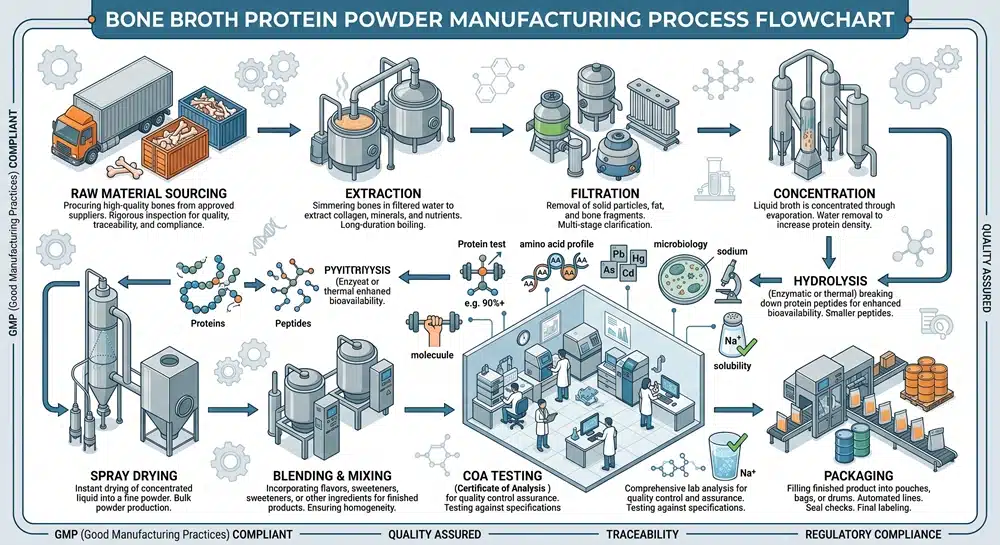
工業的な製造工程では、骨や結合組織を抽出し、ろ過・濃縮した後、多くの場合、噴霧乾燥によって粉末に加工します。適切に管理された製造プロセスにより、タンパク質の品質を維持しつつ、余分な脂肪を除去し、臭いを抑制し、完成した粉末が容器、小袋、カプセル、あるいは機能性飲料のブレンドの中で安定した状態を保つようにする必要があります。.
| クオリティ・メトリック | サプライヤーに何を尋ねるべきか | なぜ重要なのか |
|---|---|---|
| 原材料の調達先 | 牧草飼育の牛、放牧飼育の鶏、抗生物質不使用の表示、原産国、動物の健康に関する証明書。. | ラベル記載の主張、トレーサビリティ、およびプレミアムなポジショニングを裏付けます。. |
| タンパク質およびアミノ酸組成 | ケルダール法またはデュマ法によるタンパク質分析;グリシン、プロリン、ヒドロキシプロリン、ロイシン、バリン、イソロイシンを含む完全なアミノ酸分析証明書(COA)。. | コラーゲンに関する曖昧な主張を防ぎ、処方の正確性を支えます。. |
| 灰分およびナトリウム | 総灰分、1食分あたりのナトリウム、カルシウム、マグネシウム、カリウム、リン。. | 灰分やナトリウムの含有量が高いと、製品は「ミネラルが豊富」に見えるかもしれませんが、消費者の使用に適さなくなる可能性があります。. |
| 加水分解と溶解度 | 加水分解度、分子量分布、インスタント化、分散性、および沈降試験。. | レディ・トゥ・ミックス粉末、小袋入り製品、コーヒークリーマー、スープ、スティックパックには不可欠です。. |
| 重金属 | 鉛、カドミウム、ヒ素、水銀に関するバッチ単位のICP-MS分析。. | 動物の骨には環境汚染物質が自然に蓄積される可能性があるため、信頼性を確保するには検査が不可欠です。. |
| 微生物学 | 総菌数、酵母・カビ、大腸菌、サルモネラ菌、黄色ブドウ球菌、および大腸菌群。. | 常温保存可能な粉末製品および世界各国への輸出書類に必須です。. |
| 官能特性 | 色、香り、味、後味、およびマスキングとの相性。. | その原料が、バニラ、チョコレート、コーヒー、スープ、または塩味のレシピに適しているかどうかを判断します。. |
ボーンブロスを作る
ボーン・ブロス作りに挑戦してみませんか?時間はかかるが、思ったより簡単だ。簡単なガイドはこちら:
鶏がらスープのレシピ
- 原材料鶏の骨(枝肉、首、足)2~3ポンド、タマネギ1個、ニンジン2本、セロリ2本、リンゴ酢大さじ2、ハーブ(ローリエ、タイム)、水。
- ステップ:鍋またはスロークッカーに骨を入れ、野菜、酢、ハーブを加える。水で蓋をする。沸騰したら12~24時間煮込む。濾して保存する。
牛骨スープのレシピ
- 原材料牛骨(骨髄、骨付き肉)2~3ポンド、タマネギ1個、ニンジン2本、セロリ2本、リンゴ酢大さじ2、ハーブ、水。
- ステップ:骨を400°Fのオーブンで30分ローストする。鍋に野菜、酢、ハーブを入れて火にかける。水で蓋をする。24~48時間煮込む。濾して保存する。
牧草で飼育された高品質の骨を使用することで、添加物を含まない栄養豊富なスープができる。
自家製ブイヨン vs 市販の骨ブイヨンプロテインパウダー
自家製の骨スープは料理や日常的な飲み物として最適ですが、品質が一定ではありません。 家庭で作った2つのバッチでも、タンパク質、ナトリウム、ゼラチンの強度、脂肪分、風味、アミノ酸濃度などが異なる場合があります。一方、工業的に製造された骨スープのタンパク質パウダーは、品質の一貫性を重視して設計されています。メーカーは各ロットを検査し、水分量を管理し、微生物によるリスクを低減させ、タンパク質、アミノ酸、重金属、微生物に関する分析証明書(COA)を提供することができます。.
- 自家製のスープストックを選びましょう 新鮮な風味、料理の幅の広さ、そして自然食品を使ったキッチンでの日課を求めているなら。.
- 骨スープの粉末を選んでください サプリメント製品において、正確に測定されたタンパク質含有量、安定した保存期間、再現性の高い配合、そして使いやすさが求められる場合。.
- 鶏肉と牛肉のブレンドをお選びください もし、コラーゲンの位置付けに関するより広範な話題を網羅することが目的であるならば、軟骨やII型コラーゲンについては鶏肉を、ウシのI型・III型コラーゲンの位置付けについては牛肉を取り上げるのがよいだろう。.
よくあるご質問
鶏の骨と牛の骨、どちらのブイヨンがよいでしょうか?
どちらが普遍的に優れているというわけではありません。鶏の骨から取ったブイヨンは通常、風味が淡白で、軟骨を主成分とする製品に適しています。一方、牛の骨から取ったブイヨンは風味が濃厚で、牛コラーゲンを主成分とする製品に適しています。サプリメントブランドの場合、どちらが適しているかは、COA(分析証明書)に記載されているタンパク質、アミノ酸、ナトリウム、灰分、微生物検査、重金属の検査結果によって決まります。.
コラーゲンが最も多いボーンブロスは?
牛骨スープは、牛の骨や結合組織にI型およびIII型コラーゲンが豊富に含まれていることから、コラーゲンが豊富であると宣伝されることがよくあります。しかし、液体スープに含まれるコラーゲンの含有量は大きく異なります。鶏の足、胸骨、または軟骨が豊富な部位を使って作った鶏スープも、コラーゲン由来のアミノ酸を多く含んでいる場合があります。 分析証明書(COA)に記載されているタンパク質およびヒドロキシプロリンのデータを確認してください。.
鶏の骨から取ったスープは、ダイエットに効果的でしょうか?
鶏の骨から取ったスープは、あっさりとしていて温かく、風味豊かで、多くの場合低カロリーでありながらある程度のタンパク質も摂取できるため、体重管理のための食事に役立つことがあります。しかし、それ自体が直接的に脂肪の減少をもたらすわけではありません。体重管理は、依然として総摂取カロリー、タンパク質の摂取量、運動量、そして食事の継続性に左右されます。.
牛肉の骨スープの代わりに、鶏の骨スープを使ってもいいですか?
はい、多くのスープ、ソース、穀物料理、飲み物などのレシピでは、鶏の骨から取った出汁を牛の骨から取った出汁の代わりに使うことができます。その場合、味わいはよりあっさりとし、香ばしい深みも控えめになります。ビーフシチュー、チリ、グレービー、フレンチオニオンスープなどのコクのある料理には、通常、牛の骨から取った出汁を使う方が、より豊かな風味が得られます。.
骨スープは、普通の鶏肉や牛肉のスープと同じものですか?
必ずしもそうとは限りません。通常のブイヨンは通常、調理時間が短く、骨よりも肉を多く使って作られることがあります。一方、ボーンブロスは通常、骨や結合組織を長時間じっくりと煮込むため、ゼラチンやコラーゲン由来のアミノ酸をより多く抽出することができます。具体的な栄養価は、やはりレシピによって異なります。.
骨スープの粉末は、重金属の検査を行うべきでしょうか?
はい。骨には環境中の元素が蓄積される可能性があるため、骨スープの原材料については、鉛、カドミウム、ヒ素、水銀の検査を行う必要があります。サプリメント製品については、バッチごとの分析証明書(COA)を請求し、できればICP-MSなどの検証済みの分析法を用いたものに加え、微生物学的データおよびタンパク質データも併せて提出してもらうようにしてください。.
骨スープは完全タンパク質ですか?
骨スープはタンパク質の供給源となりますが、コラーゲン由来のタンパク質は、特定の必須アミノ酸、特にトリプトファンの含有量が本来少ないのが特徴です。筋肉増強のための完全な栄養摂取を目的とする場合、ホエイ、牛肉タンパク質、卵、乳製品、魚、豆類などの完全なタンパク質源の代わりとしては用いるべきではありません。.
ブランドは、鶏と牛肉の骨から取ったブイヨンを混ぜ合わせてもよいのでしょうか?
はい。1:1の配合やカスタマイズされたブレンドにより、鶏由来の軟骨/II型コラーゲンの効果と、牛由来のI型およびIII型コラーゲンの効果を組み合わせることで、コラーゲンの働きに関するストーリーをより幅広く展開することができます。プライベートブランド製品については、配合を確定する前に、風味、溶解性、ナトリウム含有量、およびアミノ酸含有量の目標値を確認してください。.
結論
の対決では 鶏がらスープと牛骨スープの比較どちらも独自の強みを持つ栄養の宝庫だ。チキン・ボーン・ブロスは関節の健康、肌のつや、筋肉の回復の味方であり、ビーフ・ボーン・ブロスは腸の健康、睡眠、エネルギーの源として輝く。どちらか一方を選ぶか、両方を選ぶか、あるいはミックスするかは、あなたの好み、健康目標、調理スタイルによる。マグカップを手に取り、両方試してみて、どのボーン・ブロスがあなたの体と味覚を喜ばせるかを発見してみてはいかがだろう。
参考文献
[1] Current target page – Chicken Bone Broth vs Beef Bone Broth: https://collagensei.com/chicken-bone-broth-vs-beef-bone-broth/
[2] Harvard Health – Savoring the benefits of bone broth: https://www.health.harvard.edu/diet-and-nutrition/savoring-the-benefits-of-bone-broth-worth-a-taste
[3] Shaw & Flynn, 2019 – Amino acid content of beef, chicken, and turkey bone broth: https://www.westmont.edu/sites/default/files/users/user1231/V19No4/Nick%20Flynn_final.pdf
[4] Alcock et al., 2019 – Bone broth unlikely to provide reliable concentrations of collagen precursors: https://pubmed.ncbi.nlm.nih.gov/29893587/
[5] Verywell Health – Bone broth benefits and limitations: https://www.verywellhealth.com/bone-broth-7967614
[6] FDA – Environmental contaminants in food and dietary supplements: https://www.fda.gov/food/chemical-contaminants-pesticides/environmental-contaminants-food
[7] FDA – Testing results for arsenic, lead, cadmium and mercury: https://www.fda.gov/food/environmental-contaminants-food/testing-results-arsenic-lead-cadmium-and-mercury
[8] NSF – Supplement and vitamin certification: https://www.nsf.org/consumer-resources/articles/supplement-vitamin-certification
[9] Hsu et al., 2017 – Essential and toxic metals in animal bone broths: https://pubmed.ncbi.nlm.nih.gov/28804437/
[10] Schwartz & Park, 2012 – Hydrolyzed chicken sternal cartilage extract: https://pubmed.ncbi.nlm.nih.gov/22956862/

ウォーレン・ワン氏は、栄養補助食品のサプライチェーンにおいて豊富な経験を持つベテランの専門家であり、コラーゲンペプチド、骨スープ由来タンパク質、ケラチンといった主要成分の研究、開発、工程管理、およびグローバルな調達において、豊富な実務経験を有しています。 本コラムの執筆者として、彼はマーケティング的な装いを剥ぎ取り、難解な成分科学や製造品質管理基準を、分かりやすい本格的な科学普及記事へと変換することに尽力しています。これにより、読者がラベルの裏にある真実を理解し、より合理的な健康に関する選択を行えるよう支援しています。.