Вам когда-нибудь доводилось стоять в продуктовом магазине, разглядывая полки, заваленные бульонами на костях, и гадать, какой из них выбрать? Я была в такой ситуации, разрываясь между куриным и говяжьим бульоном, пытаясь понять, какой из них станет волшебным эликсиром для достижения моих целей в области здоровья. Костный бульон стал настоящим фаворитом в сфере здорового образа жизни, его хвалят за все: от облегчения боли в горле до придания коже сияния. Но когда дело доходит до выбора между куриным и говяжьим костным бульоном, как же сделать выбор? Давайте погрузимся в кипящий мир костного бульона, рассмотрим, что делает каждый из них уникальным, каковы их преимущества для здоровья и стоит ли вам пробовать оба. Спойлер: универсального ответа нет, но я помогу вам найти то, что лучше всего подходит именно вам.
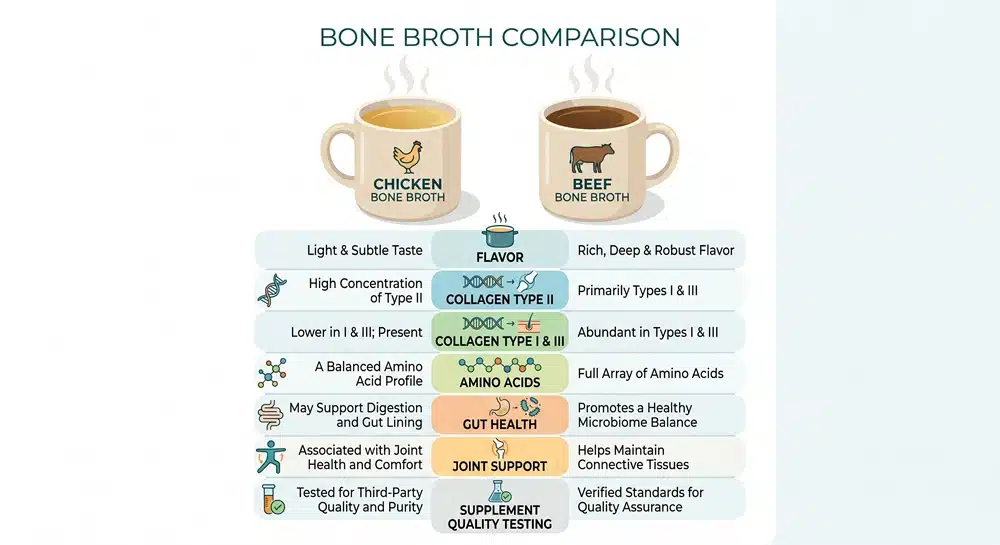
Краткий ответ: Куриный костный бульон, как правило, является лучшим выбором для получения более легкого вкуса, более быстрого приготовления и рецептур, ориентированных на хрящевую ткань, тогда как говяжий костный бульон обычно лучше подходит для получения более насыщенного вкуса и получения коллагена бычьего происхождения. Однако выбор “лучшего” бульона зависит не столько от вида животного, сколько от аминокислотного профиля, содержания белка, уровня натрия, результатов тестирования на содержание тяжелых металлов, а также от того, представляет ли собой продукт жидкий бульон, порошок или гидролизованный белок костного бульона.
Что такое костный бульон?
Костный бульон это как теплые объятия в кружке, приготовленные путем кипячения костей животных - куриных, говяжьих, свиных или даже рыбных - с овощами, травами и небольшим количеством уксуса в течение 12-24 часов и более. Этот медленный процесс позволяет извлечь сокровища питательных веществ: коллаген, аминокислоты, желатин и минералы, такие как кальций и магний. В отличие от обычного бульона, который готовится из мяса и варится всего пару часов, костный бульон за счет длительного времени приготовления становится настоящим кладезем питательных веществ. Это не просто бульон - бульон готовится 4-6 часов, а костный бульон проходит еще одну милю, чтобы извлечь все полезные вещества.
Почему так много шума? Костный бульон - это универсальный ингредиент диетической добавки, который используется во всём — от супов до смузи. Он является основным компонентом спортивного питания благодаря содержанию аминокислот, способствующих росту мышц, и его часто хвалят за его роль в добавки для здоровья суставов. Неважно, пьете ли вы его, чтобы успокоить простуду, или используете в качестве основы для сытного рагу, костный бульон - это MVP кухни.
Основы: Куриный костный бульон против говяжьего костного бульона
Давайте перейдем к мясу (или костям) вопроса: как соотносятся куриный и говяжий костный бульон с точки зрения питательности? Оба продукта богаты питательными веществами, но их состав различается, что может повлиять на ваш выбор.
Сравнение питательных веществ
Состав костного бульона не является фиксированным. Он зависит от вида костного сырья, содержания хрящевой ткани, продолжительности варки или гидролиза, степени концентрирования, добавления натрия, а также от того, является ли конечный продукт готовым к употреблению бульоном или порошком белка костного бульона, полученным методом распылительной сушки. В приведённом ниже сравнении обобщены общие различия, однако производителям пищевых добавок следует подтверждать окончательные данные с помощью сертификата анализа (COA) для конкретной партии, особенно в отношении аминокислот, белка, натрия, золы и тяжёлых металлов.
| Фактор | Бульон из куриных костей | Бульон из говяжьих костей | Лучший пример использования |
|---|---|---|---|
| Характерный вкус | Более легкий, чистый, удобный в использовании в супах, соусах и напитках. | Более насыщенный, глубокий и пикантный вкус, идеально подходит для сытных блюд и позиционирования бульона премиум-класса. | Курица — за универсальность; говядина — за насыщенный вкус. |
| Расположение коллагена в целом | Часто ассоциируется с коллагеном II типа хрящевого происхождения при использовании куриных лапок, грудины или других частей, богатых хрящевой тканью. | Часто ассоциируется с источниками коллагена I и III типа бычьего происхождения, получаемыми из костей и соединительной ткани. | Курица — для воздействия на суставы и хрящи; говядина — для укрепления кожи, кишечника и коллагеновых пептидов. |
| Содержание белка в одной чашке | Часто около 9–12 г на чашку, но это зависит от рецепта и концентрации. | Часто около 8–10 г на чашку, но это зависит от рецепта и концентрации. | Всегда проверяйте информацию на этикетке с указанием пищевой ценности или в сертификате соответствия (COA). |
| Аминокислотный профиль | Согласно опубликованным данным по коммерческим образцам, в курином бульоне содержание глицина, пролина, гидроксипролина, лейцина, изолейцина и валина оказалось несколько выше, чем в говяжьем. | Согласно опубликованным данным коммерческих исследований, в говяжьем бульоне содержание гидроксилизина оказалось несколько выше. | Не полагайтесь исключительно на информацию о происхождении животного; запросите сертификат анализа аминокислотного состава (COA). |
| Минералы и натрий | Это в значительной степени зависит от состава, количества добавленной соли, концентрации и способа фильтрации. | Это в значительной степени зависит от состава, количества добавленной соли, концентрации и способа фильтрации. | Проверьте содержание натрия, золы, кальция, магния и калия в одной порции. |
| Проблема качества в промышленности | Микробиология, натрий, стабильность при распылительной сушке, отслеживаемость происхождения мяса птицы, а также информация об аллергенах и заявления на этикетке. | Анализ содержания тяжелых металлов, отслеживаемость происхождения крупного рогатого скота, заявления о кормлении скота травой, стабильность при распылительной сушке и микробиология. | В обоих случаях требуется анализ на соответствие спецификации (COA) и проверка на наличие примесей на уровне партии. |
- Протеин: В курином костном бульоне немного больше белка - около 12 граммов на 250 мл по сравнению с 10 граммами в говяжьем. Это делает его отличным выбором для тех, кто делает ставку на восстановление мышц, особенно в спортивном питании.
- Коллаген: Говяжий костный бульон, который часто готовят из более плотных костей, как правило, содержит больше коллагена, особенно I и III типов, которые играют ключевую роль для кожи и здоровье кишечника. Куриный костный бульон богат коллагеном II типа — главным компонентом биологически активных добавок для здоровья суставов.
- Аминокислоты: В курином бульоне больше аминокислот с разветвленной цепью (ВСАА), например лейцина, который способствует росту мышц. В говяжьем бульоне, однако, больше глицина и пролина, способствующих восстановлению кишечника и сну.
- Электролиты: Куриный костный бульон содержит больше гидратирующих электролитов, таких как калий и магний, что делает его лучшим средством для гидратации.
- Жирные кислоты: Костный бульон из говядины, полученный от откормленного на травах скота, часто имеет лучшее соотношение омега-3 и омега-6, что может уменьшить воспаление по сравнению с куриным бульоном из откормленной зерном птицы.
Калорийность обоих блюд невысока, обычно 30-60 на чашку в зависимости от способа приготовления. Домашние бульоны могут содержать меньше добавок, в то время как покупные варианты могут отличаться по содержанию натрия и белка.
Почему анализ аминокислотного состава (COA) важнее, чем источник животного происхождения
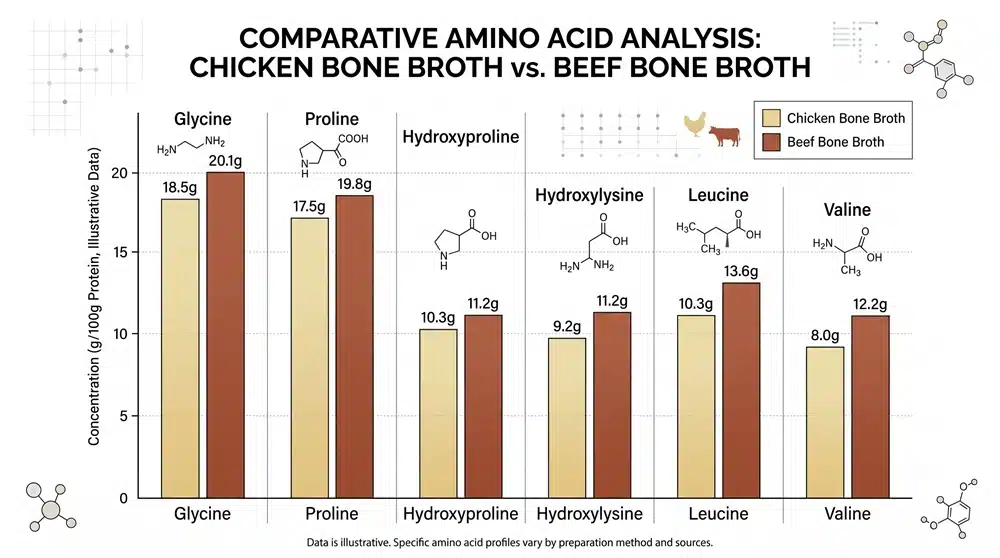
Во многих статьях сравнение упрощают, утверждая, что “куриный бульон полезен для суставов”, а “говяжий — для кишечника и кожи”. Такой подход полезен в общем плане, но его недостаточно для разработки рецептуры пищевых добавок. В ходе коммерческого анализа костного бульона, проведенного Шоу и Флинном в 2019 году, было определено содержание 19 аминокислот в образцах костного бульона из говядины, курицы и индейки, что показало: конечный аминокислотный профиль может отличаться от распространенных маркетинговых предположений.
Например, в проанализированных коммерческих образцах содержание глицина, пролина, гидроксипролина, лейцина, изолейцина и валина в курином костном бульоне было немного выше, чем в говяжьем, в то время как содержание гидроксилизина в говяжьем костном бульоне было немного выше. Это не означает, что любой куриный бульон лучше. Это означает, что сам по себе источник животного происхождения не является надёжным критерием. Для производителей пищевых добавок правильный вопрос заключается не только в том, “курица или говядина?”, но и в том, “что показывает сертификат анализа конкретной партии?”
| Содержание аминокислот, мг/г продукта | Бульон из говяжьих костей | Бульон из куриных костей | Практическое толкование |
|---|---|---|---|
| Глицин | 3,709 ± 0,059 | 4,063 ± 0,027 | В данной выборке содержание курицы оказалось выше; проверьте по сертификату анализа (COA). |
| Proline | 2,211 ± 0,034 | 2,440 ± 0,078 | В данной выборке содержание курицы было выше; это имеет отношение к расположению коллагена. |
| Гидроксипролин | 1,967 ± 0,314 | 2,158 ± 0,017 | В данной выборке содержание куриного белка было выше; это может служить полезным показателем содержания коллагена. |
| Гидроксилизин | 0,285 ± 0,006 | 0,276 ± 0,003 | В данной выборке содержание говядины было немного выше. |
| Лейцин | 0,726 ± 0,011 | 1,053 ± 0,036 | Курица по содержанию белка превосходила его, но костный бульон по-прежнему не является полноценным спортивным белком. |
| Валин | 0,487 ± 0,008 | 0,645 ± 0,022 | Уровень содержания куриного белка был выше, что подтверждает необходимость проведения полного анализа аминокислотного состава. |
Примечание к источнику: Данные взяты из работы Shaw & Flynn (2019) и основаны на анализе образцов костного бульона, продаваемого в розничной торговле. Их следует цитировать в качестве примера из опубликованного анализа, а не как универсальную гарантию для каждого продукта.
Сходства и различия в Куриный и говяжий костный бульон польза для здоровья?

Оба бульона обладают общим набором полезных свойств, но их уникальные питательные профили дают каждому из них определенные преимущества.
Общие преимущества
- Здоровье кишечника: Желатин и аминокислоты, содержащиеся в обоих бульонах, способствуют восстановлению слизистой оболочки кишечника, потенциально облегчая такие проблемы, как синдром негерметичного кишечника. Это делает их ценными ингредиентами диетических добавок для здоровья пищеварения.
- Здоровье суставов: Коллаген поддерживает хрящевую и соединительную ткань, что может уменьшить боль и скованность в суставах.
- Здоровье кожи: Коллаген повышает эластичность и увлажненность кожи, потенциально уменьшая морщины.
- Поддержка иммунитета: Такие питательные вещества, как аминокислоты и минералы, укрепляют иммунную систему, помогая бороться с простудой и инфекциями.
Уникальные преимущества
Бульон из куриных костей:
- Здоровье суставов: Богатый куриным коллагеном II типа, он особенно эффективен для здоровья суставов. Исследование, опубликованное в журнале Питательные вещества было установлено, что коллаген II типа способен уменьшать боль в коленях у пациентов с остеоартрозом.
- Здоровье кожи: Тот же тип коллагена может улучшать увлажнение кожи и уменьшать морщины, что делает его естественным усилителем красоты.
- Восстановление мышц: Высокое содержание BCAA способствует росту и восстановлению мышц, идеально подходит для спортсменов и любителей спортивного питания.
Бульон из говяжьих костей:
- Здоровье кишечника: Высокий уровень глицина способствует выработке желудочной кислоты и восстановлению слизистой оболочки кишечника, что делает его лучшим выбором для оздоровления пищеварения.
- Сон и настроение: Глицин может сократить время засыпания и улучшить качество сна, а также способствовать повышению уровня серотонина, что положительно сказывается на настроении.
- Уровни энергии: Более плотные кости содержат больше минералов, что может повысить энергию и общую питательность.
Эти преимущества зависят от таких факторов, как качество костей и время приготовления. Кости, выращенные на травах или пастбищах, часто дают более насыщенный питательными веществами бульон.
Вкус и кулинарное применение бульона из куриных и говяжьих костей
Вкус может стать решающим фактором при выборе между куриный и говяжий костный бульон. Вот как они сравниваются:
- Бульон из куриных костей: Его легкий, нежный вкус делает его кухонным хамелеоном. Используйте его в супах, соусах, ризотто или даже в смузи для получения питательных веществ, не перегружая другие ингредиенты. Его также можно пить, добавив щепотку соли и перца.
- Бульон из говяжьих костей: Смелый и сытный, он идеально подходит для таких крепких блюд, как тушеная говядина, чили или французский луковый суп. Его более насыщенный вкус может быть менее универсальным для легких рецептов, но в комфортных блюдах он просто великолепен.
Я считаю, что куриный костный бульон - мой конек для быстрых супов на выходные, а говяжий костный бульон придает изысканность моим рецептам, приготовленным на медленном огне. Ваш выбор может зависеть от того, предпочитаете ли вы тонкий или сильный вкусовой профиль.
Лучше ли использовать их вместе?
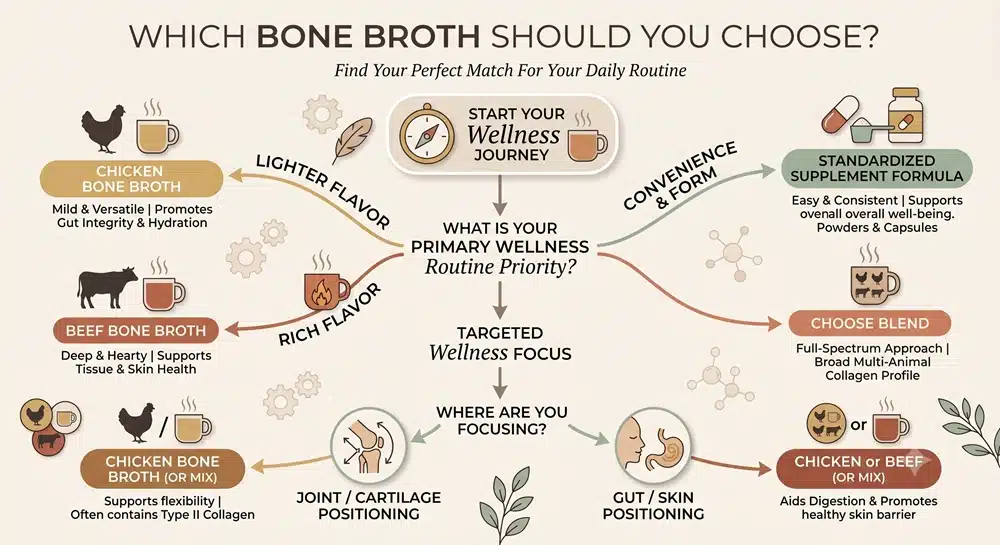
Зачем выбирать, если можно съесть и то, и другое? Сочетание куриного и говяжьего костного бульона позволяет получить сбалансированный набор питательных веществ. Например, вы получите поддерживающий суставы коллаген II типа из курицы и восстанавливающий кишечник глицин из говядины. Такой подход похож на создание пользовательская формула для вашего здоровья, сочетая лучшее из двух миров.
На практике вы можете использовать куриный костный бульон для более легких блюд, а говяжий - для более сытных, или смешивать их в рецептах для получения более тонкого вкуса. Некоторые компании даже предлагают смешанные продукты на основе костного бульона, которые часто рекламируются как содержащие пептид коллагена бычьей кости для дополнительного оздоровления.
В конечном счете, решение зависит от ваших целей. Если вы заботитесь о здоровье суставов, отдайте предпочтение курице. Для здоровья кишечника или лучшего сна вам подойдет говядина. Или, если вы, как и я, любите разнообразие, держите в кладовой оба варианта для разных рецептов и потребностей здоровья.
С точки зрения производителя: как оценить качество порошка костного бульона
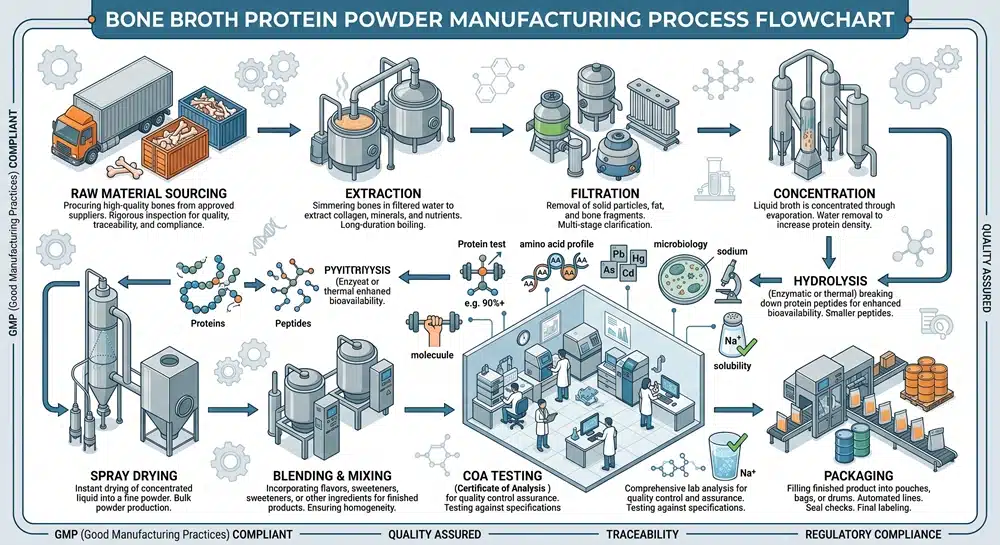
Для потребителей выбор между куриным и говяжьим костным бульоном может зависеть от вкусовых предпочтений и целей в области здоровья. Для производителей пищевых добавок это решение носит более технический характер. Порошок костного бульона премиум-класса следует оценивать по следующим критериям: прослеживаемость происхождения, аминокислотный профиль, содержание белка, зольность, содержание натрия, растворимость, маскировка вкуса, пределы допустимого содержания микроорганизмов и результаты анализа на содержание тяжелых металлов.
В условиях промышленного производства кости и соединительные ткани подвергаются экстракции, фильтрации, концентрированию и зачастую распылительной сушке с получением порошка. Тщательно контролируемый технологический процесс должен обеспечивать сохранность качества белка, одновременно удаляя избыточный жир, устраняя неприятный запах и обеспечивая стабильность готового порошка при хранении в банках, пакетиках, капсулах или в составе функциональных напитков.
| Метрика качества | О чем спросить у поставщика | Почему это важно |
|---|---|---|
| Источник сырья | Говядина от коров, выращенных на траве; курица, выращенная на пастбищах; заявление об отсутствии антибиотиков; страна происхождения; ветеринарные документы. | Способствует подтверждению заявлений на этикетке, обеспечению прослеживаемости и позиционированию в сегменте премиум-класса. |
| Состав белка и аминокислотный профиль | Содержание белка по методу Кьельдаля или Дюма; полный анализ аминокислотного состава, включая глицин, пролин, гидроксипролин, лейцин, валин и изолейцин. | Предотвращает необоснованные заявления о коллагене и способствует точности состава продукта. |
| Зола и натрий | Общее содержание золы, натрий в одной порции, кальций, магний, калий, фосфор. | Высокое содержание золы или натрия может создать впечатление, что продукт “богат минералами”, но при этом снизить его привлекательность для потребителей. |
| Гидролиз и растворимость | Степень гидролиза, молекулярно-массовое распределение, способность к растворению, диспергируемость и испытания на осаждение. | Незаменимо для готовых к приготовлению порошков, пакетиков, кофейных сливок, супов и палочек-пакетиков. |
| Тяжелые металлы | Анализ содержания свинца, кадмия, мышьяка и ртути методом ICP-MS на уровне партии. | Кости животных могут естественным образом накапливать загрязняющие вещества из окружающей среды, поэтому проведение анализов имеет решающее значение для обеспечения доверия. |
| Микробиология | Общее количество микроорганизмов, дрожжи и плесень, E. coli, сальмонелла, золотистый стафилококк и колиформные бактерии. | Требуется для порошков длительного хранения и оформления документов на экспорт в другие страны. |
| Сенсорный профиль | Цвет, запах, вкус, послевкусие и совместимость с маскирующими веществами. | Определяет, подходит ли данный ингредиент для рецептур с ванилью, шоколадом, кофе, супом или для соленых блюд. |
Приготовление собственного костного бульона
Хотите попробовать приготовить костный бульон? Это проще, чем вы думаете, хотя и требует времени. Вот краткое руководство:
Рецепт бульона из куриных костей
- Ингредиенты: 2-3 фунта куриных костей (тушка, шейки, ножки), 1 луковица, 2 моркови, 2 стебля сельдерея, 2 ст. л. яблочного уксуса, травы (лавровый лист, тимьян), вода.
- Шаги: Положите кости в кастрюлю или медленноварку, добавьте овощи, уксус и травы. Накройте водой. Доведите до кипения и варите в течение 12-24 часов. Процедите и храните.
Рецепт бульона из говяжьих костей
- Ингредиенты: 2-3 фунта говяжьих костей (костный мозг, рульки), 1 луковица, 2 моркови, 2 стебля сельдерея, 2 ст. л. яблочного уксуса, травы, вода.
- Шаги: По желанию обжарьте кости при температуре 400°F в течение 30 минут. Поместите их в кастрюлю, добавьте овощи, уксус и травы. Накройте водой. Кипятите в течение 24-48 часов. Процедите и храните.
Использование высококачественных костей, откормленных на травах или выращенных на пастбищах, гарантирует получение богатого питательными веществами бульона без добавок.
Домашний бульон против промышленного протеинового порошка из костного бульона
Домашний костный бульон отлично подходит как для приготовления пищи, так и для ежедневного употребления, но его состав не стандартизирован. Две партии, приготовленные в домашних условиях, могут различаться по содержанию белка, натрия, степени желирующей способности, уровню жирности, вкусу и концентрации аминокислот. Промышленный белковый порошок из костного бульона разработан с учетом стабильности качества: производитель может проводить тестирование каждой партии, контролировать влажность, снижать риск микробиологического загрязнения и предоставлять сертификат анализа (COA) на содержание белка, аминокислот, тяжелых металлов и микробиологические показатели.
- Выберите домашний бульон если вы цените свежий вкус, кулинарную универсальность и ритуал приготовления блюд из цельных продуктов.
- Выберите порошок костного бульона если вам нужен белок с точно отмерённым содержанием, длительным сроком хранения, стабильным составом и более простым использованием в продуктах-добавках.
- Выберите смесь из курицы и говядины если цель состоит в том, чтобы осветить более широкую тему позиционирования коллагена: курица — для хрящевого коллагена и коллагена II типа, а говядина — для бычьего коллагена I и III типов.
Вопросы и ответы
Что лучше: бульон из куриных или говяжьих костей?
Ни один из них не является универсально лучшим. Куриный костный бульон, как правило, имеет более легкий вкус и подходит для рецептур, ориентированных на хрящевую ткань, тогда как говяжий костный бульон обладает более насыщенным вкусом и хорошо подходит для добавления бычьего коллагена. Для производителей пищевых добавок лучший выбор зависит от результатов анализа (COA): содержания белка, аминокислот, натрия, золы, микробиологических показателей и содержания тяжелых металлов.
В каком костном бульоне больше всего коллагена?
Говяжий костный бульон часто позиционируется как продукт с высоким содержанием коллагена, поскольку кости и соединительные ткани крупного рогатого скота являются богатыми источниками коллагена I и III типов. Однако содержание коллагена в жидком бульоне может значительно варьироваться. Куриный бульон, приготовленный из лапок, грудины или частей, богатых хрящами, также может содержать большое количество аминокислот, полученных из коллагена. Ознакомьтесь с данными о содержании белка и гидроксипролина в сертификате анализа (COA).
Помогает ли куриный костный бульон похудеть?
Куриный бульон из костей может быть полезен при диетах, направленных на контроль веса, поскольку он лёгкий, тёплый, имеет приятный вкус и зачастую низкокалориен, при этом содержат некоторое количество белка. Однако он не приводит напрямую к потере жира. Контроль веса по-прежнему зависит от общего количества калорий, потребления белка, физической активности и регулярности питания.
Можно ли использовать куриный костный бульон вместо говяжьего?
Да, в многих супах, соусах, блюдах из зерновых и напитках куриный бульон может заменить говяжий. При этом следует ожидать более легкого вкуса и меньшей нотки поджаренности. В насыщенных блюдах, таких как говяжье рагу, чили, подливка или французский луковый суп, говяжий бульон обычно придает более насыщенный вкус.
Костный бульон — это то же самое, что обычный куриный или говяжий бульон?
Не совсем так. Обычный бульон, как правило, варят меньше времени, и в его составе может быть больше мяса, чем костей. Костный бульон обычно варят на медленном огне гораздо дольше, используя кости и соединительную ткань, что позволяет извлечь больше желатина и аминокислот, полученных из коллагена. Точный состав питательных веществ по-прежнему зависит от рецепта.
Следует ли проводить анализ порошка костного бульона на содержание тяжелых металлов?
Да. Поскольку в костях могут накапливаться вещества из окружающей среды, ингредиенты костного бульона должны проходить анализ на содержание свинца, кадмия, мышьяка и ртути. В случае пищевых добавок следует запрашивать сертификат анализа (COA) для конкретной партии, предпочтительно с использованием валидированных методов, таких как ICP-MS, а также данные по микробиологическим показателям и содержанию белка.
Является ли костный бульон полноценным белком?
Костный бульон может служить источником белка, однако белок, полученный из коллагена, по своей природе содержит мало некоторых незаменимых аминокислот, особенно триптофана. Он не должен заменять полноценные источники белка, такие как сыворотка, говяжий белок, яйца, молочные продукты, рыба или бобовые, если целью является полноценное питание для наращивания мышечной массы.
Можно ли смешивать куриный и говяжий костный бульон?
Да. Смесь в соотношении 1:1 или индивидуально разработанная смесь может обеспечить более широкий спектр воздействия коллагена за счет сочетания свойств хрящевой ткани курицы и коллагена II типа с воздействием коллагена I и III типов бычьего происхождения. При производстве продукции под собственной торговой маркой перед утверждением окончательной рецептуры необходимо уточнить требуемые показатели вкуса, растворимости, содержания натрия и аминокислот.
Заключение
В противостоянии Куриный костный бульон против говяжьего костного бульонаНо здесь нет однозначного победителя - оба продукта являются питательной силой с уникальными достоинствами. Куриный костный бульон - ваш союзник для здоровья суставов, сияния кожи и восстановления мышц, а говяжий костный бульон - для здоровья кишечника, сна и энергии. Выберете ли вы один из них, оба или смесь, зависит от вашего вкуса, целей и стиля приготовления. Так что берите кружку, экспериментируйте с обоими вариантами и узнайте, какой костный бульон заставит ваше тело и вкусовые рецепторы петь.
Ссылки
[1] Current target page – Chicken Bone Broth vs Beef Bone Broth: https://collagensei.com/chicken-bone-broth-vs-beef-bone-broth/
[2] Harvard Health – Savoring the benefits of bone broth: https://www.health.harvard.edu/diet-and-nutrition/savoring-the-benefits-of-bone-broth-worth-a-taste
[3] Shaw & Flynn, 2019 – Amino acid content of beef, chicken, and turkey bone broth: https://www.westmont.edu/sites/default/files/users/user1231/V19No4/Nick%20Flynn_final.pdf
[4] Alcock et al., 2019 – Bone broth unlikely to provide reliable concentrations of collagen precursors: https://pubmed.ncbi.nlm.nih.gov/29893587/
[5] Verywell Health – Bone broth benefits and limitations: https://www.verywellhealth.com/bone-broth-7967614
[6] FDA – Environmental contaminants in food and dietary supplements: https://www.fda.gov/food/chemical-contaminants-pesticides/environmental-contaminants-food
[7] FDA – Testing results for arsenic, lead, cadmium and mercury: https://www.fda.gov/food/environmental-contaminants-food/testing-results-arsenic-lead-cadmium-and-mercury
[8] NSF – Supplement and vitamin certification: https://www.nsf.org/consumer-resources/articles/supplement-vitamin-certification
[9] Hsu et al., 2017 – Essential and toxic metals in animal bone broths: https://pubmed.ncbi.nlm.nih.gov/28804437/
[10] Schwartz & Park, 2012 – Hydrolyzed chicken sternal cartilage extract: https://pubmed.ncbi.nlm.nih.gov/22956862/

Уоррен Ван — опытный специалист с обширным стажем работы в сфере цепочки поставок пищевых добавок, обладающий богатым практическим опытом в области исследований, разработки, контроля производственных процессов и глобального поиска поставщиков ключевых ингредиентов, таких как коллагеновые пептиды, белок костного бульона и кератин. Как автор этой рубрики, он стремится развенчать маркетинговую мистификацию, преобразуя малоизвестные научные факты об ингредиентах и стандарты контроля качества производства в доступные и достоверные научно-популярные материалы, помогая читателям понять правду, скрытую за этикетками, и делать более рациональный выбор в вопросах здоровья.