你是否曾站在超市裡,盯著架上琳瑯滿目的骨湯,不知該選哪一款? 我也曾有過這樣的經歷,在雞骨湯和牛骨湯之間舉棋不定,試圖找出哪一種才是實現我健康目標的「神奇靈藥」。骨湯已成為健康界的寵兒,從緩解喉嚨痛到提升肌膚光澤,其功效備受推崇。但當面臨「雞骨湯 vs 牛骨湯」的抉擇時,你該如何選擇呢? 讓我們深入探索這片慢燉的骨湯世界,了解兩者的獨特之處、健康益處,以及你是否該兩者都試試。劇透:沒有放諸四海皆準的答案,但我會幫助你找到最適合自己的那款。.
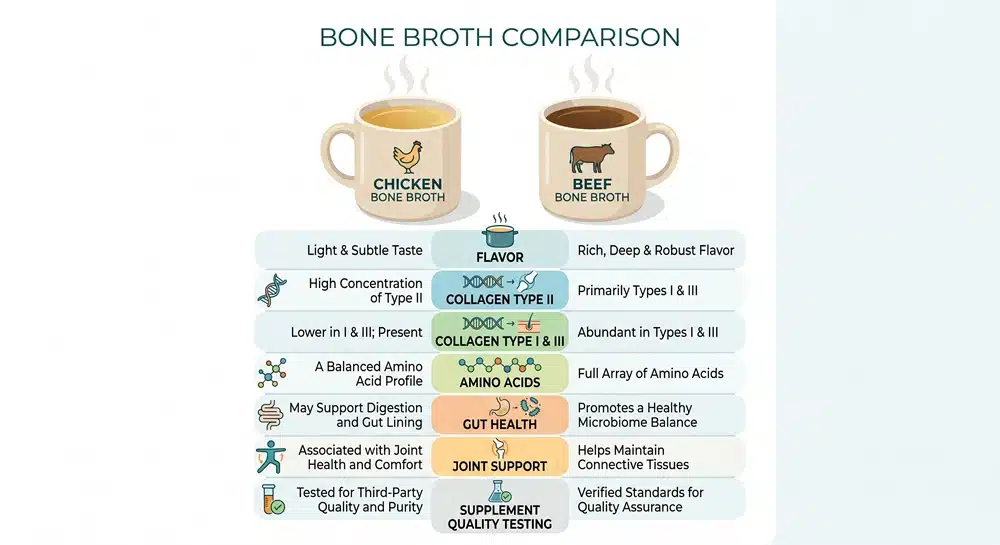
簡短回答: 若追求較清淡的風味、更快的烹調速度,以及以軟骨為重點的配方,雞骨高湯通常是較佳的選擇;而若追求更濃郁的風味及以牛膠原蛋白為定位,則牛骨高湯通常更為合適。 然而,所謂「最佳」的高湯,其優劣並非僅取決於動物來源本身,而是更取決於其胺基酸組成、蛋白質含量、鈉含量、重金屬檢測結果,以及產品形式是液態高湯、粉末狀,還是水解骨湯蛋白。.
什麼是骨湯?
骨湯 就像是杯中的溫暖擁抱,將動物骨頭 (例如雞肉、牛肉、豬肉,甚至魚肉) 與蔬菜、香草及少量醋燉煮 12 至 24 小時或更久。這個緩慢的過程會萃取出豐富的營養素:膠原蛋白、胺基酸、明膠,以及鈣和鎂等礦物質。一般肉湯只需熬煮幾小時,而骨湯則不同,它的熬煮時間長,營養豐富。骨湯也不只是高湯,高湯只需煮 4-6 小時,而骨湯則需要更長的時間才能萃取出每一點的營養。
為何如此熱炒?骨湯是一種多用途的 膳食補充品成分, ,用途廣泛,從湯品到果昔皆可使用。由於其富含有助肌肉生長的胺基酸,因此是運動營養領域中的重要基礎成分,且常因其對 關節保健品.無論您是喝骨湯來舒緩感冒,或是用它來燉湯,骨湯都是廚房的 MVP。
基本知識:雞骨湯及牛骨湯
讓我們來談談肉(或骨頭)的問題:雞骨湯和牛骨湯的營養如何?兩者都富含營養素,但兩者的營養成分不同,可能會影響您的選擇。
營養比較
骨湯中的營養成分並非固定不變。它會隨著骨頭的切割方式、軟骨含量、烹煮或水解時間、濃度比例、鈉的添加量,以及最終產品是即飲骨湯還是噴霧乾燥骨湯蛋白粉而有所變化。 下方的比較表概括了常見的差異,但營養補充品品牌應透過特定批次的分析證明書(COA)來驗證最終決定,特別是針對胺基酸、蛋白質、鈉、灰分及重金屬等項目。.
| 因子 | 雞骨湯 | 牛骨湯 | 最佳使用案例 |
|---|---|---|---|
| 典型的風味 | 口感更清爽、更純淨,在湯品、醬汁及飲品中使用更為方便。. | 風味更濃郁、更深邃、更鮮美,更適合用於豐盛的菜餚,並能突顯高檔高湯的定位。. | 雞肉用途廣泛;牛肉風味濃郁。. |
| 常見的膠原蛋白定位方式 | 當使用雞爪、胸骨或富含軟骨的部位時,常與源自軟骨的第二型膠原蛋白相關聯。. | 通常與來自牛骨骼及結締組織的 I 型和 III 型膠原蛋白來源相關。. | 雞肉用於關節/軟骨的調理;牛肉則用於皮膚/腸道/膠原蛋白胜肽的滋養。. |
| 每杯的蛋白質含量 | 通常每杯約為 9 至 12 克,但會因食譜和濃度而異。. | 通常每杯約 8 至 10 克,但會因食譜和濃度而異。. | 請務必核對營養標示或成分分析報告。. |
| 胺基酸組成 | 已發表的商業樣本數據顯示,雞高湯中的甘胺酸、脯胺酸、羥脯胺酸、亮胺酸、異亮胺酸及纈胺酸含量,均略高於牛肉。. | 已發表的商業樣本數據顯示,牛肉高湯中的羥基賴胺酸含量略高。. | 請勿僅依賴動物來源;請索取胺基酸的分析報告(COA)。. |
| 礦物質與鈉 | 這在很大程度上取決於配方、添加的鹽分、濃度以及過濾過程。. | 這在很大程度上取決於配方、添加的鹽分、濃度以及過濾過程。. | 請查閱每份的鈉、灰分、鈣、鎂及鉀含量。. |
| 工業品質問題 | 微生物學、鈉、噴霧乾燥穩定性、家禽來源可追溯性,以及過敏原/標籤聲明。. | 重金屬檢測、牛隻來源可追溯性、草飼標示、噴霧乾燥穩定性,以及微生物學。. | 兩者均需進行批次層級的成分分析(COA)及污染物檢測。. |
- 蛋白質:雞骨湯的蛋白質略高,每 250 毫升約含 12 克,牛肉則為 10 克。這讓它成為注重肌肉恢復的人的最佳選擇,尤其是在運動營養方面。
- 膠原蛋白: 牛肉骨湯通常以密度較高的骨頭熬製而成,因此往往含有較多的膠原蛋白,尤其是對皮膚至關重要的第一型和第三型膠原蛋白,以及 腸道健康. 雞骨高湯富含第二型膠原蛋白,這是關節保健補充品中的明星成分。.
- 胺基酸原料:雞肉湯含有較多支鏈胺基酸 (BCAA),例如亮氨酸,有助於肌肉生長。牛肉湯則含有較多的甘氨酸和脯氨酸,有助於腸道修復和睡眠。
- 電解質:雞骨湯含較多水份的電解質,如鉀和鎂,是補充水份的首選。
- 脂肪酸:來自草餵牛的牛骨湯通常具有較佳的Ω-3 和Ω-6 比例,與來自穀物餵飼的雞湯相比,可減少發炎。
兩者的熱量都很低,通常每杯 30-60 卡路里,視製作方法而定。自製的肉湯可能添加較少的添加劑,而商店購買的肉湯則可能含有不同的鈉和蛋白質含量。
為何胺基酸的化學結構式比動物來源更為重要
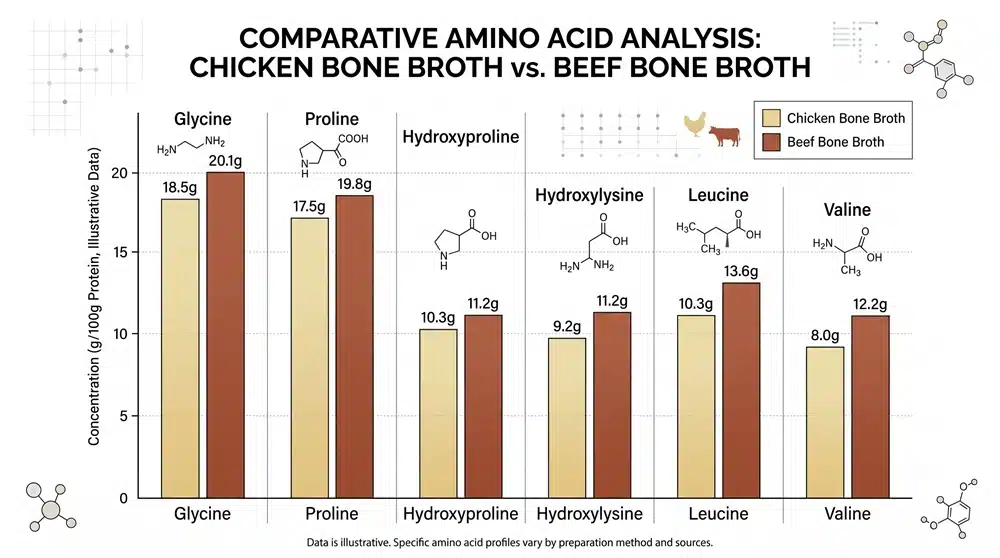
許多文章為了簡化比較,常以「雞骨湯有益關節」和「牛肉骨湯有益腸道與皮膚」來概括。這種說法雖在方向上有所助益,但對於膳食補充劑的配方設計而言仍顯不足。 Shaw 與 Flynn 於 2019 年針對市售骨湯進行的分析,量化了牛肉、雞肉及火雞骨湯樣本中的 19 種胺基酸,並顯示最終的胺基酸組成可能與常見的行銷假設有所不同。.
例如,在分析的商業樣本中,雞骨高湯在甘胺酸、脯胺酸、羥脯胺酸、亮胺酸、異亮胺酸和纈胺酸的含量上略高於牛肉骨高湯,而牛肉骨高湯在羥賴胺酸的含量上則略高。 這並不意味著每款雞骨高湯都更優越。這意味著單憑動物來源本身,並不能作為可靠的規格依據。對於營養補充品品牌而言,正確的問題不應僅是「雞肉還是牛肉?」,而是「該批次特定的分析報告(COA)顯示了什麼?」“
| 胺基酸,毫克/克產品 | 牛骨湯 | 雞骨湯 | 實務解讀 |
|---|---|---|---|
| 甘氨酸 | 3.709 ± 0.059 | 4.063 ± 0.027 | 此樣本集中的雞肉含量較高;請參照分析報告(COA)加以確認。. |
| 脯氨酸 | 2.211 ± 0.034 | 2.440 ± 0.078 | 在此樣本集中,雞肉的含量較高;這與膠原蛋白的定位有關。. |
| 羥脯氨酸 | 1.967 ± 0.314 | 2.158 ± 0.017 | 在此樣本集中,雞肉的含量較高;可用作膠原蛋白的標記物。. |
| 羥基賴胺酸 | 0.285 ± 0.006 | 0.276 ± 0.003 | 在這組樣本中,牛肉的含量略高一些。. |
| 亮氨酸 | 0.726 ± 0.011 | 1.053 ± 0.036 | 雞肉的蛋白質含量雖較高,但骨湯仍非一種完整的運動蛋白質。. |
| 纈胺酸 | 0.487 ± 0.008 | 0.645 ± 0.022 | 雞肉的含量較高,這進一步印證了進行全面胺基酸檢測的必要性。. |
來源註記:這些數值取自 Shaw & Flynn(2019)的研究,該研究使用市售骨湯樣本。應將其視為已發表分析中的範例,而非對每項產品的普遍保證。.
的異同 雞骨湯和牛骨湯 健康效益?

這兩種湯都有共同的核心優點,但其獨特的營養成分使兩者各具優勢。
共享效益
- 腸道健康:這兩種湯中的明膠和胺基酸有助於修復腸道黏膜,有可能緩解腸漏症等問題。這使得它們成為促進消化道健康的重要營養補充品成分。
- 關節健康:膠原蛋白支援軟骨和結締組織,可減少關節疼痛和僵硬。
- 皮膚健康:膠原蛋白可增加肌膚彈性和水份,減少皺紋。
- 免疫保健:胺基酸和礦物質等營養素可增強免疫系統,幫助對抗感冒和感染。
獨特優勢
雞骨湯:
- 關節健康:富含雞膠原蛋白 II 型,對關節健康特別有效。發表於 營養素 研究發現,II型膠原蛋白能減輕骨關節炎患者的膝蓋疼痛。.
- 皮膚健康:同類型的膠原蛋白可改善肌膚水份並減少皺紋,是天然的美容促進劑。
- 肌肉恢復:較高的 BCAA 含量有助於肌肉生長和修復,是運動員或運動營養愛好者的理想選擇。
牛骨湯:
- 腸道健康:較高的甘氨酸含量能促進胃酸分泌和腸道黏膜修復,是消化道保健的首選。
- 睡眠與情緒: 甘胺酸不僅能縮短入睡時間並改善睡眠品質,還能提升血清素水平,從而改善情緒。.
- 能量等級:骨骼密度較高,可提供更多礦物質,從而提升能量和整體營養。
這些好處取決於骨頭品質和烹煮時間等因素。草飼或牧場飼養的骨頭通常會產生營養更豐富的肉湯。
雞骨和牛骨湯的味覺及烹飪用途
在以下兩者之間選擇時,口味可能會是一個障礙 雞骨和牛骨湯. .以下是它們的比較:
- 雞骨湯:清淡、細緻的風味讓它成為廚房裡的變色龍。用它來做湯、醬汁、燉飯,甚至是冰沙,既能增加營養,又不會喧賓奪主。加入少許鹽和胡椒,也是啜飲的好選擇。
- 牛骨湯:燉牛肉、辣肉醬或法式洋蔥湯等強烈菜餚的最佳選擇。它較為濃郁的口感可能不太適合用於清淡的食譜,但在舒適的食物中卻大放異彩。
我發現雞骨湯是我在週末快速煲湯的首選,而牛肉骨湯則讓我的週末慢燉食譜更上一層樓。您的選擇可能取決於您喜歡微妙或強烈的味道。
一起使用是否更好?
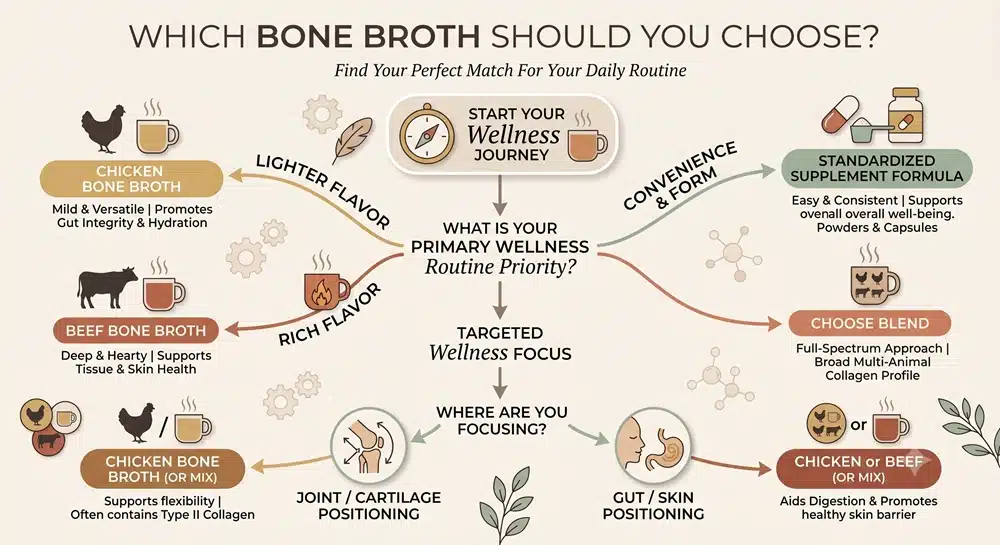
既然兩者皆可,為何要選擇?結合雞肉和牛肉的骨湯能提供均衡的營養素組合。例如,您可以從雞肉中攝取支援關節的 II 型膠原蛋白,從牛肉中攝取治療腸道的甘氨酸。這種方法就像是創造了一種 自訂公式 為了您的健康,融合兩者的優點。
實際上,您可以使用雞骨湯來烹調較清淡的菜餚,而使用牛肉來烹調較濃郁的菜餚,或是將兩者混合在食譜中,以營造細緻的風味。有些公司甚至提供混合骨湯產品,在市場上通常標榜含有 牛骨膠原蛋白肽 為健康帶來更多好處。
最終,還是要根據您的目標來決定。如果您專注於關節健康,請選擇雞肉。對於腸道健康或改善睡眠,牛肉可能是您的選擇。或者,如果您跟我一樣喜歡多樣化,那就在您的食物櫃裡同時放兩種食物,以滿足不同的食譜和健康需求。
從製造商的角度來看:如何評估骨湯粉的品質
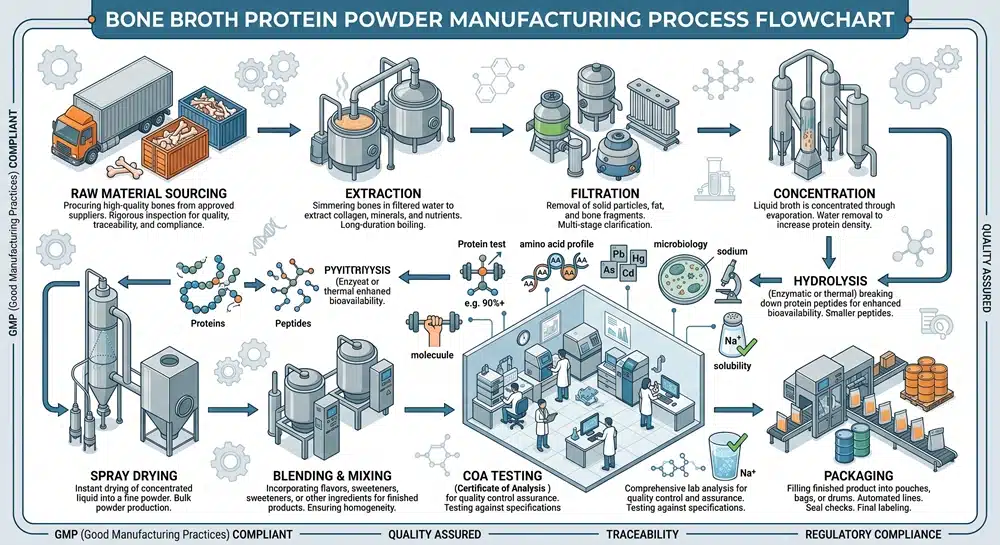
對消費者而言,選擇雞骨高湯還是牛肉骨高湯,可能取決於口味與健康目標。對營養補充品品牌來說,這項決定則更具技術性。一款優質的骨高湯粉應從原料溯源、胺基酸組成、蛋白質含量、灰分、鈉含量、溶解度、掩蓋風味能力、微生物限量以及重金屬檢測等面向進行評估。.
在工業生產過程中,骨骼與結締組織會經過萃取、過濾、濃縮,並通常以噴霧乾燥法製成粉末。一個控制得當的製程應能在去除多餘脂肪、控制異味的同时,確保蛋白質品質不受影響,並使成品粉末在桶裝、小袋裝、膠囊或功能性飲料混合物中保持穩定。.
| 品質指標 | 該向供應商詢問哪些問題 | 為何重要 |
|---|---|---|
| 原料來源 | 草飼牛、牧場飼養雞、無抗生素聲明、原產國、動物健康證明文件。. | 有助於支持標籤聲明、可追溯性及高端定位。. |
| 蛋白質與胺基酸組成 | 以凱爾達爾法或杜馬斯法測定蛋白質含量;完整的胺基酸分析報告(COA),包含甘胺酸、脯胺酸、羥脯胺酸、亮胺酸、纈胺酸及異亮胺酸。. | 可避免針對膠原蛋白的模糊宣稱,並確保配方精確性。. |
| 灰分與鈉 | 每份的總灰分、鈉、鈣、鎂、鉀、磷。. | 高灰分或高鈉含量雖能使產品看起來「礦物質豐富」,卻會降低其對消費者的適用性。. |
| 水解與溶解度 | 水解度、分子量分布、速溶性、分散性及沉澱測試。. | 對於即溶粉、小袋裝產品、咖啡奶精、湯品及條狀包裝產品而言至關重要。. |
| 重金屬 | 針對鉛、鎘、砷及汞進行批次層級的 ICP-MS 檢測。. | 動物骨骼會自然累積環境污染物,因此進行檢測對於建立信任至關重要。. |
| 微生物學 | 總菌落數、酵母菌與黴菌、大腸桿菌、沙門氏菌、金黃色葡萄球菌及大腸桿菌群。. | 此為常溫保存粉末及全球出口文件之必備條件。. |
| 感官特徵 | 色澤、氣味、風味、餘味,以及掩蓋相容性。. | 用以判定該成分是否適用於香草、巧克力、咖啡、湯品或鹹味配方中。. |
自製骨湯
想要嘗試製作骨湯嗎?雖然需要時間,但比您想像中容易。以下是快速指南:
雞骨湯食譜
- 原料材料: 2-3 磅雞骨(胴體、頸部、腳)、1 個洋蔥、2 根紅蘿蔔、2 根芹菜、2 湯匙蘋果醋、香草(月桂葉、百里香)、水。
- 步驟:將骨頭放入鍋中或慢燉鍋中,加入蔬菜、醋和香草。加水。煮沸後燉 12-24 小時。過濾後儲存。
牛骨湯食譜
- 原料材料: 2-3 磅牛骨(骨髓、指節)、1 個洋蔥、2 根紅蘿蔔、2 根芹菜莖、2 湯匙蘋果醋、香草、水。
- 步驟:可選擇將骨頭在 400°F 烤 30 分鐘。放入鍋中,加入蔬菜、醋和香草。蓋上水。燉 24-48 小時。過濾後儲存。
使用高品質、草餵或牧場飼養的骨頭可確保濃湯營養豐富,且不含任何添加劑。
自製骨湯 vs 工業製骨湯蛋白粉
自製骨湯非常適合用於烹飪和日常飲用,但其品質並未標準化。 兩批自製骨湯在蛋白質、鈉含量、明膠強度、脂肪含量、風味及胺基酸濃度方面都可能有所不同。工業生產的骨湯蛋白粉則以一致性為設計目標:製造商能對每批產品進行檢測、控制水分含量、降低微生物風險,並提供包含蛋白質、胺基酸、重金屬及微生物學項目的分析報告(COA)。.
- 選擇自製高湯 如果你想要新鮮的風味、烹飪上的靈活性,以及一套以全食物為核心的廚房儀式。.
- 選擇骨湯粉 如果您需要精確計量的蛋白質、穩定的保存期限、可重複的配方,以及在營養補充品中更方便的使用方式。.
- 選擇雞肉+牛肉混合款 如果目標是涵蓋更廣泛的膠原蛋白定位主題:則以雞肉來傳達軟骨/II型膠原蛋白的訊息,並以牛肉來定位牛源I型/III型膠原蛋白。.
常見問題
雞骨高湯和牛肉骨高湯,哪一種比較好?
兩者皆無絕對優劣之分。雞骨高湯通常風味較為清淡,適合用於以軟骨為重點的配方;而牛骨高湯風味更為濃郁,則適合用於強調牛膠原蛋白的配方。對於營養補充品品牌而言,較佳的選擇取決於分析報告(COA)中的各項數據:蛋白質、胺基酸、鈉、灰分、微生物學及重金屬的檢測結果。.
哪種骨湯含最多膠原蛋白?
牛肉骨湯常被宣傳為富含膠原蛋白,因為牛骨和結締組織是第一型與第三型膠原蛋白的豐富來源。然而,湯汁中的膠原蛋白含量差異極大。使用雞腳、胸骨或富含軟骨的部位熬製的雞湯,其膠原蛋白衍生的胺基酸含量也可能相當高。 請查閱分析報告(COA)中的蛋白質和羥脯胺酸數據。.
雞骨高湯對減重更有幫助嗎?
雞骨高湯在體重管理飲食中可能有所助益,因為它口感清淡、溫熱、風味醇厚,且通常熱量較低,同時還能提供一些蛋白質。但它並不會直接導致脂肪減少。體重管理仍取決於總熱量、蛋白質攝取量、活動量以及飲食的規律性。.
我可以改用雞骨高湯來代替牛肉骨高湯嗎?
是的,對於許多湯品、醬汁、穀物料理以及飲品食譜而言,雞骨高湯可以取代牛骨高湯。但請注意,其風味會較為清淡,且缺乏那種炙烤般的深邃風味。至於燉牛肉、辣椒醬、肉汁或法式洋蔥湯等風味濃郁的菜餚,牛骨高湯通常能賦予更濃郁的風味。.
骨湯和一般的雞湯或牛肉湯是一樣的嗎?
不盡然。一般高湯的熬煮時間通常較短,且肉的比例可能比骨頭多。骨湯則通常會用骨頭和結締組織以文火慢燉更長的時間,這樣能萃取出更多的明膠和源自膠原蛋白的胺基酸。具體的營養成分仍取決於食譜。.
骨湯粉是否應進行重金屬檢測?
是的。由於骨頭會累積環境中的元素,因此應對骨湯原料進行鉛、鎘、砷及汞的檢測。至於營養補充品,應要求提供針對特定批次的分析報告(COA),最好採用經驗證的方法(例如 ICP-MS),並附上微生物學及蛋白質數據。.
骨湯算是完整蛋白質嗎?
骨湯雖能提供蛋白質,但源自膠原蛋白的蛋白質本身天然缺乏某些必需胺基酸,尤其是色胺酸。若目標是獲得完整的增肌營養,則不應以骨湯取代乳清、牛肉蛋白、雞蛋、乳製品、魚類或豆類等完整蛋白質來源。.
品牌能否將雞骨高湯與牛肉骨高湯混合?
是的。透過將以雞為基礎的軟骨/第二型膠原蛋白訴求,與牛源第一型及第三型膠原蛋白的定位相結合,採用 1:1 或客製化配方,可打造出更全面的膠原蛋白定位敘事。針對自有品牌產品,請在確定最終配方前,先確認風味、溶解度、鈉含量及胺基酸含量等目標值。.
總結
在 雞骨湯和牛骨湯的比較兩者都是營養強國,各有特色。雞骨湯能促進關節健康、皮膚光澤和肌肉恢復,而牛骨湯則有助於腸道健康、睡眠和精力充沛。您是選擇其中一種、兩種,還是混合使用,取決於您的口味、健康目標和烹飪風格。因此,拿起杯子,試試兩者,看看哪種骨湯能讓您的身體和味蕾讚嘆不已。
參考資料
[1] Current target page – Chicken Bone Broth vs Beef Bone Broth: https://collagensei.com/chicken-bone-broth-vs-beef-bone-broth/
[2] Harvard Health – Savoring the benefits of bone broth: https://www.health.harvard.edu/diet-and-nutrition/savoring-the-benefits-of-bone-broth-worth-a-taste
[3] Shaw & Flynn, 2019 – Amino acid content of beef, chicken, and turkey bone broth: https://www.westmont.edu/sites/default/files/users/user1231/V19No4/Nick%20Flynn_final.pdf
[4] Alcock et al., 2019 – Bone broth unlikely to provide reliable concentrations of collagen precursors: https://pubmed.ncbi.nlm.nih.gov/29893587/
[5] Verywell Health – Bone broth benefits and limitations: https://www.verywellhealth.com/bone-broth-7967614
[6] FDA – Environmental contaminants in food and dietary supplements: https://www.fda.gov/food/chemical-contaminants-pesticides/environmental-contaminants-food
[7] FDA – Testing results for arsenic, lead, cadmium and mercury: https://www.fda.gov/food/environmental-contaminants-food/testing-results-arsenic-lead-cadmium-and-mercury
[8] NSF – Supplement and vitamin certification: https://www.nsf.org/consumer-resources/articles/supplement-vitamin-certification
[9] Hsu et al., 2017 – Essential and toxic metals in animal bone broths: https://pubmed.ncbi.nlm.nih.gov/28804437/
[10] Schwartz & Park, 2012 – Hydrolyzed chicken sternal cartilage extract: https://pubmed.ncbi.nlm.nih.gov/22956862/

萬華仁(Warren Wan)是一位資深專家,在膳食補充劑供應鏈領域擁有豐富經驗,並在膠原蛋白肽、骨湯蛋白及角蛋白等核心成分的研發、製程控制及全球採購方面具備深厚的實務經驗。 身為本專欄的作者,他致力於剝去行銷包裝的表象,將晦澀難懂的成分科學與生產品質控制標準,轉化為淺顯易懂的硬核科普,協助讀者看清標籤背後的真相,並做出更理性的健康選擇。.